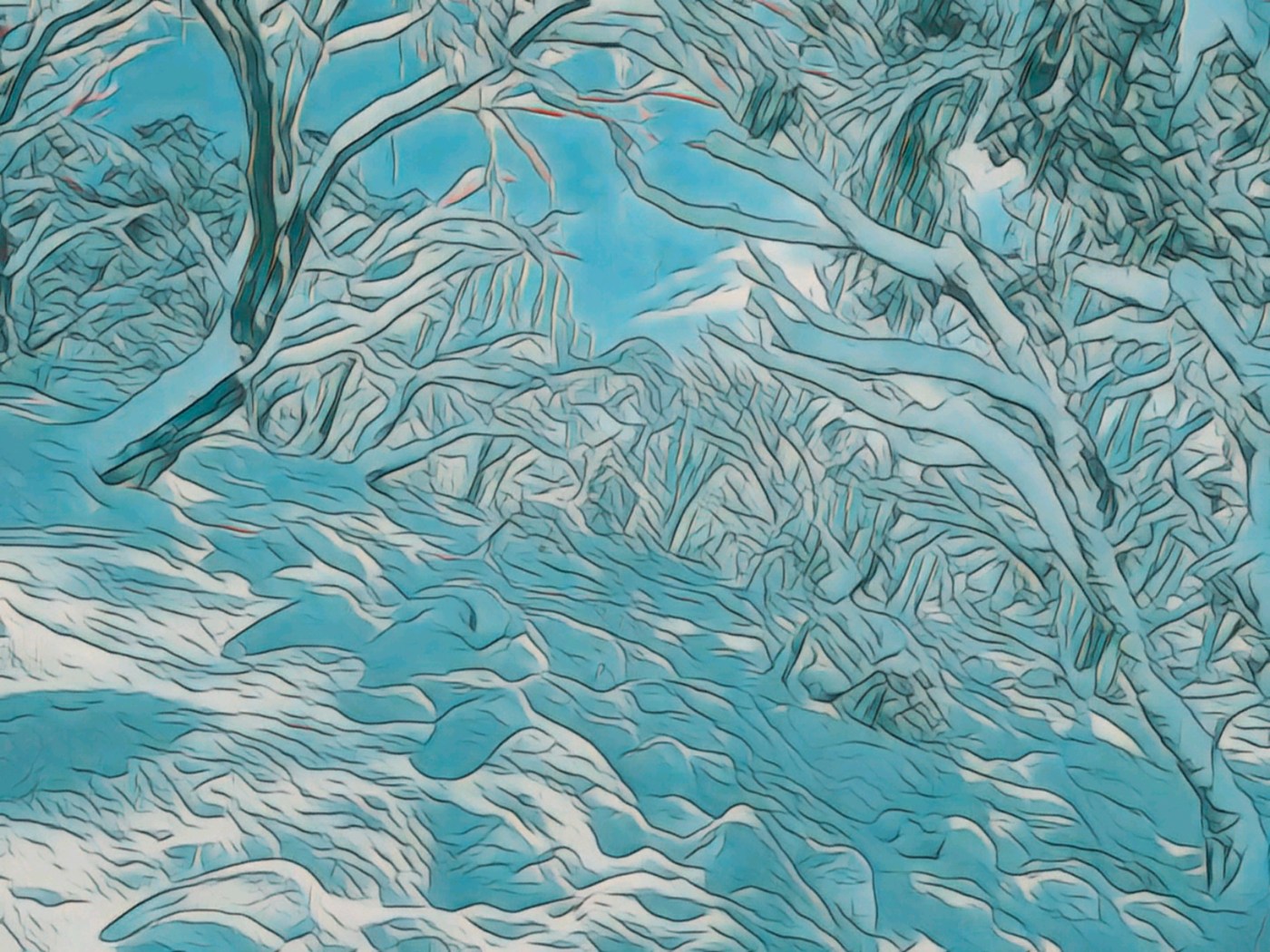
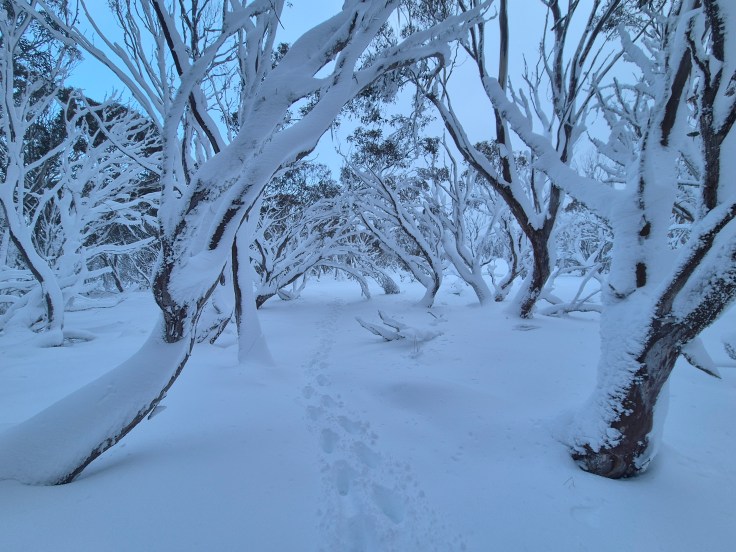
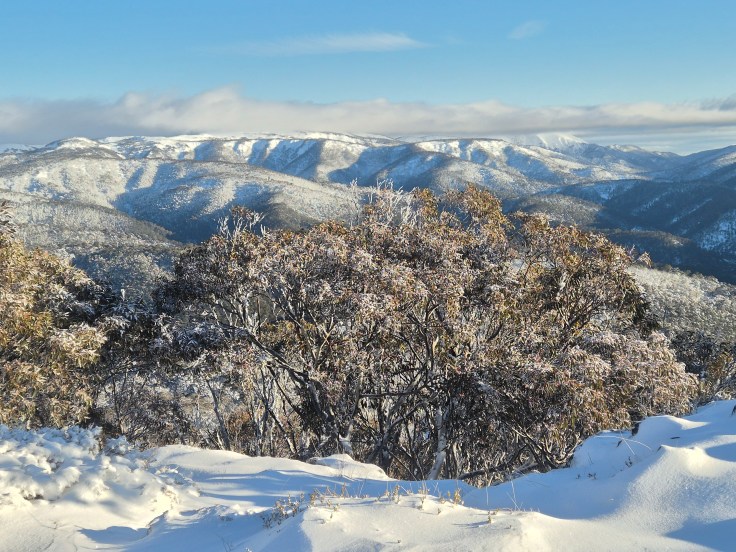
If you were in the Victorian mountains during that amazing storm that passed through in the third week of July, you will have experienced winter at its best. In the Victorian backcountry we had already lost much of the base and the fresh snow was unconsolidated, but it didn’t really matter because there was so much of it. That wonderful and particular sound of fresh dry powder creaking underfoot as you weave through the trees on the uphill and that weightlessness as you head back down truly is magic (it always reminds me of that opening scene in the Valhalla film from Sweetgrass – When you’ve seen the season’s first great snow through the eyes of a child—you’ve known true happiness).
Then the blow drier was turned on, and we all know what happened next. Despite the amazing efforts of the resort groomers, the resorts started to close – the lower elevation ones like Mt Selwyn went first (consistent with what we expect from climate change). As of September 8 there is still cover in the Main Range and a few lifts are still going in places like Falls Creek. But basically the season is done – a whole month early.
This is obviously a huge blow for the businesses who are on their second short winter and everyone who was reliant on a full winter working in a resort or valley town. And, of course, it’s a drag for everyone who just wants to go skiing or riding.
What’s going on?
While we know that climate change is leading to shorter winters and less snow (according to the CSIRO, snow depth levels in Kosciuszko National Park have been on a downward trend over the past 70 years. And a report released by the ANU earlier this year confirmed the average length of the ski season had contracted by between 17 per cent and 28 per cent between 1954 and 2012 across most Australian resorts), this winter was especially depressing because of the wild storms that came through in August. As was noted by professor of pyrogeography and fire science at the University of Tasmania David Bowman in The Conversation and Guardian, ‘Earth’s climate has become dangerously unstable and it’s only a matter of time before we get the bad combination of hot and dry weather, strong winds and a spark. None of this should come as a surprise. The sooner we stop expecting Australia’s weather to be “normal”, the sooner we can prepare for life in a wild climate’.
2023 was Earth’s hottest on record. And 2024 looks likely to be hotter still. In Australia the last 12 months have provided all the evidence we need that our climate is wobbling out of control – record early heat, local drought and also flooding, wild storms, an early fire season, and so on.
Any Australian skier or rider knows that, with our modest elevation and latitude, our snow is already marginal, and a degree or two of warmer air makes all the difference between wonderful snow and miserable rain. Unfortunately, according to an ongoing temperature analysis led by scientists at NASA’s Goddard Institute for Space Studies (GISS), the average global temperature on Earth has increased by at least 1.1° Celsius since 1880. If we are willing to accept facts, it’s clear what’s going on.
And sadly, there is already evidence that the wild storms that swept through in August and destroyed what remained of the snow pack, especially in Victoria, were influenced by climate change. As reported in The Age, ‘Strong winds in eastern Australia … are being driven by climate change interfering with jet streams, the powerful high-altitude winds that encircle the globe.’
Climate denial and the Angry Bros
But. The strange denial in the industry continues: from the tourism operators who think they can just ‘pivot’ into more green season activities like mountain biking, to the Angry Bros who dominate and attack any conversation about climate change on community forums and groups, there is an obstinate ignorance about what is going on. I know many people who have simply stopped commenting and drawing the links between climate change and less snow because they know they will be shouted down.
Early in the winter, Protect Our Winters (POW) released a comprehensive update on the threats posed by climate change – to snow pack, the mountain environment and animals who rely on a thriving ecosystem, and downstream rivers, and also the impacts on the local economies that rely on good snowfalls. In some ways this was not ‘new’ news. These details have been well known for years but this report painted a compelling picture of future trends and likely impacts on local economies. It also had a comprehensive set of recommendations about how we can act to reduce the negative impacts. The release of the report saw truly amazing media coverage – apparently generating something like 400 media stories. Yet it was comprehensively ignored by the industry.
I remember when a similar report was released in 2018 (this one was written by SGS Economics and Planning for the Victorian government). In response, Laurie Blampied, then the general manager of Buller Ski Lifts, said technology had advanced to the point where snow could be made at any temperature.
An increasing reliance on artificial snow would not make the industry less viable, he said.
“If the product [snow] becomes less common, it will in turn become more valued and people are going to be prepared to pay more of a premium to enjoy a product if it’s scarce, a bit like a fine wine.”
Since then Mt Buller has destroyed a significant area of alpine vegetation to build a 100-megalitre dam on the mountain, to provide water for potable use and snowmaking, and continued to invest in energy intensive ‘snow factory’ technology which required additional electricity supply to the mountain.
Yes, some resorts are moving in the right direction, reducing energy use, shifting from diesel to green electricity and so on. But the denial in large parts of the snow community and the industry that relies on decent snow pack is puzzling and depressing.
Fingers crossed for 2025!
Action is always the antidote to despair
You can find the POW report, and get active with them, via their website.
https://protectourwinters.org.au/
They also have an online survey at present
https://tools.protectourwinters.org.au/omyv-survey
There is a list of actions you can take, and groups you can support here.
https://themountainjournal.com/2023/04/25/giving-back-and-getting-involved-in-protecting-the-alps/
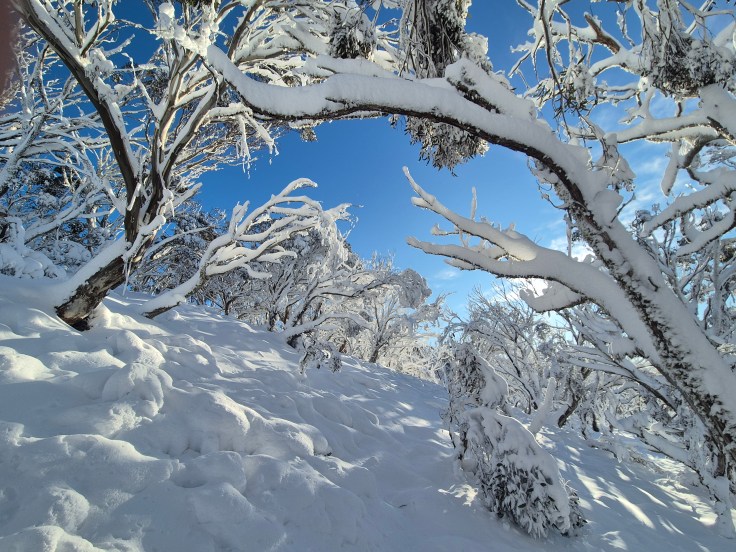
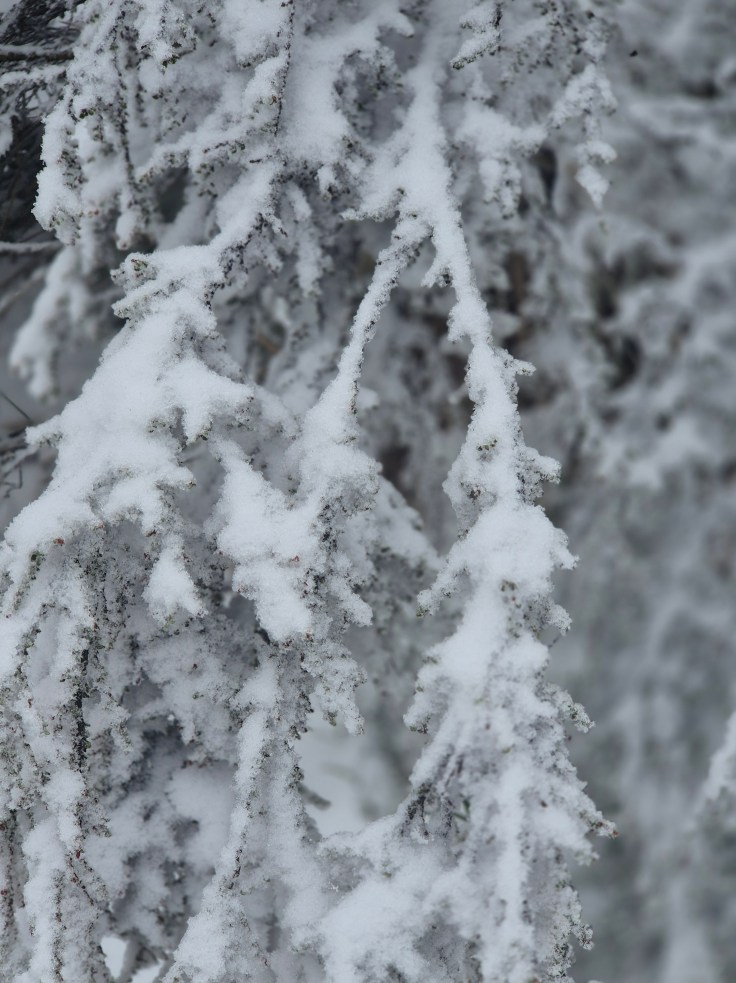
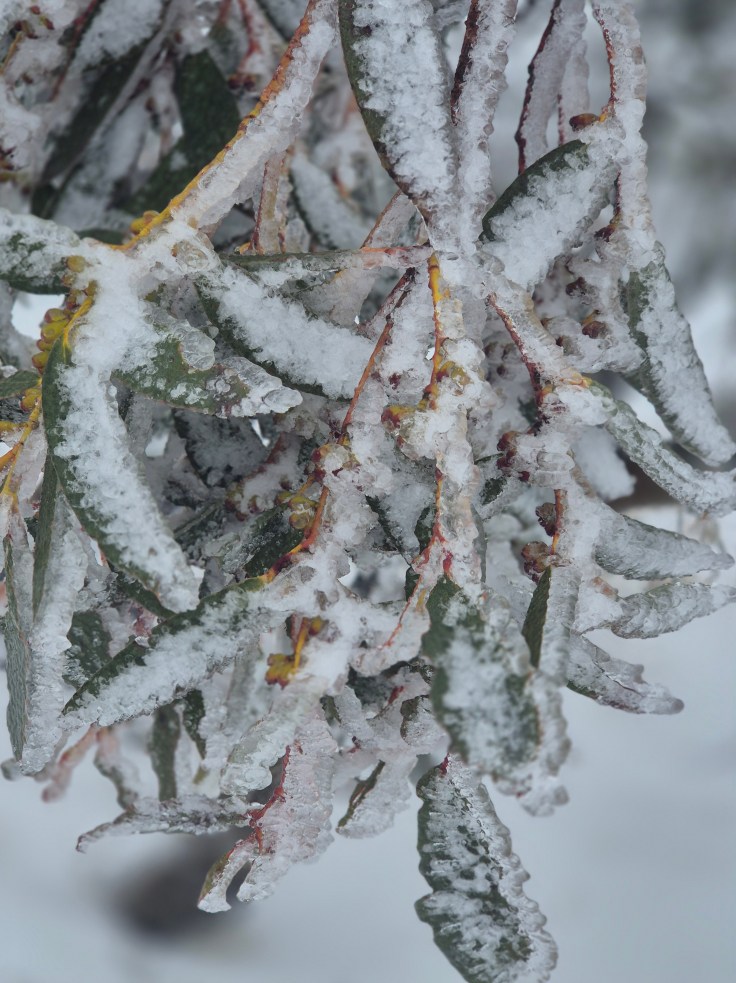
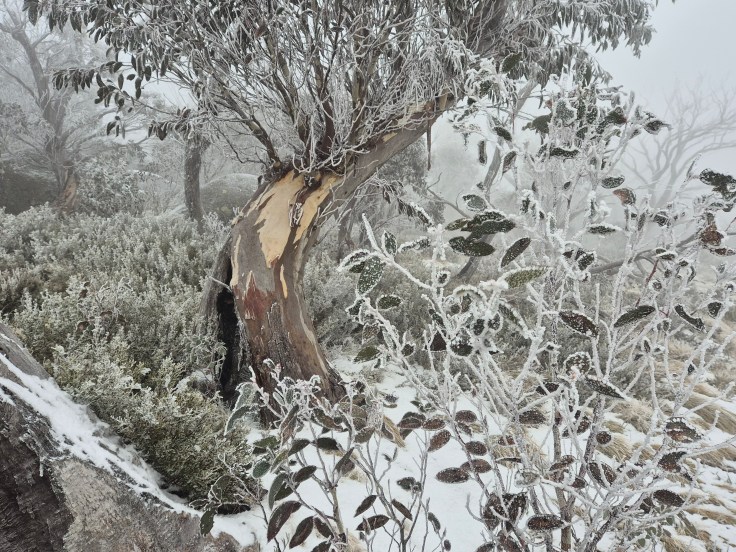
These images are from the wonderful snow of mid to late July 2024. Mt Hotham/ JB Plain area and Mt Wills.
And if you want to be cheered up, I highly recommend checking Mark Oates recent adventures in the mountains of lutruwita/ Tasmania on Instagram.




 Mountain Journal
Leave a comment