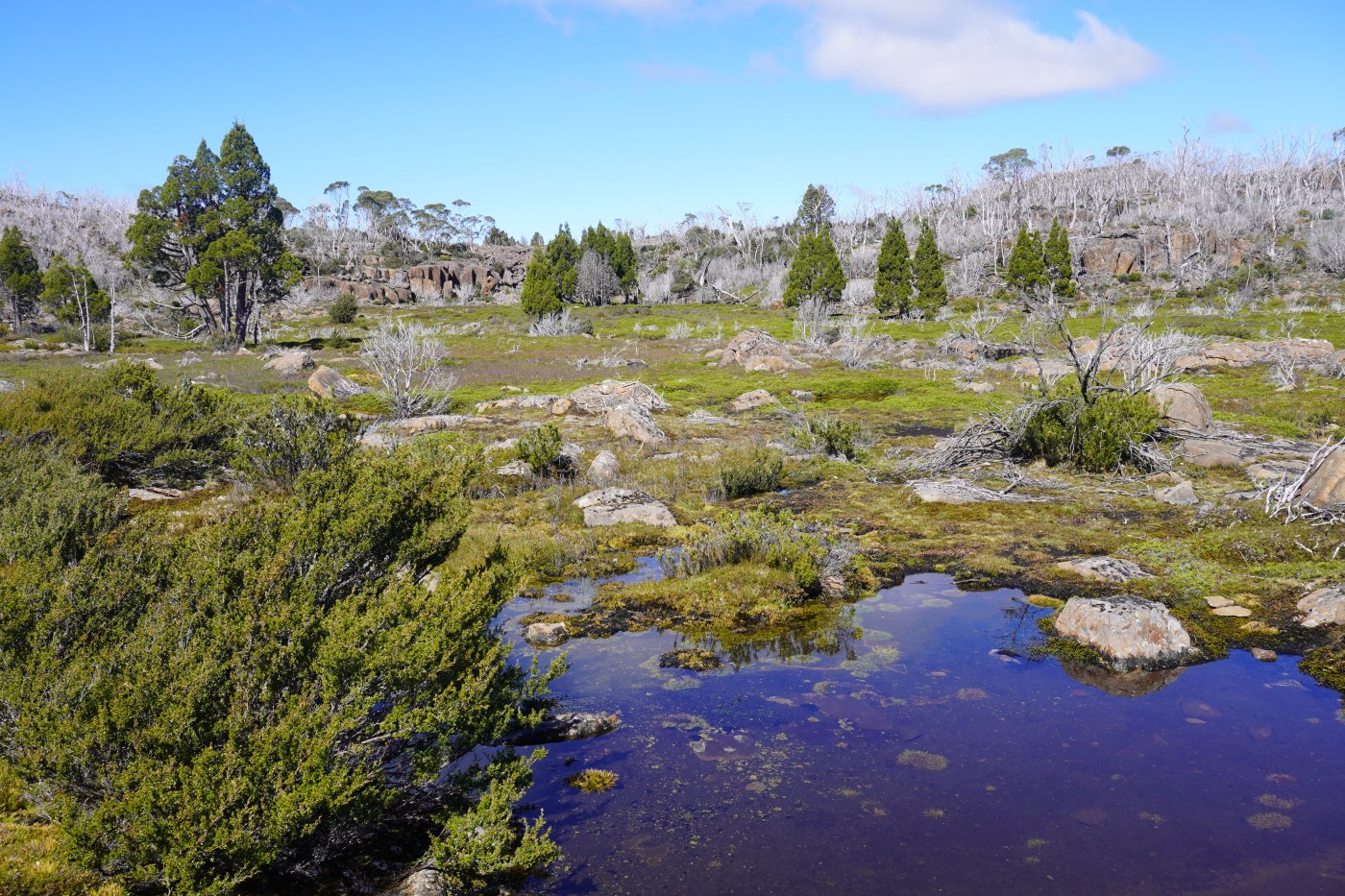
The mountains and wetter forests of lutruwita/ Tasmania are a stronghold of ancient vegetation that dates back to when the Australian continent was part of the mega continent of Gondwana.
We know that these areas of fire sensitive vegetation are at risk from changing fire regimes. We also know that climate change will bring ever more serious fire seasons, putting these remnant vegetation communities at greater risk.
The Tasmanian Planning Commission has just released the 2024 State of the Environment (SOE) Report, which, among many issues, highlights the threats posed to fire sensitive communities like the king billy and pencil pines.
The following is taken from the SOE report:
Fire plays a significant role in maintaining the health of many terrestrial ecosystems across Tasmania. However, some of our most iconic vegetation has evolved without fire and is vulnerable to its impacts.
Alpine vegetation communities that support conifers such as the king billy and pencil pines, rainforests and peatlands can be irreparably damaged by fire.
Climate change is increasing the susceptibility of many vegetation communities and soil types to impacts from severe fires. This includes the drying out of communities including wet forest, rainforest, alpine and moorlands, and vegetation on carbon rich organic soils.
Lightning strikes can ignite fires in remote or inaccessible areas which can develop into large-scale burns – for example, the Gell River, Great Pine Tier and Riveaux Road fires in 2018–19.
Climate-induced drying, in combination with increases in dry lightning strikes during summer, pose significant risks to alpine vegetation and fire sensitive communities which may survive a single fire in damaged form, but are unlikely to persist after repeated fires.
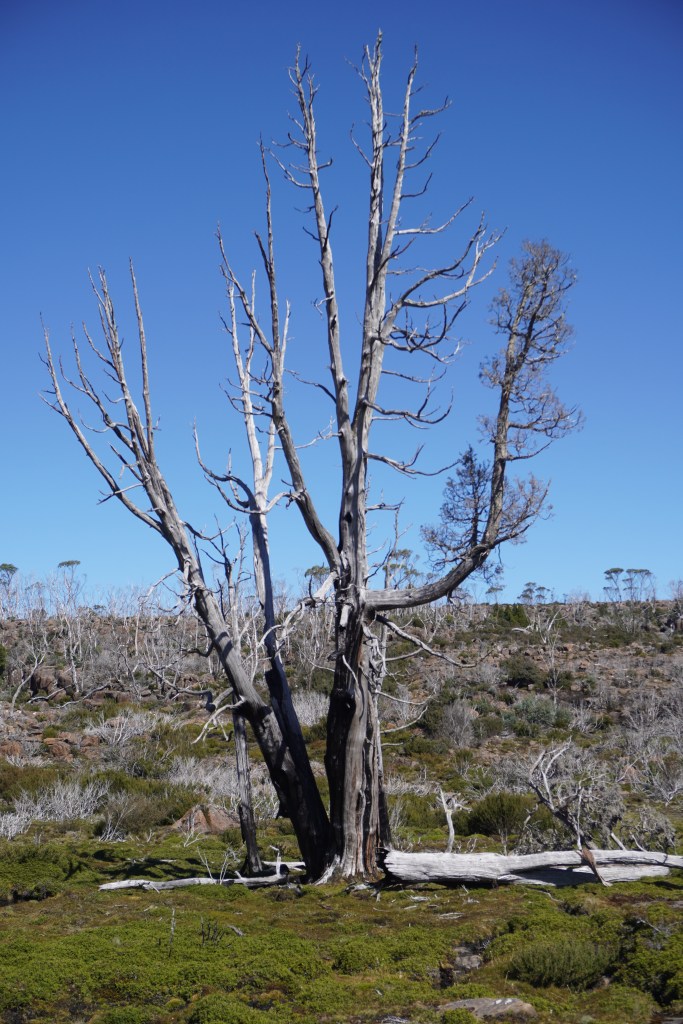
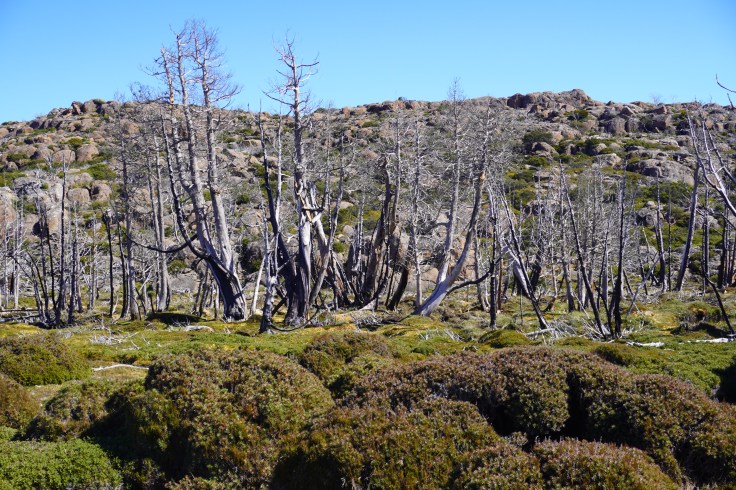
From 2009–2023 there were 6 fires that impacted the ecological fire group ‘Alpine with conifers’. The 2016 Lake McKenzie fire led to the death of over 60% of pencil pines (Athrotaxis cupressoides) across an area of 141 hectares. This fire was ignited by lightning strikes followed an exceptionally dry winter and spring. In addition to the direct impacts of the fire on pencil pines, the severity of the burn was found to substantially impact the ability of the species to recover after the fire by seedling establishment.
Where fire severity information is collected, the impacts of a fire on vegetation communities can be determined and the post-fire recovery can be assessed. For example, fire severity analysis undertaken in 2021 in response to the 2019–20 fire season indicated that many areas burnt during these fires were unlikely to lead to long-term ecosystem damage. This level of data collection provides a baseline for determining future burning frequencies and impacts associated with wildfires.
Routine collection and analysis of fire severity information is required to assist the understanding of post-fire vegetation community condition and recovery under both favourable and adverse fire conditions. This information can better inform and improve fire management and planning.
Under climate predications of drier and warmer conditions, bushfires pose a significant threat to infrastructure, resources, and natural values. Iconic fire-sensitive vegetation communities such as pencil pine forest and sphagnum bogs are particularly vulnerable.
Additional reading
There is research findings on the recovery of pencil pine groves on the Central Plateau which were burnt in 2016 available here.
Ecosystem collapse threatens pencil pine forests. Story here.
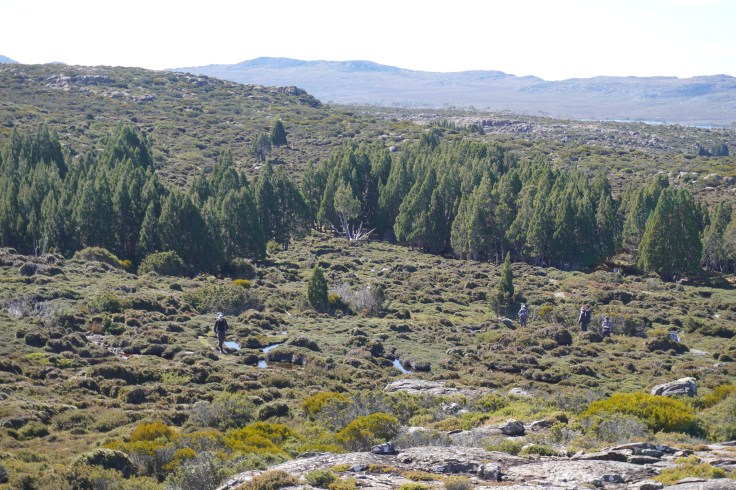
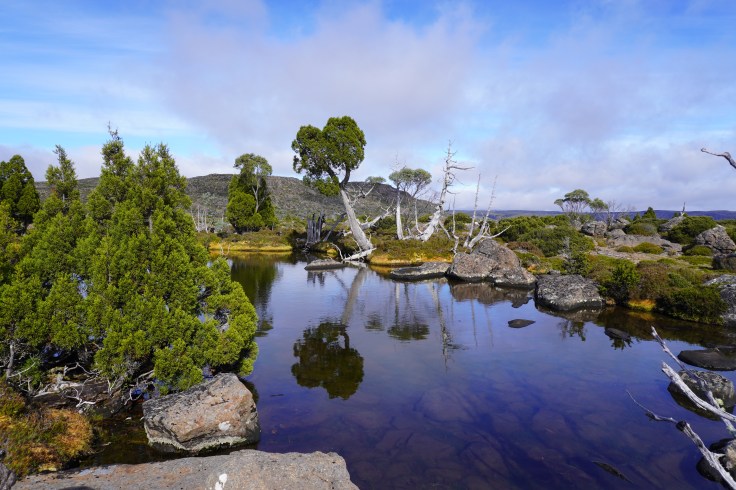
These image: fire damage around the Lake Mackenzie area, 2024.




 Mountain Journal
Leave a comment