The biennial State of the Climate Report, which is produced by the CSIRO and BOM has now been released. The report draws on the latest national and international climate research, monitoring, science and projection information to describe changes and long-term trends in Australia’s climate.
Among a vast amount of information, there are some clear details relevant to mountain environments.
The key points about changes that have happened in recent decades are:
- Australia’s climate has warmed by an average of 1.51 °C since national records began in 1910.
- The warming has led to an increase in the frequency of extreme heat events over land and in the oceans.
- In the south-east of Australia, there has been a decrease of around 9% in April to October rainfall since 1994.
- Heavy short-term rainfall events are becoming more intense.
- There has been a decrease in streamflow at most gauges across Australia since 1970.
- There has been an increase in extreme fire weather, and a longer fire season, across large parts of the country since the 1950s
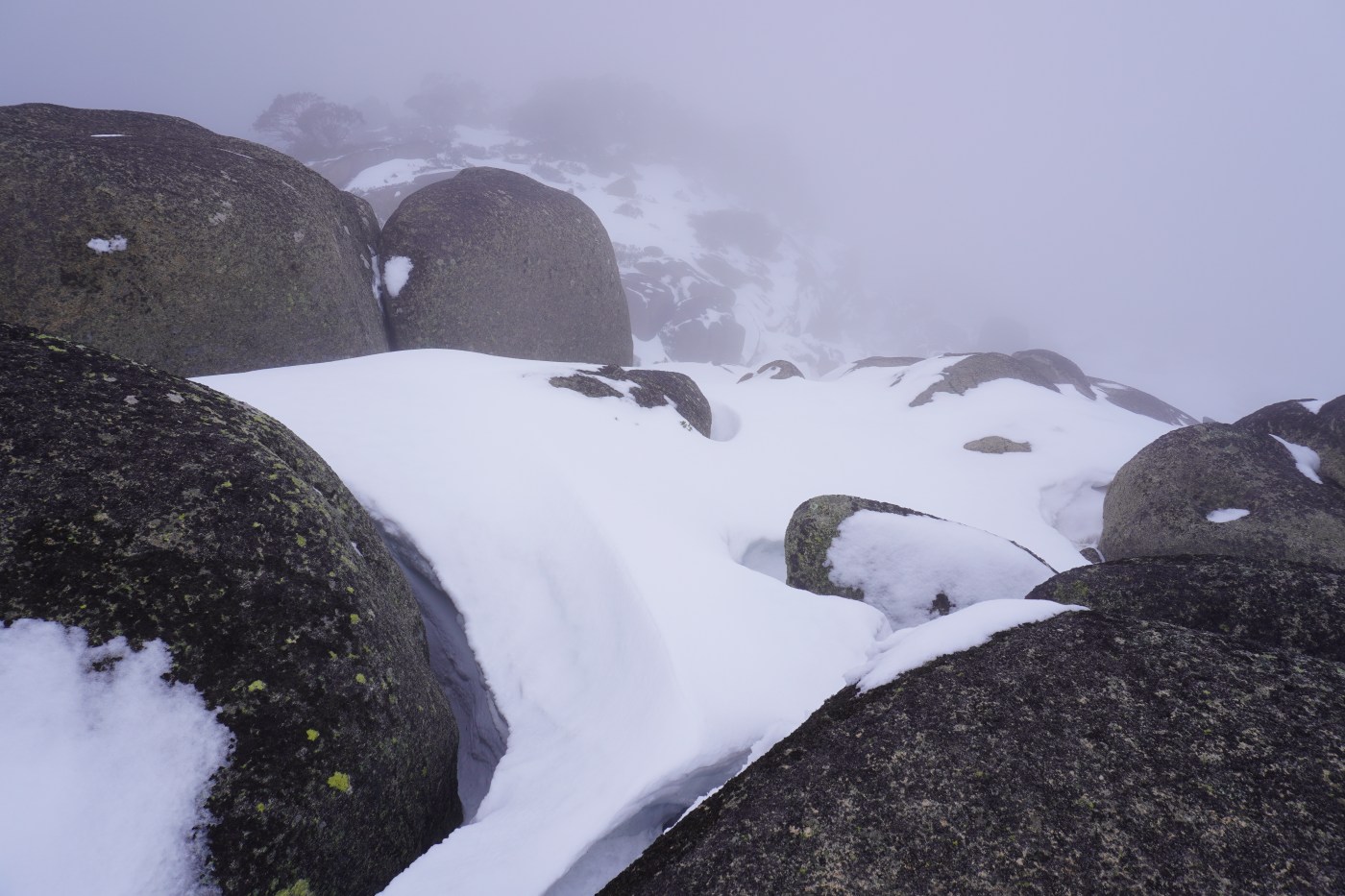
- Snow depth, snow cover and number of snow days have decreased in alpine regions since the late 1950s.
Snow
When it comes to mountain environments, it is clear that climate change is impacting on snow pack. The section on snow in the report says:
Maximum snow depth, snow cover and number of snow days have all decreased in Australian alpine regions since the late 1950s.
Downward trends in maximum snow depth have been observed for Australian alpine regions since the late 1950s, with the largest declines during spring and at lower altitudes. Downward trends in the temporal and spatial extent of snow cover have also been observed. The number of snowfall days has also decreased. Years with persistent deep snow cover have become rare.
Snow depth is closely related to temperature, and the observed declines are associated with global warming trends. Decreasing trends in snow depth are greater in the late-season month of September than during winter. Maximum snow depth remains highly variable and is strongly influenced by rare heavy snowfall days, which have no observed trends in frequency.
What the report says about Fire weather
Excert from the report:
There has been an increase in extreme fire weather, and in the length of the fire season, across large parts of Australia since the 1950s. This has led to larger and more frequent fires, especially in southern Australia.
The influence of climate change on bushfires varies across Australia, depending largely on the kinds of vegetation (fuel) which grow in each region. Climate change is driving changes in temperature, rainfall, and relative humidity, all of which influence fuel availability, fuel dryness, fire weather, and ignition sources.
Fire weather (often hot, dry and windy) is a significant contributor to fire risk in forest fuel areas of southern and eastern Australia. Conversely, wetter conditions in northern and central regions results in abundant grassy fuel loads, which is a key contributing factor to fire risk in those regions.
There is a notable trend in some regions of southern Australia towards more days with weather that is conducive to generating thunderstorms within smoke plumes. These fire-generated thunderstorms can lead to extremely dangerous fire behaviour, such as during the Black Summer fires (2019–2020), the Victorian Black Saturday fires (2009), and the Canberra fires (2003). New fires can be ignited from lightning strikes produced by these thunderstorms.
The report also notes that:
Lightning that occurs without significant rainfall (known as ‘dry lightning’) is a major source of natural ignition for bushfires. Understanding changes to bushfire ignition in Australia, including the frequency of dry lightning, is a current area of active research.
You can read the report here.




 Mountain Journal
Leave a comment