Each year it gets a little harder to ignore the impacts of climate change. For us mountain folk, the obvious signs are the more erratic winters, the dwindling snowpack, and the longer fire seasons that, increasingly, disrupt our summers.
Every natural ecosystem on the planet is being impacted by climate change. In the Australian high country, the two most obvious victims are alpine ash and snow gums. It is impossible to miss the walls of grey dead trunks and the thick and flammable regrowth as you drive up into the mountains from any valley town. Climate change is making our fire seasons longer and snow gums are increasingly being burnt beyond their ability to recover. Research from Latrobe University[1] shows that ‘long unburnt’ snow gums are now ‘exceedingly rare’ in the Victorian Alps, comprising less than 1% of snow gum forests.
And dieback is now killing thousands of trees. Dieback is a natural phenomena, caused by a native beetle. However, climate change appears to be ‘super charging’ the scale of the impact. This is because winters are shorter and warmer (meaning more beetles survive the cold months) and summers are hotter and drier (meaning trees are more water stressed and less able to produce the sap that acts as a defence against beetle infestations).
Recently it was announced that coral bleaching was being observed in reefs off the coast of Western Australia. As with earlier bleaching events on the Great Barrier Reef, there was considerable media attention and debate around how to halt future damage. Sadly, the loss of snow gums, which has the potential to cascade into a mass scale ecological collapse, barely gets a look in. Yet the losses are escalating.
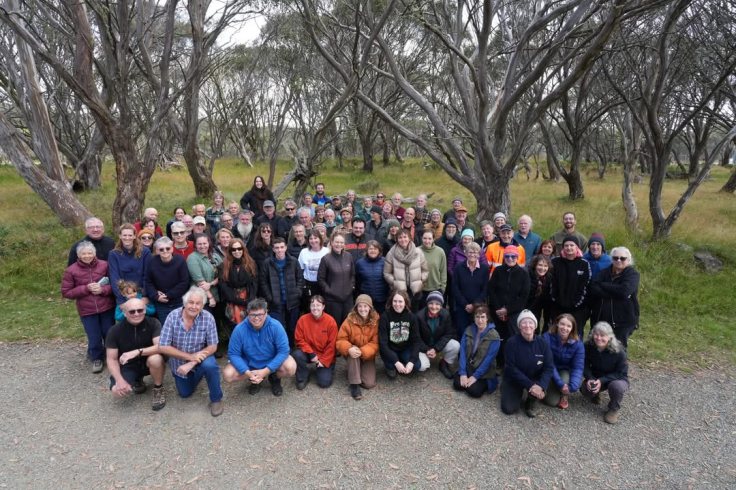
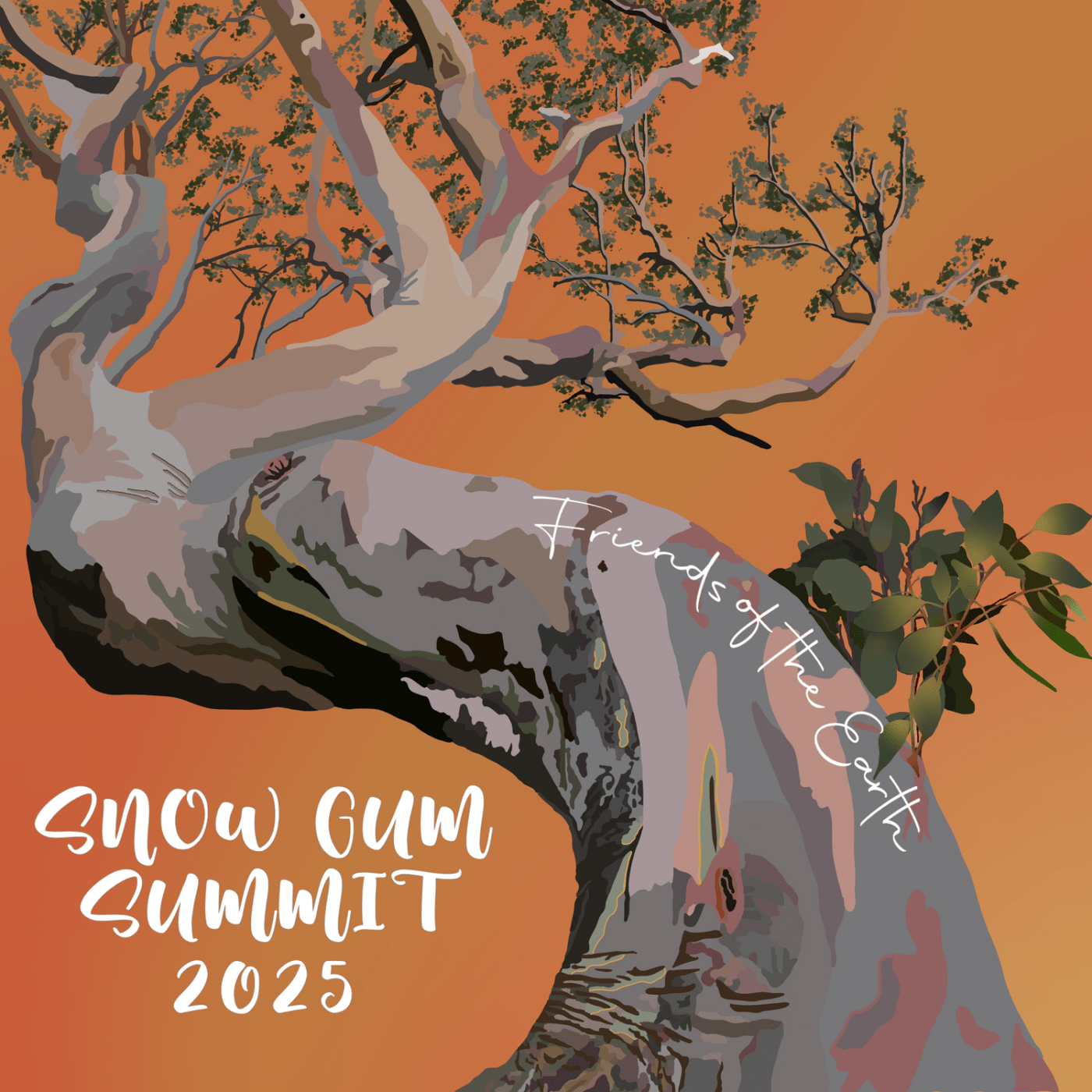
In response, Friends of the Earth decided to host the first ever ‘snow gum summit’ to try and make the threats to snow gum communities a mainstream issue. The aim was to bring experts, First Peoples, land managers and mountain lovers together to address the twin threats of fire and dieback and delve into possible solutions. It was held at Dinner Plain in north eastern Victoria in February 2025.
The summit hosted 90+ people and recognised snow gums as an iconic feature of the Australian Alps. Mountain environments are integral cultural landscapes for First Peoples and are significant in the hearts and minds of many Australians. Australia’s Alpine regions are globally unique and also support local economies and play a huge role in south east Australia’s water security, with alpine and high elevation areas responsible for 20-29 percent of the Murray Darling Basin’s flow. This water from the Alps is worth an estimated $9.6 billion per annum – in droughts it is even more valuable. The presenters covered the question of ‘what are the trends with fire’ and how climate change is driving more intense fire seasons, and the threat of dieback caused by the longicorn beetle.
Emerging and possible solutions were identified, such as fire response procedures that could protect snow gum woodlands and build their resilience to future bushfires by excluding fire as these systems recover. Early detection and rapid response to fires from lightning was identified as a practical thing we can do to reduce the impact on snow gum woodlands.
Fire was also explored via a Cultural Landscapes approach, and traditional owners shared their stories of connection to, and observation of, Country changing in response to fire, with some poignant historical events observed for context.
Speakers noted that, at present, there is no simple solution to the spread of dieback. However, Matthew Brookhouse from the ANU explained the use of pheromones to confuse mating longicorn beetles, a promising avenue to address the currently uncontrolled spread of snow gum die-back.
At the end of the summit, the Snow Gum Summit Declaration was crafted, calling for immediate action to mitigate the risks posed by a warming climate, fires and dieback.
It is clear that we still have a lot of work if we are to get state and territory governments interested in threats to snow gum woodlands and forests. But the summit felt like an important moment that brought together many people who care for the high country and who want to see this iconic species recover and thrive.
Take action
You can find a report on the summit here.
https://www.melbournefoe.org.au/snow_gum_summit_2025_recap
You can send a letter to the Victorian environment minister, urging him to act to protect snow gums, here.
https://www.melbournefoe.org.au/protect_our_snow_gums




 Mountain Journal
Leave a comment