As the process of a Treaty between First Peoples and the state of Victoria gets closer to agreement, I keep wondering about what it will all mean for the lands that we love. With an end to native forest logging, there has been two largely parallel processes underway. On the one hand, environmentalists have been pursuing their vision of larger national parks. On the other hand, First Nations people are asserting their rights to manage their traditional Country.
As a society, we really haven’t grappled with the changes in power that is currently underway in Victoria. These are a few of the complex thoughts and feelings that I have been sitting with in recent months.
—
The Yorta Yorta People lodged Victoria’s first native title claim in 1994. In 1998 Justice Olney ruled against the claim, saying that the ‘the tide of history has indeed washed away any real acknowledgement of their traditional laws and any real observance of their traditional customs’
After generations of struggle, Yorta Yorta weren’t about to give up. They appealed to the High Court, but this was rejected in 2002. However, in June 2004, the Yorta Yorta were recognised by the Victorian Government as Traditional Owners, and entered into a joint management agreement over 50,000 hectares of Crown land in the state’s north including Barmah State Forest, Kow Swamp and areas along the Murray and Goulburn rivers [1].
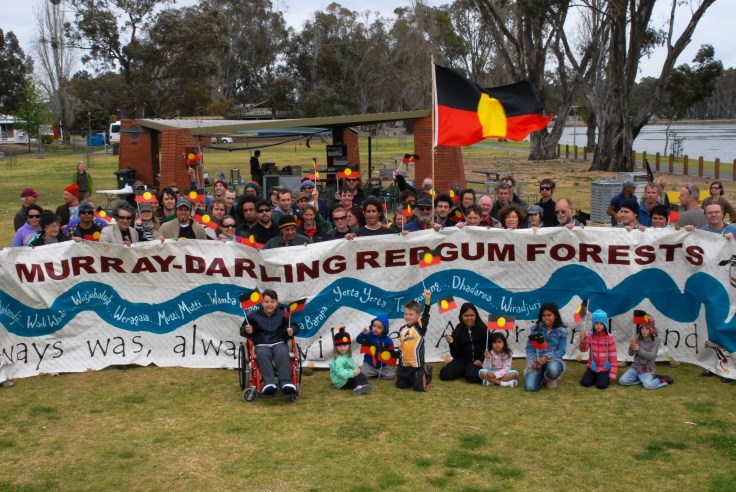
At the time, the organisation I work for, Friends of the Earth, was campaigning as allies in support of Yorta Yorta Land Back/ land justice aspirations. At the time, a formal green/ black alliance was unusual enough in the Victorian context that it still stands out as a significant moment in the development of the environmental movement in the state.
There have been many instances around the country where First Nations people have led strong environmental campaigns. The long efforts to stop the Jabiluka uranium mine in the Northern Territory, the decades of resistance to a radioactive waste dump being imposed on First Nations communities in SA, the NT and WA, and the marathon campaign to stop the Adani Carmichael coal mine in Queensland all stand out as strong examples. However, there was much less obvious connection between First Nations people and conservationists in the long campaign to protect native forests from logging in Victoria.
There are varied and often complex reasons for this, and there are many examples of strong relationships forming and solid collaboration. These alliances went from efforts to support KerrupJmara aspirations for the Cobboboonee forest in far western Victoria to collaboration to create the Emerald Link reserve in far East Gippsland. But it also seems fair to say that, as a whole, engagement with First Nations – specifically traditional owner groups with an interest in forested areas – was minimal over several decades.
After the logging
Now, after an end to native forest logging on 1.8 million hectares of public land in the east of the state was announced in 2023, traditional owner groups find themselves having a decisive hand in suggesting ‘what next’ for managing public native forests in coming decades. There are a range of reasons for this: the native title arrangements in place with a number of groups, a supportive state government, and the process of developing a state wide Treaty between traditional owners and the state government.
How has the forest conservation movement responded to the question of ‘what next’? Mostly by continuing business as usual – pressing for tenure outcomes that reflect their aspirations – which in most instances means the creation of new national parks. But there are other ideas now on the table – including the Cultural Landscape strategy which has been developed by some traditional owners and which is intended to be a guiding document which can ensure First Nation aspirations for Country are reflected in decisions about ‘whats next’.
It seems to me that, as a whole – and with exceptions – the forest conservation movement is not equipped to respond meaningfully to First Nation aspirations because it really has not accepted that forested lands were never a wilderness. Rather that they were a peopled landscape that had been crafted over thousands of generations. There is no shared space between the movement and First Nations people that allows a starting point in discussing what next.
This is because we (being forest activists) largely continue to see wild nature as being self contained and separate from humans. Nature is best if left to its own devices – as was said recently in an online forum by a prominent member of the forest conservation movement ‘Nature knows best, so it is best to also let it take its course in a national park’. This, of course, has led to the simplistic and incorrect charge that conservationists just want to ‘lock up’ land and then leave it – something that is not borne out if you actually read the policies of key conservation groups like the Victorian National Parks Association (VNPA). But there is a resonance with this view that we should ‘let nature do its thing’ that is held deeply among many individuals in the movement.
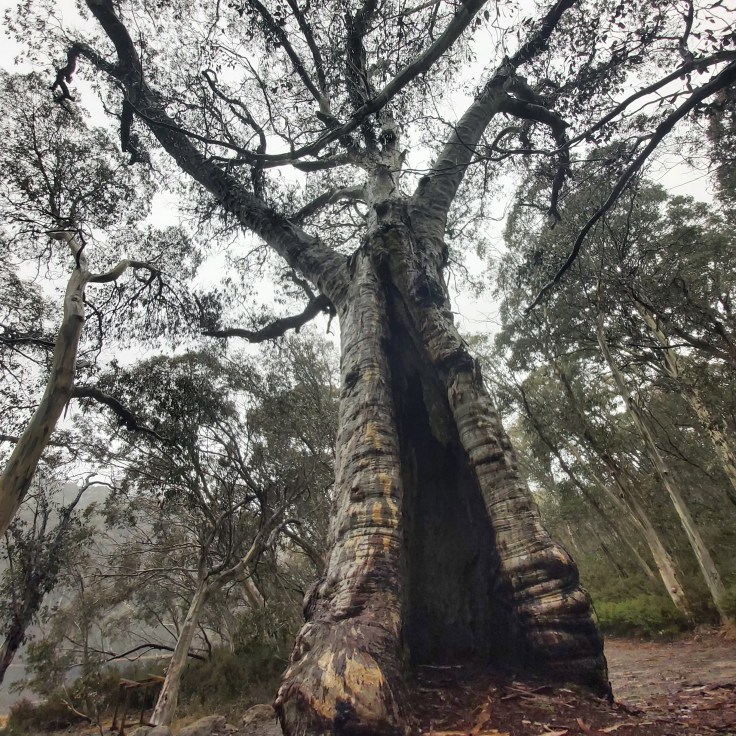
In contrast First Nations people see land as Country that is, inherently deeply connected with humans.
First Nations people rarely appear in the stories that are told about campaigning to protect forests. This is partly just because it has been in the interests of the dominant coloniser culture to ‘forget’ about the brutal occupation and dispossession that came with the Europeans. If you look at the histories that have developed around our public estates in Victoria – the forests, woodlands and other country that is still in public hands – First Nations people are largely absent. To take the example of Victoria’s High Country – the higher mountainous areas in the north east of the state, there is endless recognition of the cattle people – the families who grazed stock on public lands – yet almost no mention of First Nation connection to place.
This is changing now – primarily because traditional owners are reasserting their connection to country. But this absence is emblematic of the ‘disappearing’ that has happened also across the forest conservation movement. Aboriginal people are largely absent from the ‘mythology’ of the movement.
Back in 1974, a range of conservation groups published The Alps at the Crossroads: The Quest for an Alpine National Park in Victoria. It was a hugely significant work, which inspired and influenced the movement that was growing at the time to gain protection for the high country. It opened my mind to the possibility of a vision that would see wild nature protected from ongoing destruction. While the book contained many pages on the pioneering mountain cattle families and miners and loggers, it barely mentioned First Nations people and their connection to the north east. It did however, include considerable coverage on the thinkers who created the wilderness ethos that has guided forest conservation ever since.
There is, of course, a deep tradition in western conservation ‘wilderness’ thinking, and this has been unpacked and critiqued by indigenous people for decades.
It is probably fair to say that many younger activists are ignorant of the ‘founding fathers’ (yes, mostly men) of modern conservation thinking. Yet their presence casts a long shadow over our current thinking and approaches to protecting country.
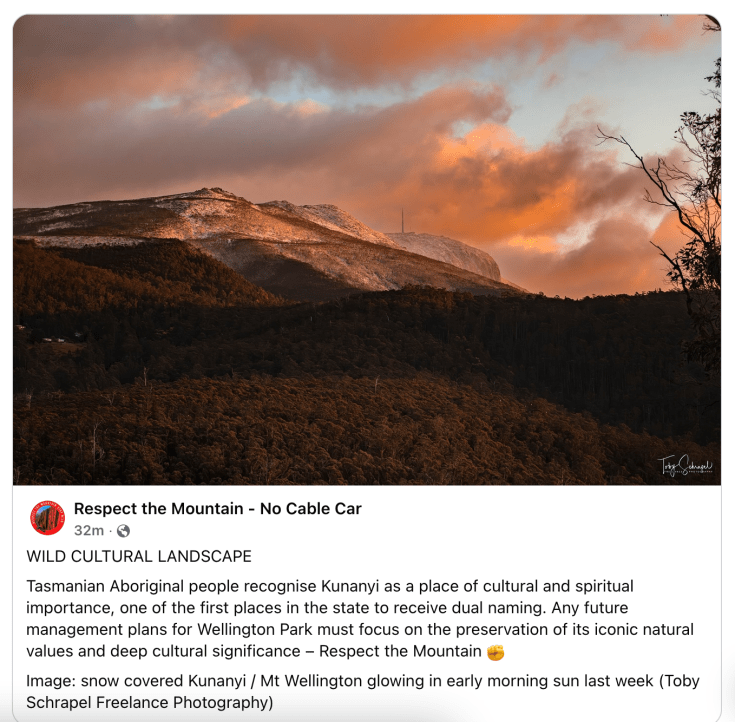
As an activist, I was raised in the western wilderness tradition: I read Henry David Thoreau and the poet Walt Whitman, which led me to the conservationist John Muir, who advocated for the protection of the Sierra Nevada mountains of California through the creation of Yosemite and other national parks. In my late teens, when I went on month long walking trips into the mountains of Tasmania, I sought wild, untrammelled nature. There were no people in those landscapes, beyond the presence of other bushwalkers and a dim memory of miners, explorers and loggers who had passed through before. Although I didn’t know the term, Tasmania was indeed Terra Nullius to me – wild land that didn’t bear the marks of humanity.
How little I knew. Even during the Franklin campaign in south western Tasmania, the presence of an ‘indigenous angle’ seemed novel and slightly out of step with the broad tide of consensus within the movement – which was that the south west was a grand wilderness that needed to be protected from humanity.
Forty years on, we are at a very different place. Many use the term lutruwita in conjunction with Tasmania to describe that state. First Nations names are common, cultural burning has been reintroduced, and Aboriginal land claims continue. The myth that ‘Tasmanian Aborigines’ are gone has been consigned to the dust bin of history.
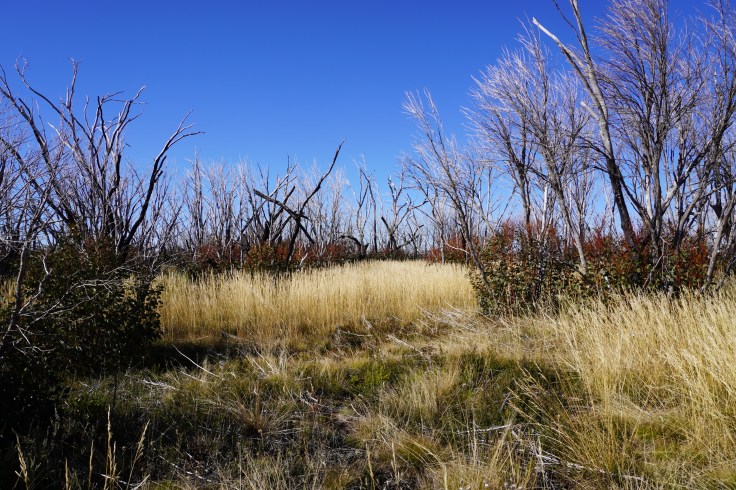
Yet on a deep level the movement has not been able to bring the wilderness world view into a frame that also includes the fact that lutruwita was always a peopled place, with an ecological landscape that was a co-creation between people and nature. The classic point that underscores this fact is that conservationists have dedicated decades to protecting cool temperate rainforests in the north west of the state in an area where research demonstrates that, pre invasion, these forests largely didn’t exist at scale [2]. First Nations people managed the land through burning and kept the rainforest at bay, largely confined to river banks. In their absence, the forests have come back, transforming the land and capturing our imagination.
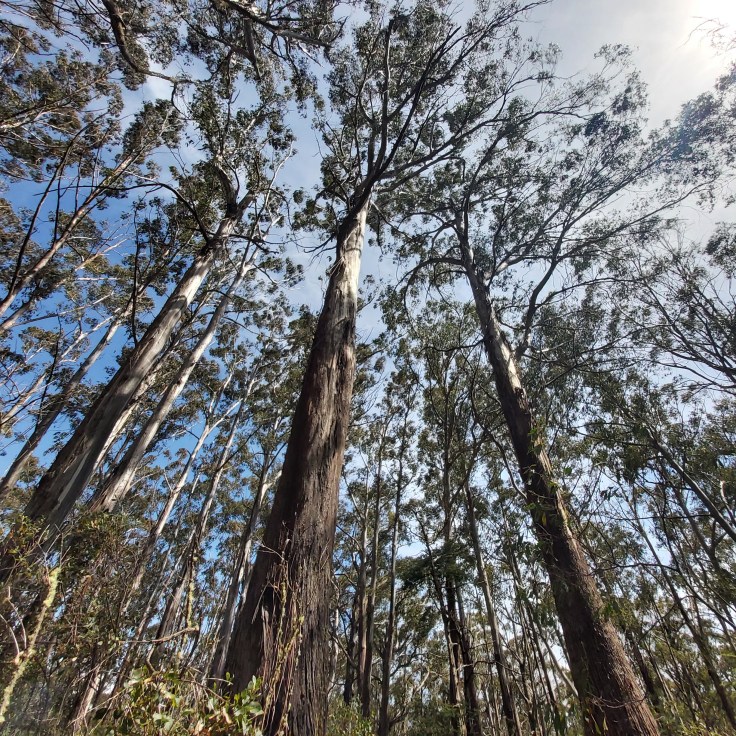
So, where do we find the balance between what was, what is, and what could be? In my heart, I am on the ‘side’ of the Gondwanic vegetation that has reclaimed the hilly lands of the north west. We need more rainforest, not less. We also live in a changed world, where human induced climate change threatens the very survival of the Gondwanic remnants – so simply in conservation terms, we need more intervention to protect these forests from threats like fire, not less. The idea of ‘letting nature be’ just doesn’t make sense if we wish to see the landscapes we love continue to flourish in a hotter, drier 21st century. Yet the prospect of stepping back and allowing the rainforests to crowd out from the gullies surely fills many of us with joy. I am constantly struck by the complexity of this great question: how do we find space for First Nations people to reassert their long connection and sovereignty, in a way that nurtures the continued processes of wild nature?
First Nations people have always lived in, and with, Country. In contrast, many non indigenous people see nature as being something ‘out there’ and which can be cared for or mistreated. As poet Gary Snyder once noted, we see land as being good (useful for food production), wild (not particularly good for human use) or sacred, and we divide the land into different uses accordingly. Many people live a fully urban life and are entirely happy about that. But many of us need a sense of wild nature, and the connection and awe that often comes as we experience grand landscapes. I agree with the author Edward Abbey, who said:
Wilderness is not a luxury but a necessity of the human spirit, and as vital to our lives as water and good bread. A civilization which destroys what little remains of the wild, the spare, the original, is cutting itself off from its origins.
If we can recognise that there is ‘wildness’ in land – and that the land is self organising and independent of people – we can keep ourselves open to the sense of Wild that we crave. At the same time, we can understand that people have always lived in connection with place and that over time this relationship has become reciprocal. In this sense there is no unpeopled Country on the planet (except for a few higher ranges, ice caps and the continent of Antarctica). But there is Orphan Country – land that has no one left to care for it or who has connection to it.
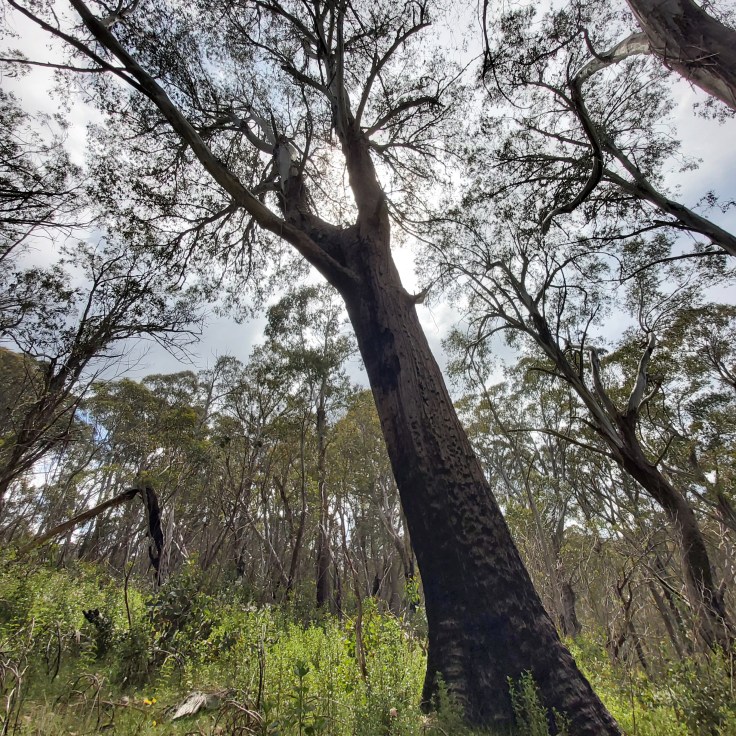
I still crave the wild. I need cold mountain mornings and silence and big views. But I find ever more people sharing my mind and my campsites as I listen for the echoes of the people who were here before. Before the occupation, there would have been places where people rarely travelled. Camp and home and hunting and food places would have been connected, but as imagined by Ursula le Guin in her post industrial collapse novel Always Coming Home, there always would have been places that weren’t worked in the same way. Those remoter spots in the hills, the no burn country of the tall wet forests, the stony country with little water. Maybe it is possible to have both peopled Country and the wild.
We are now stepping towards a moment in time where the forest conservation movement in Victoria can redeem its long disregard for First Nation aspirations. We have our lists of national parks that we want to see created. Ideally I want the high country to become part of a massively expanded Alpine National Park, under co-management of traditional owners. We all have a plan. But maybe it is time to stop talking and start listening. I acknowledge the fear that comes with letting go, and accepting diverse and different world views. But I also have trust that doing so will take us somewhere better than where we currently find ourselves.
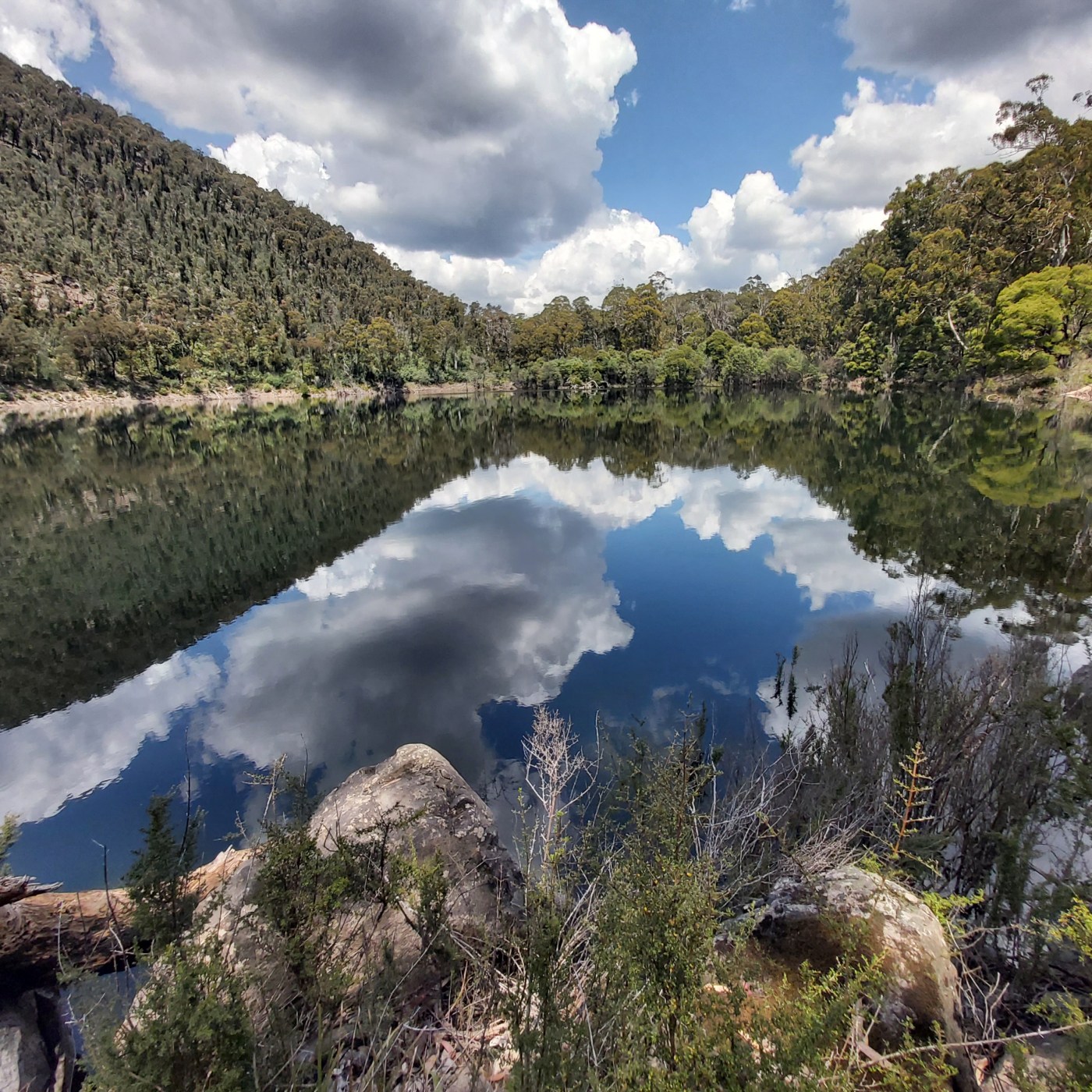
HEADER IMAGE: Lake Tali Karng, Gippsland. There is a reflection on the changes happening around the lake here.
[1] https://www.fnlrs.com.au/history-of-native-title-in-victoria
[2] https://www.sciencedirect.com/science/article/pii/S0277379124000738




 Mountain Journal
Leave a comment