Search

Mountain Journal

Environment, news, culture from the Australian Alps

Author

Cam Walker

I work with Friends of the Earth, and live in Castlemaine in Central Victoria, Australia. Activist, mountain enthusiast, telemark skier, volunteer firefighter.

The fire that launched a campaign

Do you remember how intense Black Summer was? With much of Gippsland already on fire, on December 31, 2019, a dry lightning storm passed across the high country of north eastern Victoria and East Gippsland, starting hundreds of new fires. Forest Fire Management Victoria (FFMV) crews and aircraft swung into action, and did their best to quell the many small fires that were slowly consuming individual trees.

As a volunteer with the Mt Hotham – Dinner Plain fire brigade, I headed up the hill as the area was evacuated. There were four fires around Dinner Plain, all small and slowly consuming the unfortunate trees that had been hit by lightning.

Continue reading “The fire that launched a campaign”

Mountain Journal turns 16!

Memory can be a strange thing. Special and significant moments, experiences and events lodge in our mind and when something triggers their presence they can feel as clear and fresh as the moment you experienced them for the first time. They can be cornerstones around which you build your life, those memories of the moments and times and events that give life meaning and joy, or which strip away the day-to-dayness of ‘normal’ life to reveal a truth.

The dilemma, of course, is when we extrapolate or equate a personal memory or experience with what is happening in the real world. ‘FeelPinons’ drive a lot of the debate in the online world and anecdotes can get confused with data and trends.

So, there was a strange debate about last winter. Forecasts were for a late start to winter and the likelihood of warmer than average temperatures. But by the time June arrived, we were blessed with wonderful and repeat snow storms that delivered the goods. After a couple of very mediocre winters everyone needed a good winter. It was good for resort and valley town businesses and workers and it was wonderful for the spirits of everyone who craves the cold and deep snow pack. And it dragged on in the best possible way, with lines in the backcountry until late in spring.

In that blurring of memory and data, of lived experience and the need for the media to run hyperbolic headlines about ‘the best winter in years’, its hard to actually say if it was a ‘great’ winter or an ’average’ one.

You can read the full reflection here.


AI and fire fighting. What’s going on?

Whether it is in a national park or other public land, a paddock or a house fire, one of the most important aspects of stopping fires is to get on to them quickly. The sooner that firefighters arrive, the smaller the fire will be and the easier it is to contain. In Victoria, one of the ways we try to keep fires small during high fire danger days is by launching aircraft as soon as a fire is detected. Often aircraft can then get on scene and start to contain the fire before local brigades arrive. This system (called pre-determined dispatch or PDD) was developed as part of the  response to the Victorian Bushfire Royal Commission (VBRC), and was based on a model used in a number of other states. Under PDD, fire fighting aircraft are mobilised as soon as a call out occurs for local fire brigades with a trigger needed to authorise the launch of aircraft.

Other ways we get onto fires quickly includes things like deploying remote area firefighters onto new start fires, inserting rappel crews from helicopters, and sending multiple vehicles at the same time to ensure there are enough resources to tackle the fire. We use real time analysis of satellite images and on some days put aircraft up for surveillance (rather than firefighting) purposes. There is lots of chatter about using drones that could carry water or fire retardant that could be sent to put out small new start fires. And of course, we have traditionally relied on staffed fire lookout towers to spot fires while they are small.

In recent years Artificial Intelligence (AI) has been billed as being a new option for spotting new start fires quickly.

Continue reading “AI and fire fighting. What’s going on?”

Mt Bogong then and now

The theme for the 2026 edition of Mountain Journal magazine will be on ‘our changing mountains‘, which hopes to delve in to some of the many changes that are obvious to anyone who visits the high country on a regular basis.

In the first installment / teaser for the 2026 edition, Stephen Whiteside reflects on a trip up Mt Bogong in 1976 and a recent return to the mountain, and what has changed and what has stayed the same.

Continue reading “Mt Bogong then and now”

First summer fire in the VIC mountains

The awful fires of Black Summer linger in our memory. The land slowly recovers. Since then, things have been fairly quiet in recent summers in the mountains of the mainland high country. With the first mountain fire of the season now contained, and vast areas of fire damaged forests in recovery from previous fires, it is essential that with any new start fire the authorities:

  • Get on to new start fires as rapidly as possible
  • Escalate the availability of resources to contain the fire, rather than ‘letting it burn’
  • Ensure that fire management plans highlight the need to exclude fire from fire sensitive or recovering areas and the protection of ecological as well as human assets.

Continue reading “First summer fire in the VIC mountains”

Snow gum summit tickets now on sale

The second snow gum summit will happen on Ngarigo Country in Jindabyne over the weekend of March 14 and 15 next year.

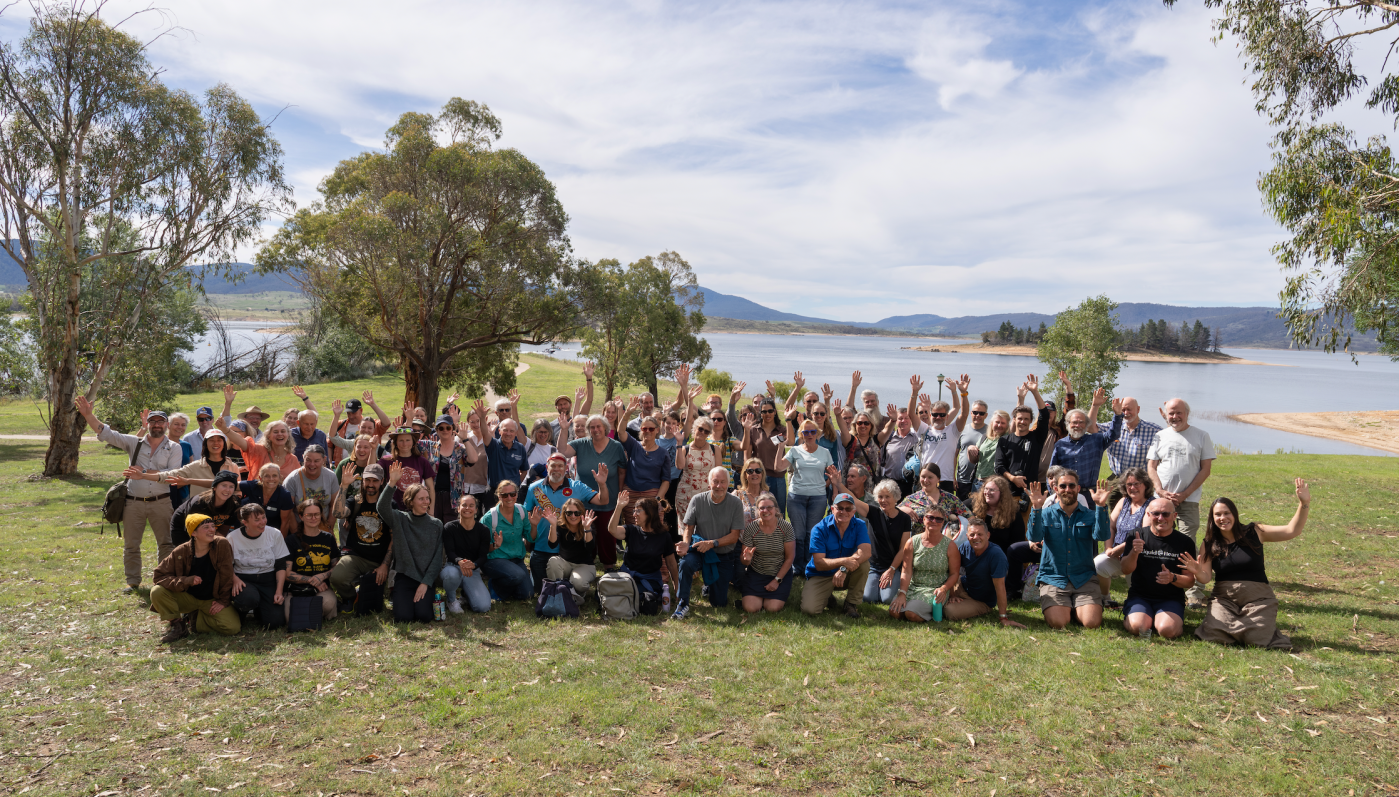
The first summit happened at Dinner Plain earlier this year, attracting about 100 people, who heard from wonderful speakers.

Tickets for the 2026 gathering have just gone on sale. Like the 2025 event, this is expected to sell out, so grab one today if you’re planning to attend.

Continue reading “Snow gum summit tickets now on sale”

Can you help us to print and distribute mountain journal mag 2026?

We produce Mountain journal magazine once a year, and distribute 1,000 copies for free in breweries, cafes, gear shops, and info centres in valley towns and resorts between Melbourne and Canberra, plus in mountain huts across the high country. It is intended for outdoors people who love the mountains. The magazine is also produced as a PDF and freely available on the website (here).

We now have a theme for the 2026 edition: managing change in the mountains, which will aim to delve into the complex issues of new people and groups who are now visiting the mountains, and how we can welcome these groups while ensuring everyone has a good and safe time in the hills.

Now we need to find the funds to make it happen.

Continue reading “Can you help us to print and distribute mountain journal mag 2026?”

We have a theme for mountain journal 6 & would love your contributions

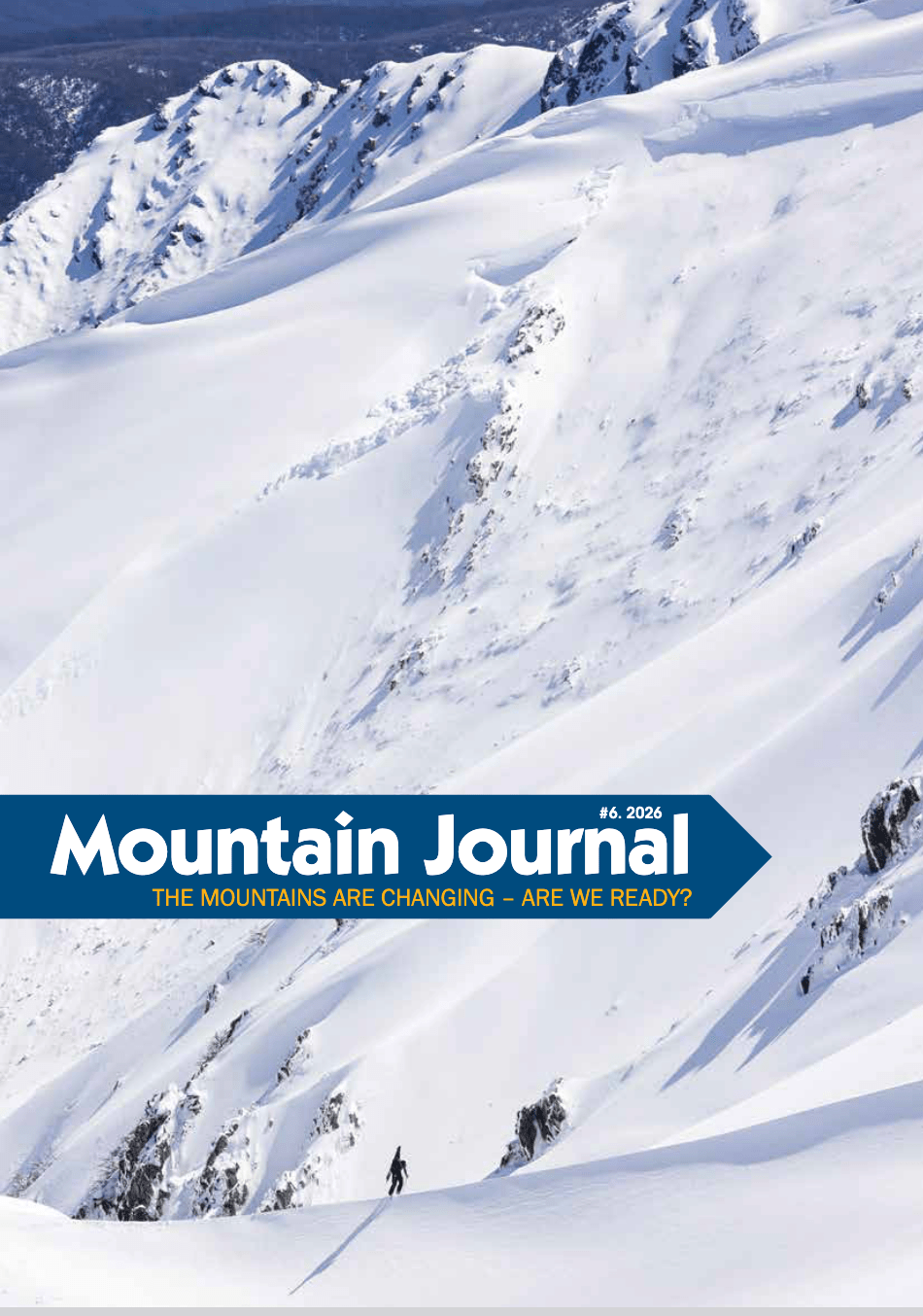
Mountain Journal magazine theme – 2026

The mountains are changing – are we ready?

Change is everywhere. As the snow line slowly but steadily climbs higher up the mountains, climate change is impacting on winter as we know it. Erratic weather, boom and bust snow cycles, the borderline rain that should be falling as snow. Businesses and mountain staff feel the brunt of these more unpredictable days. Winter ice skating and regular snow on the lower peaks is already fading into the distance as we move into an uncertain century of unprecedented warming. In summer we often face the challenges that come with longer and more intense fire seasons.

Continue reading “We have a theme for mountain journal 6 & would love your contributions”

Fire: how do we control things when we can’t control things?

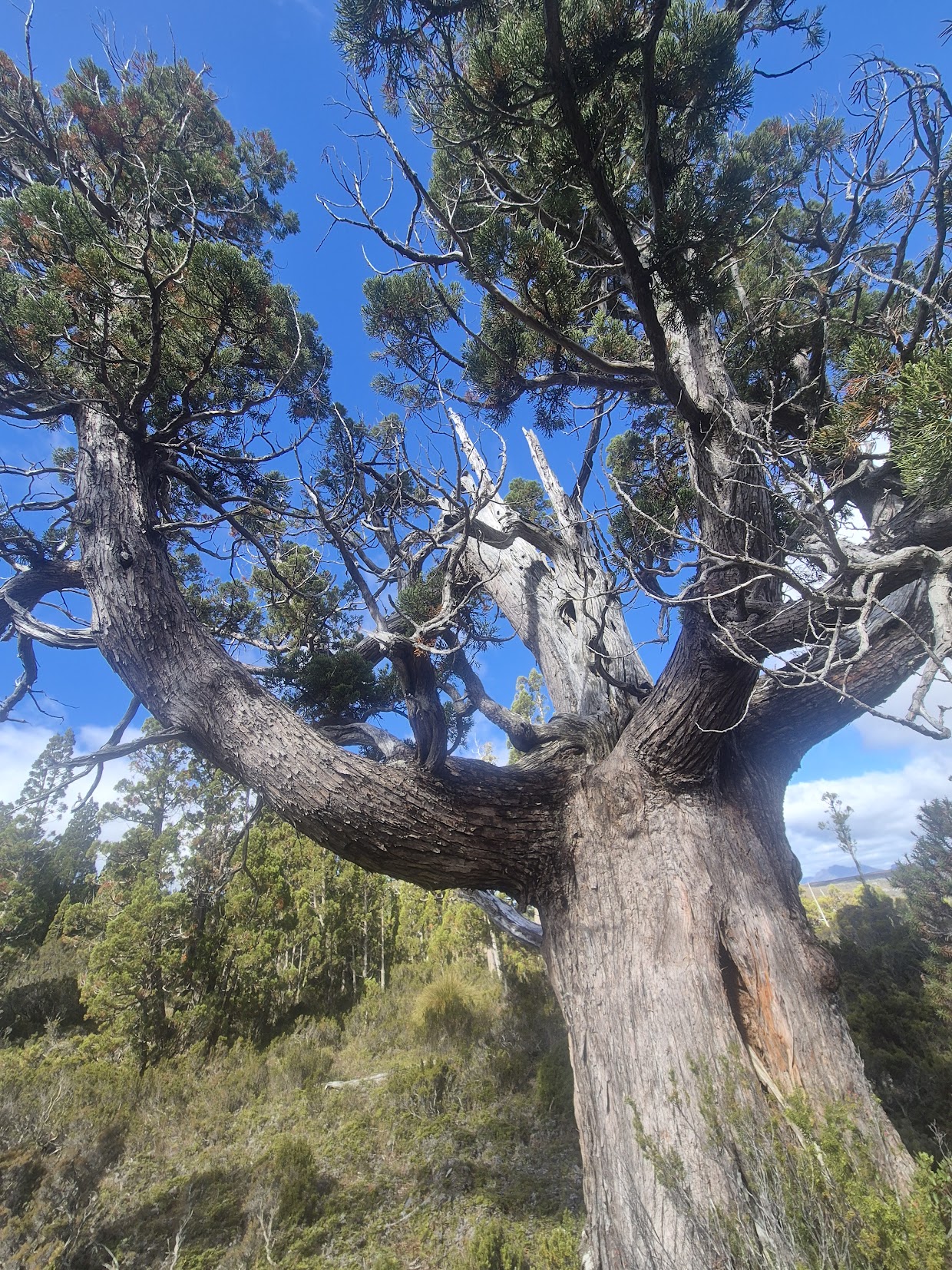
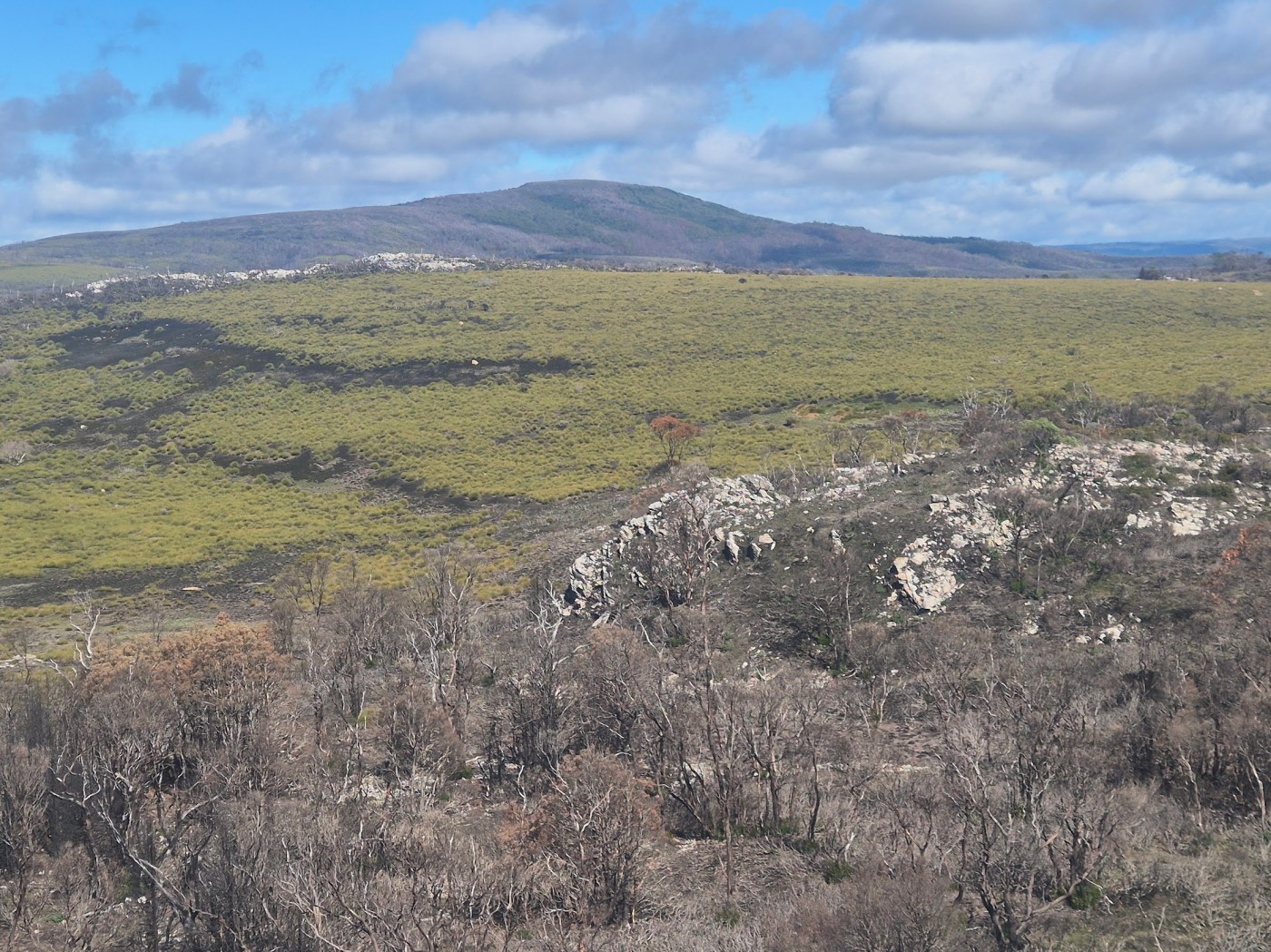
The Tasmanian National Parks Association (TNPA) recently dedicated an issue of their newsletter to the question of how to manage wild fire in Western Tasmania. As has been widely noted, including here at Mountain Journal, fires having been getting more intense in western lutruwita/ Tasmania since a ‘tipping point’ sometime around the year 2000. Since then, there has been an increase in the number of lightning-caused fires and an increase in the average size of the fires, “resulting in a marked increase in the area burnt”.

As TNPA notes in the introduction:

The direct impacts of climate change for Tasmania are changes to weather patterns with corresponding changes to levels of temperature, rainfall and evaporation – most likely a warmer, drier climate overall.

The outcomes of some of these changes are beyond our ability to influence. For example, there are no options for protecting an entire landscape from drought, although it may be possible to save examples of individual species.

As discussed in the following essays, the increased frequency and intensity of wildfires is already resulting in demonstrable impacts on some of Tasmania’s most highly valued species and ecosystems (paleoendemics and alpine ecosystems) and options do exist for how it is managed.

  Continue reading “Fire: how do we control things when we can’t control things?”

Snow gum protection getting closer

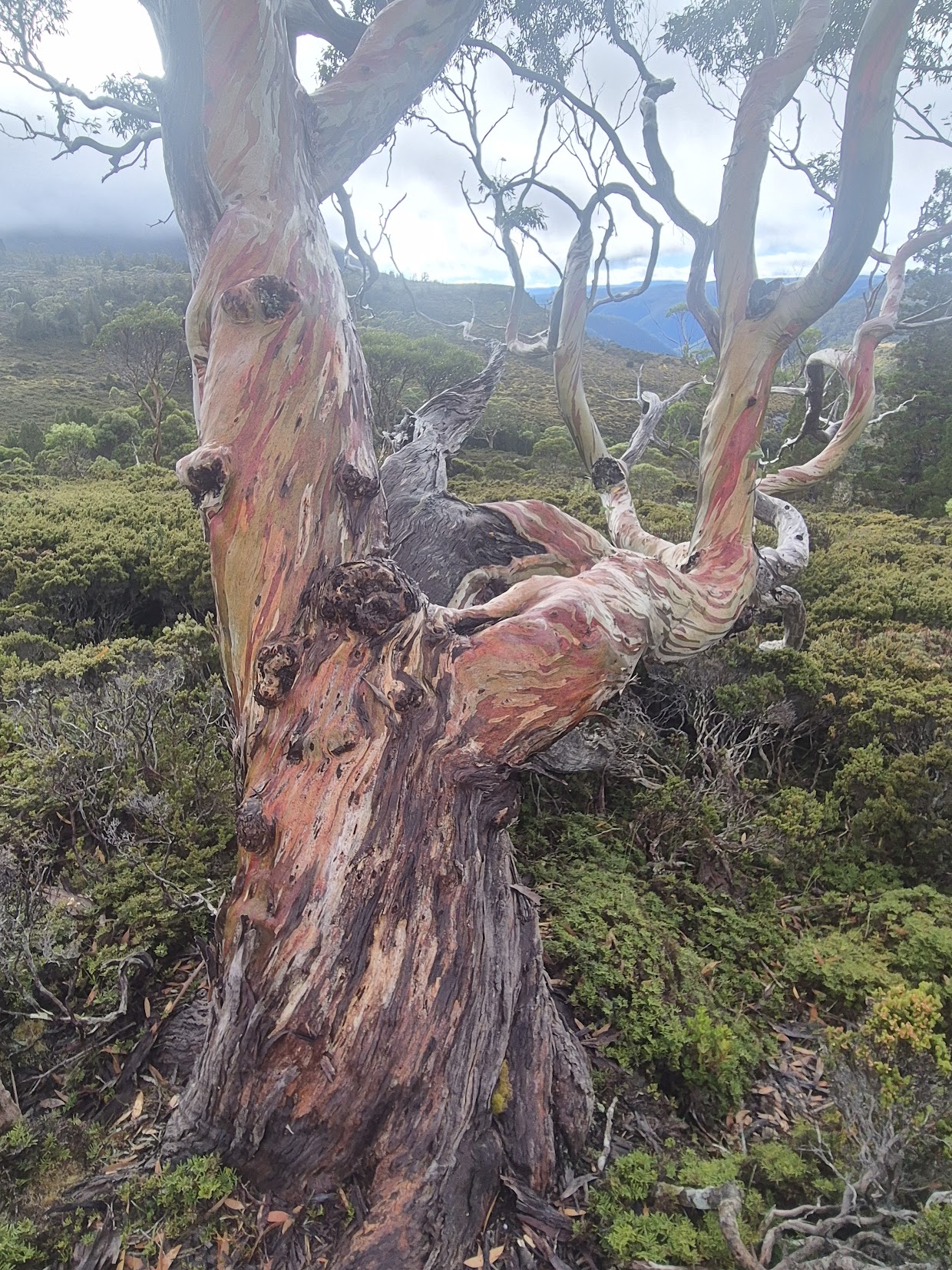
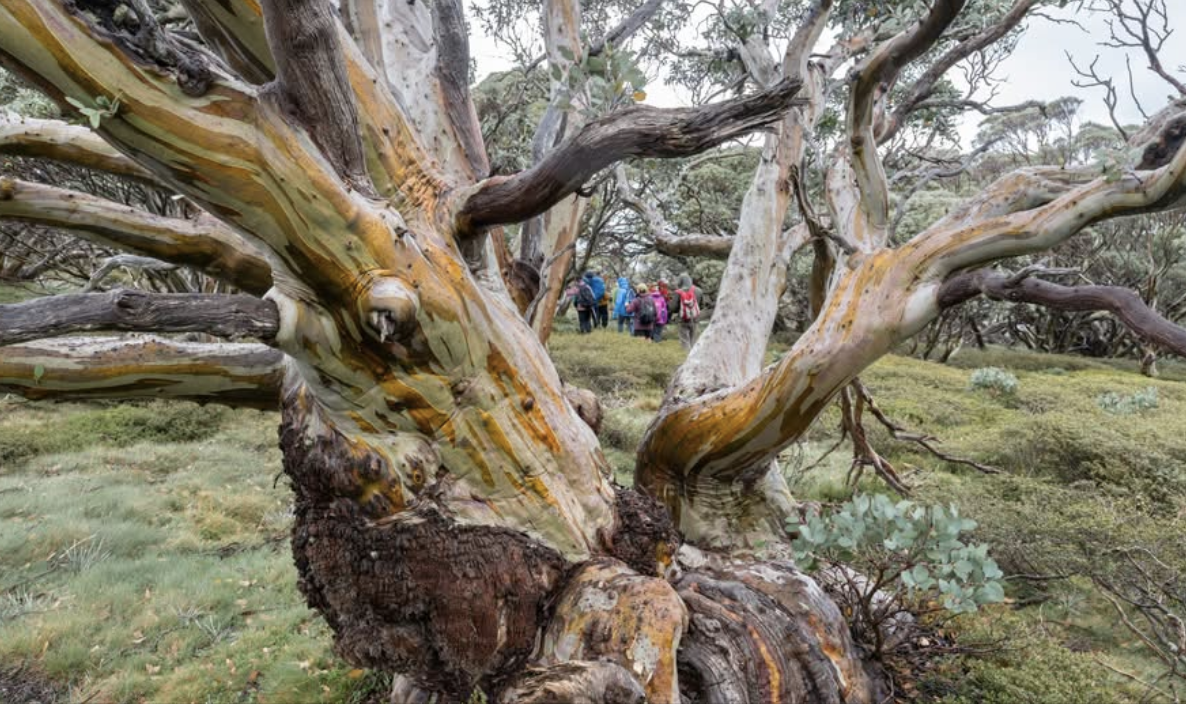
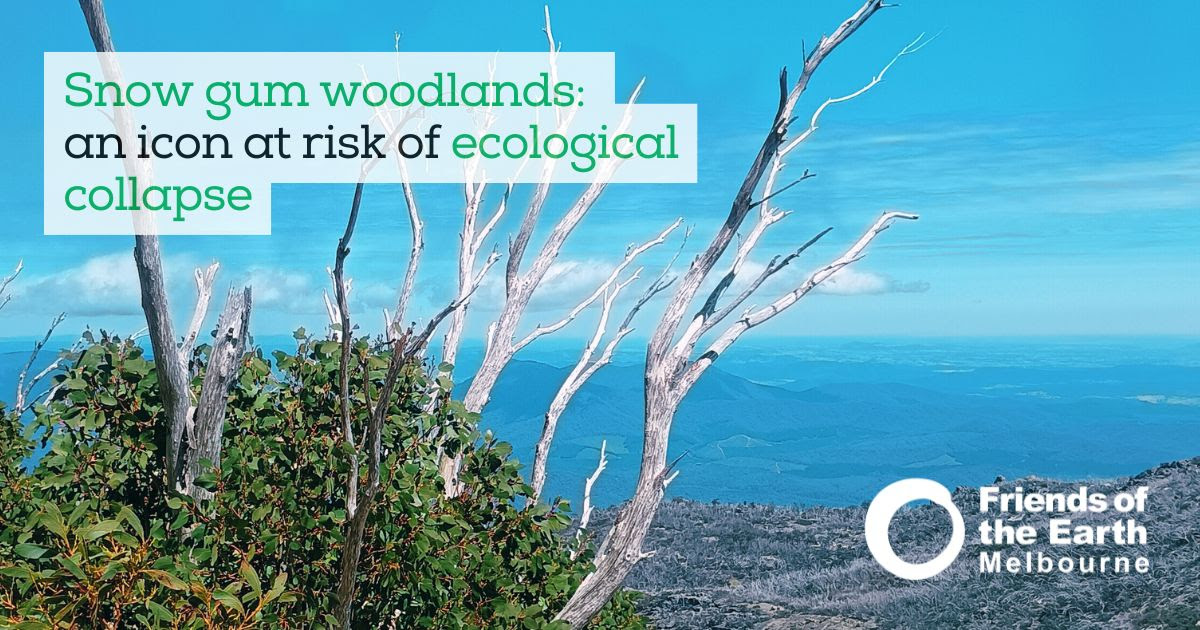
Snow Gums (Eucalyptus pauciflora) are the classic tree of the Australian High Country. They are profoundly different to the trees found in mountain areas in other parts of the world, and give a uniquely Australian sense to our high country. However, they are facing a double threat: they are at risk from dieback and climate change driven bushfires.

Like most eucalypt species, the snow gum can survive fire. However, climate change is leading to more frequent and intense fire, which is causing more death of trees and changes to forest structure. And while dieback, caused by a native beetle, is a natural occurrence, the dieback is getting worse and more widespread because climate change is making winters warmer and summers drier and hotter.

While most snow gums in Victoria are included in national parks, we are on the verge of losing the landscapes that we spent decades protecting.

Friends of the Earth have been running a campaign to ensure that the Victorian government acts in a meaningful way to head off these threats. Here is an update on recent progress made in the campaign, and new directions in the work.

Continue reading “Snow gum protection getting closer”

Take action to protect kunanyi/ Mt Wellington. Again!

A secret plan to revive the cable car

As has been reported here for years there has been a long community campaign against plans by a developer to build a cable car up the face of Mt Wellington / kunanyi. It has long been supported by the Tasmanian government.

Whenever it seems like the battle has been won, the proposal resurfaces like a zombie at the end of a horror movie.

Now, it appears that it is back once more, and Respect the Mountain – no cable car is asking people to send a submission opposing the proposal.

Continue reading “Take action to protect kunanyi/ Mt Wellington. Again!”

What happened after the miners strike at the Cobungra Ditch?

Although most of our mountains are still a wild landscape, largely free of housing and direct development, they are a deeply peopled landscape. In the ‘story’ of the high country, the cattle people have been dramatically over represented in films, books, books and even poetry. First Nations people barely get a mention. The hydro workers have a lot of literature around their story and mining is a distinct sub set of history, although when Australians think of our mining history, I don’ think many connect with mining in the high country.

I spend a lot of time around the Mt Hotham – Dinner Plain area, and mining features in the early story of those places. And there is one story that often intrigues me that doesn’t seem to have an answer. What happened with the miner’s strike near Mt Hotham in 1883?

Continue reading “What happened after the miners strike at the Cobungra Ditch?”

Blog at WordPress.com.

Up ↑