Search

Mountain Journal

Environment, news, culture from the Australian Alps

Author

Cam Walker

I work with Friends of the Earth, and live in Castlemaine in Central Victoria, Australia. Activist, mountain enthusiast, telemark skier, volunteer firefighter.

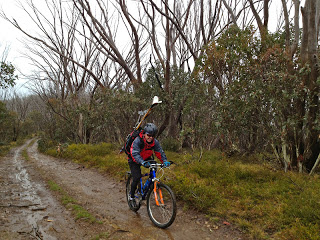
Blue Rag Range by bike

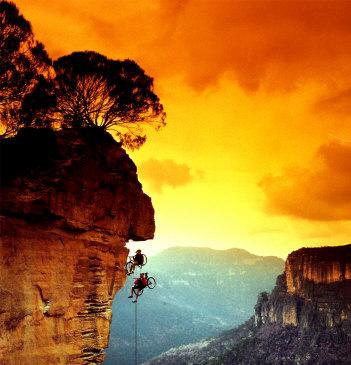
Image: MIke Garrett

A recent trip report from Mike Garrett about an epic bike ride (with skis) to the Blue Rag Range to check out what skiing was still on offer.

He says:

“Last year, Graeme (Nelson) and I had pencilled in a September man-date to the Blue Rag Range.

Visible from just about anywhere on Hotham, the Blue Rag sticks up like a red rag to a bull from the Barry Mountains between Hotham and Buller as a long ridge running east west. The heavily wooded northern faces visible from the chairlifts bely a host of south facing bowls, chutes and couloirs – and Graeme was, like me, certain that good snow would still be found there well after the season was over. The plan was to mountain-bike the 15km along the Dargo Road from St Bernard and camp out on the ridge for a few days picking off late September lines”.

A great winter has left some good snowpack in the backcountry. To find how much was left on the southern slopes of the Blue Rag, read Mike’s blog.

Environmental protection laws under attack

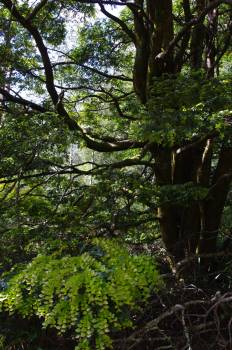
Nothofagus, Mt Toorongo, VIC

Changes are afoot to dramatically wind back cornerstone federal environmental protection laws. Under these changes, State Governments would be given sweeping powers to assess and approve major development projects. If implemented, these changes would be a disaster for our nation’s environment and wildlife.

In 1999, the Howard Government introduced the Environment Protection and Biodiversity Conservation (EPBC) Act. It was meant to protect environmental areas and wildlife that were so important, and so at risk, that their existence was of national importance.

Since it was introduced, the EPBC Act has saved only a few wild places from mining and other development. Many thousands of developments have gone ahead.

Australia’s environment is now under unprecedented attack. Nine open cut mines are planned for Tasmania’s pristine Tarkine forests. The Broome community are battling the construction of a massive gas hub at James Price Point that would mark the beginning of the industrialisation of the Kimberley . The Great Barrier Reef is becoming a coal and gas highway, and could lose its World Heritage status.

The State of the Environment Report 2011 paints a grim picture. More and more endangered species are moving closer to extinction, and we are losing our precious places.

40 years backwards

This is the most serious attack on environmental protection in over 40 years. It doesn’t take much imagination to see what the environmental implications of state decision-making would look like for our environment. In Queensland, Premier Campbell Newman has opposed any delays to coal projects, saying that Queensland is “in the business of coal”.

In Western Australia, four out of five Environmental Protection Authority decision-makers on the proposed James Price Point gas hub had to disqualify themselves because of conflicts of interest; the single remaining member, unsurprisingly, approved the proposal.

In Victoria, intervention by Federal Environment Minister Tony Burke was required to stop Premier Baillieu from overturning the previous government’s ban on alpine grazing, to reintroduce cattle into national parks under the guise of a ‘grazing trial’ that was likened to ‘scientific whaling’. Meanwhile, the New South Wales Government has changed laws to permit private hunters to shoot in national parks and allow fishing in critical grey nurse shark habitat.

The major environmental victories of past decades have largely been won by the Federal Government overturning bad development decisions by state governments. Without strong federal laws, the Franklin River would be dammed, the Great Barrier Reef would have oil rigs and Fraser Island would be a sand mine.

Yet later this year, the Council of Australian Governments (COAG) meets to agree to the framework for handing over of approval powers to the states. Decisions about renewing Regional Forest Agreements could be made at any time.

We need decision-makers to hear our voices now. Friends of the Earth is mounting a campaign − ‘Nature: Not Negotiable’ − to prevent the gutting of federal environment laws and to strengthen the federal government’s role in protecting the natural environment.

This campaign includes mobilising around the upcoming COAG meeting, organising with local campaigns, lobbying and community campaigning.

For more information on this work or to get involved, please email lauren.caulfield@foe.org.au

You can also find us on Twitter @naturenotneg or on Facebook at ‘Nature: Not Negotiable’.

Please support our campaign to ensure these powers are not undermined.

Info on the campaign is available here.

Our petition is available here.

a threat to the outdoor education course at Blue Mountains TAFE?

Many people with connection to the Alps have passed through the Blue Mountains outdoor education course. The following article comes from the Blue Mountains Gazette, and highlights a recently revealed threat to the course.
A threat to shut down the 15-year-old outdoor education course at Blue Mountains TAFE, as part of sweeping State Government cuts to education, was a short-sighted decision say angry Mountains adventure tourism operators.

The move, leaked on a College Alumni Facebook wall last week, was met with resounding disbelief by the tourism industry and current and former students.

“The quality of the course is exceptional. This doesn’t make sense. It is the Harvard equivalent of outdoor education courses.”

Mr Jones said tourists came to the region because of the huge drawcard of adventurous activities offered by companies like his.

“If you’re going to pick between Blue Mountains and the Hunter as a destination you would pick here because you can have this flagship experience (in canyoning, abseiling and rock climbing). Imagine if they stopped teaching hospitality at Blue Mountains TAFE what the implications of that would be?”

Aidan McGarry, owner of High and Wild which has been operating in Katoomba for 22 years, agreed, saying 10-15,000 people came to the Mountains annually for these types of experiences and he was “appalled” that the decision could be made without consultation.

“There’s a flow-on effect to the wider community. It’s where we get our employees from, it’s a really specialised industry. We’re not going to have any guides. I’ve got to talk to national parks to see whether they can cancel the (necessary guides) licence.”

Twelve years ago, Ben Griggs, now 37 and living in Queensland, completed the 12-month course at a subsidised price of $180 and says it changed his life.

“To me they’re trying to save money and I appreciate that, but I just don’t think they understand the value of that leadership training,” Mr Griggs said.

“I was not a particularly useful member of society and it helped me to step up.”

The course enabled him to work for more than a decade and he still supplements his current small business income as a video operator with adventure work.

“It’s not a course you can run anywhere. I know they run outdoor rec in other places but this one is made for the Blue Mountains. The tourism industry really does use those people.”

A course teacher Adam Darragh placed the original post on the Facebook site, a site he said was set up by a former teacher. He said he understood core TAFE funding would be cut to the course “because it was one of the most expensive (due to excursions)”.

“A big question I’ve got for Roza Sage and Barry O’Farrell is do they value jobs because this course has a high vocational outcome? We have organisations asking for our graduates before they have finished.”

Current course participant Tim Williams who hoped to get his diploma next year is “shattered” by the move and worried for other students, some who have come as far as Western Australia, to do the course.

“It is the only college in Australia offering all the guiding skill areas I needed to gain employment here in the Mountains. It’s really shaken us up. The staff within Blue Mountains TAFE’s Outdoor Recreation department are the most ethical and inspiring teachers and the wider community benefits as TAFE runs free and low cost guided tours for youth at risk groups and schools.”

Tourism operators told the Gazette that other courses were available at Lithgow and Sydney but none covered the final Certificate Four advanced requirements in abseiling, canyoning and rock climbing — skills the guides need.

“Ninety per cent of staff up and down Katoomba Street working in abseiling, rockclimbing and canyoning have done this course and were trained at the (western Sydney) Institute (based at Wentworth Falls),” Mr Jones, who is also a board member of the NSW Outdoor Recreation Industry Council and a director of Blue Mountains Lithgow Oberon Tourism, said.

“Outdoor recreation state-wide is an expanding industry and qualified staff are already being sought from interstate and overseas to fill the gaps.”

TAFE spokesman Craig McCallum said TAFE had made no decision on the course but he did not confirm whether it would run next year.

He said they were looking at the best ways to respond to the education cuts.

“We are in the process of consulting with our staff as to the best ways the Institute can respond to reform changes announced by the Minister for Education on September 11. TAFE NSW – WSI is also awaiting the final recommendations from the Smart and Skilled skills reform . . . to meet the current and future jobs and skills needs in western Sydney and NSW.

“The Facebook page to which you refer is not an official page of TAFE NSW -WSI and is not administered by the Institute.”

Randall Walker, Chairman of Blue Mountains Lithgow and Oberon Tourism estimated guided, active adventure and tour experiences contributed about $25m of the $500m annual tourism industry but added he “had no reason to believe the department was closing”.
Blue Mountains MP Roza Sage responded to criticisms by saying she had “sent through to the minister’s office concerns from the community that have been raised with me”.

“Any changes will be introduced after a period of engagement and consultation with relevant staff and other stakeholders . . . the advice that I have received is that all courses are being reviewed, and at this stage there is no decision made.”

Mr Darragh said he was “excited if the decision hasn’t been finalised”.
Alpine resorts and Council win State Government category in Premiers awards

Spion Kopje, above Falls Creek village

The Premier’s Sustainability Awards are billed as “Victoria’s most prestigious environmental awards ceremony”.

The awards are intended to “recognise and reward Victorian businesses, institutions, communities and individuals that are forging a sustainable Victoria now and for the future”.

At the awards ceremony on October 2, Alpine Shire Council – Dinner Plain Alpine Village, Falls Creek Resort Management, Mt Hotham Resort Management, Mt Buller Mt Stirling Resort Management, North East Victorian Regional Waste Management Group (NevRwaste) and 4SITE Australia Pty Ltd were recognised through being awarded the State government award.

This was for the ‘Living Bin’, a joint initiative between three alpine resorts which is administered by State Government Boards. This program captures organic waste from Falls Creek, Mount Hotham, Mount Buller and Dinner Plain Alpine village, to convert it into commercial fertiliser. A successful trial of organic collection was conducted in 2010, and in 2011 the program was extended into commercial food outlets, club lodges, and private accommodation.

In 2011 this program had several hundred participants and diverted over 70 tonnes of organic waste from landfill. This program empowers resort residents and guests to make a difference in their daily lives.

You can find extra details here.

As an observation about the awards, it does seem rather strange that Hepburn Wind won the overall award last year (Hepburn is within a ‘no go’ zone created by Ted Baillieu, and would not be allowed under his wind energy rules). And at the 2012 awards, a TAFE college won the Tertiary category. Given the slash and burn cutbacks occurring through the TAFE sector, this is a rather ironic decision.  

‘mountainside’: new site from Charlie Brown

‘Mitch Smith on his favourite ridge’. Image: Charlie Brown

Charlie Brown is based at Falls Creek in the Victorian Alps. His photography gets a good run in a lot of snow and ski related media, and his new website Mountainside has some gorgeous images, especially from around the Falls Creek/ High Plains area.

His ‘human’ related work includes portraits, some really lively and dynamic sports images – including snow sports and MTB, plus a focus on architecture, food and weddings. His obvious love of the High Country really shines through his work: and the site is well worth checking.

Lessons to learn from the Snowy

The following opinion piece comes from the Weekly Times.

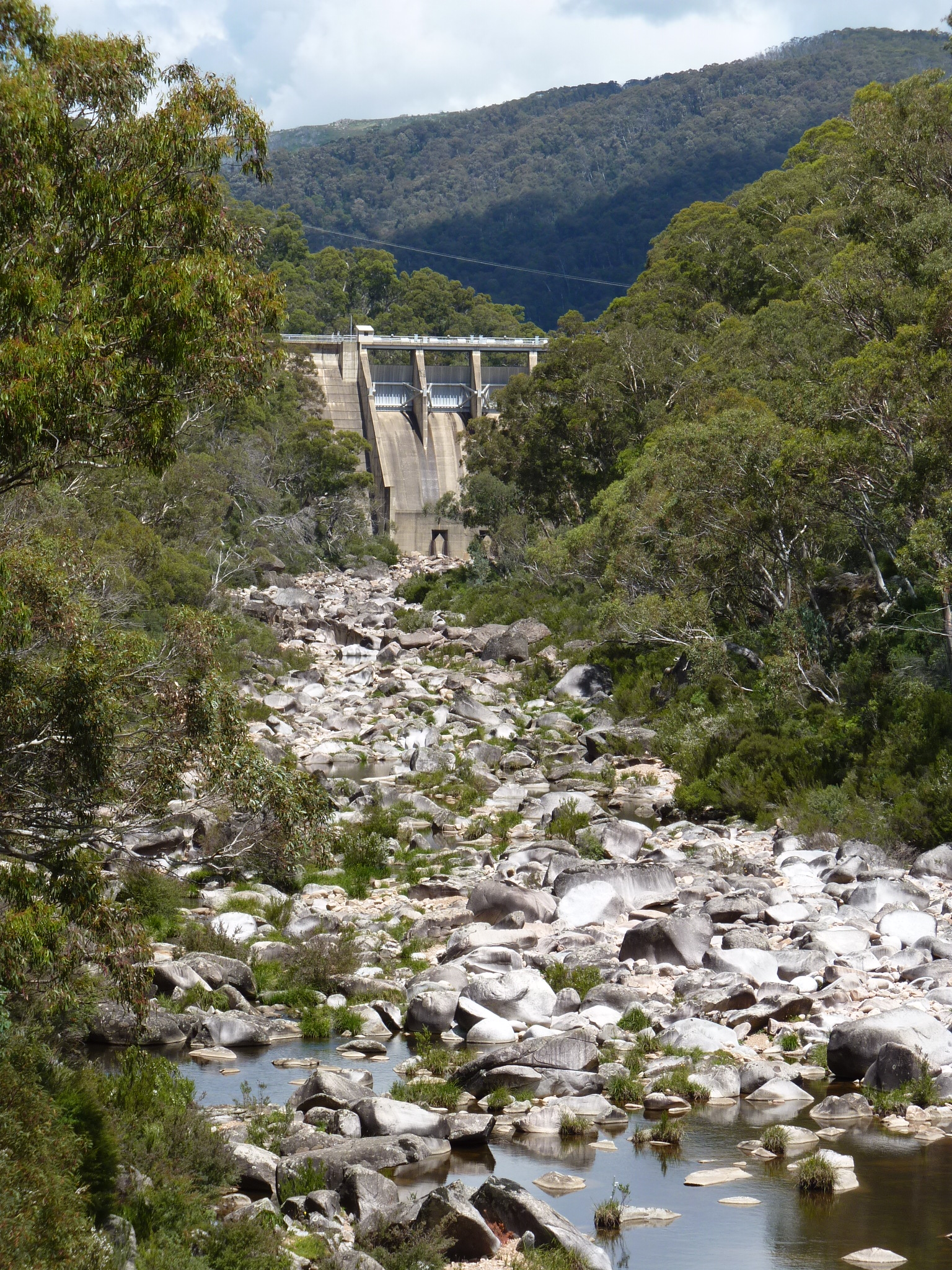
Snowy River in Kosciusko National Park

GOVERNMENTS have failed the mighty river, writes LOUISE CRISP

The big spring releases from Jindabyne Dam into the Snowy River will capture the media’s attention this week.

Snowy Hydro Ltd will allow up to 84 gigalitres to flow down the Snowy River during the next two weeks.

Although they are much reduced, the spring releases are intended to mimic the huge spring snowmelt flows the Snowy was named for.

Most people now believe the Snowy has been saved.

When Jindabyne Dam was completed in 1967, the Snowy River had 99 per cent of its headwaters captured and diverted west to the Murray-Darling Basin for electricity generation and irrigation, resulting in severe degradation of the Snowy and considerable economic loss to the downstream communities.

In 1996, an expert panel scientific report identified that a healthy river needed the equivalent of 28 per cent annual natural flow below Jindabyne.

Ten years ago, the Victorian, NSW and Commonwealth governments signed agreements and legislation to fund a 10-year plan to return environmental flows to the Snowy.

The three shareholder governments of Snowy Hydro Ltd were committed to providing $375 million to Water for Rivers for savings in the Murray and Murrumbidgee systems to off-set increased flows by 2012 to:

THE Snowy River below Jindabyne Dam – up to 21 per cent of annual natural flow.

SNOWY montane rivers – up to 118 gigalitres a year.

SEVENTY gigalitres a year to the Murray.

The three governments also agreed to return up to 28 per cent to the Snowy below Jindabyne Dam post-2012.

The legislation also required the NSW Government to establish an independent Snowy Scientific Committee to provide advice on the best environmental flow release regime and produce annual state-of-environment reports on the rivers affected by the Snowy scheme.

So where are we 10 years later?

In November 2010 and October last year, large spring flows were released into the Snowy River below Jindabyne from water savings obtained by Water for Rivers.

While the Snowy has seen some good flows this year, it is far from saved.

The annual allocation to the Snowy below Jindabyne this water year (beginning May 1) is only about 15 per cent of the annual natural flow, and half the required minimum environmental flow identified by scientists in 1996. Releases below Jindabyne are unlikely to be much more than 15 per cent, as half the water acquired by Water for Rivers is general security or low reliability.

These entitlements would only deliver much real water to the river in exceptionally wet years.

The upper Snowy River in Kosciuszko National Park was scheduled to receive increased flows from 2007-08 (below Guthega Dam) and from 2009-10 (below Island Bend Dam). However, these sections of the Snowy have not received environmental flows.

For months the Snowy River in Kosciuszko National Park remains a dry stony riverbed.

In addition, the main eastern tributary, the Eucumbene River, and many other tributaries were not included in the original Snowy legislation and will not receive environmental flows.

Snowy Hydro Ltd has made one release to the Murray in 2005-06 of 38 gigalitres.

There is now 230 gigalitres of taxpayer-funded water savings owed the Murray River held by Snowy Hydro Ltd in Snowy Scheme storages. Nevertheless, the Murray Darling Basin Authority has included it in baseline modelling for the proposed Basin plan.

The 2002 legislation also required NSW to establish the independent Snowy Scientific Committee but it was delayed until 2008.

The committee produced a series of invaluable public reports on the adequacy of flows to the Snowy and the upper Murrumbidgee.

The committee’s term expired on May 15 last year and despite commitments from the three relevant NSW ministers, it has still not been re-established.

The 10-year plan to restore the Snowy is a simpler and smaller version of the proposed Murray-Darling Basin Plan.

The failure of governments therefore, to deliver the environmental outcomes for the Snowy, does not bode well for the future of the Murray.

    Louise Crisp is vice chairwoman of the Snowy River Alliance

Check here for a you-tube video on the upper Snowy river.

Help needed to protect Australia’s biodiversity from Hawkweeds on the Bogong High Plains

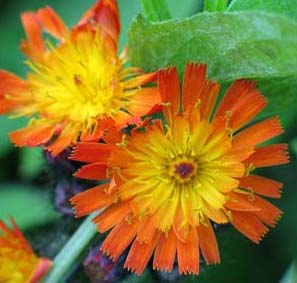
Orange hawkweed flower. Photo: Mark Imhof, DPI

2012/13 Bogong High Plains
Hawkweed Surveillance Volunteer Program

Help needed to protect Australia’s biodiversity from Hawkweeds on the Bogong High Plains

Native to Europe, Hawkweeds have recently become established on mainland Australia.  Posing a serious threat to Australian biodiversity and the structure of natural communities, it is imperative that the incursion is eradicated before it’s too late.

Hawkweeds spread quickly via runners and roots forming dense mats, inhibiting and out-competing native vegetation.  In grassy ecosystems like the High Plains, dense patches of the weeds dominate the spaces between grass tussocks that are vital for the survival and recruitment of native flora and fauna.

Survey sessions will be conducted during the active flowering period. Most sessions will be five days long, the session between Christmas and New Year will be four days. Attendance for a full session is preferred but is not essential.

Accommodation will be provided at Falls Creek. Transport will be provided to survey areas each day.

The surveys for 2012/2013 season will be held over the following dates:

Session 1: Monday the 10th – Friday the 14th of December
Session 2: Monday the 17th – Friday the 21st of December
Session 3: Thursday the 27th – Sunday the 30th of December
Session 4: Monday the 7th – Friday the 11th of January
Session 5: Monday the 14th – Friday the 18th of January

For more information or to express your interest in the program, please contact:

Keith Primrose
hawkweed@parks.vic.gov.au
Mobile: 0428 508 299
Mt. Beauty Parks Victoria Office: (03) 5754 4693

a copper zinc gold mine in the Vic Alps?

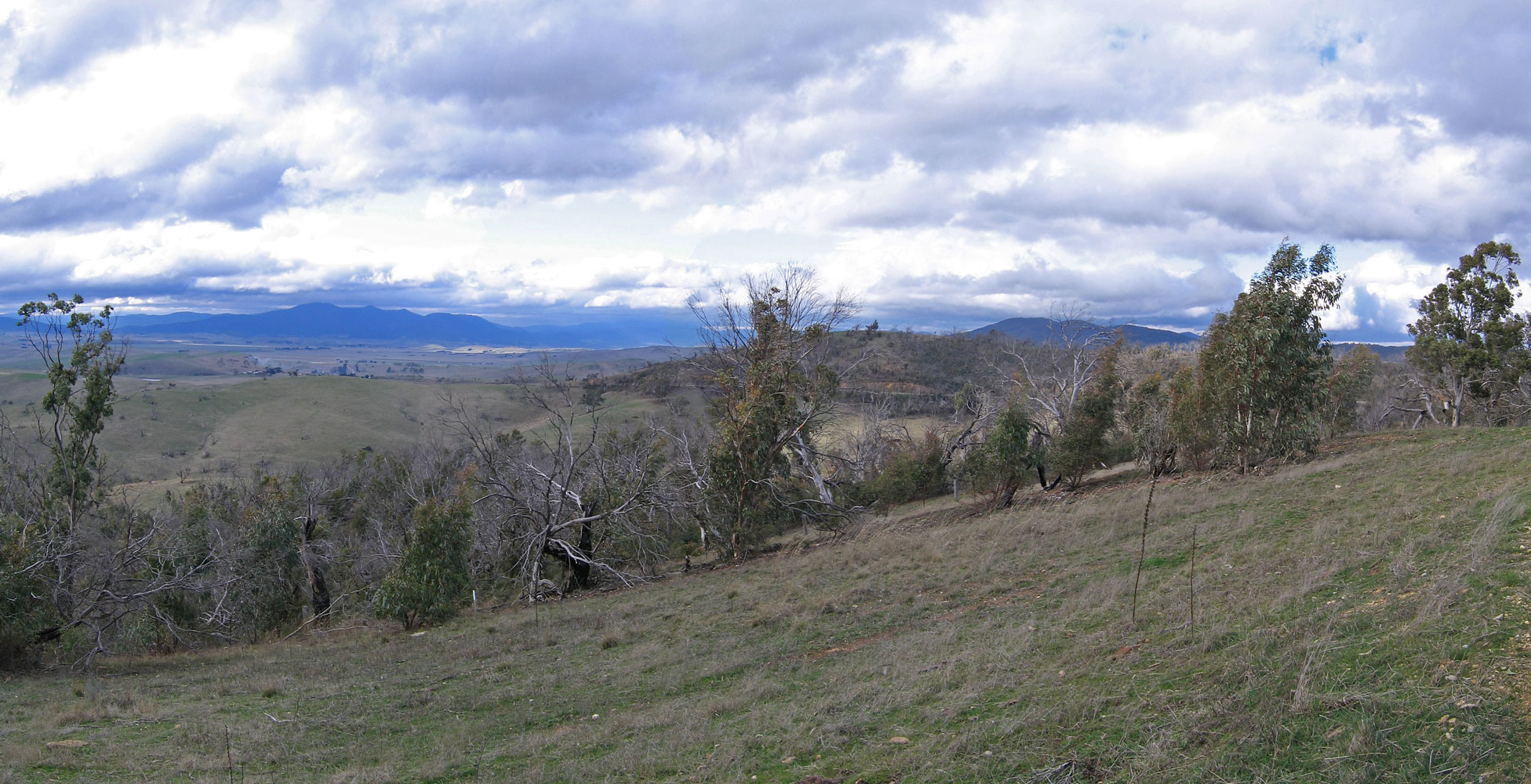
Benambra from McMillans Lookout. Image: en.wikipedia.org

The Stockman Project is located in the Victorian Alps, 470km by road north-east of Melbourne and 60km by road north east of Omeo. The project contains two copper-zinc-lead-silver-gold rich deposits, called Wilga and Currawong. Wilga was discovered in 1978 and Currawong in 1979. Denehurst mined the copper rich core of Wilga deposit from 1992 to 1996. In 2006, following rehabilitation of the plant site and tailings dam by the Victorian Department of Primary Industries, the project was put out for public tender as part of an exploration incentive program. Jabiru Metals Limited (Jabiru) was awarded the project in March 2007.

The Independence Group has now bought up Jabiru, and is proposing to recommission the Wilga mine and establish a new mine four kilometres to the north (the Currawong deposit).

Check here for a summary of the project, and some of the issues concerning locals.

Pest trees in Kosciuszko reinvented as mulch

This news release comes from the NSW Office of Environment and Heritage.

Image: NSW National Parks – Office of Environment & Heritage

Media release: 10 September 2012

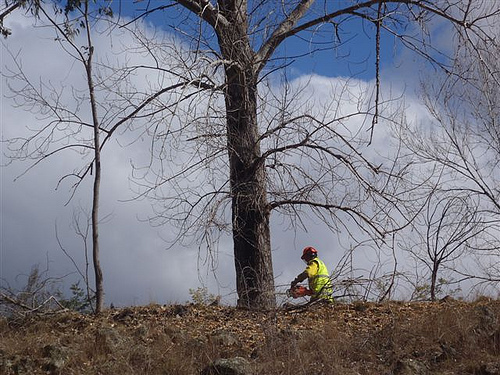
Field staff have been converting pest trees into valuable mulch to improve native animal habitat and suppress invasive blackberry and briar weeds in parts of Kosciuszko National Park.

NSW National Parks and Wildlife Service (NPWS) Senior Field Supervisor Danny Matthews said the mulched trees, mostly poplars, had been spreading at an alarming rate.

“Five field staff recently spent 26 days removing and chipping hundreds of trees over an area of six hectares at the Talbingo Landslip Quarry near Talbingo Dam wall,” Mr Matthews said.

“During the construction of the Snowy Scheme, and particularly between the 1950s and 1970s, exotic trees were planted for erosion control and this had unintended consequences for native ecosystems.”

Mr Matthews said European species including willow, broom and poplar were planted in parts of Kosciuszko National Park and in many cases they had spread and become weeds.

“Replacing exotic trees with native vegetation will not only protect soil stability, it will have broader environmental benefits.

“And chipping these trees has produced about 800 cubic metres of mulch, which we have spread to boost organic levels in the soil and help stop weed infestations in the undergrowth.”

This major woody weed eradication program in Kosciuszko National Park is tackling exotic trees on Guthega Road, reducing Scotch Broom in the Snowy River, and removing kilometres of willows in the Tumut River.

More work is planned this year, including the removal of thousands of willow stems in the Eucumbene River and helicopter-based work in the upper reaches of the Tumut River between the T2 power station and the Elliott Way.

Weed eradication programs like the one underway in Kosciuszko are one way the Office of Environment and Heritage enhances the care and management of National Parks for a healthy environment.

Kangaroo Hoppet – 25 August 2012

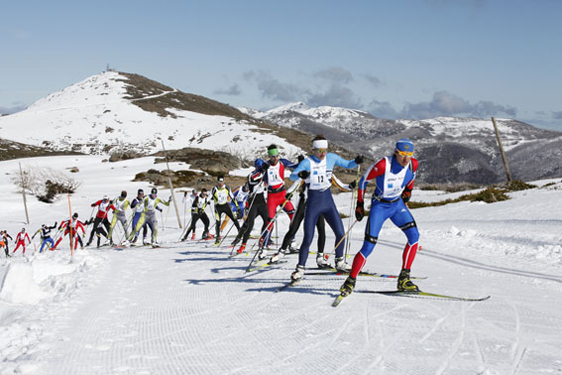
The 22nd Kangaroo Hoppet will  be held at Falls Creek in north east Victoria on 25 August 2012.

The 42km Kangaroo Hoppet is the opening event of the 2012 / 2013 Worldloppet series of long distance cross country ski races.  Also held on the same day are the shorter 21km Australian Birkebeiner and 7km Joey Hoppet events.

The Hoppet is an iconic alpine event, a great celebration of human-powered recreation, and attracts a huge crowd of skiers. With an excellent snow base, the race this year should be a great one.

You can register here.

geothermal technology in the Victorian Alps

Following on from a recent post on this site about a number of ski lodges at Mt Hotham installing solar panels to provide power, this is an update about a club at Hotham which has also started to use geothermal power for heating.

Image: Brush Ski Club

According to Wikipedia,

“A geothermal heat pump, ground source heat pump (GSHP), or ground heat pump is a central heating and/or cooling system that pumps heat to or from the ground.

It uses the earth as a heat source (in the winter) or a heat sink (in the summer). This design takes advantage of the moderate temperatures in the ground to boost efficiency and reduce the operational costs of heating and cooling systems”.

According to the Brush Ski Club,

“Victoria’s Alpine Resorts are facing the challenging hurdles of rapidly escalating energy costs, climate change and the national target to cut greenhouse emissions. We fully endorse Australia’s Keep Winter Cool initiative and are proactively committed to sustainability outcomes.

In an effort to jump these hurdles Mount Hotham’s B’Rush Ski Club has searched for many years to find an energy efficient and environmentally friendly solution to our energy requirements. In a location where winter temperatures dip to below minus 10 degrees keeping a large building at a comfortable room temperature has a high energy demand. In the past, B’Rush Ski Club has employed a combination of electric and gas fired boilers to provide hot water and heating for our guests. With energy prices on the rise and the desire to reduce our carbon footprint the club began a search for an alternate energy source.

After looking to the USA and Europe, where similar alpine environments exist, the Club decided on ‘GeoExchange’ or Ground Sourced Heat Pump (GSHP) technology. GeoExchange technology is commonly used in Europe and North America to provide low cost, low emission heating and cooling of buildings. Ground Source Heat Pumps or GSHPs are recognised as the most efficient and environmentally friendly heating and cooling systems available today, using as little as 25 % of the energy of conventional systems. This translates directly to lower costs and lower emissions.

A GHSP system is much like a reverse cycle air conditioner. The major difference is that instead of using the outside air to provide the energy the GSHPs extract renewable heat from the ground via a system of bores drilled into the earth. These bores carry a refrigerant loop that extracts ground heat, transporting it into the building. This solution will provide both heating for the building, via floor heating and radiator panels, as well as hot water for 40 guests.

The GeoExchange project has been facilitated by the Victorian Government’s ‘Four Seasons Energy Pilot Program’. The Victorian Government has provided 50% funding for the bore drilling as well as expertise and guidance in design and implementation. The assistance of the Government has turned a possibility into a reality.

The installation of this technology, in combination with a substantial upgrade to building insulation and an efficient floor system has cut our energy consumption by 75 % and our fossil fuel usage by more than 80 %. The payback period of 6 years is considered by the club to be completely acceptable given the expected 30 to 50 year life of our building. Since commissioning, forecasted savings have been exceeded with several spin-off benefits. The new system is spectacularly comfortable, has been universally acclaimed by our guests, the resort and wider communities and has been featured in several publications and forums, inc the 2009 Alpine Resorts Sustainability Forum at Thredbo on the 1st May.

This project is currently the highest GSHP installation in Australia and the first (of we hope, many) in an alpine environment”.

Congratulations to Brush Ski Club for their leadership on this. A number of other lodges and businesses in the Hotham – Dinner Plain area are also investigating using this energy source.

Ski resorts go renewable


The following comes from the ESPN Action Sports website and shows what is possible with a bit of effort and vision.

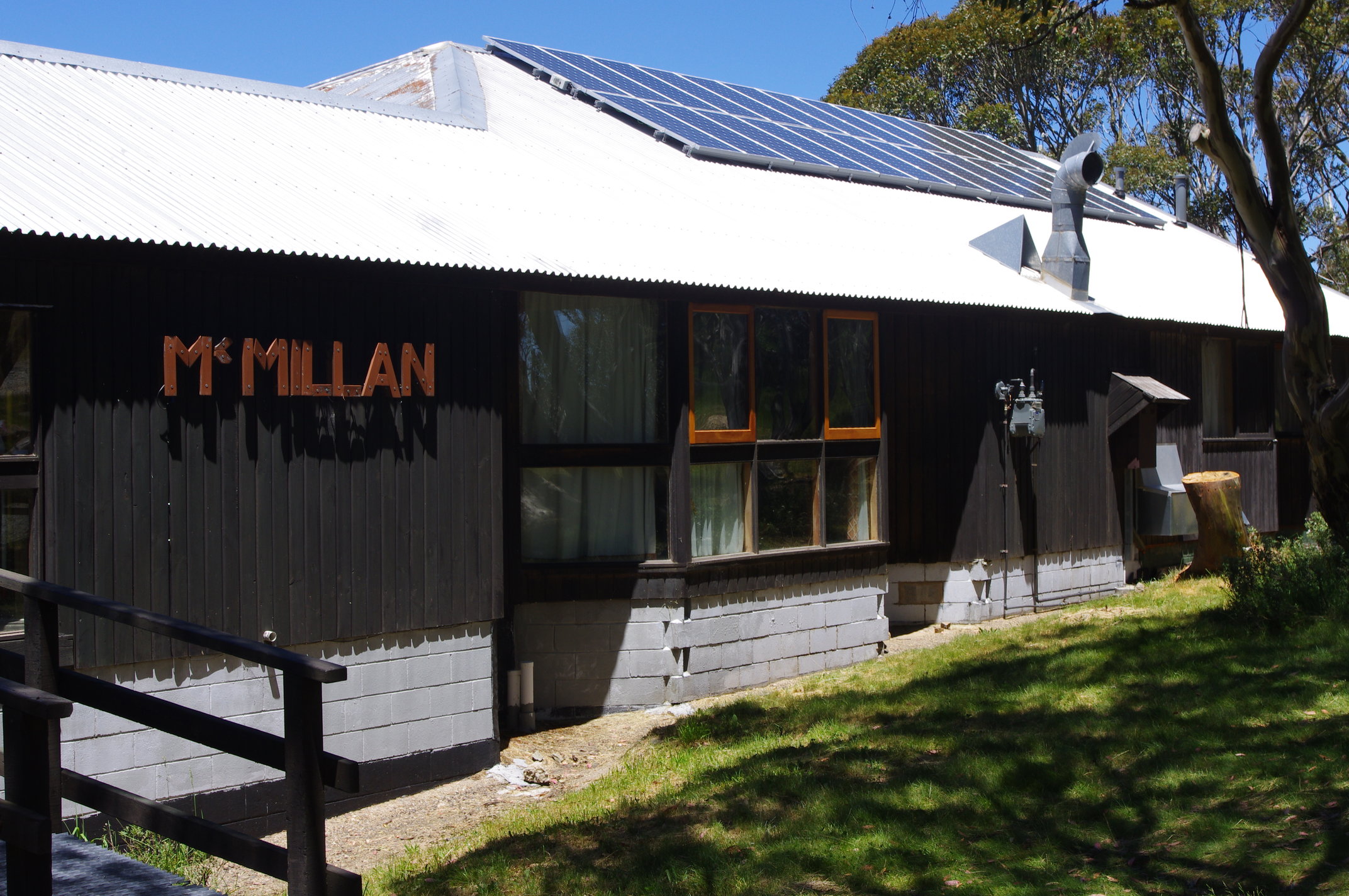
Panels at McMillan Lodge, Mt Hotham, VIC

As the environmental agenda continues to slip from the concerns of most resort management bodies in Australia, it has been the snow sports community who have stepped into a leadership position, with a large number of lodges and businesses signing up for solar PV panels over the past year, especially at Mt Hotham.

The following is the introduction to the article, please check the website for the full piece.

The author is Jesse Huffman.

U.S. ski resorts tap renewable energy sources to combat climate change

As the volatility of the 2011-12 season made clear, the stake ski resort’s have in resolving climate change is a big one. Over the past three years, resorts like Bolton, Burke, Jiminy Peak and Grouse Mountain have installed wind turbines, while others have pursued efficiency updates, in an effort to responsibly produce, and reduce, the power and heat involved in swinging chairs and heating lodges all winter long. Now, four more areas, from local ski hills in the Northeast to major resorts in the Rockies, have installed or invested in renewable power sources ranging from solar to biomass to coalmine methane.

Smuggler’s Notch closed early this winter after a spring meltdown saw the highest March temperatures in Vermont’s history. The same solar energy that drove skiers and riders batty as it took away their snow is now being put to use by an array of 35 solar trackers, which collectively produce 205,000 kWh per year — around five percent of Smuggler’s total electrical use. The array provides enough juice for most of the resort’s Village Lodge.

Dan Maxon, Smuggler’s Notch Solar Installation Project Manager, toured me through the installation on a recent morning, when the GPS-enabled trackers, manufactured by a Vermont company called ALLEarth Renewables, were tilted east to catch the a.m. sun.

“We believe it is important not only for ski resorts, but for all energy users to take some responsibility for their energy consumption,” Maxon told me. “There was a good confluence of energy and desire that made this project come together — we’d been looking at various renewable projects for six-seven years, but couldn’t pull them off. This one we could.”

Aspen is often seen as being one of the greenest of the global resorts, so I have included the section of the essay that relates to them. Coal bed methane is a fiercely contested issue across many parts of the world, so Aspen’s choice of energy source is interesting:

In Colorado, Aspen Ski Company is taking a leading role in developing an innovative form of clean energy from coalmine methane. The practice of venting methane from coalmines to prevent underground explosions has turned into a climate change bottleneck with 20 times more warming potential than CO2, coalmine methane contributed ten percent of the all U.S. greenhouse gas emissions in 2010, according to the EPA.

Aspen is the capital investor in a new project at Elk Creek Mine that uses waste methane to power a dynamo and generate electricity, downgrading the methane to CO2 and at the same time. The project is a first of its scale in the United States, and helped net the resort a National Ski Area Association Golden Eagle Award for Environmental Excellence this year.

“We’ve been looking for a large scale clean energy project for over a decade and we finally found one,” says Auden Schendler, Aspen Vice President of Sustainability.

Schendler expects the 3 megawatt project to go online around September, and says that in a matter of month it will make approximately the same amount of electricity that Aspen uses annually, around 25 million kilowatt hours. “Because we’re destroying methane in the process,” adds Schendler, “this is equivalent to triple offsetting our carbon footprint each year.”


Blog at WordPress.com.

Up ↑