I work with Friends of the Earth, and live in Castlemaine in Central Victoria, Australia. Activist, mountain enthusiast, telemark skier, volunteer firefighter.
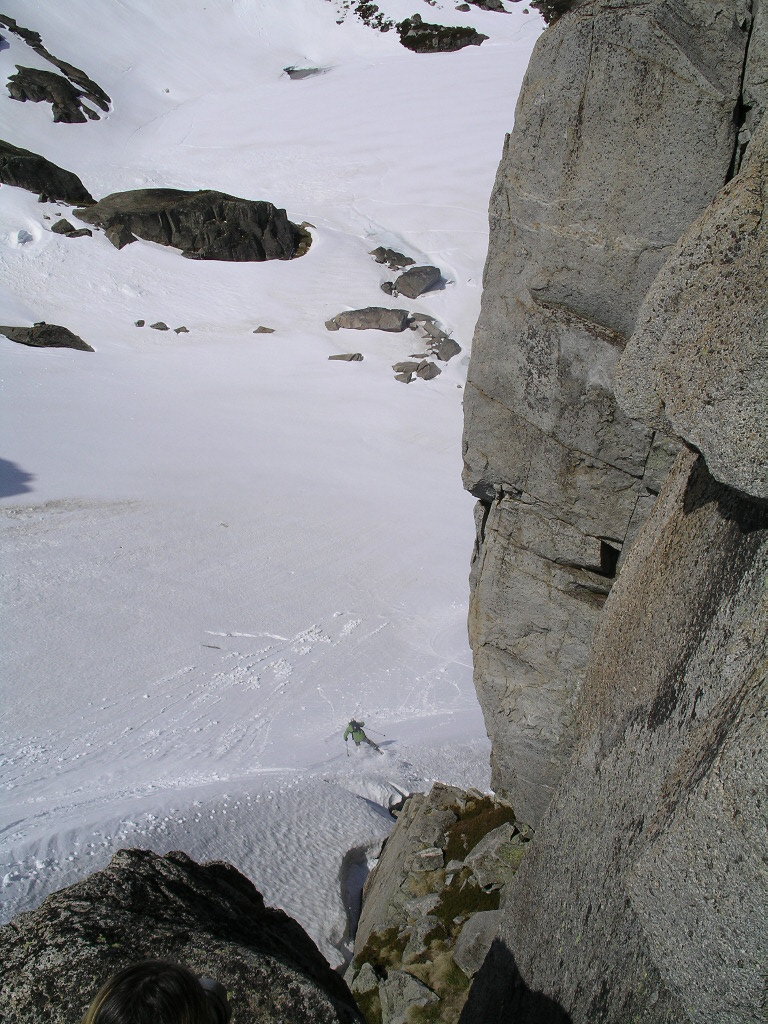
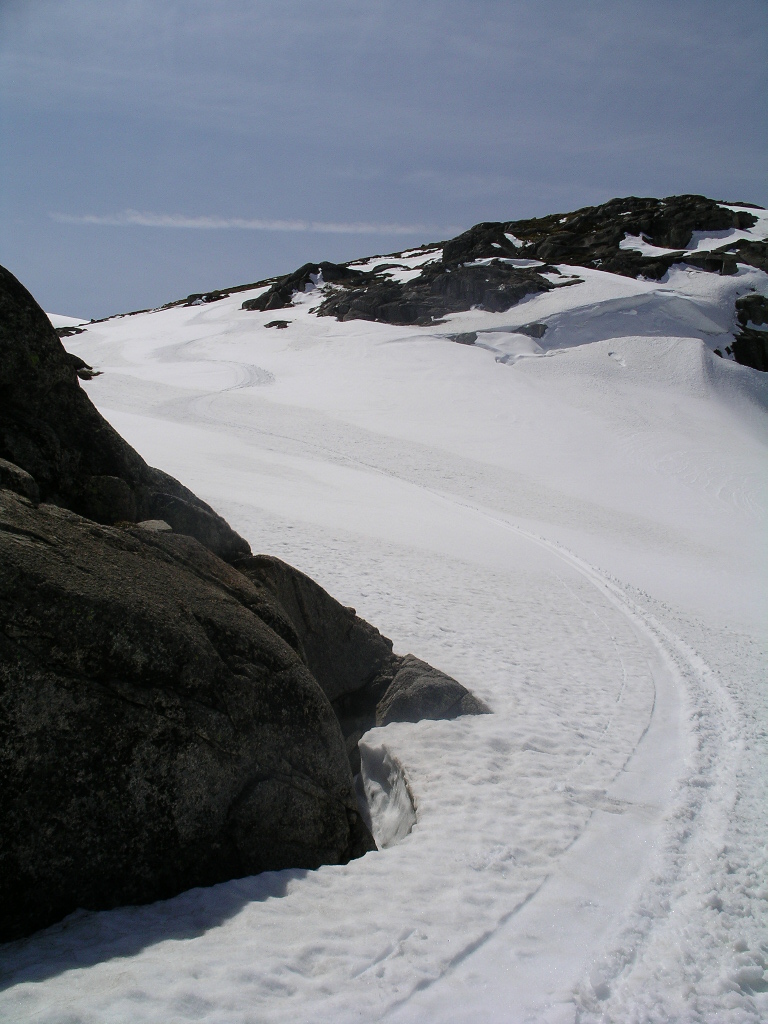
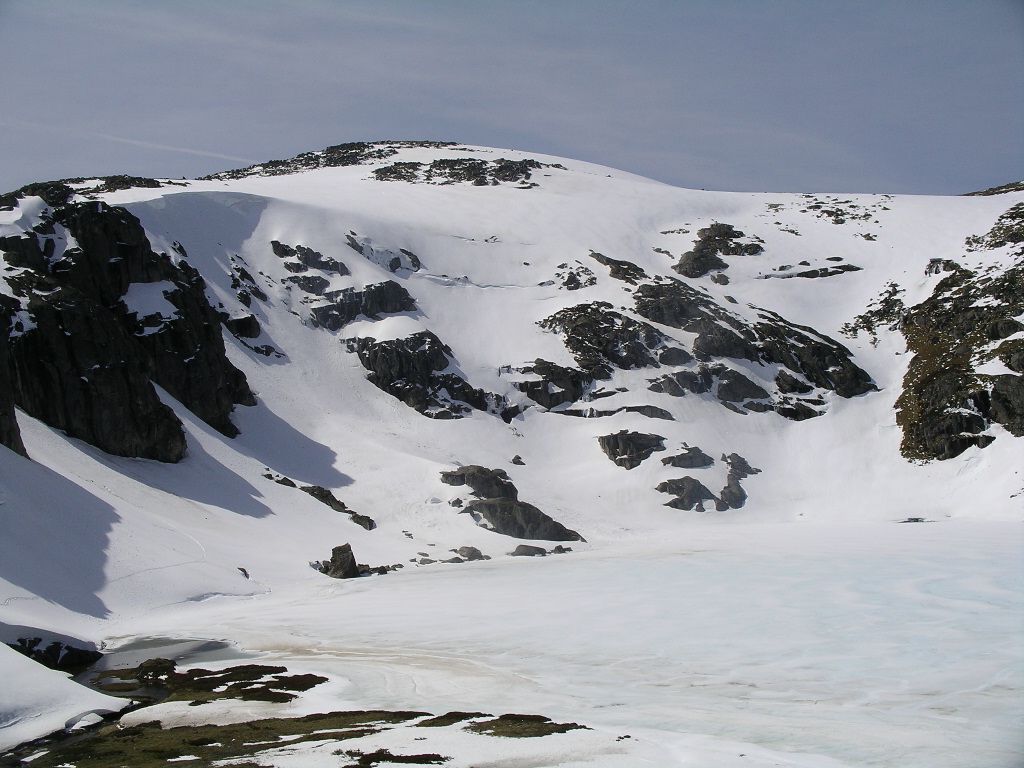
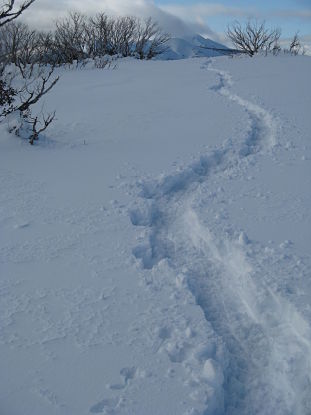
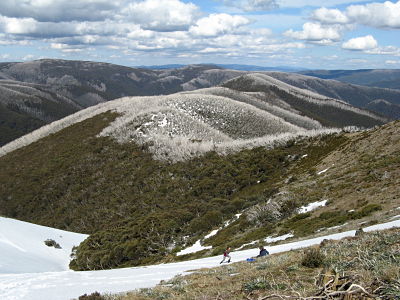
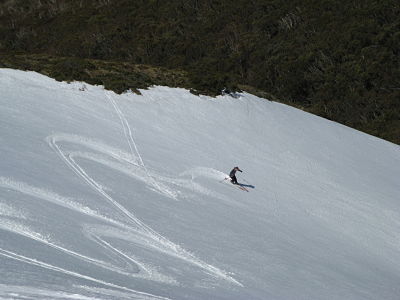
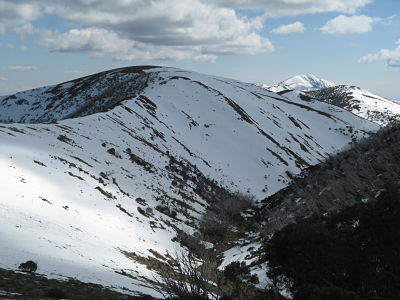
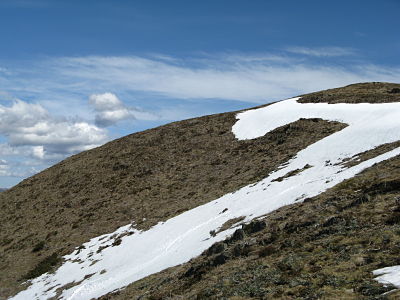
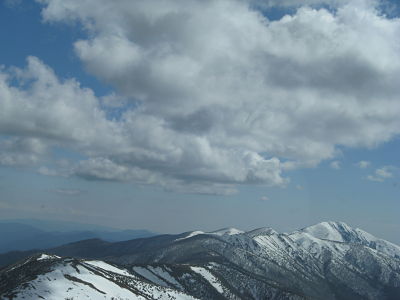
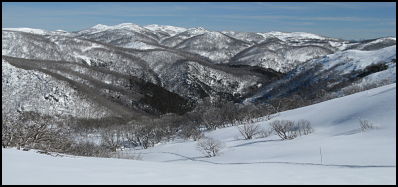
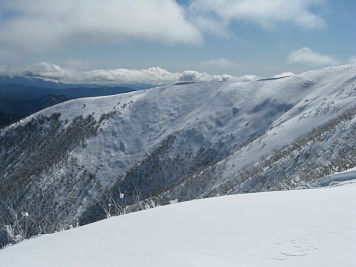
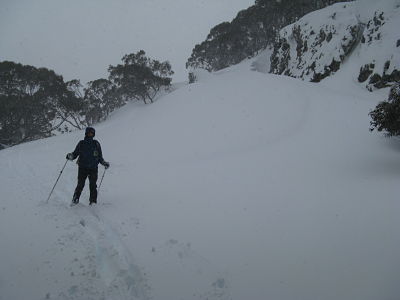
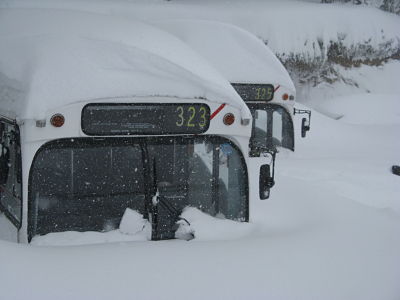
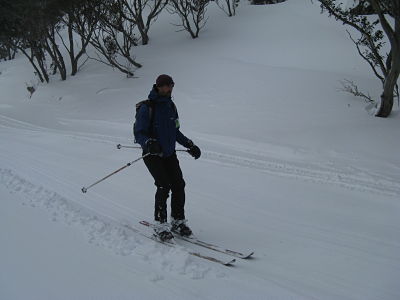
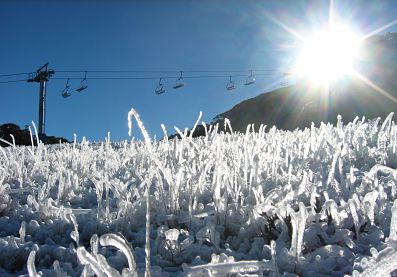
So, with spring cover holding across a fair bit of the main range and recent top ups, it seems the seasons not totally finished yet. Some very recent images from Bruce Easton, of Wilderness Sports in Jindabyne.
“Went out Wednesday for the day to Blue Lake to do some ‘gear testing’ and photos and the snow was really good. On the way out walked about a kilometre before putting skis on. On return skied to around 200 metres of the Snowy River ford with a shorter walk….The glacial lakes are all still completely covered with snow/ice”.
As a growing number of Australian ski resorts bill them selves as being ‘green’, there are some developmemts in the Northern hemisphere that show how much further we could go if we want to take our attempts to reduce environmental impacts seriously.
Image: Mt. Abram
Obviously energy use (for lifts and snow making operations) is a major environmental issue for all resorts in that it will be a major component of the resorts overall greenhouse emissions. Some Australian resorts have sought to reduce their environmental footprint through purchasing ‘green’ power, at least for some of their tows.
One problem with this is that if they are buying hydro power – generally the cheapest form of commercial renewable energy – they are in effect buying ‘old’ energy – that is, renewable power that has been in production for years and therefore does not actually displace coal and hence reduce greenhouse emissions. For instance, the major hydroschemes on mainland Australia were built decades ago. The Kiewa Hydroelectric Scheme in north eastern Victoria was originally constructed between 1938 and 1961. The one exception would probably be where resorts purchase RECs (Renewable Energy Certificates) from the Bogong power station in north east Victoria, which has recently increased its energy production substantially. It was opened in late 2009. Hence RECs from Bogong could constitute ‘new’ green energy which potentially is displacing coal from energy production. The main reservoir for the scheme is the Rocky Valley Dam, on the Bogong High Plains. Check here for some information on the recent expansion of the Bogong plant.
But a small resort in the USA has gone much further – it has decided to produce its own energy. Mt Abram, located outside of Bethel, Maine, is in the permitting stage of a plan to install 3,190 solar panels spread over an area of 2 acres. When completed, the ski area is poised to become North America’s first net negative ski area when it comes to energy production.
Mt Abram plans to sell their excessive power back to the Central Maine Power Company grid.
According to writer Shanie Matthews, in addition to producing their own power, the ski area has been taking steps to reduce their demands for electricity. In April 2010, they received a $40,000 grant from the National Ski Areas Association (NSAA) to be used for 10 high efficiency snowmaking guns. Mt Abram will purchase 50 more guns as well. The new guns can reduce energy consumption by as much as 75%. NSAA reports that snowmaking costs account for an average of 67% of electrical costs in a resort.
Mt Abram owner Matt Hancock says the solar panels will be paid for by energy savings as well as the revenues from selling their unused energy back to local utility company.
The resort bills itself as a “friendly winter resort” and is located near Bethel, Maine, in the New England region of the north eastern USA. Mt. Abram offers a variety of terrain from beginner’s to ungroomed expert glade runs and race courses, and is serviced by five lifts and has 44 trails.
Parks Victoria is looking for volunteers to help look for King Devil and Orange Hawkweed on the Bogong High Plains
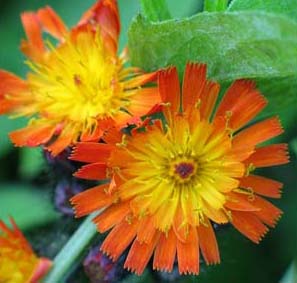
Native to Europe, Hawkweeds have recently become established on mainland Australia. They pose a serious threat to Australian biodiversity and to the structure of natural communities.
Hawkweeds spread quickly via runners and above-ground roots, forming dense mats and outcompeting native vegetation. In grassy ecosystems like the High Plains, dense patches of the weed dominate the spaces between grass tussocks that are vital for the survival and recruitment of native flora and fauna.
Three survey sessions will be conducted during the flowering period and each session requires 8 volunteers. All of the sessions will be 5 days long, Monday to Friday. Attendance for the full sessions is preferred but is not essential.
Accommodation will be provided at Falls Creek.
Breakfast and snacks will also be provided.
The surveys for 2010/2011 season will be held over the following dates:
Session 1: November 29 – December 3 (Mon – Fri)
Session 2: December 27 – December 31 (Mon – Fri)
Session 3: January 17 – January 21 (Mon – Fri)
If you would like more information or to take part in a survey session please contact:
Sally Summers
hawkweed@parks.vic.gov.au
Mt. Beauty Parks Victoria Office: (03) 5754 4693
As spring kicks in and the snowmass melts, it feels like time to acknowledge what an incredible winter it has been: massive snow falls interspaced with rain and warmer weather and crazy storms. A number of resorts were isolated as treefall and landslips cut roadways. In August almost 2 metres of snow fell across the alps, and now (early October) there is still good skiable snow across much of the higher areas.
The following are some images from the Hotham/ Feathertop area in Victoria from June until now.
The last few weeks have been incredible across the High Country. In Victoria we passed into spring with fantastic snowmass and in the last few weeks we’ve had sunny days and mostly cold nights. The resorts are still going, at least until this weekend, and there’s lots of backcountry terrain which is accessible with little or no walking.
Mornings have been great, even if you have to battle through a slushfest once the sun is high. A perfect spring after an amazing winter of grey skies, floods, and a series of massive snowfalls.
A couple of pictures from Feathertop/ Mt Blowhard in Victoria to honour the end of another season.
Near Mt McKay, heading to Pretty Valley, Bogong High Plains, VIC
If you’re an Australian skier or boarder, and unless you’ve been living under a log these past few months, you will know that ski legend Steve Lee has been running commercial backcountry ski tours out of Falls Creek resort this winter.
This is great. Getting people out of resorts and into the backcountry is to be supported and encouraged.
What is less great is the emphasis on the use of snowmobiles to get people out there. His tours are geared towards ‘strong’ intermediate skiers and boarders. So if people are fit enough to ski/ board hard terrain, then surely they are fit enough to get on some skis to actually get out there.
In my opinion, this ‘cheap grace’ approach to getting backcountry is a sad development in Victoria. Certainly, the tours are confined to the alpine resort area (even though this is ecologically part of the Bogong High Plains). However, they come with a high annoyance cost to people who are out there under their own steam. It is not clear what ecological assessment, if any, has been made of the tours – for instance, is there an impact on endangered species or vegetation? There is also a bigger picture here: there is the fact that these tours could be a precedent for future snowmobile based developments elsewhere in the alps.
Anyone who has skied backcountry in North America will know the many problems that come with rampant and often uncontrolled snowmobile use. While here in Australia recreational use of snowmobiles is supposedly controlled or banned (for instance in national parks), how often is this actually enforced? As one example, there is growing use within the Alpine national park in the area between Dinner Plain and Mt Hotham and around Dinner Plain village with apparently no intervention from land managers.
Snowmobiles are essential tools in resort management and search and rescue operations. However, the blanket endorsement of commercial use of snowmobiles in the backcountry in almost all Falls Creek promotional materials this winter shows that resorts ‘commitment’ to the environment as being shallow at best and probably a form of green wash.
We should be very cautious about the further introduction of a potentially destructive development in our alpine areas, which appears to have jumped all the approvals ‘hoops’ simply because the proponent of the development is an alpine ‘personality’.
Falls Creek Resort says that it is deeply concerned about good environmental management:
“We are extremely proud of Falls Creek’s reputation as an industry leader in the field of sustainable alpine tourism and development. Our environmental programs reduce our impact on the local environment and acknowledge the importance of maintaining a healthy world beyond our boundary”.
Further information on their approach to the environment is here.
If you have an opinion about the expansion of snowmobiles into the backcountry you may wish to let the resort management know about them.
fcrm@fallscreek.com.au
The US-based Mountain Riders Alliance has now gone global:
Bon Accord spur, VIC
“A new paradigm is emerging in ski area management: one that’s globally-based, rider-centric, environmentally sustainable, sensitive to local needs, and skier-and-snowboarder-owned
“Rising lift ticket costs, negative impacts on ski communities and the environment, and the desire to combat climate change have all led concerned skiers and snowboarders to form a global collaborative group, Mountain Rider’s Alliance (MRA).
“MRA is a movement of snow enthusiasts who are dedicated to changing the ways ski areas are run. MRA’s mission is to create rider-owned-and-operated ski areas that are rider-centric, environmentally sustainable and sensitive to local cultural, social and economic concerns”.
late August, snow buckets down day & night across the Alps
Its hard not to feel envious when you look at those photos from the late 19th century that were taken as the miners and loggers made their way up the deep valleys below the alpine peaks and built villages and new towns. Places like Harrietville, at the head of the Ovens River below Mt Feathertop, seem to have had regular dumps of snow through the winter months. Now, if we just get some snow flurries down that far it rates as an event.
Of course, Australian weather has always been famous for being erratic. And if you look at the snow pack records that chart winter snow depths over the past 3 decades you can see wild variety between the seasons.
Climate skeptics love to point to cold weather and hard winters as ‘proof’ that climate change is not real, but this just reveals more about their ignorance of how climate change is expected to work than proving any other point. Some climate campaigners prefer to use the word ‘climate chaos’ because this gives a better indication of what the science tells us is coming: ever more erractic and extreme weather events. In our part of the world, this will include drought, flood, fire, and extreme weather events like torrential rain.
This info is easy to find. It is not the stuff of hysterical greenies hiding in caves. It is from the mainstream of the climate science community. In a democracy we can think what we like. But having an opinion which runs counter to science doesn’t mean climate change is not happening. One of the things that strikes me – in a week where much of western and north eastern Victoria has been flooded, people evacuated, the road to Falls Creek was cut, and a landslip closed operations briefly at Hotham resort, is how quickly we can adapt to changed conditions and accept them as the ‘new’ normal behaviour of the weather. Just a week before that we had those wild snowfalls that blocked the Hotham Road for a day and a half and dumped almost a metre of powder across the alps. Then throw your mind back to July, and the gray rainy skies that brought miserable conditions and mediocre snow.
My point here is not to stir up fear, or to slate all this strange winter to climate change. Its just to remind ourselves that what we have experienced has not been an ‘ordinary’ winter. Sure, we need to grab the good winters when they do come along, and ski or board as hard as we can. We probably need to grumble and find other things to do in the winters that don’t happen. But we should never lose sight of the fact that all of whats happening is consistent with what climate science tells us is coming, unless we decide to do something serious as a global community to greatly reduce our greenhouse emissions.
And for me that’s reason enough to do what we can where can, to reduce our impact, and to get action at the community, corporate and government level.
With the fantastic snowfalls of the past week, theres no shortage of great skiing and boarding options across the Alps.
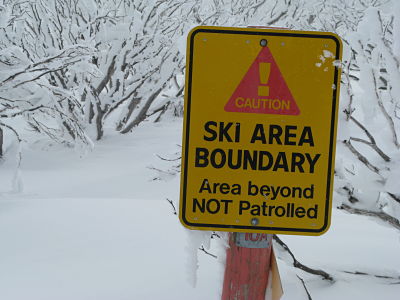
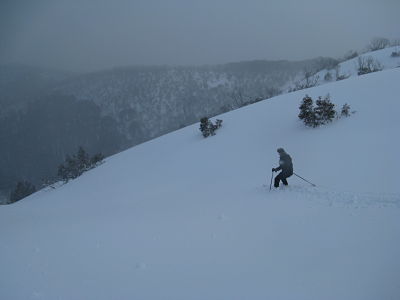
But many of the backcountry destinations are equally fantastic. For people not experienced in backcountry trips (often remote, and sometimes requiring long access) a good ‘warm up’ option is to get out in the ‘side country’ – those areas just outside ski resorts with easy access.
This quick guide canvasses some of the options available close to Mount Hotham in Victoria. There are similar opportunities at almost every other resort in the country.
BE AWARE that there is some avalanche risk with a number of these slopes at present. If you’re not familiar with avalanche risk assessment, please don’t visit these areas.
The winter that started slow has turned into an incredible season. Almost 2 metres of snow has fallen in higher areas of the Alps this month and the current batch of powder is deep and dry and gives some incredible skiing and boarding.
There are updates on snow conditions on the Mountain Watchwebsite.
These are just a few random images from the Hotham area from today.
Be aware that there is some avalanche risk in back country areas such as along the Razorback.
The current gos on the mountain (friday 27th) is that the Hotham – Harrietville road will be open by lunchtime today.
Louise Perrin is Environmental Manager for the Mt Buller and Mt Stirling Alpine Resort Management Board. She has been the driving force behind an innovative – and very successful – recovery plan for the endangered Mountain Pygmy Possum.
The possum is the only native mammal that lives in the alpine environment above the treeline and its habitat is threatened by development, climate change and introduced flora and fauna.
The Recovery Plan for the species on Mt Buller was developed in 2005. It contains a range of actions to assist in the continued survival and conservation of the Mountain Pygmy-possum on the mountain. This has relied on substantial support from the Resort Board, the ski lift company, and the Department of Sustainability and Environment, and has even involved the construction of boulder fields to create habitat for the animals.
In spite of the pressures from ski field development through its habitat, the fires of 2007, and the longer term impacts of climate change on alpine environments, the Mt Buller project is a showcase of a program which has helped bring a species back from the brink of extinction.
Lou says “I just want to do my best to ensure that my kids can enjoy this little patch of alpine Australia as much as I do”. But her contribution to this effort has been huge and deserves widespread acknowledgement.
Protect Our Winters was created as a way to bring the winter sports community together to fight climate change and its effects on our mountains.
It is the environmental center point of the winter sports community, united towards a common goal of reducing climate change’s effects on our sport and local mountain communities.
POW has just released their 2010 trailer video.
You can watch it here.
For details on POW in Australia, check here.
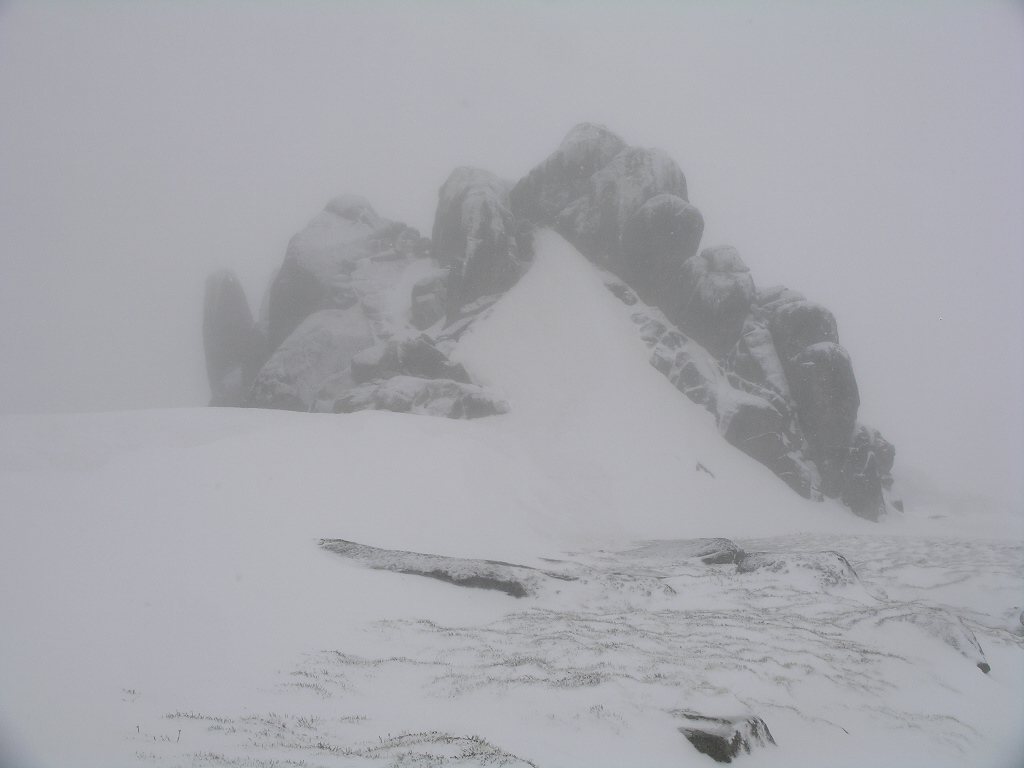 So, with spring cover holding across a fair bit of the main range and recent top ups, it seems the seasons not totally finished yet. Some very recent images from Bruce Easton, of Wilderness Sports in Jindabyne.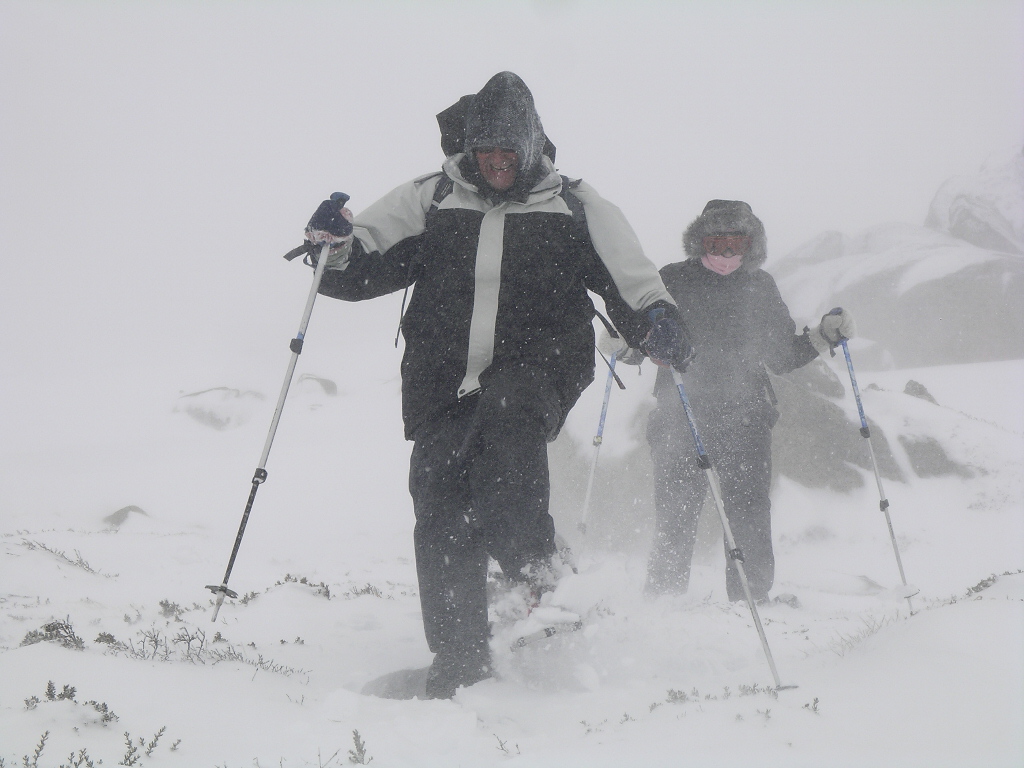
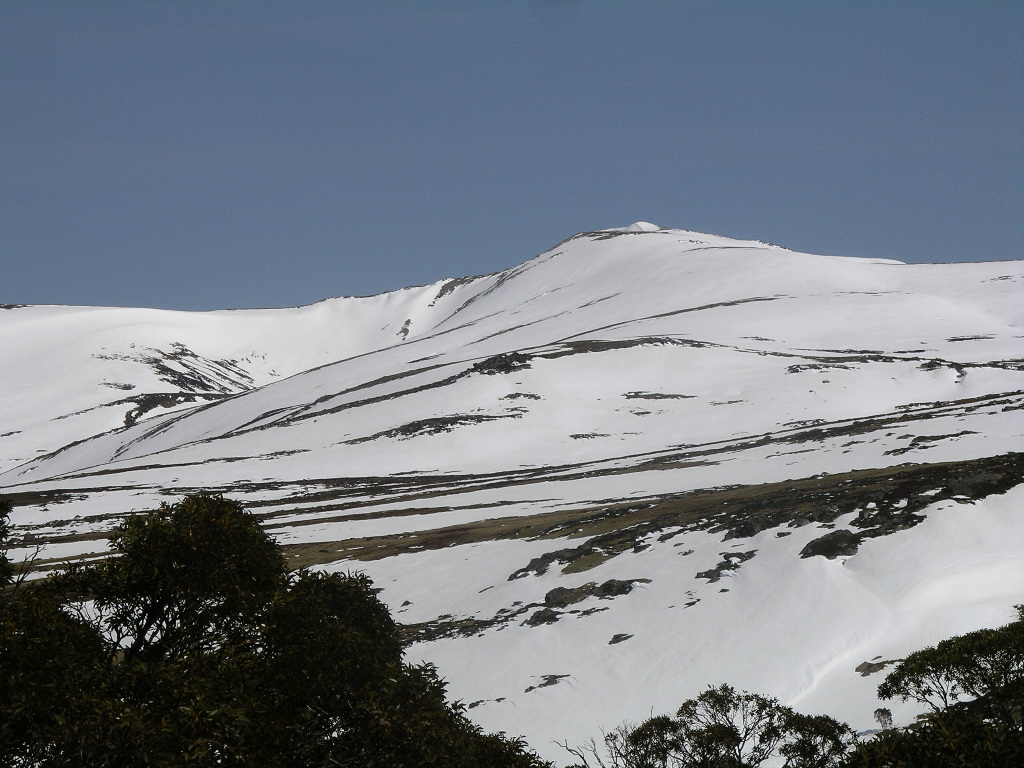
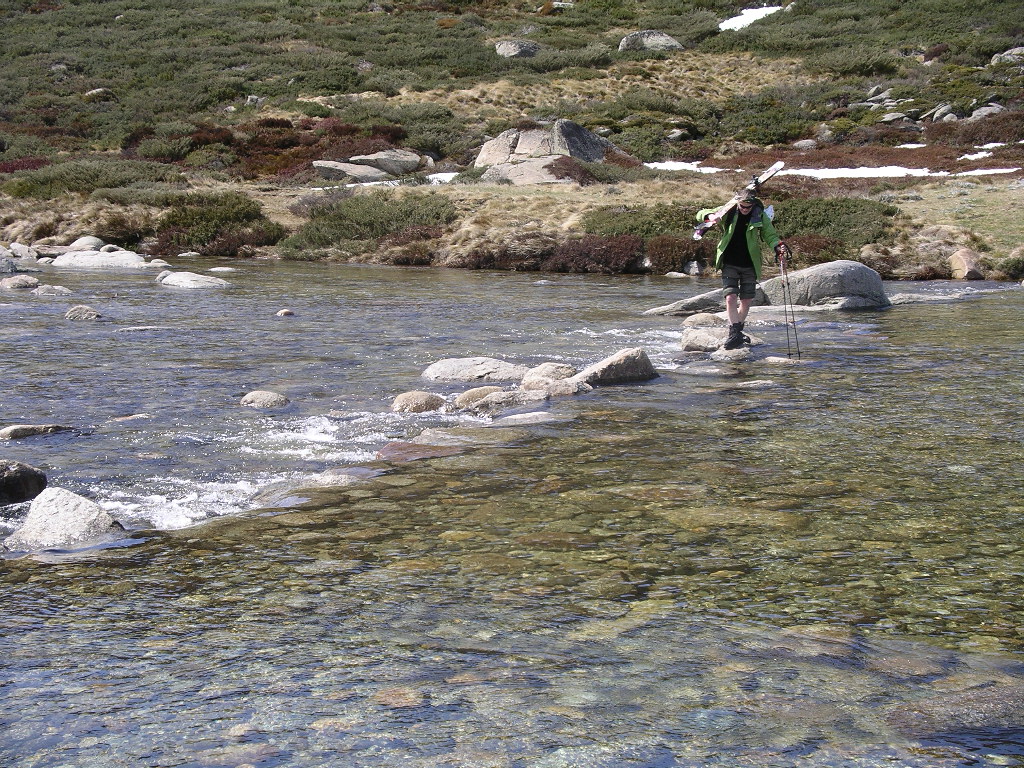



Recent Comments