Search

Mountain Journal

Environment, news, culture from the Australian Alps

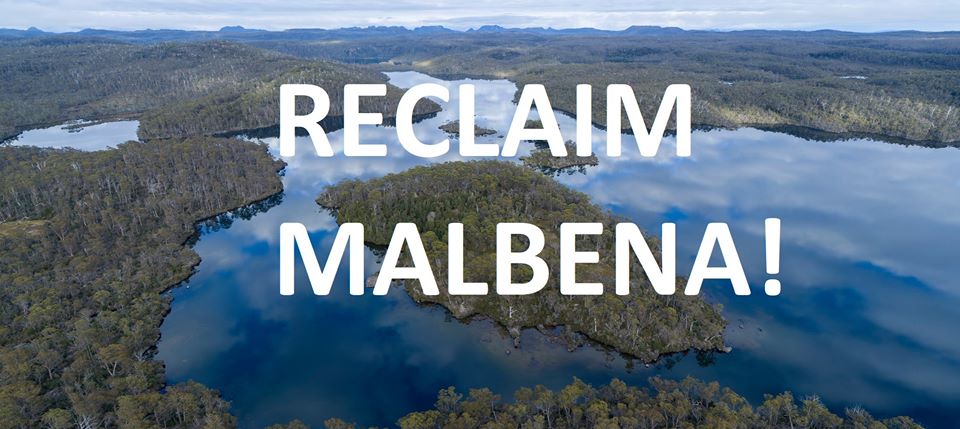
Reclaim Malbena

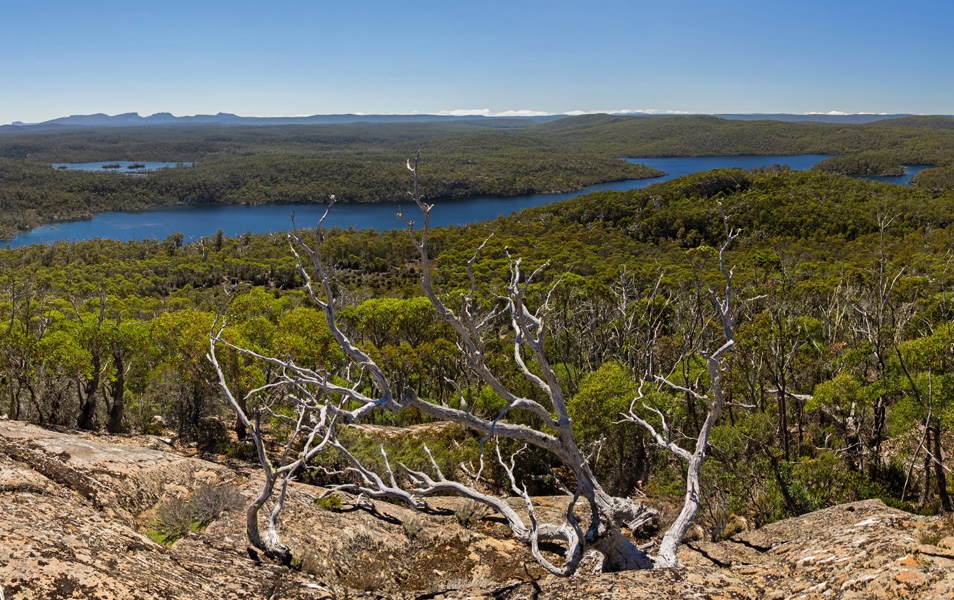
As the long campaign to protect World Heritage Areas from commercial development continues (and in the aftermath of the Federal Court case against the planned ‘helicopter tourism’ development proposed for Lake Malbena on Tasmania’s Central Plateau), a trip has now been planned to visit the site threatened by this proposal.

The Fishers and Walkers Against Helicopter Access Tasmania and the Wilderness Society have organised the camp, which will happen over the weekend of December 7 and 8.

Continue reading “Reclaim Malbena”

Approval of Lake Malbena ‘helicopter tourism’ project overturned in the Federal Court

The Wilderness Society (TWS) and Environmental Defenders Office (EDO) have had a win in the ongoing battle over the development of a tourism venture at Lake Malbena in Tasmania’s Central Plateau. The Federal Court has set aside the decision by the federal environment minister Melissa Price that the Wild Drake heli-fishing camp in the World Heritage listed Walls of Jerusalem national park is not a ‘controlled action’ under the Environment Protection and Biodiversity Conservation Act 1999. (A controlled action can avoid full environmental assessment).

The federal government’s controversial decision in August 2018 to allow helicopter flights and huts on Lake Malbena had been challenged in the Federal Court. Earlier this year, TWS sought a judicial review of the Federal Environment Minister’s decision that the Halls Island, Lake Malbena development is “not a controlled action” under the [federal] Environment Protection and Biodiversity Conservation Act 1999 (EPBC Act).

This is a great outcome.

This decision does not stop the proposal.  It means that the Parks and Wildlife Service cannot grant proper approval of the proposal.  It will now be sent back for proper approvals process under the EPBC Act. Wilderness Society spokesman Tom Allen says the decision had effectively put a stop to the plans that included huts, a communal building, walkways and helicopter flights.

Continue reading “Approval of Lake Malbena ‘helicopter tourism’ project overturned in the Federal Court”

Victorian government protects Old Growth forests

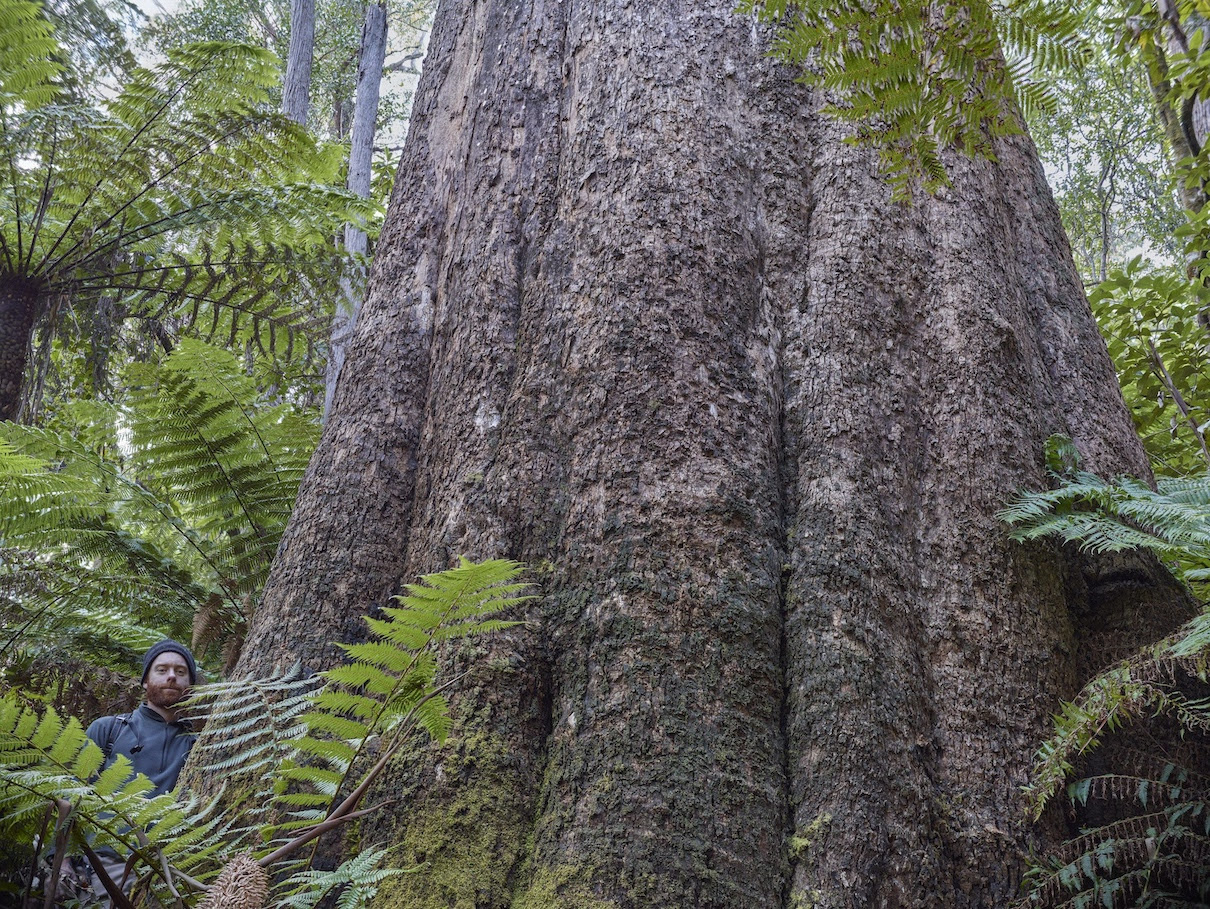
In a major announcement, the Andrews government has stated that it will ‘immediately’ protect all remaining old growth forest on the east of the state as part of a plan to phase out native forest logging and protect 96,000 hectares of forests. The old growth areas amounts to 90,000 hectares of mountain and foothill forests.

Environmental groups such as Goongerah Environment Centre (GECO) and Friends of the Earth (FoE) have welcomed the announcement and also called for the release of extra detail and maps to ensure the announcement results in lasting and effective protection.

This outcome is especially good news for the heartland of remaining old growth – the hill country of East Gippsland.

Continue reading “Victorian government protects Old Growth forests”

Calling Backcountry film makers

Are you a backcountry skier, snowboarder or snow shoer who also makes films?

We are looking for some short, locally made backcountry films to screen at the Backcountry Film Festival (BCFF) in Melbourne (March or April 2020) and the 3rd Victorian Backcountry Festival (Mt Hotham, September 2020). The BCFF program is put together by the US-based Winter Wildlands Alliance, and this season features a great line up of films (details here). But we like to open up the season with a local film.

Here’s an example of one from a couple of years ago – Mt Townsend 2209. If you’re keen to contribute something please get in touch. Cam.walker@foe.org.au

It needs to be under 7 minutes and suitable quality for a big audience of backcountry enthusiasts.

Check here for details on the Backcountry Film Festival.

A ski resort that runs on 100% wind power

Lots of people and businesses in the snow industry are doing great things to reduce greenhouse gas emissions and advocate for serious political action to respond to the existential threat posed by climate change.

There are lots of inspiring initiatives, like Thredbo resort in NSW who have announced that it will ensure that ‘all its major resort operations are now powered by renewable energy’ or Mt Abram, in the North East of the USA, who installed 3,190 solar panels to become completely reliant on renewable power to meet its energy needs (lots more stories here).

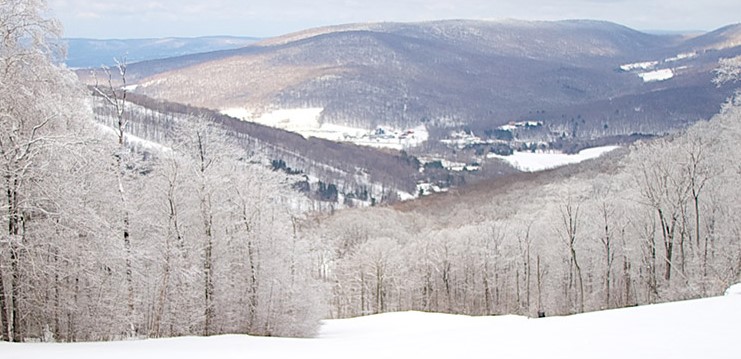
We haven’t yet covered this story: Jiminy Peak Mountain Resort is the largest resort in the southern New England region of the USA. It is also the only mountain resort in North America to generate its own energy using wind power.

Continue reading “A ski resort that runs on 100% wind power”

‘Have You Considered Relocating Because of Climate Change?’

A decade ago, I moved from Melbourne to Castlemaine in Central Victoria. Box and Ironbark, Peppermint and Yellow Gum country. Hilly sandstone country. The land of the Jaara people. It took me a while, but I fell in love with the place, and now its home.

But even at the start, I remember thinking ‘this is a crazy place to live in a time of climate change’. Already hot and dry in summer, its going to get hotter and drier in coming years and experience worse water stress. It’s the same story all over. Climate change is already happening, and bringing impacts everywhere. Along the inland rivers, towns are running out of water. Along the coast, at places like Inverloch, storm surge is stripping away coastlines. In Mildura, the town had 65 days last summer that were above the heatwave threshold. Parts of Australia are expected to become uninsurable because of more regular flooding. And in the mountains, our winters are already becoming more erratic. It goes on and on. Nowhere is immune.

We are all familiar with the plight of climate refugees – people whose environment or economy is so impacted by the effects of climate change that they have no choice but to move. Mostly these are seen as people in the global South – the ‘developing’ world (although Hurricane Katrina, which devastated much of the USA’s South and displaced millions, shows that this is also a reality even in the rich world).

Something that I have noticed in recent years is a growing number of people who have opted to move from choice, not necessity, who are seeking a friendlier climate. I have lost count of the people I know or have met who have bought land in Tasmania, especially in the south west or north east. Some of them don’t live there: they have bought land as a safety net in case it goes to shit on the mainland. I know people from north east Victoria, in towns like Wangaratta, who have moved to the cooler and wetter hills of South Gippsland. There are people who have swapped the dry inland slopes of Central VIC for the lusher coasts of the Otways. And I know people who have left the hill country of Gippsland and Central Highlands, tired from the relentless stress of ever worsening fire seasons.

Continue reading “‘Have You Considered Relocating Because of Climate Change?’”

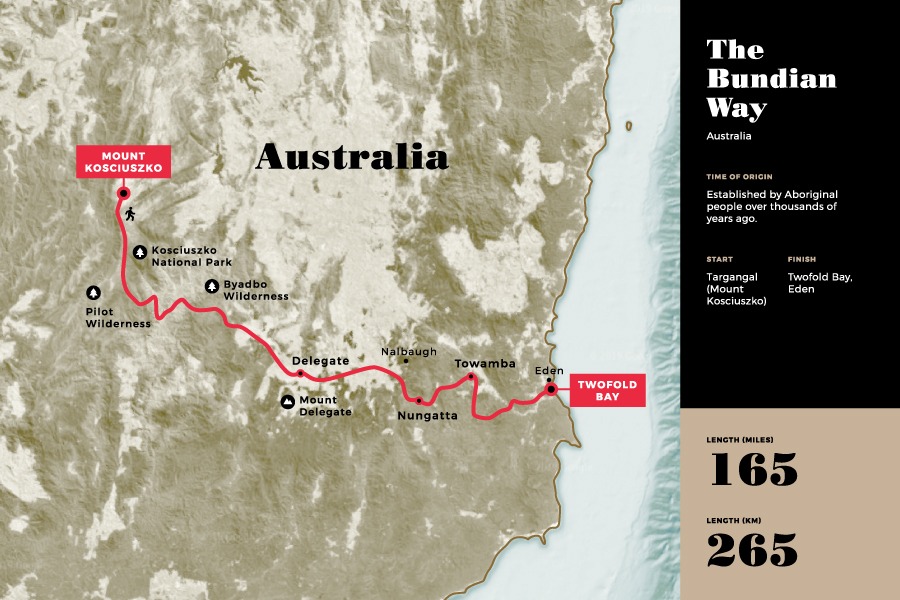
From Targangal (Kosciuszko) to Bilgalera (Fisheries Beach). Mapping the Bundian Way.

There has long been discussion about the trail that once linked the south eastern coast of NSW to the Snowy Mountains. It is called the Bundian Way. Prior to the invasion, Indigenous people moved between the coast, the Monaro Tablelands and the higher mountains. Nowdays called the Bundian Way, this route is a historical pathway between Targangal (Kosciuszko) and Bilgalera (Fisheries Beach) that connects the highest part of the Australian continent and the coast.

There is a book that explores the Bundian Way, called On Track: searching out the Bundian Way written by John Blay. Now the route has been mapped and can be found online.

Continue reading “From Targangal (Kosciuszko) to Bilgalera (Fisheries Beach). Mapping the Bundian Way.”

Tasmanian Wilderness Guides step up to protect wild places

It is always heartening to see outdoor groups and businesses getting active to protect the places they love and rely on. From the many groups who campaign for the creation of new parks in order to protect wild places, to the efforts of Protect Our Winters, who are mobilising the winter sports community, there are many great groups and initiatives out there.

With ongoing attempts by the Tasmanian government to open up national parks and World Heritage areas to further commercial tourist operations, it has been great to see the organised campaigning by the group that represents outdoor guides in that state.

Continue reading “Tasmanian Wilderness Guides step up to protect wild places”

TAS planning tribunal approves helicopter tourism on the Central Plateau

In February this year, the Central Highlands Council in Tasmania rejected the Lake Malbena tourism development.

The controversial ‘helicopter tourism’ development planned for Halls Island in Lake Malbena on Tasmania’s central plateau had previously been approved by state and federal governments. The local Council was the last government authority which needed to sign off on the project. It rejected it and it had been hoped that the decision by Council would be the end of the proposal.

However, the developer lodged an appeal against this decision. And now the state’s planning tribunal has overturned Central Highlands Councils attempt to have it blocked.

Continue reading “TAS planning tribunal approves helicopter tourism on the Central Plateau”

Call out for volunteers – Hawkweed eradication program

This summer, Parks Victoria (PV) will continue its volunteer program which is working on eradicating the invasive Hawkweed from the Bogong High Plains.

Hawkweeds are a highly invasive pest plant species which could cause major environmental damage in alpine and sub-alpine areas of Australia if not eradicated early.

The volunteer courses run out of Falls Creek over the summer in week long blocks. Details are below.

Continue reading “Call out for volunteers – Hawkweed eradication program”

Investigation into commercial development in Tasmanian parks

There has been a limited number of private commercial tourism operations developed in wild places in Tasmania’s reserve system. There has also been a long campaign by some in the Tasmanian government and business to open up more of the state’s World Heritage and other protected areas to commercial development.

In 2018, plans were revealed to build a fly-in, fly-out luxury camp at Lake Malbena in Tasmania’s Wilderness World Heritage Area (TWWHA) on the Central Plateau. It is a remote location, to the south east of the famed Walls of Jerusalem area. The plan includes a helipad, accommodation, kitchen and toilet facilities.

More recently, the Tasmanian government promised $20 million to develop Tasmania’s “Next Iconic Walk”, which was intended to be another hut-based multi-day ‘Three Capes Track’-style development. After a public call for ideas last year, some 20 odd submissions were apparently received, but the full list has never been made public. Then, after another internal process without public scrutiny or clearly detailed selection criteria, the chosen option was announced on 26 July. Based on a proposal from the West Coast Tourism Association, it focuses on the Tyndall Range in the west of the state. The process by which prospective developments are assessed has been questioned over its transparency.

All these plans have been controversial and generated substantial opposition. Now they have attracted the attention of the auditor-general who has announced an investigation into the Expression of Interest (EOI) process for these developments.

Continue reading “Investigation into commercial development in Tasmanian parks”

An ‘unprecedented’ number of plume dominated fires.

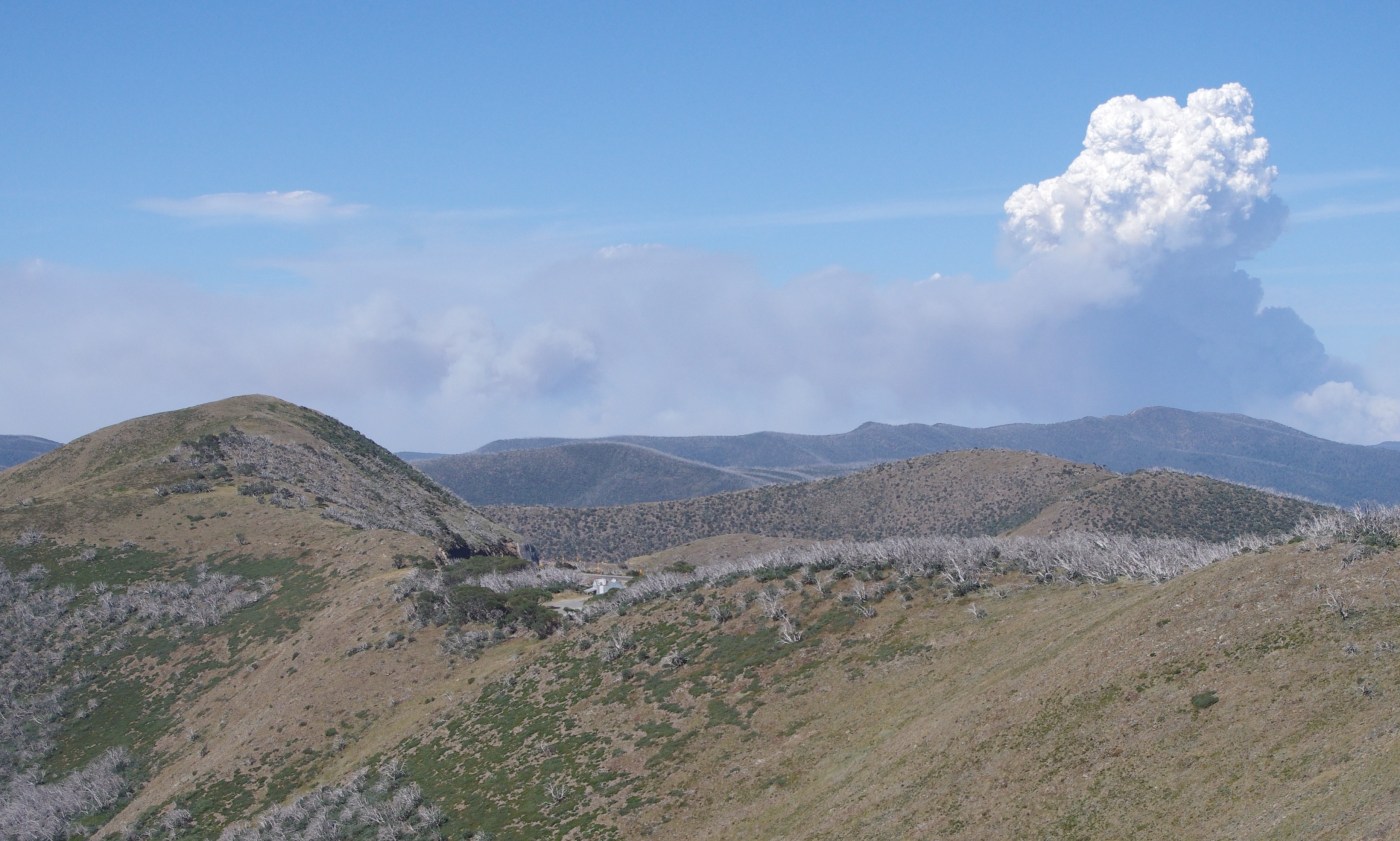
We know that climate change is driving hotter and drier summers, and making fire seasons worse, and this is already impacting on mountain environments. Last summer there were significant fires across eastern Victoria and the Victorian Mountains, as well as in Tasmania. While the largest one burned in the Bunyip state park about 65km east of Melbourne, there were also fires which closed the Southern Alps and Foothills areas of the Alpine National Park, especially around Dargo and Licola.

One of the features of these fires was the formation of pyrocumulus clouds (as shown in the image above, taken from the north of the fire burning out of the Dargo River and onto the Dargo High Plains, with Mt Blowhard in the foreground). The Licola fire burnt with such ferocity it was visible on the Bureau of Meteorology’s radar. A huge thundercloud formed from the fire, which then produced more than 1,200 lightning strikes, some of which sparked new fires. It created unpredictable weather conditions that hampered fire fighting efforts.

Continue reading “An ‘unprecedented’ number of plume dominated fires.”

Blog at WordPress.com.

Up ↑