Search

Mountain Journal

Environment, news, culture from the Australian Alps

ACT government to consider declaring feral horses a pest

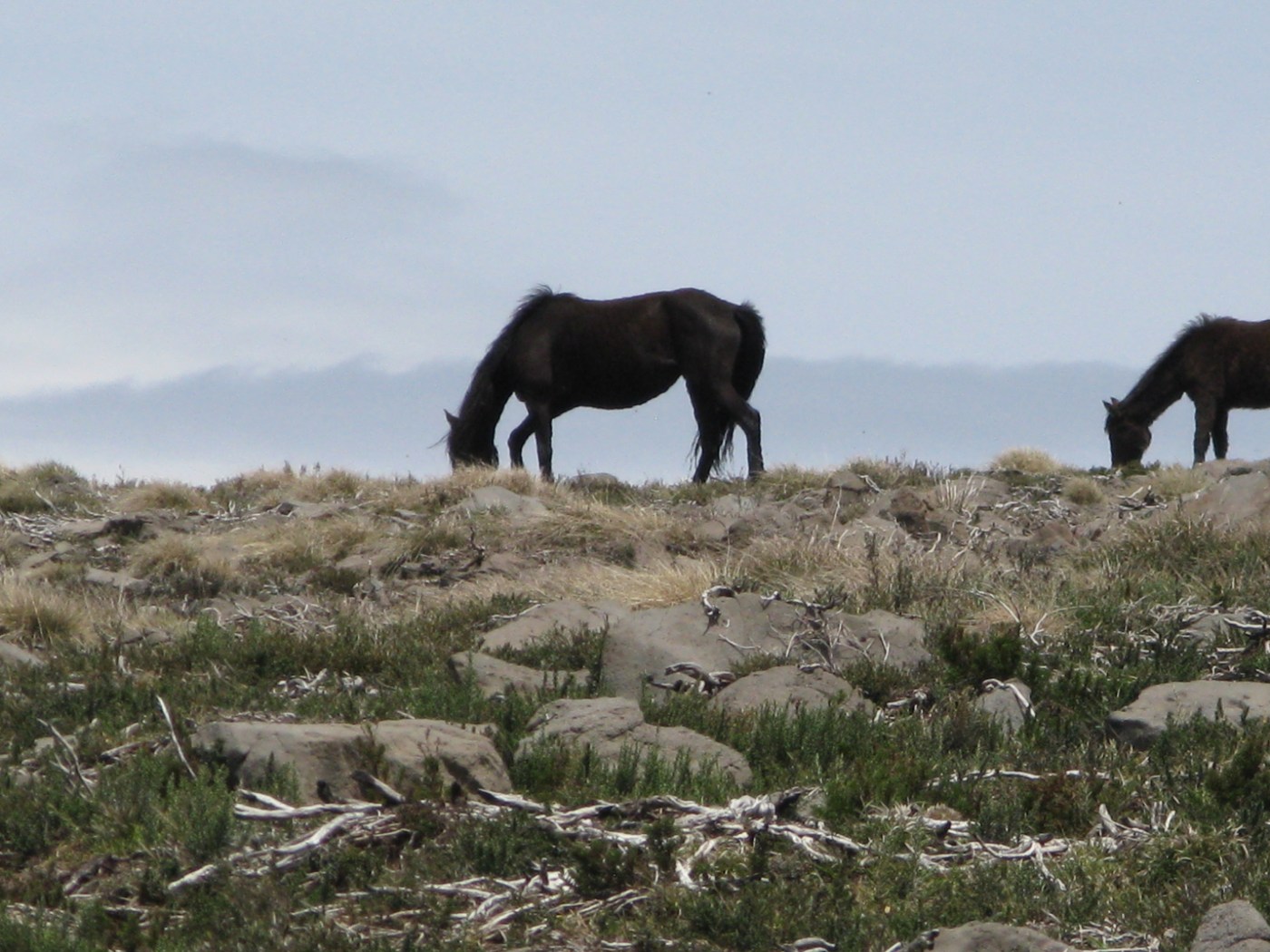
Wild horse populations are a problem right across the Alps. While there are plans to reduce numbers in Victoria, the NSW government has opted for a bizarre position that believes that ‘the cultural significance of brumbies needed to be recognised’, and hence culling in alpine national parks has been reduced. As a result, the NSW National Parks and Wildlife Service has not undertaken any feral horse control in alpine areas for more than 18 months. This has meant that the large existing wild horse population continues to grow, and continues to adversely impact on alpine ecosystems.

Continue reading “ACT government to consider declaring feral horses a pest”

Climb8: 700 kms across the Alps on snowshoes

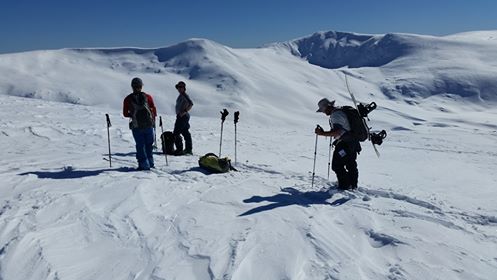
Climb8 will be a long distance snowshoe expedition planned for the 2020 winter.
It aims to cross 36 summits, visit 8 ski resorts and carry out climate change research along the way.

Continue reading “Climb8: 700 kms across the Alps on snowshoes”

Underfrog – a documentary about horses in Kosciuszko National Park

Feral horses damage alpine wetlands, stomp fragile waterways and threaten native wildlife and yet the NSW Government created a law last year giving feral horses heritage protection in Kosciuszko National Park, overriding the legal protection provided to the native plants and animals of the national park.

Reclaim Kosci and the ANU environment collective are hosting the ACT premier of the Underfrog documentary in a night about the feral horses issue in Kosciuszko National Park.

This Saturday May 11, in Canberra.

Continue reading “Underfrog – a documentary about horses in Kosciuszko National Park”

An update on the ecological costs of the 2019 Tasmania fires

Bushfires, which were started by lightning strikes, burnt large areas of Tasmania last summer.

There have been fears expressed by ecologists that large areas of fire sensitive vegetation have been impacted.

An initial desk top assessment carried out by researchers at the University of Tasmania suggested that the areas of these vegetation types affected was very small.

In March, the Tasmanian Parks and Wildlife Service updated their assessment, which also stated that only small areas of vegetation types that are rated ‘Extreme fire sensitive’ (containing components that will not recover from fire, such as rainforest with king billy pine, alpine conifer communities, alpine deciduous beech communities and rainforest with deciduous beech) and ‘very High fire sensitive’ communities (including alpine and subalpine heathland without conifers, rainforest without conifers, and mixed forest) had been affected.

Now, an additional assessment, by the Tasmanian National Parks Association (TNPA), adds further detail to our understanding of the impacts of this summer’s fires.

Continue reading “An update on the ecological costs of the 2019 Tasmania fires”

Logging stopped near Icy Creek

Forest Conservation Victoria reports that:

“Logging has been halted today in an area of forest at Icy Creek, along the main scenic tourist road out to Mt Baw Baw. A person is suspended 25 metres above the ground up a tree on a platform tied to logging machinery. Their actions are preventing the destruction of Ballantynes Saddle, which still remains after major decimation on the adjacent ridge.”

Ballantynes Saddle lies on the road to Mt Baw Baw between Icy Creek and the township of Tanjil Bren.

Continue reading “Logging stopped near Icy Creek”

Human sign on kunanyi/ Mt Wellington

There was a great turnout at the human sign event over the weekend to show opposition to the cable car planned for kunanyi/ Mt Wellington.

Check the video here.

For images, check the Respect The Mountain facebook page.

Background on the campaign available here.

IMAGE: Rob Blakers.

In the chaos, it’s important to remember the good stuff

Regardless of who wins the federal election, life will go on, and winter snows are getting closer. But it is still easy to get depressed about the chaotic state of federal politics, and the appalling lack of action on climate change that we have witnessed under the current Coalition government. Fires burnt large areas of the mountains this summer, there are ongoing attempts to allow commercial developments in national parks and other wild places, and feral horses have, in effect, been given protected status in Kosciuszko national park. Faced with ever more intense fire seasons, the forests are getting younger as we get older.

As the saying goes, ‘if you’re not outraged, you’re not paying attention.’ And, if you’re paying the slightest bit of attention to the natural world, then it’s normal to feel constant Solastalgia.

So, its important to hold hope and to pay attention to the good things that are happening. As Outside magazine recently reminded us, being out in nature is good for our bodies and also our emotional health. And there are also many good developments affecting the places that we love.

Continue reading “In the chaos, it’s important to remember the good stuff”

Adventurers for Climate Action

Anyone who spends time in wild nature knows that climate change is already impacting on the places we love. While for decades the primary political work of outdoor enthusiasts was to campaign for the protection of wild places through the creation of national parks and other reserves, now we need to also respond to the existential threat posed by unbridled climate change.

Older groups are shifting their focus to include acting on climate. For instance, the Wilderness Society, which has led so many campaigns to protect wild landscapes here in Australia, now has a strong focus on climate change. The wintersports group Protect our Winters (POW) is doing valuable work mobilising the skiing and riding communities and focusing them on decision makers.

Now another outdoor focused group – Adventurers for Climate Action – brings together the combined efforts of 10 organisations.

Continue reading “Adventurers for Climate Action”

‘The cure for depression is action’

In March this year, I sat on the summit of one of my favourite hills, Mt Blowhard, and watched the fires just to the south, which were in the Dargo River valley and burning up onto the Dargo High Plains. Already a mosaic of burnt and reburnt forest, now characterised by the grey trunks of burnt trees, I knew that this would be another wave of impact on these mountain forests. Some parts of north east VIC have now burnt more than three times in a bit over a decade. Scientists warn about the loss of alpine ash and snow gum if the frequency of fire continues to increase.

Continue reading “‘The cure for depression is action’”

Kosciuszko National Park turns 75

On April 18, Kosciuszko National Park will turn 75. We have to be grateful to the community members who argued for the creation of this park, and the government of the day who created it. Cattle were previously allowed to graze on the Main Range, the ‘roof of Australia’, and the damage has taken many decades to heal.

Sadly, seven decades on, the park faces threats from climate change and invasive species like wild horses. This release from Reclaim Kosci outlines the ongoing threat posed by feral horses.

Continue reading “Kosciuszko National Park turns 75”

Feral horse numbers ‘skyrocketing’ in Kosciuszko National Park

The long debate over feral horses in alpine areas was derailed by a decision taken by the NSW government to protect rather than limit wild horse populations in Kosciuszko National Park. It was clear that this would lead to greater environmental damage in precious alpine areas.  Now Freedom of Information documents show that horse numbers have ‘risen dramatically’ since all horse control was halted in the park 20 months ago.

Continue reading “Feral horse numbers ‘skyrocketing’ in Kosciuszko National Park”

Public meeting on the kunanyi/ Mt Wellington cablecar

Tomorrow night (Tuesday April 15) the long awaited public meeting on the cable car proposal for kunanyi/ Mt Wellington will be held. Members of the Council, Wellington Park Trust and the Department of State Growth will be on hand to answer your questions. Let’s fill the place! Banners and placards are welcome.

7pm for 7.30pm at the City Hall – not the Town Hall! 56-63 Macquarie Street.

You can RSVP on Facebook

Blog at WordPress.com.

Up ↑