Now, here’s a serious blast from the past (apologies for the bad pun). While looking through some old files I found an article from 1978 from the Friends of the Earth (FoE) magazine, Chain Reaction (number 4(1), 1978) about the threat of uranium mining in the Victorian Alps.
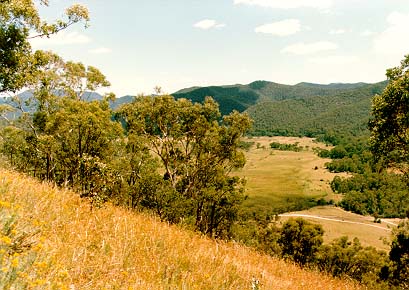
Back in the mid 1970s, a German company called Urangesellschaft had exploration rights to a very large area of the Alps, from near Tolmie near Mansfield, right down almost as far as Bairnsdale. They had a total of almost 6,000 square kilometres of land under license and this included the Avon wilderness area and large sections of the Wonnangatta valley.
“We live in remarkable times. What is done, or isn’t done, in the next few years will determine the future”
– David Suzuki
“We need people to fall in love with the outdoors. Without that personal connection with nature it’s hard to get them to protect it”
– Jeremy Jones
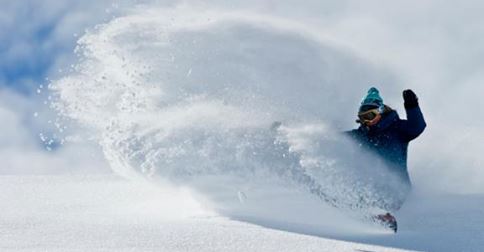
Legendary snow boarder Jeremy Jones and environmentalist David Sukuki provide the narrative to the film The Little Things, which has just been released.
The Little Things is a snowboard movie project based on “environmentally conscious riders who are inspirational through their riding, as well as their sustainable ways of living and thinking”.
The film is an initiative taken on by professional snowboarder Marie-France Roy and directed by Filmmaker Darcy Turenne in which all the riders are bringing to life the importance of protecting and living in balance with our environment.
100% of the proceeds from the film will be donated to Protect Our Winters (POW) and The David Suzuki Foundation (DSF). The film makers say that “the goal is to bring snowboarding one step ahead, while inspiring positive change that will secure the same lifestyle and quality of life that we have for future generations”.
Come and hear what the boundary change to the Pinnacle Specific Area really means and how it will affect the mountain. Learn how to make your submission to the Wellington Park Management Trust most effective.
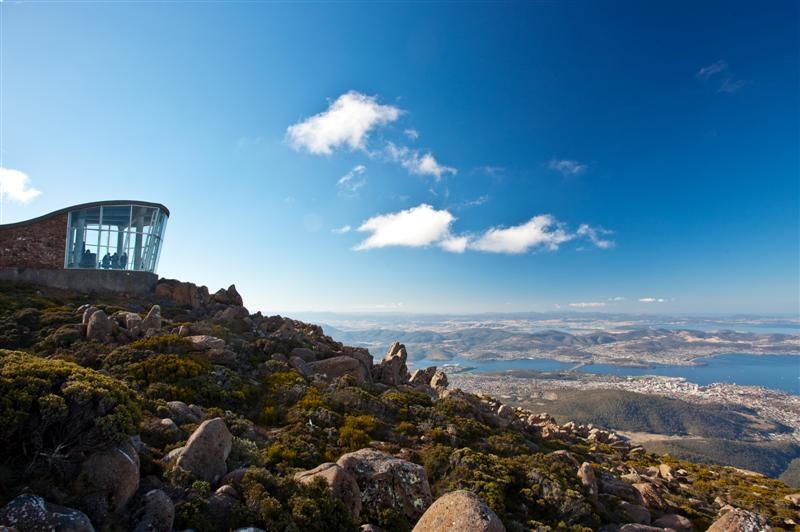
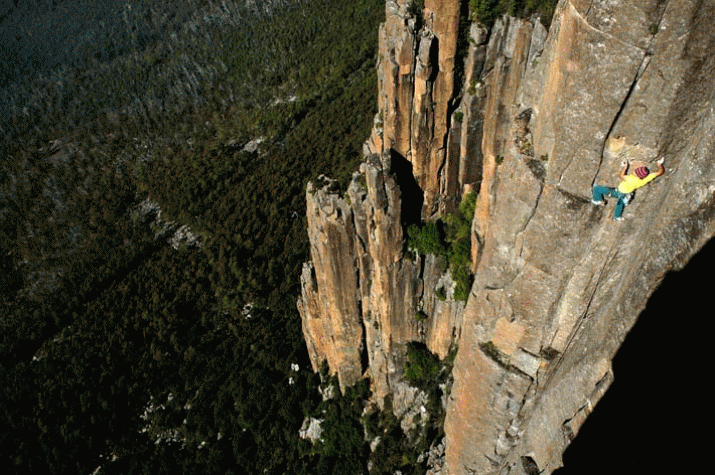
This is impressive. A remarkable group of climbers have joined together to express their opposition to the proposed cable car development on Mt Wellington/ kunanyi in Hobart. There are some real luminaries of the climbing world signed on, and this will help bring international attention to this ridiculous project.
As we wait patiently for cooler weather and serious snow falls, you may enjoy this one. Its the pilot issue of a newsprint publication.
The previous one focused on all things snow and was called The Drift.
The Watershed is a collaborative newsprint publication between The Usual (‘The Usual is a creative team with a penchant for the outdoors’) and Patagonia to celebrate the joy of simple fly fishing, healthy rivers, dam busting, and sustainably sourced food.
The Watershed features Patagonia founder Yvon Chouinard, Patagonia fly fishing ambassador April Vokey, DamNation producer Matt Stoecker, director Travis Rummel, 1% for the Planet co-founder Craig Mathews, dam buster Katie Lee. With contributions by Malcolm Johnson, Jeremy Koreski, Paul Greenberg, Jeanine Pesce, Keith Malloy, Trevor Gordon, Stefan Knecht, Jim Mangan, and others.
Pick up your Spring/Summer 2014 copy at select Patagonia stores worldwide.
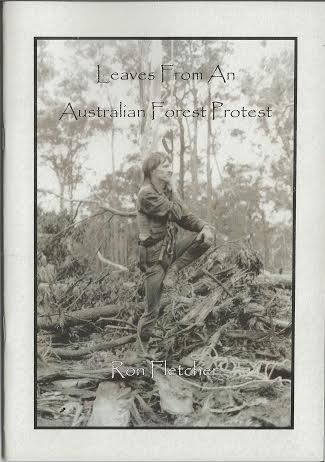
In the late 1980’s the campaign to save the majestic forests of the South East New South Wales hinged on a Base Camp set up at Reedy Creek to provide a jumping off point for Direct Action.
The forest protests were having limited effect and getting very little media. Late one night, around the campfire, a small group of greenies discussed their ’perfect’ action. It turned out that each of us dreamed the same dream; getting away from the mass arrest protests of the day where people simply presented themselves en-mass for arrest and moving up into the trees where the Police couldn’t reach us and staying there – that is how the first long-term tree action on mainland Australia was born.
This is a poetic memoir of the actions that followed by Ron Fletcher, who was a central figure in the campaign. As Ron notes “while much of those forests has since been sacrificed to the wood chippers greed, the spirit and skills developed through Nullica and subsequent SE forest protests continued and grew to be followed by many powerful platform protests and protestors”.
NB: please note that this year, because of the venue, we won’t have drinks for sale.
Co-hosted with Melbourne University Ski Club.
The festival is run by not-for-profit hosts, and in Australia, all funds raised will support the Friends of the Earth (FoE) climate campaign. Funds will go to FoE’s work with regional communities to stop the development of new coal mines and unconventional gas drilling across southern Victoria.
With a couple of good dustings across the Alps in early May, everyone is getting impatient for winter. Thoughts turn to the big questions in life: when will we get that first serious dump? What trips am I going to do? Do I need any new gear?
If you’re getting ready for the first serious falls and opening weekend, maybe it’s time to think about:
There are also a growing number of outdoor equipment producers who are paying attention to ensuring they have good working conditions in their factories. A lower impact snow industry is certainly getting closer every year – but only if we support it.
our carbon footprint.
Here in Australia, a trip to the snow usually means a lot of hours sitting in a car. But most resorts are well serviced by buses. Perhaps think of doing at least one trip a year by bus, as a practical way of reducing your impact. There are various ‘carbon calculators’ that are available so you can measure – and hopefully – reduce the impacts of your lifestyle.
If you’re a backcountry skier/ boarder, one option is to use buses to do longer tours: eg starting at Falls Creek and ending at Hotham.
hassle the resorts.
Most Australian ski resorts have given up on acting in any meaningful ay to reduce their contribution to global arming. In the US and Europe, many resorts are implementing a range of energy efficiency programs, sourcing green power (and even producing their own) and other measures. Resorts here have abandoned meaningful commitment to reducing impact.
If you stay in a resort, why not give them some feedback about the need for them to show leadership in responding to climate change?
sunscreen.
Up high, just that bit closer to the sun, we need our sunblock. But what about the hidden nasties? Check here for a guide to nano free sunscreens.
keep your recycling hat on.
At home, most of us nowdays think about the little things that make a big difference: separating the rubbish from the recycling, turning off the lights when we leave the room, keeping an eye on water and energy use. A big problem with the massive influx of people to resorts in winter is that lots of them seem to leave their conscience at home when they are on holidays. Wasteful behaviour, lower recycling rates, cranking up the heating while leaving the door open. We’ve all seen it.
But if we can look after these things at home, we can certainly do it while on holidays …
protecting the Alps.
Climate change is an ever a greater risk to the mountains that we love and enjoy. Please think about supporting one of the groups that campaign on climate change or protecting the Alps.
I recently reviewed the ski film All.I.Can. It’s such a great film, but has an awful take home message when it comes to climate change. So when I spotted this film, I was instantly cheered up.
Momenta is a new documentary starring legendary snowboarder Jeremy Jones, climber Conrad Anker, and other big-mountain athletes. It aims to mobilise people to stop a climate-wrecking proposal to ramp up coal exports from the western USA to China.
No, its not going to have the amazing skiing and mountain images of films like All.I.Can. But it brings some significant voices to the debate that – hopefully – can reach the skiing and boarding community and get them organised against this proposal.
The idea for “Momenta,” one of this year’s must-watch environmental documentaries for people concerned about climate change and the future of snow, was hatched in Boulder’s Flatirons in the fall of 2012. Big-mountain snowboarder Jeremy Jones was visiting town with Chris Steinkamp, executive director of Protect Our Winters (POW), the climate change group Jones founded. The two men decided to take a hike to brainstorm ways that POW could rally opposition against a major climate threat that has received scant attention from the national media—a coal train.
“We don’t have the ability yet to mobilize a grassroots army, so we decided a documentary was the best way to get the word out,” Steinkamp says.
“Momenta” sheds light on a climate-wrecking proposal to ship vast amounts of Rocky Mountain coal to Asia. The film stars Jones, legendary climber Conrad Anker and other big-mountain athletes who speak about the changes they’ve seen in the mountains during their lifetimes—as well as biologists, climate scientists, physicians and activists who detail the detrimental consequences of the plan hatched by energy companies, which will excavate vast coal deposits in Montana’s and Wyoming’s Powder River Basin, transport it by rail to the Pacific Northwest, then ship it across the Pacific.
Critics deride the coal-to-China plan as “Keystone on steroids,” a reference to the controversial Keystone XL Pipeline proposal that would transport tar sand oil from Alberta, Canada, to the Gulf Coast for export. Keystone has been called a climate bomb. Burning the Powder River Basin coal, however, poses an even bigger climate threat. “That coal has to stay in the ground,” environmental author and activist Bill McKibben explains in the film.
The Snowy River, in Kosciusko National Park looking downstream from Island Bend Dam
The NSW Government’s Bill to amend the Snowy Hydro Corporatisation Act and replace the independent Snowy Scientific Committee with an advisory committee under the control and direction of Katrina Hodgkinson (NSW Minister for Primary Industries) passed the Lower House last week.
One of the key benefits of the current Committee is that it was “firmly independent of government” as Ms Hodgkinson puts it (ie, doesn’t tow a government line).
According to a report in the SMH:
Scientists, including former members of the six-member scientific committee, said the separation from powerful interests such as the giant Snowy Hydro Ltd gave the panel a critical watchdog role that is likely to be lost. Irrigators, Snowy Hydro and government officials from NSW and Victoria are likely to hold sway, they say.
Independence is “the way scientists give you the best advice”, said Sam Lake, an aquatic expert from Monash University, who served on the committee.
It is set to pass the Upper House Tuesday 25th March unless the Shooters and Christian Democrats change their mind and vote against it.
An independent Snowy Scientific Committee is vital for the restoration of the Snowy River and all other rivers affected by the Snowy scheme.
take action
If you value the Snowy, please write to the Christian Democrats and Shooters and Fishers policy managers, urging them to oppose the government’s Bill.
A quick email is sufficient.
Possible text:
(cut and paste, make any changes you want, add your name and address and email to the two emails below).
Dear Paul and Robert
Snowy Hydro Corporatisation Act
I write to you to express my concerns about the NSW Government’s Bill which will amend the Snowy Hydro Corporatisation Act and replace the independent Snowy Scientific Committee with an advisory committee under the control and direction of Katrina Hodgkinson.
I believe it is essential that the panel continue to be composed of independent, appropriately skilled people. If the proposed changes in the Bill are passed, a critical watchdog role is likely to be lost. Irrigators, Snowy Hydro and government officials from NSW and Victoria are likely to hold sway, rather than scientists.
Having the ability to get independent advice is the best way for government to make sound, long term decisions about the Snowy River. An independent Snowy Scientific Committee is vital for the restoration of the Snowy River and all other rivers affected by the Snowy scheme.
I urge you to vote against the proposed amendments to the Snowy Hydro Corporatisation Act.
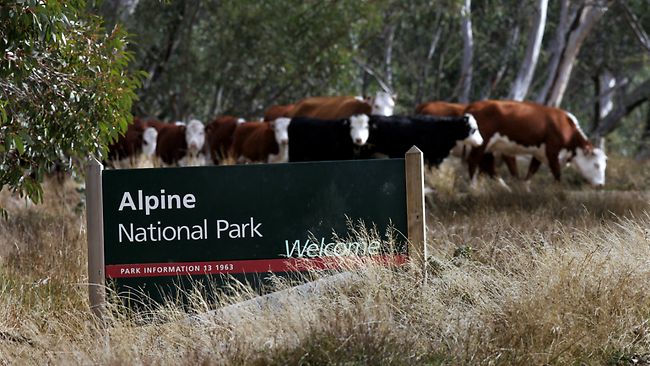
In a sad but not unexpected move, the federal environment minister Greg Hunt has approved the Victorian government’s grazing trial in the Wonnangatta Valley within the Victorian national park.
Greg Hunt approves Victorian Alpine National Park cattle grazing trial
Cattle grazing will return to Victoria’s Alpine National Park after federal Environment Minister Greg Hunt approved a state government trial to have 60 to 300 cows in the park.
Mr Hunt’s approval stands in contrast to the Gillard Government which blocked a similar – albeit larger – cattle grazing trial, on the grounds it would damage the environment and the heritage values of the alpine region.
The Napthine government has pursued the trial saying it is necessary to test whether grazing reduces the risk of bushfires by removing fuel loads. Conservationists say there is little scientific rigour behind the program and past research shows cattle grazing has no impact on stopping bushfires, while damaging sensitive alpine ecology.
Under the trial, 60 cows will be released into the Wonnangatta Valley in the park for the first year of the program. In the second and third years of the trial, up to 300 cows could be introduced, though Mr Hunt would need to approve the expansion and extra years first.
Advertisement
The approval of the second and third years of the trial by Mr Hunt will be contingent on additional surveys of rare and endangered species in the area and the impacts on heritage.
Mr Hunt has also put limits on the numbers of dogs and horses allowed to be used during the trial. Temporary electric fencing will also be installed along some of the 262-hectare trial site boundary.
Cattle grazing was first removed from the Alpine National Park in 2005 by the Bracks government. Grazing is backed by the Mountain Cattlemen’s Association of Victoria, which says it is part of its long-standing cultural heritage and has campaigned for the practice to return to the national park.
Upon coming to power in Victoria in 2010, the Coalition moved to reinstall grazing in the park, proposing a five-year trial of 400 cattle across several sites to test its impact on bushfire risk.
The government then released cows in the national park in 2011 but was ordered to remove them by the Gillard Government because they had not sought approval under federal environment laws.
That sparked a bitter battle between Canberra and Spring Street over the trial. Former federal Environment Minister Tony Burke changed heritage protections for the alpine region to block cattle grazing, likening the proposal to Japanese “scientific” whaling.
The state government launched a legal challenge, which failed. When the Abbott government came to power last year it then resubmitted a slimmed down version of the trial.
Mr Hunt’s approval was made late on Wednesday night, and he says it followed a “rigorous assessment”.
The following article comes from the Winter 2014 issue of Mountain Magazine. It tracks the decline of a glacier in coastal Alaska and was written by Tad Pfeffer, scientific partner of the Extreme Ice Survey.
James Balog’s photographs reveal a glacier in retreat.
The tremendous snowfall of the Alaskan coastal ranges funnels down to the waters of Prince William Sound, where the Columbia Glacier calves icebergs into the Valdez shipping lanes. I’ve lived at the Columbia for a few weeks at a time for nearly 10 years, and at glaciers around the world for 35. I watch, measure, photograph, and poke at ice with various tools to reveal the inner workings of this particular cog in the great environmental machine we inhabit. My work is arcane, an oddball pursuit. Or it was. Surveying ice is now mainstream. The state of the world’s climate, and its glaciers, suddenly matters.
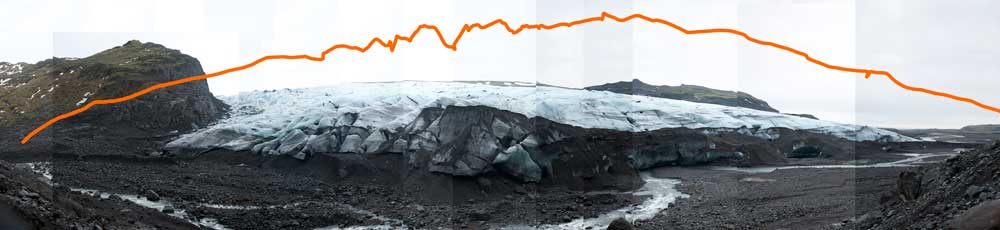
Since 1983, the Columbia Glacier’s length has shrunk by a third, losing 12 miles of ice. Pushing icebergs into the ocean at that rate is fast work. The Columbia can move 100 feet per day. In 2006, I used time-lapse photography as an observational tool. The next summer, renowned photographer James Balog and a film crew accompanied me to Alaska to do more.
The result of our work is the Extreme Ice Survey, a collection of large-scale, time-lapse imagery from Alaska, Iceland, and Greenland. Balog’s photos get the crucial point across: These giant systems are changing, and fast. Filmmaker Jeff Orlowski captured the big moments and the frustrating hurdles, and his contribution became the film Chasing Ice. Our collective labor informs those who must act, for the benefit of us all.
And our work continues. The EIS now gathers time-lapse photography from 28 cameras stationed at 13 glaciers in Greenland, Iceland, the Nepalese Himalayas, Alaska, and the Rocky Mountains. South America and Antarctica are next. Each camera collects 8,000 frames annually, taking a photo every half-hour of daylight. The images help the public learn more about glaciers and ice sheets so that 35 years from now, the Columbia might still exist.






 Mountain Journal
Recent Comments