Search

Mountain Journal

Environment, news, culture from the Australian Alps

Tag

bushfires

A new fire fighting team for Victoria

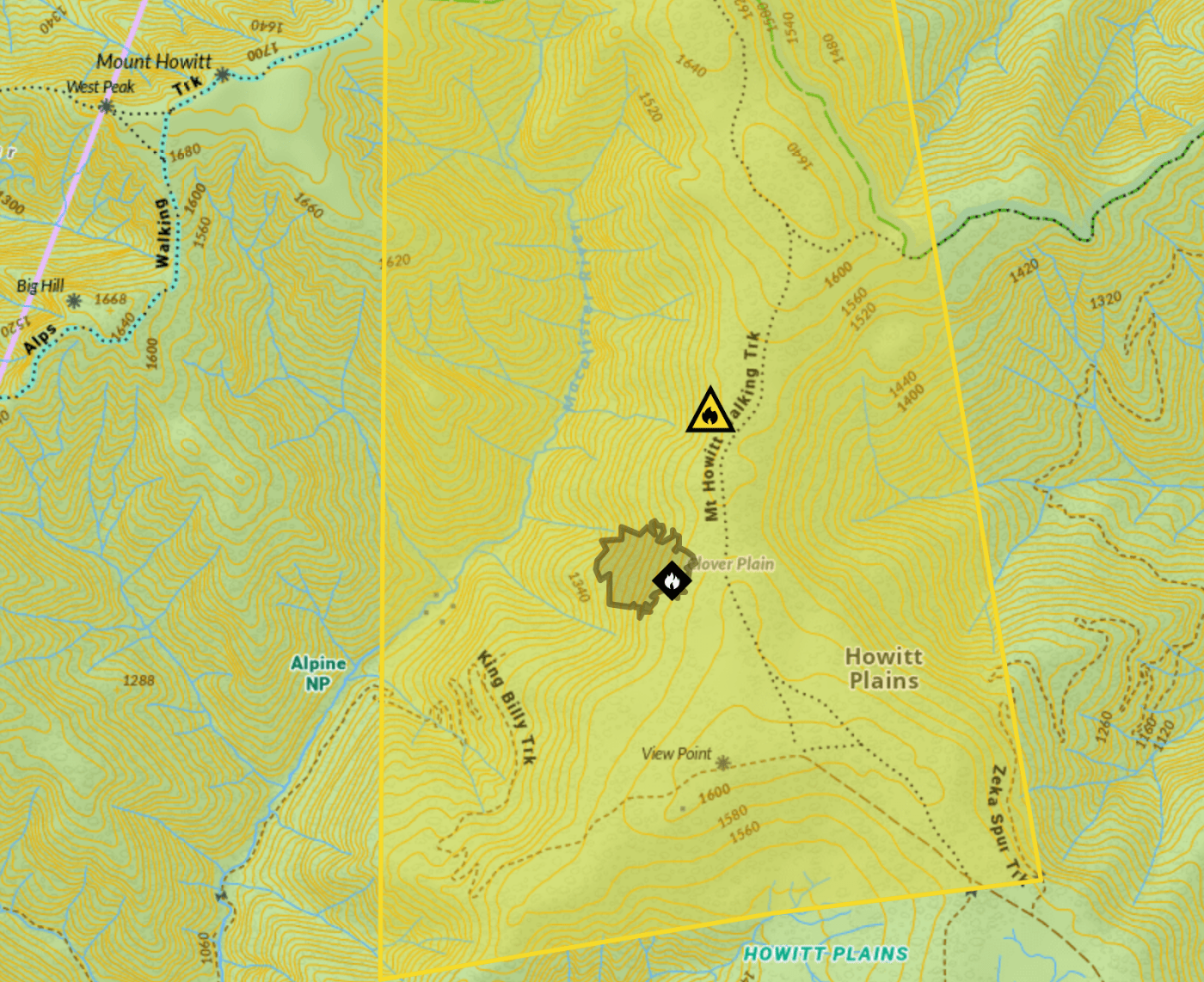
On Tuesday November 12, lightning started a fire in remote country north of Valencia Creek in the Victorian high country.

On Wednesday November 13, two rappel crews from Forest Fire Management Victoria (FFMV) were airlifted into the Avon Wilderness to fight the fire.

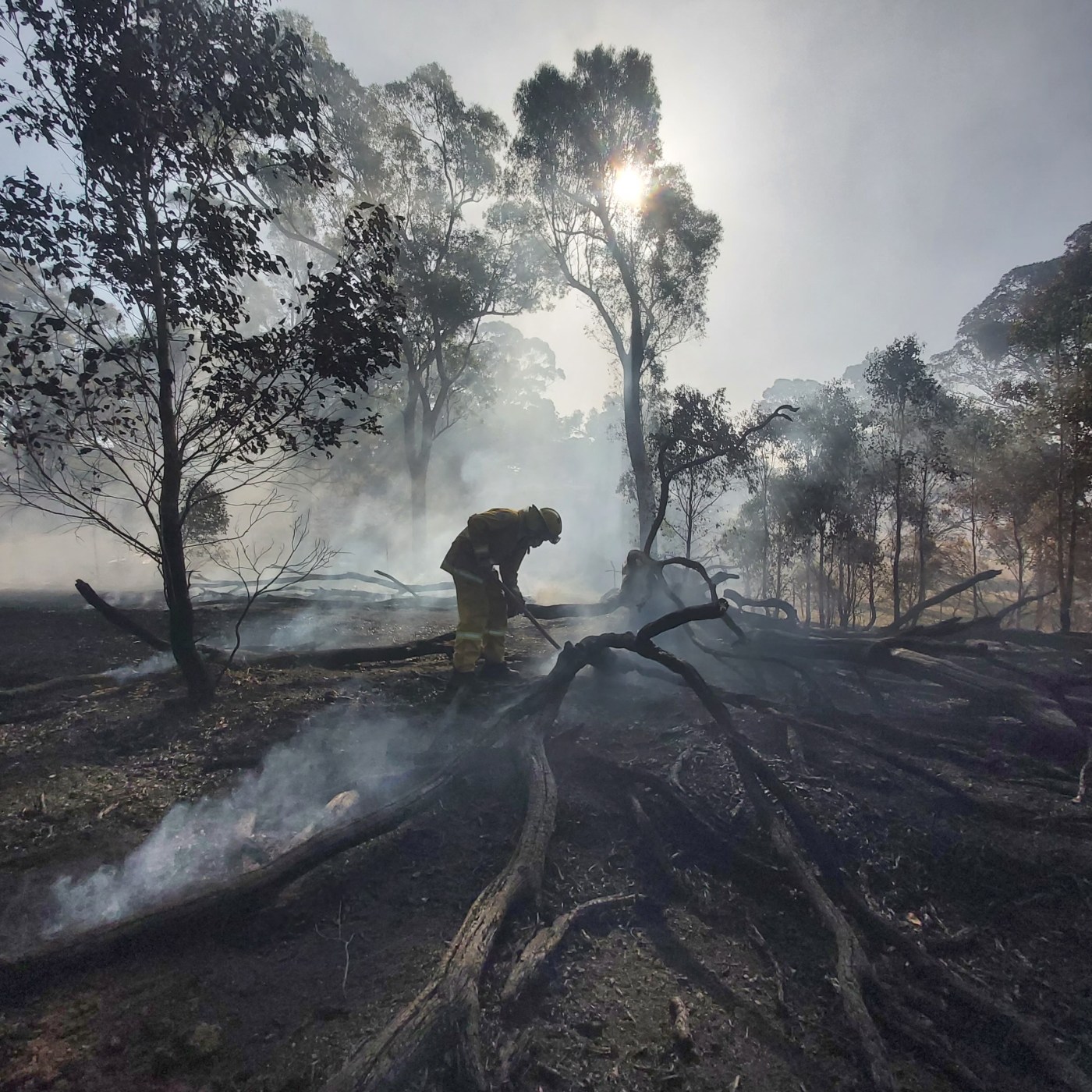
The crews created a mineral earth break around the fire and spent two days extinguishing hotspots before it was announced that the fire had been contained. In total the fire burnt around 1.3 hectares of forest. (Source: FFMV facebook).

This sort of early intervention is what is needed to stop small fires from turning into uncontrollable blazes.

Continue reading “A new fire fighting team for Victoria”

Black Summer biodiversity study suggests rethink of prescribed burns and fire management in Australia


This is not ‘new’ news. But it does add to the conversation that is underway about the role of prescribed burning (also called planned burning and fuel reduction burning) in terms of reducing fire risk.  

A new study examining plant and animal species after the Black Summer fire season has found greater biodiversity loss in areas that have been subject to frequent burning. Six ecosystems were considered, including alpine, wetland, rainforests and dry and wet eucalypt forest.

Sites with three or more fires in the 40 years leading up to the 2019–20 Black Summer were far more negatively impacted than previously unburnt areas or sites that had burnt once during that time.

Continue reading “Black Summer biodiversity study suggests rethink of prescribed burns and fire management in Australia”

Have your say: the Code of Practice for Bushfire Management on Public Land

The Victorian Department of Energy, Environment and Climate Action (DEECA) is updating the Code of Practice for Bushfire Management on Public Land (the Bushfire Code), and is calling for  feedback on the draft Code.

The Bushfire Code sets out objectives for the way DEECA manages bushfire on public land, including state forests and national parks.

The current Bushfire Code is more than 10 years old. It updating it to make sure it meets modern needs and expectations.

There is an online submission process which is open until November 3.

Continue reading “Have your say: the Code of Practice for Bushfire Management on Public Land”

Dancing and the Devil Fire – understanding the long First Nations history in the Alps

Recently a friend sent me a copy of a DVD called Dancing and the Devil Fire. It was made after the terrible fires that happened in the Alps over the summer of 2002/3, when an estimated 1.7 million hectares of forest and high country was burnt.

In the aftermath of the fires, an extensive program was established to better understand the archaeological history of indigenous settlement in the high country. Many First Nations people were involved in the surveys that followed. What they found re-wrote mainstream understanding of Indigenous occupation of the high country.

Continue reading “Dancing and the Devil Fire – understanding the long First Nations history in the Alps”

The first Snow Gum Summit

Announcement of conference: February 14 – 16, 2025

Snow Gums (Eucalyptus pauciflora) are the classic tree of the Australian High Country. They are profoundly different to the trees found in mountain areas in other parts of the world, and give a uniquely Australian sense to our high country. However, they are facing a double threat to their survival: from fire and dieback.

We are hosting a ‘snow gum summit’ which will bring together land managers and academics and anyone interested in the future of this iconic species to explore what needs to be done to ensure the survival of snow gum woodlands, and put the issue firmly on the state governments agenda.

We will be inviting First Nations people, local and state wide environmental organisations, local communities and businesses, groups active in outdoors recreation, and enthusiasts of high-elevation, forest ecosystems.  There will be presentations, workshops and field trips.

This event will happen at Dinner Plain, on GunaiKurnai Country in north eastern Victoria.

Continue reading “The first Snow Gum Summit”

The Bayindeen fire and Snow Gum forests at Mt Cole

Snow gums (generally E. pauciflora ssp. Pauciflora) are the iconic tree of the Australian high country. While they are best known for their dominance of higher elevation areas in north eastern Victoria and the Snowy Mountains of southern NSW, it grows in woodland along the ranges and tablelands, in cold sites above 700 metres, in a long stretch from the far south-east of Queensland, through New South Wales, the Australian Capital Territory, and Victoria, to near Mount Gambier in South Australia and Tasmania.

Snow gums also exist as isolated pockets well away from the higher mountains. For instance there are 53 known remnant Snow Gum sites within a 40 kilometre radius of Ballarat, Victoria. A  large proportion of remnant vegetation in the area occurs as small patches or isolated paddock trees, often on private land.

However there are also some important Snow Gum forests on public land in central and western Victoria. A well known example is on the upper slopes around Mt Macedon. Although these forests were impacted by the 1983 Ash Wednesday fires, the Mount Macedon Snow Gum population have been assessed as being in relatively good health (despite a recent proposal to clear some sections of the forest around the Memorial Cross at Mt Macedon)..

There is also a really important community of Snow Gums growing across the higher hills of the Mt Cole state forest.

Continue reading “The Bayindeen fire and Snow Gum forests at Mt Cole”

Protect Our Winters report: Our Changing Snowscapes

We have known for years that climate change is reducing the overall amount of snow we receive in Australia. The snow pack has been in decline since at least 1957. We also know that the loss of snow is being felt especially at lower elevations and will have enormous impacts on the local economies that have developed around the mountains.

Today Protect Our Winters (POW) have released a comprehensive update on the threats posed by climate change – to snow pack, the mountain environment and animals who rely on a thriving ecosystem, and downstream rivers, and also the impacts on the local economies that rely on good snowfalls.

Continue reading “Protect Our Winters report: Our Changing Snowscapes”

Celebrating the survivors

Across the mountains of south eastern Australia, climate change is already driving profound change. In many places in the high country, snow gum forests are facing a double threat: dieback, caused by a native beetle is killing individual trees, and climate change driven fire regimes are devastating vast areas of forest.

Recent research by John Morgan, Michael Shackleton and Zac Walker from the Research Centre for Applied Alpine Ecology at La Trobe University highlights that ‘Long-unburnt snow gum forests (now) comprise less than 1% of snow gum forests in the Victorian Alps’.

We know that snow gums can survive fire. We also know that across the Alps snow gum woodlands are starting to collapse from too frequent fire. That’s why we have to appreciate and protect the old forests that remain.

Continue reading “Celebrating the survivors”

Mountain Journal magazine #4 now online

Once a year we produce the Mountain Journal magazine. It is distributed through mountain and valley towns from Melbourne to Canberra each autumn. 2024 is the fourth print edition, and the magazine is being distributed at present.

You can also enjoy this PDF of the magazine MJ4.

Continue reading “Mountain Journal magazine #4 now online”

‘Long-unburnt snow gum forests are now exceedingly rare’.

Across the mountains of south eastern Australia, climate change is already driving profound change. In many places in the high country of NSW and Victoria, snow gum forests are facing a double sided threat: dieback, caused by a native beetle is killing individual trees, and climate change driven fire regimes are devastating vast areas of forest. Climate change, drought, insects and soil microbes are all thought to contribute to dieback. The spread and impacts of the beetle appear to be super charged by climate change (more beetles are surviving because of milder winters and more mortality of water stressed trees in summer).

More frequent and intense wild fire also poses an existential threat to the survival of snow gum woodlands and forests. A new report reveals the scale of the fire impact on these forests in the Victorian high country.

In the paper ‘Long-unburnt stands of snow gum (Eucalyptus pauciflora Sieber ex Spreng) are exceedingly rare in the Victorian Alps: implications for their conservation and management’, John Morgan, Michael Shackleton and Zac Walker from the Research Centre for Applied Alpine Ecology at La Trobe University highlight that ‘Long-unburnt snow gum forests (now) comprise less than 1% of snow gum forests in the Victorian Alps. We identify where long-unburnt snow gum stands persist in the Victorian Alps and outline why management intervention is necessary to protect unburnt refuges and, more broadly, to allow mature/adult stands (such as occur on the Baw Baw Plateau) to develop into future old forests’.

Continue reading “‘Long-unburnt snow gum forests are now exceedingly rare’.”

Welcome coverage of threats to snow gums in The Age

You may have seen today’s story by Miki Perkins in The Age here.  It considers the threats posed to snow gum woodlands (and other mountain forests) by more frequent and intense bushfires.

The story says ‘the global climate crisis, driven by humans burning fossil fuels, has brought a new threat to these mountain peaks: more frequent and more intense bushfires.

Because snow gums have not evolved to cope with these conditions, experts say the nature of Australia’s high mountain landscapes are changing, and the ecological collapse of snow gum woodlands – the abrupt decline or change of this ecosystem – is happening before our eyes’.

Continue reading “Welcome coverage of threats to snow gums in The Age”

California acquires 7 large firefighting planes – could Australia use this model?

We know that there is growing pressure to increase our fleet of large firebombers. There are Large Air Tankers (LATs) and ‘Type 1’ helicopters which can carry large loads of water/ retardant and which can have a big impact in terms of slowing fires so ground crews can then fight them.

Australia generally needs 6 or 7 LATs in an average summer, and only two of these are located here year round (and only one is actually owned locally, by the NSW Rural Fire Service). The others are leased in from the northern hemisphere for the fire season. As climate change causes fire seasons to become longer in both hemispheres, relying on leasing them becomes a riskier and more expensive proposition.

That has led to proposals to buy our own national fleet of LATs. This was recommended by the Bushfire Royal Commission into the 2019/20 Black Summer. The Commission recommended ‘The development of a modest Australian-based and registered national fleet of VLAT/LAT [Very large Airtanker/Large Air Tanker] aircraft and Type-1 helicopters, jointly funded by the Australian, state and territory governments, will enhance Australia’s bushfire resilience’.

It has also prompted conversations about whether we can repurpose aircraft that are already owned by the Australian Defence Force that are nearing the end of their military working life which could be re-purposed to become firebombers (there are some notes here about converting Lockheed Orion planes from the RAAF into firefighting aircraft, with a variety of views about the viability of this proposal).

Even in North America (where we lease our LATs from) there is increasing competition between agencies and states to access large firefighting aircraft. In an announcement (published by Hotshot Wake Up, a podcast that covers all things fire based in the USA) it has been noted that California has acquired 7 publicly owned C-130 planes, which are being transferred from the Coast Guard and which will be retrofitted to be able to be used to fight fires. The announcement states that they will also be used for ‘search and rescue, and emergency operations related to wildfires’.

Surely this is an indicator of options the Australian government could be pursuing here to build the number of publicly owned large air tankers.

Continue reading “California acquires 7 large firefighting planes – could Australia use this model?”

Blog at WordPress.com.

Up ↑