Snow gums (generally E. pauciflora ssp. Pauciflora) are the iconic tree of the Australian high country. While they are best known for their dominance of higher elevation areas in north eastern Victoria and the Snowy Mountains of southern NSW, it grows in woodland along the ranges and tablelands, in cold sites above 700 metres, in a long stretch from the far south-east of Queensland, through New South Wales, the Australian Capital Territory, and Victoria, to near Mount Gambier in South Australia and Tasmania.
Snow gums also exist as isolated pockets well away from the higher mountains. For instance there are 53 known remnant Snow Gum sites within a 40 kilometre radius of Ballarat, Victoria. A large proportion of remnant vegetation in the area occurs as small patches or isolated paddock trees, often on private land.
However there are also some important Snow Gum forests on public land in central and western Victoria. A well known example is on the upper slopes around Mt Macedon. Although these forests were impacted by the 1983 Ash Wednesday fires, the Mount Macedon Snow Gum population have been assessed as being in relatively good health (despite a recent proposal to clear some sections of the forest around the Memorial Cross at Mt Macedon)..
There is also a really important community of Snow Gums growing across the higher hills of the Mt Cole state forest.
As noted in the report Conservation Values of the Mount Cole & Pyrenees Landscape:
‘Rising from the plains the foothills of the Great Divide forms part of the Central Victorian Uplands bioregion. The divide runs largely in an east-west direction, with a wide valley separating the Mt Cole and Pyrenees Ranges, towards the centre of the Landscape Zone. Wet and dry foothill forest types occurred along the Mount Cole Range. Wet Forest occurred in very high rainfall areas and Riparian Forest in wetter gullies. Both these EVCs supported a dense multi-layered forest. Small areas of Snow Gum Woodland occurred on the highest peaks of the divide’.
As noted in the management plan for the Buangor State Park (which covers parts of the Mt Cole area) ‘The Park contains a variety of vegetation communities, ranging from sub-alpine Snow Gum communities on the high peaks to fern gullies along Middle Creek. The major vegetation communities, Messmate Stringybark and Blue Gum forests, create the overall character of the Park.’
These remnant pockets of Snow Gums act as biodiversity reservoirs in a larger and changing landscape with multiple points of stress, including climate change, fire, weed invasion and habitat fragmentation. We know that refugia will play a very important role in the maintenance of biodiversity during climate changes.
That is why any direct impact from uncontrolled wildfire on remnant Snow Gum communities is so concerning.
The Bayindeen Rocky Road fire
The management plan for the Mount Buangor State Park, includes the intention to ‘Protect the Park and visitors from unplanned fire, and to Develop and maintain fire regimes appropriate to the conservation of native flora and fauna’. Forest Fire Management Victoria (FFMV) is responsible for fighting fires on public land.
The 2023/24 fire season saw a number of significant bushfires impact central and western Victoria. The Bayindeen Rocky Road fires started on 22 February 2024, and burnt for more than two weeks, impacting large areas around Mt Cole. Around 22,000 hectares of farmland, residential areas and state forest were affected. It was described as ‘one of the worst bushfires in living memory’ by the local Member of Parliament. ‘The fire moved quickly, spotting up to 15 kilometres ahead, with so much smoke that it created its own weather pattern across the Pyrenees region and beyond’. These conditions make fire fighting difficult and risky.
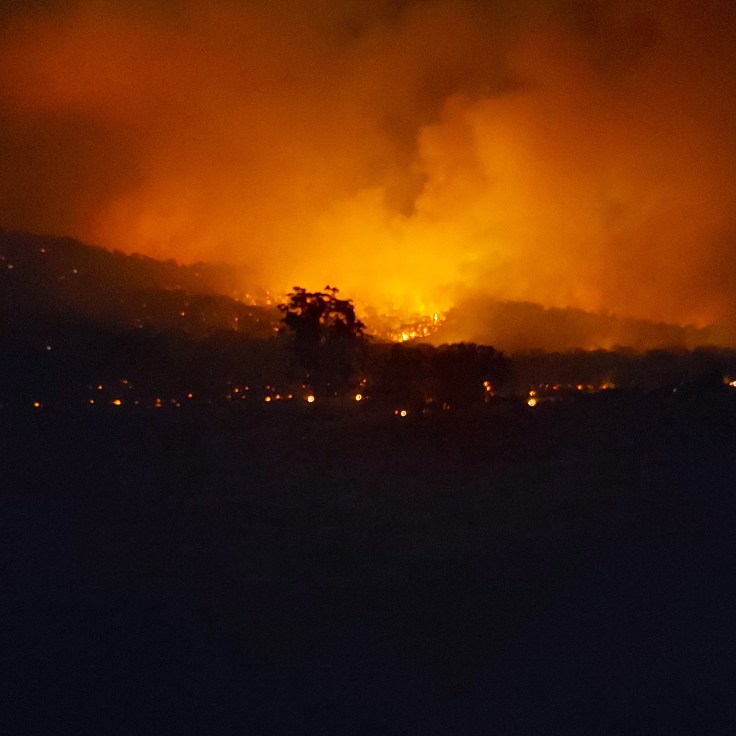
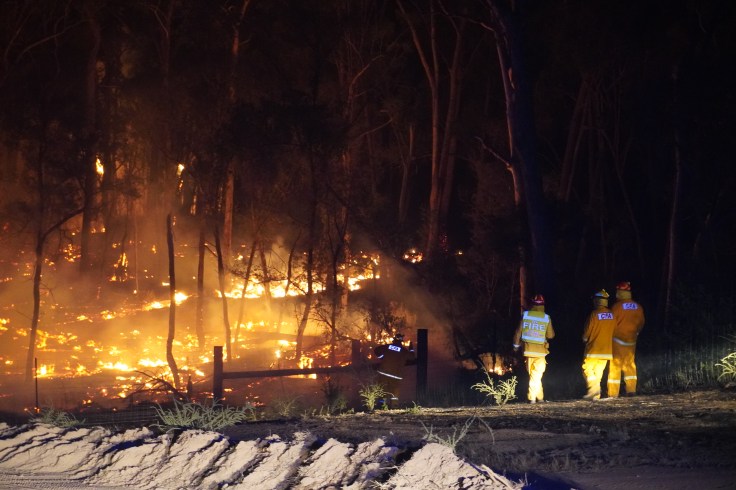
Over 1,000 emergency service members and volunteers were deployed to fight the fire and a lot of the effort involved working to stop the fire from moving out of public land forests and onto surrounding private lands. Containment lines built by bulldozers were cut around the perimeter of the fire.
As a volunteer firefighter who was involved in the operations, I was shocked by how hot the forests were burning. I felt deeply worried about how the fires may have impacted the Snow Gum woodlands on the higher peaks.
After the fires
Once the fires were contained, there was a massive clean up effort undertaken by FFMV to ensure the area was safe for the community to visit. Areas like Mt Cole state forest have only fully reopened in recent weeks, meaning we can now check the status of fire sensitive communities like the Snow Gums.
We know that climate change is making fire seasons longer and more intense. Because snow gums have not evolved to cope with these conditions, experts say the nature of Australia’s high mountain landscapes are changing, and the ecological collapse of snow gum woodlands – the abrupt decline or change of this ecosystem – is happening before our eyes.
“Snow gum don’t like fire at all – as soon as you hit them with fire they have to start regrowing from the base,” says La Trobe University’s Associate Professor John Morgan. “And it takes them a long time to regrow these big trunks, probably over a century.”
Long-unburnt, old snow gum forests, which have significant conservation, eco-tourism and cultural value, are now exceedingly rare. They comprise only one percent of snow gum forests in the Victorian alps, according to a paper co-authored by Morgan that was published in the Australian Journal of Botany.
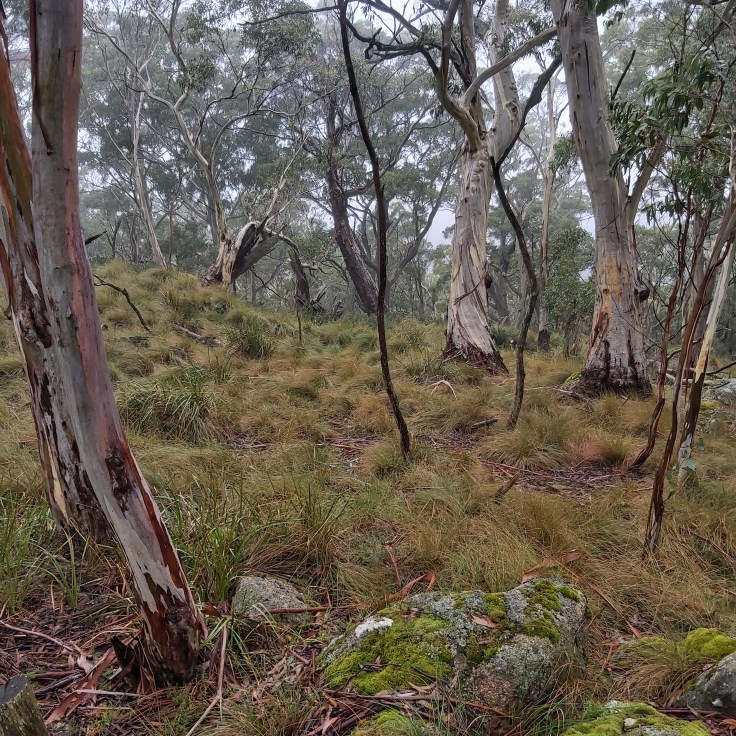
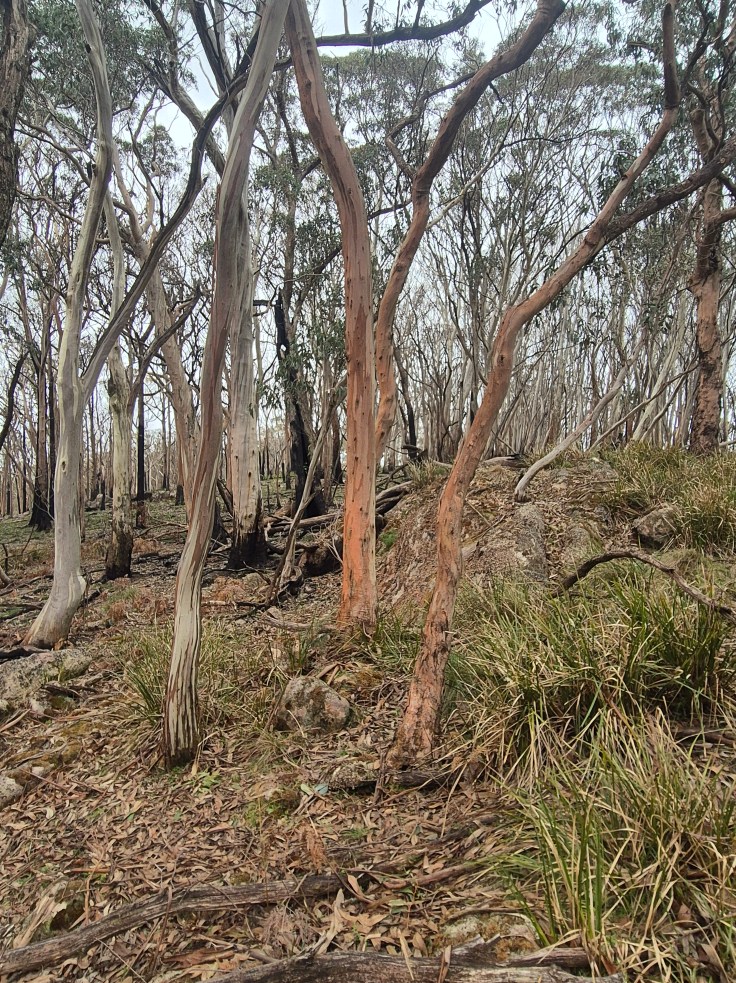
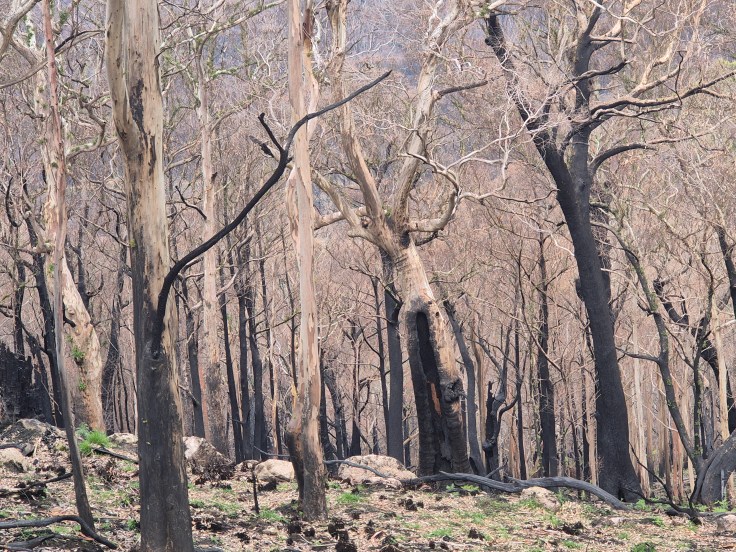
At Lookout Hill (one of the higher sections in the Mt Cole State Forest) a small snow-gum woodland exists amongst the granitic boulders with a Poa sp.grass -dominated ground-layer (see image above).
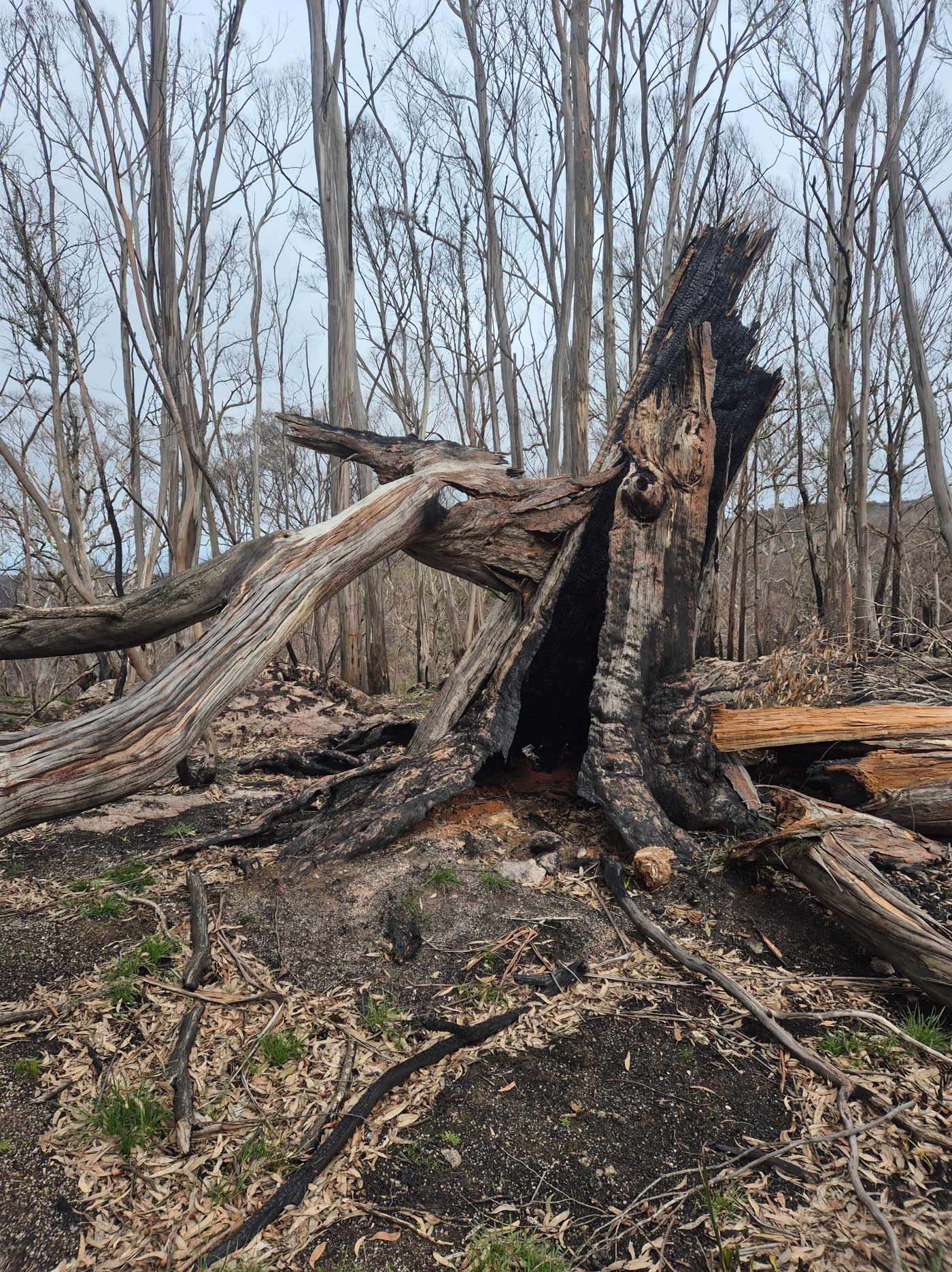
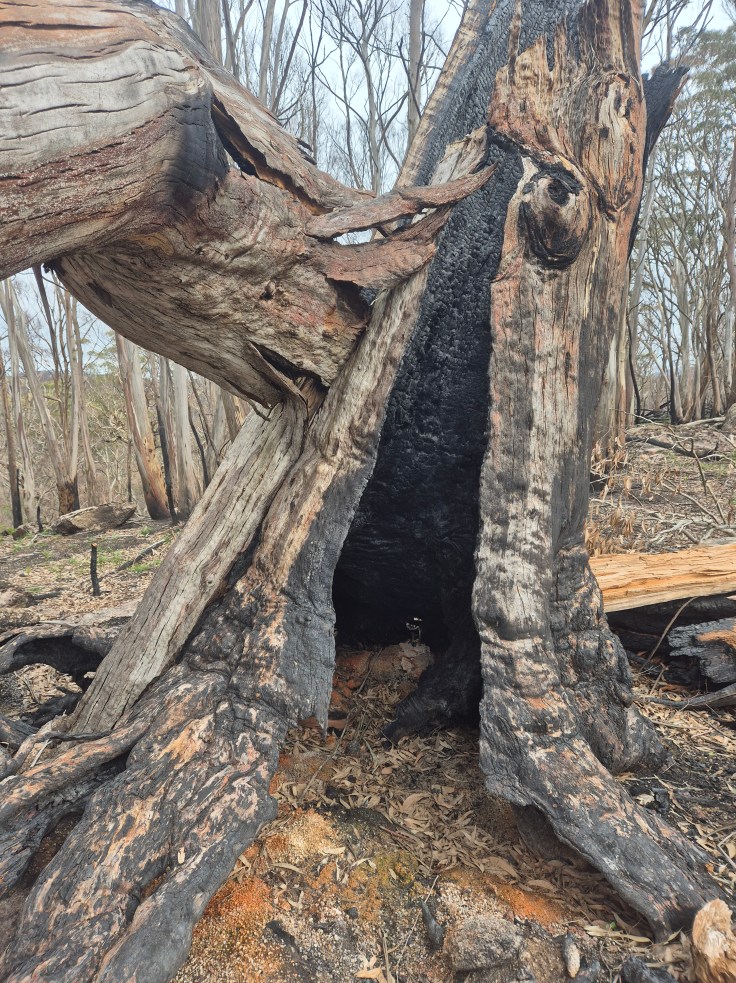
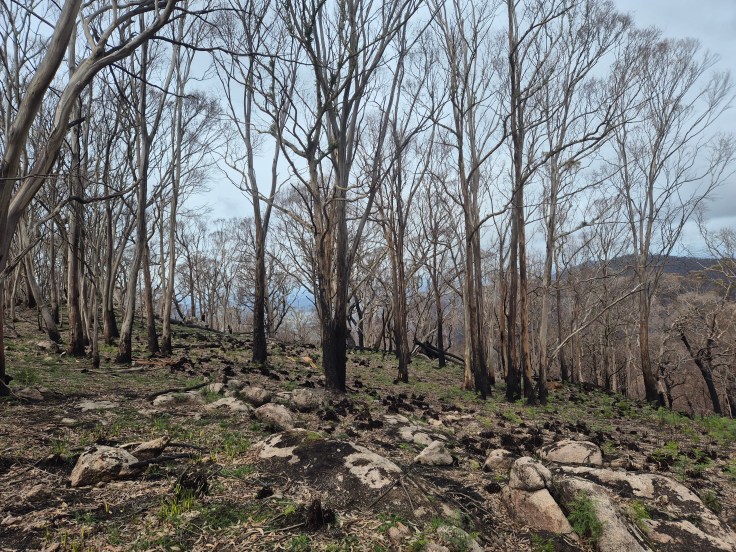
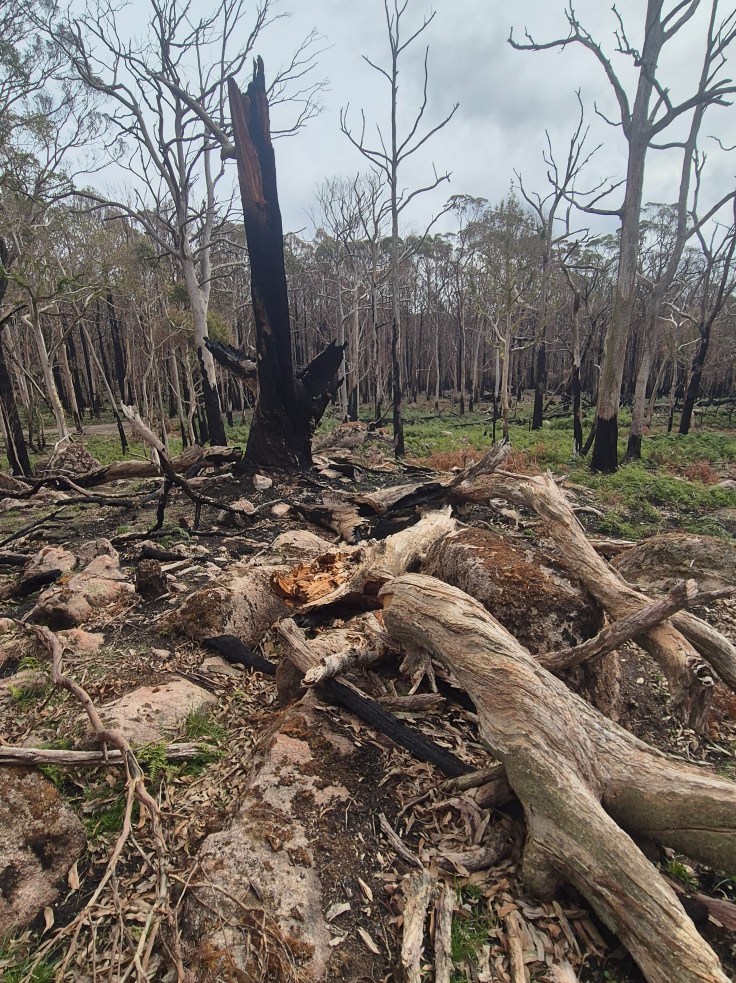
This area was burnt in the Bayindeen fire, and has been significantly impacted. Many older trees have collapsed. Individual trees have survived, often due to their single stem habit with limited bark along the trunk, which could have assisted the fire to travel into the canopy. However, much of the Snow Gum forest has lost considerable portions of the older trees with extensive stretches of trees now dead. Given this area is located deep inside a heavily forested section of the park, active firefighting would have been risky, and it is not clear if there were attempts to slow the fire as it passed through this forest.
We did ask the state environment department (DEECA) gain an understanding of how fire resources were allocated to protect important ecological assets in the Mt Cole area – especially the remnant snow gum forests on the higher ranges – but it is not clear what may have been done to protect the forests.
Interestingly, one section of snow gum forest at Lookout Hill was only lightly burnt and seemed to still show the colouration that comes from use of retardant. As outlined in this briefer from the Tasmania Parks and Wildlife Service,
‘Fire retardants are long-term products that are most commonly released from airplanes in long lines. Fire retardants contain fertiliser salts, which act to slow the rate of fire spread by cooling and coating fuels, depleting the fire of oxygen and slowing the rate of fuel combustion through a chemical reaction. Retardants often contain a dye, which makes them appear red. This is so the treated area can be located after application. Fire retardants will not stop a high-intensity fire in its tracks but can assist firefighters on the ground by slowing fires of lower intensity, reinforcing fire breaks, or protecting high-value assets’.
Lookout Hill hosts a major communications tower, so I assume the retardant was deployed primarily to protect those human assets. And as stated above, the use of these materials will not generally stop a high-intensity fire, but it will generally reduce the intensity as the fire passes through and then moves into untreated sections of forest. Without on ground firefighting capacity, it does seem that the fire has then intensified as it passed beyond the retardant treated area and moved towards and around the comms towers.
Each loss of trees in old Snow Gum forests results in overall decline in the species and brings us closer to widespread ecological collapse of these wonderful and environmentally significant forests.
Further information
(We will update any additional information we receive about firefighting efforts and report occasionally on the recovery of these forests).
Check here for ideas on how we can ensure the survival of Snow Gum forests.




August 8, 2024 at 2:17 pm
hi 👋
great article about a tree species I have particular personal internet in.
I run an indigenous plant nursery in central vic and have been locating and recording the location of snow gums on roadsides and private property i come across. I also collect seed and propagate many for local regeneration purposes.
welcome to contact me if you need any more information.
tully sumner
tully@growlocals.com.au
mob 0412806597