Search

Mountain Journal

Environment, news, culture from the Australian Alps

Tag

climate change

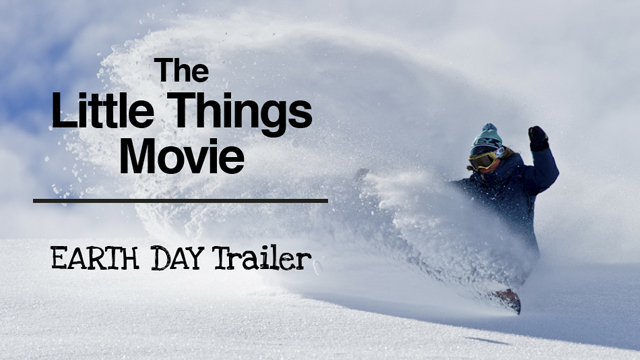
‘The Little Things’ snowboarding film

TheLittleThingsMovie-EarthDaytrailer-April14-fiAs a contribution for Earth Day (April 22) Snowboarder magazine released a trailer for the snowboarding film ‘The Little Things’.

They say:

As snowboarders, we are explicitly tied to the outdoor world. We depend on ample snowfall, cold temperatures, and healthy forestland to provide us with areas in which to strap in and make turns. And that’s just the tip of the environmental iceberg. Fuel to power our cars, trucks, and snowmobiles (and if we’re lucky, helicopters). Power for chairlifts, resources to make equipment, the list goes on and on, and for most of us, the impact of everything doesn’t enter our minds that often when we’re moving from edge to edge down corduroy or through fresh snow. But, and in no way do we or the folks involved in The Little Things Movie intend to be pushy, being considerate of our environment is something vital to take into consideration. Especially for snowboarders.

The Little Things is a snowboard movie/documentary based on environmentally conscious riders who are inspirational through their riding, as well as their sustainable ways of living and thinking. The film to be released fall 2014 is an initiative taken on by professional snowboarder Marie-France Roy and directed by Filmmaker Darcy Turenne in which all the riders are bringing to life the importance of protecting and living in balance with our environment. Riders include Gretchen Bleiler, Tamo Campos, Jeremy Jones, Mike Basich, Meghann O’Brien, Jonaven Moore, Marie-France Roy, and friends.

You can find the trailer here.
 

ski resort denial of climate change is not making the problem go away

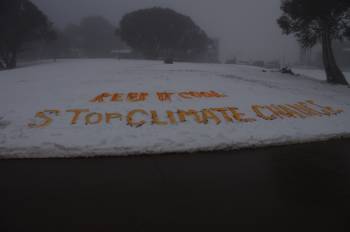
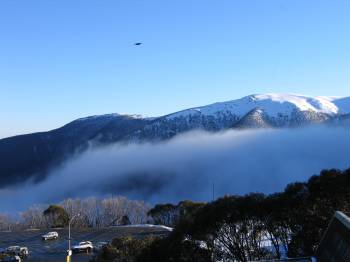
'keep it cool. Stop climate change'. Dinner Plain, June 2011
‘keep it cool. Stop climate change’. Dinner Plain, June 2011

The following article has an astonishing fact: 600 U.S. ski areas have disappeared over the past 60 years.

In the article A Snowball’s Chance, written for Boston magazine, Madison Kahn uses the example of Hogback Mountain in Vermont, a small resort that used to be ‘teeming with skiers.’

“The trouble started in the 1970s, when scientists say that temperatures began to rise significantly (in truth, there was little climate research done before then). A series of spotty seasons, coupled with the sharp spike in gas prices brought on by the 1973 oil crisis, hit the mountain hard. It finally shuttered for good in 1986”.

Madison contrasts it with the nearby resort at Mount Snow, which has survived.

“Just 15 miles apart, both ski areas are located in the middle of what was not long ago part of the Northeast’s 120-inch Snowbelt. Why did one die and the other prosper? Simple economics: Mount Snow could afford the snowmaking technology needed to stay open when temperatures began to rise. Hogback couldn’t”.

However, in an observation that should ring bells for us Australians, where much of our snow country is fairly marginal, and where winters are getting warmer, Madison notes:

“making enough snow is becoming an increasingly difficult proposition”.

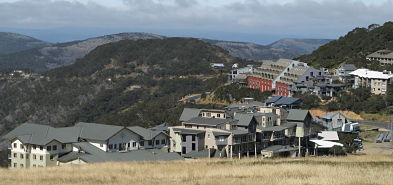
Hotham Village
Hotham Village

Research cited in the article suggests that “of the resorts (in the Northeast that are) able to stay open, at least 75 percent will require substantial artificial snowmaking to survive, which, in turn, will significantly increase operational costs and lift-ticket prices”. Skiing or riding in resort in Australia is hardly a cheap option as it is.

“Almost 600 U.S. ski areas have disappeared in the past 60 years, many of them victims of warmer winters. In fact, if warming trends continue at their current rates, within the next few decades, the multibillion-dollar New England ski industry could collapse entirely”.

Here in Australia, there has been a similar response from management boards as they grapple with more erratic winters, with greater attention to snow making and attempts to re-brand resorts as ‘year round’ destinations. Where previously a number of Australian resorts were responding to the threat of climate change, now they have clearly put it in the ‘too hard’ basket. Climate mitigation programs have been quietly dropped as resorts struggle to find new ‘bells and whistles’ to appeal to visitors each year.

Of course, none of this deals with the core problem. Half of U.S. ski areas are opening late and closing early—and in the past 50 years, the average season length in the northeast has decreased by seven days. It’s a similar story here.

It’s interesting to note that in North America, a number of resorts are showing great leadership in terms of playing their part to reduce contributions to global warming.

As we all start to wonder about what this winter may have in store for us, isn’t it time the industry started to seriously face up to the facts of global warming?

The Truth About (the Future of) Snow

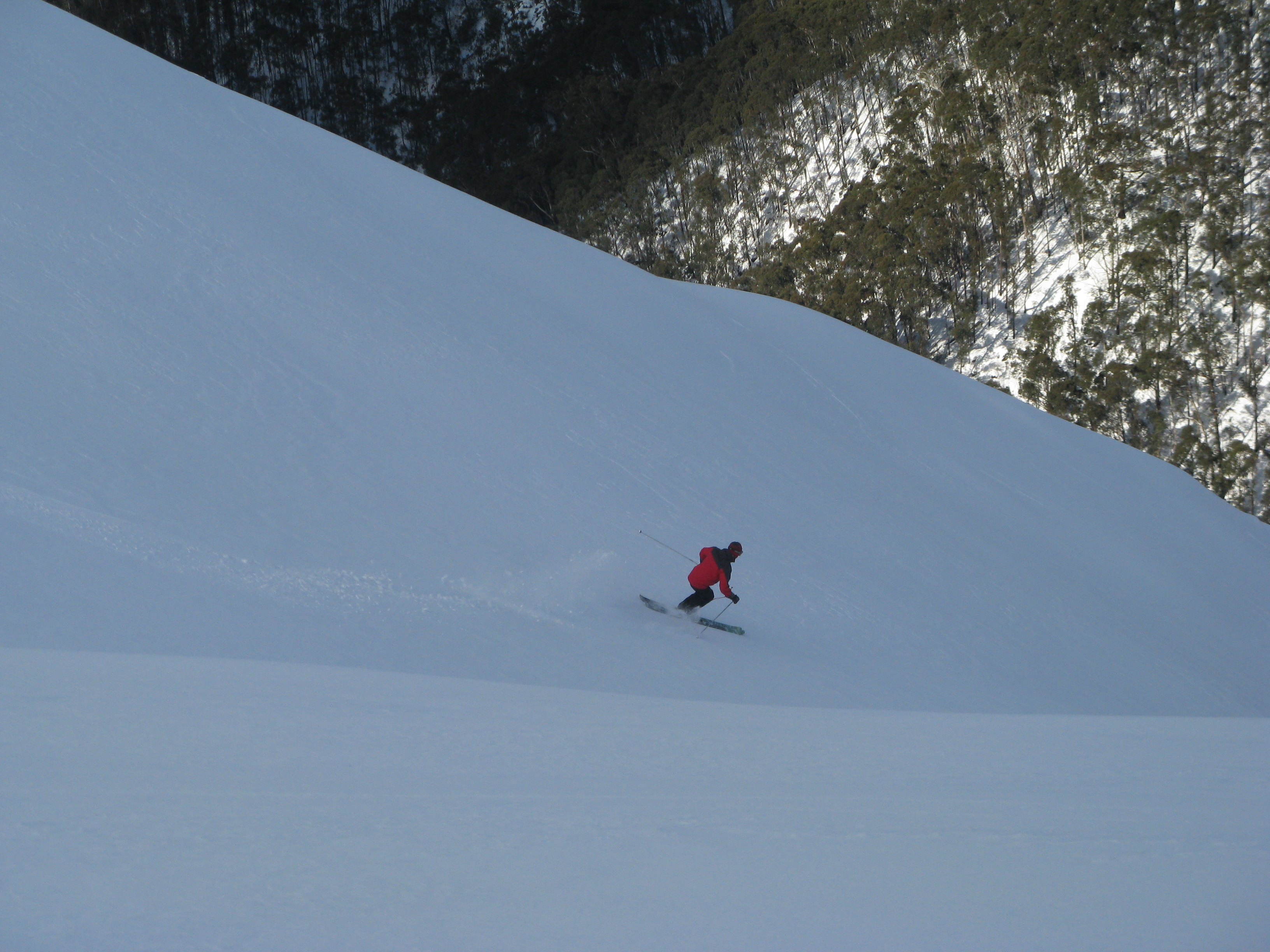
on The Razorback, VIC

We have frequently run stories on Mountain Journal about the expected impact of climate change on the future of snow (and hence alpine environments, skiing/boarding, and the economies of towns reliant on the industry). Some of these include DEEP: The Story of Skiing and the Future of Snow , less snow – less skiers, Snow gone? US ski resorts see melting future, Climate Change and the Ski Industry – an Australian perspective, Alps could become snow-free by 2050

This recent piece comes from Powder magazine, and focuses on the situation in North America.

The Truth About Snow

An interview with the world’s top skiing climatologist, Daniel Scott

When it comes to the future of snow—and more importantly, the future of skiing—Daniel Scott is the man with the answers. Or, at least, the man with the possibilities. Will the Northeast have snow in 30 years? No. Will Colorado? Yes. Scott holds the Canada Research Chair in Global Change and Tourism at the University of Waterloo in Ontario—the first research facility in the world to comprehensively investigate the relationship between climate change and skiing, starting in the 1980s. Many of the computer models used in Europe today come from the university. Scott built his own model 10 years ago and has been using it ever since to predict what will happen to skiing in the next century.

When it comes to reading the future, Scott does not pull his punches. He co-authored a report that spelled the coming end of half of the ski resorts in the Northeast in the next 30 years. He also contradicted studies saying Colorado would suffer the same fate—saying that most climate models are done from a hydrology point of view, and leave out snowmaking in their predictions. The point being, Scott’s studies are scientific, without a conservative or progressive bent. And in a world flooded with misinformation, this is the kind of resource skiers need.

You can read the full interview here.


climate change and bushfires

There is no doubt that our fire seasons are getting longer and more intense. Here in the south east, in terms of massive fires (greater than 250,000 ha), Victoria experienced two such events in the 19th century and five in the 20th century. In less than two decades, we have already had three mega fires in the 21st century. Many alpine areas have been burnt three times in the space of a decade.

There is no coherent overall response as yet by state or federal governments that outlines how we should respond to the growing interaction of climate change and wildfire. Sadly, our Prime Minister is in denial, having claimed that since ‘fires have always been part of our landscape’ there is no link to climate change. The Victorian state government has been challenged on the lack of attention to climate change in it’s approach to managing fire risk. Reducing fire risk is therefore about reducing fuel load and getting larger equipment , not about reducing greenhouse gas emissions or accepting that enhanced fire risk is the new reality for much of the country.

The following report, from Grist, outlines a different approach. The US government has released a strategy that aims to respond to the changing nature of fire threats. One aspect that especially interested me is the fact that it includes an approach that aims to ‘restore and maintain landscapes that are resilient to fire.’ In Victoria, we seem to be doing the opposite. There is a politically driven target that dictates that 5% of the state will receive fuel reduction treatment each year. This is in spite of the fact that some vegetation types don’t need burning to maintain ecological health, and others can become more flammable with the wrong fuel reduction approaches, and others are directly threatened by too much fire.

Climate change just reshaped America’s wildfire strategy

Wildfire
EricF2000

Like a tree in a greenhouse, America’s forest fire problem is growing ominously. Rising temperatures and declining rain and snowfall are parching fire-prone areas and juicing conflagrations. On Thursday, following years of meetings and scientific reviews, the Obama administration published a 101-page strategy that aims to help meet the country’s shifting fire threats.

The National Cohesive Wildland Fire Management Strategy divides the nation according to fire risks, and profiles the communities that face those risks. “No one-size-fits-all approach exists to address the challenges facing the Nation,” the strategy states.


Despite covering 70,000 communities and 46 million homes, the strategy can be boiled down to guidelines that aim to do three main things: restore and maintain landscapes that are resilient to fire; brace communities and infrastructure for occasional blazes; and help officials make wise decisions about how and whether flames should be doused. Here’s what that all looks like in flowchart form:

Click to embiggen.

“As climate change spurs extended droughts and longer fire seasons, this collaborative wildfire blueprint will help us restore forests and rangelands to make communities less vulnerable,” said Mike Boots, chair of the White House Council on Environmental Quality.

John Upton is a science fan and green news boffin who tweets, posts articles to Facebook, and blogs about ecology. He welcomes reader questions, tips, and incoherent rants: johnupton@gmail.com.

Momenta: More than a Film

6a00d83451b96069e201a3fcb001f0970b-800wiI recently reviewed the ski film All.I.Can. It’s such a great film, but has an awful take home message when it comes to climate change. So when I spotted this film, I was instantly cheered up.

Momenta is a new documentary starring legendary snowboarder Jeremy Jones, climber Conrad Anker, and other big-mountain athletes. It aims to mobilise people to stop a climate-wrecking proposal to ramp up coal exports from the western USA to China.

No, its not going to have the amazing skiing and mountain images of films like All.I.Can. But it brings some significant voices to the debate that – hopefully – can reach the skiing and boarding community and get them organised against this proposal.

As reported in Elevations Outdoors magazine:

The idea for “Momenta,” one of this year’s must-watch environmental documentaries for people concerned about climate change and the future of snow, was hatched in Boulder’s Flatirons in the fall of 2012. Big-mountain snowboarder Jeremy Jones was visiting town with Chris Steinkamp, executive director of Protect Our Winters (POW), the climate change group Jones founded. The two men decided to take a hike to brainstorm ways that POW could rally opposition against a major climate threat that has received scant attention from the national media—a coal train.

“We don’t have the ability yet to mobilize a grassroots army, so we decided a documentary was the best way to get the word out,” Steinkamp says.

“Momenta” sheds light on a climate-wrecking proposal to ship vast amounts of Rocky Mountain coal to Asia. The film stars Jones, legendary climber Conrad Anker and other big-mountain athletes who speak about the changes they’ve seen in the mountains during their lifetimes—as well as biologists, climate scientists, physicians and activists who detail the detrimental consequences of the plan hatched by energy companies, which will excavate vast coal deposits in Montana’s and Wyoming’s Powder River Basin, transport it by rail to the Pacific Northwest, then ship it across the Pacific.

Critics deride the coal-to-China plan as “Keystone on steroids,” a reference to the controversial Keystone XL Pipeline proposal that would transport tar sand oil from Alberta, Canada, to the Gulf Coast for export. Keystone has been called a climate bomb. Burning the Powder River Basin coal, however, poses an even bigger climate threat. “That coal has to stay in the ground,” environmental author and activist Bill McKibben explains in the film.

You can find out more on the Momenta facebook page and read a review from the Sierra Club here.

You can find the trailer for the film here.

As Jeremy Jones says in the film: ‘we know the solution. we know renewables work. And it’s time to embrace them.’


the Dark Snow project

“ There’s no place on earth that’s changing faster — and no place where that change matters more — than Greenland. ”
– Bill McKibben

dark_snow_wordmark_blackThe first-ever Greenland expedition relying on crowd source funding aims to answer the ‘burning question’: How much does wildfire and industrial soot darken the ice, increasing melt?

Fossil fuel combustion creates carbon emissions that increase atmospheric thickness, warming climate. The occurrence of wildfire increases with climate warming, increasing soot loading of the atmosphere. Some of this soot is transported through the atmosphere and is deposited on glaciers, lowering their reflectivity, increasing solar energy absorption, increasing melt rates.

While watching wildfires raging across his home state of Colorado, climatologist Jason Box was struck by the question of whether the dark wildfire soot could contribute to the Greenland melting?

Dark Snow is a field and lab project to measure the impact of changing wildfire and industrial soot on snow and ice reflectivity. Soot darkens snow and ice, increasing solar energy absorption, hastening the melt of the “cryosphere”.

They mounted an expedition to Greenland to consider the impacts. A lot of their work is fairly technical. But its an intriguing concept.

Check their website for details and updates.

Review: All.I.Can

allicanThis film is billed as the best selling ski film of all time. One that ‘compares the challenges of big mountain skiing to the challenges of climate change’. I liked its trailer, which did seem to be saying something about over consumption and energy. As a backcountry skier and climate campaigner, I was stoked when I finally got to watch it, a few years after it came out.

Yes, its beautiful, compelling and also great fun, covering some of the finest skiing terrain on the planet. There are great people skiing incredible lines, and having a lot of fun doing it. There is an urban skiing scene that is one of the best clips I have ever seen in a ski film.

But in its claim that it is tackling the climate change issue, it is also a dangerous piece of propaganda for ‘business as usual’ capitalism. I am amazed that the film wasn’t paid for by coal companies. How can a group of switched on people get it so wrong?

My review is available here.

cattle back in Alpine national park. Ryan Smith’s legacy?

The Age is reporting that:

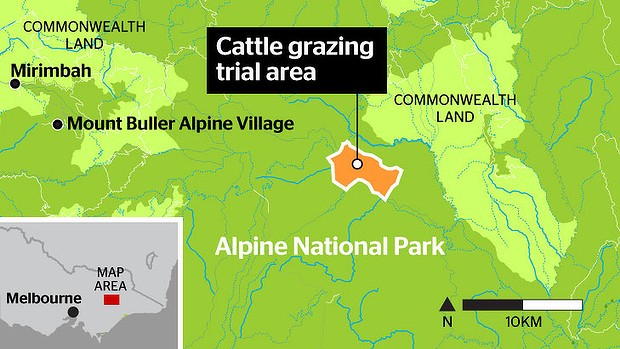
Image from The Age. Graphic: Jamie Brown

Cattle have returned to the Alpine National Park for the first time in three years, with animals released in recent days under the Napthine government’s grazing trial.

It is understood that a little under 60 cows were brought into the park either on Wednesday night or Thursday morning, marking the start of the program.

The move follows the state government getting approval for its grazing plans from federal Environment Minister Greg Hunt earlier this month. The state government says the trial will test whether cattle grazing lowers bushfire risk by reducing fuel loads.

As pointed out by Phil Ingamells of the Victorian National Parks Association:

“the trial was not science, rather a political promise to the cattlemen to protect their privileged grazing rights in the park”.

“Decades of evidence show how much grazing harms the park. But it does nothing to reduce grazing risk,” he said.

Read more in the article by Tom Arup here.

And background on the trial here.

Environmental policy in a time of climate change

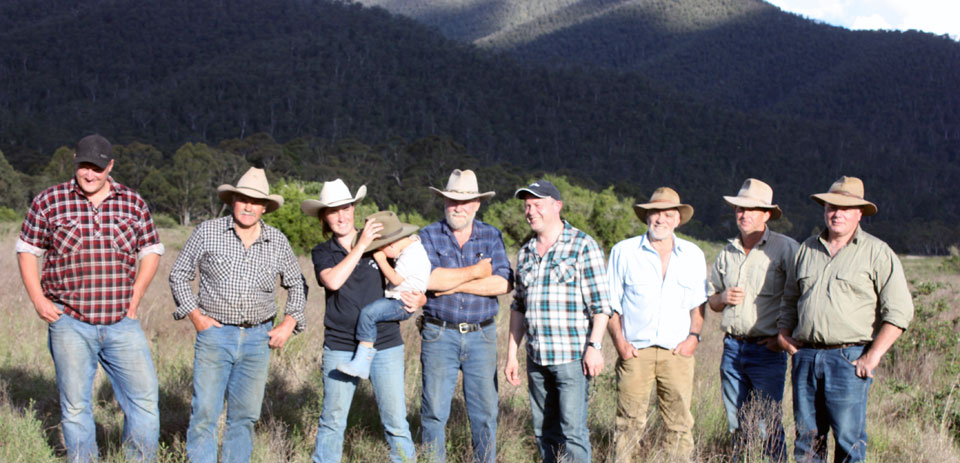
Environment Minister Ryan Smith with mountain cattle graziers, Wonnangatta Valley. source: MCAV

The state government has doggedly pursued this grazing trial since it came to power, and the environment minister Ryan Smith has been closely involved in efforts to get cattle back into the park. The first attempt was knocked back by the previous federal government. The current proposal has recently been approved by Coalition Minister Greg Hunt.

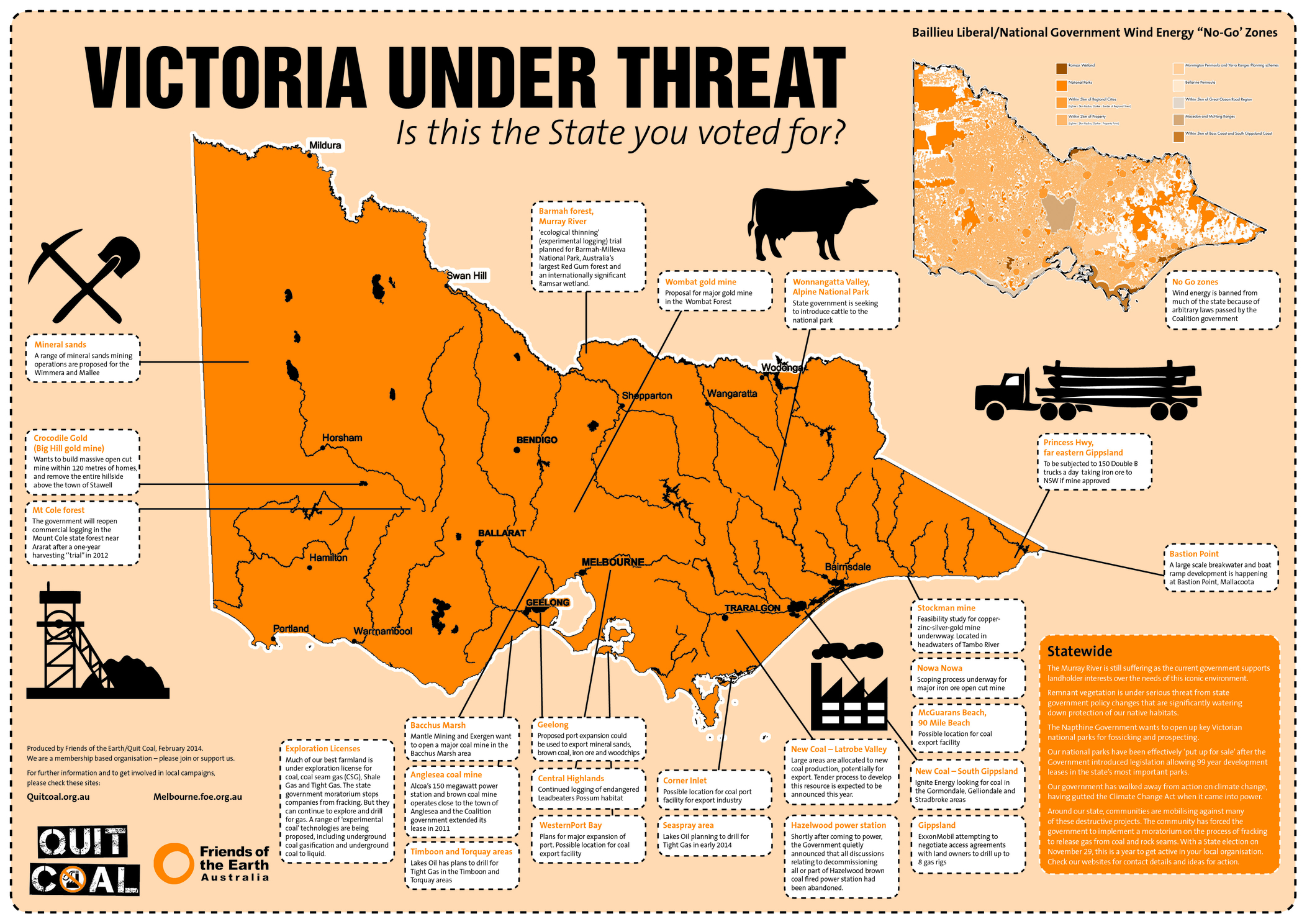
Victoria’s environment is in bad shape. Imagine how things could be improved if Mr Smith put as much effort into reducing Victoria’s contribution to climate change. Or protecting Mallacoota from the destructive development at Bastion Point. Or if he acted to protect the habitat of the endangered Leadbeaters Possum which is threatened by logging. Or … (insert any number of other issues here: for instance or check this list from Environment Victoria).

Sadly, he has instead overseen the demolition of the Victorian Climate Change Act. Development of renewable energy has basically stopped on his watch, which can only give benefit to the fossil fuel industry.

Meanwhile, he has pursued this project, widely described as being more about politics than land management.

Will he be remembered as the minister who turned his back on climate action and habitat protection, whose one legacy was to put cattle back into a national park?

VIC map for web

Point zero zero one

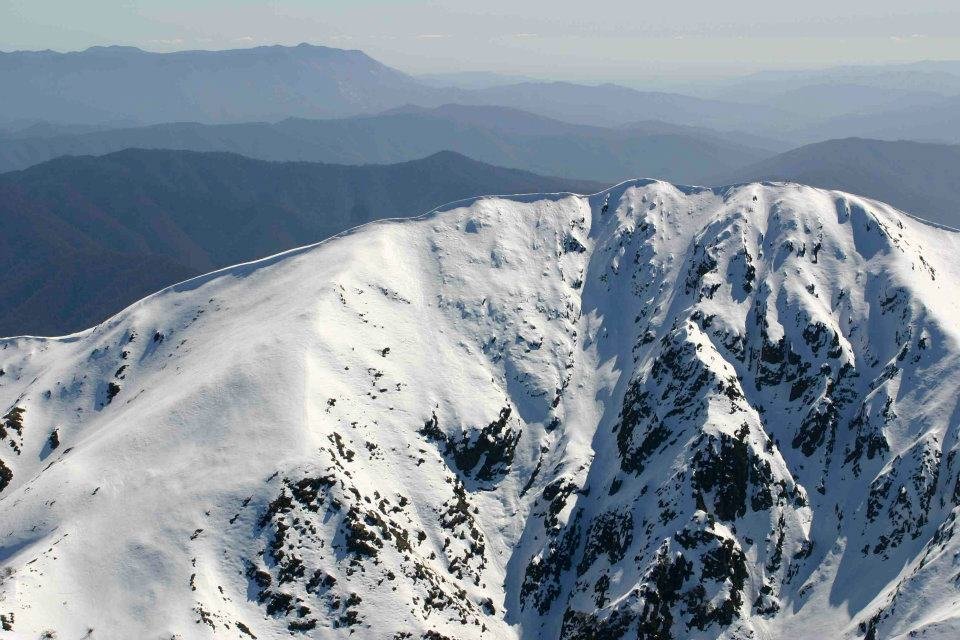
East Face of Mt Feathertop, VIC. Image from the film by Stephen Curtain.

As Tony Abbott threatens to de-list significant areas of the Tasmanian World heritage area (WHA) so the loggers can get to the old growth forests that are currently protected, it’s worth remembering that all our WH Areas are special and most of them are already under pressure from climate change.

No area has as many climate pressures as the Australian Alps. This film from Stephen Curtain offers some great telemark skiing images from the Western slopes of the Main Range in the Snowy Mountains. It also reminds us how unique and vulnerable this landscape already is. There have been several attempts to get World Heritage listing for the Australian Alps over the years. In an era of climate change and ever more demands on wild places, we need more world heritage areas, not less.

Check the film here.

Stephen says:

Point zero zero one (0.001) is the approximate percentage of the Australian continent occupied by the Australian Alps.

Bordering one Territory and two States, this biogeographical island supplies invaluable fresh water to much of south east Australia and provides outstanding natural, spiritual and cultural values.

Although the Australian Alps are recognised as a national iconic landscape by federal national park agencies and Tourism Australia in recognition of such values (see australia.com/campaigns/nationallandscapes/AustralianAlps.htm), World Heritage Listing still eludes the Australian Alps.

Point zero zero one celebrates the fleeting beauty of these Alps.

This short film was an entrant to Bristol’s 2012 Wildscreen Festival in the UK. Visit wildscreenfestival.org/

the Exteme Ice Survey – tracking the loss of the glaciers

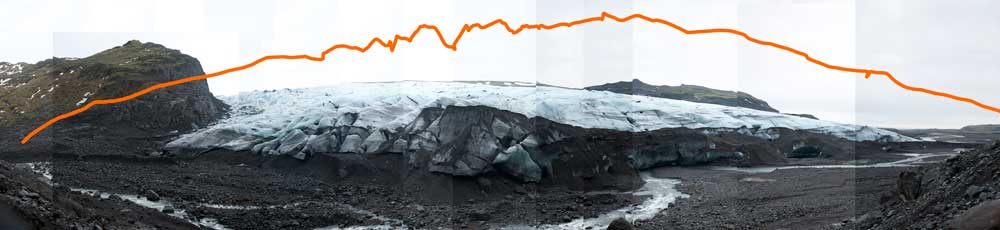
The following article comes from the Winter 2014 issue of Mountain Magazine. It tracks the decline of a glacier in coastal Alaska and was written by Tad Pfeffer, scientific partner of the Extreme Ice Survey.

James Balog’s photographs reveal a glacier in retreat.

The tremendous snowfall of the Alaskan coastal ranges funnels down to the waters of Prince William Sound, where the Columbia Glacier calves icebergs into the Valdez shipping lanes. I’ve lived at the Columbia for a few weeks at a time for nearly 10 years, and at glaciers around the world for 35. I watch, measure, photograph, and poke at ice with various tools to reveal the inner workings of this particular cog in the great environmental machine we inhabit. My work is arcane, an oddball pursuit. Or it was. Surveying ice is now mainstream. The state of the world’s climate, and its glaciers, suddenly matters.

Since 1983, the Columbia Glacier’s length has shrunk by a third, losing 12 miles of ice. Pushing icebergs into the ocean at that rate is fast work. The Columbia can move 100 feet per day. In 2006, I used time-lapse photography as an observational tool. The next summer, renowned photographer James Balog and a film crew accompanied me to Alaska to do more.

The result of our work is the Extreme Ice Survey, a collection of large-scale, time-lapse imagery from Alaska, Iceland, and Greenland. Balog’s photos get the crucial point across: These giant systems are changing, and fast. Filmmaker Jeff Orlowski captured the big moments and the frustrating hurdles, and his contribution became the film Chasing Ice. Our collective labor informs those who must act, for the benefit of us all.

And our work continues. The EIS now gathers time-lapse photography from 28 cameras stationed at 13 glaciers in Greenland, Iceland, the Nepalese Himalayas, Alaska, and the Rocky Mountains. South America and Antarctica are next. Each camera collects 8,000 frames annually, taking a photo every half-hour of daylight. The images help the public learn more about glaciers and ice sheets so that 35 years from now, the Columbia might still exist.

Visit extremeicesurvey.org for more information.

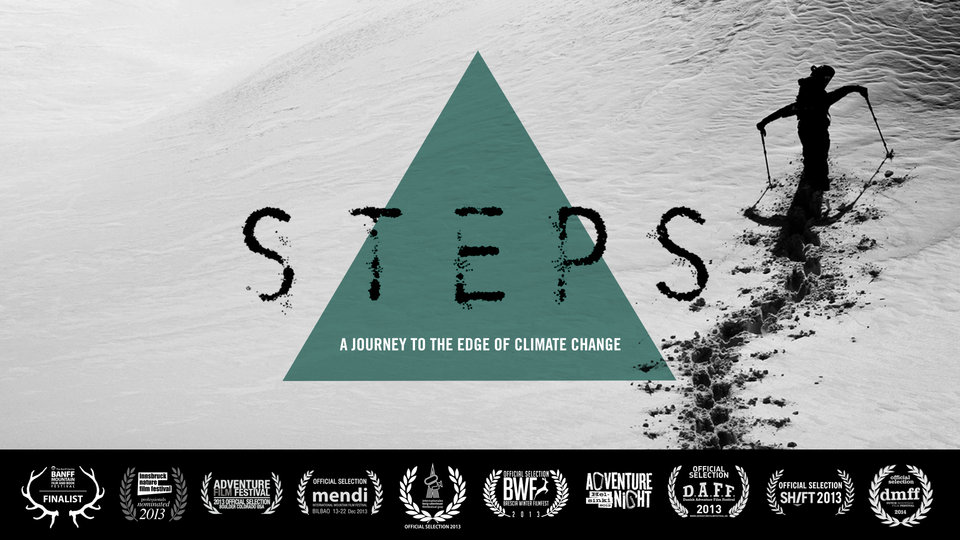
STEPS – A Journey to the Edge of Climate Change (the whole film)

StepsFrom Ride Greener.

After storming cinemas and film festivals across Europe and North America, the first climate-friendly ski and snowboard film, STEPS, is now available online for everyone to watch. STEPS is there to show us how we can snowboard and ski in harmony with nature – without giving up any fun.

Choose how much you pay: You can watch STEPS for FREE or make a DONATION to Ride Greener. Each voluntary donation will be reasonably used and 100% invested in the Ride Greener environmental campaign.

You can watch the film here.

Donation information here

How well has the Napthine government managed our environment?

Sealers Cove, Wilsons Prom NP

The following is from the Victorian National Parks Association.

With a Victorian state election due in November this year a survey has been launched asking people what they think of the Napthine Government’s environmental policy.

If you are concerned about the way the Victorian Government has handled conservation issues please take the survey, it only takes a few minutes at most.

You can do the survey here.

Blog at WordPress.com.

Up ↑