Search

Mountain Journal

Environment, news, culture from the Australian Alps

Tag

climate change

Sochi Olympians speak out on climate change

An interesting piece on the efforts of some Olympians and Paralympians who are speaking out about the need for concerted action to reduce greenhouse emissions. This comes from the Sustainable Play website and is written by Brad Rassler.

Brad notes that just 83 athletes, primarily from the U.S. and Canadian squads, and just a few from outside North America, have signed on to speak about the need for action on climate change at the Sochi Games.

Wouldn’t it be great to see some of our winter athletes raising the issue at the Games?

Sochi Olympians Speak Out On Climate Change

olympic athletesU.S. cross country skier Andy Newell will travel to Sochi, Russia in two weeks to compete in the Winter Olympics. And though his aim is clear — to stand atop the podium — he’s traveling to the Games with more than precious metal on his mind.

For the past two months, Newell, 30, has quietly appealed to his fellow Olympians to leverage the Sochi Games as an opportunity to speak to world leaders about the ravages of global climate change on the winter snowpack. The petition he’s been circulating, Olympic Athletes for Action Against Climate Change, makes the case to his fellow competitors in four paragraphs:

Winter is in jeopardy.  Inconsistent weather patterns caused by a changing climate are causing destruction around the world, and the economic impact is being felt in both large cities and small mountain communities.

    As winter Olympic athletes, our lives revolve around the winter and if climate change continues at this pace, the economies of the small towns where we live and train will be ruined, our sports will be forever changed and the winter Olympics as we know it will be a thing of the past.

    The power we have as Olympians on a global stage is immense.   Let’s use this year to make a collective statement, to send a message to the world’s leaders to recognize the impact of climate change and to take action now.

Please join us by signing this letter.

That letter, addressed to the world’s leaders from the petition’s signatories, is comprised of a simple sentence containing a powerful ask:

“…to recognize climate change by reducing emissions, embracing clean energy and preparing for a commitment to a global agreement in Paris in 2015.”

The call to action refers to the United Nations Framework Convention on Climate Change in Paris, schedule for November 30 – December 11, 2015.

Newell has thus far been joined by 82 athletes, primarily from the U.S. and Canadian squads, and just a few from outside North America. He hopes to have 100 signatures before the Games begin in two weeks, but admits getting athletes to step up and sign has proved tougher sledding than he thought.

“It’s a tricky situation. Not only because it’s hard to get the word out there to people in different countries, but a lot of athletes are reluctant to sign things in general in an Olympic year.  They don’t want to cause a controversy.  They don’t want to use the Olympics as a platform for protest either, necessarily.”

Newell, who counts 350.org founder, author and environmental advocate Bill McKibben as one of his heroes and mentors, concedes that the life of an average Olympian, with its requisite air travel, isn’t exactly easy on the planet.

“We burn a lot of fossil fuels chasing the winter around and trying to go to these competitions.  I think a lot of us feel bad about that.  But that’s our job and our livelihood and our passion.  But at the same time, we try to use that – the professional athlete as a platform — to try to raise the awareness of people that may not understand what’s going on out in the environment.”

“I didn’t necessarily want to use the Olympics as a platform for a protest, necessarily,” Newell says. “But I wanted to at least try to get a lot of athletes on board to sign this letter and basically get it to their heads of state, to say, you know, we’re Olympic athletes and we can’t continue to support ourselves and this kind of livelihood if our winters keep disappearing, and we want you guys to recognize that there is some climate change happening.”

The U.S. cross country team’s winningest athlete and gold medal favorite, Kikkan Randall, has signed the petition.

“I grew up in a family that was very respectful of the opportunities that we had to be out in the environment, and to try to do our part, the best we could, to contribute to the health of the environment,” says Randall. “And certainly being involved in a sport that does rely on the weather and the fact that climate change could effect our sport…I think athletes, doing what we do, we have a great platform to go and encourage others…to do their part.”

Protect Our Winters (POW), a California-based non-profit whose athlete-advocates get the word out about climate change, has stepped forward to boost international attention to Newell’s petition. Chris Steinkamp, POW’s executive director, says that Sochi is an ideal backdrop for an athlete alliance to speak out about climate change.

“The Olympics is the perfect stage for something like this.  Obviously, it has a history of social issues. But I think this is the first time that climate change has come up, and it’s because obviously climate change is a hot issue right now. Sochi is one of those places where it could be a real issue in the next couple of weeks, and the conditions and the weather might be really inconsistent.  So it’s a perfect storm for this issue to be recognized.”

Or maybe an imperfect storm, climatically speaking. Steinkamp says that although climate change is well documented by the science, global leaders have not yet taken the necessary actions to curb its progress, and the time to act is now.

“Every year we all go into these climate conferences, these international global discussions about climate change with high hopes that something is going to be done, and nothing ever really does get done.  So the goal of the letter is two-fold:  To really let world leaders know that something needs to be done, but also let them know that something needs to be done in Paris in 2015.”

Whether international decision makers heed Newell’s call remains to be seen. Steinkamp views the alliance itself, the first of its kind, as a significant flag in the snow.

“The cool thing is that you’ve got these Olympians that are standing up for climate change, and with this platform that they have in Sochi, [they have] the opportunity to speak their mind. Because the only way that the world leaders are going to listen is if the population lets them know about it.”

According to CNN, over 6,000 Olympians and Paralympians will compete in Sochi. Newell has just 82 with two weeks to go.


The practical realties of social change suggest that as more athletes sign the petition, the safer it becomes for those sitting on the fence to participate. This author of Sustainable Play has created his own petition, encouraging the readership of this site to ask the remaining 5,900 to take an Olympic-sized stand for this Olympic-sized issue. Reassure them that climate change transcends mere politics; it’s a phenomenon without borders.


Click on the “petition’s petition” here:


http://tinyurl.com/kn395tj
The Little Things – A new snowboard film project from Marie France Roy

The following comes from Snowboarder Magazine. There is a trend emerging of snowboarders and skiers – who are often keenly aware of how climate change is already impacting on mountain environments – taking on a more vocal attitude about the need for change. This is one more example of this.

the little thingsMarie-France Roy has earned many accolades during her snowboarding tenure for her talent when standing sideways. She has put out some of the most influential video parts of the past decade and has chops in both the backcountry and the streets.

Last season, Marie embarked on a journey to give back to the sport she loves and create a film that would share the stories of snowboarders who are committed to living in a way that positively affects the environment as much as possible. The movie is called “The Little Things” and will follow Marie and the rest of the crew this season before culminating in a release in fall 2014.

You can see the trailer for the film here.

Protect Our Winters launches the POW Riders Alliance

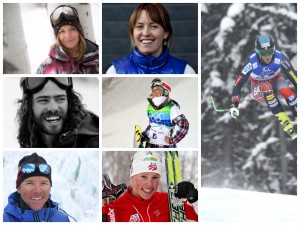
Riders-Alliance-2-300x225In the US, Protect Our Winters has just launched what it is calling its ‘Riders Alliance’, a group of 53 professional snowsports athletes, committed to fighting climate change and speaking out for the environment.

It is a remarkable line up of some of the best skiers and boarders on the planet.

As they say in the release, “Climate change is affecting our lives and careers and it’s in our best interest to use our passion to mobilize the community and bring a new perspective to the policy discussion.”

It’s great to see leadership being taken by so many high profile athletes. The group includesGretchen Bleiler, Jeremy Jones, Sage Cattabriga-Alosa, and Ingrid Backstrom.

The POW Riders Alliance was developed as a central platform for athletes to speak out and create a social movement against climate change.  For example, POW recently led a group of 17 athletes to Washington, D.C. for meetings with US Senators and has reached over 20,000 young students with a message of climate action delivered by pro athletes.

POW believes that by combining the athletes’ passion with their influence, first-hand experience and immense media reach, it represents a new, powerful approach to environmental advocacy.

With the Winter Olympics just a couple of weeks away, POW and Olympic athletes from the Riders Alliance will launch an initiative to call attention to climate change on the world’s largest sports stage in Sochi, Russia in partnership with a group of graduate students from the Yale School of Forestry.

The press release is available here,  and photos of the skiers/ boarders are available here.

Life, death, rebirth and new terrain

near Mt Wills
near Mt Wills

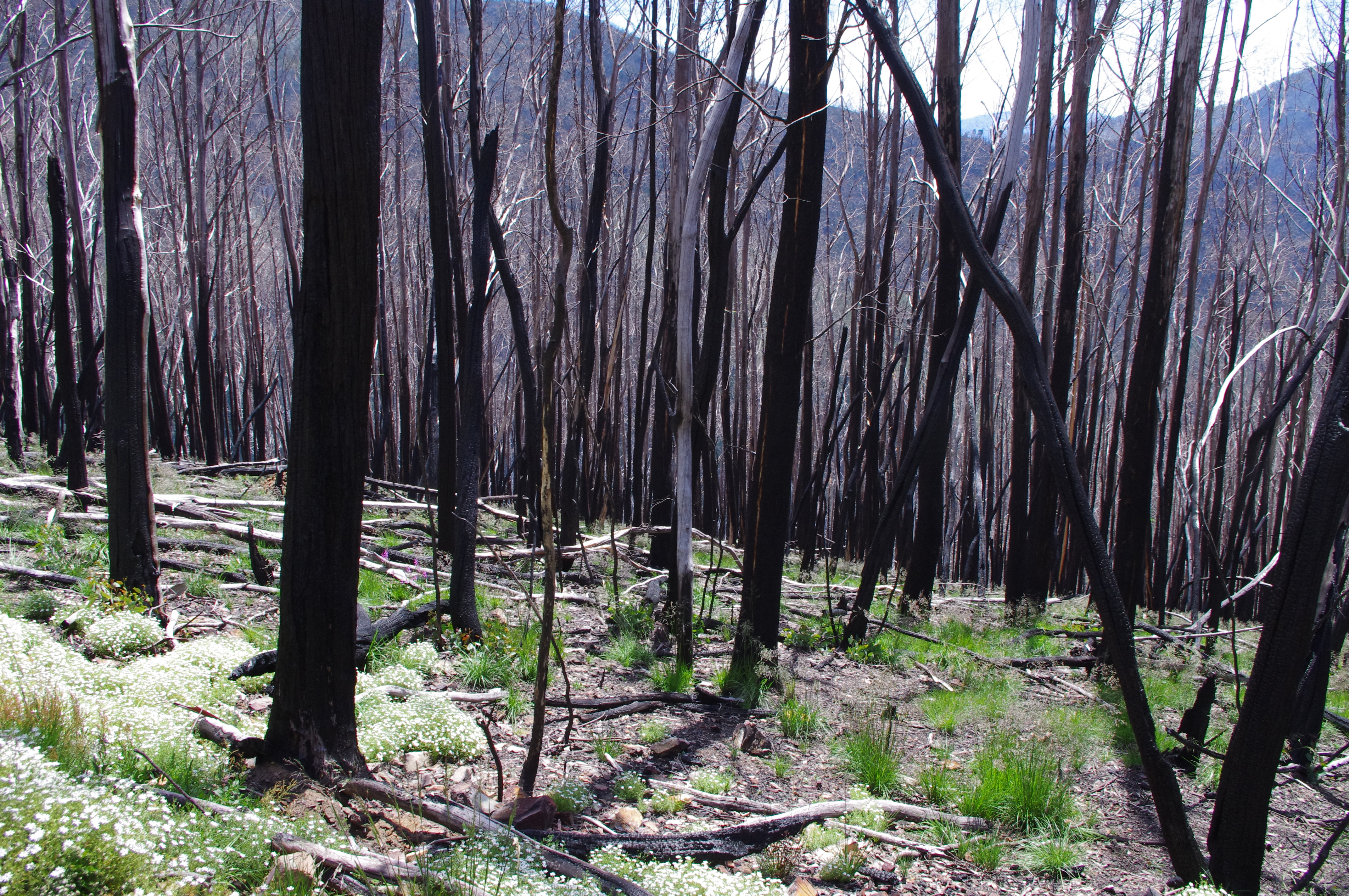
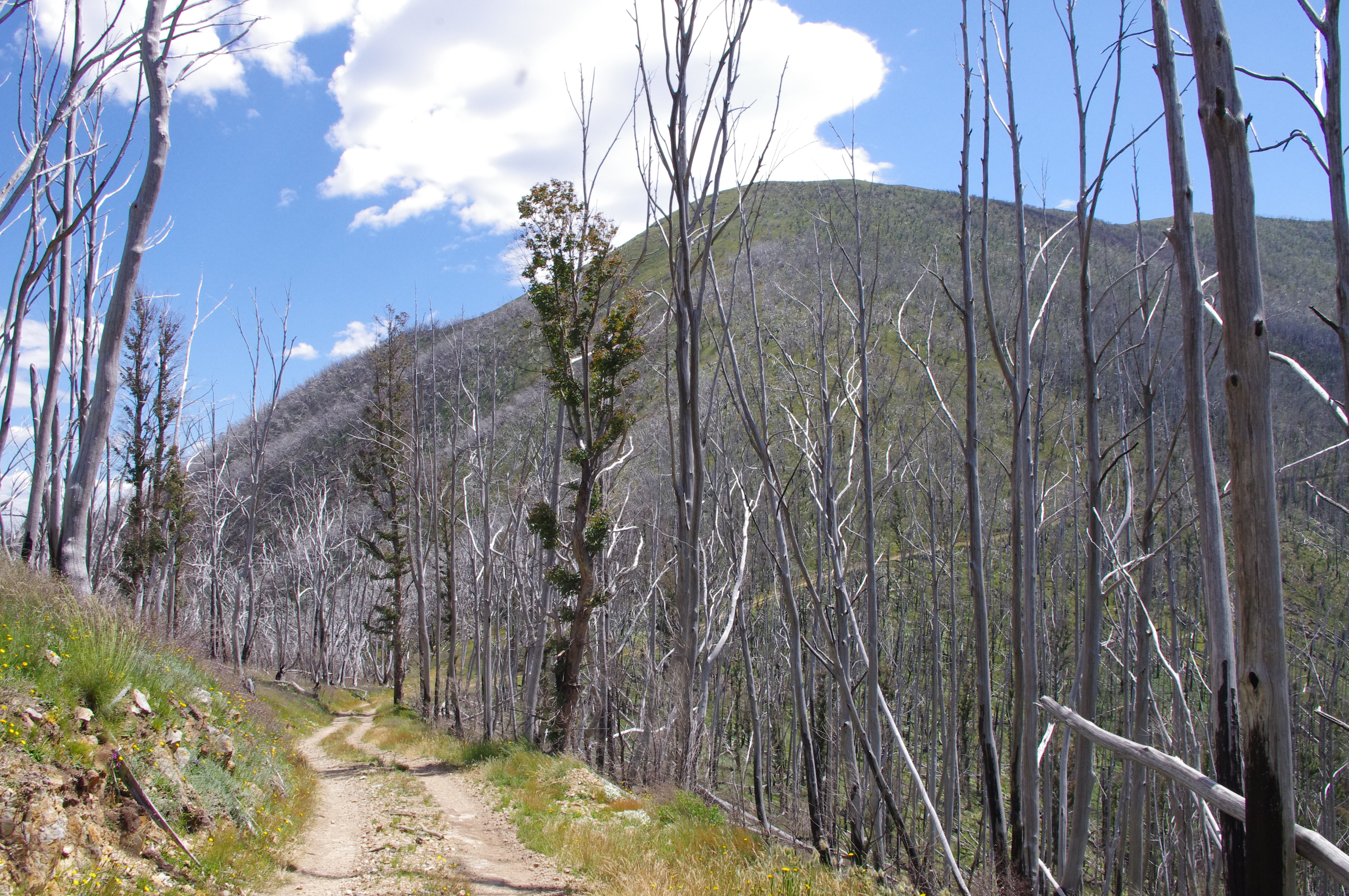
I have been out checking some of my special places, to see how they are faring after last summer’s Feathertop fire. The north razorback fire burnt hot up and out of the Ovens river, past Mt Smythe and into the Upper Buckland River and swinging east around the massive bulk of Hotham and towards Dinner Plain.

Many of the forests along the Sugarloaf Ridge were badly burnt and now big swathes of burnt out country have been clearfelled to protect the Great Alpine Road. I understand the need to cut out the alpine ash close to the road that had been killed in the 2013 or earlier fires, but a major over clearing has happened on the slopes of Mt St Bernard, where fire killed snowgums well back from the road had been clearfelled for no obvious reason.

IMGP6236Parts of this country have been burnt three times in a decade. Each year, the land becomes ever more of a mosaic of new burn, older burn, and pockets of old forest – alpine ash and snow gum – that have survived each onslaught. The 2013 fire has killed off forests, glades, slopes that had survived the earlier fires. The headwater country of the Ovens, Buckland, and Wongungarra were hammered hard over the past summer. To my eyes that land seems poorer, from too many burns in too few seasons.

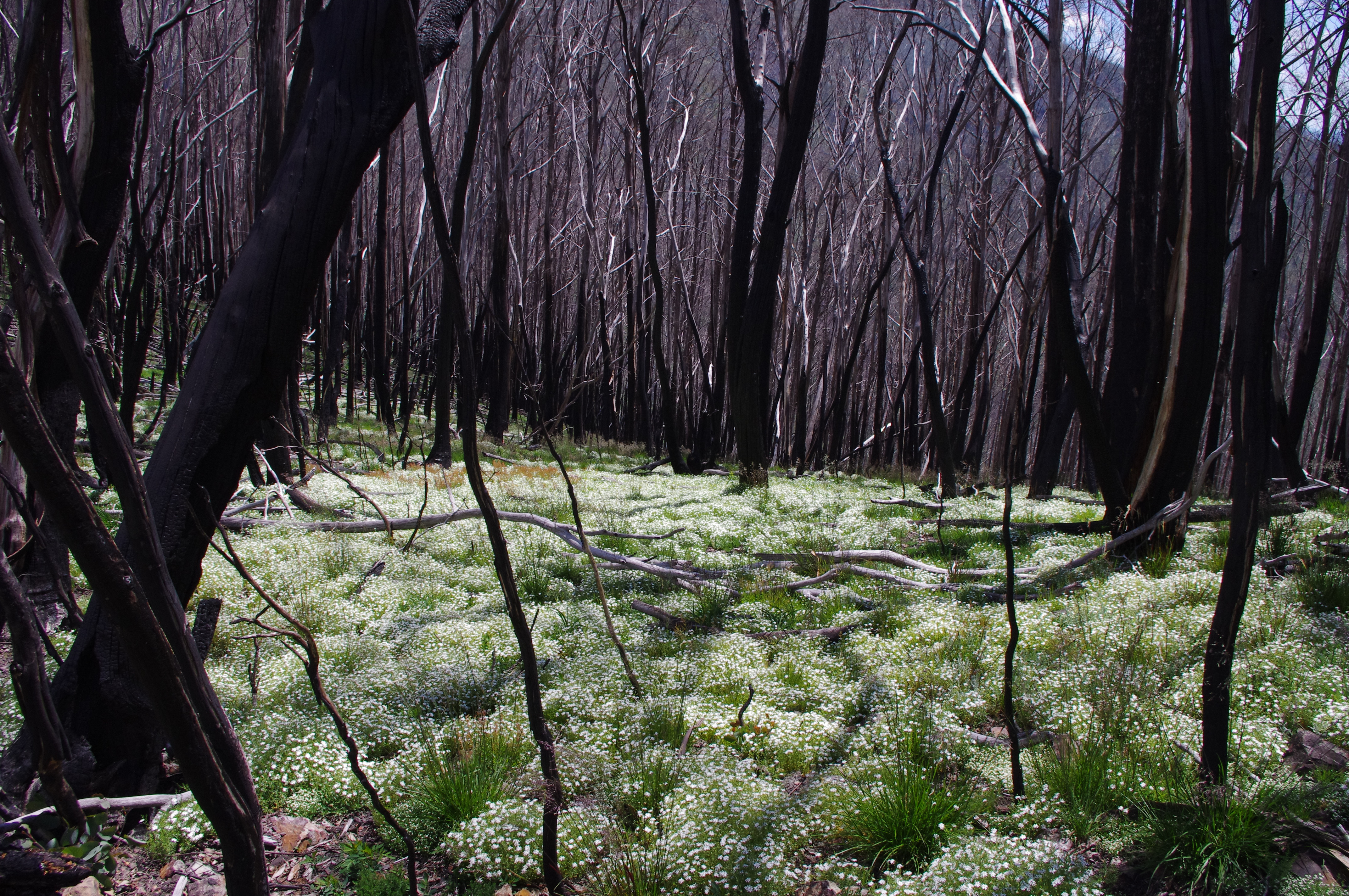
IMGP6251Fire has always been a part of our landscape. And climate science clearly tells us that longer and harder fire seasons are our future. These last few days I have wandered through alpine ash slopes and snow gum forests that had been completely scorched. Other areas have been lightly burnt, others spared altogether. The fire burnt hot up out of the Ovens, then seemed to turn back around some of the higher ridges on the Divide slower and with less heat. Its incredible to see some areas thick with new fern and daisys, while other areas as still mostly bare soil and logs, dead trees still black, streamers of bark rattling in the breeze. In some areas wattle are shooting back, in others, the beginning of Elderberry Panax groves or thick rushes of snow gums re-shooting around the burl of parent trees. If anything, the most recent fires have increased the mosaic effect on the ground.

Below tree line, the forests on these mountains can look so similar from a distance. Up close it is a mix of montane forests merging to alpine ash, leading to snow gum, the mix of vegetation in each place all dependent on slope and aspect, altitude and soil, fire history and circumstance. These most recent fires have added to the mix of already complex ecosystems and forest types.

In my mind I can see a future of more frequent fires, longer summers, warmer winters, and the land that I know and love so well being transformed into something new and poorer. Less old growth, trees pushed beyond their limits, less diversity of living things. But in the short term – summer to summer, the annual cycle that my mind can hold and understand – I see nature adapting and filling the spaces created by each fire. There is a deep ability for tenacity and resilience, seeking balance. The great unknown we face is that we do not yet understand the point at which we will have crossed beyond the balance of resilience and natural cycle into the time when balance will be broken by a human induced future. Some days I am frightened that no one knows, or will even be able to identify, that point of no return, when resilience is surpassed by a new reality that will make our familiar lands a new country, one that is foreign and strange, beyond anything we have known before.

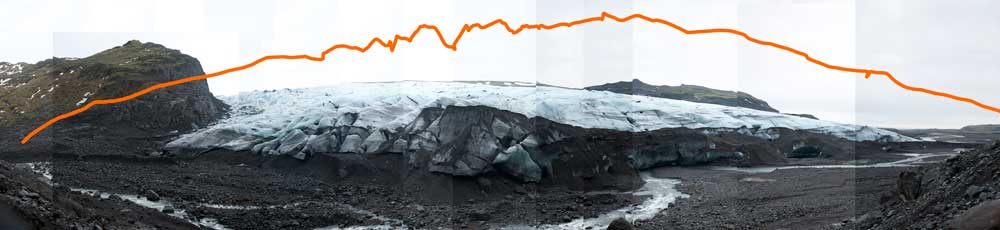
coal dust killing glaciers

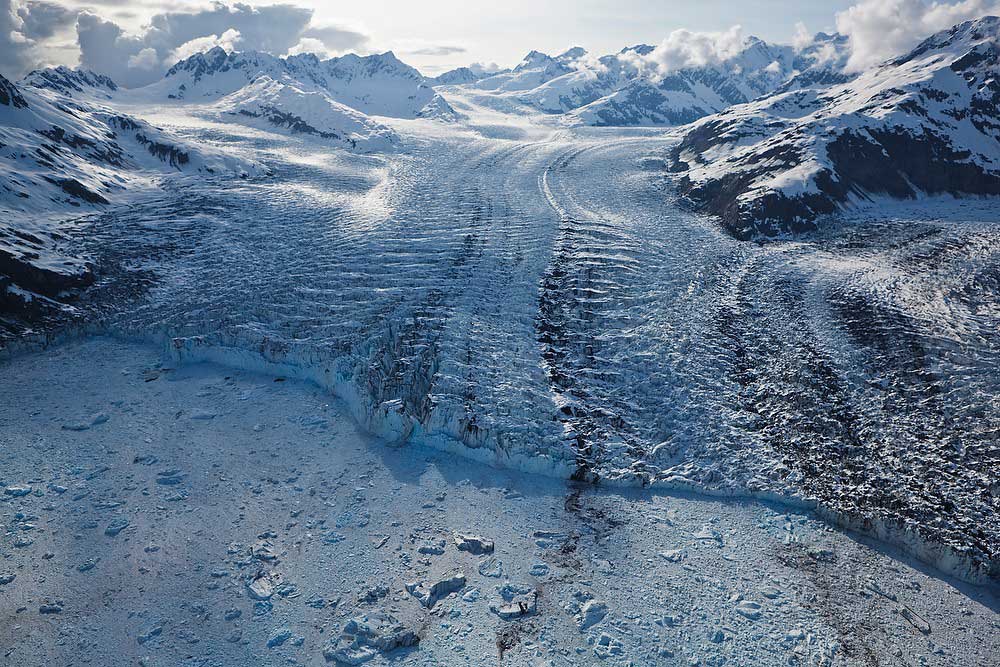
The West Branch of the Columbia Glacier, near Prince William Sound in Alaska’s Chugach Mountains. photo by Ethan Welty.

An interesting piece from Mountain Online. Here in Australia, the 10 year drought in the south east brought noticeable levels of dust onto the snowfields. Dust events are known to impact on snowcover in the South West of the US and have been linked to desertification, over grazing, etc. This article suggests another way human activity has been impacting on snow melt is through burning coal.

New research reveals humans halted the Little Ice Age. Is it too late to learn from our mistakes?

By Patrick Doyle

In July 1998, Thomas Painter took a break from his doctoral studies on the reflective nature of snow to climb the Maroon Bells near Aspen, Colorado. The snow was unusually filthy along his route. On a whim, he scraped the dirt off a small area with his ice axe and continued climbing. After summiting, Painter returned to the snowfield. The clean patch was now a small, extruded tower; the blackened snow rapidly melting around it. “It was sticking up about three inches—in a day,” says Painter.

Around that time, climate scientists were grappling with a conundrum tied to the end of the Little Ice Age, a period of below-average temperatures in the 16th through 19th centuries. Researchers had pegged the ice age’s demise to 1860, when glaciers in the Alps began to retreat. But that theory didn’t quite compute. Regional temperatures continued to decline for another 60 years. If anything, the glaciers should have kept growing.

Painter wondered if dirty snow could have been at play. In 1860, the Industrial Revolution’s coal-burning factories started spewing soot that covered European cities and—Painter guessed—the glaciers in the Alps. He hunted down ice cores from the Alps and found that layers of black carbon began appearing in the mid-19th century. Like the dirty snow melting on the Maroon Bells, the soot liquefied hundreds of meters of glacier in just 20 years. Painter, now an ice and snow scientist at NASA’s Jet Propulsion Lab, published his findings in September 2013. “I was just in the right place at the right time,” he says. “I was thinking of junk falling on snow.”

The study doesn’t just rewrite the ending of the Earth’s most recent ice age; it underlines the fact that humans caused it. Painter’s work also suggests that black carbon settling on snow runs a close second to carbon dioxide as a driver of global warming. Which means the fall of King Coal in North America is good news for snow and glaciers. Nearly half of U.S. energy came from coal in 2007. By 2012 that number had dropped to 37 percent. Expect that trend to continue, driven by increased consumption of cleaner natural gas and the Obama administration’s tighter emissions regulations for future coal plants. And while China’s coal usage has skyrocketed in recent decades, the country’s coal imports finally began to drop this year due to a slowing economy and pollution levels so high they are poisoning the population.

The switch to cleaner fuels can’t happen soon enough. But in India, a growing economy means increasing demand for coal. And more black carbon on Himalayan snow and glaciers. “What we’re seeing in the Himalaya in terms of glacier retreat is profound,” says Painter.

How it works:

Black carbon from coal-burning power plants blows into the atmosphere and settles on the mountains.

Most of that soot lands on glaciers at lower elevations, which are already susceptible to melting from summer sun.

The darkened snow melts at double the speed of clean snow, causing the glacier to retreat up the mountain.

Smaller glaciers are less able to mitigate the effects of climate change, causing a spiral of increased temperatures and less stable weather.

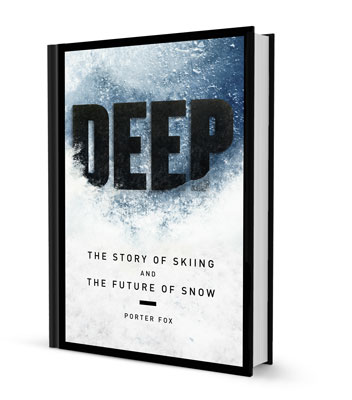
DEEP: The Story of Skiing and the Future of Snow

 As our governments at state and federal level continue to ignore the reality and scale of climate change, and dismantle the limited actions we currently have in place to reduce emissions, this book seems rather timely for those of us who like our winters cold and our snow deep.

book-cover-2“This is the most important book on snow ever written. This is a wake up call. We need to accept our reality and get busy fixing climate change.” —Jeremy Jones, pro snowboarder and founder of Protect Our Winters

“The first in-depth report on how climate change is affecting the present and future of the ski industry and mountain communities, DEEP is a must-read for every passionate skier.” — John Stifter, Editor, Powder Magazine

“Skiing offers a good barometer of the trouble we’re in—and, as this book reminds us, one more good reason for wanting to face that trouble.” —Bill McKibben, author of Oil and Honey and co-founder of 350.org

In his stunning first book, veteran ski writer Porter Fox captures the 8,000-year-old sport of skiing, the miracle of snow and the shocking truth of how climate change could wipe out both in the next 75 years.

The narrative follows the unlikely rise of skiing from prehistoric Norwegian hunters to nobility in the Alps in the 1800s to present-day freeriders on the vaunted slopes of the Rocky Mountains. On his global tour of the most celebrated mountains in the Northern Hemisphere—from Washington’s Cascade Range to the European Alps—Fox talks to alpinists about the allure and mysticism of the sport and to scientists about climate change and its effect on snow—ultimately finding a story that is far larger than the demise of skiing.

For the seven million skiers in America who dedicate their winters to tracking storms and waking up at dawn to catch the first chairlift, the lifestyle change will be radical. It will likely be far worse for the rest of the world. Fox uses primary interviews and evidence, mixed with groundbreaking scientific studies, to explain exactly how and when the Great Melt will play out—and the tremendous groundswell that is rising up to stop it. DEEP provides firsthand accounts from skiers and scientists who are mapping a way to mitigate climate change, reduce human impact on our planet and repair the water cycle. As it turns out, their efforts to save snow and ice might end up saving the world.

You can buy it here.

You can find an Australian perspective on climate change and skiing here.

Wildlife survey uncovers alpine creatures in Victoria

The following excerts come from an article on the ABC website by Greg Muller about a recent survey in north eastern Victoria. The survey was a collaboration between Parks Victoria, Museum Victoria, community members and 4WD clubs. Check here for an earlier post about this survey.

Areas explored included the Upper Buchan River and Davies Plain.

A key message is at the end of the story: climate change poses a grave threat to many alpine and sub-alpine species.

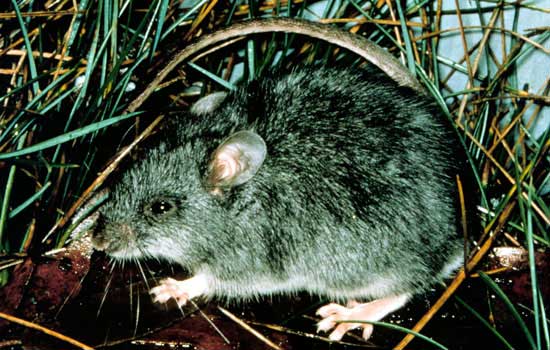
Smoky Mouse
Smoky Mouse

In a wild corner of north-east Victoria, more than 80 researchers have just spent two weeks counting and documenting rarely seen alpine wildlife.

The remoteness of the region means there is limited knowledge of the area—an issue Museum Victoria and Parks Victoria are now attempting to rectify.

‘There’s good news. We’re delighted we found alpine tree frogs because that’s one species vulnerable to a deadly fungus which has been attacking the frogs,

During the two-week bioscan, 21 species of reptiles were found, including the endangered Kosciusko Water Skink, Glossy Skink and the Mountain Skink.

Two listed species were found, the Broad Tooth Rat and the Smokey Mouse.

There were also two species of Antechinus (a small marsupial mouse indigenous to Australia) found, but at this time of year the population consisted only of females.

Roger Fenwick, the regional manager for Parks Victoria, was instrumental in organising the bioscan and worked to bring researchers, park rangers and locals together for the project.

‘No one group knows everything and it’s great to share the knowledge and get better results as land managers,’ said Mr Fenwick.

‘We invited four wheel drivers to be involved and this means the scientists can get on with doing their work, the Parks staff can concentrate on managing the program, and the four wheel drivers can get everyone around nice and safe.’

Museum Victoria’s senior curator of entomology, Dr Ken Walker documented 400 nests of native bees during the study.

‘What you find is a pile of dirt which looks like a chimney which goes down about 30 centimetres underground,’ he said.

Also at the bioscan was a member of the local indigenous community, Katherine Mullet, who was representing the Gunnai/Kurnai and Monero communities who used to occupy this area.

Ms Mullet was looking for cultural sites, including traditional walking routes, many of which are now 4WD and bushwalking tracks.

Dr Norman explained that climate change is a major threat to alpine wildlife species, which are already living at the edge of their environment.

‘The challenge worldwide with changing climate is if you are at the top of your limit or as far south as you can go, there’s nowhere else to go.’

leadership from the front lines of climate change

While the new International Panel on Climate Change (IPCC) report confirmed recently that climate change is indisputable, it’s something that the winter sports community has been seeing first-hand for years.

This has seen many in the recreational skiing and boarding community get active to tackle climate change. But there are also some interesting things happening amongst professional athletes.

Jeremy Jones
Jeremy Jones

In April, 75 Olympic medalists and other winter sports athletes – including White House “Champion of Change” awardee and pro snowboarder Jeremy Jones – lobbied President Obama, urging the President to take action on climate and clean energy.

The representatives of the global snow sports community signing the letter to the President included X Games champions and World Champion snowboarders, alpine/Nordic skiers and professional climbers, including:

• Olympic gold and silver medalist Julia Mancuso (Olympic Valley, CA)
• Olympic silver medalist and four-time X Games gold medalist Gretchen Bleiler (Aspen, CO)
• 10-time Big Mountain Rider of the Year Jeremy Jones (Truckee, CA)
• Olympic silver medalist, three-time World champion, seven-time X Games champion Lindsey Jacobellis (Stratton, VT)
• Two-time Olympian and six-time X Games gold medalist Nate Holland (Truckee, CA)
• Olympic gold & silver medalist, six-time X Games medalist, six-time World Cup champion Hannah Teter (Belmont, VT)
• 2010 Olympian, Nordic skier Kikkan Randall (Anchorage, AK)
• Five-time winner Powder Magazine’s Best Female Performer Ingrid Backstrom (Seattle, WA)
• Two-time World Freeskiing champion Chris Davenport (Aspen, CO)
• Two-time World Freeeskiing champion, Kit Deslauriers (Jackson, WY)
• 2013 World champion, X Games medalist Arielle Gold (Steamboat Springs, CO)

For a full list of signers, check here.

The letter states “Without a doubt, winter is in trouble”  “… at risk are the economies of tourist-dependent states where winter tourism generates $12.2 billion in revenue annually, supports 212,000 jobs and $7 billion in salaries.  Those are the jobs and businesses are generators of billions in federal and state income.”

Hot Planet/ Cool athletes program

Meanwhile Protect our Winters (POW) has restarted Hot Planet/ Cool athletes program, which organises Professional skiers and snowboarders to deliver presentations to North American students, encouraging them to become Climate Leaders.
Protect Our Winters re-launched their “Hot Planet/Cool Athletes” program this week to take the first hand perspective of climate change into the classroom to explain climate change from an engaging new perspective and to inspire and empower students to become involved.

Presented by The North Face, the program has been presented to more than 20,000 students at 41 schools nationwide since 2011.  The new format for 2013 continues to educate students about climate change, combining engaging action sports footage and understandable climate science with first hand athlete’s perspectives and a call to action that truly breaks through to students and gives them the tools to be part of the solution.

Pro athletes such as Gretchen Bleiler, Jeremy Jones, Sage Cattabriga-Alosa, Ingrid Backstrom, Lucas Debari, Danny Davis and Angel Collinson are featured in the video project, with many others scheduled for in-person school appearances.

More info here.

Our time is now

Then there is the the #ourtimeisnow campaign, a call to action that invites students to take meaningful action on climate change.  By connecting with them in a relevant way, via their social media, POW will invite all students to use the hashtag #ourtimeisnow across their social media channels. POW can then track its use and provide meaningful climate actions directly back to each student.  As students become more involved in the campaign by using the hashtag on Twitter and Instagram, they will have opportunities to win prizes and spend time with professional athletes discussing climate change or joining POW representatives to lobby MPs in Washington.

“We’ve got to create a social movement starting with young kids who will be the most affected, and we feel that this component of the program is a critical step in making a difference.  By using social media as a backbone for it, we’re connecting with students on their terms and starting that movement with meaningful results,” said POW’s Executive Director, Chris Steinkamp.

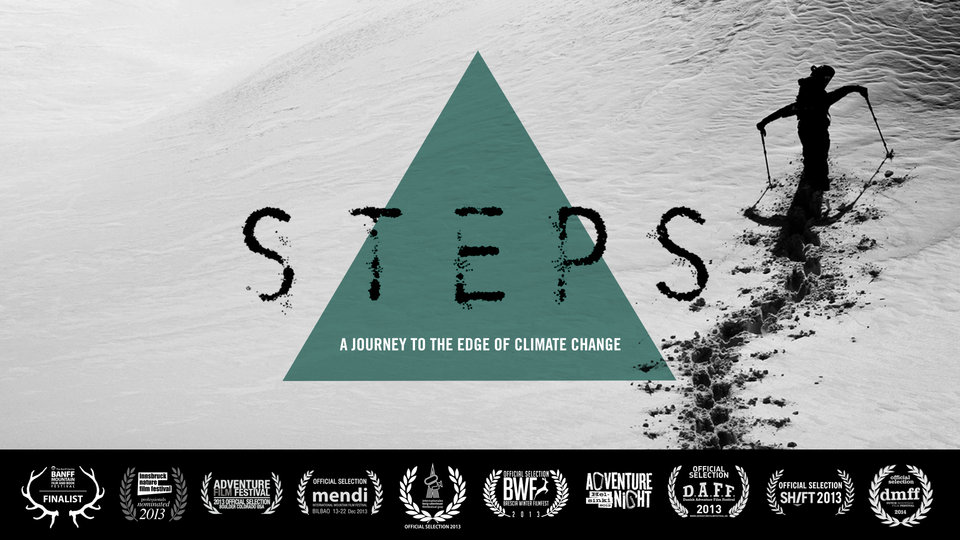
STEPS – a journey to the edge of climate change

rid-greener-screengrab-140x130Then there is this new film from Ride Greener and Coupdoeil which considers how the snow industry can work in harmony with nature to protect the climate we rely on.

The promo says:

“The carbon-neutral approach shown in the film is a new way of thinking with the ever-looming shadow of climate change growing closer year after year. It’s not too late to prevent the oncoming consequences of fossil fuels and the damage that has already been caused”. This film tackles how an industry that revolves around predictable and consistent weather patterns can play it’s part in preventing climate change.

Details here.

Mountain Cattlemens disendorsement a good thing for MP?

Image: National Trust

The Australian Electoral Commission has just declared the outcome for the Federal Seat of McEwen, in central eastern Victoria.

During the election campaign, the Mountain Cattlemen’s Association came out against the sitting Member, Rob Mitchell, because he opposed cattle grazing in the Alps.

In response, Mr Mitchell said:

“The Mountain Cattlemens Association of Victoria is a small group of people who have historically enjoyed something that few Australians have – free access to public assets to help build their wealth.”

“While we respect and admire their history and their traditions, it’s no longer possible to allow such a small group – mostly wealthy beef producers – to continue grazing cattle in areas that belong to the public, current and future generations.”

Mr Mitchell said there were many “intelligent, rational” reasons to keep cattle out of sensitive alpine ecosystems and noted NSW had decided to stop mountain cattle grazing in the late 1960s.

The Victorian Coalition is in thrall to the mountain cattlemen (as shown recently by them creating an advisory group on the Alpine Park stacked with grazing and pro-grazing interests). The state government was widely criticised for putting its political allegiance with the cattlemen ahead of good policy development in crafting its ‘fuel reduction’ grazing program, which was subsequently stopped after intervention by the federal government . As was reported in The Age, the government pushed ahead with its controversial grazing trial despite being told by Parks Victoria that no “scientific, social or economic evidence existed to support it”.

It would be worth the state government taking note of the fact that in spite of a nation wide swing against the ALP in the election, pro-grazing views within the electorate were not able to affect Mr Mitchell.


In an interesting side note, Victorian Liberal MP Donna Petrovich had resigned from state Parliament to stand against Rob Mitchell in the September election. She holds a regressive position on a range of climate related issues, including supporting continued use of coal and opposing wind energy.

On wind

In Hansard, Ms Petrovich raises various issues about what she sees as the ‘problems’ with wind energy: issues of reliability of wind, health risks, visual impacts.

Ms Petrovich is concerned that the previous government did not consult with the community over wind farm policy (yet she consistently refused to say who the Coalition consulted with in framing their policy).

She says that the No Go zones that block wind energy from much of the state were ‘carefully’ selected where communities ‘on the whole have told us that they are not appreciative of wind farms’. In the same speech she only mentioned anti-wind groups as being the groups she had worked with in forming her opinion rather than the broader community.

She endorses the Coalition’s anti wind policy VC82: ‘The position the government has come to is one that I am proud of.’ (Hansard, 12/10/11).

On coal she says:

The Coalition looks towards the effectiveness and abundance of brown coal as a means to provide a reliable source of energy for Victorians”. (Hansard October 11, 2011).


less snow – less skiers

chart_072913The following figures from Snowsports Industries America are some analysis of the most recent Northern hemisphere winter. The short message is that overall visitation to resorts is down slightly against recent years.

The report notes that “snowfall got a late start this season, really getting underway after the Christmas holiday. The lack of early season snow affected all snow sports except freeski and telemark.” With climate change predicted to increasingly impact on snow quantity, we keep getting glimpses of possible futures under global warming scenarios – of later and more erratic winters.

Here in Australia, we have had a very erratic winter so far, with good snowfalls being followed by heavy rainfall and warm conditions. In the VIC alps we lost almost the entire snowbase in mid July after solid falls early in the month. Just a few degrees in temperature can make all the difference to whether precipitation comes as rain or snow. And as the report Caring for our Australian Alps Catchments found, the Alps face an average temperature rise of between 0.6 and 2.9 degrees by 2050, depending on how much action the international community takes to combat climate change.

There are a range of reasons why people might ski or board, or do something else, and lift prices and overall costs of being in a resort is a big one. But poor snow conditions is another obvious one. Just ask anyone who manages accommodation in the Alps and they will tell you that snow falls correlate with booking trends. With less reliable snow, people are likely to do something else, or go overseas if they can afford to do so. Climate change impacts are a factor we ignore at our peril.

In the US there is a strong movement within the snowsports community which is working to encourage people and governments to act on climate change. Protect our Winters is the best known of these. You do have to wonder why the community here has been so slow to respond, and why we have so few prominent people speaking out? The one industry initiative Keep Winter Cool has dwindled off in recent years as resorts focus their attention on rebranding themselves as year round destinations. In climate change terms, this is called ‘adaptation’. But without ‘mitigation’ – action to reduce emissions, we seem doomed to the type of futures forecast in reports like Caring for our Australian Alps Catchments.

Senate Inquiry into extreme weather – an opportunity to share your experiences

Mt Stirling
Mt Stirling

The federal Greens have been successful in getting a Senate Inquiry into extreme weather. This is a significant opportunity for the government to consider the impacts of climate change and extreme weather events on local communities, landscapes and economies in the Alpine region.

It would be useful if you or your business or group were be able to make a brief submission to the inquiry about the threat of extreme weather and climate change in your community, and the impacts it has already had or is predicted to have. See below for some ideas on making a submission.

Time is short – we only have until January 18.

You may also want to make a formal request for the committee to visit your area and host a public hearing to take submissions from people who live in or are reliant on good winters to keep the local economy strong.

The snow industry – the canary in the cage when it comes to climate change?

The winter sports industry/community is deeply dependent upon predictable, heavy snowfall, but climate change is expected to contribute to warmer winters, reduced snowfall, and shorter snow seasons.

A recent US study, commissioned by Protect Our Winters (POW) and the Natural Resources Defense Council (NRDC), shows that the U.S. ski and snowmobile winter sports industry is currently worth an estimated $12.2 billion each year, and has already felt the direct impact of decreased winter snowpack and rising average winter temperatures.

As the authors note in the report, “climate change spells trouble for all businesses dependent on winter weather including snowboarding, snowshoeing and skiing. The shrinking numbers of winter sports tourists also affect restaurants, lodging, gas stations, grocery stores, bars” and other businesses.

Bogong High Plains fires, 2007

Here in Australia, winters are already becoming warmer and more erratic, and this impacts on the quality and quantity of snow.

According to Dr. David Bain, in the high Alps from 1950 to 2007 there has been an increase in winter temperatures approaching 1°C, and over much the same period (1957 to 2011), Australia has seen a slow decrease in snow depth. The mid-winter snow depths have only decreased a small amount, whereas spring snow depth has dropped by almost 40%. The obvious impact here is that the resort season becomes shorter, making it more difficult to make a profit on infrastructure that is located in resorts year round.

While resorts have invested in extra snow making capacity and are seeking to build visitation outside of the winter months, the majority of infrastructure is based around winter sports. Snow making will become more expensive in coming years as energy prices rise, and this will impact on resort profit margins and hence viability. As was highlighted in the 2012 document the Alpine Resorts Strategic Plan, “cost pressures are a major problem for many on-mountain businesses and site holders”.

Science suggests that without determined action to reduce climate change, we can expect to see less and less reliable snow falls in coming years.
According to the government commissioned report ‘Caring for our Australian Alps Catchments’, the Alps face an average temperature rise of between 0.6 and 2.9 degrees centigrade by 2050, depending on how much action the international community takes to combat climate change.

Rain, snow and other precipitation is expected to decrease up to 24% over the next four decades, accompanied by more bushfires, droughts, severe storms and rapid runoff, causing heavy erosion. Additionally, what precipitation we get could become more erratic. For instance, it is likely there will be more storm events in summer, which could be expected to impact on outdoor recreation and especially organised events like bike rides and festivals. The 2003 and 2006/2007 fires in Alpine regions are an indicator of what could come with enhanced global warming. These shut down tourism across sections of eastern Victoria, with dramatic impacts on businesses reliant on summer tourism.

The Caring for our Australian Alps Catchments report says that our ski slopes could be completely bare of natural winter snow by 2050 unless concerted action is taken against global warming.

The erratic weather will also be felt in winter, with corresponding impacts on economies. The US report notes that in that country, the downhill ski resort industry is estimated to have lost $1.07 billion in aggregated revenue between low and high snow fall years over the last decade: if the snow is bad, many people will simply cancel their holiday. So even if there is some snow cover, erratic weather can still have impacts.

All of this will be a disaster for skiers, boarders and all who spend their time in the Alps.

Buffalo Plateau from Big Hill

But it will also be devastating for local economies. In Victoria, the alpine resorts are estimated to have contributed $570 million and 5,800 Full-Time Equivalent jobs to the Victorian economy in winter alone for 2011 (source: Alpine Resorts Strategic Plan 2012, p13). The flow on effects of the industry is felt in towns throughout north east Victoria and around the Snowy Mountains, including the development of niche agriculture economies which is, in part, supported by snow-based tourism. To take one example of local benefits, the ‘gross regional profit’ of Alpine Shire was increased by about $130 million in 2011 because of the presence of the alpine resorts. The negative impacts of the bushfires on Murrindindi Shire in this same period indicate what climate change and extreme weather events could mean in future for all shires across the state.

According to the Economic Significance of the Australian Alpine Resorts report (2011), the combined benefit for the three Australian States with alpine resorts in 2005 is calculated to be $1.3 billion with 17,050 annual equivalent employment opportunities.

As the US report concludes: “all of this translates into less snow and fewer people on the slopes, which results in massive economic hardship for resorts, states, local communities, businesses and their employees.”
Please write a submission

In order to protect the alpine environments that we love and the many thousands of people and businesses who depend on a snow-filled season, we must act now to support policies that protect our climate, and in turn, our slopes.

You can read more about the Inquiry and make a submission here.

Some points you may like to make:

Apart from any direct impacts you are concerned about, you might want to mention that the latest science is showing that the impacts of climate change are happening faster than expected, and that communities will require funding to deal with the worst predicted outcomes. There must be greater community engagement about adaptation to climate change. However, responding to climate change (‘adaptation’) is not enough: we must also respond to the causes of climate change – by reducing emissions (‘mitigation’).

Check here for climate change scenarios for the Alps.

If you would like the Senate Inquiry to visit your town to hear your concerns about climate change and extreme weather, please check here.

Submissions are due on 18 January with the final report due from the Senate Committee on 20th March.

Snow gone? US ski resorts see melting future

Mountain Journal has previously covered some of the initiatives of US ski resorts attempting to become more sustainable and also respond to the threats of climate change.

This recent summary of the situation there mirrors whats happening in Australia – with resorts struggling with poor natural snow, attempting to provide cover through snow making, and re-braninding themselves as year round resorts.

This article comes from the Sydney Morning Herald.

Skier in Colorado, USA

Helena Williams had a great day of skiing at New Hampshire’s Mount Sunapee shortly after the resort opened at the end of November, but when she came back the next day, the temperatures had warmed and turned patches of the trails from white to brown.

“It’s worrisome for the start of the season,” said Williams, 18, a member of the ski team at nearby Colby-Sawyer College. “The winter is obviously having issues deciding whether it wants to be cold or warm.”

Her angst is well founded. Memories linger of last winter, when meager snowfall and unseasonably warm temperatures kept many skiers off the slopes. It was the fourth-warmest winter on record since 1896, forcing half the nation’s ski areas to open late and almost half to close early.

Whether this particular winter turns out to be warm or cold, scientists say that climate change means the long-term outlook for skiers everywhere is bleak.

The threat of global warming hangs over almost every US resort, from Sugarloaf in Maine to Squaw Valley in California. As temperatures rise, analysts predict that scores of the nation’s ski centers, especially those at lower elevations and latitudes, will eventually vanish.

Under certain warming scenarios, more than half of the 103 ski resorts in the Northeast will not be able to maintain a season length of 100 days by 2039, according to a study to be published next year by Daniel Scott, director of the Interdisciplinary Center on Climate Change at the University of Waterloo in Ontario.

By then, no ski area in Connecticut or Massachusetts is likely to be economically viable, Scott said. Only 7 of 18 resorts in New Hampshire and 8 of 14 in Maine will be. New York’s 36 ski areas, most of them in the western part of the state, will have shrunk to nine.

Rockies

In the Rockies, where early conditions have also been spotty, average winter temperatures are expected to rise as much as 7 degrees by the end of the century. Park City, Utah, could lose all of its snowpack by then. In Aspen, Colo., the snowpack could be confined to the top quarter of the mountain. So far this season, several ski resorts in Colorado have been forced to push back their opening dates.

“We need another six or eight inches to get open,” said Ross Terry, the assistant general manager of Sunlight Mountain, near Aspen, which has pushed back its opening day to Friday from Dec. 7.

The warming trend “spells economic devastation for a winter sports industry deeply dependent upon predictable, heavy snowfall,” said another report, released last week by the Natural Resources Defense Council (NRDC) and Protect Our Winters, an organisation founded to spur action against climate change.

Between 2000 and 2010, the report said, the $10.7 billion ski and snowboarding industry, with centers in 38 states and which employs 187,000 people directly or indirectly, lost $1.07 billion in revenue when comparing each state’s best snowfall years with its worst snowfall years.

Even in the face of such dire long-range predictions, many in the industry remain optimistic. Karl Stone, the marketing director for Ski New Hampshire (a trade group), said good winters tended to come after bad ones — the winter of 2010-11 was one of the snowiest in recent memory — and that a blizzard could erase a warm spell. The basic dynamic he lives with is unpredictability; some areas that were warm last week have snow this week and vice versa.

“Things can change quickly, thanks to one storm, and that’s usually how it works this time of year,” he said, noting the current on-again, off-again snow pattern.

On a warm day last week, when the thermometer reached 51, Bruce McCloy, director of marketing and sales here at Mount Sunapee, was generally upbeat about the coming season, but he could not ignore the brown slopes outside his office window.

“The real problem with a day like this is that you can’t make more snow,” he said. “There are only so many days until Christmas, and we need so many days at certain temperatures to get the whole mountain done.”

Even in the Rockies, it is difficult to find enough water to make snow. After last year’s dry winter and a parched, sweltering summer, reservoirs are depleted, streams are low, and snowpack levels stand at 41 percent of their historical average.

September view

At Sunlight in Colorado, the creek that supplies the pond that, in turn, provides water for snow guns has slowed to a near-trickle.

“It’s a nice day — for September,” said Greg Ralph, the marketing director at Monarch Mountain, which depends exclusively on natural snow. Monarch was scheduled to open the day before Thanksgiving but has pushed back that date to Friday.

Ralph estimated that 250 employees at Monarch have been “on hold” as the resort languished in the unseasonable warmth.

Concerns about global warming are intensifying at a time when the industry has seen little growth. While ski seasons have swung between epic and terrible over the last 30 years, the number of ski visits nationally from 1979, when the industry started keeping records, to 2011 has grown at a compounded annual rate of only 0.6 percent. Counting 2012 would put the growth rate closer to zero.

The chief reasons, according to people in the industry, are the aging of baby boomers, long skiing’s most active enthusiasts, and the fierce competition for time, whether from Caribbean cruises or computers.

Add something called “backyard syndrome,” in which urbanites who live in easy driving range of a ski resort — say, Bostonians, who live 90 minutes from Sunapee — are reluctant to head north unless they see snow at home. Even when live webcams show a resort blanketed in white, McCloy said, it is hard to move urbanites to the mountains “until they’re shoveling snow or they’re stuck in it.”

In response to these problems, ski areas have developed adaptation strategies to lure people to their resorts even if the skiing is marginal. Many have expanded into four-season destinations and offer an array of activities that do not depend on the weather: concerts, yoga, craft fairs, conferences, water parks and spas. Sunapee opened a new adventure park this summer with canopy ziplines, a treetop obstacle course and golf.

Snowmaking

The most basic strategy for coping with a lack of snow is to make it, and as of the 2009-10 season, 88 percent of resorts belonging to the National Ski Areas Association were doing so. Dramatic improvements in snow-making technology have helped resorts compensate for warming trends, and several have invested millions in new energy-efficient tower guns.

“So far, the technology has kept up with climate change,” said McCloy at Sunapee, one of those resorts that Scott in Canada predicted would be put out of business eventually by global warming. “In fact,” McCloy said, “it’s probably improving faster than climate change is happening.”

That may not be the case for long. “With nighttime minimum temperatures warming at a faster rate than daytime maximum temperatures,” the NRDC report said, “it is uncertain as to what extent snow-making will last as an adaptation strategy.”

Article originally from the NYT.

Blog at WordPress.com.

Up ↑