The following is yet another story about the impacts of climate change on snow and ski resorts. The evidence of direct economic impacts continues to grow and while some resorts are heeding the call, a large number continue to ignore the issue.
Global warming is likely to disrupt European ski resorts and cause more landslides and forest fires, affecting the agricultural sector and local economy.
With temperatures rising faster in the Alps than the rest of the world, alpine countries are working together to adapt to climate change and hope to set an example.
The Dinner Plain Clean Energy Initiative is a great new program. It aims to offer cheaper, pollution free electricity generated from renewable sources, as well as new technology alternatives to replace antiquated, polluting and expensive gas heating and hot water systems.
For every person that switches, Powershop will make a donation to the DP Community Energy project. You can also switch your Melbourne home using the above link to support the DP Community.
“We live in remarkable times. What is done, or isn’t done, in the next few years will determine the future”
– David Suzuki
“We need people to fall in love with the outdoors. Without that personal connection with nature it’s hard to get them to protect it”
– Jeremy Jones
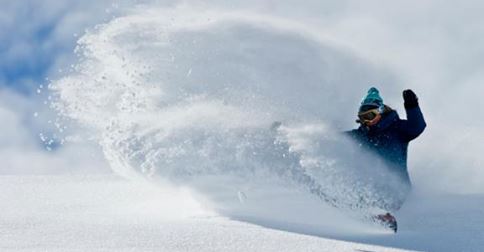
Legendary snow boarder Jeremy Jones and environmentalist David Sukuki provide the narrative to the film The Little Things, which has just been released.
The Little Things is a snowboard movie project based on “environmentally conscious riders who are inspirational through their riding, as well as their sustainable ways of living and thinking”.
The film is an initiative taken on by professional snowboarder Marie-France Roy and directed by Filmmaker Darcy Turenne in which all the riders are bringing to life the importance of protecting and living in balance with our environment.
100% of the proceeds from the film will be donated to Protect Our Winters (POW) and The David Suzuki Foundation (DSF). The film makers say that “the goal is to bring snowboarding one step ahead, while inspiring positive change that will secure the same lifestyle and quality of life that we have for future generations”.
Mountain Journal has previously reported on the sustainability initiatives of Mt. Abram ski area in the USA. They have recently substantially deepened their direct investment in renewable energy.
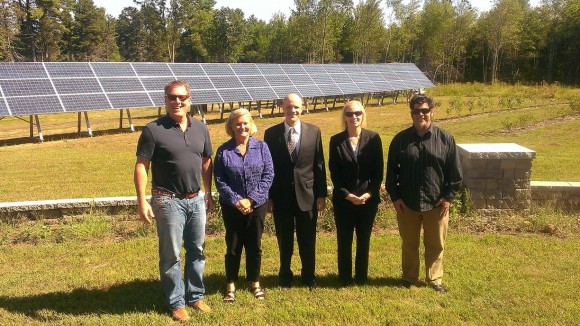
A western Maine ski resort is installing an 803-panel solar array it says should eventually provide 70 percent of the resort’s annual electricity needs.
Jamie Schectman, the marketing director of Mt. Abram ski area in Greenwood, says the project is expected to produce more than 280,000 kilowatt hours annually.
Part of the project will be paid with up to $235,000 from a 25 percent matching grant from the U.S. Department of Agriculture’s Rural Energy for America Program.
The Sun Journal reports that the total cost of the project is expected to be less than $1 million.
Mt. Abram co-owner Matt Hancock said the solar project “continues the advancement of our clean energy game plan – utilizing abundant, local and readily available resources wherever and whenever possible.”
You can read more about the sustainability initiatives at Mt Abram here.
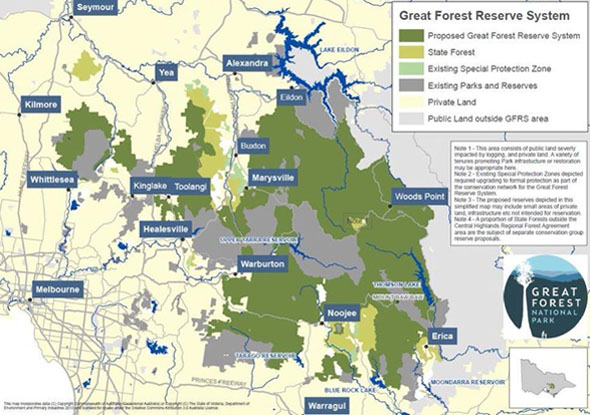
The Great Forest National Park (GFNP) proposal is a vision for a multi-tiered park system for bush users and bush lovers alike, on Melbourne’s doorstep.
It is a park that will protect and maintain important ecosystem functions critical for the health and well being of all Victorians. The proposal intends to amalgamate a group of smaller parks and add a recreational and ecosystem management plan overlay. The GFNP’s gateway in Healesville is only 60 kilometres from Melbourne’s MCG and stretches from Kinglake through to the Baw Baws and north-east up to Eildon. The proposal is backed by 30 years of research from Laureate Professor David Lindenmayer AO and his team from the Australian National University. The Park proposal adds approximately 355,000 hectares to the current 165,000 hectares in reserve. This will bring Melbourne up to a little over 500,000 hectares of reserve, nearly half the size of Sydney’s reserve system. It is an ambitious project that is gaining momentum by the day.
A few years ago I traveled with a Sherpa climber who had summited on Mt Everest many times, set some speed records, and even helped carry a statue of the Buddha to the summit. I remember him talking about how the mountain was becoming more dangerous because of global warming, with more exposed rocky sections and risk of ice fall.
Every year, as I wait for the season forecast, like other skiers and riders I hope for the best. A good year – like the one we just had – seems like a blessing when you consider what we know about climate change and the likely impacts on mountain environments world-wide in coming years. Climate change is coming and ignoring the science will not make it go away.
I find it remarkable that ski resorts in Australia, who by definition rely on good winter snow falls, have generally ignored the issue of global warming. I find it strange, and sad, that we have so few famous Australian skiers and riders willing to speak out on the issue. I look to the example of people like boarder Jeremy Jones, the inspiration of Protect Our Winters, and initiatives like The Little Things, a snowboard movie project based on environmentally conscious riders who are inspirational through their riding, as well as their sustainable ways of living and thinking.
So, lacking local leadership from the snow sports community and industry, we still need to look overseas for some inspiration. I thought these recent comments from alpinist Kitty Calhoun (lifted from the Patagonia Australia) blog were worth sharing.
“I’m here to tell a story about a Last Ascent. A route that I climbed, that may not get a repeat because of climate change. It’s hard to admit that the mountains are changing but they are. We may or may not be able to affect climate change, but I think we should at least try and I have a new approach.
We many not agree on what is causing climate change, but all can agree on the fact that it is occurring. Alpinists are like canaries in a coal mine in that we see changes that have occurred on the glaciers in our lifetime. These changes are evident not only far away in the Himalayas, but in our own back yards. Routes that my son may have dreamed of climbing are falling apart and no longer safe. I will highlight a few climbing objectives that I have done, that may not get a repeat ascent due to unsafe conditions brought by climate change. Climbers generally celebrate a first ascent of a route. The concept of doing a last ascent never occurred to the generation before me. Some argue that it is self-aggrandizing to think we could affect climate change, but I think it is worth a try.
My lifestyle of minimalism has been the key to my success in the mountains and I think it can provide a framework for interaction with our environment. Minimalism is not simply “doing without”, but a constant reassessment and focus on what is important. Alpinism and the more general concept of minimalism is a fundamental choice about the way we live – it is an attempt at a more “mindful” way of life. This attitude is critical to our relationship with the mountains and the earth”.
The most recent assessment of Australian weather trends (seasonal update: abnormal autumn 2014) from the Climate Council warns of a warmer than average winter. Professor Will Steffen says that “warmer weather increases the odds that the ski season will be shorter”.
“The unseasonably warm conditions that many regions of Australia experienced in April and May are likely to continue through winter. Higher-than-average maximum and minimum temperatures are likely over most of the country with the chances of warmer-than-average conditions being particularly high for the southern half of the continent.
With a warmer winter on the cards this year, the prospect of increasing intensity and frequency of winter warm spells could lengthen Australia’s bushfire season and worsen drought conditions”.
As skiers and boarders will remember from last winter, when overall temperatures are warmer than usual, it doesn’t take much to lose snow base when there are precipitation events. Victoria was especially hard hit last year, with loss of the entire base in July after a reasonable start to the winter in June.
“These trends can be turned around. Australians have an opportunity to rapidly and significantly reduce our CO2 emissions to help stabilise the climate and halt the current trend towards more extreme weather events and hotter average temperatures”.
With a couple of good dustings across the Alps in early May, everyone is getting impatient for winter. Thoughts turn to the big questions in life: when will we get that first serious dump? What trips am I going to do? Do I need any new gear?
If you’re getting ready for the first serious falls and opening weekend, maybe it’s time to think about:
There are also a growing number of outdoor equipment producers who are paying attention to ensuring they have good working conditions in their factories. A lower impact snow industry is certainly getting closer every year – but only if we support it.
our carbon footprint.
Here in Australia, a trip to the snow usually means a lot of hours sitting in a car. But most resorts are well serviced by buses. Perhaps think of doing at least one trip a year by bus, as a practical way of reducing your impact. There are various ‘carbon calculators’ that are available so you can measure – and hopefully – reduce the impacts of your lifestyle.
If you’re a backcountry skier/ boarder, one option is to use buses to do longer tours: eg starting at Falls Creek and ending at Hotham.
hassle the resorts.
Most Australian ski resorts have given up on acting in any meaningful ay to reduce their contribution to global arming. In the US and Europe, many resorts are implementing a range of energy efficiency programs, sourcing green power (and even producing their own) and other measures. Resorts here have abandoned meaningful commitment to reducing impact.
If you stay in a resort, why not give them some feedback about the need for them to show leadership in responding to climate change?
sunscreen.
Up high, just that bit closer to the sun, we need our sunblock. But what about the hidden nasties? Check here for a guide to nano free sunscreens.
keep your recycling hat on.
At home, most of us nowdays think about the little things that make a big difference: separating the rubbish from the recycling, turning off the lights when we leave the room, keeping an eye on water and energy use. A big problem with the massive influx of people to resorts in winter is that lots of them seem to leave their conscience at home when they are on holidays. Wasteful behaviour, lower recycling rates, cranking up the heating while leaving the door open. We’ve all seen it.
But if we can look after these things at home, we can certainly do it while on holidays …
protecting the Alps.
Climate change is an ever a greater risk to the mountains that we love and enjoy. Please think about supporting one of the groups that campaign on climate change or protecting the Alps.
After struggling financially for several years, it has been announced that the day-to-day management of the Baw Baw alpine resort has been handed to private enterprise.
As with many key decisions taken by the current Coalition government, it appears to be blind to the reality of climate change. Climate science is consistently pointing out that the lower elevation resorts will suffer from shorter and more erratic snowcover earlier compared with higher resorts. Yet government continues to ignore the huge elephant in the room.
Like other resorts, Baw Baw has sought to broaden its appeal in recent years, with a strong focus on ‘green season’ activity and an emphasis on arts and culture, and community-orientated events. Let’s hope the new management continues to develop a diverse range of low impact events that can draw in larger numbers of people.
Belgravia Leisure will manage the resort on a fee for service basis “with the incentive to improve financial performance”.
Board Chair Vicky Papachristos welcomes Belgravia who has a proven track record in the leisure industry, managing over eighty facilities throughout Australia including successfully managing Lake Mountain.
“I am delighted with Belgravia’s appointment because this will allow them to gain an understanding of the resort’s commercial operations and to assist us with improving the long term sustainability of the resort for the future”.
“We are looking to them to bring new ideas and expertise to help us achieve our vision for Mount Baw Baw to become a more vibrant centre for year-round alpine experiences.
“For some years the resort has required additional funding from Government to remain operational. This funding will continue but we will be drawing on Belgravia’s expertise to reduce this burden on the taxpayer and produce a better overall offering,” she said.
“Belgravia will apply their significant experience to manage the resort and produce efficiencies. We will work with them to develop a plan to secure investment in the resort to ensure the long term independent financial sustainability of the resort.”
Minister for Environment and Climate Change, Ryan Smith said: “The private operation of Mount Baw Baw Alpine Resort by Belgravia Leisure is a major boost for tourism and the economy. It will help to build a more innovative and sustainable future for the resort so that its facilities can be enjoyed by Victorians and visitors to the area.”
Belgravia Leisure will assume management responsibilities for the resort immediately and in time for the 2014 snow season. They will report to the Board and will be subject to the same legislation and regulations that are currently in place.
The contract follows the tender process that commenced in November 2013 seeking expressions of interest from private operators to manage and operate Mount Baw Baw. The contract is for one-year with the option to extend this arrangement.
As a contribution for Earth Day (April 22) Snowboarder magazine released a trailer for the snowboarding film ‘The Little Things’.
They say:
As snowboarders, we are explicitly tied to the outdoor world. We depend on ample snowfall, cold temperatures, and healthy forestland to provide us with areas in which to strap in and make turns. And that’s just the tip of the environmental iceberg. Fuel to power our cars, trucks, and snowmobiles (and if we’re lucky, helicopters). Power for chairlifts, resources to make equipment, the list goes on and on, and for most of us, the impact of everything doesn’t enter our minds that often when we’re moving from edge to edge down corduroy or through fresh snow. But, and in no way do we or the folks involved in The Little Things Movie intend to be pushy, being considerate of our environment is something vital to take into consideration. Especially for snowboarders.
The Little Things is a snowboard movie/documentary based on environmentally conscious riders who are inspirational through their riding, as well as their sustainable ways of living and thinking. The film to be released fall 2014 is an initiative taken on by professional snowboarder Marie-France Roy and directed by Filmmaker Darcy Turenne in which all the riders are bringing to life the importance of protecting and living in balance with our environment. Riders include Gretchen Bleiler, Tamo Campos, Jeremy Jones, Mike Basich, Meghann O’Brien, Jonaven Moore, Marie-France Roy, and friends.
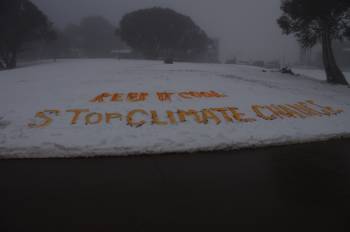
‘keep it cool. Stop climate change’. Dinner Plain, June 2011
The following article has an astonishing fact: 600 U.S. ski areas have disappeared over the past 60 years.
In the article A Snowball’s Chance, written for Boston magazine, Madison Kahn uses the example of Hogback Mountain in Vermont, a small resort that used to be ‘teeming with skiers.’
“The trouble started in the 1970s, when scientists say that temperatures began to rise significantly (in truth, there was little climate research done before then). A series of spotty seasons, coupled with the sharp spike in gas prices brought on by the 1973 oil crisis, hit the mountain hard. It finally shuttered for good in 1986”.
Madison contrasts it with the nearby resort at Mount Snow, which has survived.
“Just 15 miles apart, both ski areas are located in the middle of what was not long ago part of the Northeast’s 120-inch Snowbelt. Why did one die and the other prosper? Simple economics: Mount Snow could afford the snowmaking technology needed to stay open when temperatures began to rise. Hogback couldn’t”.
However, in an observation that should ring bells for us Australians, where much of our snow country is fairly marginal, and where winters are getting warmer, Madison notes:
“making enough snow is becoming an increasingly difficult proposition”.
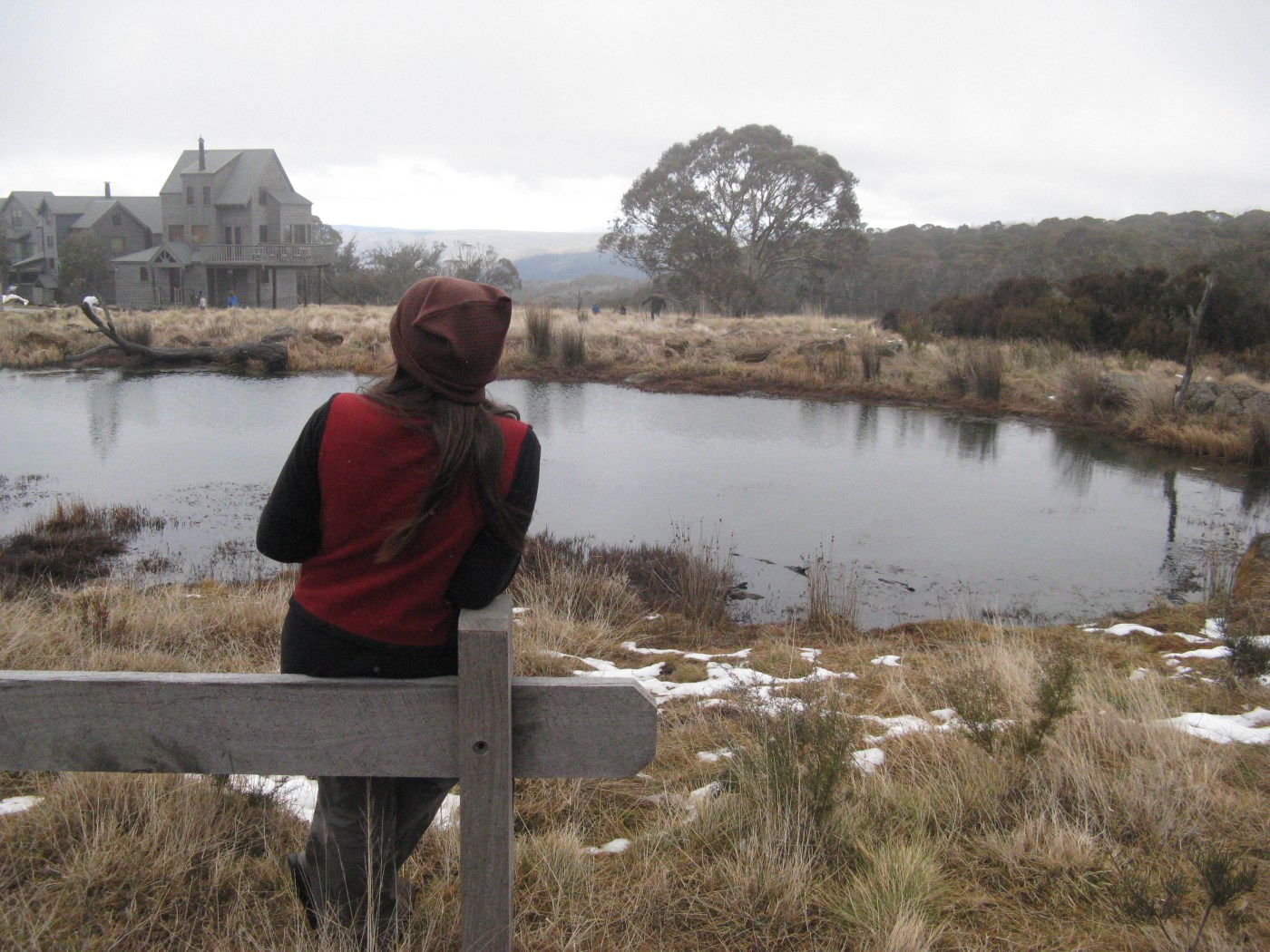
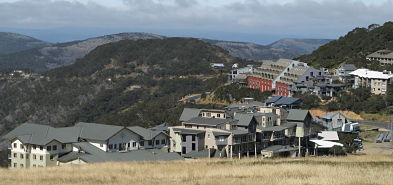
Hotham Village
Research cited in the article suggests that “of the resorts (in the Northeast that are) able to stay open, at least 75 percent will require substantial artificial snowmaking to survive, which, in turn, will significantly increase operational costs and lift-ticket prices”. Skiing or riding in resort in Australia is hardly a cheap option as it is.
“Almost 600 U.S. ski areas have disappeared in the past 60 years, many of them victims of warmer winters. In fact, if warming trends continue at their current rates, within the next few decades, the multibillion-dollar New England ski industry could collapse entirely”.
Here in Australia, there has been a similar response from management boards as they grapple with more erratic winters, with greater attention to snow making and attempts to re-brand resorts as ‘year round’ destinations. Where previously a number of Australian resorts were responding to the threat of climate change, now they have clearly put it in the ‘too hard’ basket. Climate mitigation programs have been quietly dropped as resorts struggle to find new ‘bells and whistles’ to appeal to visitors each year.
Of course, none of this deals with the core problem. Half of U.S. ski areas are opening late and closing early—and in the past 50 years, the average season length in the northeast has decreased by seven days. It’s a similar story here.
It’s interesting to note that in North America, a number of resorts are showing great leadership in terms of playing their part to reduce contributions to global warming.
This recent piece comes from Powder magazine, and focuses on the situation in North America.
The Truth About Snow
An interview with the world’s top skiing climatologist, Daniel Scott
When it comes to the future of snow—and more importantly, the future of skiing—Daniel Scott is the man with the answers. Or, at least, the man with the possibilities. Will the Northeast have snow in 30 years? No. Will Colorado? Yes. Scott holds the Canada Research Chair in Global Change and Tourism at the University of Waterloo in Ontario—the first research facility in the world to comprehensively investigate the relationship between climate change and skiing, starting in the 1980s. Many of the computer models used in Europe today come from the university. Scott built his own model 10 years ago and has been using it ever since to predict what will happen to skiing in the next century.
When it comes to reading the future, Scott does not pull his punches. He co-authored a report that spelled the coming end of half of the ski resorts in the Northeast in the next 30 years. He also contradicted studies saying Colorado would suffer the same fate—saying that most climate models are done from a hydrology point of view, and leave out snowmaking in their predictions. The point being, Scott’s studies are scientific, without a conservative or progressive bent. And in a world flooded with misinformation, this is the kind of resource skiers need.





Recent Comments