Search

Mountain Journal

Environment, news, culture from the Australian Alps

Tag

climate change

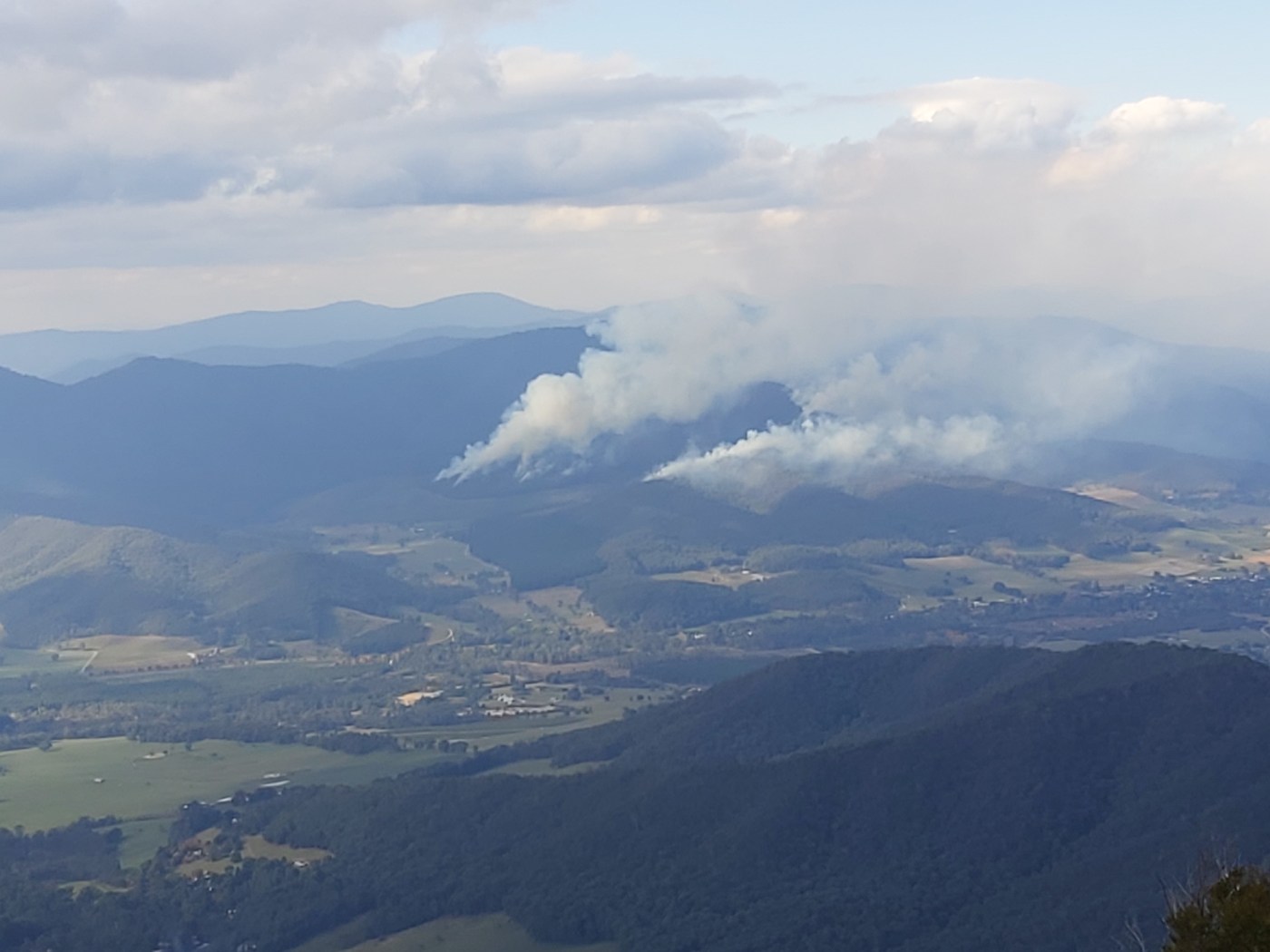
Climate change and rise of the ‘mega fire’

Recent research by CSIRO, Australia’s national science agency, shows that climate change has driven a ‘significant increase’ in Australia’s forest fire activity over the last three decades.

A lengthening of the fire season towards Autumn and Winter were also identified, along with an increase in fire activity in cooler and warmer regions including alpine forests in Tasmania and tropical rainforests in Queensland.

This is not really ‘new’ news. The impacts of climate change in terms of length of fire season and intensity of fire is well documented (for instance, the head of the firefighting agency for Victoria’s public lands, Chris Hardman, notes that there has been a 170% increase in bushfire ignitions over the last 50 years, a 20% reduction in spring rainfall, and a 40% increase in very high and severe fire risk days.

What is especially interesting is that this research, which was published in Nature Communications is the first of its kind in that it combines analysis of previous forest fire sites with eight ‘drivers’ of fire activity including climate, fuel accumulation, ignition and management (prescribed burning).

Continue reading “Climate change and rise of the ‘mega fire’”

‘Atmospheric rivers’ threaten snow pack

We are all familiar with the impacts of climate change on snow in Australia. For instance, the snow pack has been in decline since 1957. And a report commissioned by the Victorian government suggests that the end of natural snow could be as close as a couple of decades.

One obvious phenomena we have seen often in recent years has been weather coming down from the tropics in north western Australia. These rains are often ‘snow killer’ events which can massively impact on the snow base.

Continue reading “‘Atmospheric rivers’ threaten snow pack”

Climate change & fire. The more we learn, the clearer it gets

Its mid November, just a couple of weeks until the start of winter in the northern hemisphere. After a horror summer of fires across the North of the planet, fires continue to threaten communities and landscapes in many areas. This week, mandatory evacuations were announced in the area of Estes Park in Colorado, as some ski resorts in that state prepare to open. The Larimer County Sheriff’s Office announced “evacuate the area immediately and as quickly as possible. Do not delay leaving to gather belongings or make efforts to protect your home or business.” Meanwhile, the city of Denver is getting close to its record for latest First Snow of the season. And after a summer of extreme weather, the north west of North America has been hit by massive floods.

What we do know is that climate change influences wildfire now. The evidence for this is so widespread and compelling that there is really no point in even trying to argue its not a real phenomena. Here is a quick recap of some of the most recent research into climate change and wildfire.

Continue reading “Climate change & fire. The more we learn, the clearer it gets”

Climate change is coming for the Places we Love

We all remember the terrible fire season of 2019/20. Among the huge range of impacts on people and landscapes, one significant detail was that the tourism season basically didn’t happen across much of the south east that year. Mountain towns, ski resorts, even valley communities were evacuated. Lots of people missed out on summer holidays. And many workers and businesses suffered terrible economic losses (compounded soon after by covid lockdowns).

It makes you wonder what the future looks like for communities that rely on beautiful natural environments to attract visitors, who then underpin the local economy. With forecasts of longer and more intense fire seasons, and more erratic snowpack in winter, it is hard not to see a future where ecosystems and local economies don’t struggle to adapt to the changes that are coming.

This problem is likely to occur everywhere. For instance, recent research, published in Global Environmental Change, looked at how the use of state and federal public lands in the United States may change in the next 30 years under two different warming scenarios.

The biggest changes, they found, will come during the summer months. Their research showed that by 2050 it will ‘simply be too hot to have fun outdoors in many places’.

Continue reading “Climate change is coming for the Places we Love”

Can ‘super seeds’ reduce the risk of local extinction of Alpine Ash?

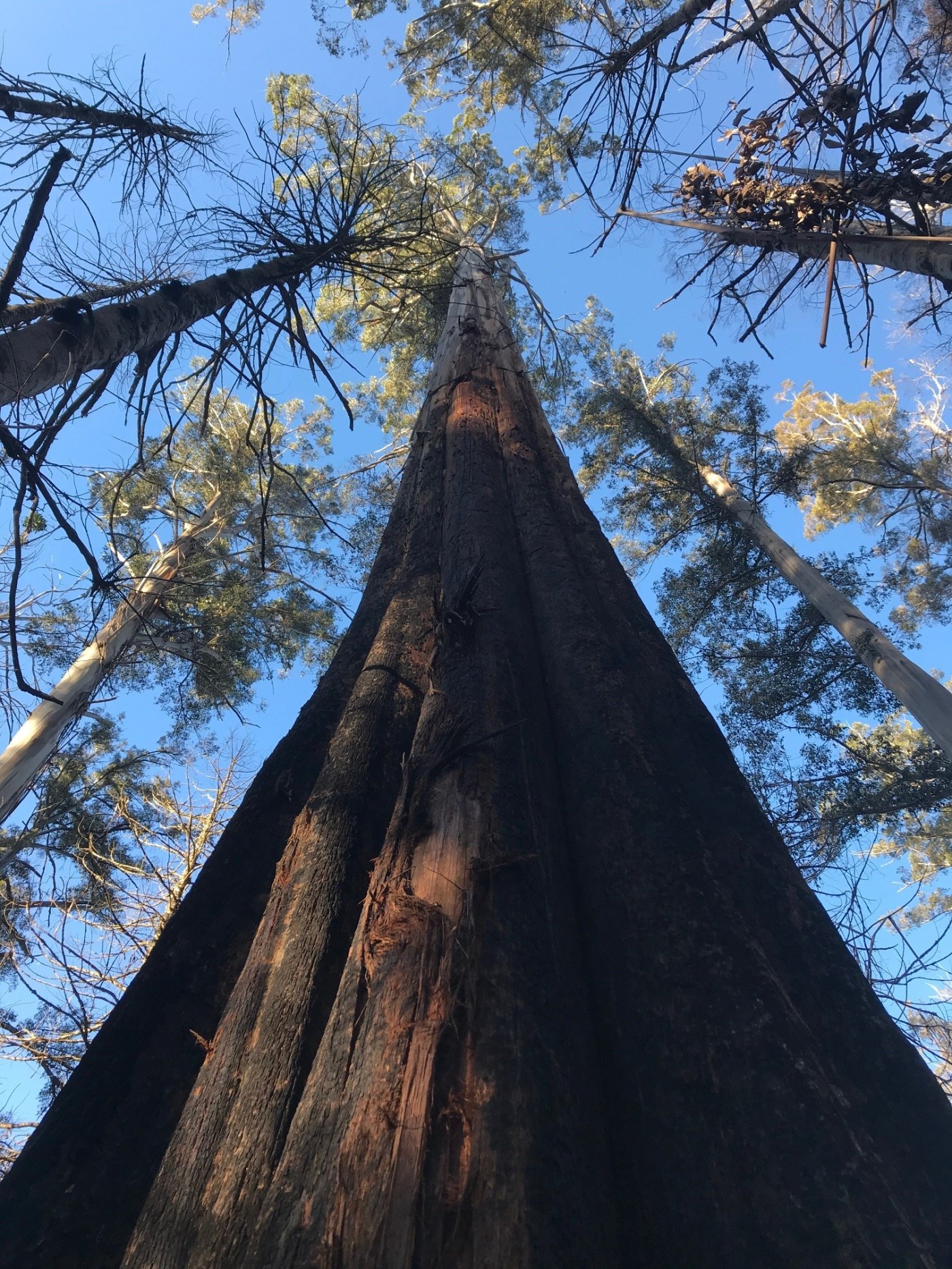
Fire has always been a part of life here in Australia (well, at least for the last 60 million years). And as a result much of our vegetation is fire reliant or fire adapted. But climate change is changing fire seasons, making them longer and more intense. And this is having a terrible impact on many fire sensitive vegetation communities. The Alpine Ash is one of these.

After a series of fires in the early 21st century, the Victorian government had to intervene to ensure the survival of Alpine Ash communities through a ‘forest recovery program’ (source). Since 2002, more than 85% of the Alps bioregion has been burnt by several very large fires. Alpine Ash require around 20 years between intense fires in order for regrowth to be able to produce seed (source), and more frequent blazes are threatening the viability of this vegetation community across the Alps.

This restoration initiative has been an effective program which sources seed and then aerial sows areas which have been devasted by wildfire.

However, the program is being stretched by more regular fires and a review of the 2019/20 fires found that it doesn’t have enough seed stock to deal with bad fire seasons.

Now, Greening Australia and Minderoo Foundation have joined together to find ‘super seeds’ from the Alpine Ash which are suited to a changing climate.

Continue reading “Can ‘super seeds’ reduce the risk of local extinction of Alpine Ash?”

Climate action: It’s now or never

We know that the mountains we love are under threat from global warming. Longer fire seasons, less water in the rivers, loss of winter snow. With average global warming of slightly more than 1oC already, we can see what that is doing to snow falls and fire seasons.

With the COP26 climate talks about to get underway in Glasgow, we have a hugely important moment, where we can decide to turn around global warming. If we can’t muster the political will to act decisively, the consequences will be devastating.

Continue reading “Climate action: It’s now or never”

‘Wildfires, deforestation and global heating turn 10 Unesco forests into carbon sources’

A recent report looked into the impacts of climate change and other human activity on protected areas. It was pretty much as you would expect – these areas, protected because of their special values, are now at risk. According to various media stories (for instance this one in The Guardian) ‘Forests in at least 10 Unesco world heritage sites have become net sources of carbon since the turn of the millennium due to wildfires, deforestation and global heating’.

While this report takes a global perspective, it does contain details on two Australian systems – the Greater Blue Mountains Area and Tasmanian World Heritage Area – there are also some details relevant more broadly to protected areas in mountain areas of south eastern Australia.

Continue reading “‘Wildfires, deforestation and global heating turn 10 Unesco forests into carbon sources’”

National Threatened Species Day 2021

Every year on September 7, National Threatened Species Day is commemorated across Australia to raise awareness of plants and animals at risk of extinction.

There are currently 457 species of fauna and 1348 species of flora listed as vulnerable, endangered or critically endangered under Australia’s Environment and Biodiversity Conservation Act 1999 (EPBC Act). Many of these are found nowhere else in the world.

This is a summary of some of the threats facing mountain species.

Continue reading “National Threatened Species Day 2021”

Bushfire review is a chance to protect Alpine Ash forests

In March 2020, just a few months after the devastating 2019/2020 Black Summer bushfires, state and federal governments rolled over the controversial Regional Forest Agreements (RFAs) which give logging an exemption from federal environment laws.

A new clause has been introduced where a significant event (like the 2019/2020 bushfires) can trigger a Major Event Review (MER).

The review was announced last year, but since then logging in critical habitat for threatened species has continued, and there have been no changes to logging schedules. The review is now open to public consultation and submissions will be accepted until 31 August 2021.

You can find out more about this review here.

Continue reading “Bushfire review is a chance to protect Alpine Ash forests”

Citizen science project: tracking loss of Snow Gums

As we know, Snow Gums face a massive threat from the spread of dieback which is caused by a native beetle, but which is now being super charged by climate change.

There is another emerging issue: localised collapse of snow gum woodlands due to more frequent fires.

Friends of the Earth recently released a report called An Icon at Risk: current and emerging threats to the Victorian Alps (available here), which points out that climate driven fires are starting to lead to localised collapse of Snow Gum woodlands where regular fires have caused death of parent trees and seedlings.

These forests are fire adapted and can recover from fire. But the dilemma we face is that , since the turn of the 21st century, fires are becoming more frequent and pushing this vegetation community towards ecological collapse.

No one knows the scale of this problem.

That’s where you come in.

Continue reading “Citizen science project: tracking loss of Snow Gums”

‘High-risk bushfire days set to soar this century’

There is no doubt that climate change is driving more intense fire seasons. The world has warmed as a result of human activity and now all fire events occur in a warmer environment. We have known this for years. Back in 2008 the Garnaut Climate Change Review’s final report, said that predictions “suggest that fire seasons will start earlier, end slightly later, and generally be more intense” and that “this effect increases over time, but should be directly observable by 2020.”

New research by the CFA and Bureau of Meteorology underscores this fact yet again.

Continue reading “‘High-risk bushfire days set to soar this century’”

The IPCC report – what does it mean for mountain environments?

The long awaited Intergovernmental Panel on Climate Change (IPCC) 6th Report has now been released.

As expected, it is an urgent wake up call to our political leaders to actually start to take decisive action to tackle the climate crisis. While the information is not really ‘new’, it does remind us of the incredible urgency of taking climate action. Now.

The IPCC says ‘many of the changes observed in the climate are unprecedented in thousands, if not hundreds of thousands of years, and some of the changes already set in motion – such as continued sea level rise – are irreversible over hundreds to thousands of years’.

However, they do remind us that ‘strong and sustained reductions in emissions of carbon dioxide (CO2) and other greenhouse gases would limit climate change’. So let’s get to it.

What are the implications for mountain lovers in this new report?

Continue reading “The IPCC report – what does it mean for mountain environments?”

Blog at WordPress.com.

Up ↑