Search

Mountain Journal

Environment, news, culture from the Australian Alps

Tag

endangered species

Protecting the Kuark forest

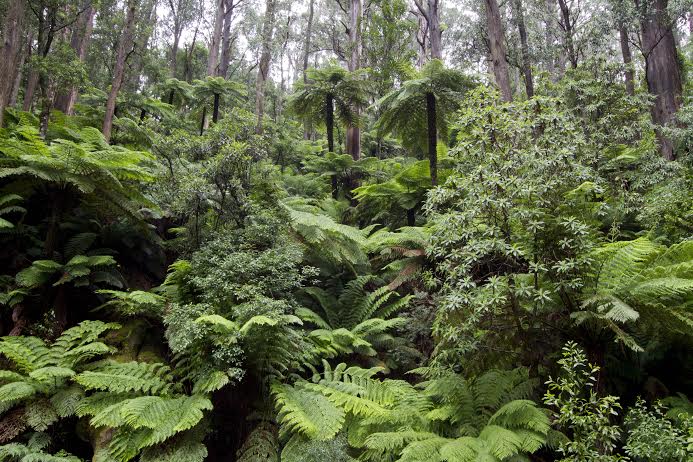
The spectacular old growth forest of Kuark in East Gippsland provides habitat for threatened species such as the Sooty, Masked and Powerful owls, Greater gliders, Long footed potoroos and a rare rainforest type where warm and cool temperate rainforest blend together in an ‘over lap” assemblage.

The state owned logging company VicForests plan on conducting extensive clear fell logging operations in the forest this year and local conservationists are getting organised to halt the proposed destruction.

Victorian conservation group, Goongerah Environment Centre (GECO) are stepping up their efforts to protect these forests from logging. The group have launched a citizen science program and public campaign to collect data and publicise the Kuark forest in the far east of Victoria.

Check here for the full story.

Great Forest National Park. It’s Time.

A playground for Melbourne

Decided this election?

More than 30 environment, conservation, recreation, scientific and citizen science groups representing tens of thousands of Victorians have called on all political parties and candidates in the lead-up to the November 2014 Victorian election to clearly commit to the creation of a new Great Forest National Park in the Central Highlands.

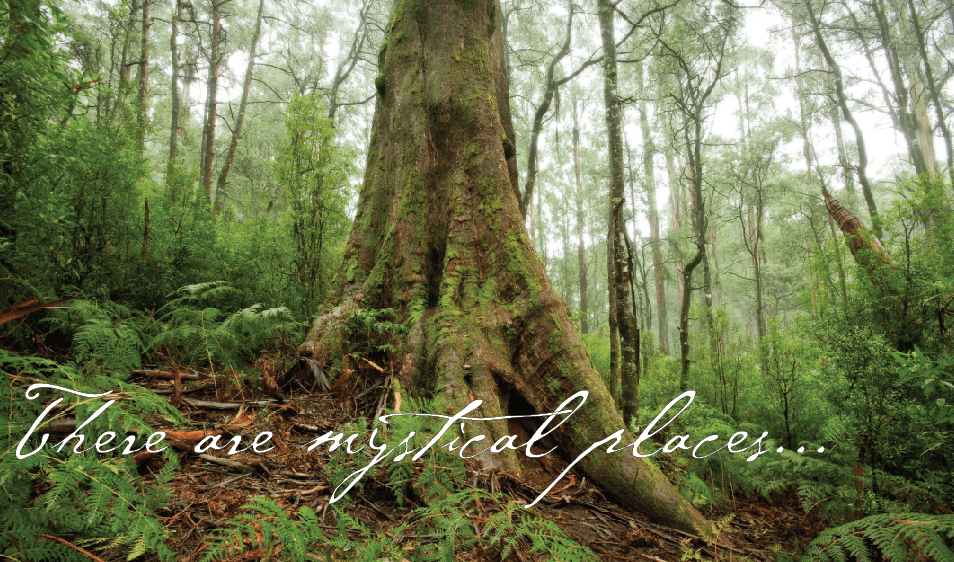
Just 60 kilometres east of Melbourne grow some of the tallest trees on Earth. Their high canopies are home to wildlife such as gliders, owls and the tiny Leadbeater’s Possum.

Continue reading “Great Forest National Park. It’s Time.”

the Great Forest National Park

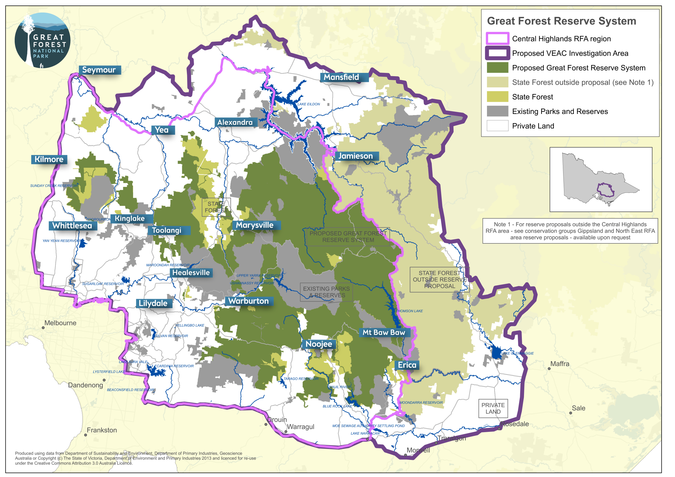
The Great Forest National Park (GFNP) proposal is a vision for a multi-tiered park system for bush users and bush lovers alike, on Melbourne’s doorstep.

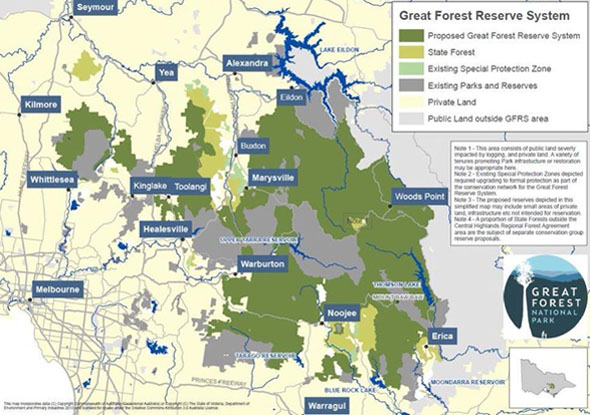
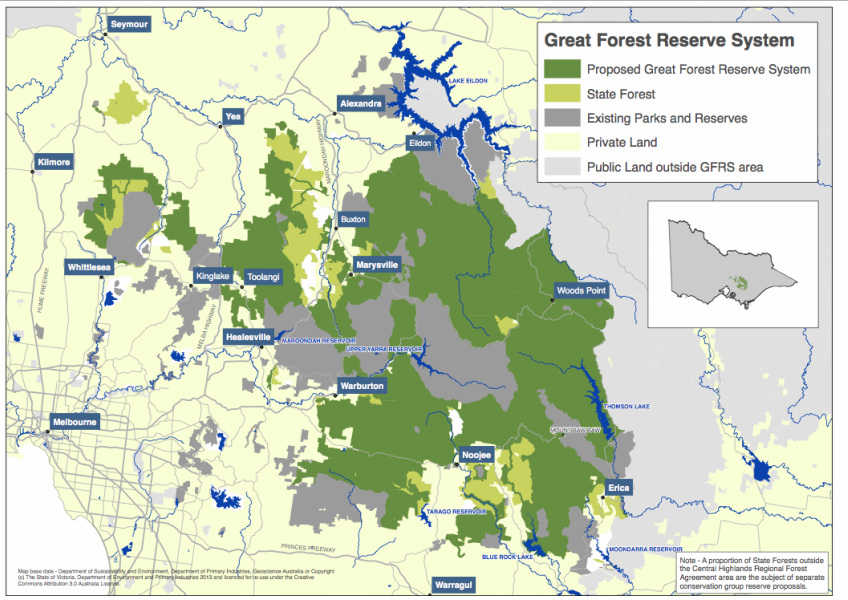
It is a park that will protect and maintain important ecosystem functions critical for the health and well being of all Victorians. The proposal intends to amalgamate a group of smaller parks and add a recreational and ecosystem management plan overlay. The GFNP’s gateway in Healesville is only 60 kilometres from Melbourne’s MCG and stretches from Kinglake through to the Baw Baws and north-east up to Eildon. The proposal is backed by 30 years of research from Laureate Professor David Lindenmayer AO and his team from the Australian National University. The Park proposal adds approximately 355,000 hectares to the current 165,000 hectares in reserve. This will bring Melbourne up to a little over 500,000 hectares of reserve, nearly half the size of Sydney’s reserve system. It is an ambitious project that is gaining momentum by the day.

Continue reading “the Great Forest National Park”

New Wattle Species for Victoria

Parks Victoria reports that a species of wattle not previously found in Victoria has been discovered in the north east, in Mount Lawson State Park near the New South Wales border.

Acacia linearifolia is a wattle with very narrow, long and straightphyllodes or leaves. Local Parks Victoria Ranger Kelton Goyne discovered about six trees of this rare wattle in March this year when looking at planned burning options in the park.

Continue reading “New Wattle Species for Victoria”

Victoria’s Great Forest National Park. It’s Time

The vision for a Great Forests National Park, proposed for the mountains east of Melbourne, is gaining momentum.

logoThe Great Forests National Park proposal is a vision for a multi-tiered parks system for bush users and bush lovers alike.

The tallest flowering trees on Earth grow north-east of Melbourne. In their high canopies dwell owls, gliders and Leadbeater’s Possum, Victoria’s endangered faunal emblem, that lives only in the ash forests of the Central Highlands.

These mountain ash forests have flourished along the Great Divide under rich rainfall patterns. They provide most of Melbourne’s drinking water. They have been shown to be among the most carbon-dense forests on Earth due to the relatively cool climate and rapid growth.
GFNP map
The Park, stretching from Kinglake through to the Baw Baws and north-east to Eildon, will protect the forests of the Central Highlands. It will be a world class reserve in Melbourne’s backyard.

It is time for this great vision to be turned into a National Park.

More information here.


Alpine Researchers honoured for contributions to parks

This is from a few weeks ago, but is good acknowledgement of the efforts of researchers working to remove Hawkweed and control willows on the Bogong High Plains. Thanks to David Turner for spotting this one.

The release below is from Parks Victoria.

orange_hawkweedTwo Victorian researchers have been recognised for their outstanding contribution to managing highly invasive weeds in Victoria’s Alpine National Park.

Parks Victoria Chief Executive Dr Bill Jackson today acknowledged The University of Melbourne’s Dr Nick Williams, and Dr Joslin Moore from Monash University, as joint recipients of Parks Victoria’s inaugural Nancy Millis Science in Parks Award.

Dr Jackson said the award was being presented to the two researchers for their outstanding contribution to fostering excellence in applied science for the benefit of park management.

“Both projects demonstrated the researchers’ strong willingness to work closely with park managers to understand the extent and challenge of the weed problems. They also demonstrated leading edge science in solving difficult problems.”

“The work of Dr Williams and his team from The University of Melbourne has helped to protect the Alpine National Park’s biodiversity and transformed hawkweed control into a cutting edge and targeted program. This research partnership between Parks Victoria and Department of Environment and Primary Industries staff has significantly reduced Hawkweeds in the Alpine National Park, and the goal of eradicating it altogether is now a real possibility.”

“Dr William’s research and the work being done by all the partners on this project also benefits private landowners as hawkweeds have the potential to invade agricultural land and significantly affect agricultural production.”

Dr Jackson said Dr Joslin Moore and her team had achieved great results in controlling willow on the Bogong High Plains and as a result has had a major impact in protecting the Bogong High Plains environment.

“Willows are highly invasive and following the 2003 fires began germinating in large numbers. This posed a significant threat to an area within the Alpine National Park that is particularly important for its high biodiversity and landscape environment.

“As a result of a 7 year partnership with Parks Victoria, local Catchment Management Authorities and Falls Creek and Mt Hotham resorts, Dr Moore’s work has been fundamental in improving efforts to control willows on Bogong High Plains.”

Dr Jackson said both researchers had extensively documented their research in scientific publications, adding to the international body of work on effective methods of managing these extremely invasive weeds.

“I warmly congratulate Dr Williams and Dr Moore, and their teams who have contributed to this work, on making a real difference to managing invasive weeds in Victoria’s iconic Alpine landscapes.

“Caring for our parks is a complex task that involves many challenges including climate change, population increases and threats such as invasive pest plants and animals.

“We need innovative solutions and a good scientific understanding of how best to tackle these issues and how best to care for these important natural environments. Dr Williams and Dr Moore’s projects are part of Parks Victoria’s Research Partners Program that fosters collaborative applied research with universities and other research organisations.

The Nancy Millis Science in Parks Award

This award presented by Parks Victoria honours the late Professor Nancy Millis who was Chair of Parks Victoria’s Science and Management Effectiveness Advisory Committee since its inception 1997 and a member of Parks Victoria Board’s sub-committee on Environment.
Forests Forever Easter Ecology Camp

Spend Easter in the heart of East Gippsland 18-21 April, 2014

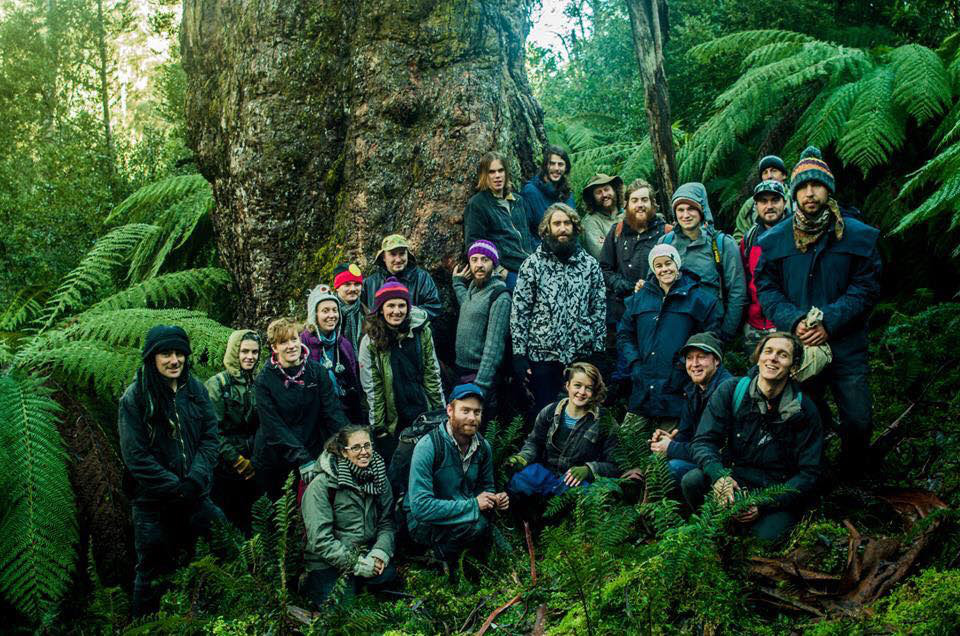
Every Easter for the past 30 years Environment East Gippsland has been showing people the best of East Gippsland’s beautiful and complex forests as part of its Forests Forever ecology camps.

Participants camp on the Brodribb River surrounded by peppermint and manna gums.

Over four days people can spotlight for nightlife, sample hearty home made soups, learn the history of the ongoing fight to save these forests and how they can help.

> Book online
> Download flyer

A range of guided short and longer drives and walks into the forests are led by experts in forest conservation, wildlife and rainforests.


NATURE’S ARK

East Gippsland has some of the most ancient and beautiful forests in the world. The area’s huge trees and rich dense understorey capture and store carbon, create rain and produce clean water in abundance.

Although they have been relentlessly clearfelled for the past 50 years, the remaining stands of unaltered forest are like an ark; habitat for some of Victoria’s most charismatic wildlife, like the Quoll, Yellow-bellied Glider, Long-footed Potoroo and large forest owls and Glossy Black Cockatoo.


CAMP HIGHLIGHTS

  • Be guided by expert ecologists and botanists into old growth and rainforests, spotlight for nocturnal animals.
  • Spend four days learning about East Gippsland’s ancient forests and the impacts of logging.
  • Camp by the beautiful Brodribb River in Goongerah.
  • This event has been organised by Environment East Gippsland and the Victorian National Parks Association.
  • All proceeds go to help the campaign to save these forests.


COST

  • Full 4-day weekend (18-21 April): $60 (concession $40)
  • One day only: $25 (concession $15).
  • Under 13s free.


HOW TO BOOK YOUR SPOT

The best way to book your spot is via the Environment East Gippsland website.

For more information please email forestsforever@eastgippsland.net.au (preferred) or phone (03) 5154 0145.

Please note: By participating in this event you agree to do so at your own risk. For more details visit www.disclaimer.vnpa.org.au


HOW TO GET THERE

Environment East Gippsland has produced fun maps to help you get to the Forests Forever Ecology Camp.

Download maps

last days for the Toolangi treehouse?

a view from the treehouse

On sunday 10 November, 2013, a young activist called Hannah Patchett launched a long term tree sit to highlight the immediate threats to the Leadbeaters Possum through continued destruction of its habitat. Logging threatens the survival of this species in the Central Highlands to the east of Melbourne.

A range of people have lived in the treehouse since then, bearing witness to the on-going destruction of the precious ash forests.

Now the treehouse has been issued with an eviction notice from the Department of Environment and Primary Industries (DEPI), which expires on the 9th of April. At this point it is expected that DEPI will remove the treehouse on or soon after the 9th.

A group of people connected with the treehouse are currently appealing to DEPI (Department of Environment and Primary Industries) to provide an ongoing permit for the treehouse, or to at least give some reason why a permit has been denied. At this stage we can only assume that the treehouse will be torn down and destroyed if a permit is not granted.

You can keep track of developments by following the treehouse on facebook.

State decision on future of native forest timber industry expected soon

The following is taken from an article in the Herald Sun newspaper written by James Campbell.

CH-Reserve-Proposal-01_articlefullwidth

In the next few weeks the State Government will make a decision which is likely to seal the fates of leadbeater’s possums and Victoria’s native forest timber industry.

Cabinet will soon consider a report from an advisory group which includes such possum-friendly folk as the boss of the Victorian Association of Forest Industries and representatives of VicForests, established to consider ways it can be saved “while maintaining a sustainable timber industry”. The report has gone to Environment Minister Ryan Smith and Agriculture Minister Peter Walsh. What it says, we’ll have to wait and see.

Government sources say that the two men take a different view of what should be done. Smith is believed to support the creation of a Central Highlands National Park to save the possum, while Walsh is prepared to accept a small area be set aside to save the timber industry. His line of argument with his colleagues is expected to be that this is a jobs issue, which in an election year should trump other considerations. The Government claims the industry employs 2300 people, but it is unclear how many of those jobs depend entirely on native forestry, rather than a mixture of native and plantation timber. The largest employer, with 900 jobs, is the Maryvale paper plant, which has indicated in the past it would be happy to shift to chips from plantations. VicForests itself only employs 114 people.

Normally, the smart money would be on “Walshie” to get his way. The Agriculture Minister has earned a reputation for winning internal battles. In a Smith vs. Walsh fight it would be no contest. The wildcard, though, is Treasurer Michael O’Brien and his department. O’Brien is unlikely to be impressed with an industry whose subsidies are retarding the growth of the private enterprise plantation industry. The possum may yet triumph over the loggers.

The full article can be read here.

For details on the proposed Great Forest National Park, check here.

The Herald Sun has some salient points about the finances around the economics of the native forest industry. Should the tax payer continue to subsidise the logging of our native forests potentially at the risk of losing the Leadbeaters Possum?. The article says:

As for VicForests financial statements, the best that can be said for them is that they are not as bad as they used to be.

(In the last year) its net profit was only $802,000 — which, while pretty dismal, is still better than the $96,000 it lost the year before.

VicForests hasn’t paid a dividend to the Victorian Treasury, i.e. the taxpayers, since 2007.

Indeed, it has only managed to pay a dividend twice since it was established in 2004. Across its eight years of existence it has reported an after-tax profit of only $12.3 million. But even that you can take with a grain of salt, as over the same period it has received government grants of $24.7 million.

Victorian government yet to supply all information on alpine grazing proposal

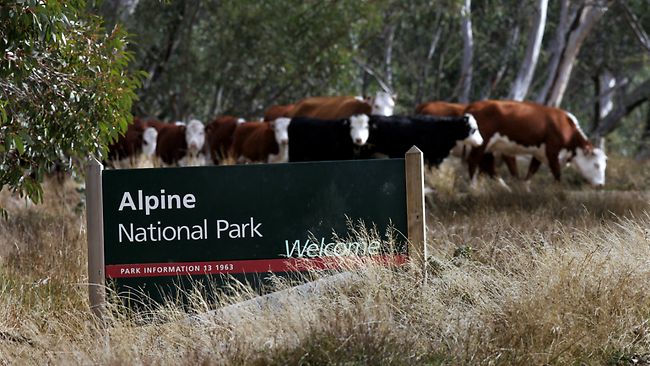
The following comes from Rob Harris at The Weekly Times. It is interesting to note that this trial is ostensibly about whether cattle grazing can reduce fuel load, yet the Mountain Cattleman rep keeps talking about invasive species in the valley.

Given that cattle introduced most of the invasive species in the first place it seems to be an ‘own goal’ type argument to run if you want to see cattle brought back.

As with the earlier attempt to get cattle into the Alpine Park, it would appear that the Victorian government has done a poor job of compiling the information that the federal minister needs to make an informed decision on the trial. Given that the Wonnangatta trial has been a concept endorsed by the environment minister for at least a year, it is hard to fathom why this second application has been managed so badly.

For background on the issue, check here.

There is an online poll attached to the story: Should a native orchid halt alpine grazing?


Fears for native orchid put high country cattle trial on hold

alpine grazingA THREATENED native orchid could prove the latest hurdle to returning cattle to the high country.

The Victorian Government’s push to begin a three-year trial in the Wonnangatta Valley this month has been put on hold after the Commonwealth sought more information about the habitat.

The Australasian Native Orchid Society of Victoria is the latest conservation group to raise concerns about a return to alpine grazing, after it was reported a survey of rare and threatened plants in the area was not included in Victoria’s application to the Commonwealth.

The Wonnangatta Valley is home to one of two known populations of the native orchid diuris ochroma, or pale golden moth.

Society member Richard Thomson said the group had written to federal Environment Minister Greg Hunt seeking protection for the native flower.

“Having chosen this venue virtually in the middle of the park – where there is plenty of state forest which would have been equally as suitable and wouldn’t run the same risks to the environment – just seems totally weird to me,” Mr Thomson said.

Mr Thomson said it was “ridiculous” the Victorian Government would put the native flower at risk.

If the trial is approved by the Commonwealth, 60 cattle will be released into the Valley for a three-year trial.

A spokesman said Mr Hunt was awaiting information from his Victorian counterpart that would allow the department to make a “fully-informed decision”.

A spokeswoman for Victorian Environment Minister Ryan Smith said an updated survey of the native habitat would be provided to the Commonwealth. She said the “experience and expertise gathered over 170 years” should be included in land management.

The mountain cattlemen, removed from the park in 2005 by the Bracks Labor Government, will this weekend hold their annual high country “get together” on the Omeo High Plains.

Mountain Cattlemen’s Association of Victoria president Charlie Lovick said the decision to stop grazing Wonnangatta had grown into a fire trap “infested with invasive species”.

eviction notice soon for Toolangi treehouse?

1522060_374731309336888_1556541492_nOn sunday 10 November, 2013, a young activist called Hannah Patchett launched a long term tree sit to highlight the immediate threats to the Leadbeaters Possum through continued destruction of its habitat. Logging threatens the survival of this species in the Central Highlands to the east of Melbourne.

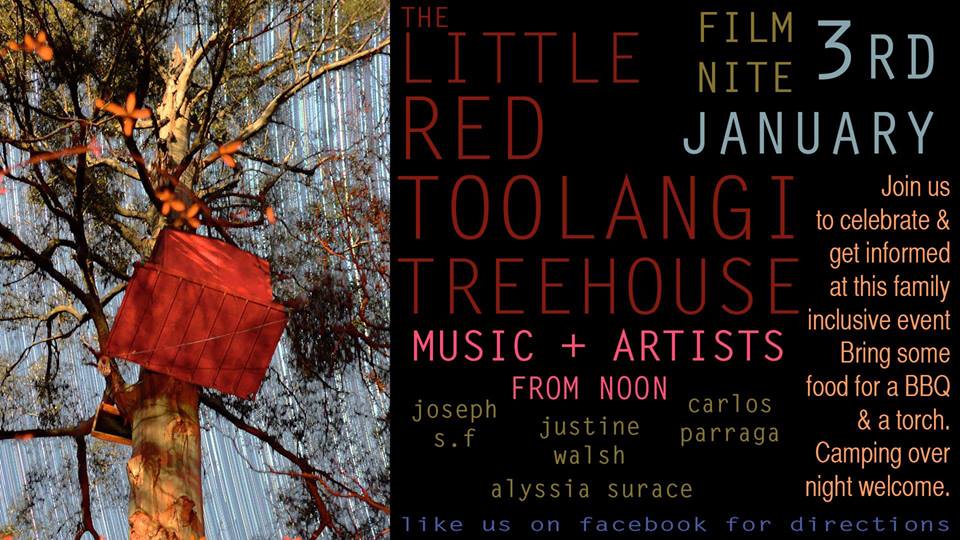
She has called a ‘festive picnic’ at the red treehouse, because she is expecting the government to issue a notice of complaint addressed to the ‘owner’ on the 3rd or 6th of January. Supporters will host a walk to the location of the treehouse with local naturalist Burnie Mace and a movie screening is also planned, plus some live music. This will be a family friendly drug and alcohol free event.

It  will be held on thursday January the 3rd. Please call the Camp phone on 0455 111 985 for specific directions and if you feel like it please ask if you can bring something or help some one with a lift. The journey is about 1.5hrs from Melbourne.

More details on the facebook page and background info here.

Lake Mountain fire recovery

Echo Flat
Echo Flat

The Lake Mountain area, near Marysville, was terribly burnt in the fires of early 2009.

Almost every tree on the plateau was killed or burnt back to ground level (snow gums have the capacity to reshoot from the base after the above ground section of the tree is killed). At Lake Mountain, the fire was particularly severe and killed off many parent trees that had survived the 1939 fires.

The landscape was completely transformed from what it had been. Anyone that knew the ‘old’ Lake Mountain couldn’t help but be devastated on their first post fire visit.

The good rainfalls over the summers of 2010 and 2011 greatly assisted the regrowth across the mountain. Whilst the area will not return to anything near to its former state for many years, the regrowth is going well, and the spring/ summer wildflower display is fantastic.

If you haven’t been to Lake Mountain since the fires, Christmas is a great time to go.

The Olden Days (aka the late 1970s). Echo Flat with an intact snow gum forest

The snow gum woodlands and lower alpine ash forests were absolutely devastated in the fires. Regeneration in the snow gum country is now substantial, with regrowth over 3 m high and in most places at least one third the height of the remnant dead trunks.  In addition large numbers of Snow Gum seedlings are also thriving.

The open heath and bog areas have been slower to recover, but ground cover is now almost complete.

If you knew the pre-fire landscape, then coming back can be emotionally devastating. The two known stands of Mountain Plum Pine on Echo Flat did not survive the fires. These trees had previously been dated as being between 700 and 800 years old. The remaining colony of Leadbeaters Possums have been removed to Healesville Sanctuary because it wasn’t deemed biologically viable. Most of us won’t see the likes of the original forest, and the landscape itself can seem forlorn.

But life is coming back. There is great walking on the plateau, and the local economies need your support.

For details on the post fire recovery, check here. For general info on the resort, check here.

Blog at WordPress.com.

Up ↑