Search

Mountain Journal

Environment, news, culture from the Australian Alps

Tag

environment

New year, old issues 

As we move into a new year, things are looking good in the mountains. A second mild and wet spring has led to a mild summer, with no significant fires in mountain areas so far (there were two fires in lutruwita/ Tasmania earlier in the season – at Mt Rufus and the Eldon Range). As heatwaves bake much of the north and west of the continent, the mountains of the south east and lutruwita/ Tasmania are a cool refuge from the heat. As always there is so much to do and wonderful places to visit. And, as always, there are threats to the mountains that we will have to deal with this year.

Here’s some of them:

Continue reading “New year, old issues “

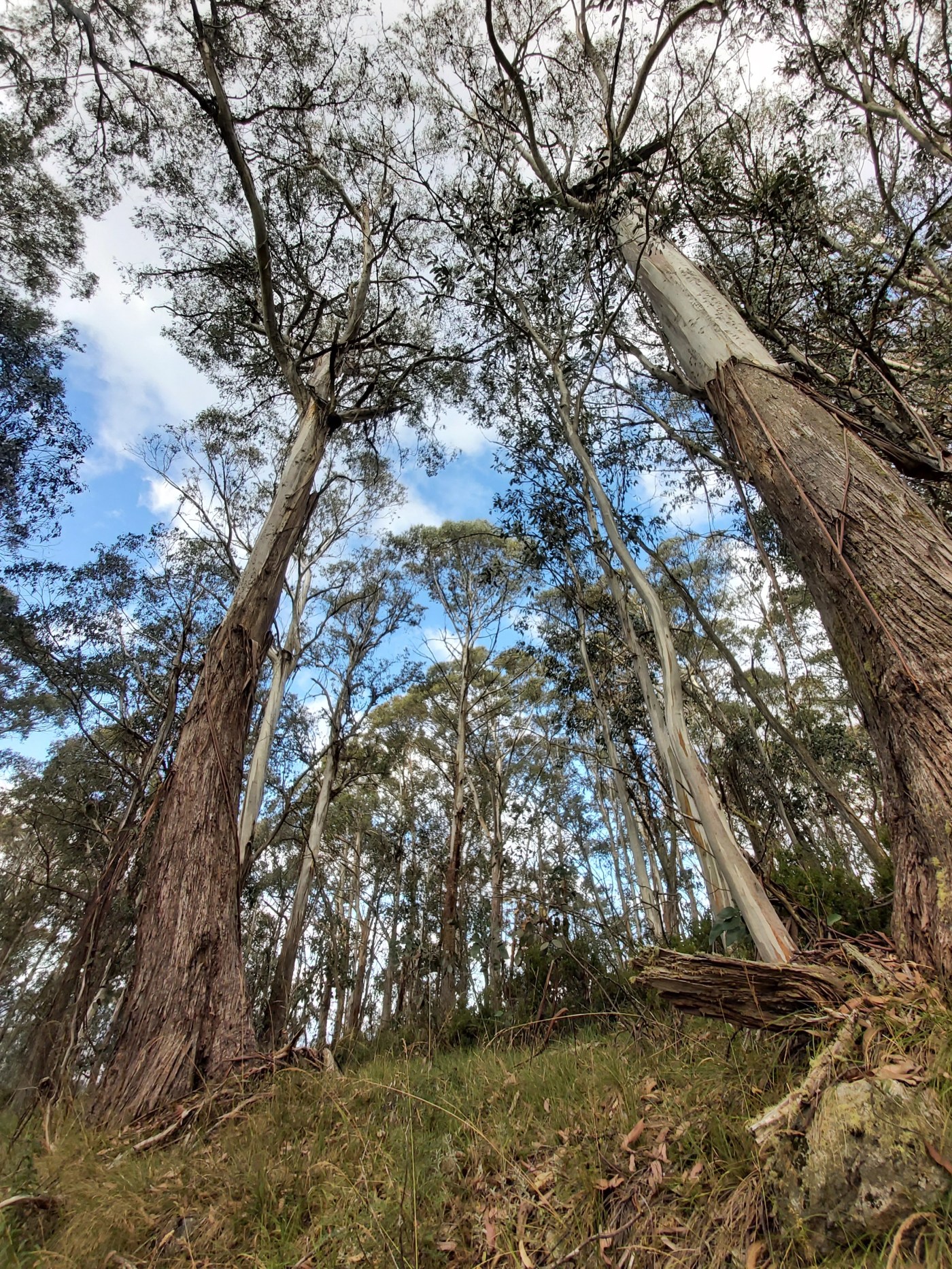
Alpine and Mountain Ash face potential declines in a warmer and drier future.

We know that the Alpine Ash forests are struggling to survive in the face of climate change driven fire regimes that are bringing fire into these forests more frequently.

The scale of this threat is so extreme that the Victorian government has a program specifically responsible for reseeding forests that are on the verge of ecosystem collapse.

New research underscores, yet again, that the mountain forests face grave threats from climate change and that this could lead to the transformation of these forests.

Continue reading “Alpine and Mountain Ash face potential declines in a warmer and drier future.”

Help identify and report Snow Gum dieback

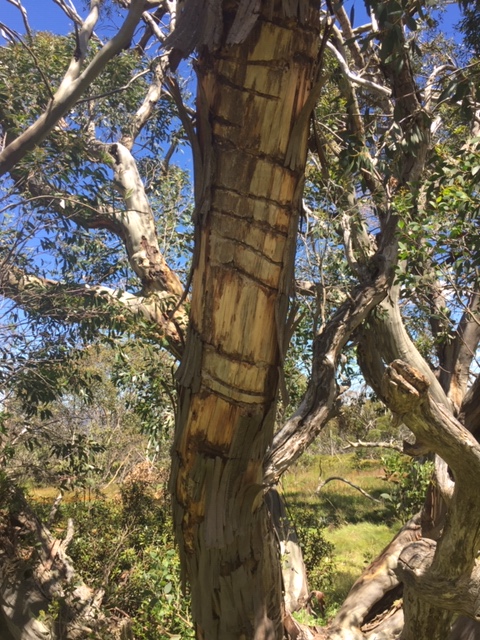
Snow gums are experiencing dieback in Kosciuszko National Park, largely because of the impacts of the native longicorn (or ‘longhorn’) beetle. These beetles prefer to lay their eggs on moisture-stressed trees and, in warmer weather, the longicorn beetle can hatch and grow up to 75% faster. It is understood that climate change is helping the spread of dieback because of background warming.

Now dieback is being seen more frequently in the mountain forests of Victoria.

Jessica Ward-Jones, a PhD student at the Fenner school, is part of a group researching snow-gum dieback, and is asking for people visiting the mountains to send in details of sightings of dieback affected trees.

Continue reading “Help identify and report Snow Gum dieback”

Climate change & fire. The more we learn, the clearer it gets

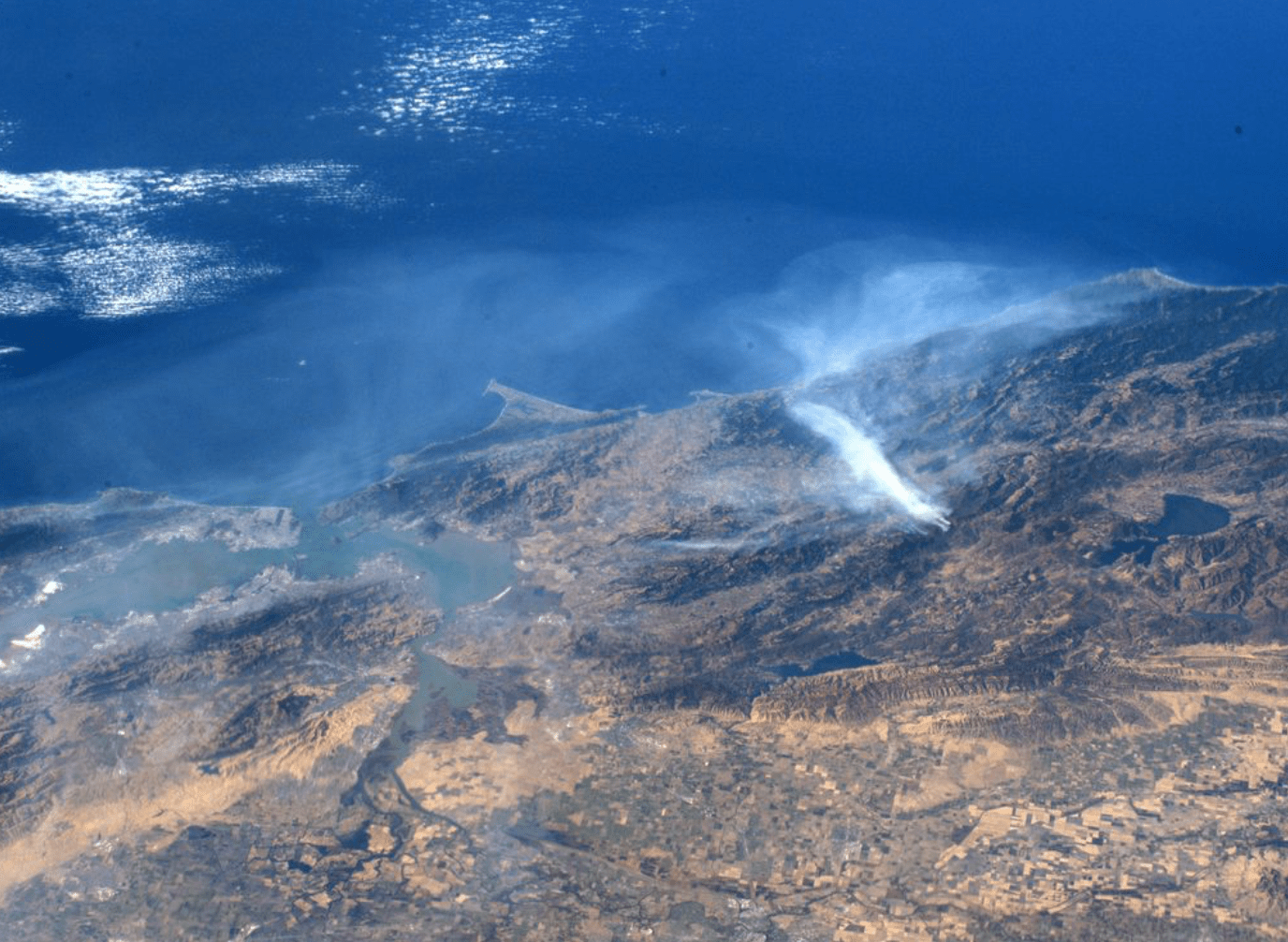
Its mid November, just a couple of weeks until the start of winter in the northern hemisphere. After a horror summer of fires across the North of the planet, fires continue to threaten communities and landscapes in many areas. This week, mandatory evacuations were announced in the area of Estes Park in Colorado, as some ski resorts in that state prepare to open. The Larimer County Sheriff’s Office announced “evacuate the area immediately and as quickly as possible. Do not delay leaving to gather belongings or make efforts to protect your home or business.” Meanwhile, the city of Denver is getting close to its record for latest First Snow of the season. And after a summer of extreme weather, the north west of North America has been hit by massive floods.

What we do know is that climate change influences wildfire now. The evidence for this is so widespread and compelling that there is really no point in even trying to argue its not a real phenomena. Here is a quick recap of some of the most recent research into climate change and wildfire.

Continue reading “Climate change & fire. The more we learn, the clearer it gets”

Can ‘super seeds’ reduce the risk of local extinction of Alpine Ash?

Fire has always been a part of life here in Australia (well, at least for the last 60 million years). And as a result much of our vegetation is fire reliant or fire adapted. But climate change is changing fire seasons, making them longer and more intense. And this is having a terrible impact on many fire sensitive vegetation communities. The Alpine Ash is one of these.

After a series of fires in the early 21st century, the Victorian government had to intervene to ensure the survival of Alpine Ash communities through a ‘forest recovery program’ (source). Since 2002, more than 85% of the Alps bioregion has been burnt by several very large fires. Alpine Ash require around 20 years between intense fires in order for regrowth to be able to produce seed (source), and more frequent blazes are threatening the viability of this vegetation community across the Alps.

This restoration initiative has been an effective program which sources seed and then aerial sows areas which have been devasted by wildfire.

However, the program is being stretched by more regular fires and a review of the 2019/20 fires found that it doesn’t have enough seed stock to deal with bad fire seasons.

Now, Greening Australia and Minderoo Foundation have joined together to find ‘super seeds’ from the Alpine Ash which are suited to a changing climate.

Continue reading “Can ‘super seeds’ reduce the risk of local extinction of Alpine Ash?”

‘Wildfires, deforestation and global heating turn 10 Unesco forests into carbon sources’

A recent report looked into the impacts of climate change and other human activity on protected areas. It was pretty much as you would expect – these areas, protected because of their special values, are now at risk. According to various media stories (for instance this one in The Guardian) ‘Forests in at least 10 Unesco world heritage sites have become net sources of carbon since the turn of the millennium due to wildfires, deforestation and global heating’.

While this report takes a global perspective, it does contain details on two Australian systems – the Greater Blue Mountains Area and Tasmanian World Heritage Area – there are also some details relevant more broadly to protected areas in mountain areas of south eastern Australia.

Continue reading “‘Wildfires, deforestation and global heating turn 10 Unesco forests into carbon sources’”

Launch of ‘Where the Water Starts’

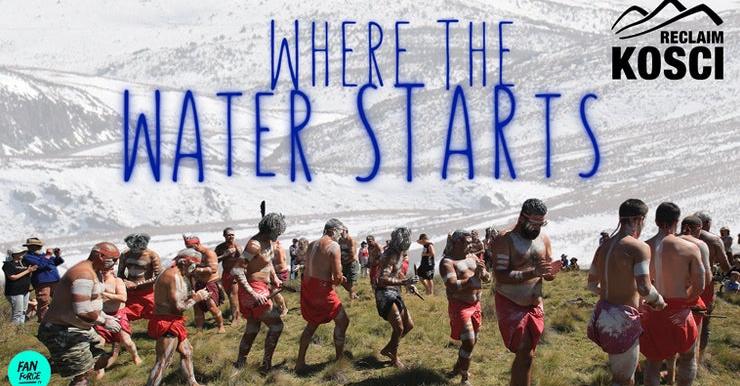
The film Where The Water Starts aims to reveal how the fragile alpine region of the Snowy Mountains, particularly Kosciuszko National Park, is seen by a number of Indigenous and non-Indigenous people who were born or live in the southern mountains area, or who care deeply about it.

The launch of this important film will happen on Thursday October 28th at 6.30pm followed by Q&A with

  • Richard Swain, Indigenous Ambassador with the Invasive Species Council,
  • Professor David Watson, Environmental Scientist, and
  • the filmmakers, Mandy King & Fabio Cavadini

Continue reading “Launch of ‘Where the Water Starts’”

Giving back to the Alps

Most of Australia’s High Country is now protected in parks. While there are significant pressures on many of these – for instance plans for a major expansion of commercial development in Kosciuszko national park, and tourism development in wild areas in lutruwita/ Tasmania – there is also the existential threat posed by climate change.

On a day to day basis our parks are generally underfunded and so the Parks Services struggle to deal with invasive species and the impacts of tourism. We need to increase funding across the board for our parks services.

There are also many options to directly support the ecological integrity of our mountain areas through hands on volunteer work. As author Alice Walker puts it nicely, ‘Activism is my rent for living on the planet’, and there are many ways to get involved in hands on efforts in and around the Alps. Here are a few ideas.

Continue reading “Giving back to the Alps”

Ecological recovery in Namadgi National Park

In January and February 2020, the Orroral Valley Fire burnt more than 80% of Namadgi National Park in the ACT, leaving large areas blackened and apparently lifeless.

Monitoring the recovery of Namadgi National Park from the Orroral Valley fire has occurred since the fire. This is managed by the Environment, Planning and Sustainable Development Directorate within the Department of Environment, Heritage and Water. They have just released a great visual report on the recovery of animals and vegetation communities in the park. It is mostly good news.

The report is available here.

Some highlights from the report:

Many Candle Bark forests and Snow Gums are recovering quite well.

The rate of recovery appears to be strongly affected by moisture availability.

Wetter sites, such as Snow Gum woodland near Mt Franklin Road, are recovering faster. Snow Gums on drier and rockier sites are demonstrating less recovery.

One exception to the general pattern of good recovery is Alpine Ash (Eucalyptus delegatensis), which is killed by intense fire and must regenerate from seed.

It is uncertain how well Alpine Ash will recover after two intense fires only 18 years apart; Conservation Research ecologists are currently assessing the degree of fire impact and the extent of recovery in Namadgi’s Alpine Ash forests.

Fortunately, some important stands of Alpine Ash were not affected by the Orroral Valley fire. A total of 2,415 ha, or 33% of the Alpine Ash forest in Namadgi, did not burn in 2020.

Some species can benefit from burning.

By killing shrubs, removing leaf litter and creating areas of bare ground, the fire resulted in ideal conditions for the germination of short-lived herbs and grasses.

Billy buttons (Craspedia sp.) covered the burnt slopes of Mt Gingera in November. Later they faded and set seed, to be replaced by other brightly-coloured species. By February, bluebells and paper daisies (Xerochrysum spp.) were the dominant flowers.

We may not see another flowering event like this for years or decades.

How are fauna populations recovering?

Although the fire took a heavy toll on animals, many survived, either in unburnt or lightly-burnt patches or by taking shelter beneath the ground.

The first teams onto the fire ground found a surprising number of birds (click unmute background audio to listen), mammals, invertebrates, frogs and reptiles,

Preliminary results are encouraging. The burnt areas of Namadgi still ring with an impressive array of singing birds.
An Icon at Risk: current and emerging threats to the Victorian Alps

Snow Gums (Eucalyptus pauciflora) are the classic alpine tree of the High Country, generally growing at heights between 1,300 and 1,800 metres asl. Anyone who has visited the Australian High Country will know – and probably love – these trees.

In recent decades, wildfire has been devastating huge areas of the Snow Gum forests, with significant fires in the Victorian High Country in 1998, 2002/3, 2006/7, 2013 and 2019/20. More than 90% of Snow Gum habitat has been burnt at least once in the last 20 years.

The species can survive fire. However, climate change driven fire seasons are leading to more frequent fire, which is causing more death of trees and changes to forest structure. In some instances, localised collapse of Snow Gum woodlands is now being observed. As climate scientist Michael Mann describes it, we are now seeing climate change play out in real time.

We must ask whether we are now seeing the start of the collapse of Snow Gum woodlands, one of Victoria’s iconic vegetation communities.

Continue reading “An Icon at Risk: current and emerging threats to the Victorian Alps”
Featured post

Dead forests making bushfires worse

We know that climate change is making fire seasons longer and more intense. This is happening globally. It has enormous implications for the landscapes that we love, how we prepare for and fight fires, and even how we live in fire prone areas.

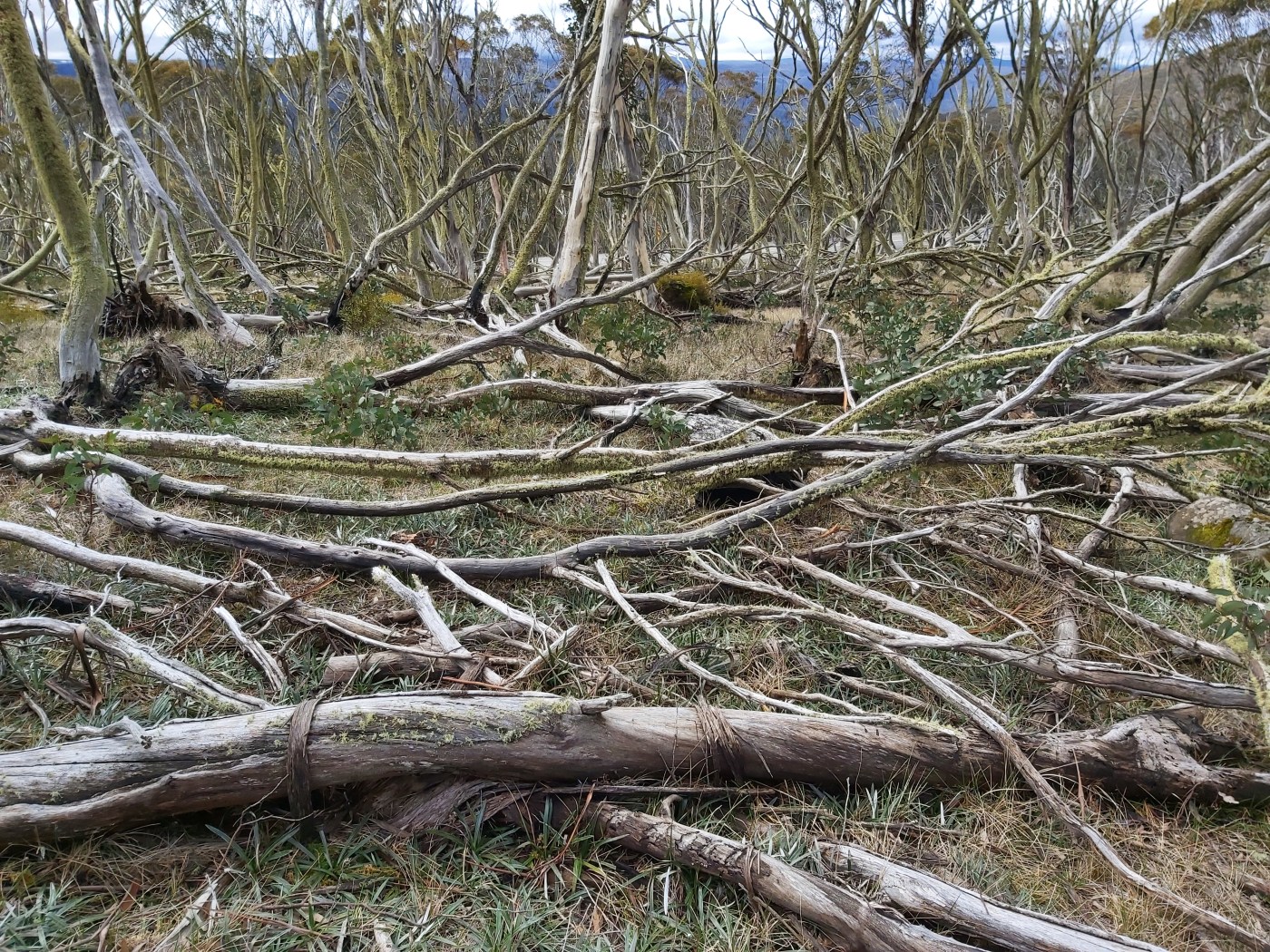
These fires are transforming the landscapes we know and love. Anyone who has driven out of Jindabyne into the Snowy Mountains, or Mt Beauty towards the Bogong High Plains knows what I am talking about – endless walls of grey, dead trees. Only 0.47% of old growth Alpine Ash still exists in Victoria. This has huge implications for the aesthetics of our mountain areas, and significant ecological implications.

Increased fire frequency could see mountain forests like Alpine Ash replaced by wattle woodlands. As recently noted by Brett McNamara, the manager of Namadgi National Park:

Recovery happens but it is “tainted with a sense of what does the future hold for us if we are to experience fire again and again with such intensity. This is where the question is unanswered. What these mountains will look like well into the future?”

The huge volumes of dead trees from previous fires also creates a lot of fuel that is already dry and hence ready to burn in future fires. What are the implications of this for our fire fighting and land management efforts?

Continue reading “Dead forests making bushfires worse”

What’s your Big Idea for climate action?

The Victorian government is required to prepare and rollout a climate strategy every five years out to 2050. However, because of the C-19 pandemic, it is well behind schedule, so the Friends of the Earth Act on Climate collective has launched a push to write a People’s Climate Strategy for Victoria and is seeking your Big Idea that Victoria could take to act on climate.

It can be something to rein in emissions or protect the community from climate impacts. What could be done in mountain areas and surrounding towns?

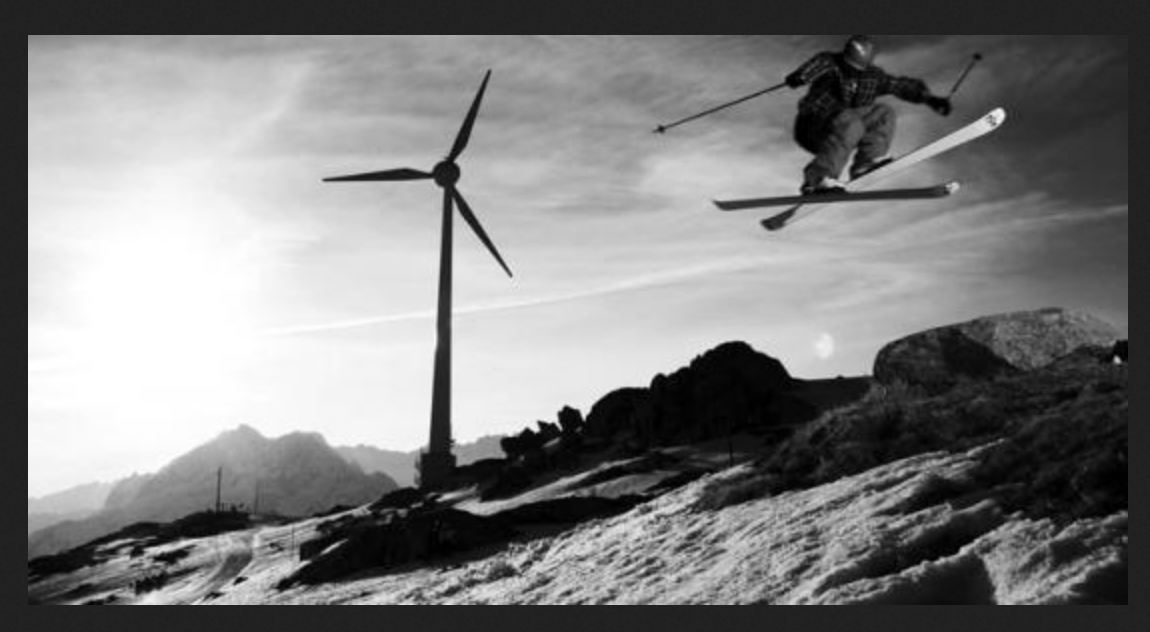
There has long been a plan for a wind turbine at Mt Hotham. There have been several bulk buy programs to get solar panels onto houses and businesses at Hotham and Dinner Plain. What about micro hydro power in ski resorts? Or protecting the carbon dense forests of the Victorian Central Highlands? Running ski resort lift operations on 100% renewable energy? Using electric rather than diesel buses in ski resorts. Or building bushfire refugees in mountain communities?

What’s your big idea that will be good for climate change and good for the mountains?

  Continue reading “What’s your Big Idea for climate action?”

Blog at WordPress.com.

Up ↑