Search

Mountain Journal

Environment, news, culture from the Australian Alps

Tag

forests

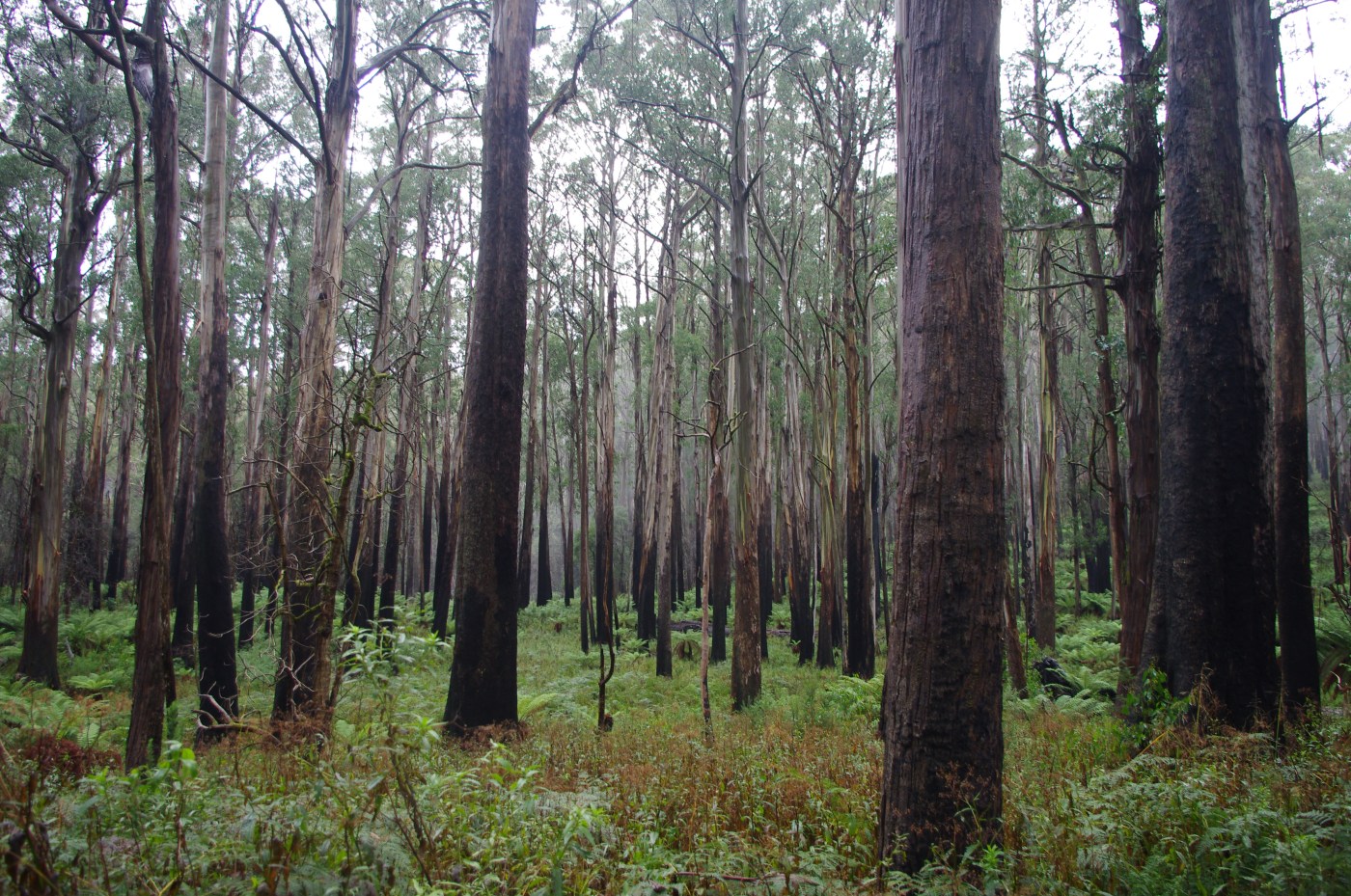
Mountain Ash forests in VIC face ‘almost certain collapse in the next 50 years’

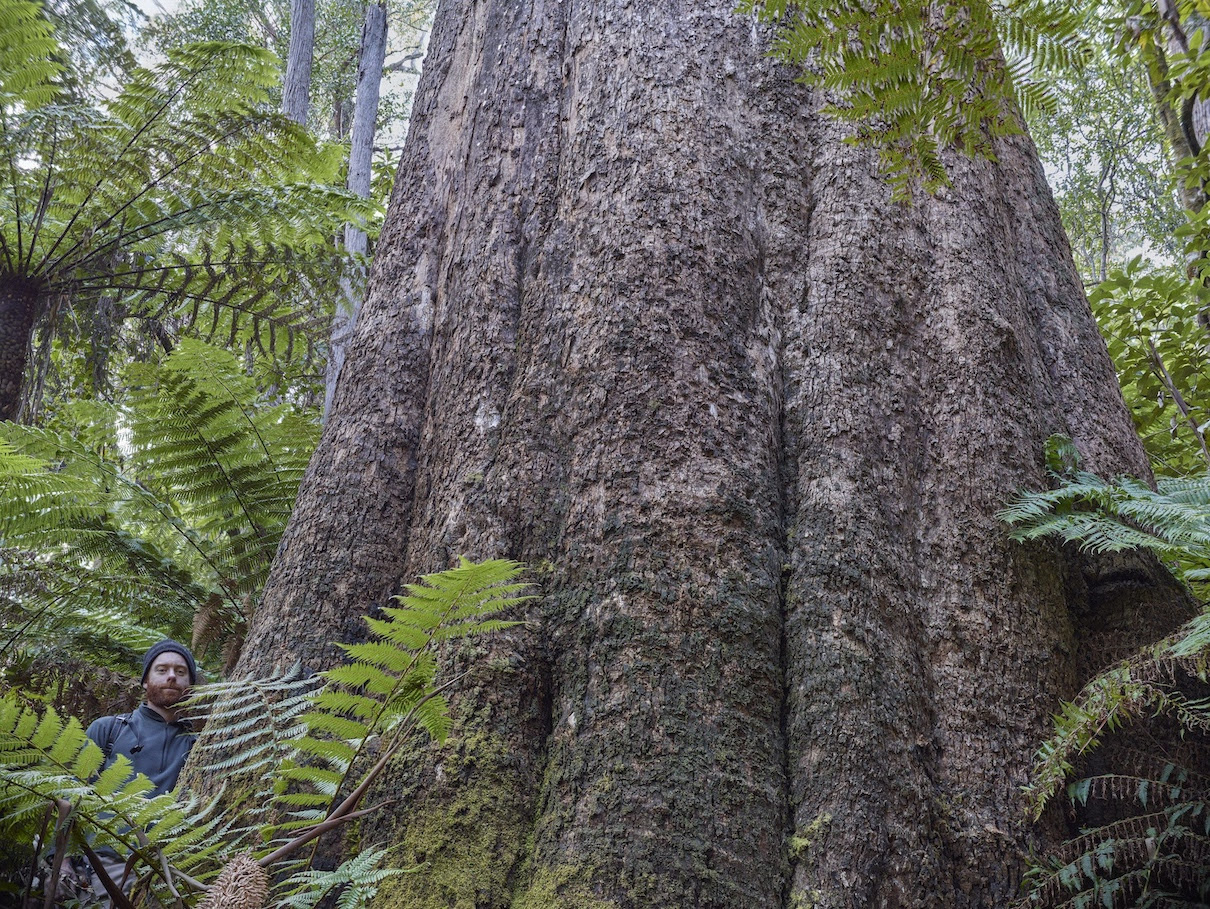
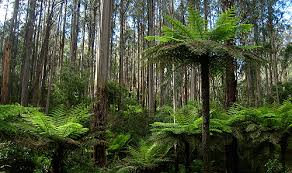
Mountain Ash (Eucalyptus regnans) is the ‘signature’ tree of the damp montane forests of south eastern Australia. Generally growing in temperate areas receiving over 1,200 millimetres rainfall a year on deep loam soils, this species is the tallest flowering plant on earth.

They have been heavily logged for well over a century, and massive areas have been burnt in wildfire. Now climate change and extreme fragmentation of habitat is driving Mountain ash forest in south-eastern Australia towards ‘almost certain collapse in the next 50 years’, according to an assessment by researchers from the ANU.

The key message in this research is:

Researchers “modelled 39 different scenarios and found there was a 92 to 99.99% chance of collapse of the mountain ash forest in Victoria’s Central Highlands by 2067”.

It is also important to understand that there is still a “critical window where we can act to prevent the loss of the mountain ash forest ecosystem”.

Continue reading “Mountain Ash forests in VIC face ‘almost certain collapse in the next 50 years’”
Kuark forest protected through Court injunction

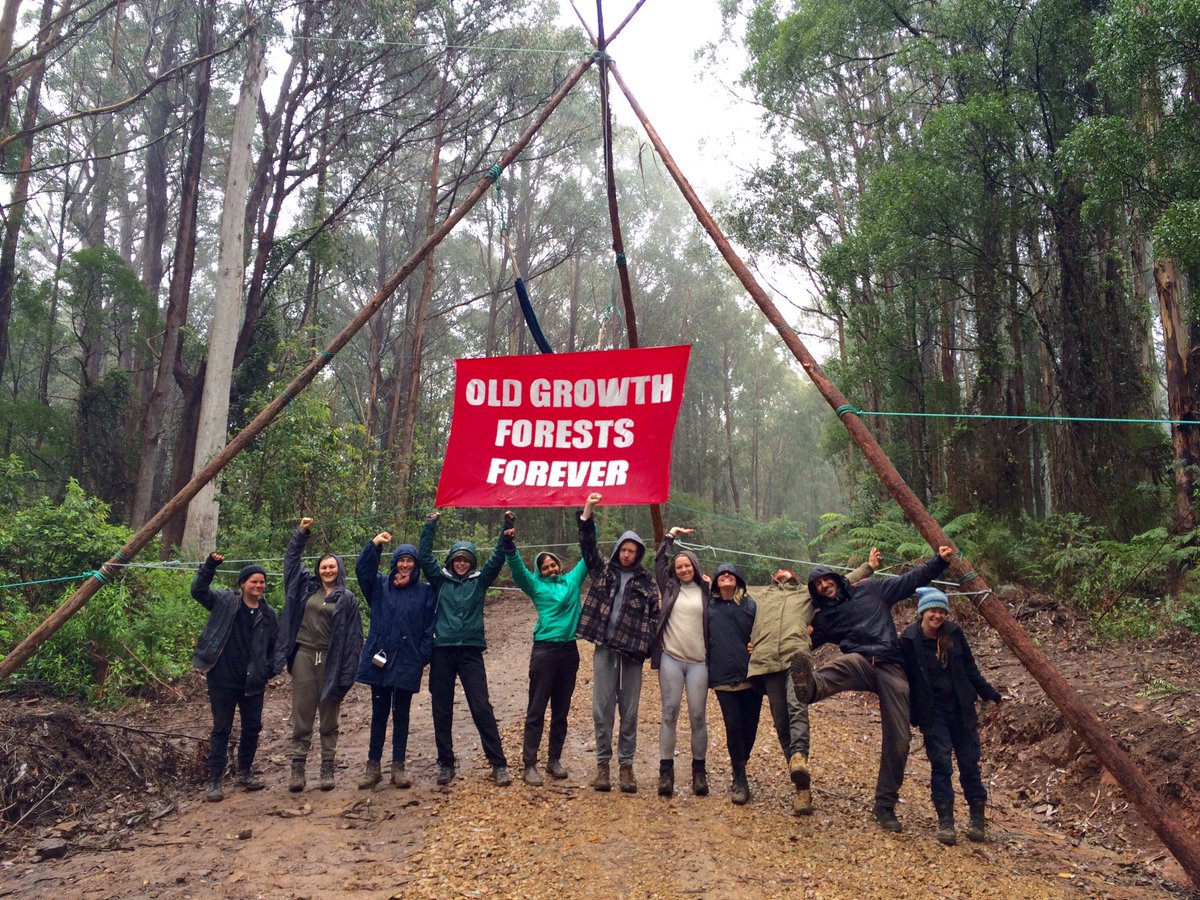
The Kuark forest is located in far East Gippsland, Victoria. This magnificent forest is home to rare rainforest and endangered animals. Sections of it are currently on logging schedules and could be cut at any moment. An access track has been cut into the first coupe.

In response, campaigners have set up a camp in the forest to oppose logging. In response, the Victorian government announced it would increase the protection given to old growth forests, but activists are not prepared for any of the coupe to be logged.

On Wednesday November 1st, a Supreme Court injunction has prevented logging from starting in the forest. Campaigners are celebrating this temporary protection.

Further information is available on the GECO website.

Kuark forest old growth about to be logged

Kuark forest is located in far East Gippsland, Victoria. This magnificent forest is home to rare rainforest and endangered animals.

Logging of Kuark forest has previously destroyed the habitat of endangered forest Owls, Potoroos and Gliding possums. It’s also impacting on unique rainforest types, found nowhere else on earth. Kuark, which is just south of the Cool Temperate Forests of the Errinundra Plateau, contains stands of Warm temperate species which have evolved from tropical species that colonised Australia millions of years ago when the continent was joined to Papua New Guinea and Asia. These tropical like species slowly migrated down the east coast and East Gippsland is the most southerly extent of many of their distributional ranges (you can find additional information on the Kuark here and previous Mountain Journal stories are here).

VicForests is currently preparing to log some of the most spectacular old growth forest remaining in Victoria, wit logging equipment being moved into the coupe this week.

Continue reading “Kuark forest old growth about to be logged”

An update on logging at Toolangi

Earlier this year we reported on logging that was planned for an area near Toolangi, just north of Healesville. The Tanglefoot picnic ground is the gateway to the amazing Kalatha Giant which is 300- 400 years old, and the start of the wonderful and popular Myrtle Gully Walking Track . Its accessibility and rich ecology has led to it being visited by many thousands of tourists each year. Despite strong local opposition, the logging has been allowed to proceed.

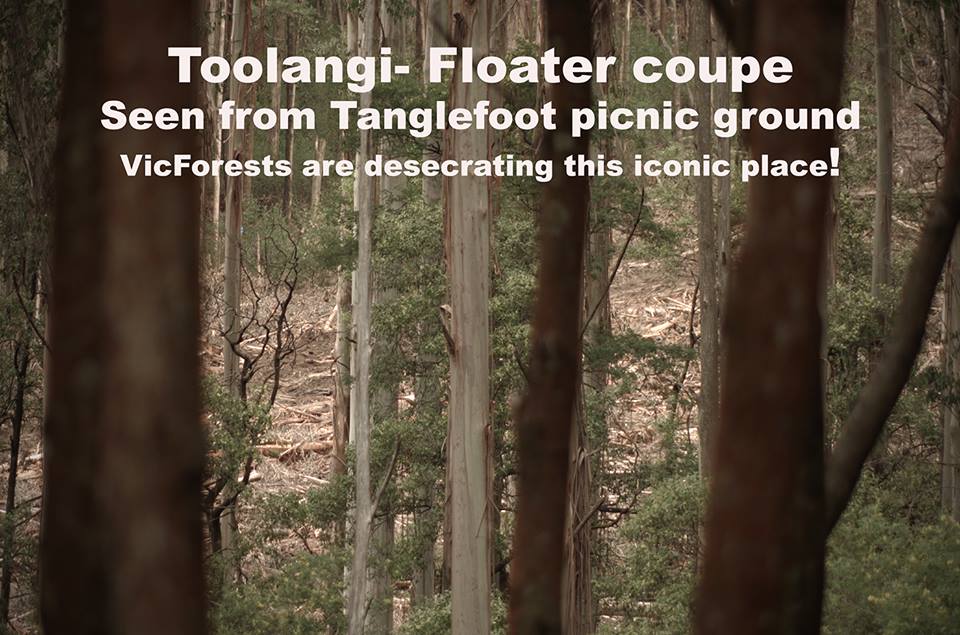
Logging can now be seen from Tanglefoot picnic ground in Toolangi.

Please take action

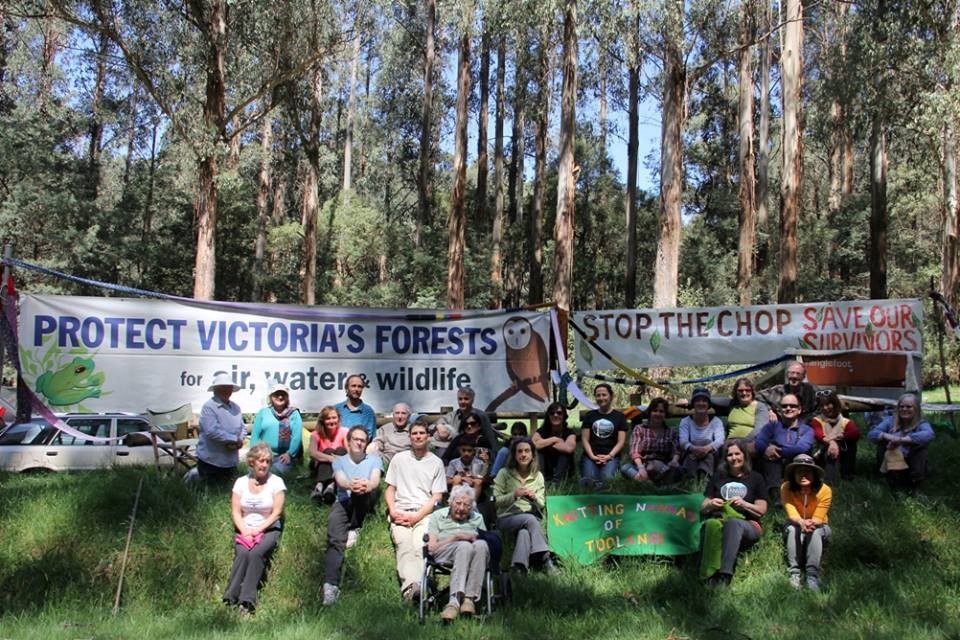
Local campaigners, the Knitting Nannas of Toolangi, have put out a call asking concerned people to call Daniel Andrews. You can ask to leave a short message for the premier, and then explain that you’re upset that this logging is proceeding, that it will impact on threatened species, tourist income, and local recreation opportunities.
The office phone number is (03) 96515000.

Save the iconic Tanglefoot Picnic Ground Forest Area

The Tanglefoot Picnic Ground is an iconic area in the heart of the Toolangi Forest to the east of Melbourne – complete with beautiful surrounds, an information stand, picnic tables and a toilet. It is also the gateway to the amazing Kalatha Giant which is 300- 400 years old, and the start of the wonderful and popular Myrtle Gully Walking Track . Its accessibility and rich ecology has led to it being visited  by many thousands of tourists each year.

But the area behind the picnic ground is now being being logged! Eventually the coupe will cover 51 hectares. This will greatly impact on the general beauty of the area and make it far less attractive to visitors. It will see the needless further destruction of precious native forest.

Continue reading “Save the iconic Tanglefoot Picnic Ground Forest Area”

Legal action planned to protect Strathbogie forests

The Strathbogie Ranges, in Victoria’s north east, contain valuable remnant forests across a range of elevations. Logging in the Ranges has long been opposed by many locals.

The Shepparton News is reporting that locals are now considering a legal challenge to the VicForests logging.

Continue reading “Legal action planned to protect Strathbogie forests”

Citizen science survey camp


The Goongerah Environment Centre (GECO) in East Gippsland is running another ‘citizen science’ weekend.

There will be workshops and practical sessions on forest ecology, threatened species, survey techniques, remote fauna cameras, nocturnal spotlighting, Owl surveys, Frog surveys and rainforest identification, forest carbon accounting and more.

Continue reading “Citizen science survey camp”

The case for a Great Forest National Park

The Great Forest National Park will deliver a secure future for endangered species, has huge potential to safeguard against climate change, and will protect domestic and rural water catchments, a new report shows.

In early December, an alliance of Forest conservation groups have released a report outlining the planning and analysis behind the Great Forest National Park proposal.

Continue reading “The case for a Great Forest National Park”

Review: Mountain Ash: Fire, Logging and the Future of Victoria’s Giant Forests

David Lindenmayer is the renowned specialist on the critically endangered Leadbeater’s Possum and the Mountain Ash forests that are their home. He has collaborated with other researchers to produce a book which looks at the possums future in light of fires and logging.

While it is expensive (almost $60) it is an incredibly important contribution to our knowledge about these forests. It is available from the CSIRO.

The following review was written by Alex Mullarky, and originally published on the Wild Melbourne website.

Continue reading “Review: Mountain Ash: Fire, Logging and the Future of Victoria’s Giant Forests”

Summer of Citizen Science and Forest Defence

Goongerah Environment Centre (GECO), based in a mountain valley in far east Gippsland, is organising two weeks of ‘citizen science’ and a range of activities intended to protect the native forests of the region.

It runs from Friday, December 4 until Friday, December 18.

Continue reading “Summer of Citizen Science and Forest Defence”

the Great Forest National Park

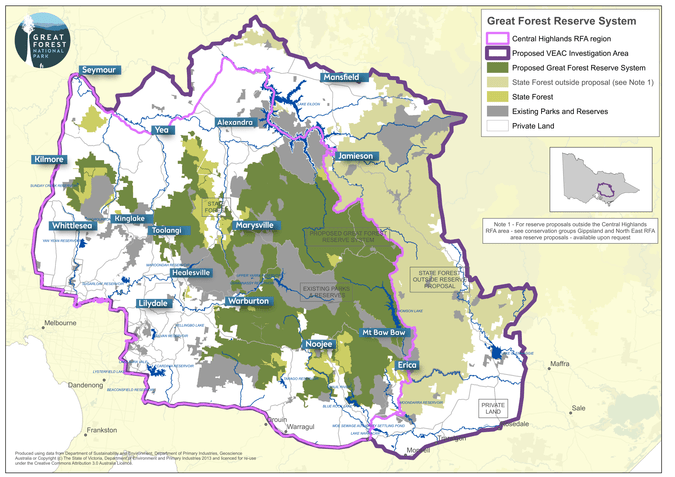
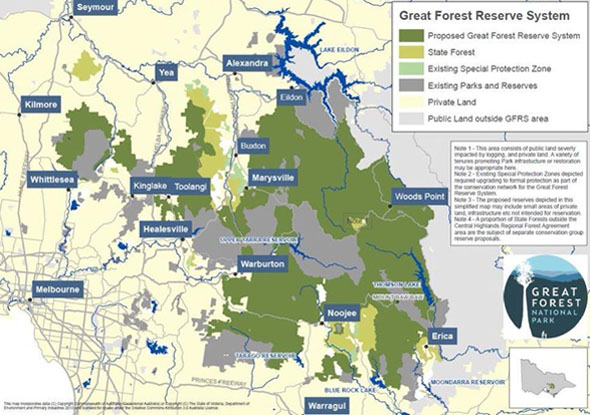
The Great Forest National Park (GFNP) proposal is a vision for a multi-tiered park system for bush users and bush lovers alike, on Melbourne’s doorstep.

It is a park that will protect and maintain important ecosystem functions critical for the health and well being of all Victorians. The proposal intends to amalgamate a group of smaller parks and add a recreational and ecosystem management plan overlay. The GFNP’s gateway in Healesville is only 60 kilometres from Melbourne’s MCG and stretches from Kinglake through to the Baw Baws and north-east up to Eildon. The proposal is backed by 30 years of research from Laureate Professor David Lindenmayer AO and his team from the Australian National University. The Park proposal adds approximately 355,000 hectares to the current 165,000 hectares in reserve. This will bring Melbourne up to a little over 500,000 hectares of reserve, nearly half the size of Sydney’s reserve system. It is an ambitious project that is gaining momentum by the day.

Continue reading “the Great Forest National Park”

last days for the Toolangi treehouse?

a view from the treehouse

On sunday 10 November, 2013, a young activist called Hannah Patchett launched a long term tree sit to highlight the immediate threats to the Leadbeaters Possum through continued destruction of its habitat. Logging threatens the survival of this species in the Central Highlands to the east of Melbourne.

A range of people have lived in the treehouse since then, bearing witness to the on-going destruction of the precious ash forests.

Now the treehouse has been issued with an eviction notice from the Department of Environment and Primary Industries (DEPI), which expires on the 9th of April. At this point it is expected that DEPI will remove the treehouse on or soon after the 9th.

A group of people connected with the treehouse are currently appealing to DEPI (Department of Environment and Primary Industries) to provide an ongoing permit for the treehouse, or to at least give some reason why a permit has been denied. At this stage we can only assume that the treehouse will be torn down and destroyed if a permit is not granted.

You can keep track of developments by following the treehouse on facebook.

Blog at WordPress.com.

Up ↑