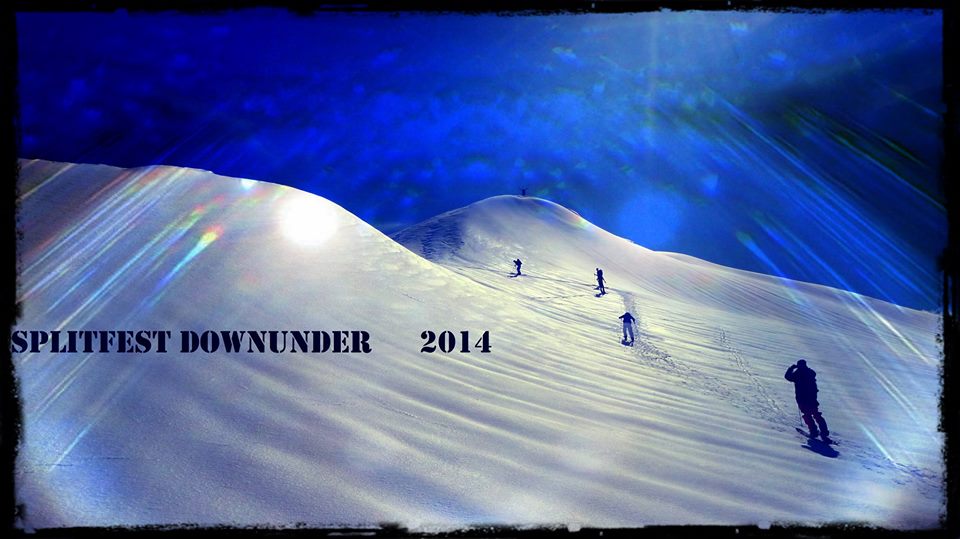
Just a reminder that the NSW Splitfest DownUnder will be held over this weekend (29th – 31st of August) in the NSW main range. Register here.
We will be holding the Friday night entertainment at the Banjo Paterson Inn, starting @ 6pm. 1 Kosciuszko Road Jindabyne Snowy Mountains New South Wales 2627
There will be all the usual trimmings, T-Shirts, give a ways, raffles and loads of fun. Some of the prize categories include worst DIY job, most inventive Splitboard design etc. etc.
You have the option to stay in Jindabyne, camp in the National Park or my favorite camp on the peaks.
There will be rental gear available to those who need it. Jump on board and meet some new touring partners, the more the merrier!
When people think of ski touring in the Snowy Mountains, its more than likely they will imagine the Main Range area around Kosciuszko itself, or the high plains that extend up to Mt Jagungal. But there is a lot of alpine and sub alpine country to the north of these iconic areas. With elevations dropping off as you head north, it can be a rare thing to have sufficient snow nowdays to travel by ski into the northern sections of Kosciuszko National Park.
But with 2014 being the fantastic season that it is, there has been plenty of opportunity to ski in some of the lower elevation mountain regions across SE Australia.
This trip report from Andrew Stanger is of a ski tour to Four Mile Hut from near the Selwyn ski resort.
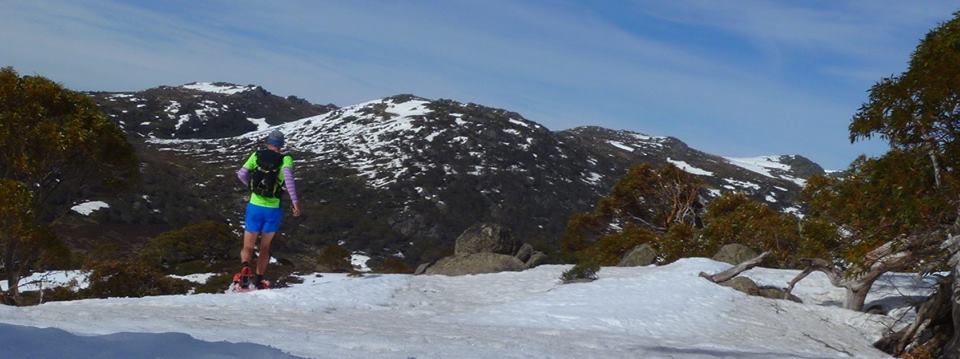
It’s possibly not going to be in the Olympics or Commonwealth Games for a while yet. But there is a snowshoe running event coming up soon in the Snowy Mountains.
Saturday August 23, Perisher Valley, Kosciusko National Park
The organisers say:
It will be a day of snowshoe running in the Kosciusko National Park. Two events are planned:
The Stomp: 6km (approx.) The Longer Stomp: 15km (approx.)
Both events will be on marked courses and mostly on marked trail. Not flat but not over-the-top steep, courses will be designed to be runnable by the fit and walkable by those wanting a challenge up in the hills.
The following comes from ABC Rural and is written by Alexandra Blucher and Bill Brown. At the end of their article you will also find links to the arguments FOR and AGAINST culling, culling methods and summary of the damage caused by brumbies.
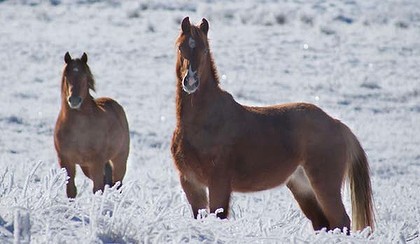
Brumbies roam the Kosciuszko National Park. Photo: Coleen O’Brien
Wild horses are out of control in the Australian Alps according to conservationists, and doing irreparable damage to the fragile alpine environment.
However, brumby advocates dispute the claims and say alpine horses are part of an iconic bush heritage that must be protected.
It’s a divisive debate and passions always run high.
Aerial surveys of the wild horse population in the Australian Alps, including Kosciuszko National Park between 2003 and 2009, indicate an increase in brumby numbers, from just under 2, 500 to over 7,500 horses.
With recent good seasons and an estimated population growth of between eight to 20 per cent every year, NSW National Parks are projecting that a conservative estimate, would put the current horse numbers in the alps at over 10,000, with over 7000 in Kosciuszko National Park.
Conservationists say environmental destruction in Kosciuszko National Park is at crisis point, with threatened native animal and plant species at risk. They want the population to be aerially culled.
Advocates for these wild horses of the high country reject the population estimates, the claims of lasting environmental damage, and say they will vehemently fight any move towards aerial culling.
Government review puts brumbies back in the spotlight
A review of the Kosciuszko Horse Management plan is currently underway after the NSW Environment Minister, Robyn Parker, called for it to be examined last year.
As a part of the review, a consultation process is underway to bring the polarised community together to decide how the wild horse population in Kosciuszko National Park will be managed.
The discussions are expected to be far from harmonious with the facts about horse numbers, the extent of environmental damage and the best approach to management, all in dispute.
Another round of aerial surveys is expected to be completed in April.
The Government initiated consultation process will put the divisive issues firmly back on the public agenda.
New South Wales Police will appeal to hikers in the Kosciuszko National Park to help in the search for missing Canadian Prabhdeep Srawn.
Two days after recommencing a ground search for the 25-year-old who has been missing since May 13, Monaro Local Area Command Superintendent Rod Smith said police and National Parks and Wildlife Officers were contending with some snow in the search area.
“We are recommencing the search in a limited capacity, using some specialist services available to us.
“We’re going to give that a go this week and then will make a weekly assessment as to when the appropriate time to go back into another thorough ground search but obviously that will be when the snow goes.”
He said SES volunteers were on standby for a broader ground search and that visitors to the area were being asked to remain vigilant.
“We believe that he walked along the Main Range Trail from Charlotte Pass, in an anti-clockwise direction towards Mt Townsend and Mt Kosciusko.
“For people who are out there, we are appealing for hikers in that area to keep an eye out.”
Family members are coordinating a group of 18 volunteers who will arrive from Canada next week to assist with the search.
“All of the information that we’ve got, firmly point us in the direction that we have concentrated our search but of course, we are open to the fact that he may not be in that particular area which is problematic because it is such a massive, vast area.”
Mr Srawn was last seen on May 13 when he parked a rental car in the Charlotte Pass Village before setting out in fine conditions to hike near Australia’s two highest peaks, Mt Kosciuszko and Mt Townsend. His disappearance was reported a week later, prompting a large air and land search over two weeks. The 30-person search was abandoned on June 1 ahead of heavy winter snowfall.
Image: NSW National Parks – Office of Environment & Heritage
Media release: 10 September 2012
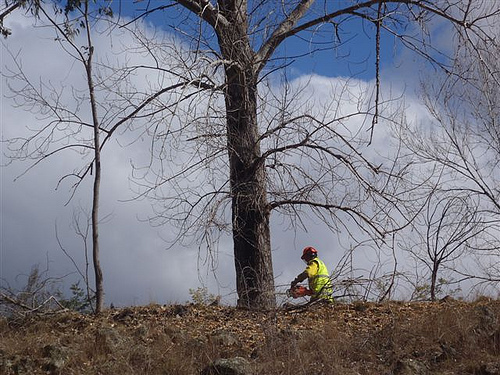
Field staff have been converting pest trees into valuable mulch to improve native animal habitat and suppress invasive blackberry and briar weeds in parts of Kosciuszko National Park.
NSW National Parks and Wildlife Service (NPWS) Senior Field Supervisor Danny Matthews said the mulched trees, mostly poplars, had been spreading at an alarming rate.
“Five field staff recently spent 26 days removing and chipping hundreds of trees over an area of six hectares at the Talbingo Landslip Quarry near Talbingo Dam wall,” Mr Matthews said.
“During the construction of the Snowy Scheme, and particularly between the 1950s and 1970s, exotic trees were planted for erosion control and this had unintended consequences for native ecosystems.”
Mr Matthews said European species including willow, broom and poplar were planted in parts of Kosciuszko National Park and in many cases they had spread and become weeds.
“Replacing exotic trees with native vegetation will not only protect soil stability, it will have broader environmental benefits.
“And chipping these trees has produced about 800 cubic metres of mulch, which we have spread to boost organic levels in the soil and help stop weed infestations in the undergrowth.”
This major woody weed eradication program in Kosciuszko National Park is tackling exotic trees on Guthega Road, reducing Scotch Broom in the Snowy River, and removing kilometres of willows in the Tumut River.
More work is planned this year, including the removal of thousands of willow stems in the Eucumbene River and helicopter-based work in the upper reaches of the Tumut River between the T2 power station and the Elliott Way.
Weed eradication programs like the one underway in Kosciuszko are one way the Office of Environment and Heritage enhances the care and management of National Parks for a healthy environment.


 Mountain Journal
Recent Comments