Search

Mountain Journal

Environment, news, culture from the Australian Alps

Tag

Main Range Snowy Mountains

In praise of huts 2

Mountain Journal has previously covered the issue of huts in the high country. As we said then:

Huts in the mountains can be a vexed issue. Huts will tend to attract people and so tend to concentrate visitation within a larger area. As one example, most people who climb Mt Bogong tend to then turn towards Cleve Cole hut rather than head across to the Hooker Plateau. This tendency to influence visitation can be both good and bad.

They are part of the cultural history of the high country, and reflect major stages in the post colonisation era: cattle grazing, forestry, hydro, even fire watch towers and, more recently, huts built for recreational purposes. We also have a number of strange and random anomalies, ones that don’t really make sense: Craig’s hut near Mt Stirling as an example, which was built as a set for a film. There are, of course, those whose primary function is safety, such as Seaman’s hut near Mt Kosciusko, and huts that belong to clubs or even schools (Geelong Grammar on Mt Stirling)”.

With growing risk of wildfire, and many huts simply ageing and starting to fall apart, there is the chance that the overall number of huts will decline in coming years. Some are carefully looked after (the Kosciusko Huts Association lists the known caretakers of huts in the Snowy Mountains) but others are falling into disrepair.

I am more interested in indigenous history of the high country than huts, but I do appreciate the cultural value they hold for many people and the practical value of refuge huts.

Continue reading “In praise of huts 2”

Splitfest 2015

The NSW Splitfest DownUnder will be held on weekend of the 21-23rd of August in the NSW main range.

You can
Register here.

We will be holding the Friday night entertainment at the Banjo Paterson Inn in Jindabyne, Starting @ 6pm
1 Kosciuszko Road, Jindabyne

The weekend will be spent out on the Main Range.

You have the option to stay in Jindabyne, camp in the National Park or out on the peaks.

There will be rental gear available to those who need it. Jump on board and meet some new touring partners, the more the merrier!

This is a free event, there are no guides so you must be able to make your own terrain decisions.

Further information available here.


Climbing The Sentinel – from the west

Photo:The Sentinel, by James Morrow, OZBC.net

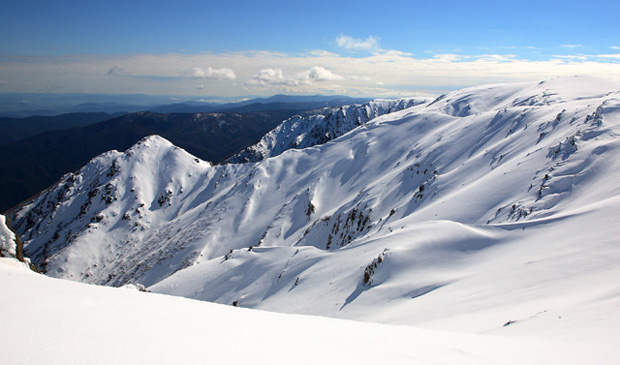
The western slopes of the Main Range in the Snowy Mountains are the premier backcountry ski and boarding destination in Australia.

And while people have been riding out there since at least the 1940s, the slopes have been getting a lot of coverage in recent years.

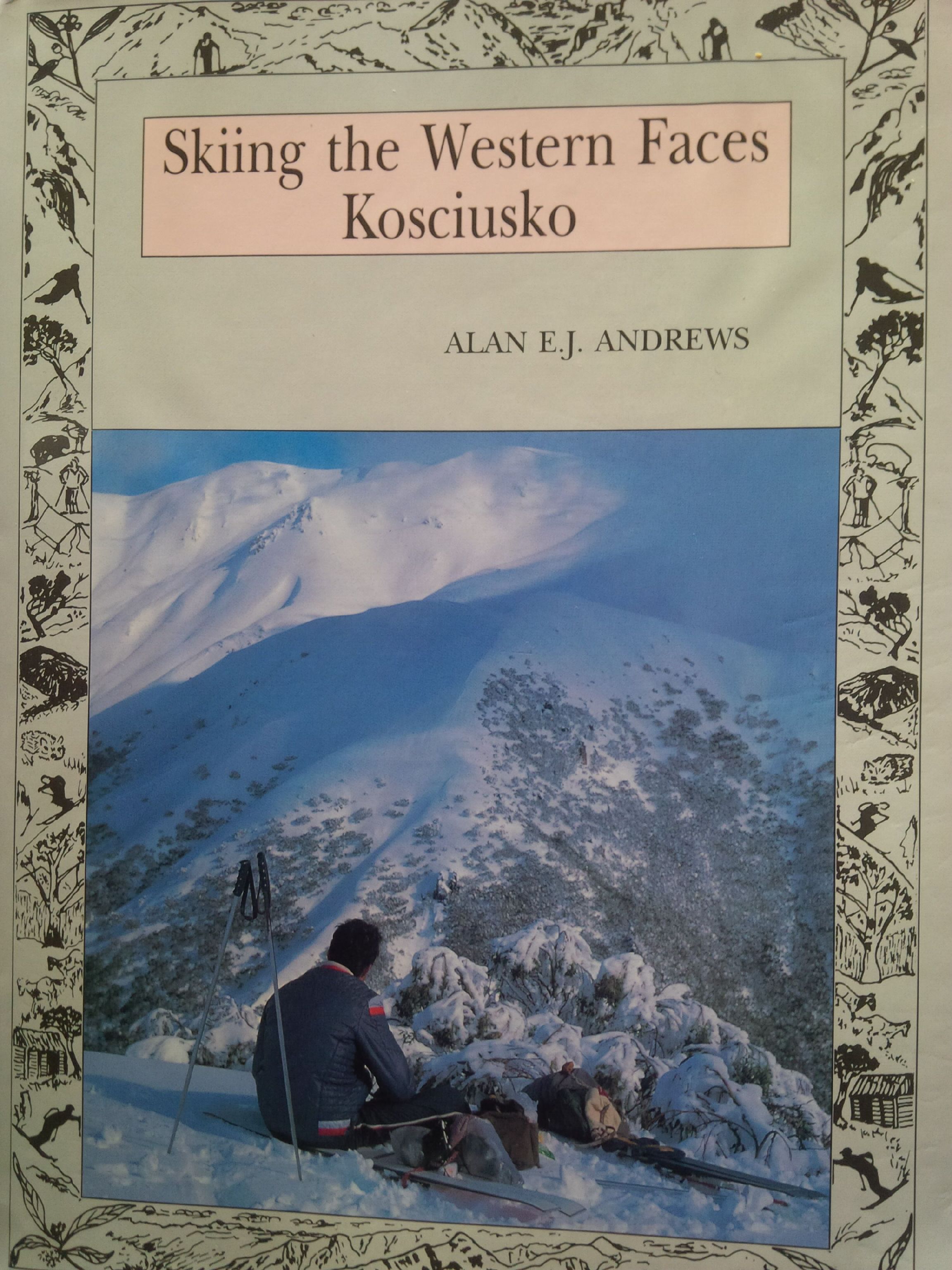
While the classic book is still Skiing the Western Faces of Kosciusko, by Alan Andrews, there are lots of other reports and even films coming out about skiing and boarding these impressive slopes. John Blankenstein has written a number of great trip reports from the Slopes, and Nic Rivers recently released a short film, called Find Your Line, of John snow boarding Watsons Crag.

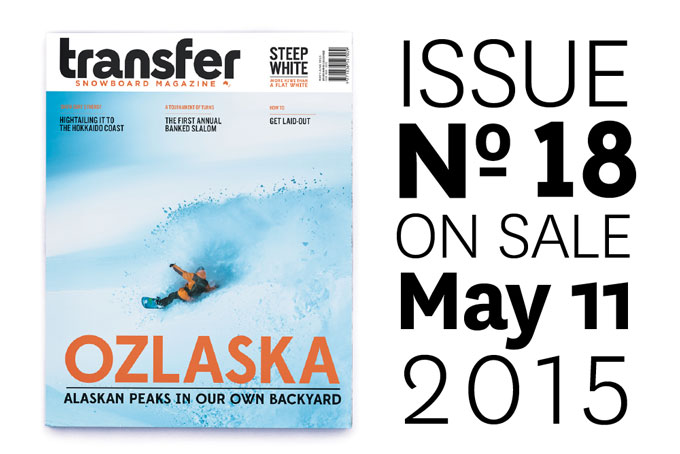
There’s a brilliant front cover story in the current edition of Transfer magazine, the upcoming Roof of Oz film project, and a number of other magazines have covered the western faces. Stephen Curtains classic telemark film, Winter Dreaming, has a lot of action from Little Austria and other sections of the Slopes.

No matter which way you get to the western slopes, the main drop of mountains from Abbott Peak to about Mt Tate, you’re in a for a few hours of work. The shortest routes are from the top station at Thredbo or via Perisher to Charlotte Pass. You can also skin up via a number of routes from Guthega or, if you’re hard core, Dead Horse Gap.

But who would think of climbing from the west side? The views from The Alpine Way (the road between Thredbo and Khancoban) are some of the best alpine vistas in the whole country, but the slopes of the western faces sit so far above the road that they feel like they’re on another planet.

Enter Jack Skilbeck.

Continue reading “Climbing The Sentinel – from the west”

Ozlaska

Backcountry is the new black.

In the last few years, all things backcountry have come in from the fringe, and are now ubiquitous, featuring in films, magazines, books, and gear. I assume that for most people its slightly voyeuristic. People like to read about the amazing runs on offer in the backcountry without necessarily actually getting out there themselves. But there certainly is a new generation of skiers and boarders heading out for an adventure, and BC specific gear is one of the growth areas in the snow equipment industry.

Here in Australia, attention has tended to focus on two of our most spectacular BC destinations: Mt Bogong in Victoria, and the western slopes of the Main Range of the Snowy Mountains (yes, there is lots more on offer, often harder to access and perhaps less iconic. Then there’s Tasmania, which has some insanely good terrain on the rare occasion that it actually comes into shape for riding. But that’s another story).

Continue reading “Ozlaska”

ski mountaineering courses

Main Range Backcountry is offering ski mountaineering courses on the Main Range in the Snowies.

They say:

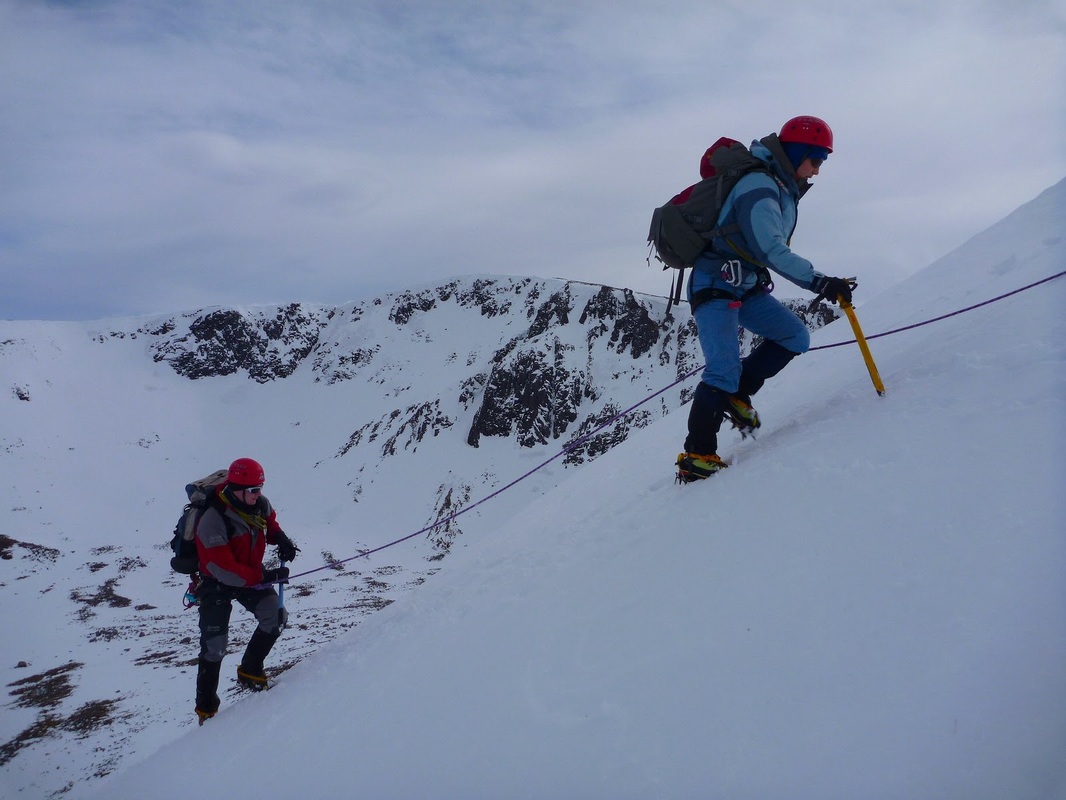
The rope can be a valuable tool for ski touring, but without any training in its use, can be dangerous or even provide a false sense of security. This course is designed to teach you basic rope handling and movement on snow and ice with crampons and ice axes. If you have a small group, the day can be customised to your needs, whether you want to access and ski big lines, with a larger margin of safety or are looking at getting into mountaineering from hiking or climbing.

Continue reading “ski mountaineering courses”

Splitfest DownUnder 2015

The NSW Splitfest DownUnder will be held on weekend of the 21-23rd of August in the NSW main range.
Register here.

We will be holding the Friday night entertainment at the Banjo Paterson Inn Starting @ 6pm
1 Kosciuszko Road, Jindabyne, Snowy Mountains, New South Wales.

There will be all the usual trimmings, T-Shirts, give a ways, raffles and loads of fun. Some of the prize categories include worst DIY job, most inventive Splitboard design etc. etc.

An official list will be out soon so stay tuned!

You have the option to stay in Jindabyne, camp in the National Park or my favorite camp on the peaks.
There will be rental gear available to those who need it. Jump on board and meet some new touring partners, the more the merrier!

This is a free event, there are no guides so you must be able to make your own terrain decisions.

Winter may be over, but the beauty and wonder of the mountains rolls on…

Some photos from Andrew Stanger, taken in late October “out the back on the Main Range of Kosciuszko National Park as the first flowers were unfurling to clear, sunny skies.”

Enjoy.

Continue reading “Winter may be over, but the beauty and wonder of the mountains rolls on…”

Mt Carruthers and The Sentinel

A trip report from John Blankenstein . This is his third report from the western faces of the Main Range, featuring runs on the Mt Carruthers North Chutes and the South West Sentinel.

“Wind and rain had crept back into the mountains with a series of less than adequate “not so cold fronts” which threatened to unhinge my winter. Optimistic, I was certain that cooler air would be drawn up into the cycle of precipitation by Thursday evening. I got a call from Mike at First tracks Snowboard store Jindabyne on Thursday night with reports of wind gusts in excess of 190km from a cat driver on top of Guthega, by 9pm that night snow finally entered the equation and by Saturday morning we had received a healthy recharge of up to 20cm of dry pow”.

Read the full report here.

Alan E J Andrews 1926 – 2014

mapAlan E J Andrews is known to many backcountry skiers and boarders as a pioneer of skiing the steep western faces of the Main Range of the Snowy Mountains. He was the author of Skiing the Western Faces Kosciusko.

He passed away last month after a long and well lived life. The eulogy that follows was written by his friend Klaus Hueneke, another luminary of the High Country.

Nureyev on Skis
Or
The Emperor of Illawong

Eulogy for Alan E J Andrews, Mona Vale, 26/6/14

“I have known Alan in person since about 1984 and I’ve known about his writings and journeys across the high country since the 1960s. He had a big impact on my life and my book publishing business Tabletop Press.

Alan was a lover of:-

Australian History especially the early explorers,

the Australian Alps and skiing in all its forms,

the mountain huts especially Illawong and Albina,

old style poetry with rhyming verse,

the ballet and bacon sandwiches and

an old Holden Station Wagon.
He loved reading, drawing and using maps,
and the careful composing of numerous articles and books.

He enjoyed helping others with their own research and replied at length to any questions or correspondence sent. He did this in careful, often quite tiny, longhand or neatly printed with lots of curly bits. You can view it in some of his books. When his distinct handwriting was not on the last parcel of books I thought, ‘something must be seriously wrong’. It was.

His books and long sojourns at Albina or Illawong hut above the Snowy River were very important features of his life. When he was at Illawong it was like the Emperor was in residence. Not a domineering Emperor who demanded our attention but a quietly spoken, quietly smiling, self effacing Emperor, one who didn’t have to shout it from the roof tops.

I loved listening to him reciting Australian classics as well as his own poetry. This is an extract from The Fan-shaped Snowgum.

There it is, the fan-shaped snowgum,
Glinting in the morning frost;
Reminding us of courtly pleasures
From time forgotten – long since lost.
Lovely eyes ‘neath lowered lashes,
Flirting sweetly, ringlets tossed,
Fan on crinoline laid demurely,
Clamouring suitors imperiously bossed.

But look again, the trunk is twisted,
Leaning perilously askew.
Another instant it had fallen,
Yet still survives, to grow anew,
The branchlets fanning to the northward,
Others stretching southward too;
Now proudly standing tall, defiant,
A sentinel to welcome you.

In 1982 I wrote Huts of the High Country. Alan took note that there was a new kid on the block and on a later visit to Illawong we spoke about my new book Kiandra to Kosciusko. He offered to draw a number of maps and gave me permission to use his articles about early ski tours in different parts of the Snowy Mts.

When the book came out he said ‘but you only spent a couple of pages on the history of Mt Kosciusko itself’. Sorry Alan. It got him going and in 1990 he asked me to design and publish Kosciusko – the Mountain in History. It covered all the first European explorers who reached the high tops and filled a missing gap. As usual, the research was meticulous.

In 1993 he wanted me to do the same with Skiing the Western Faces but this time he said, ‘I want the book to breathe more’. ‘Breathe?’, I thought Can a book breathe? It showed how books to him were living entities with eyes, lungs, heart and soul. No wonder his and Muriels house is full of them.

He showed me a book which had lots of space around the text and between chapters. I got the message and Skiing the Western Faces became his most popular book. It inspired many others including his sons Neil and Ian as well as my step-son Chris, who brought me here today, to explore the dramatic western faces. I always know it has been a good snow year if orders come in during September and October.

By 1996 he was ready to go with Rainforest and Ravished Snow. Half of this book dealt with his bushwalks on the Comboyn and in the Upper Manning River area, one in which some of his relatives once lived and where Ian, his son, still owns a plot of bush. After skiing became too hard for him, Alan often went there to communicate with nature.

It became obvious that Alan had been sitting on a large body of drawings, maps, photos, writing ideas and unpublished work. I was very glad he chose me to bring them into the world. These were books with small print runs not commercially viable for big publishing houses but important nevertheless.

In 1998 I received the manuscript for Earliest Monaro and Burragorang, his last major work. It is jam-packed with historical detail, black and white photos, dozens of hand-drawn maps and many references. It has been well received by old Monaro families and local historians.

His books have been selling steadily for the last 20 years and will continue to do so for a long time. I often say ‘History doesn’t age, it just gets older’.

Before I came along Alan published a number of books with Blubber Head Press and smaller hand-made ones like Where the Wombat Goes and Surveyor Thomas Townsend, his work in Australia 1831-1854. Another was a compendium of all the articles and books he had published between 1950 and 1983. Yes, starting in 1950, 64 years ago, when he was a young 24. A note in one said, ‘This really is a table top book – written, made and printed at home’.

On one of our day trips he took me on to Twynam West Spur and showed me the gap in the cornices through which I could thread my long, thin skis and descend into Siren Song Creek. ‘Ski down there?’ I thought, and went off to sit at the end of the Crags to bask in the sun and contemplate the vista to the crouching lion Jagungal.

He, meanwhile, wasted no time and in a series of adroit, light as a feather, linked turns, leapt, carved and flew into the sirens arms. It was Rudolf Nureyev (a famous ballet dancer from the 1980s) delicately balanced on a couple of plastic planks in the steepest snow country we have.

About the same time I discovered he adored the Australian Ballet and the stunning, lithe, pink-clad ballerinas. He wrote poems about them too. The ballet must have rubbed off for it was ballet on skis that he displayed that memorable day.

Writing this about Alan, the word ‘fey’ kept bouncing around inside my head. The dictionary explained. It means, ‘as if enchanted, under a spell and aware of supernatural influences’. Yes, that was Alan all over and that’s what explains his love of skiing, his poetry, his wry sense of humour, some of his drawings and his ability to morph from a cheeky Shakespearean imp to a serious historian over the same cup of tea.

I will end on a poem he wrote after ascending Twynam North Spur. It could be his epitaph:

We leave our stately sentinel
And pass on through the Arc of Trees,
Then upwards still and cross the snowbridge,
There possibly to take our ease,
But not for long; it’s on to Twynam
To the throne to pay our dues
And find our fealty rewarded –
The granting of the kingdom’s keys.

You may be sure we will not waste them.
Full many a secret we’ll explore.
Full many a slope will feel our ski-tips:
Past craggy slate and granite tor,
Down gullies steep and awesome,
We’ll ski them all, you may be sure.

So when at last we hand the keys in,
As needs we must – so stands the Law –
There’ll be no need for compensation.
There’ll be no need to ask for more.

I will miss him, his annual hand-illustrated and written Christmas cards, his tightly composed letters often with poetry, his years of support and all that he stood for with all my heart for the rest of my days.

Alan, you were an inspiring scholar and an old fashioned gentleman”.

Klaus Hueneke (OA-AM)

NB: a number of Alan’s books are still available, check here for details.
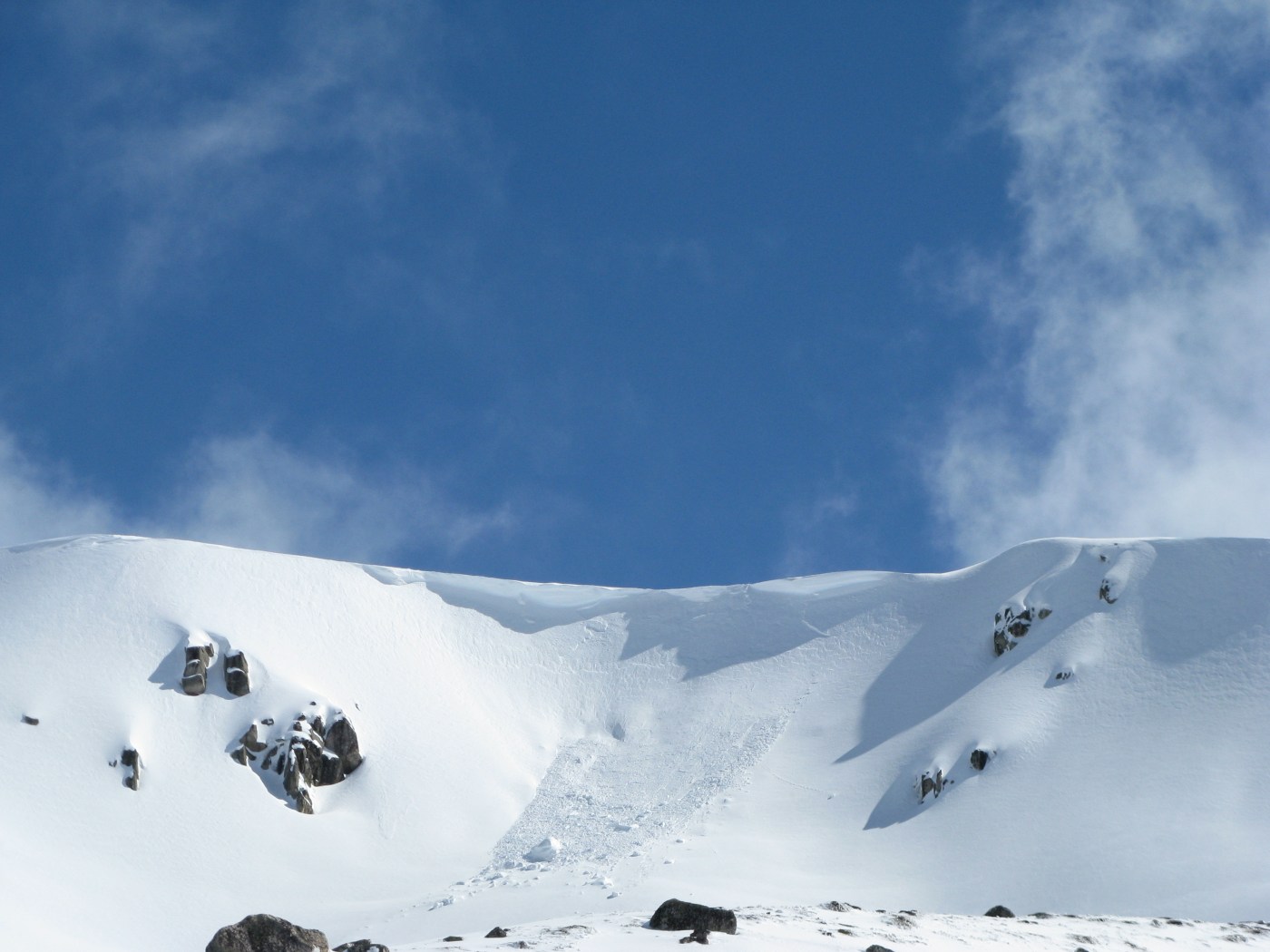
Watsons Crags in winter

Introduction

The western faces of the Main Range of the Snowy Mountains contain the largest section of big skiing and riding terrain in Australia. In good snow conditions you can find runs of up to 1,000 metres of vertical.

While most serious backcountry skiers and riders have the western faces on their ‘to do’ list, do not underestimate the serious nature of the terrain. They contain steep and serious slopes, with cliffs and chutes, often in dangerously icy conditions. The main faces and ridges, such as Watsons Crags, are not suitable for beginner skiers and riders. Do not drop in to one of the major lines without scoping it first (eg from an opposite ridgeline) to ascertain how icy or wind affected it is, or whether it may be subject to avalanche danger. Do not ski/ ride here alone. Ensure you have all appropriate backcountry gear, including avalanche beacon/ probe/ shovel, and know how to use it. And be aware that even in spring like conditions, soft snow can quickly become dangerously icy in the afternoon as you climb out – I would recommend ski crampons as a minimum. Some teams also carry ice axes.

Be aware that whatever you do, you need to head UP to get help, not down into the trees. If injured or exhausted seek help via calling 000 rather than heading DOWN.

And make sure you check the MSC backcountry conditions report before heading out.

Watsons Crag in winter

After a slow start, the winter of 2014 is shaping up to be a great season.

This trip report comes from John Blankenstein who lives on the Far south Coast of NSW. John has been frequenting the mountains since he was 15, where he fell in love with the sport of snowboarding.

He has just returned from boarding the iconic Watsons Crags on the western face of the main range of the Snowy Mountains.

Watson Crags provide some serious and challenging terrain. John timed his trip to be able to experience perfect conditions.

The trip report is available here.

Adventure on the western faces

Mt Sentinel with Watson Crags in the background

“The mountain environment in Australia is unique and unlike anywhere else in the world. The people you meet and the friendships you forge are meaningful and rewarding. The mountain environment can teach us a lot about ourselves as individuals and as a collective. In today’s world of  cellular phones, games and other distractions the mountains provide me with a sanctuary were silence is promoted and the human senses come alive”.

John Blankenstein and his family reside on the Far south Coast of NSW. John has been exploring the mountains since the age of 15 were he fell in love with the sport of snowboarding. Being based on the coast so close to the snowy mountains provides ample opportunity for adventure. Over the last five years john has begun exploring the back country and the mountain environment that is on offer in the Snowy Mountains, NSW. Each year the Snowy Mountains provide a range of winter and summer based objectives that require a full suite of mountain skills.

In his first installment for mountain journal, John describes a big day out on the western slopes of the Main Range in the Snowy Mountains.

Point zero zero one

East Face of Mt Feathertop, VIC. Image from the film by Stephen Curtain.

As Tony Abbott threatens to de-list significant areas of the Tasmanian World heritage area (WHA) so the loggers can get to the old growth forests that are currently protected, it’s worth remembering that all our WH Areas are special and most of them are already under pressure from climate change.

No area has as many climate pressures as the Australian Alps. This film from Stephen Curtain offers some great telemark skiing images from the Western slopes of the Main Range in the Snowy Mountains. It also reminds us how unique and vulnerable this landscape already is. There have been several attempts to get World Heritage listing for the Australian Alps over the years. In an era of climate change and ever more demands on wild places, we need more world heritage areas, not less.

Check the film here.

Stephen says:

Point zero zero one (0.001) is the approximate percentage of the Australian continent occupied by the Australian Alps.

Bordering one Territory and two States, this biogeographical island supplies invaluable fresh water to much of south east Australia and provides outstanding natural, spiritual and cultural values.

Although the Australian Alps are recognised as a national iconic landscape by federal national park agencies and Tourism Australia in recognition of such values (see australia.com/campaigns/nationallandscapes/AustralianAlps.htm), World Heritage Listing still eludes the Australian Alps.

Point zero zero one celebrates the fleeting beauty of these Alps.

This short film was an entrant to Bristol’s 2012 Wildscreen Festival in the UK. Visit wildscreenfestival.org/

Blog at WordPress.com.

Up ↑