Search

Mountain Journal

Environment, news, culture from the Australian Alps

Tag

national parks

backcountry snowmobile bonanza?

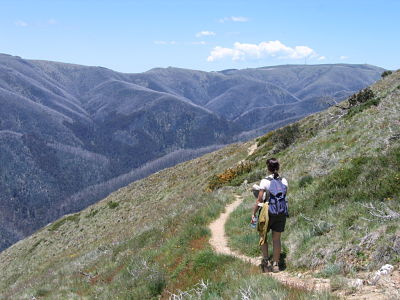
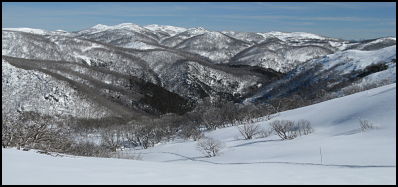
Near Mt McKay, heading to Pretty Valley, Bogong High Plains, VIC

If you’re an Australian skier or boarder, and unless you’ve been living under a log these past few months, you will know that ski legend Steve Lee has been running commercial backcountry ski tours out of Falls Creek resort this winter.

This is great. Getting people out of resorts and into the backcountry is to be supported and encouraged.

What is less great is the emphasis on the use of snowmobiles to get people out there. His tours are geared towards ‘strong’ intermediate skiers and boarders. So if people are fit enough to ski/ board hard terrain, then surely they are fit enough to get on some skis to actually get out there.

In my opinion, this ‘cheap grace’ approach to getting backcountry is a sad development in Victoria. Certainly, the tours are confined to the alpine resort area (even though this is ecologically part of the Bogong High Plains). However, they come with a high annoyance cost to people who are out there under their own steam. It is not clear what ecological assessment, if any, has been made of the tours – for instance, is there an impact on endangered species or vegetation? There is also a bigger picture here: there is the fact that these tours could be a precedent for future snowmobile based developments elsewhere in the alps.

Anyone who has skied backcountry in North America will know the many problems that come with rampant and often uncontrolled snowmobile use. While here in Australia recreational use of snowmobiles is supposedly controlled or banned (for instance in national parks), how often is this actually enforced? As one example, there is growing use within the Alpine national park in the area between Dinner Plain and Mt Hotham and around Dinner Plain village with apparently no intervention from land managers.

Snowmobiles are essential tools in resort management and search and rescue operations. However, the blanket endorsement of commercial use of snowmobiles in the backcountry in almost all Falls Creek promotional materials this winter shows that resorts ‘commitment’ to the environment as being shallow at best and probably a form of green wash.

We should be very cautious about the further introduction of a potentially destructive development in our alpine areas, which appears to have jumped all the approvals ‘hoops’ simply because the proponent of the development is an alpine ‘personality’.
Falls Creek Resort says that it is deeply concerned about good environmental management:
“We are extremely proud of Falls Creek’s reputation as an industry leader in the field of sustainable alpine tourism and development. Our environmental programs reduce our impact on the local environment and acknowledge the importance of maintaining a healthy world beyond our boundary”.

Further information on their approach to the environment is here.

If you have an opinion about the expansion of snowmobiles into the backcountry you may wish to let the resort management know about them.
fcrm@fallscreek.com.au
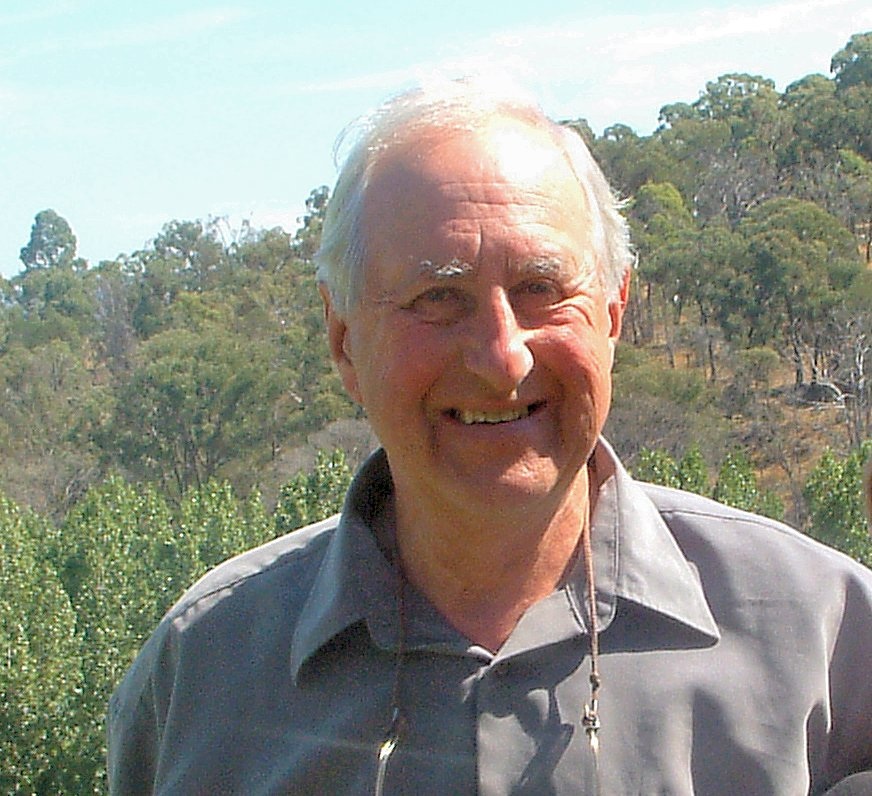
Geoff Mosley

Geoff Mosley has worked for decades to protect wild places in Australia. He helped establish wilderness zones and parks across the south east of the mainland and Tasmania, and has recently released a book on Antarctica. He is active in the field of steady state economics, a keen walker, and widely published activist and thinker.

Perhaps he is best known for his efforts to see a major national park established across the Australian Alps. Much of this vision has now been realised, although he continues to work to see an extension of the Western section of the Alpine National Park and to get World Heritage listing for the forest ecosystems of the south east corner of the country, where Gippsland and NSW meet.

Check here for an interview with Geoff.

The remarkable shrinking Alps plan!

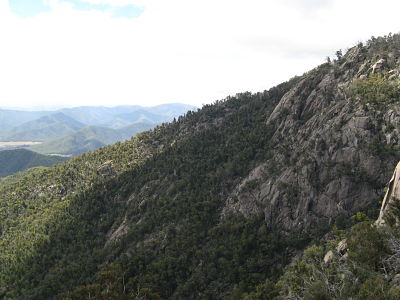
near Wire Plain, VIC

According to Phil Ingamells, of the Victorian National Parks Association, “there has never been more hoo-haa from Parks Victoria over the development of a management plan, and never such an unpromising result, as their draft of their alpine parks management plan”.

He says that the new plan is a “new low”, delivering very little that will enhance environmental protection, despite starting the process well.

You can read his analysis here.

Elizabeth MacPhee, Tumut, NSW

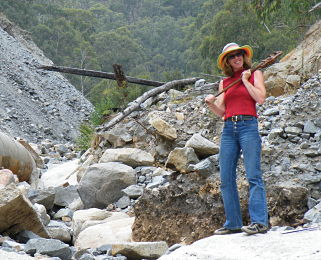
Liz at Deep Creek, a rehab site near the Tooma dam in Kosciuszko National Park

Elizabeth MacPhee has been working across the Australian Alps for two decades, and has a life long commitment to helping repair degraded ecosystems in the Alps. She is Rehabilitation Officer with the Department of Environment, Climate Change & Water, in NSW.

The Parks Service are doing great work on rehabilitation in the Kosciuszko National Park, and her work has been pivotal in this. For the past 5 years she has been working on the former construction sites of the Snowy Hydro-electric scheme.

Check here for a profile and interview on her work

Buffalo skways final “Open House” Information & Feed Back Session

This will be held on Wednesday June 16, 2010 4:00 PM – 6:00 PM
Alpine Visitor Information Centre, Bright, Victoria.

It is hosted by Council and billed as being a Public open house session.

This is your last opportunity to voice your support or concerns. Everyone is welcome to visit and comment. If you can’t attend, please send your thoughts to the Alpine Shire (the proponents for this proposed project) via their contacts page.

For details on some of the environmental problems of this project and how to voice your concerns, please check here.

Draft management plan coming soon – the Vic Alps WePlan project

Information from Louise Rose (Parks Victoria), 26/04/2010.

“The Alpine Advisory Committe has met three times since being formed in October 2009, the Environment and Scientific Advisory Group has met three times and the Victorian Alpine Traditional Owner Reference Group has met six times.

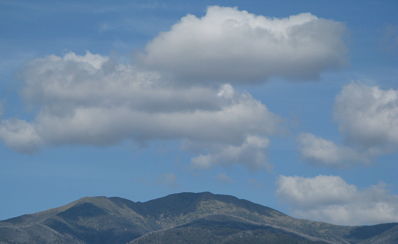
Feathertop & cloud, VIC

More than 21,000 different people have accessed wePlan Alpine and 163 people attended open houses in October 2009.

All of this input has assisted the Alpine planning team to develop a ‘work in progress’ draft plan.

This ‘work in progress’ draft plan will soon be loaded onto this website under Draft Management Plan. We’d love your input on this work in progress to help make it a final printable draft plan.”

Buffalo skyway proposal – community forums

The Alpine Shire Council  continues to push forward into its investigation about whether the skyway project should proceed (don’t mind the minor details like whether they could ever get approvals for a major infrastructure project inside a national park, or who is actually going to fund it).

There will be two information sessions in May:

  • an “Open House” Information & Feed Back Session on Wednesday May 19, 2010 from 4:00 PM – 6:00 PM. Alpine Visitor Information Centre, Bright. Public open house session. Everyone welcome to visit and comment.
  • and at Appin Park Rotary Club Wangaratta. Thursday May 20, 2010 6:00 PM – 8:00 PM. This will be an information and Feedback Session.
Looking over the Razorback towards Buffalo Plateau

For full details on the forums please check here.

Interestingly, the ‘media‘ section on the skyways website only contains positive reports on the skyway proposal.

Further (independent) opinion on the skyway proposal here.

Stirling Alpine Link

Mt Cobbler from Stirling summit

Mt Stirling, adjacent to Mt Buller, is a unique natural landscape with dramatic vistas of Victoria’s alpine area.

Popular with cross-country skiers, bushwalkers, campers and school groups, it is also home to many threatened plant and animal species.

The Victorian National Parks Association has launched a push for the Mt Stirling area to be managed as a national park by linking it to the Alpine National Park and handing its management to Parks Victoria.

It can then be managed as an integral part of Victoria’s largest national park, improving ecological management, recreation experiences and the overall integrity of our alpine region.

You can find a fact sheet and details on how to take action here.

Premier announces free entry to all Vic national parks

From the premier’s website:
“Entry to all of Victoria’s national parks and metropolitan parks will be made free of charge to encourage people to get active in the great outdoors, Premier John Brumby announced today.

Opening the international Healthy Parks Healthy People Congress at the Melbourne Convention and Exhibition Centre, Mr Brumby said the health benefits for people getting out and exploring the natural world far outweighed the benefits of collecting entry fees from parks.

“Victoria has one of the best park networks in the world and we want them to be as accessible as possible to all Victorians,” Mr Brumby said.

Buffalo Plateau

“From 1 July 2010 there will be no entry fee to any national park or metropolitan park in Victoria. Parks Victoria estimates that removing entry fees will increase visitor numbers by 25 per cent to 50 per cent at most sites.”

National parks that will be free are Wilsons Promontory, Mount Buffalo, Baw Baw, Mornington Peninsula, Yarra Ranges (Mount Donna Buang) and Point Nepean as well as Werribee Park, Coolart, National Rhododendron Gardens and William Ricketts Sanctuary metropolitan parks.

Surely this is a good thing… it means more people are likely to get out in the parks (and the premier has included a review to see if top up funds are needed to back fill loss of gate revenue). It should be especially useful in the case of Buffalo national park, which has been suffering because of loss or closure of key infrastructure in recent years.

Mr Brumby said encouraging people to get out and about in Victoria’s parks was good for community wellbeing and good for regional economies.

You can find the full release here.

‘Healthy Parks Healthy People’ Congress

Next week, Melbourne will host the inaugural International Healthy Parks Healthy People Congress 2010. This “ground breaking event explores the many ways nature and parks significantly contribute to our health and wellbeing”. It has a great line up of speakers, although sadly the $1,100 registration fee will exclude lots of folks who would otherwise attend.

You can find details on the program here.

on the Razorback, VIC

As a strange side note, Sir Gustav Nossal AC is the Congress Patron. Given he has been a vocal supporter of nuclear power – which necessitates the destruction of indigenous lands here in Australia and the dumping of waste on indigenous communities – who are struggling to protect their country – he does seem like a strange choice of patron.

Blog at WordPress.com.

Up ↑