Search

Mountain Journal

Environment, news, culture from the Australian Alps

Tag

national parks

Feral cattle cull in Snowy River National Park

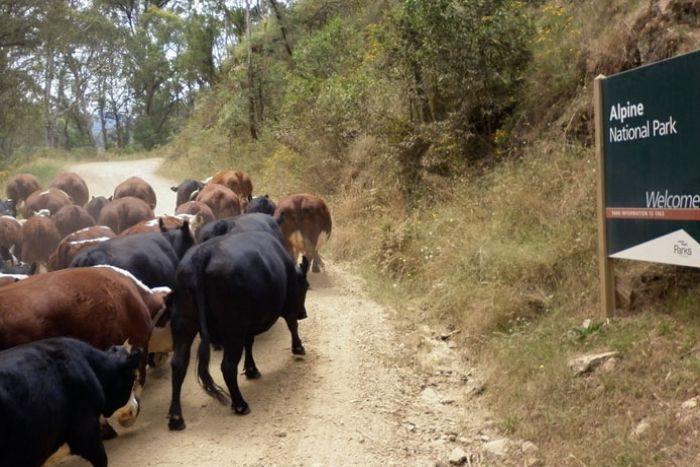
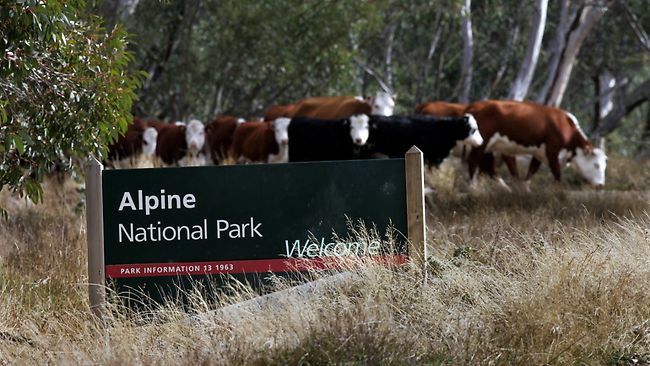
Having seen cattle within various sections of the Alpine National Park over the years I have wondered whether they are cattle that have not been collected when herds have been removed, or whether its been illegal grazing. The comments in this story from Kath Sullivan in The Weekly Times are interesting. A farmer says of cattle found within a national park “I can’t lay claim to them because they’re not earmarked, but I can claim an interest in them”.

SHOOTERS will be choppered into the Snowy River National Park, in East Gippsland, to destroy feral cattle.

Parks Victoria district manager Will McCutcheon said 10 cattle remained in the park.Parks Victoria had recent success with helicopters used to locate the cattle and drop skilled shooters into remote, rugged sites, where access has been an issue,” he said. “With another helicopter operation we hope to remove the last of the cattle over the next few weeks.”

Gordon Moon, a farmer at Black Mountain in East Gippsland, was “devastated” to learn of the cull. His family owned a cattle-grazing lease in the park before cattle grazing in national parks was banned. When asked if the cattle could be his, Mr Moon said: “I can’t lay claim to them because they’re not earmarked, but I can claim an interest in them.

I’d think it’d be costing squillions to cull them.”

Victorian National Parks Association spokesman Phil Ingamells said: “They (cattle) are not meant to be there.”

Wild dog attacks. Farmers ask for more trappers.

Wild dogs are a huge problem in farming areas around the mountains in north east Victoria. They also prey heavily on native fauna. The issue of dog control has risen again recently in Victoria because of claims that there are fewer people employed to control population numbers.

According to a report in The Weekly Times (29/4/15):

“The Victorian Government employs 18 dog trappers, 10 in Gippsland and eight across the North East.

The Victorian Farmers Federation says that five years ago there were 25 trappers for the same area.

But the community engagement officer for the Government’s wild dog program, Barry Davies, said there were now “five or six casual wild dog controllers, two contractors and 25 field services officers who are trained to various deg­rees, some capable of trapping dogs.”

The full article, by journalist Kath Sullivan can be found here. It highlights the impacts on farmers and animals as a result of dog attacks on stock.

There are, of course, a number of ways of dealing with the problem. Trapping and shooting is a traditional method. Is funding for dog-proof fencing an option in key farming areas around the high country national parks? Some farmers use Maremmas (is a breed of livestock guardian dog indigenous to central Italy), while others bait.

There is also some question about whether the government will allocate more resources to employ additional hunters in the state budget, due to be released in early May.


High country cattle grazing ban in national parks likely to succeed

In an update to our recent report on the Victorian government introducing legislation to ban cattle grazing in the Alpine and Red Gum national parks, it now seems likely the legislation will pass through the Upper House.

The ALP controls the Lower House but will require at least two additional Upper House votes to have the legislation approved. The Weekly Times is reporting that this is now looking likely:

Many Upper House MPs still expect the Government to succeed despite its minority position.

At least two of the five cross-benchers are expected to join the ALP and Greens and vote the Bill through after it clears the Lower House.

While all minority parties say they are still waiting to see the legislation’s wording, Sex Party MP Fiona Patten said she was likely to support the ban, as was Democratic Labour Party MP Rachel Carling-Jenkins.


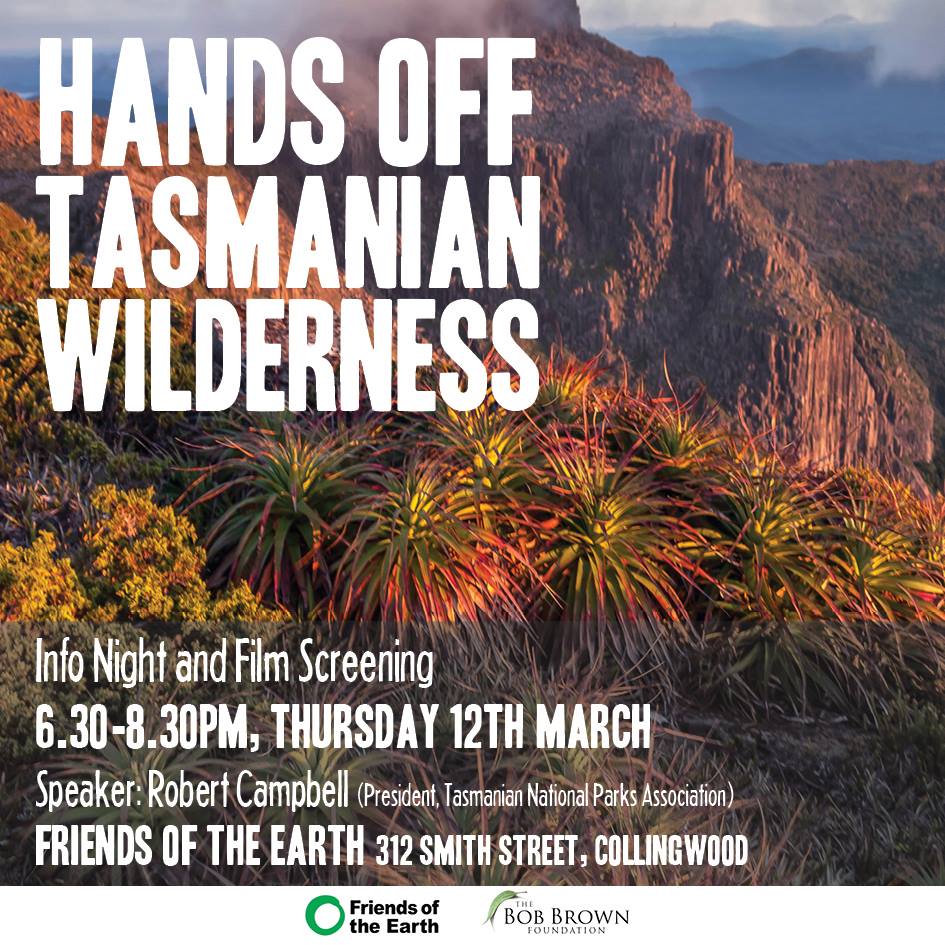
Hands off the Tasmanian World Heritage Area!

In January, The Australian newspaper reported that:

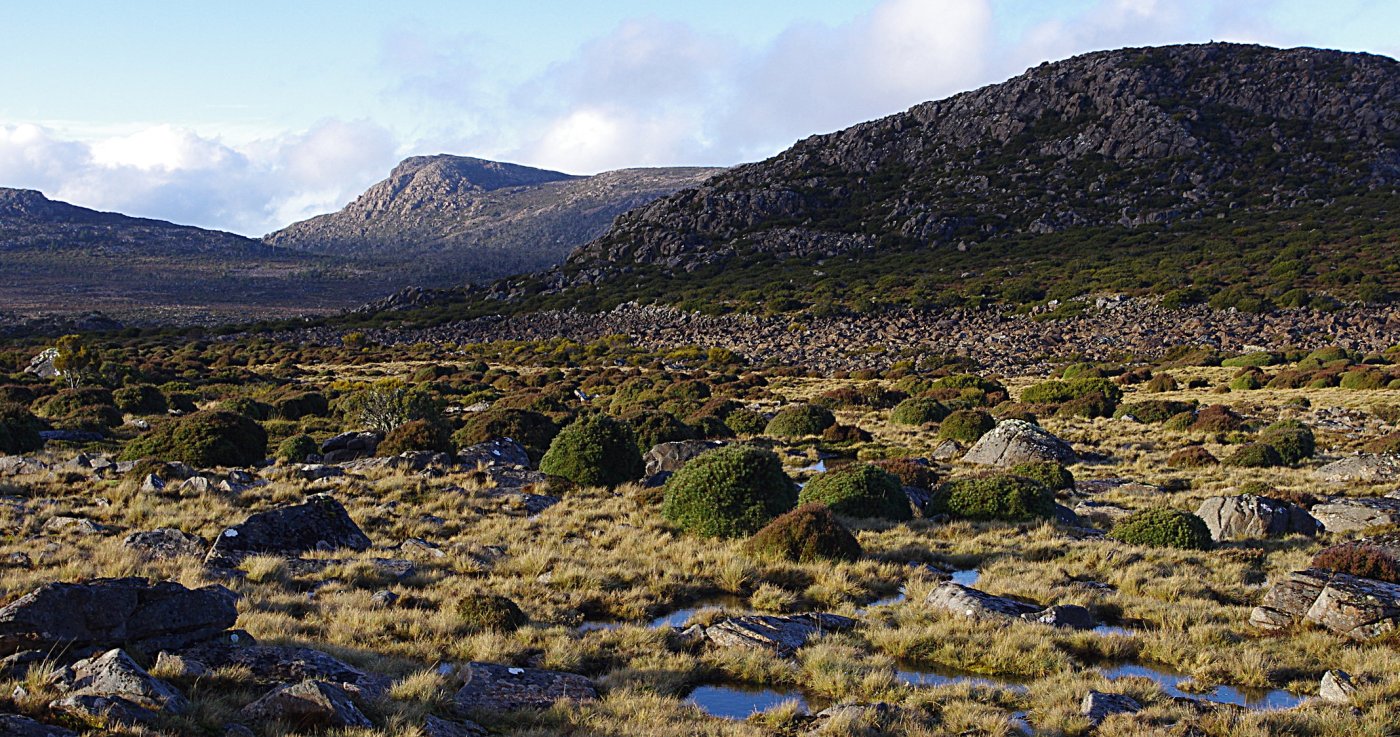
“TASMANIA’S  Liberal government is to take the “wilderness’’ out of the state’s iconic Wilderness World Heritage Area, rezoning it to allow tourism developments, more aircraft and ship access, and even selective logging.

The radical plans, which have provoked outrage from conservationists, are contained in a draft ­revised management plan for the Tasmanian Wilderness World Heritage Area.”

The natural and cultural values of this incredible landscape are under threat, but you can write a submission about the management plan.

Friends of the Earth in Melbourne is hosting an information night to let people know what is being planned and how to write a submission.

Please come along and find out what is really going on and how you can help Tassie campaigners to protect this global treasure!

Featuring speaker Robert Campbell (President of the Tasmanian National Parks Association), amazing photography, films, snacks and drinks.

Thursday March 12, at 6.30 pm.

At Friends of the Earth, 312 Smith street, Collingwood.

A Facebook page for the event is available here.


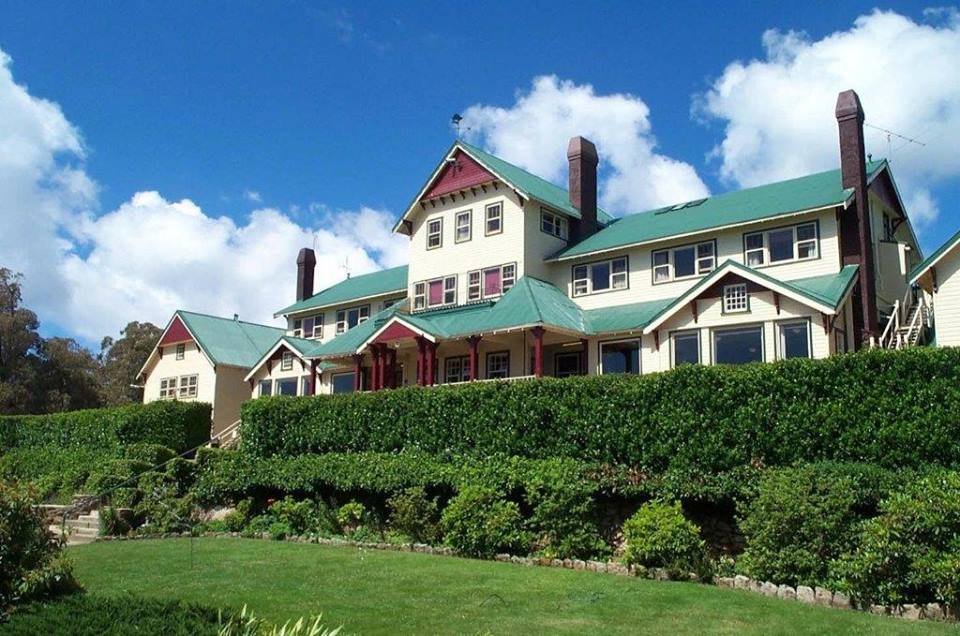
Tours of Mount Buffalo Chalet

The following comes from Parks Victoria:

It’s your last chance to tour the Mount Buffalo Chalet prior to the commencement of refurbishment works. Free one hour tours will be held on Saturday 21 February. Tours will run on the hour from 10am to 3pm and bookings are essential as tickets are limited. Book online here.

Accessibility: there are numerous steps up into and throughout the chalet as part of the tour.


Tasmania plans to open wilderness world heritage area to logging and tourism

In a worrying development, decades worth of environmental campaigning could be lost under plans unveiled by the Tasmanian government to open up the world heritage area to logging and tourism.

Under the rhetoric of supporting Indigenous people, the government has released the draft Tasmanian Wilderness World Heritage Area Management Plan Project, while opening up the prospect of major new developments withing the region.

The National Parks and Reserves Management Act 2002 requires that the draft plan be made publically available to allow for representations to be made.

Your chance to have a say ends on Sunday 22 March 2015.

Continue reading “Tasmania plans to open wilderness world heritage area to logging and tourism”

Victorian Government to scrap alpine cattle grazing trial

It’s heartening to see that the new Environment Minister, Lisa Neville, has moved so quickly on the Alpine grazing issue. The following comes from the ABC.

The Victorian Government says it will remove cattle from the Alpine National Park, despite continued lobbying from the Mountain Cattlemen’s Association.

Continue reading “Victorian Government to scrap alpine cattle grazing trial”

Great Forest National Park. It’s Time.

A playground for Melbourne

Decided this election?

More than 30 environment, conservation, recreation, scientific and citizen science groups representing tens of thousands of Victorians have called on all political parties and candidates in the lead-up to the November 2014 Victorian election to clearly commit to the creation of a new Great Forest National Park in the Central Highlands.

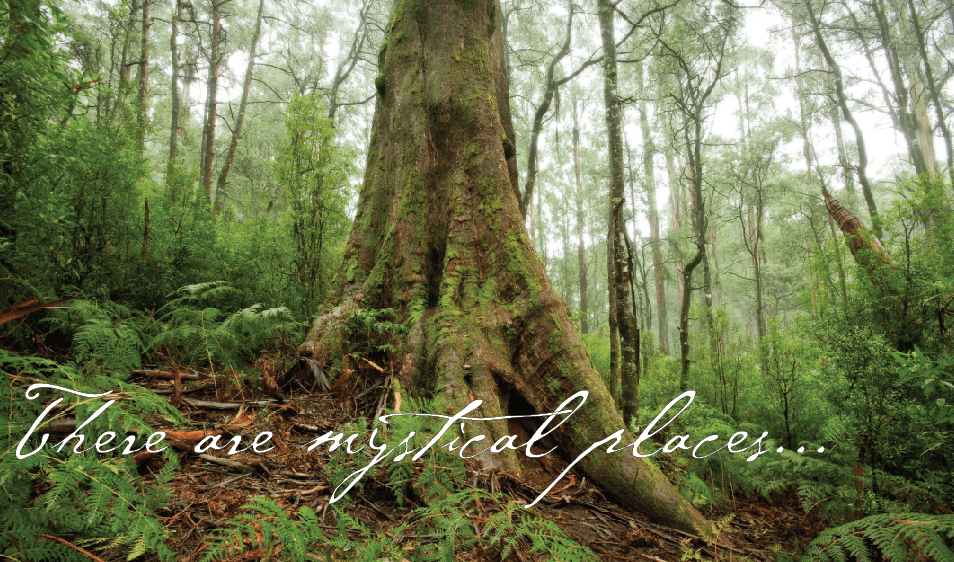
Just 60 kilometres east of Melbourne grow some of the tallest trees on Earth. Their high canopies are home to wildlife such as gliders, owls and the tiny Leadbeater’s Possum.

Continue reading “Great Forest National Park. It’s Time.”

Old foes team up to preserve Higgs Track

This story by Hilary Burden from The Guardian describes some work being done to restore the famous Higgs Track, which climbs through the Great Western Tiers, across Tasmania’s Central Plateau, towards the Walls of Jerusalem. The context is how people from across the land use divide are finding ways to work together.

The Mountain Huts Preservation Society is collaborating with the NGO Environment Tasmania.

The article says:

“Historically, Mountain Huts and green groups such as Environment Tasmania have been foes, ever since the nationwide environmental movement encouraged the removal of mountain huts. Twenty or 30 years ago, manmade sites of historic significance to local communities in Australia’s high country were deemed to clash with a vision of a totally pristine wilderness.

But times have moved on, the Higgs Track is now part of the World Heritage Area, and the former foes are working together to build a bridge” (in this case a literal one, a bridge over a stream).

Continue reading “Old foes team up to preserve Higgs Track”

Victorian Public Lands Survey

This survey, for Parks Victoria, is now at least 6 months old but is still open for comment. Depending on how many spots you want to nominate as being precious, the survey takes about 15 minutes.

The following comes from the PV website:

“Public lands in Victoria comprise national parks and reserves, state forests, marine parks, and other public lands. What do you value about these places? What changes would you like to see? We need your help!

In the first part of the survey, you will drag small icons onto a map of Victoria to identify places you value and your public land preferences. The second part is a short, simple questionnaire. We really value your input to help manage our public lands now, and to plan great public lands for the future!

The questionnaire will take you less than 5 minutes and the mapping activity takes most people around 10 – 15 minutes, depending on how many icons are mapped at each location and how many locations are mapped.”

http://www.landscapemap2.org/pvictoria/

Public gets first look at Alps plan

The following comes from the Victorian National Parks Association’s Phil Ingamells.

It’s been six years in preparation, but the Greater Alpine National Parks Draft Management Plan has at last been released for public comment.

Covering five national parks (Alpine, Baw Baw, Errinundra, Mount Buffalo and Snowy River), as well as the Avon Wilderness Park and six smaller parks and historic reserves, this single management plan deals with nearly one-third of Victoria’s park estate.

Not surprisingly, there is little detail in such a broadscale document – but there are some quite specific proposals, such as the current alpine grazing trial. Roofed ‘retreat style accommodation’ is flagged for Mount Buffalo National Park.

Unfortunately the integrity of the draft plan has been marred by the oddly configured Alpine Advisory Committee, required by law to advise on the plan. The committee was appointed without its full quota of environmental advisors, yet has a majority of mountain cattlemen members and supporters.

The 40 maps available online may be difficult to download, but hard copies can be bought from Parks Victoria for $10, phone 13 1963.

Alternatively, you can view the plan and maps at the VNPA office, just call ahead on 03 9347 5188.

We will outline our response to the plan within a few weeks to help anyone making a submission. Comments on the draft are due by Monday 25 August.

Check the VNPA website for additional information.

Victoria’s Great Forest National Park. It’s Time

The vision for a Great Forests National Park, proposed for the mountains east of Melbourne, is gaining momentum.

logoThe Great Forests National Park proposal is a vision for a multi-tiered parks system for bush users and bush lovers alike.

The tallest flowering trees on Earth grow north-east of Melbourne. In their high canopies dwell owls, gliders and Leadbeater’s Possum, Victoria’s endangered faunal emblem, that lives only in the ash forests of the Central Highlands.

These mountain ash forests have flourished along the Great Divide under rich rainfall patterns. They provide most of Melbourne’s drinking water. They have been shown to be among the most carbon-dense forests on Earth due to the relatively cool climate and rapid growth.
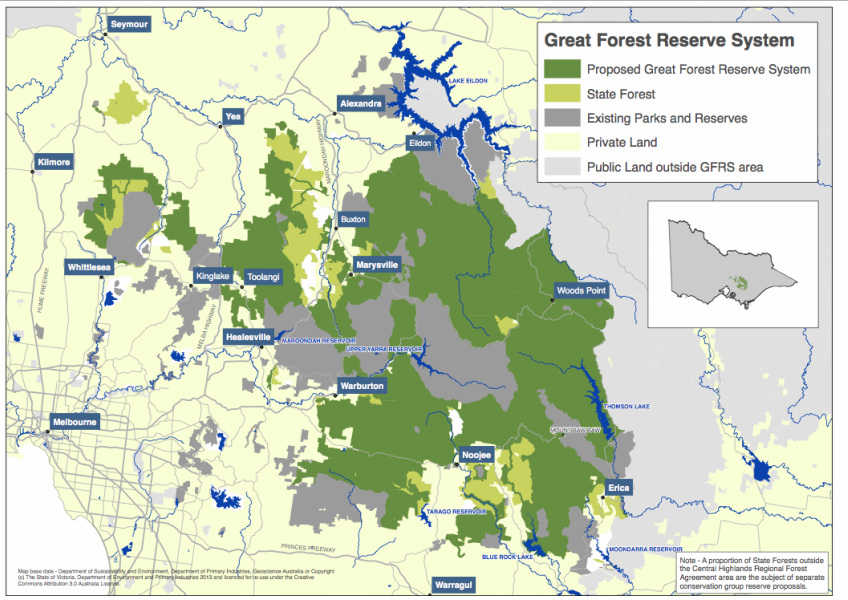
GFNP map
The Park, stretching from Kinglake through to the Baw Baws and north-east to Eildon, will protect the forests of the Central Highlands. It will be a world class reserve in Melbourne’s backyard.

It is time for this great vision to be turned into a National Park.

More information here.


Blog at WordPress.com.

Up ↑