Search

Mountain Journal

Environment, news, culture from the Australian Alps

Tag

national parks

Alpine grazing: still no news from government

source: MCAV
source: MCAV

Four days after The Australian newspaper announced that the Victorian government intends to ask the federal government to approve a new grazing trial within the Alpine national park, there is still no statement from the government about its intentions. The environment minister has had the time to issue a media release on the birth of a baby hippo at Werribee zoo, but apparently not to let the Victorian community know what is happening with this controversial proposal.

The grazing announcement has been a long time coming. In January 2013, The Weekly Times reported that the mountain cattlemen had toured Mr Smith to the Wonnangatta Station, specifically to talk about the re introduction of grazing.

Then last week, it was reported that the mountain cattlemen had again toured the Wonnangatta Valley with Mr Smith and also the Upper House MP Philip Davis.

Both the Age and the Australian have run pieces on the visit and subsequent announcement that the Victorian government is moving to gain federal approval to introduce cattle back into the Alpine national park.

The Weekly Times is reporting that a referral for the trial had been sent to the Federal Government on monday November 25.

Any attempt to re-introduce cattle gazing will be highly controversial. It seems strange that the Minister appears to be making announcements via the media, and not communicating directly with the people of Victoria about his intentions by making a detailed statement on the trial.

National Park logging canned – now to stop ‘ecological thinning’

The New South Wales Government has rejected the recommendations of an Upper House enquiry that called for logging in National Parks. However, their response leaves the door open for ‘scientific’ trials that could still see commercial logging crews sent back into sensitive protected areas.

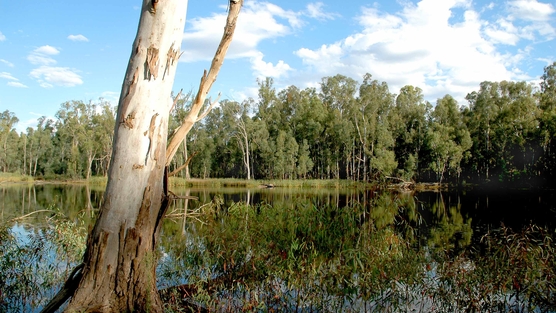
barmah treesFriends of the Earth welcomes the Government’s response to rule out a moratorium on new National Parks and to open Parks for commercial logging. Politicians of all persuasions can’t ignore the fact that Australians don’t want to see our National Parks trashed. If National Parks aren’t safe from logging, where is? This response is a small win for the millions of Australians who care about our unique ecosystems and want to see them properly protected.

However, the response still provides support for a controversial ‘ecological thinning’ trial in the Barmah-Millewa National Park; Australia’s largest Red Gum forest and an internationally significant Ramsar wetland. This trial mimics a commercial forestry operation and will have significant impacts on this environment of national significance. If the O’Farrell Government is serious about protecting our natural heritage, they should rule out all logging in National Parks, whether commercial or ‘scientific.’

Friends of the Earth worked alongside Traditional Owners, scientists and local communities to ensure that precious remaining River Red Gum forests in Victoria and NSW were protected in National Parks.

We now need to mobilise to safeguard this legacy. Please check out and sign our petition to the federal Government calling for them to reject the proposed thinning trial.

yet another attempt to get cows back into the Alpine Park

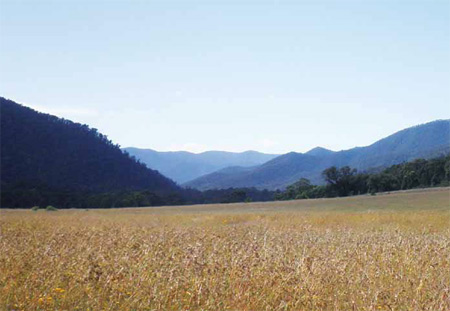
in the Wonnangatta, looking north

In a nicely orchestrated media piece, it has been announced via The Australian newspaper that the Victorian government will propose a three year cattle grazing trial in the Wonnangatta Valley, within the Alpine national park.

The paper reports that the government is supporting a three-year trial of cattle grazing in the Wonnangatta Valley, one of the main south flowing river systems in the central Alps.

“Victorian Environment Minister Ryan Smith will refer the issue to the Abbott government on Monday, backing a scientific study during the summer months of about 60 head of hereford and angus cattle”. The Victorian government has not yet issued a statement on the trials.

While previous attempts by the Coalition have been soundly attacked by scientists for the poor basis of the research framework, apparently this new trial will be “part of a scientific investigation of bushfire prevention options across 2200 hectares.”

Mountain cattleman Charlie Lovick is reported as saying he hopes this trial will re open access for grazing to a broader area.

The report says that the “preservation of Australian bush heritage will be crucial to the application” that will go to the federal environment minister, Greg Hunt, for approval.

The Wonnangatta was settled by Europeans in the 1860’s and incorporated into the national park in 1988. It is a lowland area compared with the previous attempt by the Victorian government to re-introduce grazing. One has to assume that should this trial be a success at reducing fuel load and weeds, then there would be an attempt to introduce it at higher elevations, where the science clearly shows that ‘grazing does not reduce blazing’.

The Victorian environment minister Ryan Smith (who is a member of the far right Institute of Public Affairs, well known for its anti –environment agenda) said “it’s not an ideological position, it’s a land-management issue.”

Assuming Greg Hunt approves the ‘scientific survey’, grazing could start as early as January 2014.

A spokesman for Mr Hunt said yesterday the government would assess the referral when it was received in accordance with Environment Protection and Biodiversity Conservation Act.

take action

If the prospect of grazing in the park troubles you, please contact the Minister for the Environment, Greg Hunt, making it clear you would not support such a move.

E: greg.hunt.mp@aph.gov.au

Website: http://www.greghunt.com.au

Twitter: https://twitter.com/greghuntmp

Possible tweet:

Alpine grazing is about politics, not good policy. @GregHuntMP – please: No cows in the Alpine Park.

Facebook: https://www.facebook.com/greg.hunt.mp


For background on the grazing issue, please see here.

https://themountainjournal.wordpress.com/environment/alpine-grazing/

new fees for camping in national parks

IMGP4039The Victorian government has announced that it is intending to introduce charges for overnight hiking and camping in more than 100 of our state and national parks.

In addition to increasing existing fees at car camping spots that have basic services, there is a proposal to introduce “overnight walking” fees.

You only have til COB this Friday, November 22 to make a submission.

Background information and details on how to make a submission is available here.

Check here for a statement by Glenn Tempest of Open Spaces Publications

Some quotes from Glenn’s submission:

There are so many issues regarding these proposals that it’s difficult to know where to start. Firstly, however, I have to say that I’m astounded at the size of the proposed increase in camping fees. A fee of almost $50 for an individual to stay one night at a campground designated as having a ‘high’ level of facility and service is simply outrageous.

Many park users are travelers who don’t plan ahead but simply ‘roll-up’ to various campgrounds. So who thought it was a good idea to confine those park users to an online booking system upon arrival at the campground?

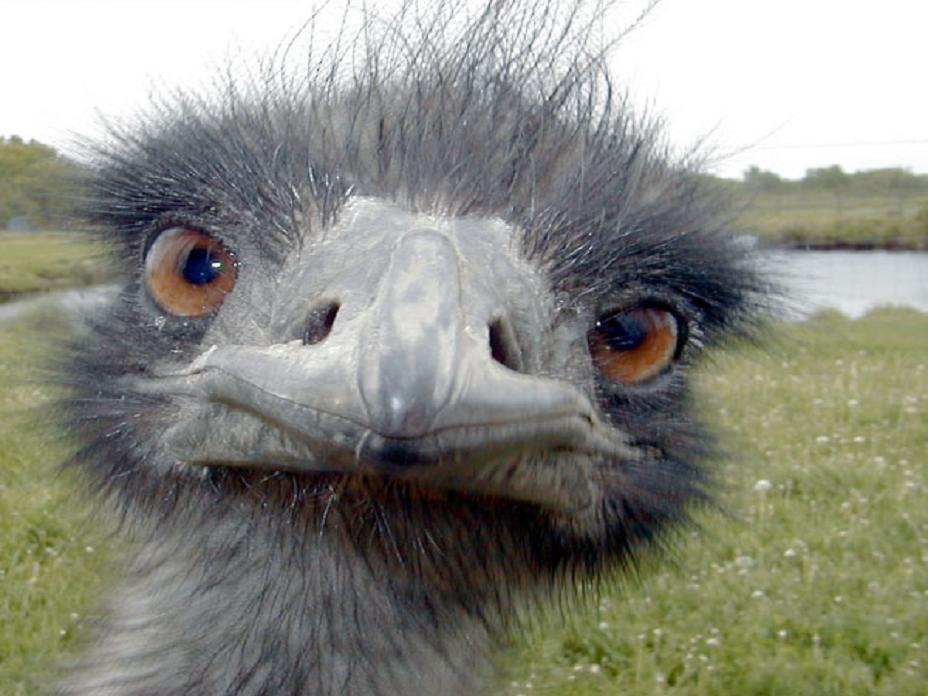
Got a problem with weeds? Blame the emus

emuRadio National today reported on new research from Griffith University about the potential of horses to spread weeds in national parks. The Griffith University findings were published in the journal Ecological Management and Restoration.

Researchers found that weeds germinate from dung and are spread by activities like riding.

Researchers looked at the number and type of weeds that are spread through horse manure and found that 16 of the plants were listed noxious weeds in Australia.

Associate Professor Catherine Pickering says governments around Australia should take heed of her team’s findings before opening national parks to horse riding.

She said that researchers had examined 15 studies from around the world and found many weeds germinate in horse manure, enabling their spread.

They also found that horses cause disturbance by trampling the ground, further helping weeds to thrive.

In a ‘nothing to see here, move along’ response, the former president of the Mountain Cattlemen’s Association of Victoria, Mark Coleman, said horses are not solely to blame, as many other native and introduced species also spread weeds. In response, Ms Pickering pointed out that native animals are not generally grazing in pasture – which is where the weeds are being introduced from.

He says riding horses in national parks can actually help control weeds (yeah, ok, would you like to elaborate on that one Mark?)

And in another strange twist in the ‘blame someone else’ strategy, Mr Coleman said ‘other native and introduced species also spread weeds’.

“With the introduction of blackberry into Australia, which is a horrific weed, you couldn’t get a better spread of blackberry than the emu, followed probably by the deer.”

“We were still the eyes and ears of these areas and once we were removed you remove man out of management” he said. Does that mean that all park rangers and other land managers are women? Or are they some strange form of alien? Or perhaps there is just no land management in our national parks …. that may come as some surprise to many of you

alpine grazing and the inconvenient truth of science

Images of mountain grazing tend to be positive, often evoking the frontier ethos

From my earliest days of walking in the Alps, cattle were a prominent feature of many places I visited. I would often meet cattlemen (almost invariably men), who would assure me the cattle were a benign influence on the environment.

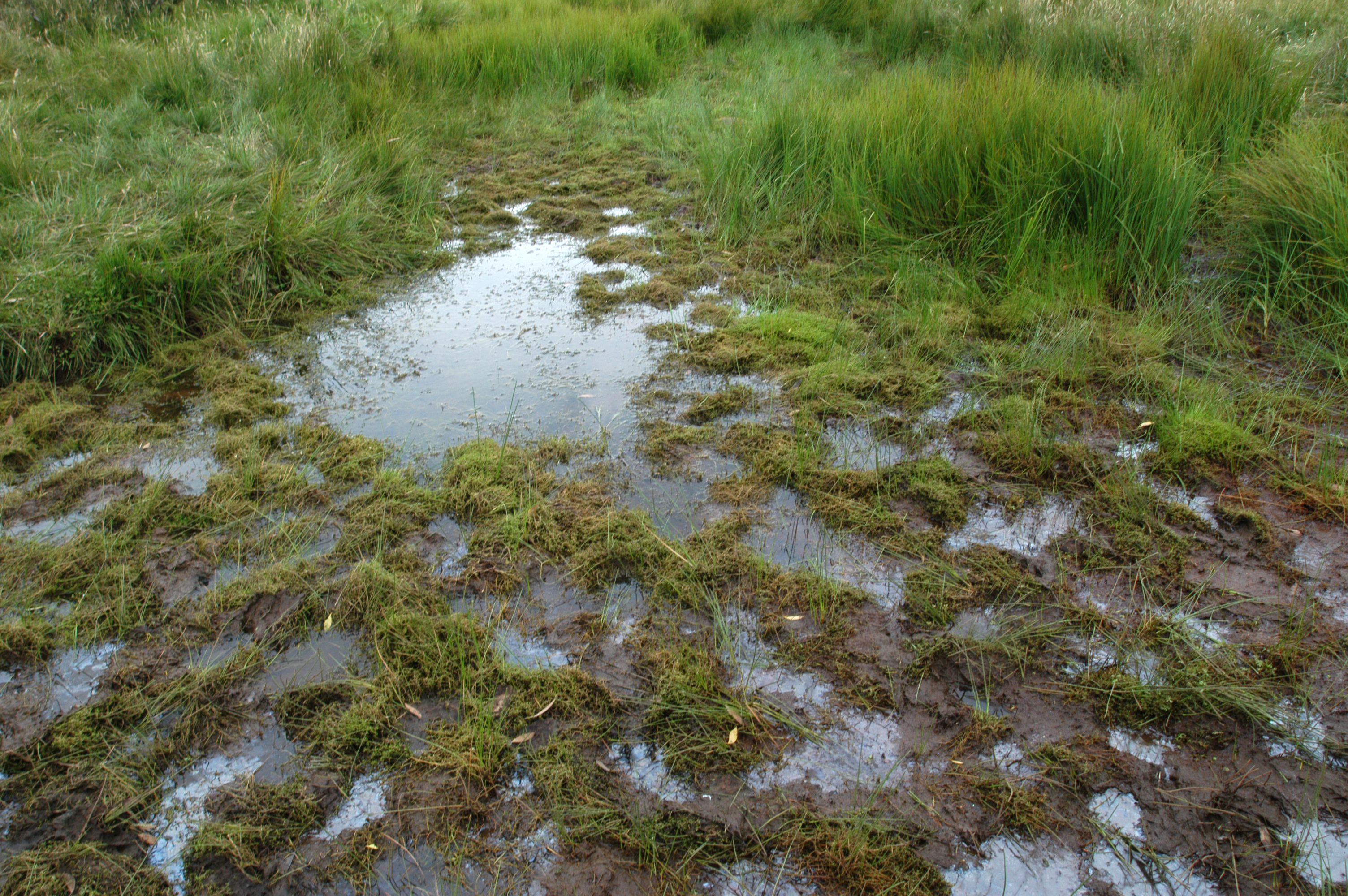
But what I saw was trampled wetlands and stream beds. I saw cattle standing in the headwaters of crystal clear streams, crapping and stomping the stream banks. I saw them spreading weeds. And I saw them selectively eating the succulent low lying vegetation in meadows rather than the flammable shrubs on the edges of those systems. More than once I was chased by a herd, and a scarey and heart thumping run and scramble up a tree got me out of a few situations. At Mt Stirling I saw that the ‘exclusion zone’ around the alpine summit was somewhat aspirational – the fence was normally damaged and there were almost always cows wandering around up on the summit. I drank from streams that had been polluted by huge animals with damaging hard hooves. At Macalister Springs we were warned of intestinal worms that had been introduced by cattle years before.

But my experience of alpine grazing was more like this.

At 16, I wanted a sticker that said ‘cattle grazing increases blazing’.

Cattle were finally removed from the Alpine National Park in 2005 by the Bracks Government after a thorough investigation by the Alpine Grazing Parliamentary Taskforce. Cattle continued to graze in state forest next to the park.

In recent years I have witnessed the recovery of alpine systems as cattle caused erosion slowly healed.

That should have been the end of the matter. But we all know that it was plain old politics that saw the newly elected Coalition government try to fulfil a promise to the mountain cattlemen for their support in ousting East Gippsland independent MP Craig Ingram at the 2010 state election. They allowed the cattlemen to return cattle to the Alpine national park in a sneaky operation under the guise of ‘scientific grazing’. Thankfully that was thwarted by the federal government.

As has been noted on this site, the election of the Coalition to federal Coalition to power has changed the dynamic, and the president of the Mountain Cattleman’s Association, Charlie Lovick, says alpine grazing is ‘back on the agenda’.

He says there is no other way to effectively control fire fuel loads above an elevation of 1,200 metres.

“How else do you reduce the fuel load because grass and scrub grows,” he said.

“We’re saying that cattle are a perfect balance to manage the higher stuff, to chew it down and keep it nice and green and you can more confidently burn the other areas.”

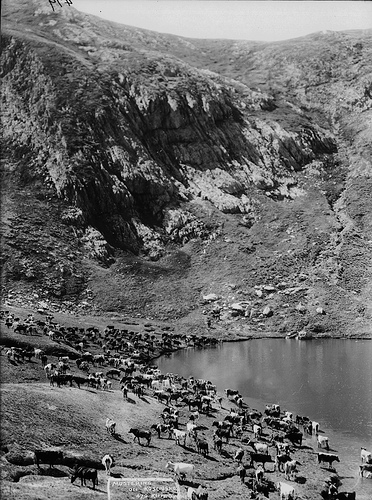
Back to the future? Cattle at Blue Lake in about 1900, photographed by Charles Kerry and part of the Tyrell Collection held by the Powerhouse Museum http://wikiski.com/wiki/index.php/Category:Australian_High_Country_History
Back to the future? Cattle at Blue Lake in about 1900, photographed by Charles Kerry and part of the Tyrell Collection held by the Powerhouse Museum
http://wikiski.com/wiki/index.php/Category:Australian_High_Country_History

Mr Lovick red tape is the only thing stopping the federal and state governments from moving ahead with the plan.

If you’ve never been to the high country, it might seem sensible to argue that there will be less fire where cattle graze.  But the idea doesn’t actually stack up when you look at the science.

The most significant research on alpine grazing and fire was carried out shortly after the 2003 fires swept across Victoria’s Alpine National Park, and was published in a peer-reviewed journal.

The conclusion was that grazing is not scientifically justified as a tool for fire abatement.

Many earlier studies have shown the damage cattle cause in the Alps.

Alpine grazing was not recommended by the Bushfires Royal Commission.

Victoria’s 2009 Bushfires Royal Commission was an inquiry of unparalleled thoroughness. It had no limits to the subjects it could address, was granted a $40 million budget, and sat for 155 days between May 2009 and May 2010.

The Commission made ten recommendations for research into fire related matters. The effectiveness of alpine grazing on reducing fire was not one of them.

  • The Commission recommended, as a high priority, extensive research into the monitoring of the effectiveness of fuel reduction burning programs across Victoria, and monitoring of the impacts of bushfires and fuel reduction burning on biodiversity.
  • The Department of Sustainability and Environment’s own Code of Fire practice says that ‘(domestic stock) grazing is appropriate only for significantly modified habitats’, such as roadsides.
  • There is compelling peer-reviewed evidence showing that alpine cattle grazing has no significant effect on mitigating bushfires.

So, as Mr Abbott works his way through his top order list, like ‘stopping the boats’ and winding back the price on carbon, cutting ‘green tape’ and so on, will he eventually get to the wish list of the mountain cattlemen?

It seems to me that alpine grazing would be entirely consistent with the world view of Tony Abbott and the mountain cattlemen: if you don’t like what the science is telling you, ignore it and do what you wanted to do in the first case.

If you’re not a huge fan of this world view, you may want to send a message to the federal environment minister, Greg Hunt.

Private development push threatens Victoria’s national parks

The following comes from the Victorian National Parks Association.

IMGP5971The Victorian Government’s decision to open up the state’s national parks to development and private investment sets a dangerous new direction for our conservation reserves.

The policy essentially puts a ‘for sale’ sign on two thirds of Victoria’s national parks estate.

National parks and other conservation reserves protect our already depleted natural areas. They do not exist as money-making ventures for private hoteliers and or proponents of large-scale tourist accommodation.

National parks are the jewel in the crown of Victoria’s tourism industry, but we need to be careful that we don’t kill the goose that lays the golden egg.

Exposing our parks to tourism development could lead to irreversible damage to some of our most precious natural areas and undermine the integrity of our magnificent system of parks and reserves.

The primary role of national parks is the conservation of nature on behalf of all Victorians. Our parks were not created to end up as building sites for hotels and large-scale infrastructure that can only be used by a privileged few who can afford it.

Now, a group of 21 eminent Victorians including a former state governor, Nobel prize winner and leading academics have written an open letter to Victorian Premier Denis Napthine, describing the privatisation of our national parks as a betrayal of public trust.

What can you do

Sign the petition: By signing the petition you will be joining the fight to protect Victoria’s national parks. Your name will be listed among thousands of others who stand together to win the campaign.

new fees for staying in National Parks

snowy mountains 052The Victorian government has announced that it is intending to introduce charges for overnight hiking and camping in more than 100 of our state and national parks.

In addition to increasing existing fees at car camping spots that have basic services, there is a proposal to introduce “overnight walking” fees for Alpine NP, Baw Baw NP, Grampians NP, and the Great Ocean Walk. This would mean for instance you will need a permit for hiking and camping within the Alpine National Park. For example, it will cost $30 to walk from Hotham to Falls, plus a $10 admin fee.

The Government has prepared a regulatory impact statement (RIS) to assess the impact of introducing a user pays approach to camping fees for all parks and reserves managed by Parks Victoria. It says ‘this is part of the Government’s efforts to make sure that Victorians continue to have access to these beautiful places and that the costs of providing safe, visitor-friendly facilities and services are sustainable and affordable’ and ‘these changes will provide longer-term financial sustainability for these special places’.

The new approach is expected to be introduced in Victoria’s parks and reserves from 1 March 2014.

People are invited to provide feedback on the RIS, which is available here.

Written submissions should be forwarded by 5:00pm Friday 22 November 2013 via either of the following:

Post

Camping and Accommodation Fees
Land Management Policy Division
Department of Environment and Primary Industries
Level 3, 8 Nicholson Street
EAST MELBOURNE VIC 3002

Online

Email: camping.RIS@depi.vic.gov.au

What do you think?

Please feel free to leave a comment below or on the Mountain Journal facebook page.

Some thoughts on the proposed changes

In considering how much to increase camping fees, the Department of Environment and Primary industry created a weighting system, based on a mix of considerations: efficency, equity, and effectiveness. After considering the implications of these 3 categories on possible fee increases, they suggested 3 options:

·         Full cost recovery

·         A system equivalent to rates charged by private operators outside parks

·         One based on improved revenue yield (which is the preferred option, called option 3)

Option 3 is expected to generate $15.3 million per year (camping fees at present generate around $6.5m, and the system is estimated to cost $17.8m to run on an annual basis). Implementing option 3 would mean there is a shortfall of $2.5m per year –  at present the annual shortfall is $11.3m).

The supporting documents make it clear that the funds generated from camping fees will go into managing the parks rather than consolidated revenue, so in that sense I would support the proposal.

However, if the government will now receive an estimated additional $8.8m a year in camping fees, a key question is whether they will commit to using the money they have now saved in other Parks related activity, or will it just get subsumed into the state budget?

It rates camping sites according to the type of facilities offered and has a sliding scale of fees proposed. For car camping style sites, these are mostly based on sites of 6 or 8 people, making them very expensive if travelling as a couple or family. I would argue they should have a basic per person fee for smaller groups

It proposes the creation of an annual camping pass for hikers and bike riders. This would mean that remote and backcountry camping will require a fee for the first time.

Some suggestions on what you might like to say in your feedback

·         The money saved from existing state budget by new camping fees should be re-invested into Park management, not subsumed into the state budget. Eg interpretive services, weed management, restoration activity, management of threatened species, etc

·         The system should consider a concession for card holders (students, unemployed, pensioners, etc)

·         The per person fee for remote camping (called Overnight hiker permits) is quite high. Overnight hiker permits in places like the Alpine National Park will be $10 per person per night, with a $10 booking fee per booking. It will be higher for Mt Buffalo and Wilsons Prom ($12.50 per person) and for the ‘Hotham to Falls Creek Crossing’ ($30 per site- with per person option not available). This could become very costly for people, especially given this is generally decentralised and non designated camping with low impact. A lower rate should be considered for camping in remote, unserviced sites.

·         There is no per person option for high quality sites, making camping very expensive for single people, couples and small families. A per person option should be introduced.

·         There should be some assessment of whether these changes will impact on the economy of regional centres and towns in areas around the key national parks

Parks where it is proposed that fees for camping would change from 1 March 2014:

  • Wilsons Promontory National Park
  • Cape Conan Coastal Park
  • Mount Buffalo National Park
  • Grampians National Park
  • Great Otway National Park (Western)
  • Gippsland Lakes Coastal Park
  • Buchan Caves Reserve
  • Croajingolong National Park, Peachtree Reserve
  • Lower Glenelg National Park
  • Mt Eccles
  • Discovery Bay
  • Lake Eldon National Park
  • Mount Arapiles-Tooan State Parks
  • Cathedral Range State Park
  • Hattah Kulkyne National Park
  • Wyperfeld National Park
  • Upper Yarra Reservoir
  • Little Desert National Park
  • The Lakes National Park
  • Plenty Gorge Parklands
  • Ewing Morass W.R/Orbost
  • Yarra Valley Parklands
  • Kinglake National Park
  • Brisbane Ranges National Park

Parks where it is proposed that fees for roofed accommodation would change from 1 March 2014:

  • Buchan Caves Reserve
  • Cape Conran Coastal Park
  • Gabo Island Reserve
  • Murray Sunset National Park
  • Plenty Gorge Parklands Nioka Bush Camp
  • Wilsons Promontory National Park

Parks where it is proposed that fees for camping would be introduced from 1 March 2014:

  • Alpine National Park
  • Baw Baw National Park
  • Bunyip State Park
  • Broken Boosey State Park
  • Cape Liptrap Coastal Park
  • Cobboboonee National Park
  • French Island National Park
  • Lerderderg State Park
  • Mornington Peninsula National Park
  • Mount Samaria State Park
  • Mt Buangor State Park

The supporting documentation says “it is Victorian Government policy to specifically consider the impact of proposed amendments to legislative proposals on small business in RISs. However, in this case, the proposed Determination primarily imposes costs on individual visitors rather than on businesses. The businesses likely to be affected by the proposed fees are private providers of camping grounds and some licence tour operators who utilise camping and accommodation in parks”.

This seems to miss the point that there may be economic impacts on business operators outside the parks who may be adversely impacted by any change in people travelling through their region/ town on their way to national parks.
 

Australia’s wilderness ‘risks being loved to death’

The following is a media release from National Environmental Research Program’s (NERP) Environmental Decisions Hub and The University of Melbourne, October 14, 2013.

Mt Field national park, TAS

With 28 million visitors camping, tramping, biking, 4W driving, riding and picnicking in them every year, Australia’s iconic nature areas are at risk of being loved to death.

The love affair of urban Australians and foreign visitors with our spectacular wilderness is challenging conservation managers with a new set of problems and tricky decisions, says Dr Kelly Hunt de Bie of The National Environmental Research Program’s (NERP) Environmental Decisions Hub and The University of Melbourne.

“The trend towards nature tourism is increasing year by year. There are more people, doing more travel and an urban culture that is keen to re-establish its links with nature,” says Dr Hunt de Bie. “This all adds up to growing visitor pressure on our wild places, both managed and unmanaged, and the inevitable degradation of some of them.”

“National parks are established with the aim of conserving environmental assets while also providing quality, sustainable recreational experiences. But what if the recreational experiences result in the damaging of environmental assets? Activities of visitors can have significant negative impacts on the natural values of parks, both at the site and landscape scale,” she says.

Typically these include soil compaction and erosion, tree and vegetation damage, waste disposal issues and increasing visitor pressure in areas containing rare and endangered species, or where efforts are being made to re-establish lost species. Visitor safety in the bush is also a factor.

As a result, Dr Hunt de Bie and her colleagues are working on novel ways to help park and wildlife managers navigate the tricky path between meeting the expectations of nature tourists, and keeping the natural wilderness intact for future generations. The work is co-funded through Parks Victoria.

Using Victoria’s famous Grampians National Park and the inter tidal zone walking trails of Port Phillip Heads Marine National Park as case studies, the researchers are investigating ways to help park managers to ease the pressure on wild places of high conservation value – without diminishing the experience that visitors gain from them.

“Managers of the environment are routinely faced with making complex decisions with little information and high levels of uncertainty. It’s a tough ask, but that’s their job. When decisions have to be made regardless of these constraints, structured decision making (often simply referred to as SDM) is a useful tool for guiding managers through the decision process,” she says.

The team is testing a six-step decision process that involves defining the conservation goals and performance measures, developing alternatives and predicting the consequences of each, making a decision – and keeping a careful eye on its results.

“When it comes to making a decision about an area that is getting over-visited, there are basically several alternatives – do nothing, relocate visitors to another area so it can recover or limit visitation in time or space. You can also build permanent features that reduce its vulnerability.

“We are now working on what each of these does for the sustainability of the site in question – and also speaking to visitors to see what they are willing to accept.”

At Port Phillip Heads, for example, the famous visitor walk round the heads at low tide crosses areas covered with the brown seaweed Hormosira banksii, which is a haven for wildlife. “Parks Victoria has identified that a key threat to intertidal reef communities is trampling by humans – which may increase in future,” says Dr Hunt de Bie’s colleague, PhD researcher Prue Addison.

Options range from using rangers and signage to educate visitors, to diverting the route of the walk to less sensitive areas, to opening and closing sections, to building boardwalks over key reef areas. Using the SDM approach, the researchers enabled park managers to score the various options and so choose the most appropriate at the time.

“It is clear that managing our national parks and wildlife reserves is a never-ending task – and that it also includes managing the pressures imposed by visitor numbers which are growing at a steady 3 per cent a year,” Dr Hunt de Bie says.

“Nature tourism brings more than $20 million in from overseas each year, so it is clearly a vital part of the Australian experience, which we don’t want to diminish in any way. At the same time we need to be sure the experience itself does not deteriorate through over-use. These decision making systems can help to achieve that,” she says.

Details of the research appear in the latest issue of the journal Decision Point: http://www.decision-point.com.au/

The Environmental Decisions Hub is funded by the Australian Government’s National Environmental Research Program (NERP). The Hub’s research aims to assist Australian governments in their environmental management and decision making.

Mountain Cattlemens disendorsement a good thing for MP?

Image: National Trust

The Australian Electoral Commission has just declared the outcome for the Federal Seat of McEwen, in central eastern Victoria.

During the election campaign, the Mountain Cattlemen’s Association came out against the sitting Member, Rob Mitchell, because he opposed cattle grazing in the Alps.

In response, Mr Mitchell said:

“The Mountain Cattlemens Association of Victoria is a small group of people who have historically enjoyed something that few Australians have – free access to public assets to help build their wealth.”

“While we respect and admire their history and their traditions, it’s no longer possible to allow such a small group – mostly wealthy beef producers – to continue grazing cattle in areas that belong to the public, current and future generations.”

Mr Mitchell said there were many “intelligent, rational” reasons to keep cattle out of sensitive alpine ecosystems and noted NSW had decided to stop mountain cattle grazing in the late 1960s.

The Victorian Coalition is in thrall to the mountain cattlemen (as shown recently by them creating an advisory group on the Alpine Park stacked with grazing and pro-grazing interests). The state government was widely criticised for putting its political allegiance with the cattlemen ahead of good policy development in crafting its ‘fuel reduction’ grazing program, which was subsequently stopped after intervention by the federal government . As was reported in The Age, the government pushed ahead with its controversial grazing trial despite being told by Parks Victoria that no “scientific, social or economic evidence existed to support it”.

It would be worth the state government taking note of the fact that in spite of a nation wide swing against the ALP in the election, pro-grazing views within the electorate were not able to affect Mr Mitchell.


In an interesting side note, Victorian Liberal MP Donna Petrovich had resigned from state Parliament to stand against Rob Mitchell in the September election. She holds a regressive position on a range of climate related issues, including supporting continued use of coal and opposing wind energy.

On wind

In Hansard, Ms Petrovich raises various issues about what she sees as the ‘problems’ with wind energy: issues of reliability of wind, health risks, visual impacts.

Ms Petrovich is concerned that the previous government did not consult with the community over wind farm policy (yet she consistently refused to say who the Coalition consulted with in framing their policy).

She says that the No Go zones that block wind energy from much of the state were ‘carefully’ selected where communities ‘on the whole have told us that they are not appreciative of wind farms’. In the same speech she only mentioned anti-wind groups as being the groups she had worked with in forming her opinion rather than the broader community.

She endorses the Coalition’s anti wind policy VC82: ‘The position the government has come to is one that I am proud of.’ (Hansard, 12/10/11).

On coal she says:

The Coalition looks towards the effectiveness and abundance of brown coal as a means to provide a reliable source of energy for Victorians”. (Hansard October 11, 2011).


Is alpine grazing back on the agenda?

Shortly after the election of the Coalition to power, the Mountain Cattleman’s Association of Victoria (September 17, 2013) issued a call for the new Federal government to overturn the current ban on grazing in the Alpine Park in Victoria.

Cattle-dont-belong-in-national-parks-their-National-ParksIn response, a spokesperson for Gippsland MHR Darren Chester said the federal government would “look at the issue should the state government put it forward”.

“Darren is still fully supportive (of cattle grazing) and we would be happy to take it to the party room if and when it happens.”

Such an action would be consistent with Mr Abbott’s intention to get rid of ‘green tape’ (ie, environmental protections), thereby removing the federal government from involvement in most key environmental decision making processes. It was only intervention by the previous Minister for the Environment, Tony Burke, that saw the removal of the cattle after they were introduced by the Victorian government.

If this troubles you, please contact the new Minister for the Environment, Greg Hunt, making it clear you would not support such a move.

E: greg.hunt.mp@aph.gov.au

Website: www.greghunt.com.au

Twitter: https://twitter.com/greghuntmp

Possible tweet:

Congratulations to new Enviro Minister @GregHuntMP Darren Chester says Gov will look at ending grazing ban. No cattle in the Alpine Park.

Facebook: https://www.facebook.com/greg.hunt.mp

a proposal for the ‘Great Forest’ national park

Victoria’s Great Forest Experience – Melbourne’s New Playground

Baw Baw plateau
Baw Baw plateau

Just 60 kilometre’s East of Melbourne there grows some of the tallest tree’s on earth. In their high canopy a plethora of gliders, owls and the tiny Leadbeater’s Possum dwells. These forests have flourished along the great divide under rich rainfall patterns and provide most of Melbourne’s drinking water.  The forests been scientifically shown to be the most carbon rich forests on earth due to their cooler climate and epic growth heights.

The new Great Forest National Park is a proposal to create a two tiered park system for bush users and bush lovers alike that protects and maintains this important ecosystem function. The park stretches from the Kinglake National Park right through to the Baw Baw’s and to the North East up to Eildon. The park will host a range of activities such as bike riding, bushwalking, bird walking, 4wd driving, camping, zip line tours and more.

This proposal comes from Healesville Environment Watch, My Environment and Friends of Leadbeatters Possum.

Further details here.

Blog at WordPress.com.

Up ↑