Search

Mountain Journal

Environment, news, culture from the Australian Alps

Tag

snow gums

The Bayindeen fire and Snow Gum forests at Mt Cole

Snow gums (generally E. pauciflora ssp. Pauciflora) are the iconic tree of the Australian high country. While they are best known for their dominance of higher elevation areas in north eastern Victoria and the Snowy Mountains of southern NSW, it grows in woodland along the ranges and tablelands, in cold sites above 700 metres, in a long stretch from the far south-east of Queensland, through New South Wales, the Australian Capital Territory, and Victoria, to near Mount Gambier in South Australia and Tasmania.

Snow gums also exist as isolated pockets well away from the higher mountains. For instance there are 53 known remnant Snow Gum sites within a 40 kilometre radius of Ballarat, Victoria. A  large proportion of remnant vegetation in the area occurs as small patches or isolated paddock trees, often on private land.

However there are also some important Snow Gum forests on public land in central and western Victoria. A well known example is on the upper slopes around Mt Macedon. Although these forests were impacted by the 1983 Ash Wednesday fires, the Mount Macedon Snow Gum population have been assessed as being in relatively good health (despite a recent proposal to clear some sections of the forest around the Memorial Cross at Mt Macedon)..

There is also a really important community of Snow Gums growing across the higher hills of the Mt Cole state forest.

Continue reading “The Bayindeen fire and Snow Gum forests at Mt Cole”

The world’s most charismatic tree (*)

If you visit this website, you will probably have noticed that I have a bit of an obsession with Snow Gums.

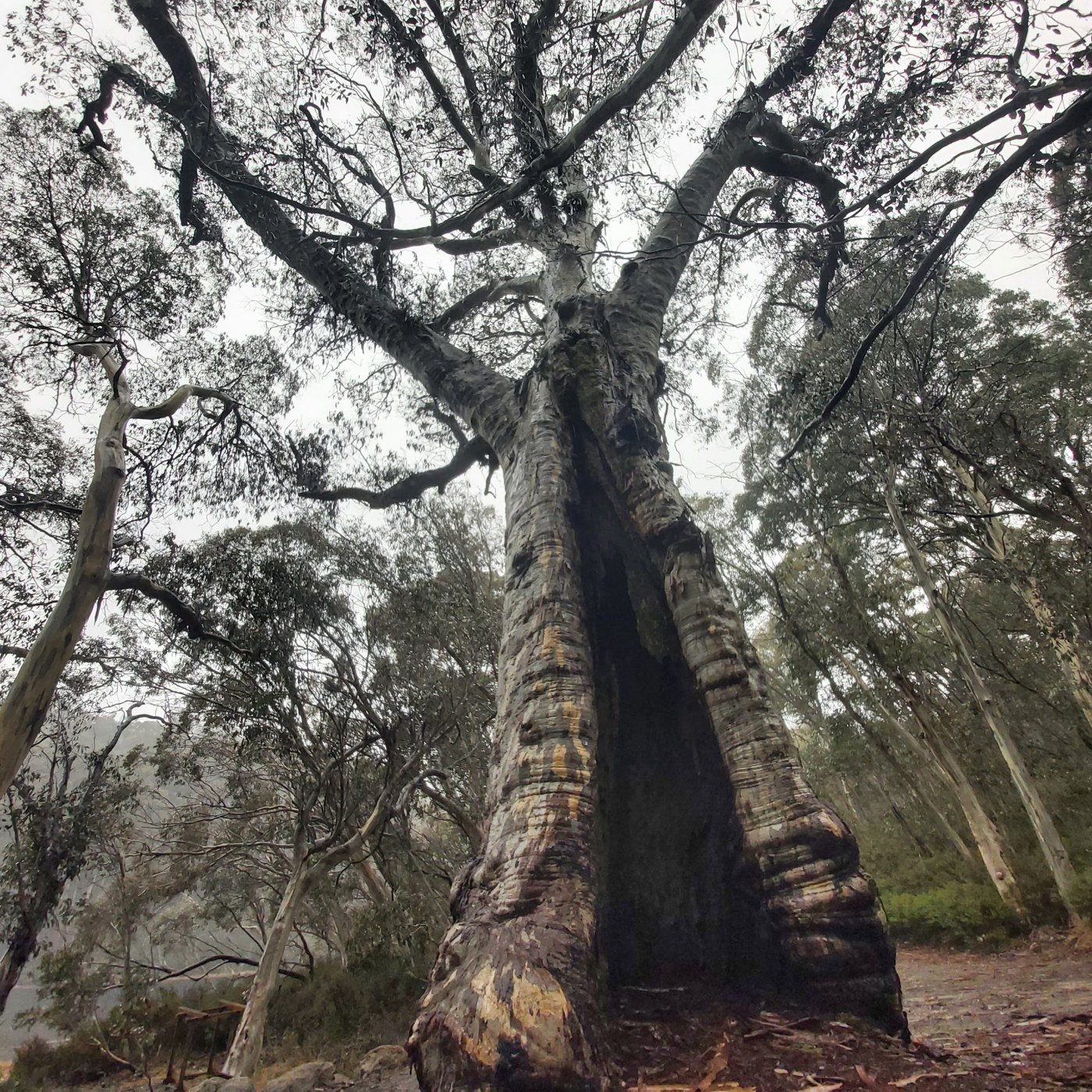
Snow Gums (Eucalyptus pauciflora) are the classic tree of the higher mountains of south eastern Australia. Interspaced with Alpine Ash at the lower end of their distribution, much of the forests and woodlands at higher levels across the Alps are dominated by this wonderful tree. They are profoundly different to the trees found in mountain areas in other parts of the world, and give a uniquely Australian sense to our high country. I am always amazed by the remarkable diversity in form that is possible within a single species. From grand tall elders in sheltered zones to wind pruned Bonsai sized trees on the treeline, the Snow Gum has a dazzling diversity of forms.

Continue reading “The world’s most charismatic tree (*)”

‘They offer great beauty. They offer shelter. They nurture us.’

Across the Australian high country, the snow gum woodlands are facing an existential threat from dieback and climate change driven fire regimes.

These threats are detailed here, as are some potential solutions.

While the loss of these forests would have major physical and ecological impacts on mountain environments, what would it mean for our personal connection to the high country? For me these trees are an essential part of life in the mountains. When I drive or walk up from the valley and have a wander among old trees, I feel like I have come home. I know these forests have been here for time beyond our imagining:

Continue reading “‘They offer great beauty. They offer shelter. They nurture us.’”

‘Long-unburnt snow gum forests are now exceedingly rare’.

Across the mountains of south eastern Australia, climate change is already driving profound change. In many places in the high country of NSW and Victoria, snow gum forests are facing a double sided threat: dieback, caused by a native beetle is killing individual trees, and climate change driven fire regimes are devastating vast areas of forest. Climate change, drought, insects and soil microbes are all thought to contribute to dieback. The spread and impacts of the beetle appear to be super charged by climate change (more beetles are surviving because of milder winters and more mortality of water stressed trees in summer).

More frequent and intense wild fire also poses an existential threat to the survival of snow gum woodlands and forests. A new report reveals the scale of the fire impact on these forests in the Victorian high country.

In the paper ‘Long-unburnt stands of snow gum (Eucalyptus pauciflora Sieber ex Spreng) are exceedingly rare in the Victorian Alps: implications for their conservation and management’, John Morgan, Michael Shackleton and Zac Walker from the Research Centre for Applied Alpine Ecology at La Trobe University highlight that ‘Long-unburnt snow gum forests (now) comprise less than 1% of snow gum forests in the Victorian Alps. We identify where long-unburnt snow gum stands persist in the Victorian Alps and outline why management intervention is necessary to protect unburnt refuges and, more broadly, to allow mature/adult stands (such as occur on the Baw Baw Plateau) to develop into future old forests’.

Continue reading “‘Long-unburnt snow gum forests are now exceedingly rare’.”

Welcome coverage of threats to snow gums in The Age

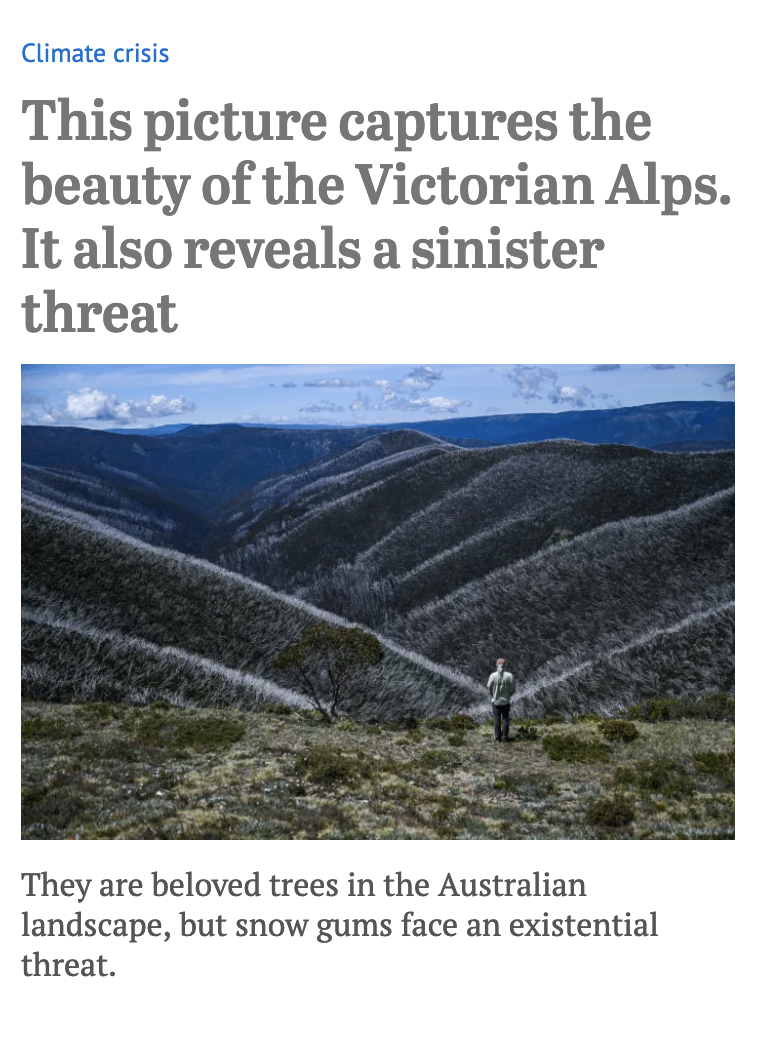
You may have seen today’s story by Miki Perkins in The Age here.  It considers the threats posed to snow gum woodlands (and other mountain forests) by more frequent and intense bushfires.

The story says ‘the global climate crisis, driven by humans burning fossil fuels, has brought a new threat to these mountain peaks: more frequent and more intense bushfires.

Because snow gums have not evolved to cope with these conditions, experts say the nature of Australia’s high mountain landscapes are changing, and the ecological collapse of snow gum woodlands – the abrupt decline or change of this ecosystem – is happening before our eyes’.

Continue reading “Welcome coverage of threats to snow gums in The Age”

“Ecological collapse is likely to start sooner than previously expected”

The Guardian recently reported that ecological collapse is likely to start sooner than previously expected, according to a new study that models how tipping points can amplify and accelerate one another.

Based on these findings, the authors warn that more than a fifth of ecosystems worldwide, including the Amazon rainforest, are at risk of a catastrophic breakdown within a human lifetime.

“It could happen very soon,” said Prof Simon Willcock of Rothamsted Research, who co-led the study. “We could realistically be the last generation to see the Amazon.”

The research was published on Thursday in Nature Sustainability.

Here in Australia we are starting to witness tipping points, where specific ecosystems are being pushed beyond their capacity to recover from impacts like fire, then experiencing ecological collapse whereby an existing system – for instance an alpine ash forest – collapses and is replaced by something else (in the case of alpine ash it might be a mix of grass and shrubs).

Continue reading ““Ecological collapse is likely to start sooner than previously expected””

A rescue plan for the Snow Gums

The first time I skied in the backcountry in the Rocky Mountains in Colorado, I was shocked by the dieback of pine trees. While I had read a lot about the beetle that is devastating a lot of the conifer forests in that part of the world, it was a shock to see it running through entire hillsides. Even in the glorious deep powder of a northern winter, I was reminded of the terrible ecological changes that are rippling through ecosystems across the planet.

Back home I was familiar with a similar pattern. Across the mountains that I love I could see the Alpine Ash in freefall as more frequent fires were starting to see local collapse of Ash communities. More regular and intense fires has led to loss of seedlings before they can produce seed. The situation is so dire that the Victorian government has an aerial seeding program to try and keep Ash populations viable.

Meanwhile, at higher elevations in the snow gum country, a double sided threat is charging through the forests: dieback, caused by a native beetle is killing individual trees, while climate change driven fire regimes were devastating vast areas of the high country.

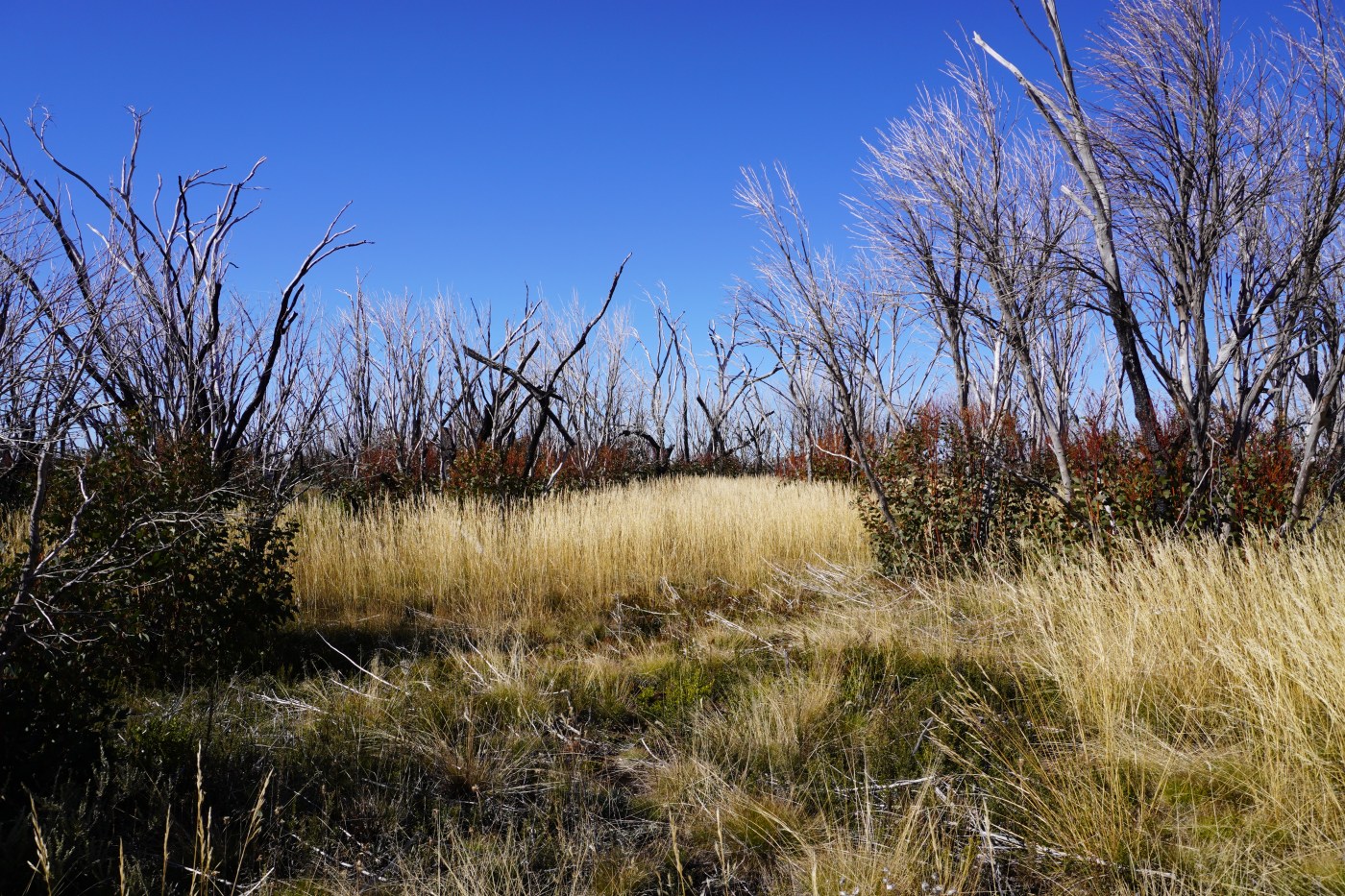
Once you see these changes, you can’t unsee them. The endless stands of grey dead trunks. The loss of the old trees. The thickets of flammable regrowth. Every trip to the mountains reminds you that we are seeing ecological collapse in real time.

Continue reading “A rescue plan for the Snow Gums”

Quantifying the climate cost of the Black summer fires

We know that climate change is resulting in increased fire severity and extent in Australia’s temperate Eucalyptus forests. While Eucalyptus forest communities are generally adapted to the presence of fire and in some instances need irregular fires, as the gap between fires become shorter and fires become more severe, there are obvious biodiversity impacts. For instance, forests are already changing – especially the alpine ash and snow gums, which are in a state of decline and even ecological collapse in many parts of the high country.

There is also the question of the how carbon released during these fires adds further fuel to climate change. While the general understanding is that carbon lost to the atmosphere during a fire is drawn down again in subsequent regrowth, is climate driven fire seasons causing more carbon to be lost into the atmosphere, thereby making climate change worse?

New research (Tree mortality and carbon emission as a function of wildfire severity in south-eastern Australian temperate forests, to be published in the journal Science of the Total Environment a summary is available here) considers these issues and fills some significant gaps in our knowledge about the links between fire and its contribution to climate change.

Continue reading “Quantifying the climate cost of the Black summer fires”

Where are the old snow gums?

Snow Gums (Eucalyptus pauciflora and related species) are the classic alpine tree of the High Country, generally growing at heights between 1,300 and 1,800 metres asl. Anyone who has visited the Australian High Country will know – and probably love – these trees.

In recent decades, wildfire has been devastating huge areas of the Snow Gum forests, with significant fires in the Victorian High Country in 1998, 2002/3, 2006/7, 2013 and 2019/20. More than 90% of Snow Gum habitat has been burnt at least once in the last 20 years.

The species can survive fire. However, climate change driven fire seasons are leading to more frequent fire, which is causing more death of trees and changes to forest structure. In some instances, localised collapse of Snow Gum woodlands is now being observed. As climate scientist Michael Mann describes it, we are now seeing climate change play out in real time.

We must ask whether we are now seeing the start of the collapse of Snow Gum woodlands, one of Victoria’s iconic vegetation communities.

Continue reading “Where are the old snow gums?”

The multiple threats to the survival of snow gums

For years now, Mountain Journal has posted about the multiple threats posed to our mountain environments which link back to climate change, including increased frequency of fire, higher temperatures, more frequent drought, and more impact from dieback (which is a natural phenomenon which is being super charged by global heating). These have also been documented in the Friends of the Earth report An Icon at Risk.

Its always good to see mainstream news coverage of these threats.

Genelle Weule, writing for ABC Science, has written an indepth piece which covers these threats.

Continue reading “The multiple threats to the survival of snow gums”

The elders among the devastation

If you visit this website often you will be familiar with the depressing stories about the decline of the wonderful snow gum. Between dieback and more intense fire seasons, the iconic tree of the high country is in decline.

In recent decades, wildfire has been devastating huge areas of the Snow Gum forests, with significant fires in the Victorian High Country in 1998, 2002/3, 2006/7, 2013 and 2019/20. More than 90% of Snow Gum habitat has been burnt at least once in the last 20 years.

The species can survive fire. However, climate change driven fire seasons are leading to more frequent fire, which is causing more death of trees and changes to forest structure. In some instances, localised collapse of Snow Gum woodlands is now being observed. If you’re interested in the detail of this, check these articles.

But we still have a lot of amazing older and mixed age snow gum forests. And in the depressing reality of the 21st century, it’s good to celebrate and love the places that are still intact. Please share your favourite spots.

Continue reading “The elders among the devastation”

Documenting loss of Snow Gums in the VIC Alps

The recent The IPCC WGII Sixth Assessment Report included details about the threat posed by climate change to Snow Gum woodlands (story here). Mountain Journal has been recording the local loss of Snow Gum woodlands across the Australian high country for several years now.

In a welcome sign, the last two summers have been mild and wet, and this has led to reseeding in some previously burnt areas of Snow Gums after years of no growth. However almost every trip to the higher mountains reveals new areas that have been burnt to the point of ecological collapse.

Continue reading “Documenting loss of Snow Gums in the VIC Alps”

Blog at WordPress.com.

Up ↑