Search

Mountain Journal

Environment, news, culture from the Australian Alps

Tag

snow sports

Momenta: More than a Film

6a00d83451b96069e201a3fcb001f0970b-800wiI recently reviewed the ski film All.I.Can. It’s such a great film, but has an awful take home message when it comes to climate change. So when I spotted this film, I was instantly cheered up.

Momenta is a new documentary starring legendary snowboarder Jeremy Jones, climber Conrad Anker, and other big-mountain athletes. It aims to mobilise people to stop a climate-wrecking proposal to ramp up coal exports from the western USA to China.

No, its not going to have the amazing skiing and mountain images of films like All.I.Can. But it brings some significant voices to the debate that – hopefully – can reach the skiing and boarding community and get them organised against this proposal.

As reported in Elevations Outdoors magazine:

The idea for “Momenta,” one of this year’s must-watch environmental documentaries for people concerned about climate change and the future of snow, was hatched in Boulder’s Flatirons in the fall of 2012. Big-mountain snowboarder Jeremy Jones was visiting town with Chris Steinkamp, executive director of Protect Our Winters (POW), the climate change group Jones founded. The two men decided to take a hike to brainstorm ways that POW could rally opposition against a major climate threat that has received scant attention from the national media—a coal train.

“We don’t have the ability yet to mobilize a grassroots army, so we decided a documentary was the best way to get the word out,” Steinkamp says.

“Momenta” sheds light on a climate-wrecking proposal to ship vast amounts of Rocky Mountain coal to Asia. The film stars Jones, legendary climber Conrad Anker and other big-mountain athletes who speak about the changes they’ve seen in the mountains during their lifetimes—as well as biologists, climate scientists, physicians and activists who detail the detrimental consequences of the plan hatched by energy companies, which will excavate vast coal deposits in Montana’s and Wyoming’s Powder River Basin, transport it by rail to the Pacific Northwest, then ship it across the Pacific.

Critics deride the coal-to-China plan as “Keystone on steroids,” a reference to the controversial Keystone XL Pipeline proposal that would transport tar sand oil from Alberta, Canada, to the Gulf Coast for export. Keystone has been called a climate bomb. Burning the Powder River Basin coal, however, poses an even bigger climate threat. “That coal has to stay in the ground,” environmental author and activist Bill McKibben explains in the film.

You can find out more on the Momenta facebook page and read a review from the Sierra Club here.

You can find the trailer for the film here.

As Jeremy Jones says in the film: ‘we know the solution. we know renewables work. And it’s time to embrace them.’


Valhalla showing in Melbourne

Valhalla.Two years in the making, Valhalla is the latest film from Sweetgrass Productions. The premise of the film is that as we get older we lose our passion for life, that sense of wonder we had as a child, but can find it again.

This is a tale about the search to rediscover the freedom of youth.

Valhalla is like a psychedelic version of ‘Into the Wild’, but with a bit of nudity, a lot of skiing and boarding, a happy ending, and a simple message: Go out there. Find yourself. Bring yourself back and find your place. It’s a homage to ‘70s era surfing and skiing films and counterculture lifestyle, with a sound track to match.

But as with any Sweetgrass film, its also got incredible skiing and boarding footage in some beautiful terrain.

We will also be showing a couple of short films from Sweetgrass before Valhalla: Desert River, a nice flowing piece set in Alaska, and Skiing the Void, about skiing and coming to terms with the loss of friends.

This is being shown as a fund raiser for climber and all round great guy Lincoln Shepherd and his family.  Their house was burnt down in the recent Grampians fire. Feel free to make a donation of any size.

This film is being shown at
LongPlay
318 St. Georges Rd.
North Fitzroy 3068
Tuesday 25 February

Arrive at 6.30 to get a drink and have a chat
Shorts start at 7 (Skiing the Void, Desert River)
Valhalla starts at 7.20pm

Please be aware that LongPlay only holds 35 people so please rsvp if you’re coming along. We have 14 rsvp’s by facebook and email, so please let me know if you’re attending.

Entry by donation – all money raised will go to Lincoln.

Further info: cam.walker@foe.org.au

Sochi Olympians speak out on climate change

An interesting piece on the efforts of some Olympians and Paralympians who are speaking out about the need for concerted action to reduce greenhouse emissions. This comes from the Sustainable Play website and is written by Brad Rassler.

Brad notes that just 83 athletes, primarily from the U.S. and Canadian squads, and just a few from outside North America, have signed on to speak about the need for action on climate change at the Sochi Games.

Wouldn’t it be great to see some of our winter athletes raising the issue at the Games?

Sochi Olympians Speak Out On Climate Change

olympic athletesU.S. cross country skier Andy Newell will travel to Sochi, Russia in two weeks to compete in the Winter Olympics. And though his aim is clear — to stand atop the podium — he’s traveling to the Games with more than precious metal on his mind.

For the past two months, Newell, 30, has quietly appealed to his fellow Olympians to leverage the Sochi Games as an opportunity to speak to world leaders about the ravages of global climate change on the winter snowpack. The petition he’s been circulating, Olympic Athletes for Action Against Climate Change, makes the case to his fellow competitors in four paragraphs:

Winter is in jeopardy.  Inconsistent weather patterns caused by a changing climate are causing destruction around the world, and the economic impact is being felt in both large cities and small mountain communities.

    As winter Olympic athletes, our lives revolve around the winter and if climate change continues at this pace, the economies of the small towns where we live and train will be ruined, our sports will be forever changed and the winter Olympics as we know it will be a thing of the past.

    The power we have as Olympians on a global stage is immense.   Let’s use this year to make a collective statement, to send a message to the world’s leaders to recognize the impact of climate change and to take action now.

Please join us by signing this letter.

That letter, addressed to the world’s leaders from the petition’s signatories, is comprised of a simple sentence containing a powerful ask:

“…to recognize climate change by reducing emissions, embracing clean energy and preparing for a commitment to a global agreement in Paris in 2015.”

The call to action refers to the United Nations Framework Convention on Climate Change in Paris, schedule for November 30 – December 11, 2015.

Newell has thus far been joined by 82 athletes, primarily from the U.S. and Canadian squads, and just a few from outside North America. He hopes to have 100 signatures before the Games begin in two weeks, but admits getting athletes to step up and sign has proved tougher sledding than he thought.

“It’s a tricky situation. Not only because it’s hard to get the word out there to people in different countries, but a lot of athletes are reluctant to sign things in general in an Olympic year.  They don’t want to cause a controversy.  They don’t want to use the Olympics as a platform for protest either, necessarily.”

Newell, who counts 350.org founder, author and environmental advocate Bill McKibben as one of his heroes and mentors, concedes that the life of an average Olympian, with its requisite air travel, isn’t exactly easy on the planet.

“We burn a lot of fossil fuels chasing the winter around and trying to go to these competitions.  I think a lot of us feel bad about that.  But that’s our job and our livelihood and our passion.  But at the same time, we try to use that – the professional athlete as a platform — to try to raise the awareness of people that may not understand what’s going on out in the environment.”

“I didn’t necessarily want to use the Olympics as a platform for a protest, necessarily,” Newell says. “But I wanted to at least try to get a lot of athletes on board to sign this letter and basically get it to their heads of state, to say, you know, we’re Olympic athletes and we can’t continue to support ourselves and this kind of livelihood if our winters keep disappearing, and we want you guys to recognize that there is some climate change happening.”

The U.S. cross country team’s winningest athlete and gold medal favorite, Kikkan Randall, has signed the petition.

“I grew up in a family that was very respectful of the opportunities that we had to be out in the environment, and to try to do our part, the best we could, to contribute to the health of the environment,” says Randall. “And certainly being involved in a sport that does rely on the weather and the fact that climate change could effect our sport…I think athletes, doing what we do, we have a great platform to go and encourage others…to do their part.”

Protect Our Winters (POW), a California-based non-profit whose athlete-advocates get the word out about climate change, has stepped forward to boost international attention to Newell’s petition. Chris Steinkamp, POW’s executive director, says that Sochi is an ideal backdrop for an athlete alliance to speak out about climate change.

“The Olympics is the perfect stage for something like this.  Obviously, it has a history of social issues. But I think this is the first time that climate change has come up, and it’s because obviously climate change is a hot issue right now. Sochi is one of those places where it could be a real issue in the next couple of weeks, and the conditions and the weather might be really inconsistent.  So it’s a perfect storm for this issue to be recognized.”

Or maybe an imperfect storm, climatically speaking. Steinkamp says that although climate change is well documented by the science, global leaders have not yet taken the necessary actions to curb its progress, and the time to act is now.

“Every year we all go into these climate conferences, these international global discussions about climate change with high hopes that something is going to be done, and nothing ever really does get done.  So the goal of the letter is two-fold:  To really let world leaders know that something needs to be done, but also let them know that something needs to be done in Paris in 2015.”

Whether international decision makers heed Newell’s call remains to be seen. Steinkamp views the alliance itself, the first of its kind, as a significant flag in the snow.

“The cool thing is that you’ve got these Olympians that are standing up for climate change, and with this platform that they have in Sochi, [they have] the opportunity to speak their mind. Because the only way that the world leaders are going to listen is if the population lets them know about it.”

According to CNN, over 6,000 Olympians and Paralympians will compete in Sochi. Newell has just 82 with two weeks to go.


The practical realties of social change suggest that as more athletes sign the petition, the safer it becomes for those sitting on the fence to participate. This author of Sustainable Play has created his own petition, encouraging the readership of this site to ask the remaining 5,900 to take an Olympic-sized stand for this Olympic-sized issue. Reassure them that climate change transcends mere politics; it’s a phenomenon without borders.


Click on the “petition’s petition” here:


http://tinyurl.com/kn395tj

The Little Things – A new snowboard film project from Marie France Roy

The following comes from Snowboarder Magazine. There is a trend emerging of snowboarders and skiers – who are often keenly aware of how climate change is already impacting on mountain environments – taking on a more vocal attitude about the need for change. This is one more example of this.

the little thingsMarie-France Roy has earned many accolades during her snowboarding tenure for her talent when standing sideways. She has put out some of the most influential video parts of the past decade and has chops in both the backcountry and the streets.

Last season, Marie embarked on a journey to give back to the sport she loves and create a film that would share the stories of snowboarders who are committed to living in a way that positively affects the environment as much as possible. The movie is called “The Little Things” and will follow Marie and the rest of the crew this season before culminating in a release in fall 2014.

You can see the trailer for the film here.

Protect Our Winters launches the POW Riders Alliance

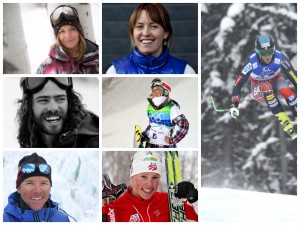
Riders-Alliance-2-300x225In the US, Protect Our Winters has just launched what it is calling its ‘Riders Alliance’, a group of 53 professional snowsports athletes, committed to fighting climate change and speaking out for the environment.

It is a remarkable line up of some of the best skiers and boarders on the planet.

As they say in the release, “Climate change is affecting our lives and careers and it’s in our best interest to use our passion to mobilize the community and bring a new perspective to the policy discussion.”

It’s great to see leadership being taken by so many high profile athletes. The group includesGretchen Bleiler, Jeremy Jones, Sage Cattabriga-Alosa, and Ingrid Backstrom.

The POW Riders Alliance was developed as a central platform for athletes to speak out and create a social movement against climate change.  For example, POW recently led a group of 17 athletes to Washington, D.C. for meetings with US Senators and has reached over 20,000 young students with a message of climate action delivered by pro athletes.

POW believes that by combining the athletes’ passion with their influence, first-hand experience and immense media reach, it represents a new, powerful approach to environmental advocacy.

With the Winter Olympics just a couple of weeks away, POW and Olympic athletes from the Riders Alliance will launch an initiative to call attention to climate change on the world’s largest sports stage in Sochi, Russia in partnership with a group of graduate students from the Yale School of Forestry.

The press release is available here,  and photos of the skiers/ boarders are available here.

‘Worn Wear’. Don’t buy new stuff – love the stuff you already have

Image: Worn Wear website

This 27 minute film comes from Patagonia.

Worn Wear is an exploration of quality – in the things we own and the lives we live. This short film takes you to an off-the-grid surf camp in Baja, Mexico; a family’s maple syrup harvest in Contoocook, Vermont; an organic farm in Ojai, California; and into the lives of a champion skier, a National Geographic photographer, and a legendary alpinist. It also features exclusive interviews with Patagonia founder Yvon Chouinard.

Released as an antidote to the USA Black Friday and Cyber Monday shopping frenzy, Worn Wear is an invitation to celebrate the stuff you already own.

You can read people’s stories about their favourite gear here.

Check here for an earlier post on the Worn Wear campaign.

a new take on backcountry skiing: managing forests to create runs

mt stirling 008
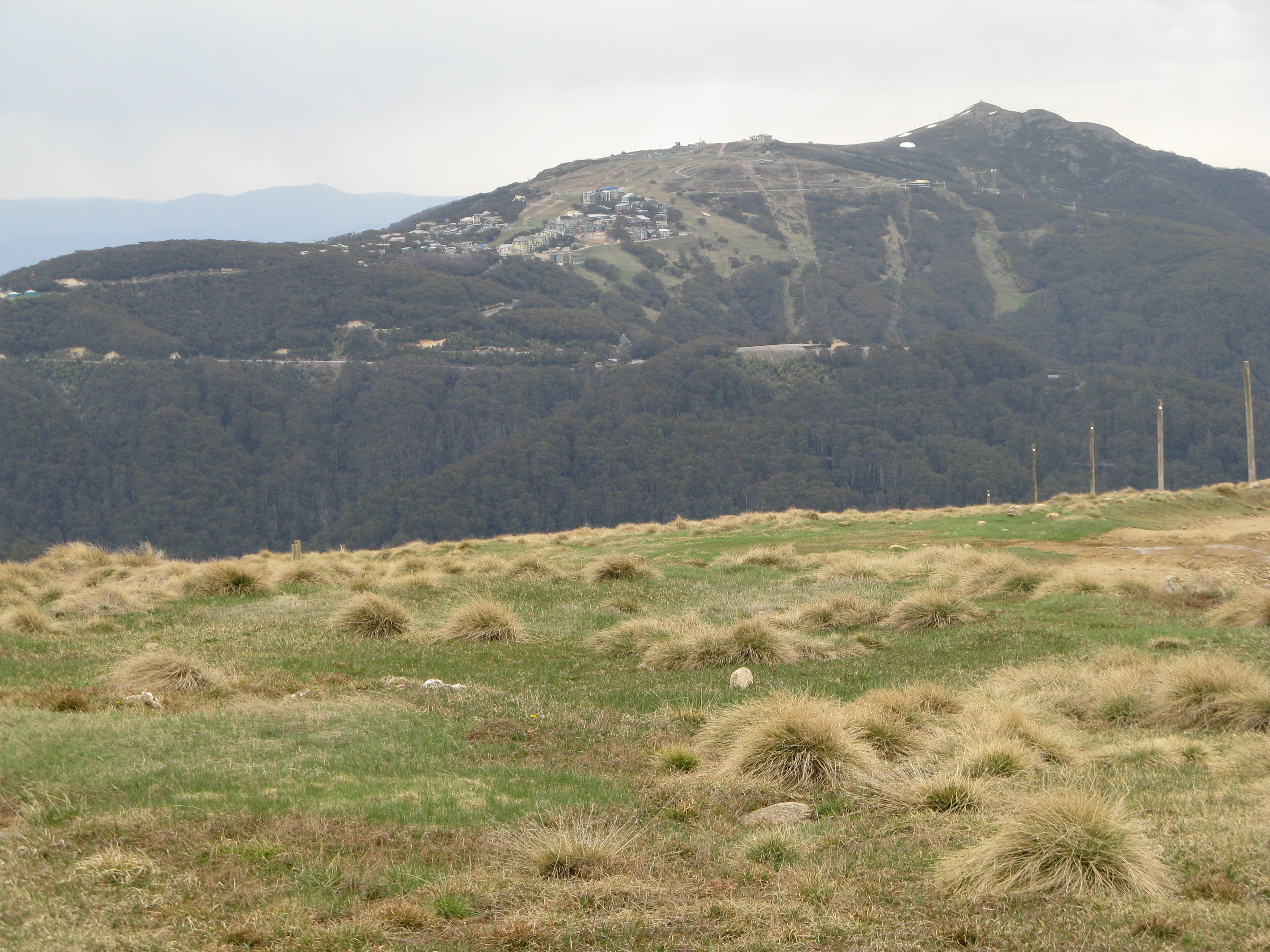
Mt Buller from Mt Stirling

The mountains of the eastern seaboard of the USA have some similarities with those in south eastern Australia. They are mostly forested, with only limited terrain above tree line, meaning that much of the steep snow country is not easily or safely ridden. Alpine resorts get around this by cutting runs, with sometimes very significant environmental impacts. Mt Buller would stand out as the worst case in Australia, with much of the mountain having been massively impacted by the footprint of the resort: the roads, the village, the runs and associated infrastructure, and waste treatment plants, etc.

Backcountry skiers and boarders tend to look to the higher terrain, and while many areas of tree covered terrain in the Australian mountains do offer some great options, the vast majority of the riding hours that are clocked up each winter are on naturally open slopes above tree line.

Image: APSA
Image: APSA

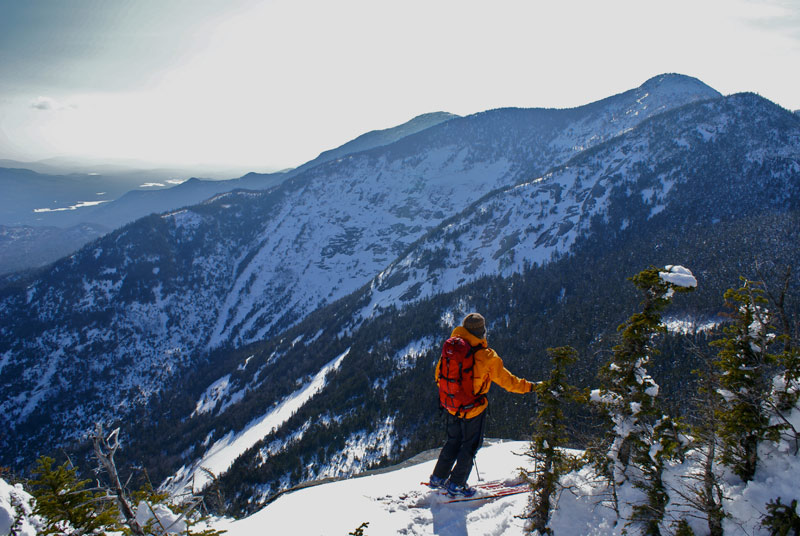
In the Adirondack mountains of New York state, there is a growing movement to create backcountry runs through ‘glade clearing’, small scale clearing of saplings to create safe corridors through the forests to allow skiing access.

The Adirondack Powder Skier Association (APSA) was formed to negotiate the right to cut these trails from state authorities in the Adirondack Park, which covers about 2.5 million hectares of wild land. Although avalanche slide paths are formed each year, skiers currently have few options when it comes to safely touring the backcountry mountain sides in the park. The APSA is seeking to gain an amendment to legislation that covers the park management plan so that they can create a series of skier-specific trails. The APSA argues that these would have less environmental impact than formed walking trails. Ron Konowitz, the president of the APSA, says “we’d manage the undergrowth by clipping horizontal stems and minimal undergrowth. On hiking trails they remove the top soil down to a hard surface. What we’re proposing is so much less invasive than that.”

Essentially they would seek to carefully remove a handful of trees on each ‘run’ or glade to create a more open area through birch forests which will be far safer than attempting to ski through regrowth forest. At this point, this type of management for backcountry skiing is not recognised in the Park management plans. Back country skiing and boarding is growing in North America, as it is here. The APSA argues that opening up back country runs would bring economic benefit to local towns, as it would attract more people to a wider area of the Adirondacks, as well as bringing many more opportunity for low impact out-of-resort skiing.

Of course, such land management intervention for a particular user group on public land is potentially fraught. It can be a foot in the door to more intrusive developments. The APSA seems to be mindful of this risk: it is seeking a change only to allow glade management, and is going to considerable lengths to bring all groups concerned about the mountains along with this proposal. It is set up as a not-for-profit corporation formed to “study, protect, promote, and enhance low-impact human powered snow sports on public lands in the Adirondack Mountains” and is working with state and local land managers, plus the local towns, conservation groups, and other stakeholders, to “define then develop appropriate management regulations” for managing the runs. If successful in gaining permission for the runs, they would trial them on a number of mountains.

For further details on the APSA, check their website.

‘snow surfing’

‘Snow surf’ boards are hardly a common sight on our slopes. But they are showing up more in some classic backcountry films like Signatures, from Sweetgrass Productions.

The following item is lifted directly from the new The Drift publication, and features some quotes from renowned surfboard designer and rider Taro Tamai. The company Gentemstick makes snowsurf boards.


Image: The Drift
Image: The Drift

Taro Tamai: Of Gods and Mountains

ON DESIGNING GENTEMSTICK:

My shapes aren’t just mimicking surfboards, but like surfboards they have different shapes for riding different waves. I shape boards depending on snow, terrain, and riding styles.

The design should perform on any snow condition, whether it’s powder, groomers, or spring corn snow. I don’t focus on skateboard-like snowboards, which emphasize ollies, big-air landings and the spinning factor, but a design that focuses on the relationship between the rider and slopes.

Image: The Drift
Image: The Drift

ON SNOWSURFING:

What if someone sees the mountain differently than others? What if the same terrain appears different to each person who sees it? Obviously the design for riding that place will differ from one another. The reason I quit skiing— which I loved so much—for snowboarding is because the potential lines that I could see when on a snow-surfboard were drastically different from when I was on skis. The ultimate goal of surfing is to be one with the wave. The ultimate goal in snowsurfing is to be one with the mountains.

MOUNTAINS IN JAPANESE SYMBOLISM:

Traditionally, Japanese people felt the presence of gods in all natural elements: water, forests, fire or mountains. Mountains were one of the most important deific symbols and climbing was a religious ritual. Japanese mentality sees gods in every single pebble lying on the river shores.

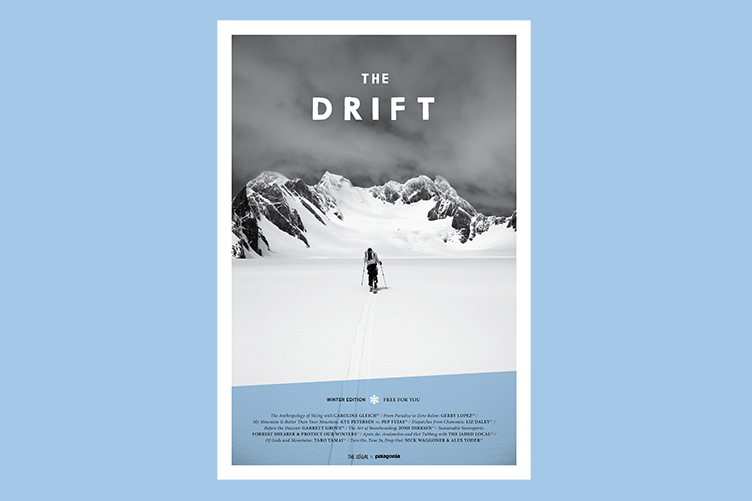
The Drift – new publication

The DriftThe Drift is a collaborative newsprint publication between The Usual and Patagonia to celebrate all things snow.

Issue 1 features Patagonia ski and snowboard ambassadors Caroline Gleich, Josh Dirksen, Gerry Lopez, Kye Petersen, Liz Daley, Pep Fujas, Forrest Shearer, Taro Tamai, Alex Yoder, and Aidan Sheahan.

Pick up your Winter 2013/14 copy at select Patagonia stores worldwide.

For more information visit: http://www.thedriftmag.tumblr.com and http://www.patagonia.com/us/sports/snow. Follow us @theusualmontauk, @patagonia #pursuitofpowder

Best backcountry ski & board films

Image: Winter Dreaming/ Stephen Curtain

Snow/ skiing/ boarding films have long been a staple part of mountain life. And while I love snow porn as much as the next person, I never felt very interested in the high profile ‘heroes and helicopters’ style that has long dominated the mainstream films.

It was only a few years ago when I realised there was a sub genre that actually spoke to my reality: backcountry films.

I am not sure if this is a growth sector compared with the rest of the snow industry films, but its certainly prolific. Here are some brief reviews of a few of the best.

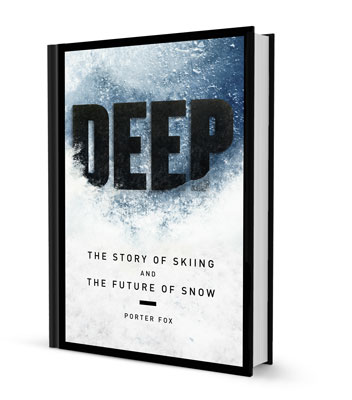
DEEP: The Story of Skiing and the Future of Snow

 As our governments at state and federal level continue to ignore the reality and scale of climate change, and dismantle the limited actions we currently have in place to reduce emissions, this book seems rather timely for those of us who like our winters cold and our snow deep.

book-cover-2“This is the most important book on snow ever written. This is a wake up call. We need to accept our reality and get busy fixing climate change.” —Jeremy Jones, pro snowboarder and founder of Protect Our Winters

“The first in-depth report on how climate change is affecting the present and future of the ski industry and mountain communities, DEEP is a must-read for every passionate skier.” — John Stifter, Editor, Powder Magazine

“Skiing offers a good barometer of the trouble we’re in—and, as this book reminds us, one more good reason for wanting to face that trouble.” —Bill McKibben, author of Oil and Honey and co-founder of 350.org

In his stunning first book, veteran ski writer Porter Fox captures the 8,000-year-old sport of skiing, the miracle of snow and the shocking truth of how climate change could wipe out both in the next 75 years.

The narrative follows the unlikely rise of skiing from prehistoric Norwegian hunters to nobility in the Alps in the 1800s to present-day freeriders on the vaunted slopes of the Rocky Mountains. On his global tour of the most celebrated mountains in the Northern Hemisphere—from Washington’s Cascade Range to the European Alps—Fox talks to alpinists about the allure and mysticism of the sport and to scientists about climate change and its effect on snow—ultimately finding a story that is far larger than the demise of skiing.

For the seven million skiers in America who dedicate their winters to tracking storms and waking up at dawn to catch the first chairlift, the lifestyle change will be radical. It will likely be far worse for the rest of the world. Fox uses primary interviews and evidence, mixed with groundbreaking scientific studies, to explain exactly how and when the Great Melt will play out—and the tremendous groundswell that is rising up to stop it. DEEP provides firsthand accounts from skiers and scientists who are mapping a way to mitigate climate change, reduce human impact on our planet and repair the water cycle. As it turns out, their efforts to save snow and ice might end up saving the world.

You can buy it here.

You can find an Australian perspective on climate change and skiing here.

new management at lake Mountain & Baw Baw?

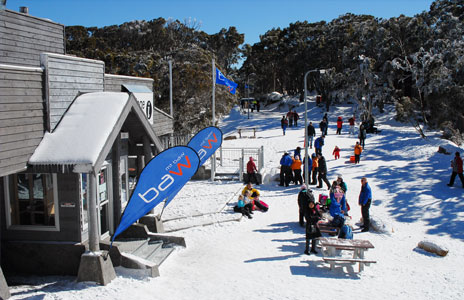
wtg_14The Victorian government recently called for Expressions of interest for long term private managers to take on running the Lake Mountain and Mount Baw Baw Alpine Resorts. Tender applications have now closed.

As noted recently on this site, the Victorian Government has previously decided to open up the state’s national parks to further development and private investment. The depth of this agenda is not yet clear.

The government describes Mt Baw Baw as
“an all-season alpine resort, open year round for summer and winter adventures. It is Victoria’s affordable, family friendly ‘learn to ski’ destination. Activities include downhill skiing, snowboarding, cross country skiing, tobogganing, terrain parks and other event in the white season, plus walking, hiking, cycling, downhill and mountain biking and a number of events in the green season”.

And Lake Mountain as
Lake Mountain is a Crown Land reserve which is open year round for summer and winter experiences. It is Victoria’s affordable family getaway in the great outdoors, and is Australia’s premier cross country skiing and snow play resort. Only a two hour drive from Melbourne, Lake Mountain is Melbourne’s closest alpine resort.

Given the prognosis of expected warmer conditions and less reliable snowfalls as a result of climate change, any private operator considering taking on a new project in these lower elevation resorts will need to be building up the ‘green season’ activity at the resorts.

This begs a fairly obvious question: with the pro development agenda of the current state government and a limited ability to run economically viable resorts based on snow activity at lower elevations, what devil in the detail might emerge once the new operators are announced?

Let’s hope this doesn’t become an opportunity for new operators to radically increase the footprint and impact of activity at these resorts.

Blog at WordPress.com.

Up ↑