Search

Mountain Journal

Environment, news, culture from the Australian Alps

Tag

snow sports

leadership from the front lines of climate change

While the new International Panel on Climate Change (IPCC) report confirmed recently that climate change is indisputable, it’s something that the winter sports community has been seeing first-hand for years.

This has seen many in the recreational skiing and boarding community get active to tackle climate change. But there are also some interesting things happening amongst professional athletes.

Jeremy Jones
Jeremy Jones

In April, 75 Olympic medalists and other winter sports athletes – including White House “Champion of Change” awardee and pro snowboarder Jeremy Jones – lobbied President Obama, urging the President to take action on climate and clean energy.

The representatives of the global snow sports community signing the letter to the President included X Games champions and World Champion snowboarders, alpine/Nordic skiers and professional climbers, including:

• Olympic gold and silver medalist Julia Mancuso (Olympic Valley, CA)
• Olympic silver medalist and four-time X Games gold medalist Gretchen Bleiler (Aspen, CO)
• 10-time Big Mountain Rider of the Year Jeremy Jones (Truckee, CA)
• Olympic silver medalist, three-time World champion, seven-time X Games champion Lindsey Jacobellis (Stratton, VT)
• Two-time Olympian and six-time X Games gold medalist Nate Holland (Truckee, CA)
• Olympic gold & silver medalist, six-time X Games medalist, six-time World Cup champion Hannah Teter (Belmont, VT)
• 2010 Olympian, Nordic skier Kikkan Randall (Anchorage, AK)
• Five-time winner Powder Magazine’s Best Female Performer Ingrid Backstrom (Seattle, WA)
• Two-time World Freeskiing champion Chris Davenport (Aspen, CO)
• Two-time World Freeeskiing champion, Kit Deslauriers (Jackson, WY)
• 2013 World champion, X Games medalist Arielle Gold (Steamboat Springs, CO)

For a full list of signers, check here.

The letter states “Without a doubt, winter is in trouble”  “… at risk are the economies of tourist-dependent states where winter tourism generates $12.2 billion in revenue annually, supports 212,000 jobs and $7 billion in salaries.  Those are the jobs and businesses are generators of billions in federal and state income.”

Hot Planet/ Cool athletes program

Meanwhile Protect our Winters (POW) has restarted Hot Planet/ Cool athletes program, which organises Professional skiers and snowboarders to deliver presentations to North American students, encouraging them to become Climate Leaders.
Protect Our Winters re-launched their “Hot Planet/Cool Athletes” program this week to take the first hand perspective of climate change into the classroom to explain climate change from an engaging new perspective and to inspire and empower students to become involved.

Presented by The North Face, the program has been presented to more than 20,000 students at 41 schools nationwide since 2011.  The new format for 2013 continues to educate students about climate change, combining engaging action sports footage and understandable climate science with first hand athlete’s perspectives and a call to action that truly breaks through to students and gives them the tools to be part of the solution.

Pro athletes such as Gretchen Bleiler, Jeremy Jones, Sage Cattabriga-Alosa, Ingrid Backstrom, Lucas Debari, Danny Davis and Angel Collinson are featured in the video project, with many others scheduled for in-person school appearances.

More info here.

Our time is now

Then there is the the #ourtimeisnow campaign, a call to action that invites students to take meaningful action on climate change.  By connecting with them in a relevant way, via their social media, POW will invite all students to use the hashtag #ourtimeisnow across their social media channels. POW can then track its use and provide meaningful climate actions directly back to each student.  As students become more involved in the campaign by using the hashtag on Twitter and Instagram, they will have opportunities to win prizes and spend time with professional athletes discussing climate change or joining POW representatives to lobby MPs in Washington.

“We’ve got to create a social movement starting with young kids who will be the most affected, and we feel that this component of the program is a critical step in making a difference.  By using social media as a backbone for it, we’re connecting with students on their terms and starting that movement with meaningful results,” said POW’s Executive Director, Chris Steinkamp.

STEPS – a journey to the edge of climate change

rid-greener-screengrab-140x130Then there is this new film from Ride Greener and Coupdoeil which considers how the snow industry can work in harmony with nature to protect the climate we rely on.

The promo says:

“The carbon-neutral approach shown in the film is a new way of thinking with the ever-looming shadow of climate change growing closer year after year. It’s not too late to prevent the oncoming consequences of fossil fuels and the damage that has already been caused”. This film tackles how an industry that revolves around predictable and consistent weather patterns can play it’s part in preventing climate change.
Details here.

review: Valhalla

the camp
the camp

This is the 4th backcountry ski film from Sweetgrass Productions.

Two years in the making, Valhalla is way beyond your normal ski film and its almost as if the usual eye candy of skiing/ boarding big lines is used to entice you in, and covers a deeper story. The premise of the film is that as we get older we lose our passion for life, that sense of wonder we have as a child, but can look for it again.

‘Valhalla is the tale of one man’s search to rediscover the freedom of his youth. Feeling the distant heat of it’s fire still burning in the mountains of the frozen north, he goes in search of those tending the flame—the untamed, the wild, and the outcast dwelling on the fringe’.

The following is a fairly rambling review.

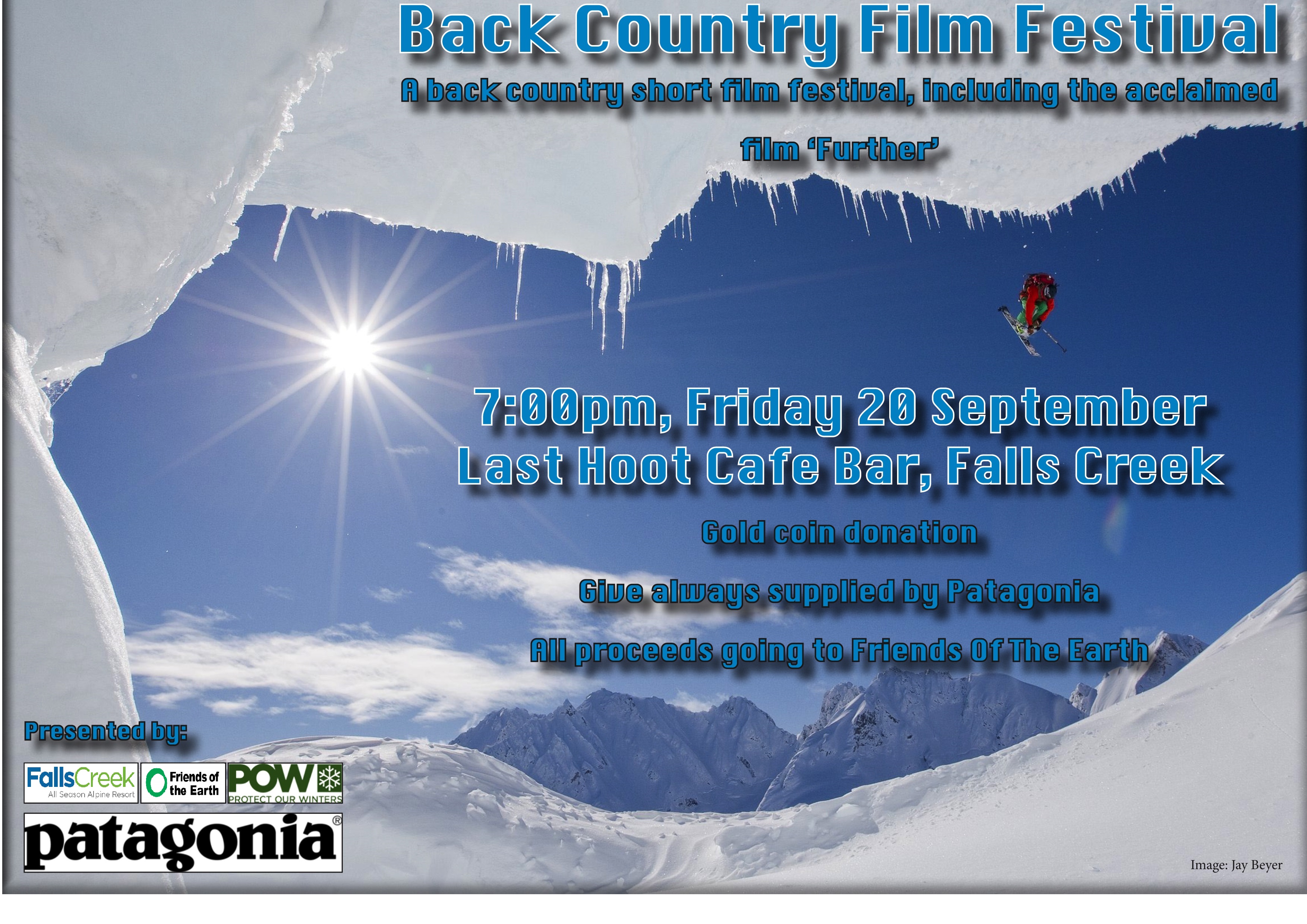
Backcountry film festival, Falls Creek

Back Country at FallsThere is one last showing for 2013 – at Falls Creek, on friday September 20 at 7pm.

Many thanks to Brett Lemin for organising the evening, and to Falls Creek resort management for support, the Last Hoot cafe bar for hosting, and Patagonia for the give-aways.

Check here for details on the films shown in this years festival.

new resorts sustainability initiative in the US

I know I should probably stop bagging out our local ski resorts for being useless on climate change, but there are so many inspiring examples from overseas that show what is possible with a little bit of vision.

The following is an announcement about a new collaboration between an alliance of US-based mountain resorts, and Protect Our Winters.

The announcement is vague on the details of exactly what the alliance will do, and highlights ‘cross promotion’ opportunities, but at least it seems intent on putting climate change on the agenda for each of the resorts, and mentions advocacy as one of the activities that will be undertaken.

Aspen-Snowmass-1The Mountain Collective, an alliance of independent mountain resorts, and Protect Our Winters (POW) are proud to announce a new and innovative partnership with the mission of uniting the winter sports community on the important issue of climate change. Both groups have worked independently to promote this environmental cause, and this collaboration will make an even bigger impact.

Protect Our Winters is the environmental center point of the winter sports community’s fight against climate change.  The Mountain Collective is comprised of six iconic destinations representing the core of the skiing and snowboarding world including Alta, Aspen/Snowmass, Jackson Hole, Mammoth Mountain, Snowbird, Squaw Valley/Alpine Meadows, and Whistler Blackcomb. Together, POW and these high profile resorts can impact the entire community and industry with incredible effectiveness.

“Through this groundbreaking partnership, The Mountain Collective has re-defined what a pass should be.  It not only represents access to six world-class destinations, but the foresight to realize that climate change is a threat to our sport and with that access, comes a responsibility to protect it for the long term,” said POW’s Executive Director Chris Steinkamp.

“Partnering with a leading organization like POW serves to reinforce The Mountain Collective as the most forward-thinking alliance of its kind,” said Christian Knapp, vice president marketing, Aspen Skiing Company. “Together we can leverage the power of our brands to promote meaningful climate advocacy that resonates with mountain resorts and snow sports enthusiasts alike.”

The partnership will include ongoing advocacy and cross-marketing initiatives, education and community outreach to raise awareness and promote environmental sustainability.  Additionally, POW members who purchase a Mountain Collective Pass will receive a year’s subscription to Powder magazine, and anyone who purchases a new Mountain Collective Pass will be offered a free one-year membership to POW.

The Impact of Climate Change on Winter Sports

The last decade was the warmest on record [NOAA, 2010]. Fewer ski days would not only reduce enjoyment for skiers, boarders and other winter sports enthusiasts, but also cause significant economic impact to an industry that supports 965,000 people and contributes $66 billion to the U.S. economy alone [OIA 2006, 2012]. Without action to reduce emissions, scientists predict that by 2039 the Northeast ski season will last less than 100 days and the probability of being open by Christmas will decline below 75% [Scott et al. (2008)].

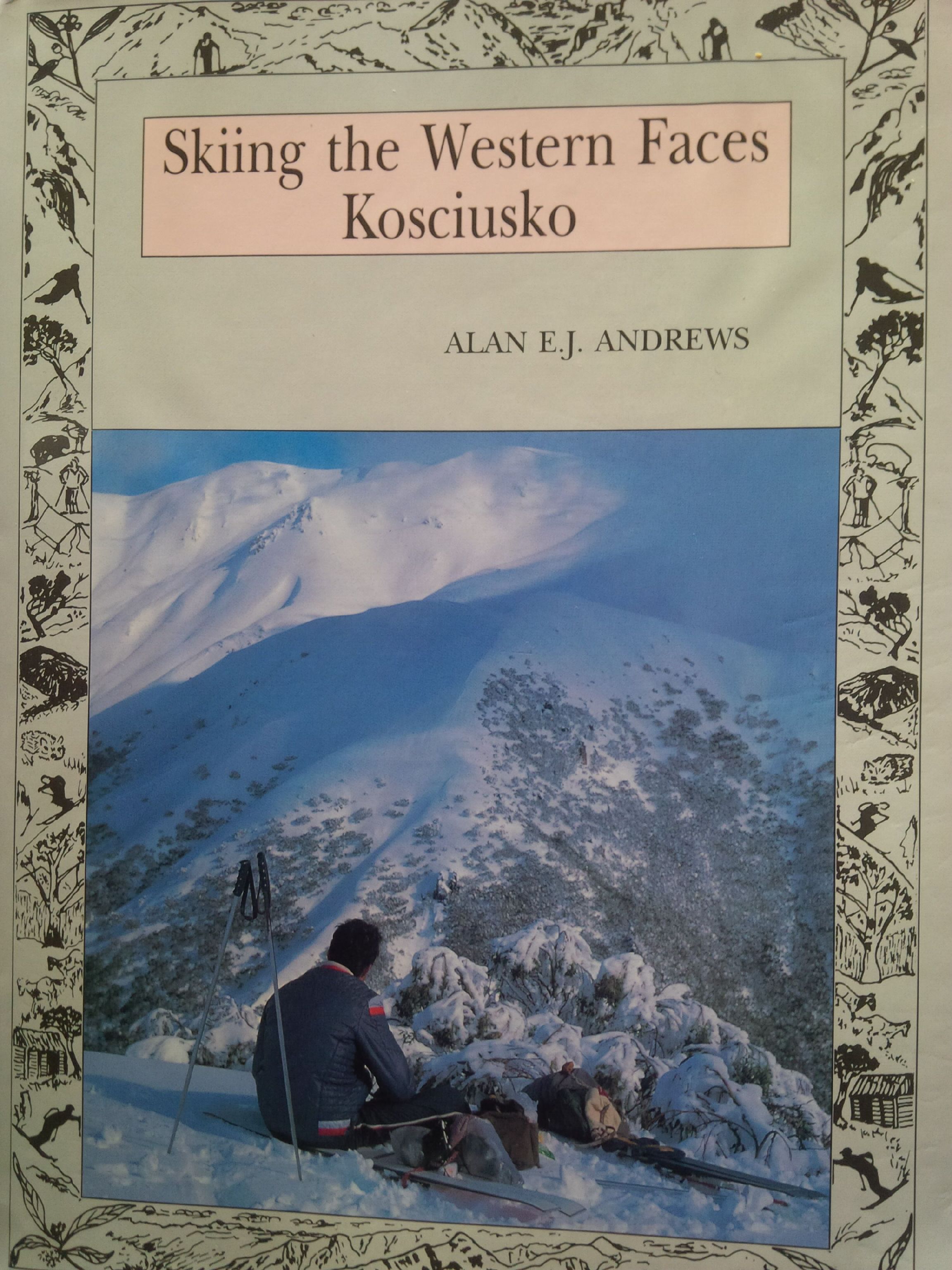
Skiing the Western Faces Kosciusko

mapAnyone with an interest in skiing or boarding steeper lines on the Main Range of the Snowy Mountains will love this book. I can’t believe that it took 20 years from its publication before I heard of this wonderful book.

I was skiing with my friend Peter this winter and as we talked of the backcountry trips we had done and wanted to do, the western slopes of the Snowies came up. He mentioned Alan Andrews ‘classic’ Skiing the Western Faces Kosciusko, describing it as the Bible of skiing in the area, and providing the ‘tick list’ for anyone interested in  the many lines that come off the western side of the highest peaks of the Main Range.

Two weeks later I was the proud owner of a copy, a publication of Canberra based Tabletop Press, which has an impressive collection of mountain themed books in its stable.

As Alan describes in the introduction, the book is not so much a guide to skiing the western slopes as ‘a companion volume that might instil in you or remind you of its joys’.

Check here for a review and details on buying the book.

Backcountry film festival 2013 season

from the film Further

The Winter Wildlands Alliance created the Backcountry Film Festival in 2005 to help grassroots and professional filmmakers to show audiences their love of the winter outdoors. Since then, the annual festival has become something of an institution amongst many outdoor communities.

The festival is now a pre winter event here in Australia.
Melbourne show

Wednesday May 15

At The South Melbourne Commons
corner of Bank & Montague St in South Melbourne

Suggested donation: $8 conc/ $12 waged

7pm. Come and grab a drink and catch up
7.30. Films start, the show runs til 10pm (with a 20 minute break in the middle).

Check here for details on how to get to the Commons. Trams and the Light Rail are a few minutes walk away. Lots of parking at night.

Facebook event page here, feel free to invite your friends.

Full details on the films here.

backcountry snowboarding magazine available in Australia

2516246Kronicle  is the world’s first backcountry snowboarding/ spiltboard magazine:

“Kronicle is a backcountry snowboard publication tailored to riders with a thirst for untracked snow, untapped lines, and exploration. We’re employing the richest stories, images and design to chronicle the people and places of backcountry snowboarding. That’s not all—we also report on the gear and skills riders need to reach their mountain objectives.

During its relatively short lifespan, snowboarding has covered a lot of ground and backcountry is the next frontier. It’s a homecoming of sorts, coming back to where it all began, bringing the sport full circle and leading us to Kronicle. This is our story, and it’s just the beginning”.

It is produced by Height of Land Publications in the US, who produce the excellent Backcounrtry magazine and, for many years, Telemark magazine. HOL produces high quality, visually gorgeous publications and Kronicle is a nice addition to their existing magazines.

Kronicle have teamed up with FirstLight Snowboards to provide this to the Australian Splitboard community.

You can order your copy from FirstLight here.

Senate Inquiry into extreme weather – an opportunity to share your experiences

Mt Stirling
Mt Stirling

The federal Greens have been successful in getting a Senate Inquiry into extreme weather. This is a significant opportunity for the government to consider the impacts of climate change and extreme weather events on local communities, landscapes and economies in the Alpine region.

It would be useful if you or your business or group were be able to make a brief submission to the inquiry about the threat of extreme weather and climate change in your community, and the impacts it has already had or is predicted to have. See below for some ideas on making a submission.

Time is short – we only have until January 18.

You may also want to make a formal request for the committee to visit your area and host a public hearing to take submissions from people who live in or are reliant on good winters to keep the local economy strong.

The snow industry – the canary in the cage when it comes to climate change?

The winter sports industry/community is deeply dependent upon predictable, heavy snowfall, but climate change is expected to contribute to warmer winters, reduced snowfall, and shorter snow seasons.

A recent US study, commissioned by Protect Our Winters (POW) and the Natural Resources Defense Council (NRDC), shows that the U.S. ski and snowmobile winter sports industry is currently worth an estimated $12.2 billion each year, and has already felt the direct impact of decreased winter snowpack and rising average winter temperatures.

As the authors note in the report, “climate change spells trouble for all businesses dependent on winter weather including snowboarding, snowshoeing and skiing. The shrinking numbers of winter sports tourists also affect restaurants, lodging, gas stations, grocery stores, bars” and other businesses.

Bogong High Plains fires, 2007

Here in Australia, winters are already becoming warmer and more erratic, and this impacts on the quality and quantity of snow.

According to Dr. David Bain, in the high Alps from 1950 to 2007 there has been an increase in winter temperatures approaching 1°C, and over much the same period (1957 to 2011), Australia has seen a slow decrease in snow depth. The mid-winter snow depths have only decreased a small amount, whereas spring snow depth has dropped by almost 40%. The obvious impact here is that the resort season becomes shorter, making it more difficult to make a profit on infrastructure that is located in resorts year round.

While resorts have invested in extra snow making capacity and are seeking to build visitation outside of the winter months, the majority of infrastructure is based around winter sports. Snow making will become more expensive in coming years as energy prices rise, and this will impact on resort profit margins and hence viability. As was highlighted in the 2012 document the Alpine Resorts Strategic Plan, “cost pressures are a major problem for many on-mountain businesses and site holders”.

Science suggests that without determined action to reduce climate change, we can expect to see less and less reliable snow falls in coming years.
According to the government commissioned report ‘Caring for our Australian Alps Catchments’, the Alps face an average temperature rise of between 0.6 and 2.9 degrees centigrade by 2050, depending on how much action the international community takes to combat climate change.

Rain, snow and other precipitation is expected to decrease up to 24% over the next four decades, accompanied by more bushfires, droughts, severe storms and rapid runoff, causing heavy erosion. Additionally, what precipitation we get could become more erratic. For instance, it is likely there will be more storm events in summer, which could be expected to impact on outdoor recreation and especially organised events like bike rides and festivals. The 2003 and 2006/2007 fires in Alpine regions are an indicator of what could come with enhanced global warming. These shut down tourism across sections of eastern Victoria, with dramatic impacts on businesses reliant on summer tourism.

The Caring for our Australian Alps Catchments report says that our ski slopes could be completely bare of natural winter snow by 2050 unless concerted action is taken against global warming.

The erratic weather will also be felt in winter, with corresponding impacts on economies. The US report notes that in that country, the downhill ski resort industry is estimated to have lost $1.07 billion in aggregated revenue between low and high snow fall years over the last decade: if the snow is bad, many people will simply cancel their holiday. So even if there is some snow cover, erratic weather can still have impacts.

All of this will be a disaster for skiers, boarders and all who spend their time in the Alps.

Buffalo Plateau from Big Hill

But it will also be devastating for local economies. In Victoria, the alpine resorts are estimated to have contributed $570 million and 5,800 Full-Time Equivalent jobs to the Victorian economy in winter alone for 2011 (source: Alpine Resorts Strategic Plan 2012, p13). The flow on effects of the industry is felt in towns throughout north east Victoria and around the Snowy Mountains, including the development of niche agriculture economies which is, in part, supported by snow-based tourism. To take one example of local benefits, the ‘gross regional profit’ of Alpine Shire was increased by about $130 million in 2011 because of the presence of the alpine resorts. The negative impacts of the bushfires on Murrindindi Shire in this same period indicate what climate change and extreme weather events could mean in future for all shires across the state.

According to the Economic Significance of the Australian Alpine Resorts report (2011), the combined benefit for the three Australian States with alpine resorts in 2005 is calculated to be $1.3 billion with 17,050 annual equivalent employment opportunities.

As the US report concludes: “all of this translates into less snow and fewer people on the slopes, which results in massive economic hardship for resorts, states, local communities, businesses and their employees.”
Please write a submission

In order to protect the alpine environments that we love and the many thousands of people and businesses who depend on a snow-filled season, we must act now to support policies that protect our climate, and in turn, our slopes.

You can read more about the Inquiry and make a submission here.

Some points you may like to make:

Apart from any direct impacts you are concerned about, you might want to mention that the latest science is showing that the impacts of climate change are happening faster than expected, and that communities will require funding to deal with the worst predicted outcomes. There must be greater community engagement about adaptation to climate change. However, responding to climate change (‘adaptation’) is not enough: we must also respond to the causes of climate change – by reducing emissions (‘mitigation’).

Check here for climate change scenarios for the Alps.

If you would like the Senate Inquiry to visit your town to hear your concerns about climate change and extreme weather, please check here.

Submissions are due on 18 January with the final report due from the Senate Committee on 20th March.

Public ski resort groomed for private sale

The following comes from the Victorian National Parks Association.

Media release. Thursday, 28 November, 2012

art-Lake-Mountain-Village-420x0Lake Mountain, Melbourne’s closest and most affordable alpine resort, will soon be given over to developers in a long‐term lease that effectively privatises public land.

“The Baillieu Government should not be acting like a real estate agent for land that belongs to all Victorians. It should be managing our natural heritage responsibly, for future generations,” the Victorian National Parks Association’s Phil Ingamells said today.

“The Baillieu Government’s announcement that it is handing over management of the Lake Mountain Alpine Resort to a private recreation company, in preparation for auctioning the leasehold, may be the first of many such developments. Our alpine resorts, national parks and other public land are all vulnerable to this policy,” he said.

Importantly the Alpine Resorts Act, which governs the management of Victoria’s alpine resorts, makes it clear that resorts are for the use of all sections of the community, not just the big spenders.

A recent State Services Authority inquiry into Victoria’s alpine resort management said the resorts need to provide for a far greater section of the community, not just high‐end tourism.

The inquiry also recommended that resorts such as Lake Mountain, which will be the first to lose their snow cover as global warming increases, should be placed under the management of Parks Victoria.

“But the Baillieu Government seems determined to hand our finest bits of public land over to private control, and make them playgrounds for the wealthy,” said Mr Ingamells.

“Developments in private hands inevitably grow. This is a short‐sighted move, and one that will be very hard to reverse. Victorians of the future will almost certainly look back at this time with great regret.”

Alpine Resorts Strategic Plan 2012 finally tabled in Parliament

The following comes from the Minister for Environment and Climate Change, so should be read essentially as propaganda.

I would be interested in any industry/ community/ environmental perspectives on the new plan.

From the Minister for Environment and Climate Change

Image: Brush Ski Club

The long-term viability of Victoria’s alpine resorts will be strengthened following the tabling in Parliament today of a new strategic plan by Minister for Environment and Climate Change Ryan Smith.

The Alpine Resorts Strategic Plan 2012 will shape the long-term direction of Victoria’s six alpine resorts of Mt Hotham, Falls Creek, Mt Buller, Mt Stirling, Mt Baw Baw and Lake Mountain, ensuring they remain attractive tourist destinations, financially viable and capable of attracting new investment.

Mr Smith said the strategic plan recognised the fact that the winter season was the economic engine of the resorts, however opportunities existed to expand their array of iconic non-winter events and investment opportunities.

Under the strategic plan, each of the resorts will prepare an alpine resort master plan ensuring their environmental values are protected and providing the commercial sector greater certainty about the resorts’ long-term directions.

“The Alpine Resorts Strategic Plan 2012 outlines a vision for the resorts and a plan of actions to ensure they are vibrant, growing and financially sustainable places well into the future and their environmental values are preserved,” Mr Smith said.

“The strategic plan sets out a more co-operative and integrated approach to investment, promotion, management and use across the resorts.

“The plan focuses on paying more attention to the long-term financial viability of the alpine resorts, focusing on the winter economic ‘engine’ and building on the year-round competitive strengths of individual resorts.

“Victoria’s alpine resorts make a significant contribution to the State economy, especially in regional Victoria and the Coalition Government is committed to ensuring they remain viable into the future.”

In 2011 the resorts were visited by more than 1.2 million people, contributed $570 million to Gross State Product and generated around 5,800 full-time equivalent jobs for winter alone.

Mr Smith said the alpine resort master plans would simplify planning and leasing decisions and allow high priority development opportunities to be identified through the Victorian Alpine Resorts Development Program.

“We need to make sure that resort services and infrastructure are delivered efficiently and with appropriate levels of accountability.

Investment opportunities need to be more co-ordinated and non-commercial activities will need to be reviewed,” Mr Smith said.

The strategic plan proposes a new financial management framework for the alpine resorts to sustain their significant economic contribution to the State’s economy and to their surrounding regions.

The strategic plan also outlines actions to build partnerships across sectors and increase access for Victorians of all backgrounds.

“Victorian alpine resorts are on public land and are managed on behalf of all Victorians, so it is important we ensure alpine experiences are accessible to people of differing cultural backgrounds, ability levels and economic circumstances,” Mr Smith said.

“Major initiatives include a focus on growing visitation by enhancing the visitor experience and further development of the resorts. This means maximising benefits from winter visitation, non-winter or “green season” visitation and more integrated marketing,” Mr Smith said.

Activities such as horse riding, bush walking, road and mountain bike riding, fishing, festivals and events and even high-altitude training are set to become a non-winter feature under the new strategic plan.

The Alpine Resorts Strategic Plan 2102 includes opportunities to improve the regulatory environment and initiatives to address impediments to economic opportunities in the resorts, including:
·    planning and leasing arrangements;
·    native vegetation offsets; and
·    bushfire and emergency management.

The Alpine Resorts (Management) Act 1997 requires the Alpine Resorts Coordinating Council to conduct a five-yearly review of its strategic plan.

Extensive public consultation was conducted as part of the development of the Alpine Resorts Strategic Plan. A total of 250 people participated in workshops in Melbourne and at the resorts, and 66 submissions were received which were considered during development of the strategy.

More information about the Alpine Resorts Strategic Plan 2012 is at http://www.dse.vic.gov.au

Snow gone? US ski resorts see melting future

Mountain Journal has previously covered some of the initiatives of US ski resorts attempting to become more sustainable and also respond to the threats of climate change.

This recent summary of the situation there mirrors whats happening in Australia – with resorts struggling with poor natural snow, attempting to provide cover through snow making, and re-braninding themselves as year round resorts.

This article comes from the Sydney Morning Herald.

Skier in Colorado, USA

Helena Williams had a great day of skiing at New Hampshire’s Mount Sunapee shortly after the resort opened at the end of November, but when she came back the next day, the temperatures had warmed and turned patches of the trails from white to brown.

“It’s worrisome for the start of the season,” said Williams, 18, a member of the ski team at nearby Colby-Sawyer College. “The winter is obviously having issues deciding whether it wants to be cold or warm.”

Her angst is well founded. Memories linger of last winter, when meager snowfall and unseasonably warm temperatures kept many skiers off the slopes. It was the fourth-warmest winter on record since 1896, forcing half the nation’s ski areas to open late and almost half to close early.

Whether this particular winter turns out to be warm or cold, scientists say that climate change means the long-term outlook for skiers everywhere is bleak.

The threat of global warming hangs over almost every US resort, from Sugarloaf in Maine to Squaw Valley in California. As temperatures rise, analysts predict that scores of the nation’s ski centers, especially those at lower elevations and latitudes, will eventually vanish.

Under certain warming scenarios, more than half of the 103 ski resorts in the Northeast will not be able to maintain a season length of 100 days by 2039, according to a study to be published next year by Daniel Scott, director of the Interdisciplinary Center on Climate Change at the University of Waterloo in Ontario.

By then, no ski area in Connecticut or Massachusetts is likely to be economically viable, Scott said. Only 7 of 18 resorts in New Hampshire and 8 of 14 in Maine will be. New York’s 36 ski areas, most of them in the western part of the state, will have shrunk to nine.

Rockies

In the Rockies, where early conditions have also been spotty, average winter temperatures are expected to rise as much as 7 degrees by the end of the century. Park City, Utah, could lose all of its snowpack by then. In Aspen, Colo., the snowpack could be confined to the top quarter of the mountain. So far this season, several ski resorts in Colorado have been forced to push back their opening dates.

“We need another six or eight inches to get open,” said Ross Terry, the assistant general manager of Sunlight Mountain, near Aspen, which has pushed back its opening day to Friday from Dec. 7.

The warming trend “spells economic devastation for a winter sports industry deeply dependent upon predictable, heavy snowfall,” said another report, released last week by the Natural Resources Defense Council (NRDC) and Protect Our Winters, an organisation founded to spur action against climate change.

Between 2000 and 2010, the report said, the $10.7 billion ski and snowboarding industry, with centers in 38 states and which employs 187,000 people directly or indirectly, lost $1.07 billion in revenue when comparing each state’s best snowfall years with its worst snowfall years.

Even in the face of such dire long-range predictions, many in the industry remain optimistic. Karl Stone, the marketing director for Ski New Hampshire (a trade group), said good winters tended to come after bad ones — the winter of 2010-11 was one of the snowiest in recent memory — and that a blizzard could erase a warm spell. The basic dynamic he lives with is unpredictability; some areas that were warm last week have snow this week and vice versa.

“Things can change quickly, thanks to one storm, and that’s usually how it works this time of year,” he said, noting the current on-again, off-again snow pattern.

On a warm day last week, when the thermometer reached 51, Bruce McCloy, director of marketing and sales here at Mount Sunapee, was generally upbeat about the coming season, but he could not ignore the brown slopes outside his office window.

“The real problem with a day like this is that you can’t make more snow,” he said. “There are only so many days until Christmas, and we need so many days at certain temperatures to get the whole mountain done.”

Even in the Rockies, it is difficult to find enough water to make snow. After last year’s dry winter and a parched, sweltering summer, reservoirs are depleted, streams are low, and snowpack levels stand at 41 percent of their historical average.

September view

At Sunlight in Colorado, the creek that supplies the pond that, in turn, provides water for snow guns has slowed to a near-trickle.

“It’s a nice day — for September,” said Greg Ralph, the marketing director at Monarch Mountain, which depends exclusively on natural snow. Monarch was scheduled to open the day before Thanksgiving but has pushed back that date to Friday.

Ralph estimated that 250 employees at Monarch have been “on hold” as the resort languished in the unseasonable warmth.

Concerns about global warming are intensifying at a time when the industry has seen little growth. While ski seasons have swung between epic and terrible over the last 30 years, the number of ski visits nationally from 1979, when the industry started keeping records, to 2011 has grown at a compounded annual rate of only 0.6 percent. Counting 2012 would put the growth rate closer to zero.

The chief reasons, according to people in the industry, are the aging of baby boomers, long skiing’s most active enthusiasts, and the fierce competition for time, whether from Caribbean cruises or computers.

Add something called “backyard syndrome,” in which urbanites who live in easy driving range of a ski resort — say, Bostonians, who live 90 minutes from Sunapee — are reluctant to head north unless they see snow at home. Even when live webcams show a resort blanketed in white, McCloy said, it is hard to move urbanites to the mountains “until they’re shoveling snow or they’re stuck in it.”

In response to these problems, ski areas have developed adaptation strategies to lure people to their resorts even if the skiing is marginal. Many have expanded into four-season destinations and offer an array of activities that do not depend on the weather: concerts, yoga, craft fairs, conferences, water parks and spas. Sunapee opened a new adventure park this summer with canopy ziplines, a treetop obstacle course and golf.

Snowmaking

The most basic strategy for coping with a lack of snow is to make it, and as of the 2009-10 season, 88 percent of resorts belonging to the National Ski Areas Association were doing so. Dramatic improvements in snow-making technology have helped resorts compensate for warming trends, and several have invested millions in new energy-efficient tower guns.

“So far, the technology has kept up with climate change,” said McCloy at Sunapee, one of those resorts that Scott in Canada predicted would be put out of business eventually by global warming. “In fact,” McCloy said, “it’s probably improving faster than climate change is happening.”

That may not be the case for long. “With nighttime minimum temperatures warming at a faster rate than daytime maximum temperatures,” the NRDC report said, “it is uncertain as to what extent snow-making will last as an adaptation strategy.”

Article originally from the NYT.

Backcountry journal – Spring Mission to Feathertop

Scoping the line, image: Sam Leitch

Recent warm weather has really burnt off much of the snowpack remaining in the Victorian Alps, especially on lower elevation and north facing slopes. But there are still some great slopes and gullies, especially those facing south and east.

The following trip report by Sam Leitch comes from Mountain Watch, and features some great images of spring conditions on Mt Feathertop’s impressive east face.

Anyone who has skied/ boarded this terrain will know Hellfire and Avalanche gullies, this is serious country which can be dangerous because of cornice collapse, slide avalanches, and ice, even occasional rockfall. Being east facing it can quickly become extremely icy once in the shadows. Graeme Nelson, a highly experienced skier died here in the winter of 2011.

With spring in full swing and plenty of snow, conditions were great, but as Mike Garrett found on his trip to the Blue Rag Range, things don’t always go according to plan.

Read Sam’s report here.

Blog at WordPress.com.

Up ↑