Search

Mountain Journal

Environment, news, culture from the Australian Alps

Tag

south west TAS

Fire: how do we control things when we can’t control things?

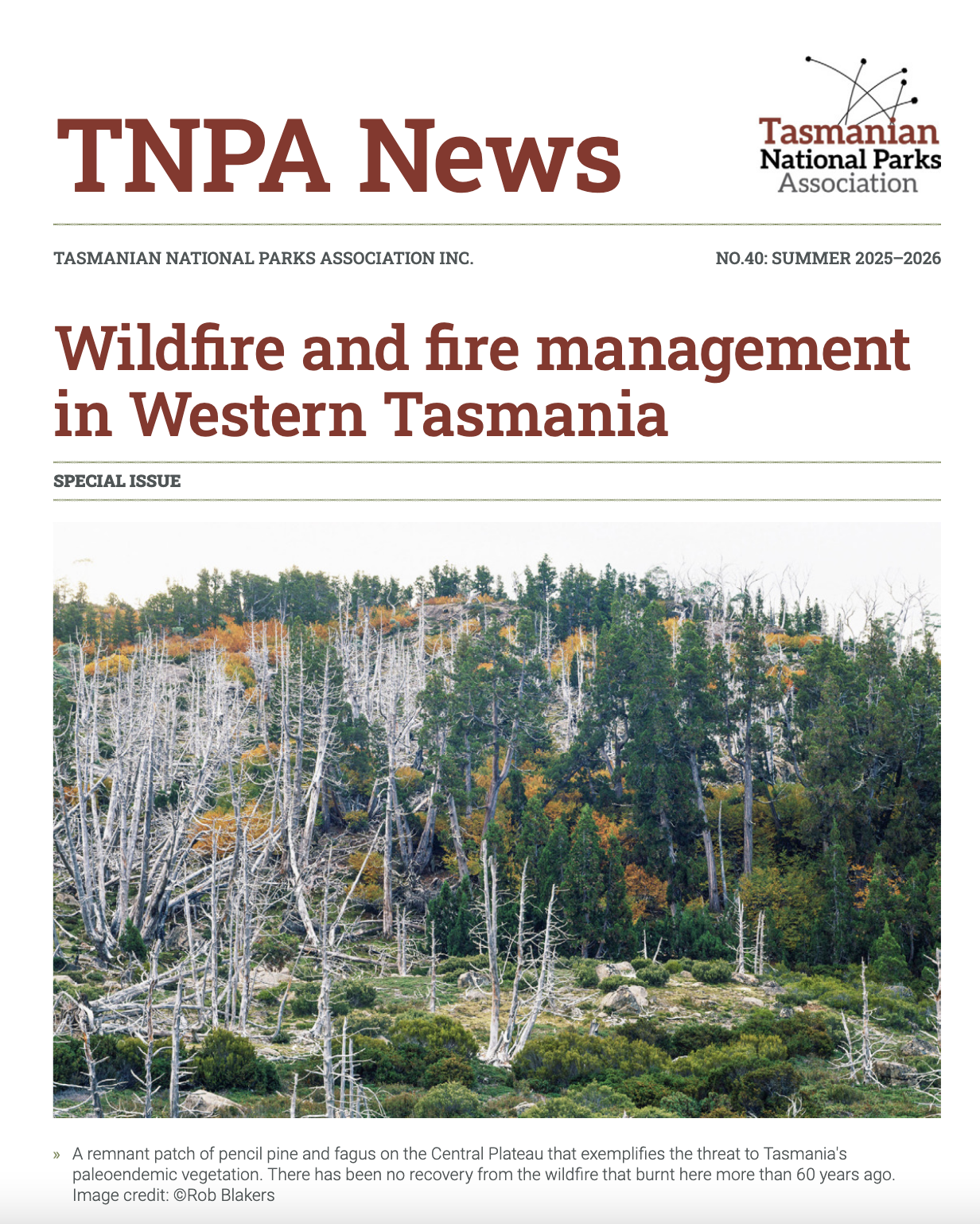
The Tasmanian National Parks Association (TNPA) recently dedicated an issue of their newsletter to the question of how to manage wild fire in Western Tasmania. As has been widely noted, including here at Mountain Journal, fires having been getting more intense in western lutruwita/ Tasmania since a ‘tipping point’ sometime around the year 2000. Since then, there has been an increase in the number of lightning-caused fires and an increase in the average size of the fires, “resulting in a marked increase in the area burnt”.

As TNPA notes in the introduction:

The direct impacts of climate change for Tasmania are changes to weather patterns with corresponding changes to levels of temperature, rainfall and evaporation – most likely a warmer, drier climate overall.

The outcomes of some of these changes are beyond our ability to influence. For example, there are no options for protecting an entire landscape from drought, although it may be possible to save examples of individual species.

As discussed in the following essays, the increased frequency and intensity of wildfires is already resulting in demonstrable impacts on some of Tasmania’s most highly valued species and ecosystems (paleoendemics and alpine ecosystems) and options do exist for how it is managed.

  Continue reading “Fire: how do we control things when we can’t control things?”
2024 is a pivotal year in determining Lake Pedder’s future

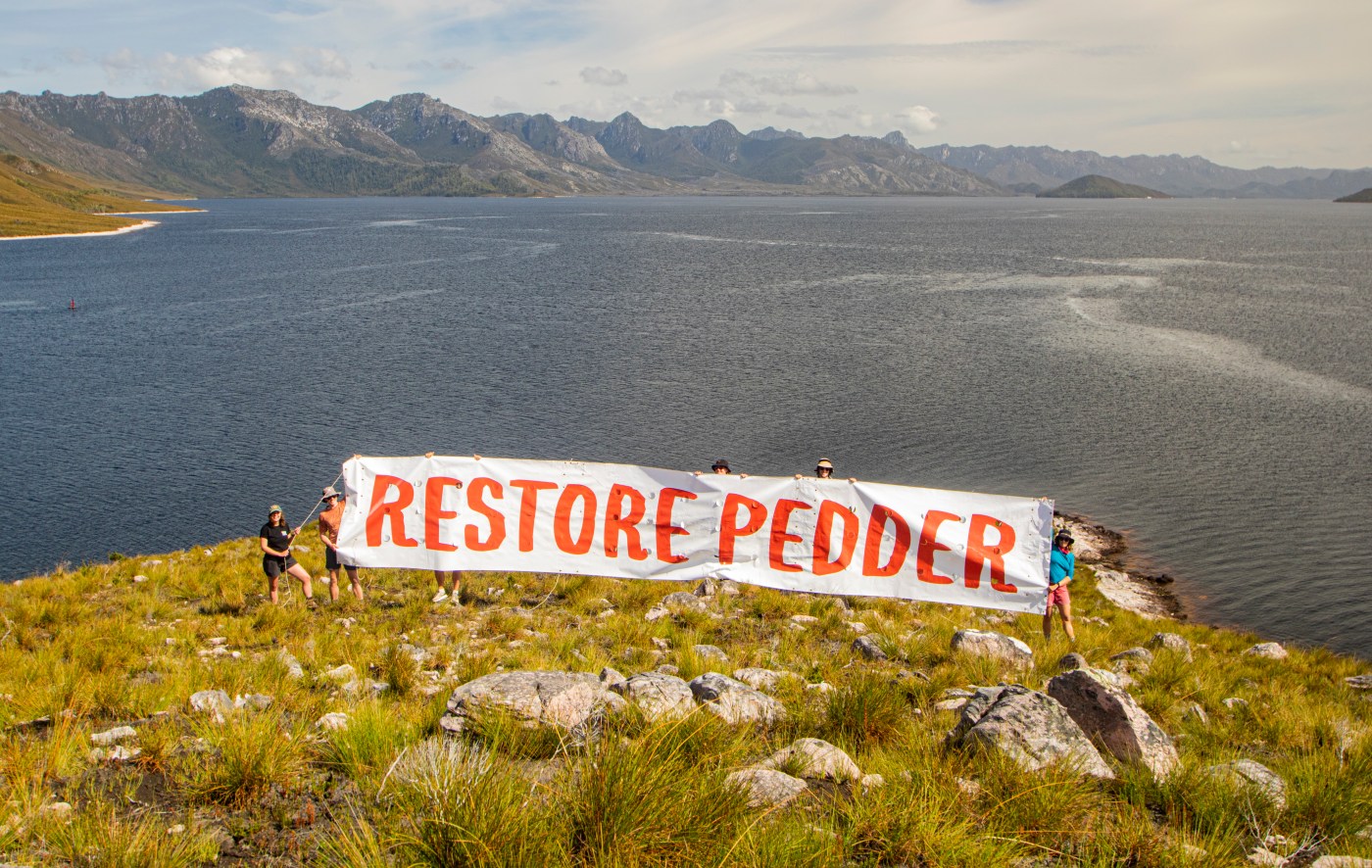
In 1972 the original Lake Pedder was flooded to create an auxiliary Hydro storage impoundment, sparking national outcry and international criticism. Since the controversial flooding, there have been growing calls to restore the original Lake. Hence the present-day human-made Pedder Impoundment is contained within the Tasmanian Wilderness World Heritage Area (TWWHA) boundaries, with the intent of eventual restoration. That time has come.

2024 is shaping up to be a pivotal year in determining Lake Pedder’s future. A federal government decision will be made in the coming 12 to 18 months; to either set about planning the restoration of Lake Pedder or invest in massive high-risk dam works that will maintain the flooding of Pedder for another 40 to 50 years.

Continue reading “2024 is a pivotal year in determining Lake Pedder’s future”

Walker registration in remote TAS World Heritage Areas – how is the system going?

There has long been a permitting system for people wishing to walk the Overland Track in lutruwita/ Tasmania. Since 2021, there has also been a registration system for the Western and Eastern Arthurs and Mt Anne area, Lake Rhona and the Walls of Jerusalem. Many of these areas experienced visits from a record numbers of walkers during the 2022-23 season.

How is the system going? The general feedback from walkers visiting these areas is that the system is needed to manage environmental impact and crowding, but that the system itself needs to be reviewed and improved.

Continue reading “Walker registration in remote TAS World Heritage Areas – how is the system going?”

CHASING the MOUNTAIN LIGHT: A Life Photographing Wild Places

All landscapes have appeal. Some are easier to love than others. Many Australians love the beach and coastlines. Some love the desert, or wetlands, rainforests or the tall Ash forests. Some people have more obscure tastes – mangroves or mulga or gibber plains. But many of us love the mountains. And some of us express this love through writing, film, poetry, photography or other forms of communication. A new book called Chasing the Mountain Light delves deep into love of the mountains through the medium of images and writing.

The subititle of the book explains it perfectly: ‘A life photographing wild places’. The work of David Neilson, it is a glorious coffee table sized book featuring wonderful black and white images from south western lutruwita/ Tasmania, Patagonia, Karakoram and the Alps of Australia, New Zealand and Europe and other ranges such as the Andes.

Continue reading “CHASING the MOUNTAIN LIGHT: A Life Photographing Wild Places”

Tasmania’s south-west threatened by drought and fire

Mountain Journal has often reported on the threats to remnant ancient forests in lutruwita/ Tasmania. Vegetation that dates back to the time when Australia was a part of the Gondwana super continent remain in mountain and low land areas in the centre and west of the state, and are under threat from climate change driven fire regimes.

For instance, this story reports on the drying trend that has been noted in south western Tasmania which has seen a steady increase in bushfires ignited by lightning, threatening the survival of Tasmania’s Gondwanan legacy.

A recent story from Zoe Kean, published on the Tasmanian Inquirer website (available here) highlights the threats to these vegetation communities.

Continue reading “Tasmania’s south-west threatened by drought and fire”

Tasmanian Wilderness Guides Association calls for halt on developments within World Heritage Areas

The South Coast Track travels 85k m from Melaleuca to Cockle Creek along the coastline of south western lutruwita/ Tasmania. It traverses wild beaches and mountains and feels like one of the most remote places on earth. The landscape that the track passes through is a part of the massive Tasmanian Wilderness World Heritage Area (TWWHA) that protects most of the south west of the state.

As part of the state government’s agenda to see more private development within World Heritage and national parks, a seven-day guided walk has been proposed for the South Coast Track, which would include six walkers’ privately operated huts built.

Continue reading “Tasmanian Wilderness Guides Association calls for halt on developments within World Heritage Areas”

Huon Pine reserve threatened by fire

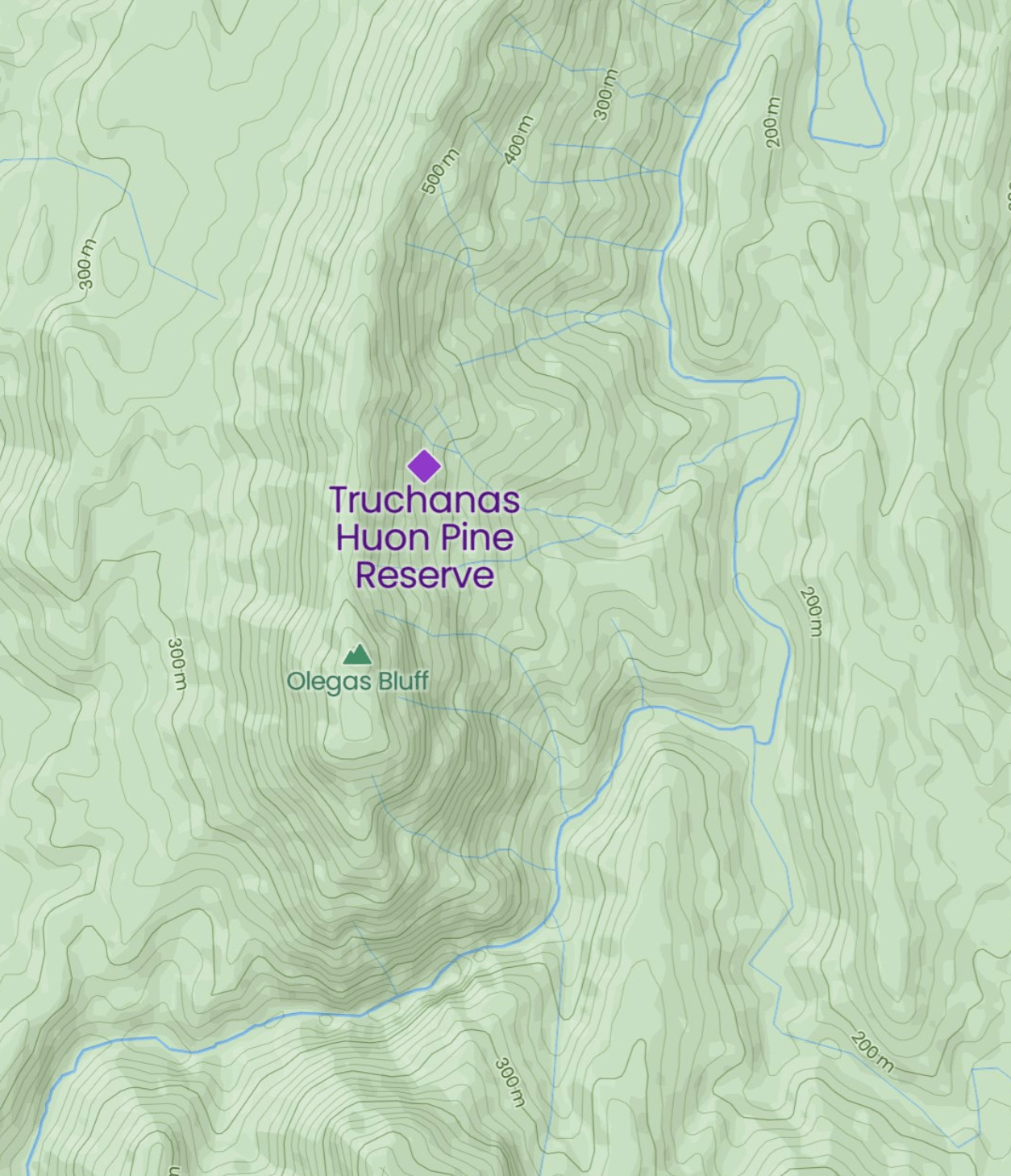
There is currently a bushfire burning at Olegas Bluff within the Franklin-Gordon Wild Rivers National Park in south western lutruwita/ Tasmania.

The Parks and Wildlife Service is undertaking air-based suppression works in the area. The fire is not yet contained and the cause of the fire is yet to be determined.

The most disturbing aspect of this fire is that it threatens the Truchanas Pine Forest, which contains globally significant Huon Pine trees.

Continue reading “Huon Pine reserve threatened by fire”

Fires in south west Tasmania

A number of small fires are burning in World Heritage Areas in lutruwita/ Tasmania. At this point details on each fire is fairly scare. This post will be updated as extra details arrive. Initial post: JAN 31, 2022.

Continue reading “Fires in south west Tasmania”

Progress on a fire management plan for the TAS World Heritage Area

The Tasmanian Wilderness World Heritage Area (TWWHA) is one of the largest conservation areas in Australia, covering 15,800 km², or almost 25% of lutruwita/ Tasmania. It contains huge areas of wild landscape.

Sadly, fire is a huge threat to many vegetation communities in the TWWHA which are fire sensitive, particularly in the context of a changing climate.

We know that climate change fueled fire regimes threaten the TWWHA. For instance, the amount of vegetation burnt by fires caused by lightning strikes in Tasmania’s world heritage area has increased dramatically this century, according to research led by the University of Tasmania.

Following public consultation in 2020, plans for managing fire in the TWWHA are being developed. The Tasmanian National Parks Association (TNPA) says ‘we are pleased to see belated progress towards the development of a Fire Management Plan for the TWWHA’.

Continue reading “Progress on a fire management plan for the TAS World Heritage Area”

Chasing Giant Trees in lutruwita/ Tasmania

Carl Hansen and Jan Corigliano report on a recent mission to catalogue newly discovered forest giants.

This story first appeared in the Mountain Journal print magazine for 2021 (available here).

The tallest and biggest living things in the world are trees. While the biggest and tallest are the well-known Coast Redwoods of California, the towering Mountain Ash (Eucalpytus Regnans) of Victoria and Tasmania have largely escaped the limelight, despite being the tallest trees in the southern hemisphere.

In the Tasmanian Wilderness World Heritage Area, to the west of the Florentine River in the vicinity of McLeod’s Creek, grows a patch of extremely tall forest unmatched in extent and integrity in Australia. Remote, rugged and barely visited by Europeans, it contains 29 LiDAR-identified “‘hits’ over 85 meters tall. In recent years, the advent of LiDAR (a 3D scan of tree heights from a small plane) has uncovered many previously undiscovered giant trees. But what’s shown on LiDAR doesn’t always stack up with what’s on the ground, so ground surveys must be done in order to see how big the trees really are.

Continue reading “Chasing Giant Trees in lutruwita/ Tasmania”

Lessons from the Tasmanian fires of 2018/19: state has entered a ‘new era of bushfire risk’

Over the summer of 2018/19 huge fires burnt across Tasmania. An independent review of Tasmania’s management of the summer bushfires was released in August 2019. It found inadequacies in the response to the fire burning near Geeveston, and revealed that crews withdrew from the Gell River fire in Tasmania’s southwest in the mistaken belief it was out. The fire then expanded again and became out of control.

The report made a series of recommendations

Now, a comprehensive study examining the 2018/19 and the experience of authorities and affected groups by Insurance Group Zurich has found that the state has entered a ‘new era of bushfire risk’.

“Since the turn of the millennium, climate change and land use change have converged to bring about a new fire regime in Tasmania,” Zurich’s first Australian Post-Event Review Capability (PERC) report said.

More than two thousand dry lightning strikes hit the state during that summer, igniting 70 fires that formed into four massive fire complexes. Over 95,000 hectares of protected land was burnt.

Continue reading “Lessons from the Tasmanian fires of 2018/19: state has entered a ‘new era of bushfire risk’”

Increase in lightning strikes expected to ignite more wildfires

Lightning strikes are one of the main causes of wildfire in Australia. As the planet’s temperature warms, the frequency of lightning strikes is expected to grow with it.

Currently, lightning strikes the earth’s surface nearly eight million times a day. This number is expected to ‘dramatically increase’ as global temperatures rise, according to a study published by Science. The U.S., for example, could experience a 50% increase in the number of lightning strikes by the end of the century, if greenhouse gas emissions are not curbed.

This increase is already being felt in Australia and has implications for how we plan for, and fight fire. Because they start from a single point, lightning caused fires are initially small and can be easily contained before they turn into blazes, if there are ground crews or planes or helicopters available. As was shown by last summer’s fires, in a bad season, we simply don’t have enough resources to do this.

Continue reading “Increase in lightning strikes expected to ignite more wildfires”

Blog at WordPress.com.

Up ↑