Search

Mountain Journal

Environment, news, culture from the Australian Alps

Tag

sustainable business

Dumu Balcony Cafe

There is no shortage of cafes and eating spots in Bright. But Dumu Balcony Cafe stands out, even if its a bit hard to find. It is a social enterprise that employs and trains participants from the Thathangathay Foundation’s Leadership Program.

The Thathangathay Foundation aims to improve the lives of the indigenous people of the Thamarrur region in the Northern Territory through identifying and developing its future leaders. 

Continue reading “Dumu Balcony Cafe”

Thank a Resort

This is an interesting initiative from the Climate Reality Project.

It profiles eleven ski resorts in North America who are undertaking meaningful initiatives to reduce their environmental impact as a practical way of reducing their contribution to climate change.

It asks people to send a message to the resorts to acknowledge their efforts and encourage them to do more.

The project says:

The resorts listed below have all taken meaningful action to offset their carbon emissions in some way. We encourage you to send a virtual high-five to as many of them as you can for going above and beyond in the fight against climate change and helping to keep snow on our mountains.

Of course, no Australian resorts would make such a list given their lacklustre efforts. But its always good to get inspiration from elsewhere about what might be possible …


The Epicenter

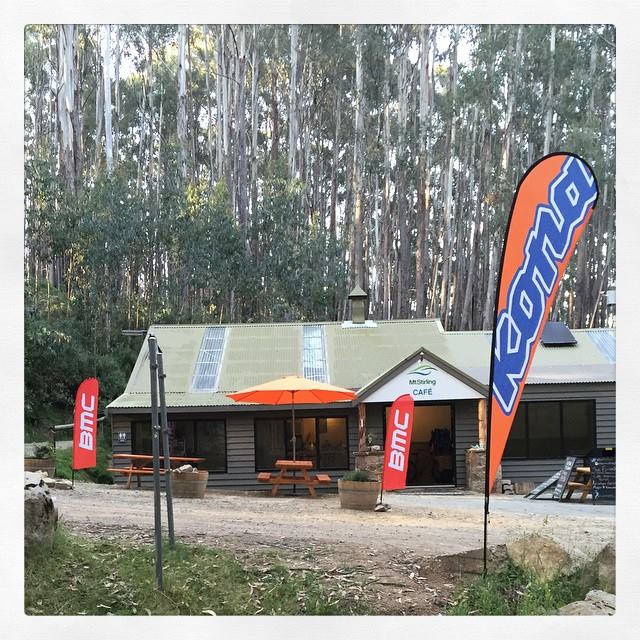
The Epicenter is a great new cafe, opened in December 2014, that’s operating out of the ski school building at Telephone Box Junction on Mt Stirling.

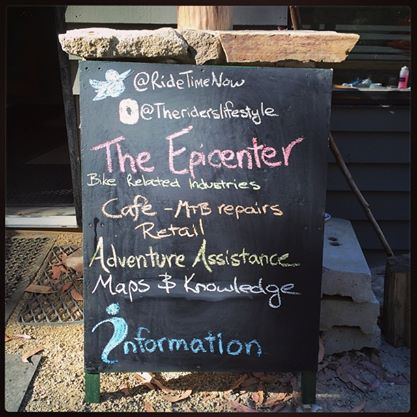
Epicenter 2The Epicenter has a strong focus on mountain biking, and will be open throughout summer and autumn, then for the snow season as well. Along with Mountain Kitchen at Dinner Plain, this new operation is a stand out amongst alpine cafes: it’s small scale and friendly, with an authentic feel and commitment to adventure and mountain living.

Co-owner Hjalmar Arnold (Yully/Dingo) describes it as “the Riders Lifestyle in a shop, year round” and “the Gateway to the Alpine Backcountry”. There is no doubt that the MTB trails developed in recent years on Mt Buller and Stirling are some of the finest in the country. Yully helped build them, and is a great source of knowledge for first time riders.

They have great food, much of it made on the premises, and excellent coffee. Please drop by and support this great initiative.

There are additional renovations going on to extend the facilities at TBJ, which will be ready for winter 2015.

You can find their facebook page here.

the Dinner Plain Clean Energy Initiative

The Dinner Plain Clean Energy Initiative is a great new program. It aims to offer cheaper, pollution free electricity generated from renewable sources, as well as new technology alternatives to replace antiquated, polluting and expensive gas heating and hot water systems.

You can switch your electricity supplier here.

For every person that switches, Powershop will make a donation to the DP Community Energy project. You can also switch your Melbourne home using the above link to support the DP Community.

Continue reading “the Dinner Plain Clean Energy Initiative”

Ski Resort Installing Solar Array

Mountain Journal has previously reported on the sustainability initiatives of Mt. Abram ski area in the USA. They have recently substantially deepened their direct investment in renewable energy.

This report comes from NECN news.

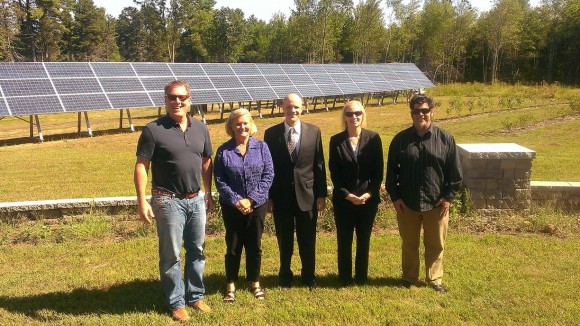
A western Maine ski resort is installing an 803-panel solar array it says should eventually provide 70 percent of the resort’s annual electricity needs.

Jamie Schectman, the marketing director of Mt. Abram ski area in Greenwood, says the project is expected to produce more than 280,000 kilowatt hours annually.

Part of the project will be paid with up to $235,000 from a 25 percent matching grant from the U.S. Department of Agriculture’s Rural Energy for America Program.

The Sun Journal reports that the total cost of the project is expected to be less than $1 million.

Mt. Abram co-owner Matt Hancock said the solar project “continues the advancement of our clean energy game plan – utilizing abundant, local and readily available resources wherever and whenever possible.”

You can read more about the sustainability initiatives at Mt Abram here.

the Great Forest National Park

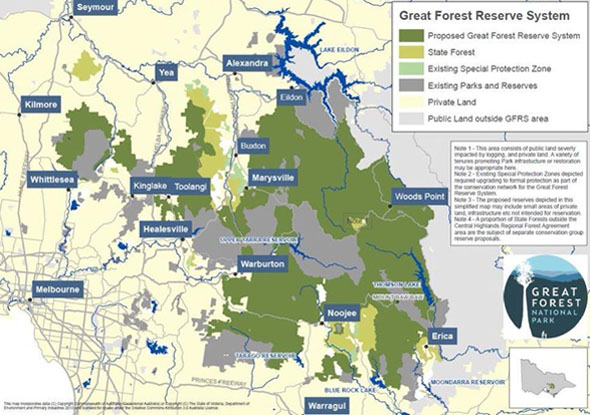
The Great Forest National Park (GFNP) proposal is a vision for a multi-tiered park system for bush users and bush lovers alike, on Melbourne’s doorstep.

It is a park that will protect and maintain important ecosystem functions critical for the health and well being of all Victorians. The proposal intends to amalgamate a group of smaller parks and add a recreational and ecosystem management plan overlay. The GFNP’s gateway in Healesville is only 60 kilometres from Melbourne’s MCG and stretches from Kinglake through to the Baw Baws and north-east up to Eildon. The proposal is backed by 30 years of research from Laureate Professor David Lindenmayer AO and his team from the Australian National University. The Park proposal adds approximately 355,000 hectares to the current 165,000 hectares in reserve. This will bring Melbourne up to a little over 500,000 hectares of reserve, nearly half the size of Sydney’s reserve system. It is an ambitious project that is gaining momentum by the day.

Continue reading “the Great Forest National Park”

Thredbo carbon offset scheme

The snow season may be pretty much over, but it’s worth mentioning this initiative to reduce greenhouse emissions related to travel to Thredbo resort. It’s also heartening to see Thredbo offsetting emissions from some of its operations, including snow groomers, snow mobiles, buses and work trucks. This came via Adventure Pro.

Continue reading “Thredbo carbon offset scheme”

‘Worn Wear’. Don’t buy new stuff – love the stuff you already have

Image: Worn Wear website

This 27 minute film comes from Patagonia.

Worn Wear is an exploration of quality – in the things we own and the lives we live. This short film takes you to an off-the-grid surf camp in Baja, Mexico; a family’s maple syrup harvest in Contoocook, Vermont; an organic farm in Ojai, California; and into the lives of a champion skier, a National Geographic photographer, and a legendary alpinist. It also features exclusive interviews with Patagonia founder Yvon Chouinard.

Released as an antidote to the USA Black Friday and Cyber Monday shopping frenzy, Worn Wear is an invitation to celebrate the stuff you already own.

You can read people’s stories about their favourite gear here.

Check here for an earlier post on the Worn Wear campaign.

new resorts sustainability initiative in the US

I know I should probably stop bagging out our local ski resorts for being useless on climate change, but there are so many inspiring examples from overseas that show what is possible with a little bit of vision.

The following is an announcement about a new collaboration between an alliance of US-based mountain resorts, and Protect Our Winters.

The announcement is vague on the details of exactly what the alliance will do, and highlights ‘cross promotion’ opportunities, but at least it seems intent on putting climate change on the agenda for each of the resorts, and mentions advocacy as one of the activities that will be undertaken.

Aspen-Snowmass-1The Mountain Collective, an alliance of independent mountain resorts, and Protect Our Winters (POW) are proud to announce a new and innovative partnership with the mission of uniting the winter sports community on the important issue of climate change. Both groups have worked independently to promote this environmental cause, and this collaboration will make an even bigger impact.

Protect Our Winters is the environmental center point of the winter sports community’s fight against climate change.  The Mountain Collective is comprised of six iconic destinations representing the core of the skiing and snowboarding world including Alta, Aspen/Snowmass, Jackson Hole, Mammoth Mountain, Snowbird, Squaw Valley/Alpine Meadows, and Whistler Blackcomb. Together, POW and these high profile resorts can impact the entire community and industry with incredible effectiveness.

“Through this groundbreaking partnership, The Mountain Collective has re-defined what a pass should be.  It not only represents access to six world-class destinations, but the foresight to realize that climate change is a threat to our sport and with that access, comes a responsibility to protect it for the long term,” said POW’s Executive Director Chris Steinkamp.

“Partnering with a leading organization like POW serves to reinforce The Mountain Collective as the most forward-thinking alliance of its kind,” said Christian Knapp, vice president marketing, Aspen Skiing Company. “Together we can leverage the power of our brands to promote meaningful climate advocacy that resonates with mountain resorts and snow sports enthusiasts alike.”

The partnership will include ongoing advocacy and cross-marketing initiatives, education and community outreach to raise awareness and promote environmental sustainability.  Additionally, POW members who purchase a Mountain Collective Pass will receive a year’s subscription to Powder magazine, and anyone who purchases a new Mountain Collective Pass will be offered a free one-year membership to POW.

The Impact of Climate Change on Winter Sports

The last decade was the warmest on record [NOAA, 2010]. Fewer ski days would not only reduce enjoyment for skiers, boarders and other winter sports enthusiasts, but also cause significant economic impact to an industry that supports 965,000 people and contributes $66 billion to the U.S. economy alone [OIA 2006, 2012]. Without action to reduce emissions, scientists predict that by 2039 the Northeast ski season will last less than 100 days and the probability of being open by Christmas will decline below 75% [Scott et al. (2008)].

a threat to the outdoor education course at Blue Mountains TAFE?

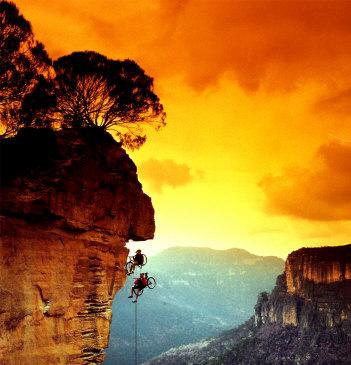
Many people with connection to the Alps have passed through the Blue Mountains outdoor education course. The following article comes from the Blue Mountains Gazette, and highlights a recently revealed threat to the course.
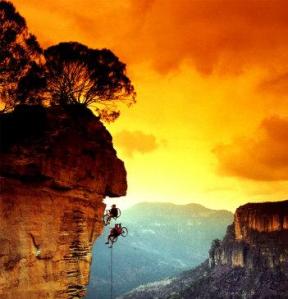
A threat to shut down the 15-year-old outdoor education course at Blue Mountains TAFE, as part of sweeping State Government cuts to education, was a short-sighted decision say angry Mountains adventure tourism operators.

The move, leaked on a College Alumni Facebook wall last week, was met with resounding disbelief by the tourism industry and current and former students.

“The quality of the course is exceptional. This doesn’t make sense. It is the Harvard equivalent of outdoor education courses.”

Mr Jones said tourists came to the region because of the huge drawcard of adventurous activities offered by companies like his.

“If you’re going to pick between Blue Mountains and the Hunter as a destination you would pick here because you can have this flagship experience (in canyoning, abseiling and rock climbing). Imagine if they stopped teaching hospitality at Blue Mountains TAFE what the implications of that would be?”

Aidan McGarry, owner of High and Wild which has been operating in Katoomba for 22 years, agreed, saying 10-15,000 people came to the Mountains annually for these types of experiences and he was “appalled” that the decision could be made without consultation.

“There’s a flow-on effect to the wider community. It’s where we get our employees from, it’s a really specialised industry. We’re not going to have any guides. I’ve got to talk to national parks to see whether they can cancel the (necessary guides) licence.”

Twelve years ago, Ben Griggs, now 37 and living in Queensland, completed the 12-month course at a subsidised price of $180 and says it changed his life.

“To me they’re trying to save money and I appreciate that, but I just don’t think they understand the value of that leadership training,” Mr Griggs said.

“I was not a particularly useful member of society and it helped me to step up.”

The course enabled him to work for more than a decade and he still supplements his current small business income as a video operator with adventure work.

“It’s not a course you can run anywhere. I know they run outdoor rec in other places but this one is made for the Blue Mountains. The tourism industry really does use those people.”

A course teacher Adam Darragh placed the original post on the Facebook site, a site he said was set up by a former teacher. He said he understood core TAFE funding would be cut to the course “because it was one of the most expensive (due to excursions)”.

“A big question I’ve got for Roza Sage and Barry O’Farrell is do they value jobs because this course has a high vocational outcome? We have organisations asking for our graduates before they have finished.”

Current course participant Tim Williams who hoped to get his diploma next year is “shattered” by the move and worried for other students, some who have come as far as Western Australia, to do the course.

“It is the only college in Australia offering all the guiding skill areas I needed to gain employment here in the Mountains. It’s really shaken us up. The staff within Blue Mountains TAFE’s Outdoor Recreation department are the most ethical and inspiring teachers and the wider community benefits as TAFE runs free and low cost guided tours for youth at risk groups and schools.”

Tourism operators told the Gazette that other courses were available at Lithgow and Sydney but none covered the final Certificate Four advanced requirements in abseiling, canyoning and rock climbing — skills the guides need.

“Ninety per cent of staff up and down Katoomba Street working in abseiling, rockclimbing and canyoning have done this course and were trained at the (western Sydney) Institute (based at Wentworth Falls),” Mr Jones, who is also a board member of the NSW Outdoor Recreation Industry Council and a director of Blue Mountains Lithgow Oberon Tourism, said.

“Outdoor recreation state-wide is an expanding industry and qualified staff are already being sought from interstate and overseas to fill the gaps.”

TAFE spokesman Craig McCallum said TAFE had made no decision on the course but he did not confirm whether it would run next year.

He said they were looking at the best ways to respond to the education cuts.

“We are in the process of consulting with our staff as to the best ways the Institute can respond to reform changes announced by the Minister for Education on September 11. TAFE NSW – WSI is also awaiting the final recommendations from the Smart and Skilled skills reform . . . to meet the current and future jobs and skills needs in western Sydney and NSW.

“The Facebook page to which you refer is not an official page of TAFE NSW -WSI and is not administered by the Institute.”

Randall Walker, Chairman of Blue Mountains Lithgow and Oberon Tourism estimated guided, active adventure and tour experiences contributed about $25m of the $500m annual tourism industry but added he “had no reason to believe the department was closing”.
Blue Mountains MP Roza Sage responded to criticisms by saying she had “sent through to the minister’s office concerns from the community that have been raised with me”.

“Any changes will be introduced after a period of engagement and consultation with relevant staff and other stakeholders . . . the advice that I have received is that all courses are being reviewed, and at this stage there is no decision made.”

Mr Darragh said he was “excited if the decision hasn’t been finalised”.

Alpine resorts and Council win State Government category in Premiers awards

Spion Kopje, above Falls Creek village

The Premier’s Sustainability Awards are billed as “Victoria’s most prestigious environmental awards ceremony”.

The awards are intended to “recognise and reward Victorian businesses, institutions, communities and individuals that are forging a sustainable Victoria now and for the future”.

At the awards ceremony on October 2, Alpine Shire Council – Dinner Plain Alpine Village, Falls Creek Resort Management, Mt Hotham Resort Management, Mt Buller Mt Stirling Resort Management, North East Victorian Regional Waste Management Group (NevRwaste) and 4SITE Australia Pty Ltd were recognised through being awarded the State government award.

This was for the ‘Living Bin’, a joint initiative between three alpine resorts which is administered by State Government Boards. This program captures organic waste from Falls Creek, Mount Hotham, Mount Buller and Dinner Plain Alpine village, to convert it into commercial fertiliser. A successful trial of organic collection was conducted in 2010, and in 2011 the program was extended into commercial food outlets, club lodges, and private accommodation.

In 2011 this program had several hundred participants and diverted over 70 tonnes of organic waste from landfill. This program empowers resort residents and guests to make a difference in their daily lives.

You can find extra details here.

As an observation about the awards, it does seem rather strange that Hepburn Wind won the overall award last year (Hepburn is within a ‘no go’ zone created by Ted Baillieu, and would not be allowed under his wind energy rules). And at the 2012 awards, a TAFE college won the Tertiary category. Given the slash and burn cutbacks occurring through the TAFE sector, this is a rather ironic decision.  

geothermal technology in the Victorian Alps

Following on from a recent post on this site about a number of ski lodges at Mt Hotham installing solar panels to provide power, this is an update about a club at Hotham which has also started to use geothermal power for heating.

Image: Brush Ski Club

According to Wikipedia,

“A geothermal heat pump, ground source heat pump (GSHP), or ground heat pump is a central heating and/or cooling system that pumps heat to or from the ground.

It uses the earth as a heat source (in the winter) or a heat sink (in the summer). This design takes advantage of the moderate temperatures in the ground to boost efficiency and reduce the operational costs of heating and cooling systems”.

According to the Brush Ski Club,

“Victoria’s Alpine Resorts are facing the challenging hurdles of rapidly escalating energy costs, climate change and the national target to cut greenhouse emissions. We fully endorse Australia’s Keep Winter Cool initiative and are proactively committed to sustainability outcomes.

In an effort to jump these hurdles Mount Hotham’s B’Rush Ski Club has searched for many years to find an energy efficient and environmentally friendly solution to our energy requirements. In a location where winter temperatures dip to below minus 10 degrees keeping a large building at a comfortable room temperature has a high energy demand. In the past, B’Rush Ski Club has employed a combination of electric and gas fired boilers to provide hot water and heating for our guests. With energy prices on the rise and the desire to reduce our carbon footprint the club began a search for an alternate energy source.

After looking to the USA and Europe, where similar alpine environments exist, the Club decided on ‘GeoExchange’ or Ground Sourced Heat Pump (GSHP) technology. GeoExchange technology is commonly used in Europe and North America to provide low cost, low emission heating and cooling of buildings. Ground Source Heat Pumps or GSHPs are recognised as the most efficient and environmentally friendly heating and cooling systems available today, using as little as 25 % of the energy of conventional systems. This translates directly to lower costs and lower emissions.

A GHSP system is much like a reverse cycle air conditioner. The major difference is that instead of using the outside air to provide the energy the GSHPs extract renewable heat from the ground via a system of bores drilled into the earth. These bores carry a refrigerant loop that extracts ground heat, transporting it into the building. This solution will provide both heating for the building, via floor heating and radiator panels, as well as hot water for 40 guests.

The GeoExchange project has been facilitated by the Victorian Government’s ‘Four Seasons Energy Pilot Program’. The Victorian Government has provided 50% funding for the bore drilling as well as expertise and guidance in design and implementation. The assistance of the Government has turned a possibility into a reality.

The installation of this technology, in combination with a substantial upgrade to building insulation and an efficient floor system has cut our energy consumption by 75 % and our fossil fuel usage by more than 80 %. The payback period of 6 years is considered by the club to be completely acceptable given the expected 30 to 50 year life of our building. Since commissioning, forecasted savings have been exceeded with several spin-off benefits. The new system is spectacularly comfortable, has been universally acclaimed by our guests, the resort and wider communities and has been featured in several publications and forums, inc the 2009 Alpine Resorts Sustainability Forum at Thredbo on the 1st May.

This project is currently the highest GSHP installation in Australia and the first (of we hope, many) in an alpine environment”.

Congratulations to Brush Ski Club for their leadership on this. A number of other lodges and businesses in the Hotham – Dinner Plain area are also investigating using this energy source.

Blog at WordPress.com.

Up ↑