Search

Mountain Journal

Environment, news, culture from the Australian Alps

Tag

Tasmania

‘Eternal vigilance is the price of Freedom’

Tasmania has a world class conservation system. From the South West Wilderness to the Central Plateau, to the Ben Lomond tablelands, it is brimming with wonderful landscapes that are protected as national parks, world heritage or other forms of park. But these parks didn’t just happen. All of them are the result of tireless work by many thousands of people, sometimes over decades.

From the attempts to stop Lake Pedder from being flooded in the 1970s, the Franklin River campaign of the early 1980s, and the long forest campaigns that followed in places like the Styx, the Florentine, Lemonthyme, and the Great Western Tiers, through to the current attempts to ensure proper protection for the Tarkine / takayna region in the north west, people have campaigned for decades to see these areas protected for all time.

Climate change poses an existential threat to many of the natural ecosystems currently protected in the park network. But there is also a pushback by government and some vested interests and sections of the community against the basic notion of protecting these places.

Continue reading “‘Eternal vigilance is the price of Freedom’”
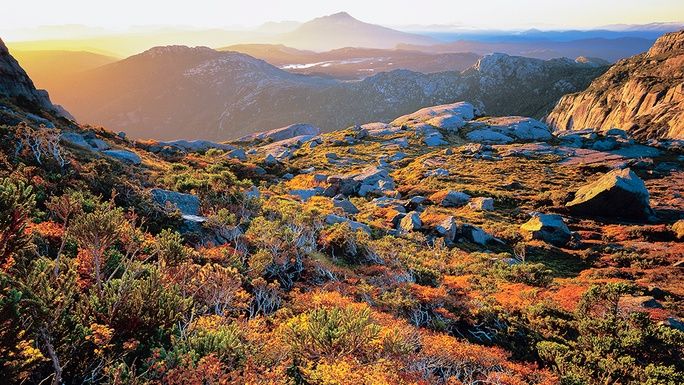
Documenting Tasmania’s threatened Gondwana vegetation

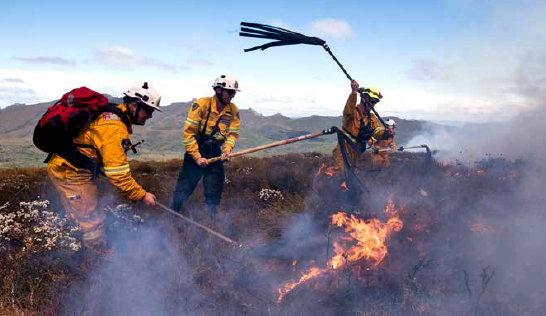
Fires burnt large areas of Tasmania last summer. A recent independent review of fire fighting efforts found there had been some errors in how fires were tackled, but there were also innovative developments (like using sprinkler systems to fire sensitive vegetation).

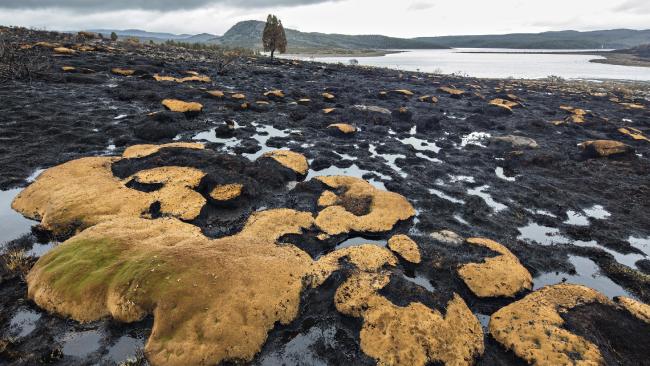
We know that significant areas of fire sensitive vegetation were impacted by the fires. We also know that climate change will bring ever more serious fire seasons, putting these remnant vegetation communities at greater risk.

A group of people have banded together to make a film about this endangered vegetation. They say the ‘Tasmanian Gondwana film aims to raise awareness of the extraordinary value and beauty of Tasmania’s unique paleo-endemic communities. It comes in the wake of the 2016 and 2019 wildfires in western Tasmania that threatened and burnt large areas of ancient Gondwanan vegetation’.

They have launched a crowd fund campaign to enable the film to be produced.

Continue reading “Documenting Tasmania’s threatened Gondwana vegetation”

Independent review of the management of 2018/19 Tasmanian fires

Over the summer of 2018/19 huge fires burnt across Tasmania. An independent review of Tasmania’s management of the summer bushfires has just been released. It found inadequacies in the response to a fire burning near Geeveston, and revealed that crews withdrew from the Gell River fire in Tasmania’s southwest in the mistaken belief it was out. The fire then expanded again and became out of control.

It makes a series of recommendations for the fire services and government, including a proposal to re-establish a volunteer remote area firefighter group. The report, from the Australasian Fire and Emergency Service Authorities Council (AFAC) also gives an update on the ecological impacts of the fires. An earlier ecological assessment is here.

Continue reading “Independent review of the management of 2018/19 Tasmanian fires”

Increased bushfire risk the New Normal

Australian summers are getting drier and hotter as the Earth’s temperature rises and this is leading to longer and more intense bushfire seasons. On the mainland, we are seeing more frequent fires in the mountains – for instance, in the Mt Hotham area we have seen three serious fires in less than 15 years, which has devastated huge areas of snow gum and alpine ash forests. Snow gum forests are changing under the onslaught of more frequent fire regimes.

In Tasmania, huge fires burnt across Tasmania for months last summer, threatening fire sensitive communities. More than 100,000 hectares were burnt in Victoria. As is becoming increasingly obvious, this is the ‘new normal’. This has implications for landscapes and water supplies, how we manage fires, and how we live in the landscape. This is happening in forests around the world, and people who have traditionally lived in forested areas are having to re-assess how they can do this safely in a time of heightened fire risk.

Continue reading “Increased bushfire risk the New Normal”

How has Tasmania’s climate changed?

Climate change is already affecting the landscape of Tasmania through more intense fire seasons. This threatens species like the Pencil Pine. In the last few decades, there has been an increase in fires caused by dry lightning strikes, and this has been impacting on vegetation types that are not fire adapted.

A recent review of how much climate change has already impacted on Tasmania highlights how broad these effects are on the landscape.

Erin Cooper, writing for the ABC, identified the following impacts that are being felt in mountain areas.

Continue reading “How has Tasmania’s climate changed?”

New ‘iconic’ walk with private huts planned for Tasmania’s Tyndall Range

Tasmanian premier Will Hodgman has announced that ‘Tasmania’s wild West Coast has been chosen as the preferred location for our Next Iconic Walk’.

The area selected is the remote and wild Tyndall Range. This ‘iconic walk’ will be similar to the Overland and Three Capes Tracks, where private hut networks have been built. The Range is known for its rock climbing on conglomerate cliffs up to 300m in height, glacial lakes and alpine areas and ‘out of the way’ nature.

The government says “A signature Liberal election commitment, up to $20 million will be invested to deliver our next iconic multi-day, hut-based walk which will enhance the visitor economy throughout the entire region”. According to the proponent, the proposal includes the option of “a private walking company .. investing in the development of private lodges similar to that of Three Capes Track”.

Continue reading “New ‘iconic’ walk with private huts planned for Tasmania’s Tyndall Range”

Campaign against Mount Wellington cable car keeps growing

The long campaign against a cable car that has been proposed for kunanyi/ Mt Wellington, in Hobart, has entered a pivotal moment, with the developers having lodged a development application for the proposal.

In response, local group Residents Opposed to the Cable Car has issued a statement outlining how they will be ramping up their campaign against this unpopular and destructive project.

Continue reading “Campaign against Mount Wellington cable car keeps growing”

(Another) vigil for the mountain

As the long campaign against the cable car planned for kunanyi/ Mt Wellington continues, the residents group Respect the Mountain is keeping the pressure on the developer and all levels of government involved in the approvals process.

They have now announced there will be a peaceful vigil outside the Wellington Park Management Trust Meeting to highlight the Trusts continued involvement in ‘pushing this inappropriate proposal for the people’s mountain’.

The Trust has an important role in looking after the mountain but has been criticised by many in the community during the campaign.

DETAILS

Wednesday, June 26, 2019 at 9 AM – 10 AM

Facebook page (will have extra info and updates closer to the day) available here.

An update on the ecological costs of the 2019 Tasmania fires

Bushfires, which were started by lightning strikes, burnt large areas of Tasmania last summer.

There have been fears expressed by ecologists that large areas of fire sensitive vegetation have been impacted.

An initial desk top assessment carried out by researchers at the University of Tasmania suggested that the areas of these vegetation types affected was very small.

In March, the Tasmanian Parks and Wildlife Service updated their assessment, which also stated that only small areas of vegetation types that are rated ‘Extreme fire sensitive’ (containing components that will not recover from fire, such as rainforest with king billy pine, alpine conifer communities, alpine deciduous beech communities and rainforest with deciduous beech) and ‘very High fire sensitive’ communities (including alpine and subalpine heathland without conifers, rainforest without conifers, and mixed forest) had been affected.

Now, an additional assessment, by the Tasmanian National Parks Association (TNPA), adds further detail to our understanding of the impacts of this summer’s fires.

Continue reading “An update on the ecological costs of the 2019 Tasmania fires”

Human sign on kunanyi/ Mt Wellington

There was a great turnout at the human sign event over the weekend to show opposition to the cable car planned for kunanyi/ Mt Wellington.

Check the video here.

For images, check the Respect The Mountain facebook page.

Background on the campaign available here.

IMAGE: Rob Blakers.

Public meeting on the kunanyi/ Mt Wellington cablecar

Tomorrow night (Tuesday April 15) the long awaited public meeting on the cable car proposal for kunanyi/ Mt Wellington will be held. Members of the Council, Wellington Park Trust and the Department of State Growth will be on hand to answer your questions. Let’s fill the place! Banners and placards are welcome.

7pm for 7.30pm at the City Hall – not the Town Hall! 56-63 Macquarie Street.

You can RSVP on Facebook

No sign of wilderness fire funding for World Heritage Areas

In recent years, wildfire has had devastating impacts on World Heritage Areas in Tasmania. The 2016 fires damaged fire sensitive areas and vegetation types, like Pencil Pines near Lake Mackenzie. Fires caused by dry lightning strikes are becoming more common since the year 2000. Yet resourcing for fighting fires in remote areas is not growing to keep up with greater fire threats.

The fires that happened this summer burnt more than 100,000 hectares, but thankfully (and based on initial estimates), it would appear that only very small areas of fire sensitive vegetation like Pencil Pine and King Billy Pine were destroyed. Innovative actions, like placing sprinklers to protect fire sensitive vegetation at Lake Rhona reduced the impacts. But it remains clear that fire fighters are under resourced to fight remote area fires. Despite sustained calls for additional resources, it would appear that the current commonwealth government isn’t coming to the party.

Continue reading “No sign of wilderness fire funding for World Heritage Areas”

Blog at WordPress.com.

Up ↑