Search

Mountain Journal

Environment, news, culture from the Australian Alps

Author

Cam Walker

I work with Friends of the Earth, and live in Castlemaine in Central Victoria, Australia. Activist, mountain enthusiast, telemark skier, volunteer firefighter.

Letter home from the Arctic: when will we miss winter?

A reflection from Anna Langford, currently in the Arctic Circle region of Norway.


People keep asking me why I have come to spend three months in the Arctic Circle. They need a beat of stunned silence to comprehend my answer, ‘to be cold’.

I’m well-practiced at riding out the response – the loss of words, usually followed by a guffaw of laughter and a light-hearted insult. And sometimes a nervous flicker in the eyes, as though I’ve just given myself away as a ghoulish creature who flinches at the touch of sunlight.

I have been travelling since January, when I chose to bail on an Australian summer in favour of an English winter. ‘What are you doing here?!’ people would splutter, upon finding out where I had come from. Had I accidentally stumbled into Melbourne airport and onto a flight to London while on my way to the beach?

Continue reading “Letter home from the Arctic: when will we miss winter?”

Winter 2024 – the washup

If you were in the Victorian mountains during that amazing storm that passed through in the third week of July, you will have experienced winter at its best. In the Victorian backcountry we had already lost much of the base and the fresh snow was unconsolidated, but it didn’t really matter because there was so much of it. That wonderful and particular sound of fresh dry powder creaking underfoot as you weave through the trees on the uphill and that weightlessness as you head back down truly is magic (it always reminds me of that opening scene in the Valhalla film from Sweetgrass – When you’ve seen the season’s first great snow through the eyes of a child—you’ve known true happiness).

Then the blow drier was turned on, and we all know what happened next. Despite the amazing efforts of the resort groomers, the resorts started to close – the lower elevation ones like Mt Selwyn went first (consistent with what we expect from climate change). As of September 8 there is still cover in the Main Range and a few lifts are still going in places like Falls Creek. But basically the season is done – a whole month early.

This is obviously a huge blow for the businesses who are on their second short winter and everyone who was reliant on a full winter working in a resort or valley town. And, of course, it’s a drag for everyone who just wants to go skiing or riding.

Continue reading “Winter 2024 – the washup”

O’Connell’s Lookout safety railing proposal

There is a proposal to upgrade informal tracks close to the Mitta Mitta River within the Alpine national park. Many people have expressed concerns about plans to erect a set of steel stairs and putting in guard rails on top of the cliff at O’Connell’s Lookout, which overlooks the Graveyard rapid.

The Mittagundi outdoor education centre opposes the proposal, saying

‘young people who come to Mittagundi usually have the opportunity to abseil at this amazing and natural place without guard rails and steel stairs’.

They are urging people to contact Parks Victoria and object to the current proposal.

‘Mittagundi did object initially when we were invited to have a submission, however our objection was not successful. Please, if you choose too, could you write to Parks Victoria stating an objection, it might help prevent the proposal from going ahead.

Thank you!’

info@parks.vic.gov.au

Friends of the Mitta (FOTM) are concerned that if the project doesn’t go ahead, the area may be closed off because of safety concerns.

They say:

Over the years, we have been in ongoing discussions with Parks Victoria (PV) regarding the formalisation of the loop trail, which includes O’Connell’s Overlook. Our discussions included the requirement for a safety railing at the overlook to comply with evolving risk management protocols.

Initially, FOTM opposed the installation of a railing, as we believed it would detract from the site’s natural beauty.

However, approximately three years ago, PV informed us that, without a railing, the overlook would be closed to all visitors, including abseilers and hiking groups.

There is a major piece about the proposal available on their website which provides history and details on their views on the proposal.
 

Call out for Australian backcountry films

Each autumn, the Backcountry Film Festival comes to Naarm/ Melbourne. Timed to inspire some pre season stoke, the program is put together by the Winter Wildlands Alliance (WWA) in Idaho and is a one night festival featuring up to 12 short films. Last year there were 2 films with an Australian connection.

As well as the WWA package, we like to screen one or two locally produced backcountry films – and maybe that’s where you come in! In the 2024 season we showed local films 36o South and Spring Shralpinism on Sentinel Ridge.

If you plan to make a short backcountry inspired film after this winter and would like to show it to an enthusiastic audience, then please get in touch. Cam.walker@foe.org.au

The 2025 screening will happen some time in April or May 2025.


Nature walks at the VIC backcountry festival

As we get close to the annual Victorian Backcountry Festival, there are still spaces available in a number of the tours and workshops.

There will also be some low key nature immersion tours, which are being offered by Protect Our Winters (POW) and Friends of the Earth (FoE).

These tours are free, but everyone attending the festival should purchase a weekend pass (which costs $31.25).

This pass is valid for the whole festival weekend. It gives you access to festival activities including the Friday Night Launch Party, the Saturday and Sunday evening Speakers Program, film screenings and the Avalanche Rescue Competition.

Continue reading “Nature walks at the VIC backcountry festival”

The first Snow Gum Summit

Announcement of conference: February 14 – 16, 2025

Snow Gums (Eucalyptus pauciflora) are the classic tree of the Australian High Country. They are profoundly different to the trees found in mountain areas in other parts of the world, and give a uniquely Australian sense to our high country. However, they are facing a double threat to their survival: from fire and dieback.

We are hosting a ‘snow gum summit’ which will bring together land managers and academics and anyone interested in the future of this iconic species to explore what needs to be done to ensure the survival of snow gum woodlands, and put the issue firmly on the state governments agenda.

We will be inviting First Nations people, local and state wide environmental organisations, local communities and businesses, groups active in outdoors recreation, and enthusiasts of high-elevation, forest ecosystems.  There will be presentations, workshops and field trips.

This event will happen at Dinner Plain, on GunaiKurnai Country in north eastern Victoria.

Continue reading “The first Snow Gum Summit”

The Bayindeen fire and Snow Gum forests at Mt Cole

Snow gums (generally E. pauciflora ssp. Pauciflora) are the iconic tree of the Australian high country. While they are best known for their dominance of higher elevation areas in north eastern Victoria and the Snowy Mountains of southern NSW, it grows in woodland along the ranges and tablelands, in cold sites above 700 metres, in a long stretch from the far south-east of Queensland, through New South Wales, the Australian Capital Territory, and Victoria, to near Mount Gambier in South Australia and Tasmania.

Snow gums also exist as isolated pockets well away from the higher mountains. For instance there are 53 known remnant Snow Gum sites within a 40 kilometre radius of Ballarat, Victoria. A  large proportion of remnant vegetation in the area occurs as small patches or isolated paddock trees, often on private land.

However there are also some important Snow Gum forests on public land in central and western Victoria. A well known example is on the upper slopes around Mt Macedon. Although these forests were impacted by the 1983 Ash Wednesday fires, the Mount Macedon Snow Gum population have been assessed as being in relatively good health (despite a recent proposal to clear some sections of the forest around the Memorial Cross at Mt Macedon)..

There is also a really important community of Snow Gums growing across the higher hills of the Mt Cole state forest.

Continue reading “The Bayindeen fire and Snow Gum forests at Mt Cole”

The Zorali story

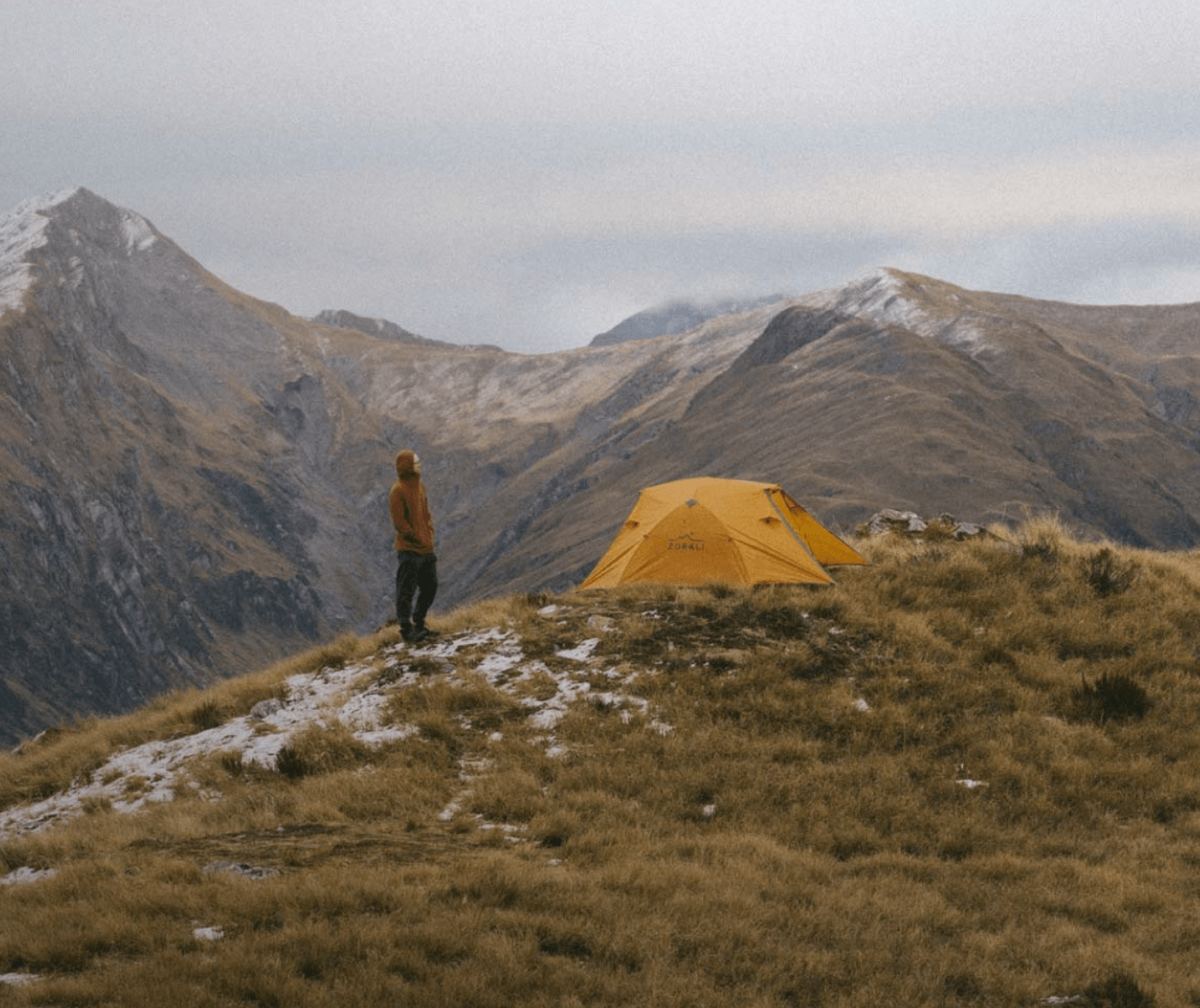
If you spend any time out walking or camping in national parks or other natural places, you will have noticed the rapid rise in the presence of Zorali gear over the past few years. The brand has a particular aesthetic, a commitment to sustainability, and has been active in encouraging people to get into the Big Outdoors.

With the loss of several key Australian brands over the last decade or so (for instance Snow Gum going under, Mountain Designs going online only) and strong awareness campaigns from US based brands such as Patagonia, Arc’terex, The North Face and so on, there are fewer Australian companies active in the outdoors business landscape nowadays. So Zorali, which is epitomised by its cheerful and energetic founders Elise and Cam, is a welcome addition to the outdoors scene.

Who are they and what is their mission? Here is a bit of a chat with founder Cam.

Continue reading “The Zorali story”

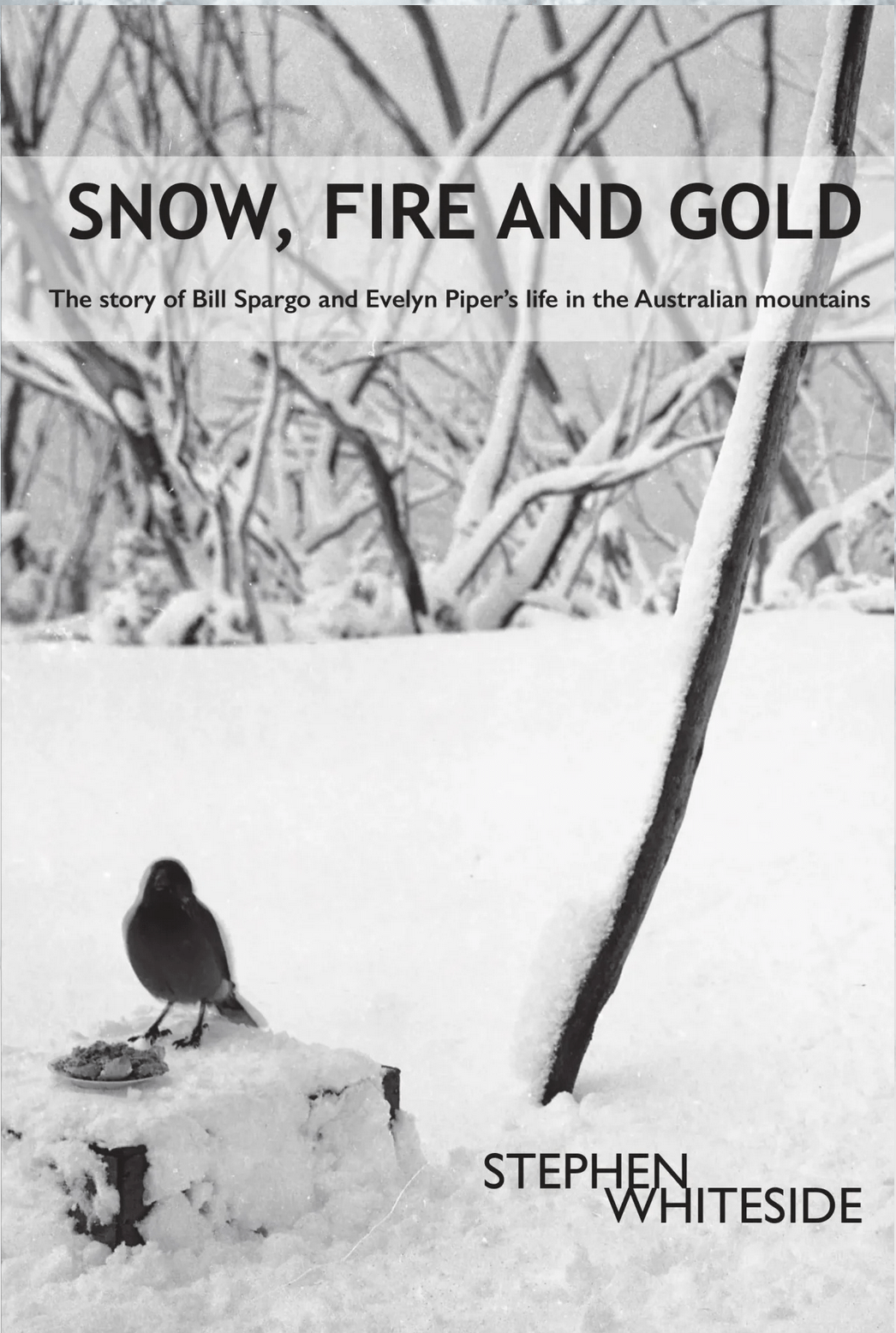
Review: Snow, Fire and Gold

We often see mountain environments as being wilderness: remote and wild country with few signs of human impact or habitation. But, of course, the mountains are a peopled landscape, rich in memory, history and personal stories. Many First Nations stories are now gone, lost with the people who were murdered or displaced. The cattle grazing families who followed occupation tend to dominate popular culture when it comes to the mountains, and most of the others barely get a mention. But there were generations of explorers, miners, loggers, skiers and hikers, hydro workers and road builders, people who built the ski resorts or managed to farm in the higher areas who have also left rich stories. Snow, Fire and Gold written by Stephen Whiteside is a wonderful book about Bill Spargo and Evelyn Piper and their long connection to each other and the mountains around Hotham.

One obvious sign of the human story of the Alps are the huts that dot the landscape. These include old cattle family huts, cabins attached to fire towers, huts connected with government agencies, the hydro schemes, recreation groups, or public infrastructure. They all tell a story of what happened before, or about our enduring connection to place. A rare few hold cultural treasures that speak to other times – the informal museum in the hut at Twilight Tarn in Mt Field national park in lutruwita/ Tasmania is one that comes to mind. Most of these huts were seasonal residences or provided short term shelter for workers or travellers. A rare few were long term homes for people. Spargos is one of these.

You can read the review here.

After the logging: what areas must we protect?

In May 2023, the Victorian government announced that logging of native forests on public land would end in the state by January 1, 2024. This was six years ahead of the planned end of logging and was welcomed by environmental groups and ecologists.

The government announced that there would be a process for the community to contribute to decision making about future forest management, and the Eminent Panel for Community Engagement commenced its community engagement program to look into possible management options for forests in Victoria’s Central Highlands.

In July 2024, consultation on the Central Highlands closed. The Eminent Panel is currently preparing its recommendations to government on the future use and management of these forests. These are expected to be announced before the end of the year.

The next stage: the north east and Gippsland

On 1 April 2024 the Victorian Government announced the next stage in process for determining the future of Victoria’s state forests, with the appointment of a ‘Great Outdoors Taskforce’.

Continue reading “After the logging: what areas must we protect?”

The world’s most charismatic tree (*)

If you visit this website, you will probably have noticed that I have a bit of an obsession with Snow Gums.

Snow Gums (Eucalyptus pauciflora) are the classic tree of the higher mountains of south eastern Australia. Interspaced with Alpine Ash at the lower end of their distribution, much of the forests and woodlands at higher levels across the Alps are dominated by this wonderful tree. They are profoundly different to the trees found in mountain areas in other parts of the world, and give a uniquely Australian sense to our high country. I am always amazed by the remarkable diversity in form that is possible within a single species. From grand tall elders in sheltered zones to wind pruned Bonsai sized trees on the treeline, the Snow Gum has a dazzling diversity of forms.

Continue reading “The world’s most charismatic tree (*)”

Regional reads

I started Mountain Journal back in 2010. Hiding from the mid summer heat, I drew inspiration from Mountain Gazette, a long lived magazine from the USA, and started turning out a few stories under the general themes of ‘news, environment and culture’ from the Australian Alps. Almost a decade later I finally managed to produce a printed magazine, which is now in its 4th year of production.

Somewhere along the way I wrote “people do want to read well crafted content that comes from *somewhere*. Place still matters, and mountains are some of the most compelling environments, drawing us mountain lovers in, helping to form the communities and cultures we develop as we try to make sense of each place.”

Most of what I read is online nowdays. But I do love the experience of print. Finding a sunny spot under a tree and diving into a magazine or book remains a very different experience to sitting on some kind of electronic device. We all know that print is hard – its expensive to produce and distribute. But it has an enduring charm and many people still love the substance and feel of paper-based reading, be it magazine or book.

Continue reading “Regional reads”

Blog at WordPress.com.

Up ↑