Search

Mountain Journal

Environment, news, culture from the Australian Alps

Author

Cam Walker

I work with Friends of the Earth, and live in Castlemaine in Central Victoria, Australia. Activist, mountain enthusiast, telemark skier, volunteer firefighter.

Wellington Park Management Trust weighs up cable car expansion request

The following comes from The Mercury newspaper. Journalist is Michelle Paine.

You may want to add a comment to The Mercury article.

For background to this issue, please check here.

A CABLE car on Mt Wellington is a step closer as the public is called to comment on extending the summit’s development zone.

The Wellington Park Management Trust has agreed to evaluate the proposal to enlarge the Pinnacle Specific Area, which allows development.

The Mt Wellington Cableway Co requested the boundary be moved to accommodate a cable car.

Trust chair Christine Mucha said it did not mean the trust was supporting any particular development.

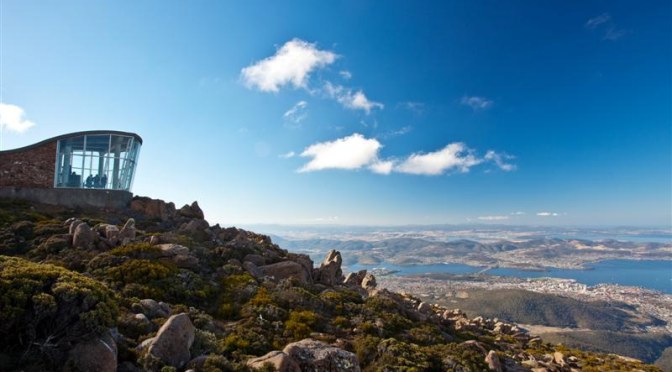
The change would extend the area by about 60m east of the observation shelter.

Dr Mucha said that after consultation, the trust would prepare a report for the Tasmanian Planning Commission.

“While we recognise the strong sentiment against the potential for future development in the Pinnacle Specific Area, the trust believes that the management plan enables such proposals to be considered and assessed in accordance with the performance standards contained in the plan,’’ Dr Mucha said.

MWCC project lead Adrian Bold said it was a positive step.

“We’re following proper process. They had to agree with our rationale. Now there will be a process that involves the public,’’ Mr Bold said.

He said enlarging the boundary was extra work but would mean the cable car would have less visual impact.

Residents Opposed to the Cable Car spokesman Ted Cutlan said he was appalled at the trust’s “rubber stamp’’.

“They’re bending the management plan to fit the development,’’ Mr Cutlan said.

“This is one step along the way. The developer has to put in a development application that would fit the plan.’’


rescue of walker on Bogong hampered by extreme weather conditions

The second rescue operation on Mt Bogong in a week has been slowed by ‘horrendous’ weather on the mountain. As of 8am this morning (9 July), The Age is reporting that police are currently waiting for better weather conditions before they extract a lost hiker on Mount Bogong.

The Border Mail had also reported that:

8.27AM: RESCUE workers have been forced to take cover as wild weather hampers efforts to rescue a hiker who got lost on the mountain last night.

Mount Beauty’s Leading Sen-Constable Peter Johns said the man, who had set off alone, had phoned triple-0 about 4.30pm yesterday after becoming disoriented in the bleak mountain conditions.

He had food, water, clothing and a tent.

Rescue crews set off about 10pm for a four-hour climb to the summit from Eskdale Spur and it has been confirmed that they located the man last night.

However, wild weather has since moved in and the group have been forced to take cover.

Wild weather, with gusts of wind up to 100km/h and a snowstorm, were expected in the area about 3am.

The mission follows two hikers spending Saturday night on Mount Bogong in freezing temperatures.

A Bendigo North man, and his friend, 33, from Box Hill, Melbourne, returned to Mount Beauty about 2pm Sunday after a 12-hour search for them.


Alan E J Andrews 1926 – 2014

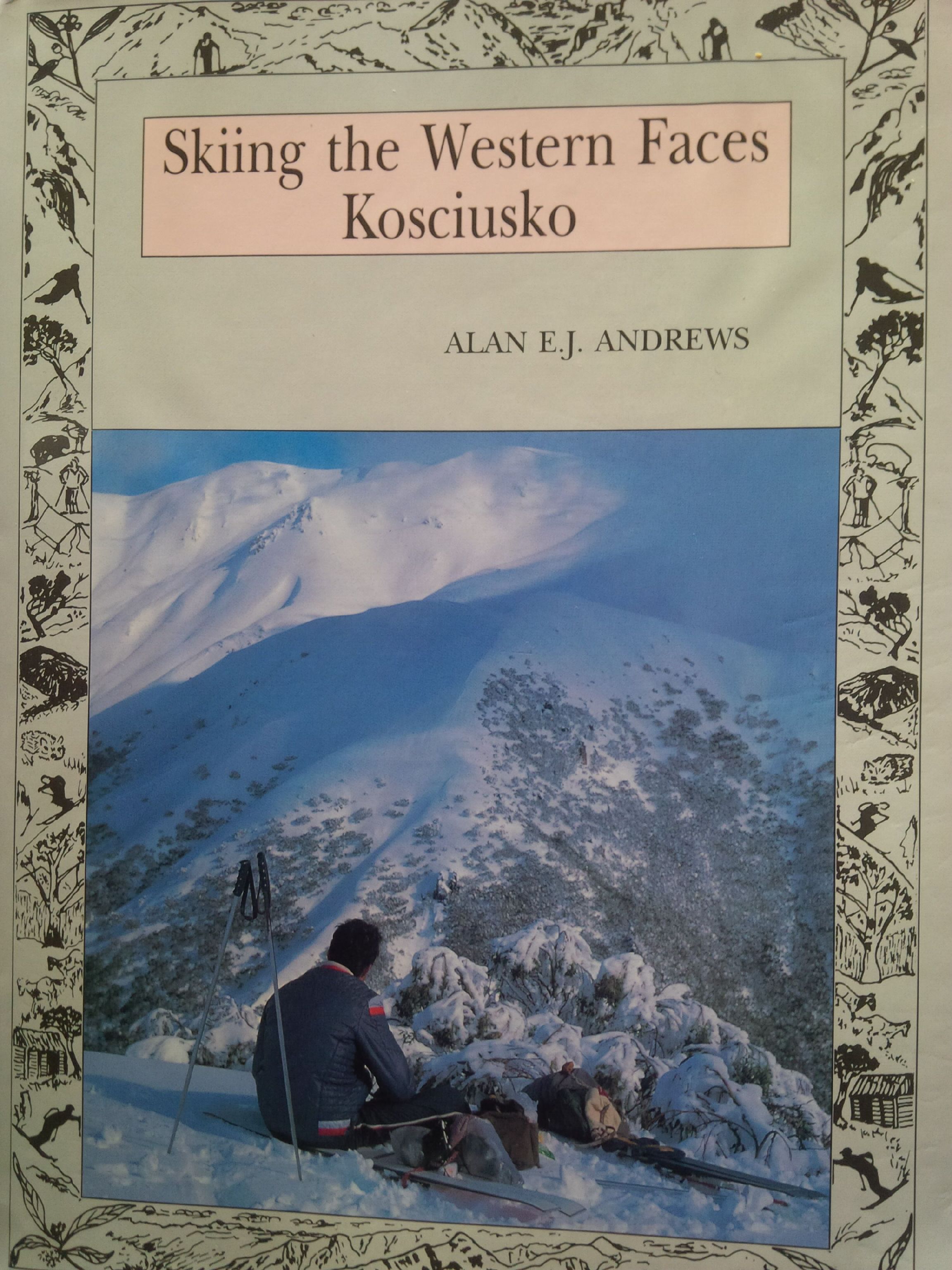
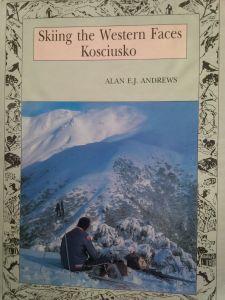
mapAlan E J Andrews is known to many backcountry skiers and boarders as a pioneer of skiing the steep western faces of the Main Range of the Snowy Mountains. He was the author of Skiing the Western Faces Kosciusko.

He passed away last month after a long and well lived life. The eulogy that follows was written by his friend Klaus Hueneke, another luminary of the High Country.

Nureyev on Skis
Or
The Emperor of Illawong

Eulogy for Alan E J Andrews, Mona Vale, 26/6/14

“I have known Alan in person since about 1984 and I’ve known about his writings and journeys across the high country since the 1960s. He had a big impact on my life and my book publishing business Tabletop Press.

Alan was a lover of:-

Australian History especially the early explorers,

the Australian Alps and skiing in all its forms,

the mountain huts especially Illawong and Albina,

old style poetry with rhyming verse,

the ballet and bacon sandwiches and

an old Holden Station Wagon.
He loved reading, drawing and using maps,
and the careful composing of numerous articles and books.

He enjoyed helping others with their own research and replied at length to any questions or correspondence sent. He did this in careful, often quite tiny, longhand or neatly printed with lots of curly bits. You can view it in some of his books. When his distinct handwriting was not on the last parcel of books I thought, ‘something must be seriously wrong’. It was.

His books and long sojourns at Albina or Illawong hut above the Snowy River were very important features of his life. When he was at Illawong it was like the Emperor was in residence. Not a domineering Emperor who demanded our attention but a quietly spoken, quietly smiling, self effacing Emperor, one who didn’t have to shout it from the roof tops.

I loved listening to him reciting Australian classics as well as his own poetry. This is an extract from The Fan-shaped Snowgum.

There it is, the fan-shaped snowgum,
Glinting in the morning frost;
Reminding us of courtly pleasures
From time forgotten – long since lost.
Lovely eyes ‘neath lowered lashes,
Flirting sweetly, ringlets tossed,
Fan on crinoline laid demurely,
Clamouring suitors imperiously bossed.

But look again, the trunk is twisted,
Leaning perilously askew.
Another instant it had fallen,
Yet still survives, to grow anew,
The branchlets fanning to the northward,
Others stretching southward too;
Now proudly standing tall, defiant,
A sentinel to welcome you.

In 1982 I wrote Huts of the High Country. Alan took note that there was a new kid on the block and on a later visit to Illawong we spoke about my new book Kiandra to Kosciusko. He offered to draw a number of maps and gave me permission to use his articles about early ski tours in different parts of the Snowy Mts.

When the book came out he said ‘but you only spent a couple of pages on the history of Mt Kosciusko itself’. Sorry Alan. It got him going and in 1990 he asked me to design and publish Kosciusko – the Mountain in History. It covered all the first European explorers who reached the high tops and filled a missing gap. As usual, the research was meticulous.

In 1993 he wanted me to do the same with Skiing the Western Faces but this time he said, ‘I want the book to breathe more’. ‘Breathe?’, I thought Can a book breathe? It showed how books to him were living entities with eyes, lungs, heart and soul. No wonder his and Muriels house is full of them.

He showed me a book which had lots of space around the text and between chapters. I got the message and Skiing the Western Faces became his most popular book. It inspired many others including his sons Neil and Ian as well as my step-son Chris, who brought me here today, to explore the dramatic western faces. I always know it has been a good snow year if orders come in during September and October.

By 1996 he was ready to go with Rainforest and Ravished Snow. Half of this book dealt with his bushwalks on the Comboyn and in the Upper Manning River area, one in which some of his relatives once lived and where Ian, his son, still owns a plot of bush. After skiing became too hard for him, Alan often went there to communicate with nature.

It became obvious that Alan had been sitting on a large body of drawings, maps, photos, writing ideas and unpublished work. I was very glad he chose me to bring them into the world. These were books with small print runs not commercially viable for big publishing houses but important nevertheless.

In 1998 I received the manuscript for Earliest Monaro and Burragorang, his last major work. It is jam-packed with historical detail, black and white photos, dozens of hand-drawn maps and many references. It has been well received by old Monaro families and local historians.

His books have been selling steadily for the last 20 years and will continue to do so for a long time. I often say ‘History doesn’t age, it just gets older’.

Before I came along Alan published a number of books with Blubber Head Press and smaller hand-made ones like Where the Wombat Goes and Surveyor Thomas Townsend, his work in Australia 1831-1854. Another was a compendium of all the articles and books he had published between 1950 and 1983. Yes, starting in 1950, 64 years ago, when he was a young 24. A note in one said, ‘This really is a table top book – written, made and printed at home’.

On one of our day trips he took me on to Twynam West Spur and showed me the gap in the cornices through which I could thread my long, thin skis and descend into Siren Song Creek. ‘Ski down there?’ I thought, and went off to sit at the end of the Crags to bask in the sun and contemplate the vista to the crouching lion Jagungal.

He, meanwhile, wasted no time and in a series of adroit, light as a feather, linked turns, leapt, carved and flew into the sirens arms. It was Rudolf Nureyev (a famous ballet dancer from the 1980s) delicately balanced on a couple of plastic planks in the steepest snow country we have.

About the same time I discovered he adored the Australian Ballet and the stunning, lithe, pink-clad ballerinas. He wrote poems about them too. The ballet must have rubbed off for it was ballet on skis that he displayed that memorable day.

Writing this about Alan, the word ‘fey’ kept bouncing around inside my head. The dictionary explained. It means, ‘as if enchanted, under a spell and aware of supernatural influences’. Yes, that was Alan all over and that’s what explains his love of skiing, his poetry, his wry sense of humour, some of his drawings and his ability to morph from a cheeky Shakespearean imp to a serious historian over the same cup of tea.

I will end on a poem he wrote after ascending Twynam North Spur. It could be his epitaph:

We leave our stately sentinel
And pass on through the Arc of Trees,
Then upwards still and cross the snowbridge,
There possibly to take our ease,
But not for long; it’s on to Twynam
To the throne to pay our dues
And find our fealty rewarded –
The granting of the kingdom’s keys.

You may be sure we will not waste them.
Full many a secret we’ll explore.
Full many a slope will feel our ski-tips:
Past craggy slate and granite tor,
Down gullies steep and awesome,
We’ll ski them all, you may be sure.

So when at last we hand the keys in,
As needs we must – so stands the Law –
There’ll be no need for compensation.
There’ll be no need to ask for more.

I will miss him, his annual hand-illustrated and written Christmas cards, his tightly composed letters often with poetry, his years of support and all that he stood for with all my heart for the rest of my days.

Alan, you were an inspiring scholar and an old fashioned gentleman”.

Klaus Hueneke (OA-AM)

NB: a number of Alan’s books are still available, check here for details.
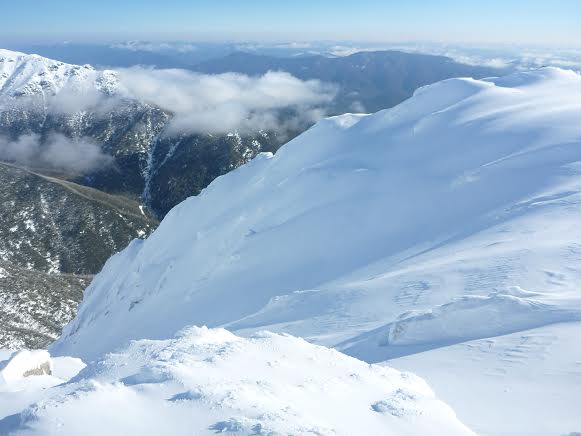
Watsons Crags in winter

Introduction

The western faces of the Main Range of the Snowy Mountains contain the largest section of big skiing and riding terrain in Australia. In good snow conditions you can find runs of up to 1,000 metres of vertical.

While most serious backcountry skiers and riders have the western faces on their ‘to do’ list, do not underestimate the serious nature of the terrain. They contain steep and serious slopes, with cliffs and chutes, often in dangerously icy conditions. The main faces and ridges, such as Watsons Crags, are not suitable for beginner skiers and riders. Do not drop in to one of the major lines without scoping it first (eg from an opposite ridgeline) to ascertain how icy or wind affected it is, or whether it may be subject to avalanche danger. Do not ski/ ride here alone. Ensure you have all appropriate backcountry gear, including avalanche beacon/ probe/ shovel, and know how to use it. And be aware that even in spring like conditions, soft snow can quickly become dangerously icy in the afternoon as you climb out – I would recommend ski crampons as a minimum. Some teams also carry ice axes.

Be aware that whatever you do, you need to head UP to get help, not down into the trees. If injured or exhausted seek help via calling 000 rather than heading DOWN.

And make sure you check the MSC backcountry conditions report before heading out.

Watsons Crag in winter

After a slow start, the winter of 2014 is shaping up to be a great season.

This trip report comes from John Blankenstein who lives on the Far south Coast of NSW. John has been frequenting the mountains since he was 15, where he fell in love with the sport of snowboarding.

He has just returned from boarding the iconic Watsons Crags on the western face of the main range of the Snowy Mountains.

Watson Crags provide some serious and challenging terrain. John timed his trip to be able to experience perfect conditions.

The trip report is available here.

More detail revealed about proposed cable car on Mt Wellington

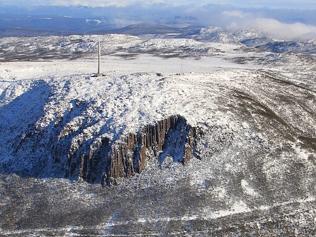
The saga of the cable car planned for Mt Wellington/ Kunanyi, above Hobart, continues, with the revelation that some sections of the towers would be 75 metres high.

The following comes from local group Respect The Mountain. For background to this proposal, please check here.

July 6, 2014

Respect The Mountain were shocked to learn the heights of the towers for Section 2 of the proposed Cable Car development. Images supplied to Respect The Mountain show heights up to 75m for the development – greater in height than Tasmania’s tallest building, Wrest Point Casino.

The heights are marked on a plan labeled ‘Line Profile – Section 2’ with majority shareholder, Bullwheel IC3’s logo prominently featured in the top right corner.

Spokesperson Jason Turvey, questioned why the heights were hidden from the public. “Mt Wellington Cableway Co (MWCC) were more than happy to disclose technical data such as cabin capacity figures, rope diameters, travel times and speeds, as well as the length of the cable car and elevation so it seems odd that they would leave of information about the heights of the towers when obviously they had that information available.”

The three towers vary between 36 to 75m in height. The first tower in South Hobart will be 75m, the second 45m and the tower above the Organ Pipes will be 36m. The current Observation Shelter at the summit is approximately 5.5m in height

“The heights are enormous! To give perspective it’s like having a Wrest Point Tower (73m), followed by a Hydro Tasmania building (47m) and then a Marine Board Building (39m) sitting above the Organ Pipes.”

It is suspected that the heights were not revealed to the public for fear of further damaging their ‘social licence’ which has recently come under scrutiny.

Alpine Researchers honoured for contributions to parks

This is from a few weeks ago, but is good acknowledgement of the efforts of researchers working to remove Hawkweed and control willows on the Bogong High Plains. Thanks to David Turner for spotting this one.

The release below is from Parks Victoria.

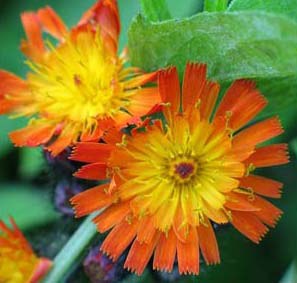
orange_hawkweedTwo Victorian researchers have been recognised for their outstanding contribution to managing highly invasive weeds in Victoria’s Alpine National Park.

Parks Victoria Chief Executive Dr Bill Jackson today acknowledged The University of Melbourne’s Dr Nick Williams, and Dr Joslin Moore from Monash University, as joint recipients of Parks Victoria’s inaugural Nancy Millis Science in Parks Award.

Dr Jackson said the award was being presented to the two researchers for their outstanding contribution to fostering excellence in applied science for the benefit of park management.

“Both projects demonstrated the researchers’ strong willingness to work closely with park managers to understand the extent and challenge of the weed problems. They also demonstrated leading edge science in solving difficult problems.”

“The work of Dr Williams and his team from The University of Melbourne has helped to protect the Alpine National Park’s biodiversity and transformed hawkweed control into a cutting edge and targeted program. This research partnership between Parks Victoria and Department of Environment and Primary Industries staff has significantly reduced Hawkweeds in the Alpine National Park, and the goal of eradicating it altogether is now a real possibility.”

“Dr William’s research and the work being done by all the partners on this project also benefits private landowners as hawkweeds have the potential to invade agricultural land and significantly affect agricultural production.”

Dr Jackson said Dr Joslin Moore and her team had achieved great results in controlling willow on the Bogong High Plains and as a result has had a major impact in protecting the Bogong High Plains environment.

“Willows are highly invasive and following the 2003 fires began germinating in large numbers. This posed a significant threat to an area within the Alpine National Park that is particularly important for its high biodiversity and landscape environment.

“As a result of a 7 year partnership with Parks Victoria, local Catchment Management Authorities and Falls Creek and Mt Hotham resorts, Dr Moore’s work has been fundamental in improving efforts to control willows on Bogong High Plains.”

Dr Jackson said both researchers had extensively documented their research in scientific publications, adding to the international body of work on effective methods of managing these extremely invasive weeds.

“I warmly congratulate Dr Williams and Dr Moore, and their teams who have contributed to this work, on making a real difference to managing invasive weeds in Victoria’s iconic Alpine landscapes.

“Caring for our parks is a complex task that involves many challenges including climate change, population increases and threats such as invasive pest plants and animals.

“We need innovative solutions and a good scientific understanding of how best to tackle these issues and how best to care for these important natural environments. Dr Williams and Dr Moore’s projects are part of Parks Victoria’s Research Partners Program that fosters collaborative applied research with universities and other research organisations.

The Nancy Millis Science in Parks Award

This award presented by Parks Victoria honours the late Professor Nancy Millis who was Chair of Parks Victoria’s Science and Management Effectiveness Advisory Committee since its inception 1997 and a member of Parks Victoria Board’s sub-committee on Environment.

Time to get Out There!

conditions at Mt Wheatley, 25/6/14

So, the first major dump has passed over the Alps, with snow everywhere!

This update comes from Bruce at Wilderness Sports in Jindabyne.

A deep low, well to the south of Tasmania is moving slowly to the southeast. A ridge of high pressure extends across the far north of New South Wales from a high centred over South Australia. The high should move to the Tasman Sea on Friday. The next major cold front is expected to reach the far west of the state Friday night, before bringing another vigorous and colder west to southwesterly airstream over the weekend.

In terms of backcountry conditions on the Main Range:

BACKCOUNTRY:
Lots of wind and drifting snow continuing to build the snow cover on the Main Range with a further 20+cms over higher peaks. Looks so promising with the forecast of solid snowfalls continuing this week. The base will have consolidated improving backcountry skiing & Snowshoes are pretty useful at the moment to get about. Once the weather clears it will be really good but while the weather is wild and woolly patience will be rewarded so use more sheltered spots to get out. Resort Cams show building snow cover!
The NEW Cam looking towards Mount Kosciuszko is sensational to assess conditions (But not when blizzard conditions prevail).

“From field observations exposed slopes in the area averaged 40-50cms. Cross loaded terrain averaged between 50-80 cms. Protected slopes snow depths started at 70 to130+cms”.

Check the weather page on www.wildernesssports.com.au for more updates on the weather throughout the week.

It’s here

The wait is over. Melbourne’s Herald Sun, who always love a bit of hyperbole has declared it “The megablizzard. Snowpocalypse now“.

A few weeks ago, Falls Creek management made the brave prediction:

Like many on the mountain, we’re beginning to get a very good feeling about this Winter. Old hands say it feels a lot like 1991, the end of the last Cold War, when our dear frenemy El Nino looked like a double agent early on before confounding the pundits and pounding us with record snowfalls. The pattern looks encouragingly familiar this year. Fingers crossed.

Whether they are right waits to be seen.

But there is no doubt that the snow is falling. Check the forecast amounts for resorts over the next week, courtesy of Mountain Watch.

Bring it.

more private development in Tasmanian World Heritage Area ?

As the Tasmanian and federal governments are being internationally criticised at the World Heritage Commission meeting in Doha over their attempt to de-list 74,000 hectares of forest from the Tasmanian World Heritage Area, a new threat to the integrity of Tasmania’s reserves has come to light.

A Tasmanian government website is calling for Expressions of Interest from investors w ho have “ideas (for development) in the Tasmanian Wilderness World Heritage Area as well as our National Parks and Reserves”.

It says the government wants to “unlock its natural areas to allow exciting new tourism experiences that are complemented by sensitive and appropriate tourism infrastructure”. In other words, more private development in conservation reserves.

Specifically, it says that the Government is looking for “developments which broaden the range of exciting and unique experiences on offer in our state by improving access for tourists while maintaining the integrity of our natural areas”.

It suggests that “sensible and appropriate” developments in the Wilderness World Heritage Area, National Parks and Reserves might include “resort-style accommodation. It might include walking tours, helicopter flights, mountain-bike riding, river cruises, new interpretative experiences or even luxury camping escapes”.

The Government is initially looking for ideas for the Tasmanian Wilderness World Heritage Area as well as our National Parks and Reserves. In the longer term it will consider other protected areas including Crown land and State Forests.

The first round for putting in an EOI is open until 21 November 2014.

With the anti-green agenda of the Tasmanian government it is very hard not to see this as a dangerous development which will undermine the ecological integrity of the reserve system.

The Greens have opposed this process. Greens’ Parks and Tourism spokesperson Nick McKim said in May that “the Liberals have an irrational and ideological desire for development at any cost, and they simply cannot be trusted to safeguard the natural and cultural values of Tasmania’s National Parks.”


The High Country of the Mind

The places we love are the ‘mountains of the mind’. The places we imagine and day-dream about. The places we escape to. Each of us has our special place. Some of us have many. Some just like to keep moving, and the mountain of the mind is the next unclimbed range.

What makes our places special? And what do we find there?

And where are your places?

Check here for some reflections, inspired by writer David Gilligan.

Winter. Are we there yet?

It’s almost mid June and we’re still waiting for winter to start!

Forecasts have been all over the place. Recently the Climate Council suggested winter would be warmer than normal. Not good news for snow lovers.

Earlier reports on this site quoted weather guru grasshopper as predicting ‘a mediocre to above average season’.

With the BOM now suggesting the expected El Nino event will not occur until early spring, perhaps things are looking up.

According to the Weekly Times:

Weather forecasters at the Bureau of Meteorology last week dramatically downgraded the fears of El Nino’s drying influence on the weather in southern Australia this year.

While the El Nino pattern could still form in spring, the conditions that originally caused scientists to issue the warning disappeared last month.

Falls Creek is especially brave with this recent prediction:

Like many on the mountain, we’re beginning to get a very good feeling about this Winter. Old hands say it feels a lot like 1991, the end of the last Cold War, when our dear frenemy El Nino looked like a double agent early on before confounding the pundits and pounding us with record snowfalls. The pattern looks encouragingly familiar this year. Fingers crossed.


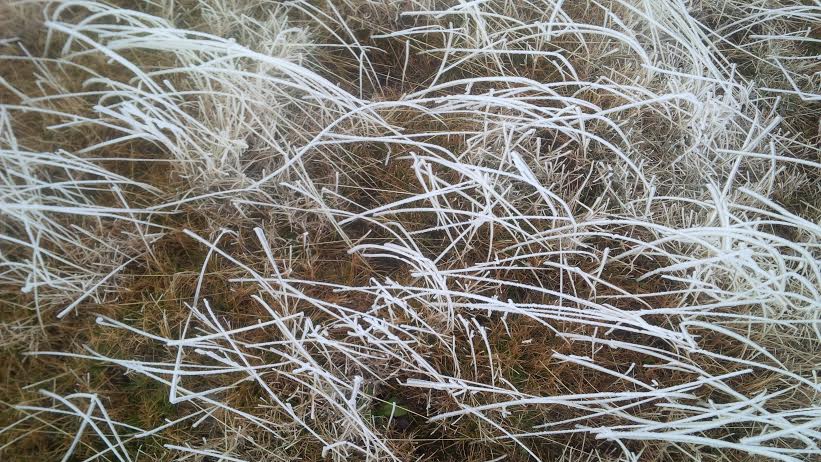
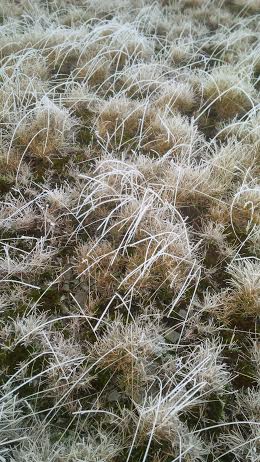
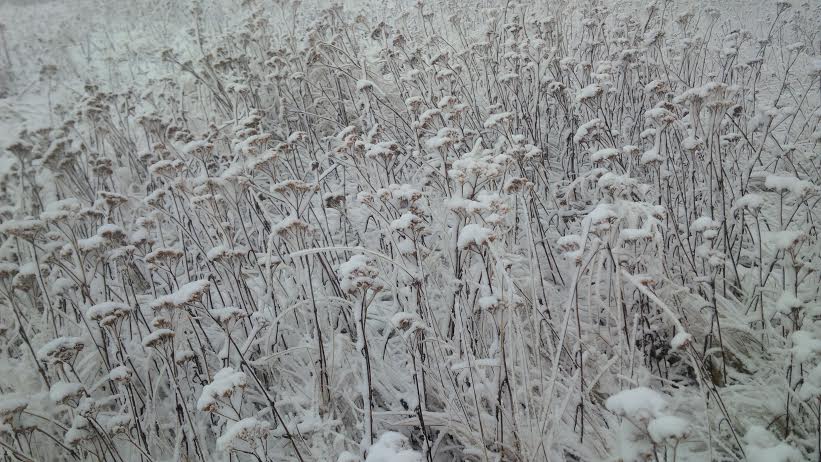
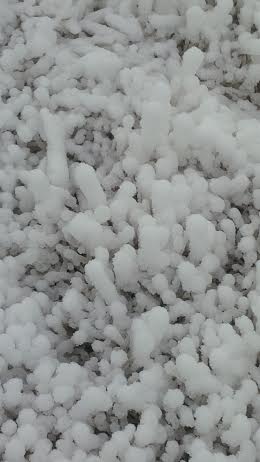
In praise of the ephemeral

In my teenage years, after I became obsessed with all things alpine, I discovered the work of a number of ‘70s era nature photographers who were working on the micro scale in black and white.

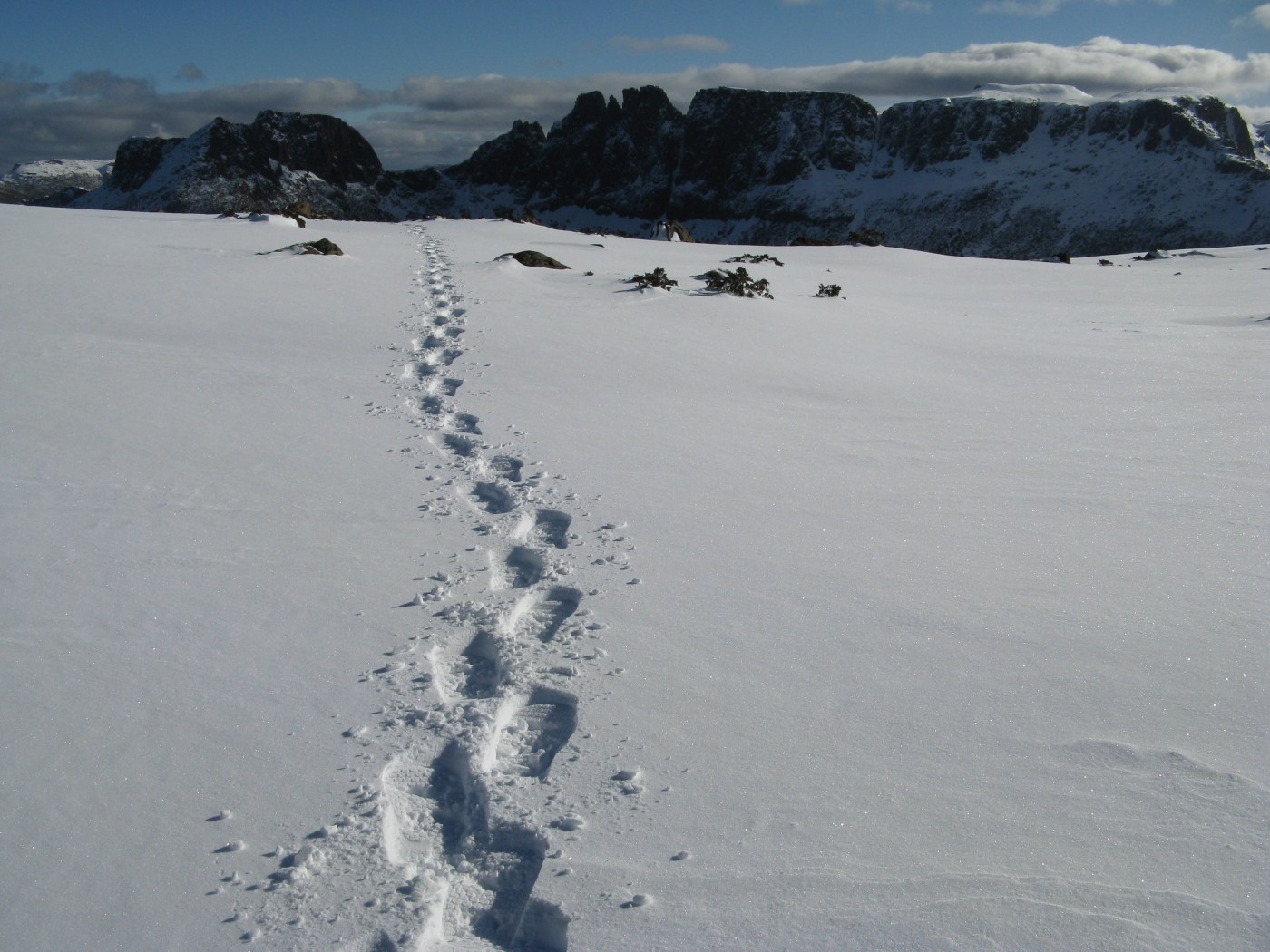
snow3I found a number of large format photo books that gave me an insight into the small places and ephemeral beauty of ice and snow, wind blown sand and leaf fall.

snow5I followed their lead and spent endless hours looking downwards to the tiny worlds under our feet. One July, on a week long ski tour of the Bogong High Plains, I found myself camped near Johnston Hut, with an entire day to enjoy my birthday as I wandered amongst snow drifts and emerging poa tussocks, amongst stately snow gums as high ragged clouds pushed through, with the promise of fresh snow.

As I lent in to hear the small, and glean something from the temporary and incredibly complex tangle of the worlds at ground level, I was struck by a sense of wonder, of specialness, of amazing things happening just beyond our sight. I felt richness stitched into the complexity of thick tangles of grass, of bark thrown on snow, and bare branches against a pale, rich winter sky.

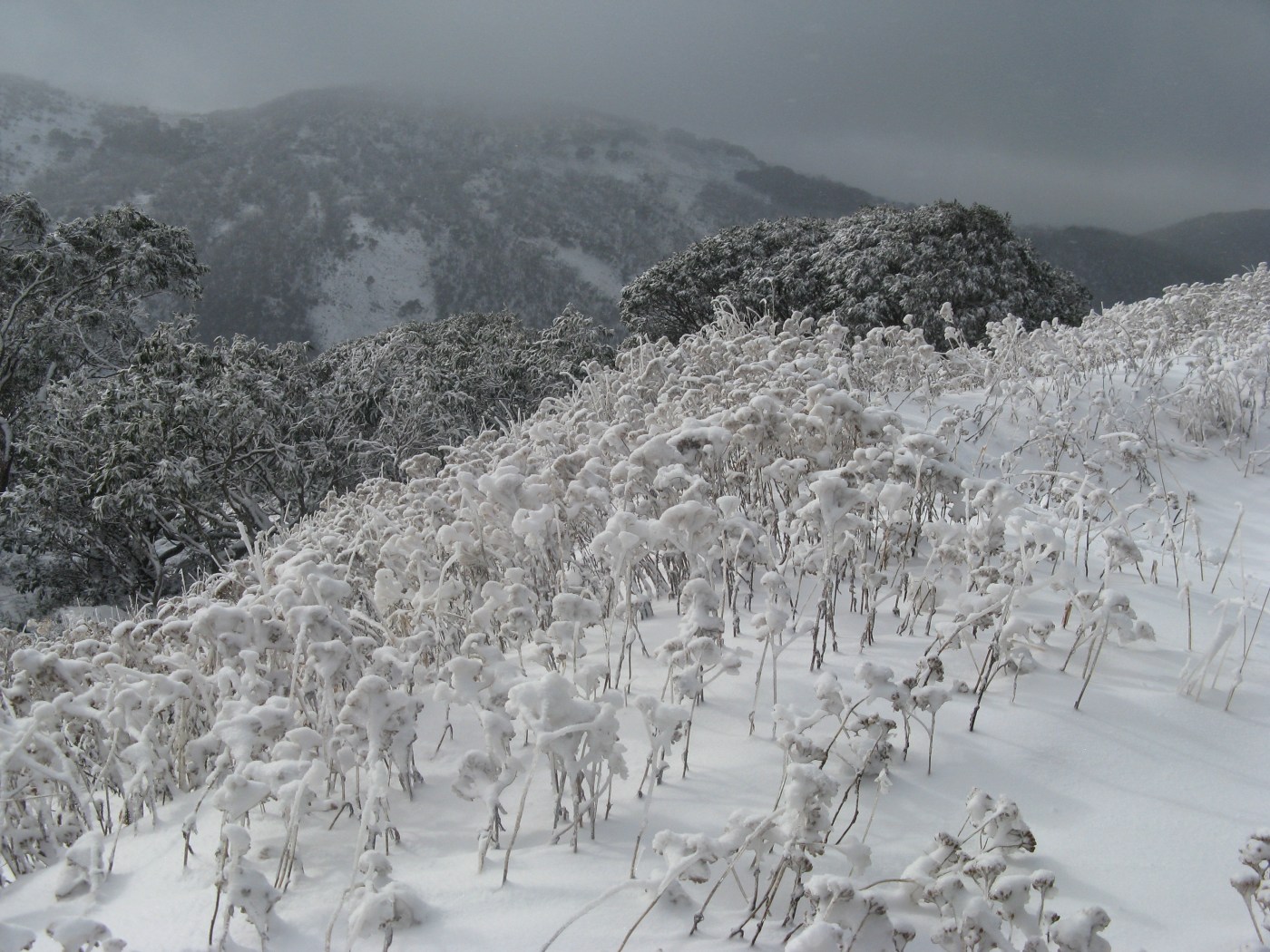
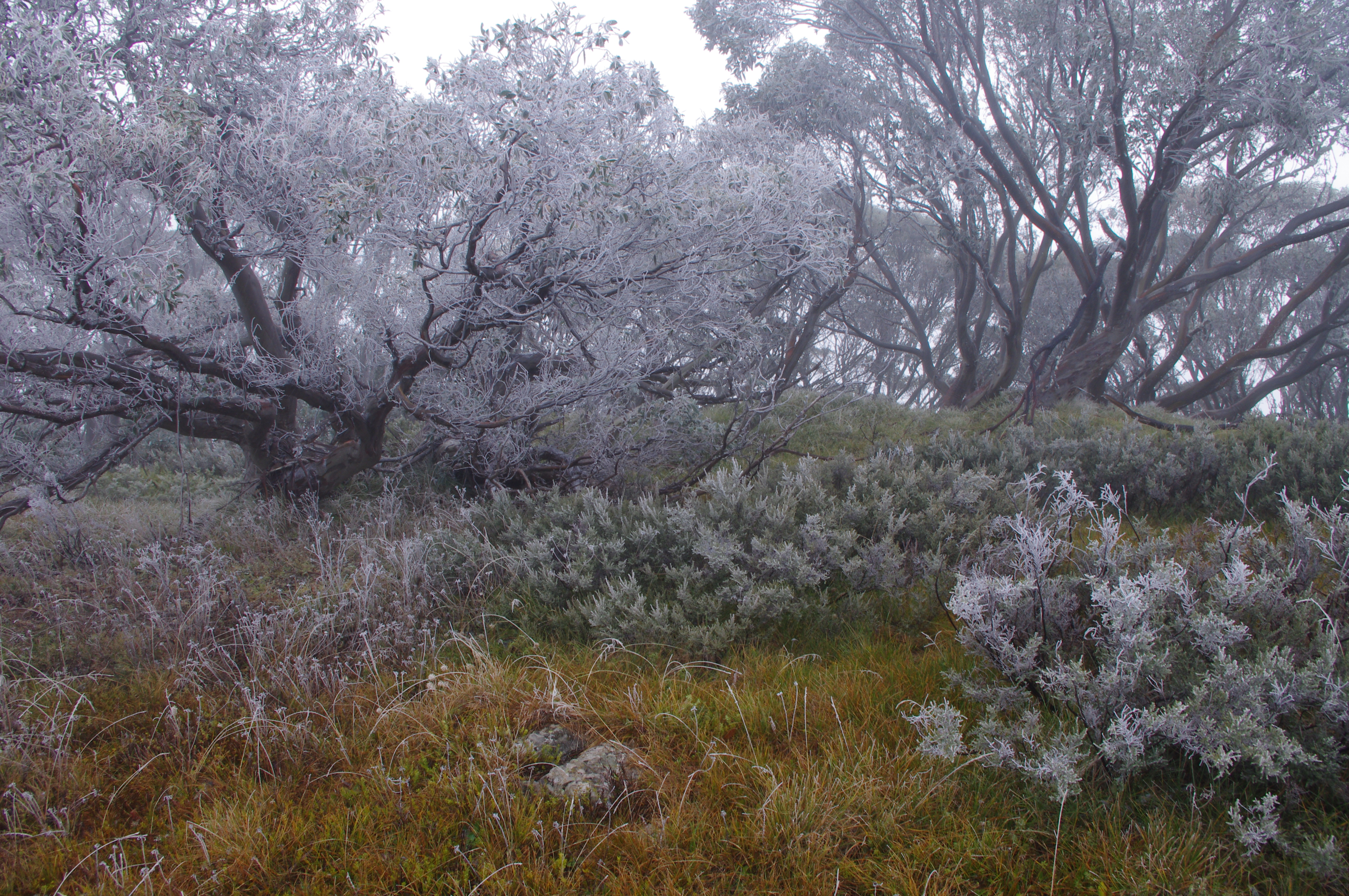
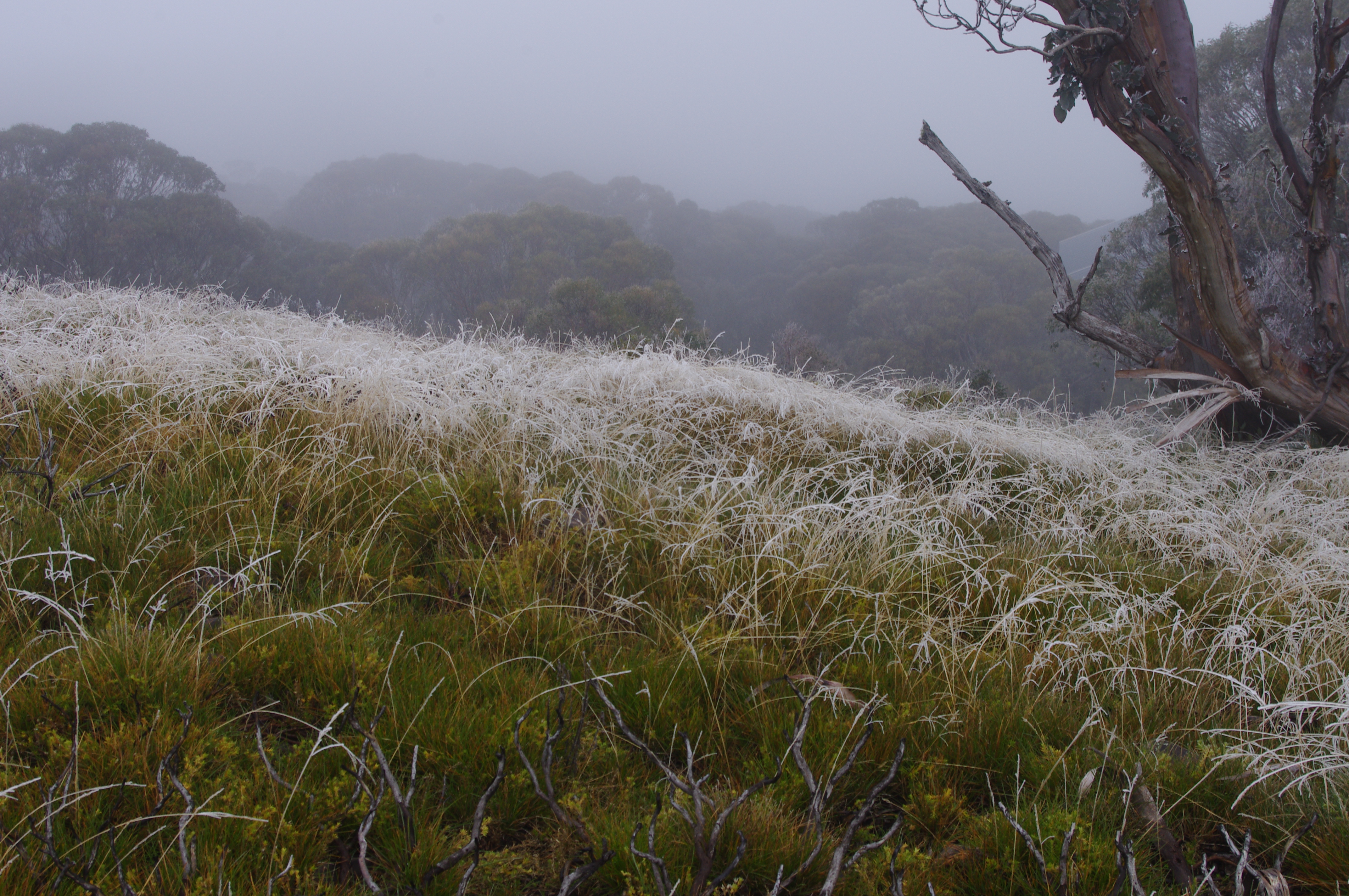
snow11As we wait for the decent falls of a late coming winter, I have been struck by that same old sense of wonder at the beauty of the ephemera of wind blown grass, stone and snow.

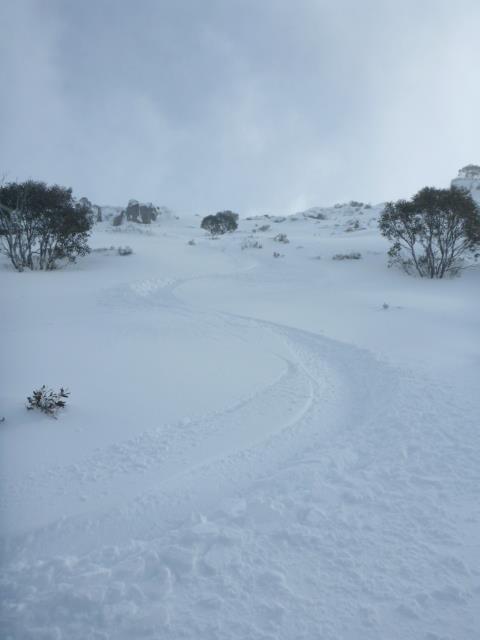
The following are some pics from Mt Hotham and nearby hills over Opening weekend 2014.

snow12

Little Higginbotham
Little Higginbotham


IMGP7694


Blog at WordPress.com.

Up ↑