Search

Mountain Journal

Environment, news, culture from the Australian Alps

Finding the Centre.

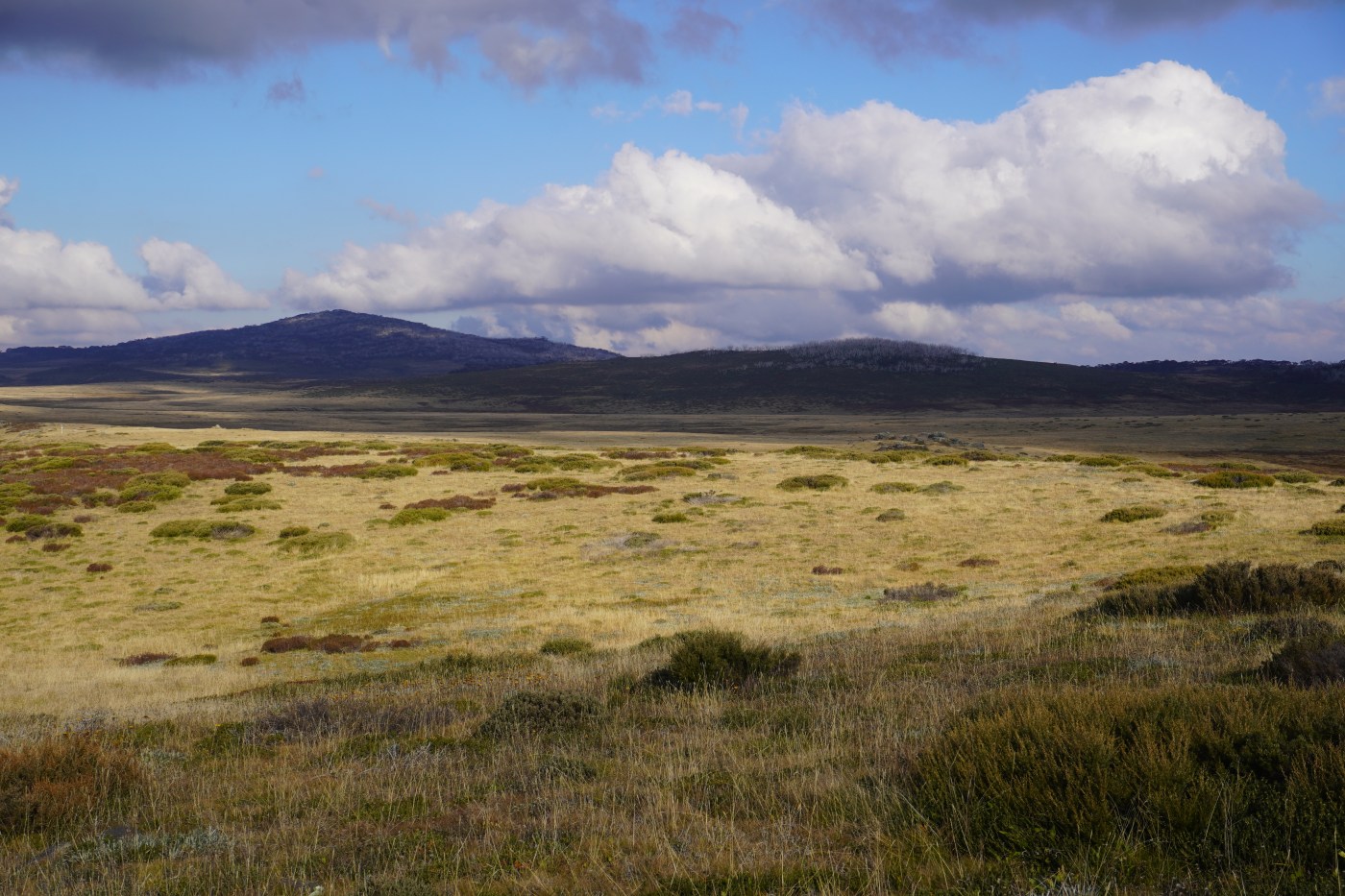
It’s a perfect autumn morning in Pretty Valley. The grass and tents are frosted with ice, the air is cold and invigorating, the silence immense. Sitting and waiting for the sunlight to spread across the plains from the hills to the west, it feels so silent you can hear the earth itself humming. In the shallow valley below, white mists form above the marshy landscape and braided waterways, rising until they meet a temperature inversion, which creates a ceiling effect that stops further upward movement. The flat topped mists then flow slowly towards the south east. Finally, the sun starts to warm my back. The air fills with bird call, the parrots sweep through, chitting as they fly past. After a cold night, it seems like everyone and everything is glad to be alive this morning.

Continue reading “Finding the Centre.”

‘They offer great beauty. They offer shelter. They nurture us.’

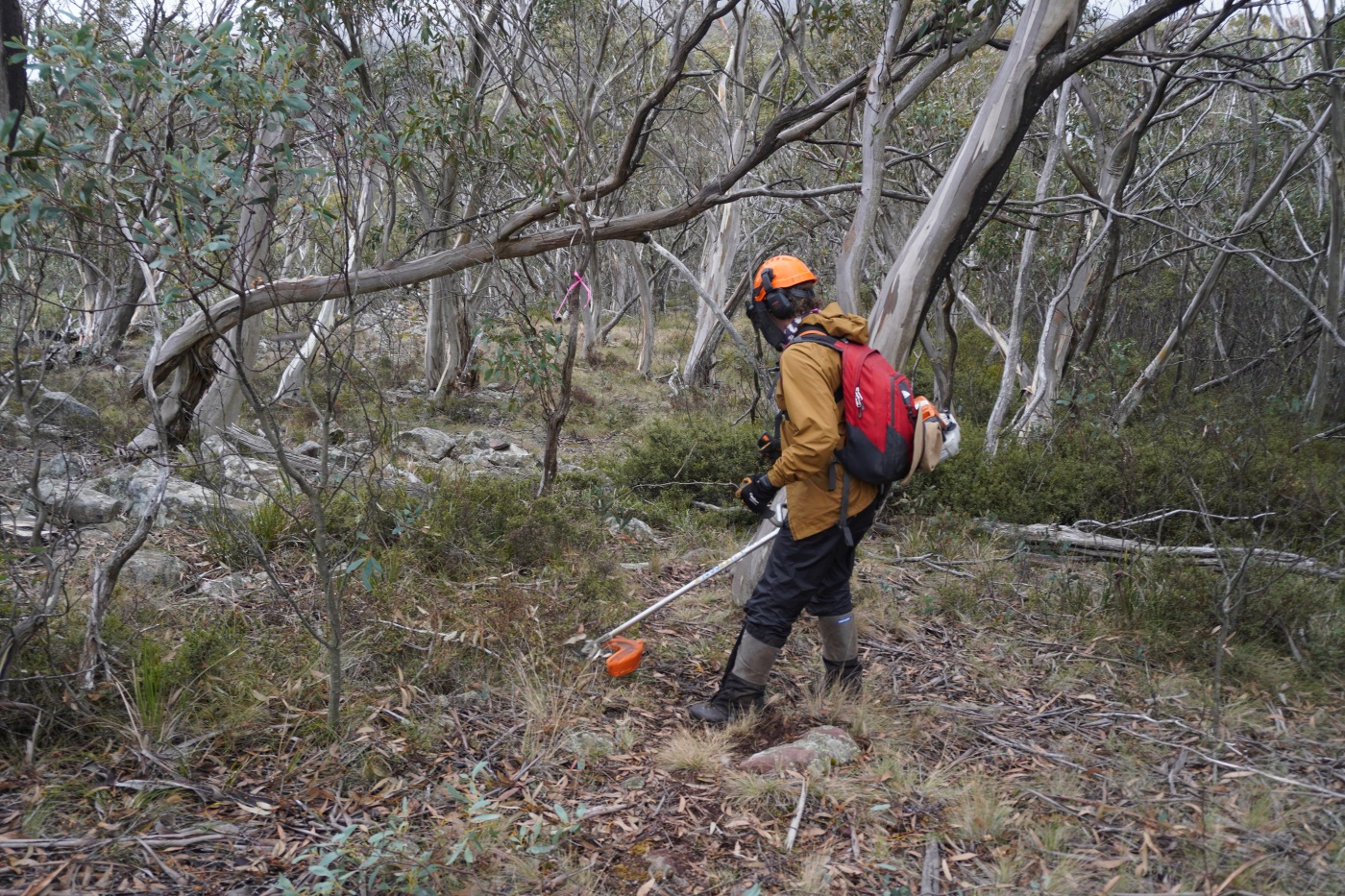
Across the Australian high country, the snow gum woodlands are facing an existential threat from dieback and climate change driven fire regimes.

These threats are detailed here, as are some potential solutions.

While the loss of these forests would have major physical and ecological impacts on mountain environments, what would it mean for our personal connection to the high country? For me these trees are an essential part of life in the mountains. When I drive or walk up from the valley and have a wander among old trees, I feel like I have come home. I know these forests have been here for time beyond our imagining:

Continue reading “‘They offer great beauty. They offer shelter. They nurture us.’”

AAWT Track Angels – a solution to a long-distance problem!

Long distance walking tracks often attract kind souls who assist the walkers with food, water, beers, lifts, accommodation and other assistance. The ‘Trail Angels’ of the Pacific Crest Trail in the USA are famous for their kindness to hikers. Mick Webster describes the Track Angels of the AAWT.

This was originally published in the 2024 print edition of Mountain Journal magazine (https://themountainjournal.com/mountain-journal-magazine/), which had a series of stories about human powered crossings of the Australian Alps.

Continue reading “AAWT Track Angels – a solution to a long-distance problem!”

The centenary Perrins Bluff pilgrimage

Perrins Bluff is a remote peak in the Cradle Mountain-Lake St Clair National Park in lutruwita/ Tasmania.

Tabatha Badger reflects on a journey to the mountain made by Florence Perrin in 1920. Perrins Bluff is a remote peak only visible from one tiny stretch of the Overland Track. In January 1920 Florence Perrin, her husband George, and friend Charlie Macfarlane were guided to the region by legendary bushman Paddy Hartnett. Florence embarked on annual walking trips with Paddy and was the first female, since colonisation, to summit several peaks including Mount Ossa, the highest in Tasmania. But it was their 14-day expedition in 1920 that made a mark in Lutruwita/Tasmania’s history.

Continue reading “The centenary Perrins Bluff pilgrimage”

Kelly Van Den Berg. A life outdoors

As part of the Mountain Journal magazine, we publish a series of interviews each edition with people who have had life long connections to the mountains. The section in the 2024 magazine, Around the Fire – chats with mountain people, has some great interviews, profiles and stories, including this one on Kelly Van Den Berg.

You can read the magazine as a PDF here. https://themountainjournal.com/2024/03/19/mountain-journal-magazine-4-now-online/

Print versions will be available shortly.

Continue reading “Kelly Van Den Berg. A life outdoors”

Mountain Journal magazine #4 now online

Once a year we produce the Mountain Journal magazine. It is distributed through mountain and valley towns from Melbourne to Canberra each autumn. 2024 is the fourth print edition, and the magazine is being distributed at present.

You can also enjoy this PDF of the magazine MJ4.

Continue reading “Mountain Journal magazine #4 now online”

2024 Backcountry film festival Melbourne screening – April 22

The annual Backcountry Film Festival is put together by the Winter Wildlands Alliance (WWA), screens around the world, and is hosted locally by Friends of the Earth and RMIT Outdoors Club.

The 2024 season will screen in Naarm/ Melbourne on Monday April 22.

It will be screening a collection of short documentaries and ski movies about the pursuit of adventure in the mountains, artistic vision, friendship, and how the snowsports community is adapting to a changing environment.

Continue reading “2024 Backcountry film festival Melbourne screening – April 22”

Heatwave Dreaming

It’s Labour Day Weekend. It’s March and, across the state, outdoor events are being cancelled because of the heatwave (even the Moomba parade in Melbourne!). Much of the state is on high fire risk. There is even a heatwave warning for lutruwita/ Tasmania. It’s a weekend to hunker down and stay out of the heat. And possibly day dream about colder weather and winter adventures.

I recently posted a short video about a group of women who rode their pushbikes through a section of the European Alps, climbing and then skiing/ riding mountains along the way. That got a response from various people including Tom Wainwright, who shared the details on his first trip to the Bogong High Plains, which included a bike ride and ski. They rode to Mt Fainter going along the Fainter Fire Trail.

Continue reading “Heatwave Dreaming”

655: FOR THE WILD

Running 655km across Australia’s toughest alpine track to save our wild places.

The two of us have always dreamed of running the 655km Australian Alps Walking Track (AAWT). It’s a track spoken of in a quiet reverence, by old hardened hikers who have seen it and done it all. It’s one of the country’s oldest, steeped in Indigenous and colonial history, and is as brutal as it is beautiful (and it is, above all else, beautiful). Ascending a cumulative 35,000m (approximately four times Mt Everest), the track traverses the ridgeline of the Great Dividing Range from an old gold-mining town called Walhalla (two hours’ drive from Melbourne) all the way through to Canberra. Forcing explorers to overcome the extreme heights (and depths) of the majestic Australian Alps across a typically 30 to 40-day journey, the AAWT is not a track to be trifled with.

And that’s why, one summer’s day, we set out to run it – all in an effort to save our wild places. And now we’re asking for your help to share our story.

Continue reading “655: FOR THE WILD”

Plibersek puts NSW on notice over feral horse numbers

In the long running campaign to have the NSW government do something about the huge number of feral horses that are causing damage in the Kosciuszko National Park, recent efforts to reduce horse numbers has been welcomed by environmentalists.

Figures announced by the NSW government on 29th January show that 3,530 feral horses have been removed from Kosciuszko since the Plan’s commencement – by re-homing, removal to knackery, aerial and ground shooting, and shooting in yards. However, the Federal Environment Minister Tanya Plibersek has announced that she may intervene to ensure a ‘zero-tolerance approach’ to feral horses in the park if the environmental impacts remain too high.

Continue reading “Plibersek puts NSW on notice over feral horse numbers”

An important meeting about the future of kunanyi/ Mt Wellington

There has been a long and spirited campaign against the proposal from The Mt Wellington Cableway Company (MWCC) to build a commercial centre on the summit of kunanyi/Mt Wellington, an aerial tramway up the face of the mountain, and associated infrastructure and works (background information available here). Now, with a state election coming up soon, Residents Opposed to the Cable Car are urging locals in nipaluna/ Hobart to attend an important public meeting.

Continue reading “An important meeting about the future of kunanyi/ Mt Wellington”

‘Long-unburnt snow gum forests are now exceedingly rare’.

Across the mountains of south eastern Australia, climate change is already driving profound change. In many places in the high country of NSW and Victoria, snow gum forests are facing a double sided threat: dieback, caused by a native beetle is killing individual trees, and climate change driven fire regimes are devastating vast areas of forest. Climate change, drought, insects and soil microbes are all thought to contribute to dieback. The spread and impacts of the beetle appear to be super charged by climate change (more beetles are surviving because of milder winters and more mortality of water stressed trees in summer).

More frequent and intense wild fire also poses an existential threat to the survival of snow gum woodlands and forests. A new report reveals the scale of the fire impact on these forests in the Victorian high country.

In the paper ‘Long-unburnt stands of snow gum (Eucalyptus pauciflora Sieber ex Spreng) are exceedingly rare in the Victorian Alps: implications for their conservation and management’, John Morgan, Michael Shackleton and Zac Walker from the Research Centre for Applied Alpine Ecology at La Trobe University highlight that ‘Long-unburnt snow gum forests (now) comprise less than 1% of snow gum forests in the Victorian Alps. We identify where long-unburnt snow gum stands persist in the Victorian Alps and outline why management intervention is necessary to protect unburnt refuges and, more broadly, to allow mature/adult stands (such as occur on the Baw Baw Plateau) to develop into future old forests’.

Continue reading “‘Long-unburnt snow gum forests are now exceedingly rare’.”

Blog at WordPress.com.

Up ↑