Search

Mountain Journal

Environment, news, culture from the Australian Alps

Outdoors People for Climate Action

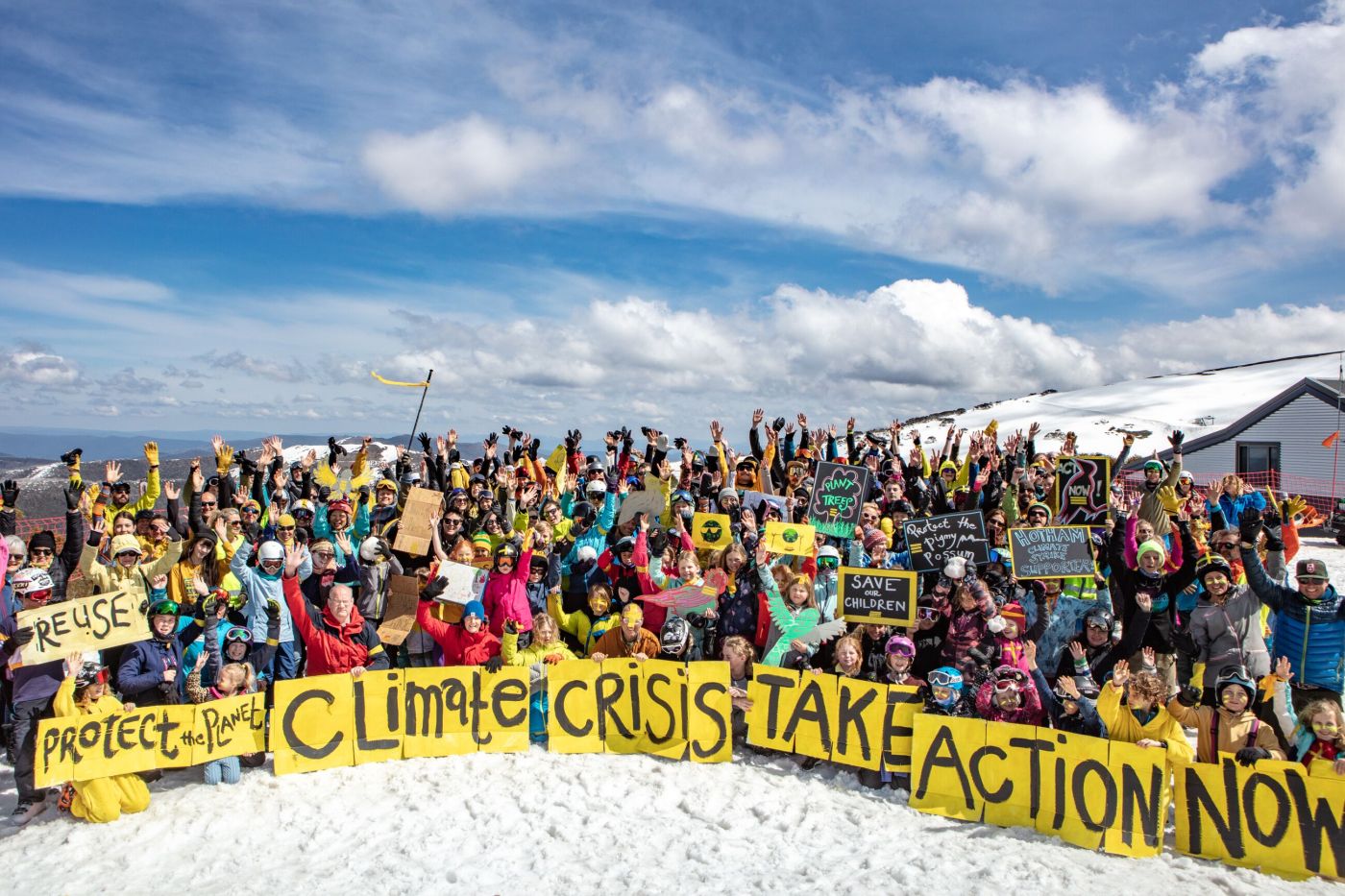
Outdoors People for Climate Action is a new group that was launched on the 1stof March 2020 following what was, for many outdoors people, a climatically confronting summer.

The launch also followed a period of growing climate change concern and action in Australia and around the world, marked by protests, actions, mass engagement, media coverage, and some major climate wins. Because the only thing lacking in addressing the climate crisis globally is political will – it’s now widely recognized that climate activism is essential to achieve a safe climate future.

Continue reading “Outdoors People for Climate Action”

Fast tracking development in Tasmania’s wilderness

The ongoing attempts by the Tasmanian government to encourage commercial developments in the state’s national parks and wilderness areas continues. While the high profile ‘helicopter tourism’ proposal planned for Lake Malbena on the Central Plateau has dominated the conversation in the last few months, a broader threat to the integrity of the reserve system is becoming apparent.

This relates to the draft Land Use Planning and Approvals Amendment (Major Projects) Bill 2020, which could facilitate these type of developments by ‘fast tracking’ such proposals.

The Wilderness Society condemned the Tasmanian Liberal Party’s ‘plan to strip away Tasmania’s already questionable planning safeguards, to further reduce the public’s role in planning and fast-track development proposals in national parks’.

They say there are ‘30 or so national park privatisation proposals’ (commercial tourism) in the pipeline for the World Heritage Area’. If this legislation gets through parliament, there is a fear that many of these proposals could be fast-tracked and with very little opportunity for the public to have input to the decision making process.

Continue reading “Fast tracking development in Tasmania’s wilderness”

Leadbeater’s Possum Rediscovery Day Picnic

The Leadbeater’s Possum is a critically endangered possum largely restricted to small pockets of alpine ash, mountain ash and snow gum forests in the Central Highlands of Victoria.

Each year the Friends of Leadbeater’s hold a ‘Possum Rediscovery Day Picnic’ to mark the day this species was rediscovered. In 2020, it will happen on Sunday, 5th April.

“Commencing at 11am we will indulge in our annual picnic at the usual Cambarville location, close to where Eric Wilkinson rediscovered the possum on 3 April 1961”.

Continue reading “Leadbeater’s Possum Rediscovery Day Picnic”

Kuark forest after the fires

The old growth forest of Kuark is (I can’t bring myself to say ‘was’) a jewel in the wild landscape of East Gippsland. It provides habitat for threatened species such as the Sooty, Masked and Powerful owls, Greater gliders and Long footed potoroos, and is a rare rainforest type where warm and cool temperate rainforest blend together in an ‘over lap’ assemblage.

There was a long campaign, led by Goongerah Environment Centre (GECO) and The Wilderness Society to see the Kuark protected. It had considerable success, and was scheduled to be fully protected under a Bill in parliament to include Kuark in the Errinundra National Park.

Then this summer happened. I watched in horror as parts of the legendary Errinundra Plateau burnt and the rainforests of Martins Creek were devastated. I hadn’t heard news of the Kuark until now.

Ed Hill led the campaign to protect the Kuark forest. He has been up there recently. This is his report.

Continue reading “Kuark forest after the fires”

Malbena Rally: Rewild Launceston!

The long campaign against commercial tourist developments in national parks and World Heritage Areas continues.

A flash point  in this campaign is the ‘eco tourism’ development planned for Lake Malbena will introduce ‘helicopter tourism’ to the central plateau of Tasmania. Approvals have been ‘waved through’ by the federal government, and then been bogged down in legal processes.

To highlight opposition to ‘helicopter tourism’, The Wilderness Society and Walkers and Fishers Against Helicopter Access Tasmania have organised a rally in Launceston on Sunday April 5.

Continue reading “Malbena Rally: Rewild Launceston!”

Inquiry into the 2019-20 Victorian Fire Season

This summer’s fires had a devastating impact on the environment and economies of the Victorian, NSW and ACT mountains.

Now, the Victorian government, through the Inspector-General for Emergency Management or IGEM, is holding an inquiry into ‘Victoria’s preparedness for and response to the 2019-20 fire season’. You can make a submission to this process.

Continue reading “Inquiry into the 2019-20 Victorian Fire Season”

Huge opportunity for climate action in Victoria

Climate change poses an existential threat to the wild ecosystems that skiers and snow boarders, hikers, climbers, paddlers, trail runners, and mountain bike riders rely on for adventure. It also poses an equally grave threat to the businesses that rely on wild nature for their existence. This is true locally and globally.

Climate change is a global problem. This requires a co-ordinated global response. But as part of global efforts, we all need to step up and do our part. From individuals to transnational corporations, and local councils to the UN, we all have to apply ourselves wherever we can, using the resources and influence we have.

At present there is a huge opportunity to set the state of Victoria onto a path that will see the transformation of it’s economy away from fossil fuels. But we need to seize this opportunity now.

Continue reading “Huge opportunity for climate action in Victoria”

Community energy hubs in north east VIC

Interested in renewable energy and how to make it happen?

There will be information sessions across north eastern Victoria soon, including mountain and valley towns like:

Cheshunt: 11 March

Mt Beauty: 20 March

Mansfield: 23 March

Bright: 26 March

Continue reading “Community energy hubs in north east VIC”

Research highlights the fire threat to King Billy Pine

Tasmania is home to a treasure trove of ancient vegetation that emerged when Australia was part of the Gondwanda super continent. Most of the relict vegetation is not fire adapted (fire being a relatively recent arrival to Australia compared to Gondwanaland). Widespread wildfires in early 2016 caused devastating damage across large areas of the Tasmanian World Heritage Area, including significant sections of vegetation which is not fire adapted, such as Pencil Pine forests.

At the time, and in follow up investigations, it became clear that increased fire risk due to climate change posed an existential threat to these vegetation types. Now additional research has confirmed the trend towards more extreme fire seasons. It suggests that we reached a ‘tipping point’ sometime around the year 2000and that, since then, there has been an increase in the number of lightning-caused fires and an increase in the average size of the fires, “resulting in a marked increase in the area burnt”.

Research just released through the journal Global Change Biology, titled ‘Population collapse and retreat to fire refugia of the Tasmanian endemic conifer Athrotaxis selaginoides following the transition from Aboriginal to European fire management’ underscores the threat posed to these forest types.

Continue reading “Research highlights the fire threat to King Billy Pine”

Global warming played a ‘big role’ in generating heat waves that fueled the 2019-2020 fire season

This summer’s fires had devastating impacts on landscapes and local economies.

For the first time in eight months, all the NSW fires are out. The Namadgi fires are out, as are the fires in north east Victoria and East Gippsland. During the fires, there was an attempt by some groups to blame the fires on arson as a way of avoiding the conversation about climate change. There is the ongoing debate about the role of fuel reduction burning as a way to reduce the intensity of fire, plus the broader conversation about how we manage our forests and wild places, and whether salvage logging of burnt areas should be allowed.

Now, a ground-breaking report has shown that climate change was a ‘massive factor’ in the extreme fire conditions that devastated Australia this summer.

The report was prepared by World Weather Attribution (WWA), which ‘is an international effort to analyse and communicate the possible influence of climate change on extreme weather events, such as storms, extreme rainfall, heatwaves, cold spells, and droughts’.

Continue reading “Global warming played a ‘big role’ in generating heat waves that fueled the 2019-2020 fire season”

Walking the Mountains of Home – protect Mt Bride

Community members from Warburton are attempting to stop the proposed logging coupes on and surrounding Mt Bride.

They say that “logging this area will reduce water security as the proposed coupes are within water catchment areas and it has long been recognised that logging has a negative impact on water yield”. The mountain has great value to many locals for a range of reasons.

To highlight community concern about the imminent logging plans, they have organised a walk up the mountain which is open to all interested people. It will happen on March 21.

Continue reading “Walking the Mountains of Home – protect Mt Bride”

Protect the ‘Kalatha Giant’

The Little Red Toolangi Treehouse (Mission Statement: “To raise awareness, educate and empower the public to respond to the commercial destruction of Australia’s native forests.”) has issued an urgent call for community members, especially Victorians, to contact the state environment minister to ask her to stop logging around an old growth mountain ash tree known as the Kalatha Giant. A community blockade has now started – scroll down for updates.

Continue reading “Protect the ‘Kalatha Giant’”

Blog at WordPress.com.

Up ↑