Search

Mountain Journal

Environment, news, culture from the Australian Alps

Tag

climate change

The 10th Mountain Climate Project

The 10th Mountain huts are a remarkable network of backcountry huts spread through the mountains of the Rocky Mountains of Central Colorado. They have long been famous among backcountry skiers and riders. Using the network of huts, it is possible to ski from Aspen to Vail (a distance of roughly 150 kilometres, depending on which route you take) and from near Edwards all the way to Leadville. Check here for a Mountain Journal story on the network and backcountry touring in the Central Rockies.

Built over several decades the huts are mostly log cabins, with bunks, lovely communal spaces, and well fitted out kitchens. They have micro solar systems for lighting. 10th Mountain is a not for profit organisation and huts are booked online. They are popular both in winter for skiing/ splitboarding and summer for mountain bike riding.

Last winter they launched a climate project.

Continue reading “The 10th Mountain Climate Project”

Climate change driven fire threatens Tasmania’s forests

While the summer of 2021/22 has been a mild fire season in the east of the country, there have been a small number of significant fires in lutruwita/ Tasmania that have threatened World Heritage Areas (including one that threatened an incredibly significant Huon pine forest). This is because the west of that state has been experiencing a prolonged and extreme drought, with some areas receiving their lowest rainfall on record.

As reported recently in The Conversation, “this drought fits an observed drying trend across the state, which will worsen due to climate change. This is very bad news for the ancient wilderness in the state’s World Heritage Area, where the lineage of some tree species stretch back 150 million years to the supercontinent Gondwana’.

The drying trend has seen a steady increase in bushfires ignited by lightning, imperilling the survival of Tasmania’s Gondwanan legacy, and raising profound fire management challenges.’ Continue reading “Climate change driven fire threatens Tasmania’s forests”

Alpine plants are on the move

We know that climate change poses an existential threat to the mountains that we know and love.

A new study, looking at 36 species of alpine plants, looks at one aspect of the changes that are already underway. It shows that ‘elevational shifts’ are occurring rapidly in the Australian alpine zone. Plants are moving higher (a number are also moving downslope) to find optimal conditions to grow. The authors of the report Alpine plants are on the move: Quantifying distribution shifts of Australian alpine plants through time say that ‘this may allow species to persist under climate change. However, if current warming trends continue, several species within the Australian alpine zone will likely run out of suitable habitat within a century’.

Continue reading “Alpine plants are on the move”

IPCC report points to collapse of Alpine Ash and Snowgum woodland

The IPCC WGII Sixth Assessment Report has just been released (and is available here).

The take home message is:

Further climate change is inevitable, with the rate and magnitude of impact largely dependent on the emission reduction pathways that we choose. Time is running out if we want to act.

The final sentence of new IPCC report is: “The scientific evidence is unequivocal: climate change is a threat to human well-being and the health of the planet. Any further delay in concerted global action will miss a brief and rapidly closing window to secure a liveable future.”

The Chapter on Australasia (available here) has a considerable amount of detail on likely impacts on mountain areas of south eastern Australia and lutruwita/ Tasmania. Some of these are summarised below. It looks at both observed impacts and predicted future impacts (applying a level of certainty to each of these).

Continue reading “IPCC report points to collapse of Alpine Ash and Snowgum woodland”

Yet another warning that we need to act now to protect forests from climate change-driven fire

According to a report released by the United Nations Environment Program and environmental not-for-profit organisation GRID-Arendal, as climate change continues to destablise global weather patterns, we can expect up to 50% more wildfires by the turn of the century.

This will impact on us locally and the mountain forests we love.

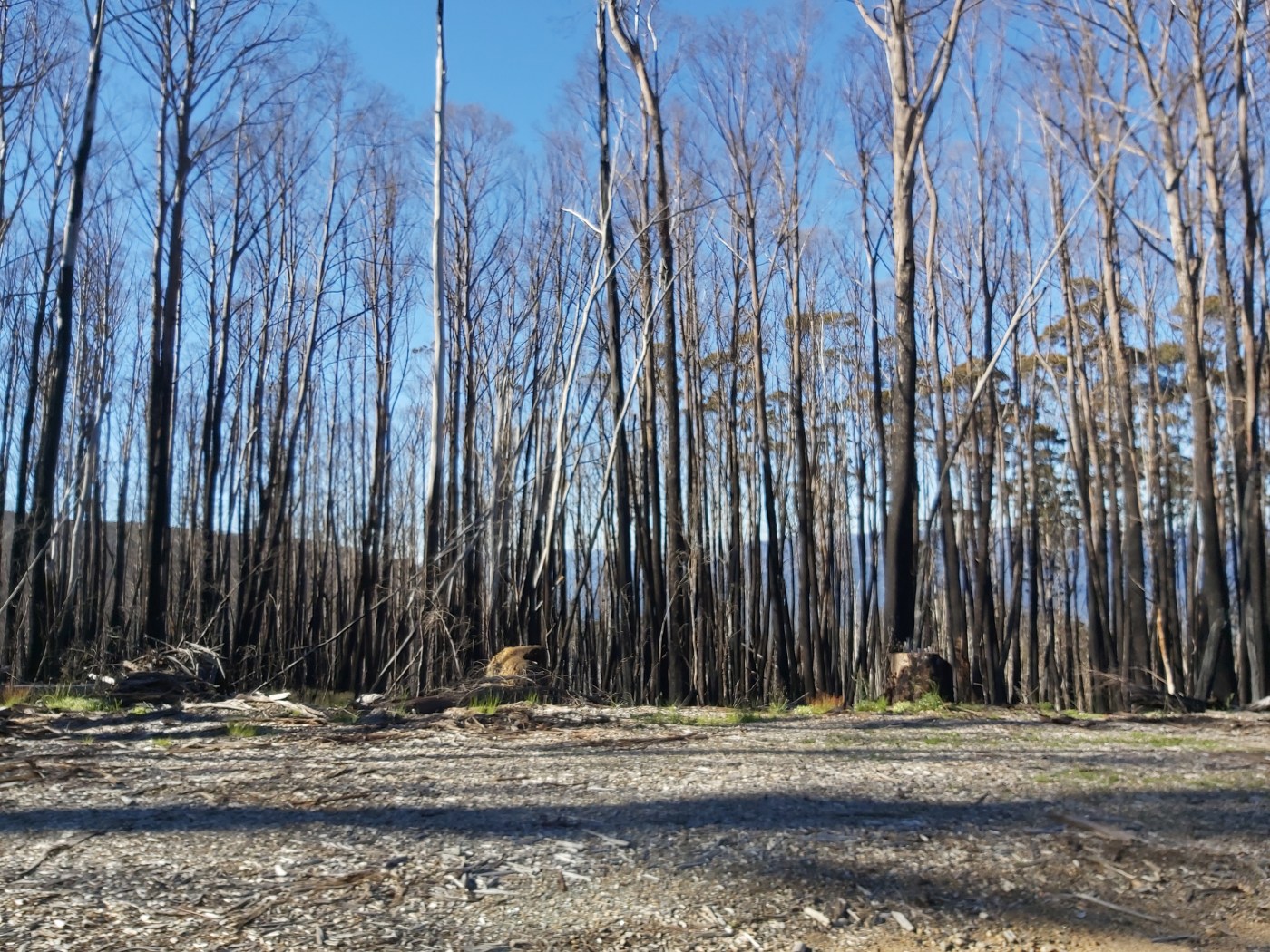
One example of this is Alpine Ash forests, which have been heavily impacted by fire in recent decades. The same threats are starting to cause local collapse of Snow Gum woodlands.

Continue reading “Yet another warning that we need to act now to protect forests from climate change-driven fire”

‘Mature-aged native forest may never return to parts of Namadgi’

In January and February 2020, the Orroral Valley Fire burnt more than 80% of Namadgi National Park in the ACT. Since then, monitoring and recovery efforts have sought to protect damaged environments and aid the recovery of the park.

A report released in 2021 showed that some areas and forest types were recovering well (for instance, many Candle Bark forests and Snow Gums) however the news was grimmer for other vegetation types like Alpine Ash.

Two years on, it is clear that full recovery will take many years and sections of the park will never be the same. Mature-aged native forest may never return to parts of Namadgi National Park because climate change is impacting regeneration.

Continue reading “‘Mature-aged native forest may never return to parts of Namadgi’”

‘Citizen science’ field trip investigates loss of Snow Gums

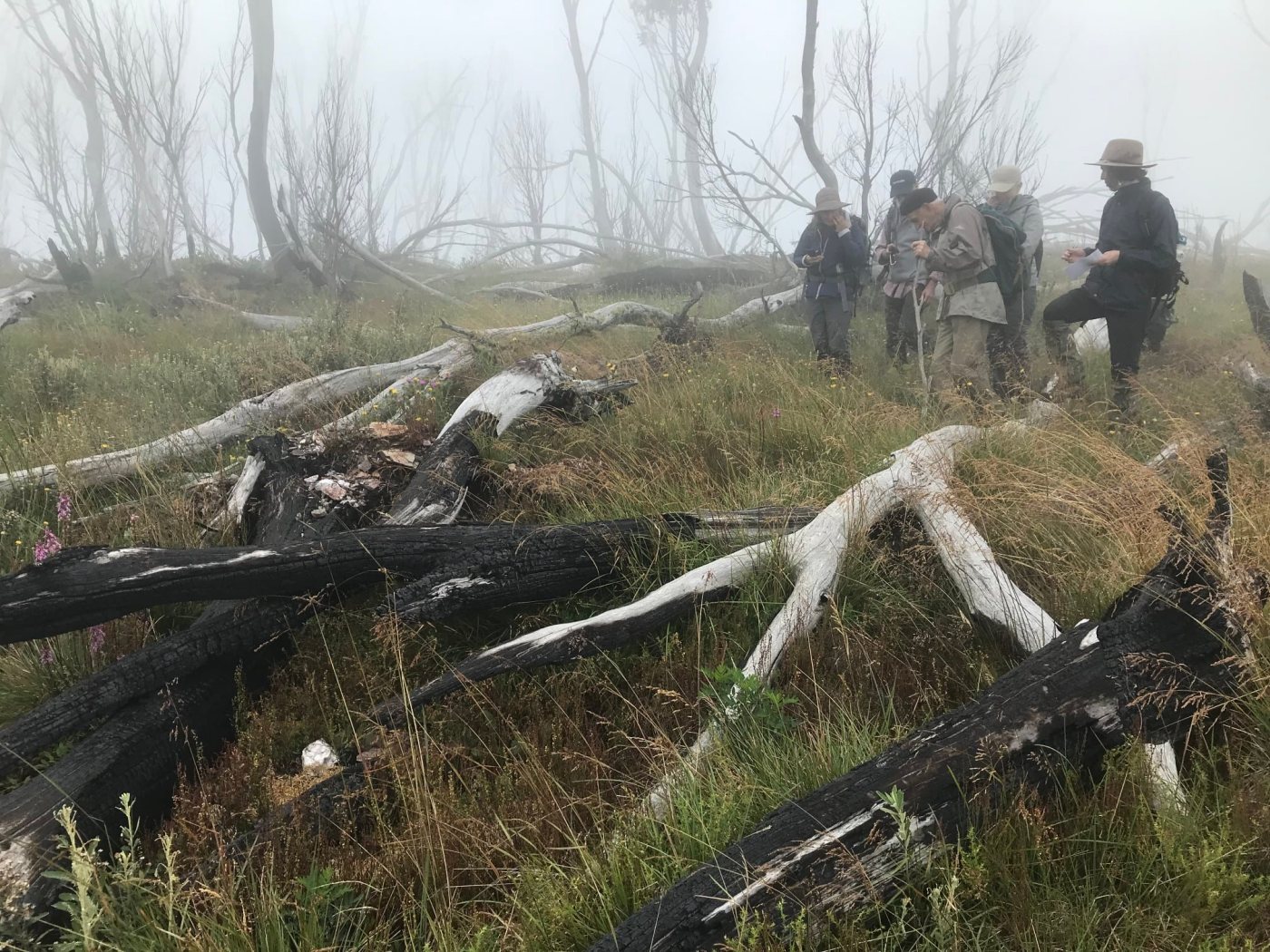
Friends of the Earth recently held its first citizen science fieldtrip to map areas of Snow Gum forests in the Victorian mountains. These forests are largely protected in national parks but are threatened by climate driven fire regimes and dieback, which is caused by a native beetle.

We checked sites on the northern end of the Dargo High Plains, which is roughly south of the Hotham ski resort. We visited areas that have been burnt multiple times in recent years. This has resulted in the death of many parent trees, and then loss of the seedlings and resprouting that happened after the first fire. We were pleased to see that, after two mild and wet summers, seedlings have finally started to grow in sections of these burnt forests.

While these forests will recover from fire, climate change is making fires more frequent and this is leading to local loss of Snow Gum woodlands.

Continue reading “‘Citizen science’ field trip investigates loss of Snow Gums”

Firefighters demand climate action

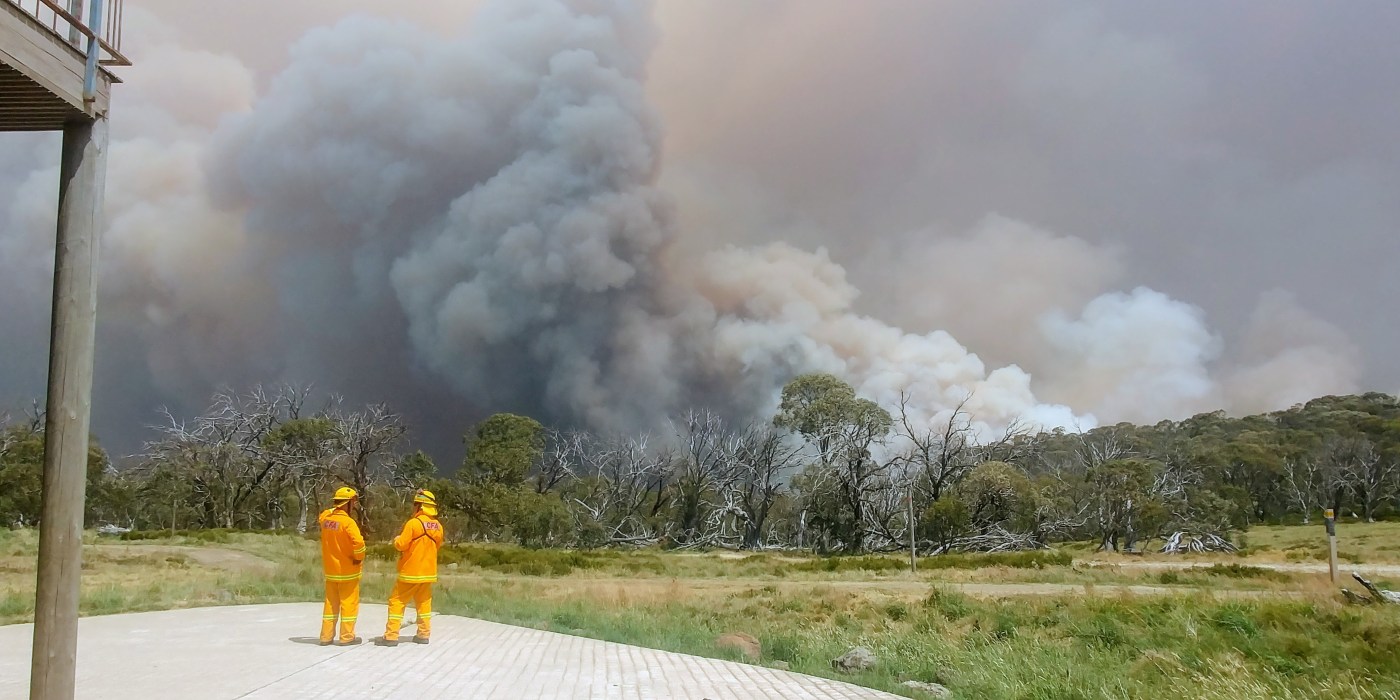
Bushfires are becoming more frequent and the bushfire season is coming earlier and lasting longer because of climate change.

These longer fire seasons in Australia are not “normal”. They are being driven by human induced global heating (climate change). Unless we act now to reduce our emissions in line with what climate science suggests, we will become locked in to ever worsening fire seasons. We know that climate driven fires pose an extreme threat to mountain environments like Alpine Ash and Snow Gums.

The Australian Firefighters Climate Alliance (AFCA) has launched a new campaign, asking firefighters to post an image of themselves on a fireground, and demanding the Austrtalian government act on climate change.

Continue reading “Firefighters demand climate action”

New year, old issues 

As we move into a new year, things are looking good in the mountains. A second mild and wet spring has led to a mild summer, with no significant fires in mountain areas so far (there were two fires in lutruwita/ Tasmania earlier in the season – at Mt Rufus and the Eldon Range). As heatwaves bake much of the north and west of the continent, the mountains of the south east and lutruwita/ Tasmania are a cool refuge from the heat. As always there is so much to do and wonderful places to visit. And, as always, there are threats to the mountains that we will have to deal with this year.

Here’s some of them:

Continue reading “New year, old issues “

Alpine and Mountain Ash face potential declines in a warmer and drier future.

We know that the Alpine Ash forests are struggling to survive in the face of climate change driven fire regimes that are bringing fire into these forests more frequently.

The scale of this threat is so extreme that the Victorian government has a program specifically responsible for reseeding forests that are on the verge of ecosystem collapse.

New research underscores, yet again, that the mountain forests face grave threats from climate change and that this could lead to the transformation of these forests.

Continue reading “Alpine and Mountain Ash face potential declines in a warmer and drier future.”

International Mountain Day 2021

December 11 is International Mountain Day.

Around the world, mountain environments are threatened by climate change and destruction of natural environments. It is the same here in Australia, where we are starting to see the local collapse of mountain forests – both Alpine Ash and Snow Gum – due to climate driven fire regimes (and, in the case of Snow Gum, dieback caused by a native beetle).

There is much we must do to protect these wonderful environments, including building our capacity to fight fires effectively in mountain areas.

Here are some ideas.

And please join the citizen science project if you’re planning on visiting the VIC/ACT/ NSW mountains this summer.

#MountainsMatter

‘The places humanity must not destroy to avoid climate chaos’

Detailed new mapping has pinpointed the carbon-rich forests and peatlands that humanity cannot afford to destroy if climate catastrophe is to be avoided.

The vast forests and peatlands of Russia, Canada and the US are vital, researchers found, as are tropical forests in the Amazon, the Congo and south-east Asia. Peat bogs in the UK and mangrove swamps and eucalyptus forests in Australia are also on the list.

This highlights the need to protect the carbon dense forests of south eastern Australia which are still being subjected to clearfell logging.

Continue reading “‘The places humanity must not destroy to avoid climate chaos’”

Blog at WordPress.com.

Up ↑