Search

Mountain Journal

Environment, news, culture from the Australian Alps

Tag

land management

the Great Forest National Park

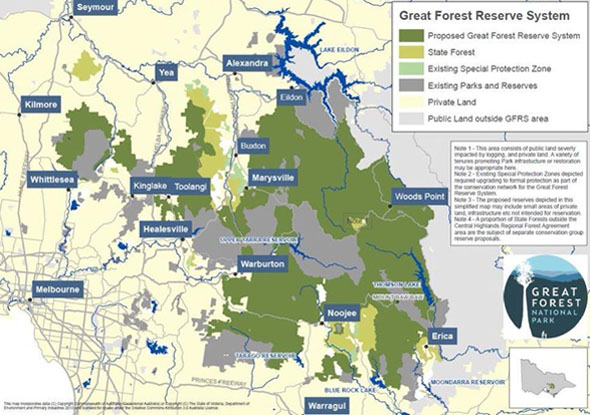
The Great Forest National Park (GFNP) proposal is a vision for a multi-tiered park system for bush users and bush lovers alike, on Melbourne’s doorstep.

It is a park that will protect and maintain important ecosystem functions critical for the health and well being of all Victorians. The proposal intends to amalgamate a group of smaller parks and add a recreational and ecosystem management plan overlay. The GFNP’s gateway in Healesville is only 60 kilometres from Melbourne’s MCG and stretches from Kinglake through to the Baw Baws and north-east up to Eildon. The proposal is backed by 30 years of research from Laureate Professor David Lindenmayer AO and his team from the Australian National University. The Park proposal adds approximately 355,000 hectares to the current 165,000 hectares in reserve. This will bring Melbourne up to a little over 500,000 hectares of reserve, nearly half the size of Sydney’s reserve system. It is an ambitious project that is gaining momentum by the day.

Continue reading “the Great Forest National Park”

Victorian Public Lands Survey

This survey, for Parks Victoria, is now at least 6 months old but is still open for comment. Depending on how many spots you want to nominate as being precious, the survey takes about 15 minutes.

The following comes from the PV website:

“Public lands in Victoria comprise national parks and reserves, state forests, marine parks, and other public lands. What do you value about these places? What changes would you like to see? We need your help!

In the first part of the survey, you will drag small icons onto a map of Victoria to identify places you value and your public land preferences. The second part is a short, simple questionnaire. We really value your input to help manage our public lands now, and to plan great public lands for the future!

The questionnaire will take you less than 5 minutes and the mapping activity takes most people around 10 – 15 minutes, depending on how many icons are mapped at each location and how many locations are mapped.”

http://www.landscapemap2.org/pvictoria/

Public gets first look at Alps plan

The following comes from the Victorian National Parks Association’s Phil Ingamells.

It’s been six years in preparation, but the Greater Alpine National Parks Draft Management Plan has at last been released for public comment.

Covering five national parks (Alpine, Baw Baw, Errinundra, Mount Buffalo and Snowy River), as well as the Avon Wilderness Park and six smaller parks and historic reserves, this single management plan deals with nearly one-third of Victoria’s park estate.

Not surprisingly, there is little detail in such a broadscale document – but there are some quite specific proposals, such as the current alpine grazing trial. Roofed ‘retreat style accommodation’ is flagged for Mount Buffalo National Park.

Unfortunately the integrity of the draft plan has been marred by the oddly configured Alpine Advisory Committee, required by law to advise on the plan. The committee was appointed without its full quota of environmental advisors, yet has a majority of mountain cattlemen members and supporters.

The 40 maps available online may be difficult to download, but hard copies can be bought from Parks Victoria for $10, phone 13 1963.

Alternatively, you can view the plan and maps at the VNPA office, just call ahead on 03 9347 5188.

We will outline our response to the plan within a few weeks to help anyone making a submission. Comments on the draft are due by Monday 25 August.

Check the VNPA website for additional information.

who – or what – is to blame for declining trout population?

In the following piece from The Weekly Times anglers accuse the environmental policies of the Victorian government for “ruining the state’s trout fishing areas in the high country”.

According to the Times,

“Anglers say the past season was disastrous in terms of lost brown and rainbow trout populations, and fear famous trout rivers are now years from recovery. “It was the worst trout fly fishing season in living memory,” Greenwells Fly Fishing Club at Albury president Des Walters said.

Many blame the widespread removal of non-native willows and poplars on public land under government environmental policy as the chief cause.

Continue reading “who – or what – is to blame for declining trout population?”

Alpine Researchers honoured for contributions to parks

This is from a few weeks ago, but is good acknowledgement of the efforts of researchers working to remove Hawkweed and control willows on the Bogong High Plains. Thanks to David Turner for spotting this one.

The release below is from Parks Victoria.
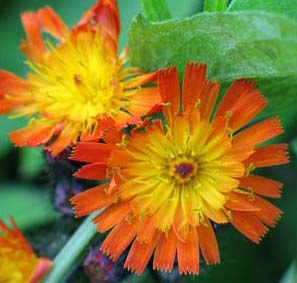
orange_hawkweedTwo Victorian researchers have been recognised for their outstanding contribution to managing highly invasive weeds in Victoria’s Alpine National Park.

Parks Victoria Chief Executive Dr Bill Jackson today acknowledged The University of Melbourne’s Dr Nick Williams, and Dr Joslin Moore from Monash University, as joint recipients of Parks Victoria’s inaugural Nancy Millis Science in Parks Award.

Dr Jackson said the award was being presented to the two researchers for their outstanding contribution to fostering excellence in applied science for the benefit of park management.

“Both projects demonstrated the researchers’ strong willingness to work closely with park managers to understand the extent and challenge of the weed problems. They also demonstrated leading edge science in solving difficult problems.”

“The work of Dr Williams and his team from The University of Melbourne has helped to protect the Alpine National Park’s biodiversity and transformed hawkweed control into a cutting edge and targeted program. This research partnership between Parks Victoria and Department of Environment and Primary Industries staff has significantly reduced Hawkweeds in the Alpine National Park, and the goal of eradicating it altogether is now a real possibility.”

“Dr William’s research and the work being done by all the partners on this project also benefits private landowners as hawkweeds have the potential to invade agricultural land and significantly affect agricultural production.”

Dr Jackson said Dr Joslin Moore and her team had achieved great results in controlling willow on the Bogong High Plains and as a result has had a major impact in protecting the Bogong High Plains environment.

“Willows are highly invasive and following the 2003 fires began germinating in large numbers. This posed a significant threat to an area within the Alpine National Park that is particularly important for its high biodiversity and landscape environment.

“As a result of a 7 year partnership with Parks Victoria, local Catchment Management Authorities and Falls Creek and Mt Hotham resorts, Dr Moore’s work has been fundamental in improving efforts to control willows on Bogong High Plains.”

Dr Jackson said both researchers had extensively documented their research in scientific publications, adding to the international body of work on effective methods of managing these extremely invasive weeds.

“I warmly congratulate Dr Williams and Dr Moore, and their teams who have contributed to this work, on making a real difference to managing invasive weeds in Victoria’s iconic Alpine landscapes.

“Caring for our parks is a complex task that involves many challenges including climate change, population increases and threats such as invasive pest plants and animals.

“We need innovative solutions and a good scientific understanding of how best to tackle these issues and how best to care for these important natural environments. Dr Williams and Dr Moore’s projects are part of Parks Victoria’s Research Partners Program that fosters collaborative applied research with universities and other research organisations.

The Nancy Millis Science in Parks Award

This award presented by Parks Victoria honours the late Professor Nancy Millis who was Chair of Parks Victoria’s Science and Management Effectiveness Advisory Committee since its inception 1997 and a member of Parks Victoria Board’s sub-committee on Environment.
Alpine park grazing challenged

The following comes from the Victorian National Parks Association,:

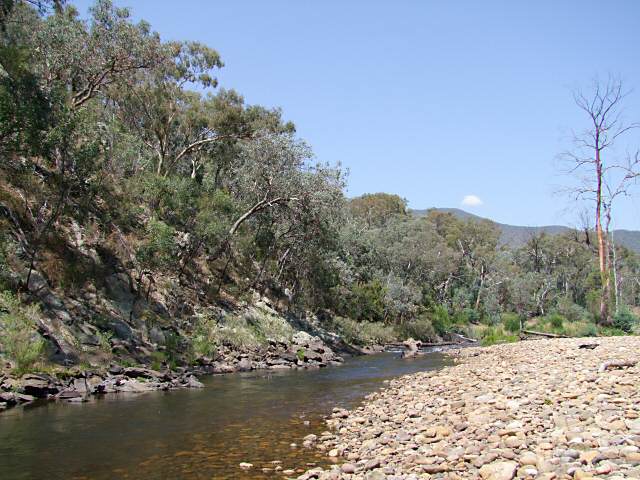
Wonnangatta River
Wonnangatta River

Today we took the first steps in our legal challenge against Alpine cattle grazing.

This case marks the first time in our 60 year history that the Victorian National Parks Association has taken the extraordinary step of launching court proceedings to protect national parks – the cornerstone of our conservation efforts – from damaging cattle grazing. 
Represented by Environmental Justice Australia and barristers Richard Niall QC and Andrew Walker, we headed to the Supreme Court of Victoria for a directions hearing on the case. The court set a time in early July 2014 for a further hearing. 
According to Felicity Millner, Director of Litigation at Environmental Justice Australia and part of our legal team, today’s hearing takes us one step closer to getting a decision from the court about whether it is legal for the government to put cattle in the national park. 
At the final hearing of the case, we will be arguing the laws do not allow cattle in the Alpine National Park. 
Ensuring the integrity of national parks is an investment in the future. Whether we win or lose this legal test case, the idea and importance of national parks as a haven for people and nature must be defended.
To fight this campaign we need to raise money from visionary people in Victoria. We are hoping you are one of those people. 
We have to take this legal action now.  In March this year, 60 cattle were rushed back into the Wonnangatta Valley, part of the heritage-listed Alpine National Park, under a flawed fire management trial by the Napthine Government.
The cattle have now left, but will be back next summer, when up to 300 head of cattle will do even more damage.
These ‘cattle grazing trials’ have been roundly criticised as flawed science that will contribute little, if anything, to our understanding of fire management. The evidence speaks for itself, you can read all about it on our website.

Alpine grazing. It’s not just a bumper sticker, it’s a hypothesis

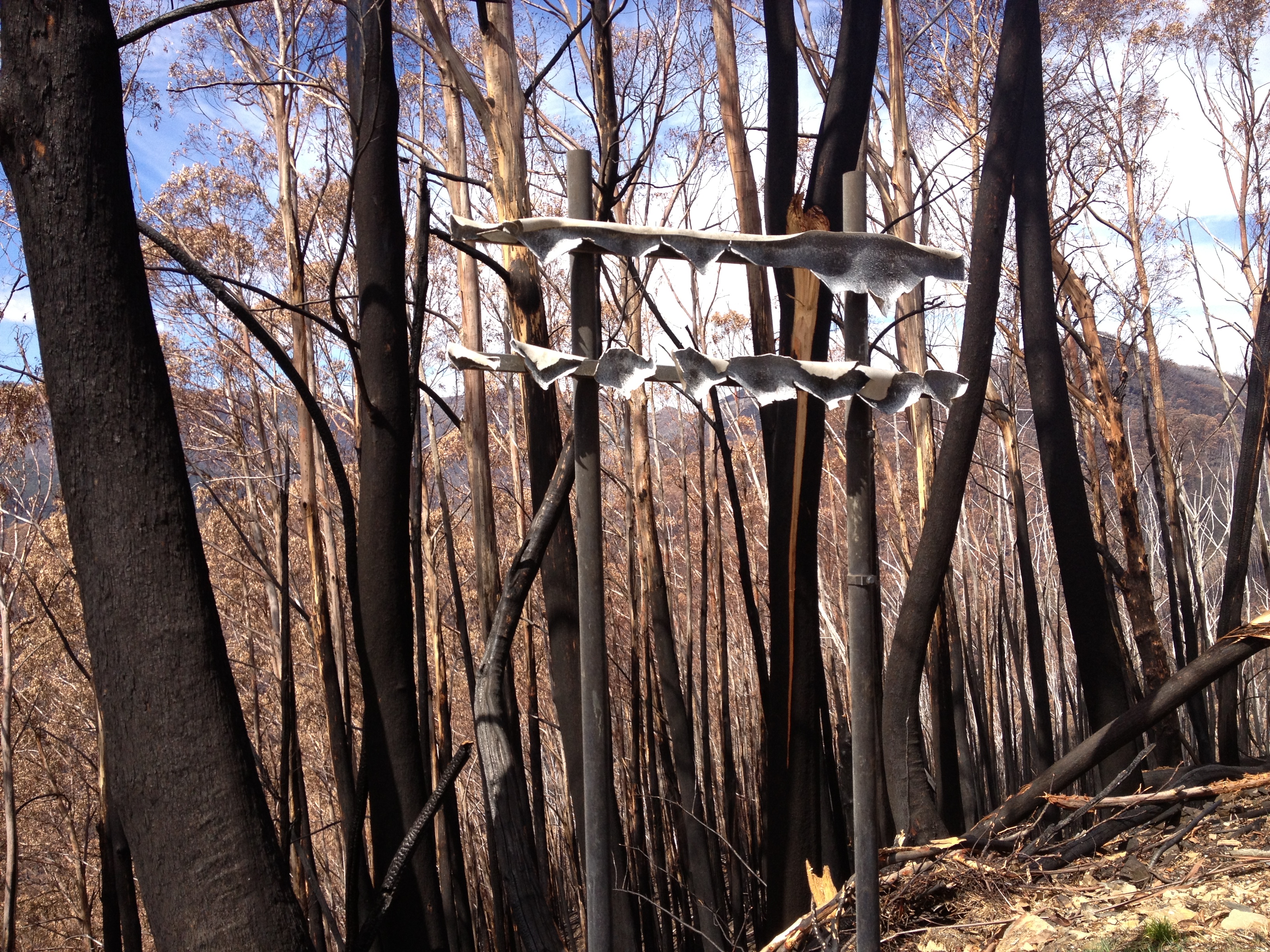
fire damage on Great Alpine Road

Its just not a credible one.

Latrobe University recently hosted a significant event organised by the Research Centre for Applied Alpine Ecology on the much contested topic of alpine grazing and whether it is a useful management tool to reduce fire intensity.

It featured two researchers with long term research backgrounds in the realm of fire and grazing.

A report is available here.

challenge to alpine grazing

The following update comes from the Victorian National Parks Association.

Today we lodged papers in the Supreme Court of Victoria challenging the Napthine Government’s reintroduction of cattle grazing to the Alpine National Park.

The whole idea of national parks is to conserve nature for future generations, and for its own sake. These natural environments are irreplaceable – a gift to the present, and a legacy for the future.

But by insisting on putting cattle back into the Alpine National Park the Victorian Government is ignoring the intention of the law that established national parks.

Now that all other avenues of protecting the national park have been thwarted we have been forced to take legal action.

Both the state and federal governments have failed in their duty to protect the Alpine National Park.

This is a legal test case. No one has ever tried it before, so we can’t guarantee we will win.

But in our view there is no other option. We have to take this brave step.

Ensuring the integrity of national parks is an investment in the future. Whether we win or lose this legal test case, the idea and importance of national parks as a haven for people and nature must be defended.

To fight this campaign we need to raise money from visionary people in Victoria. We’re hoping you are one of those people.

This campaign is vital. It’s not just about stopping cattle, it’s also about putting a stop to all the other attempts to exploit and commercialise our national parks in ways that irreversibly damage them for future generations.

We have to take this legal action now.  In March this year, 60 cattle were rushed back into the Wonnangatta Valley, part of the heritage-listed Alpine National Park, by your government as part of a flawed fire management trial.

These ‘cattle grazing trials’ have been roundly criticised as flawed science that will contribute little, if anything, to our understanding of fire management. The evidence speaks for itself, you can read it on our website.

We have to stop them going back in again over the coming 2014-15 summer when more cattle (up to 300) will do even more damage!

The mountain cattlemen have clearly said they want to return cattle to the entire Alpine National Park, and that this ‘trial’ is just the starting point.

With a looming state election, the Napthine Government and the Labor opposition must clarify their policy on these ‘scientific’ cattle grazing trials.

Victorians have a right to know before the next state election if they are voting for a small-scale scientific trial, the full-scale return of cattle grazing to the Alpine National Park or for the exclusion of cattle from the park once and for all.

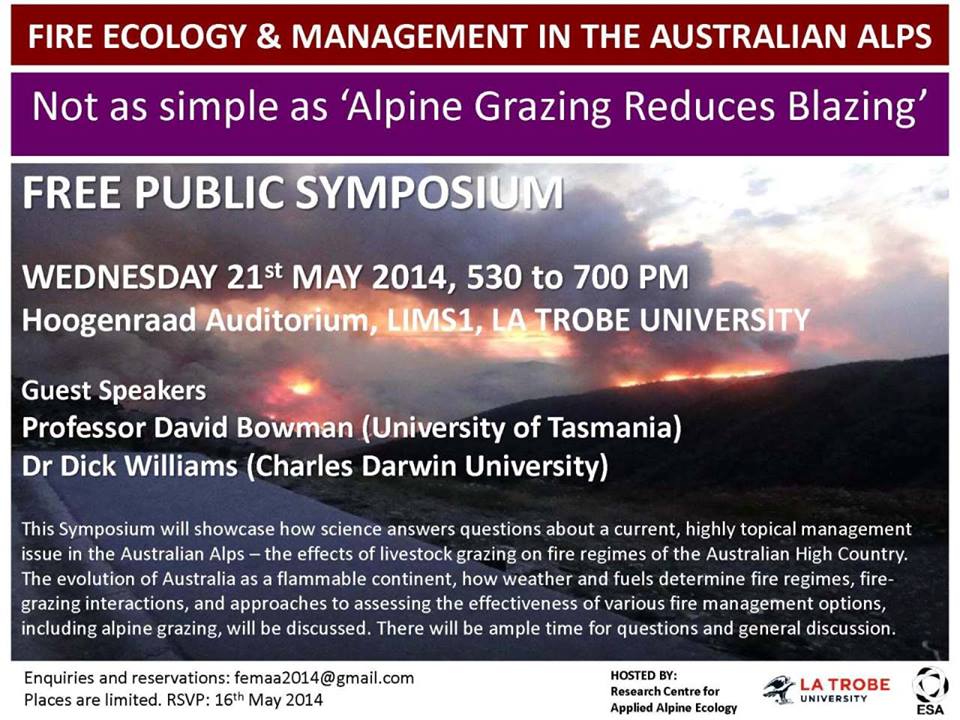
Public Symposium on Fire Management and Alpine Grazing

10001434_807156965961438_7591415225312276971_nWEDNESDAY 21st MAY 2014, 530 to 700 PM

Hoogenraad Auditorium, La Trobe Institute for Molecular Sciences

LA TROBE UNIVERSITY, Bundoora Campus

Hosted by the Research Centre for Applied Alpine Ecology, La Trobe University

This Symposium will showcase how science answers questions about a current, highly topical management issue in the Australian Alps – the effects of livestock grazing on fire regimes of the Australian High Country.  The guest speakers will address globally important topics such as the evolution of Australia as a flammable continent, how weather and fuels determine fire regimes, fire-grazing interactions, and approaches to assessing the effectiveness of various fire management options, including alpine grazing. This is a public forum about an important land management issue, and there will be ample time for questions and discussion at the conclusion of the talks. The Symposium will be followed by drinks and nibbles.

This Symposium is a must for anyone with an interest in the ecology and management of the Australian Alps. Enquiries and reservations: femaa2014@gmail.com

Places are limited. RSVP: 15th May 2014


Giving Back part 2: the Victorian Mobile Landcare Group

I recently posted about the need for people who enjoy the mountains to give back to the natural environment in some way. One great option is to join or support one of the many groups that do ecological restoration work or track maintenance. One group that certainly ‘walks the talk’ is the Victorian Mobile Landcare Group, who work across a range of projects in the Victorian High Country.

The following is a report on a recent project they completed on the Bogong High Plains.

For contact details on a range of groups, check here.

Roper’s Hut Track Repair

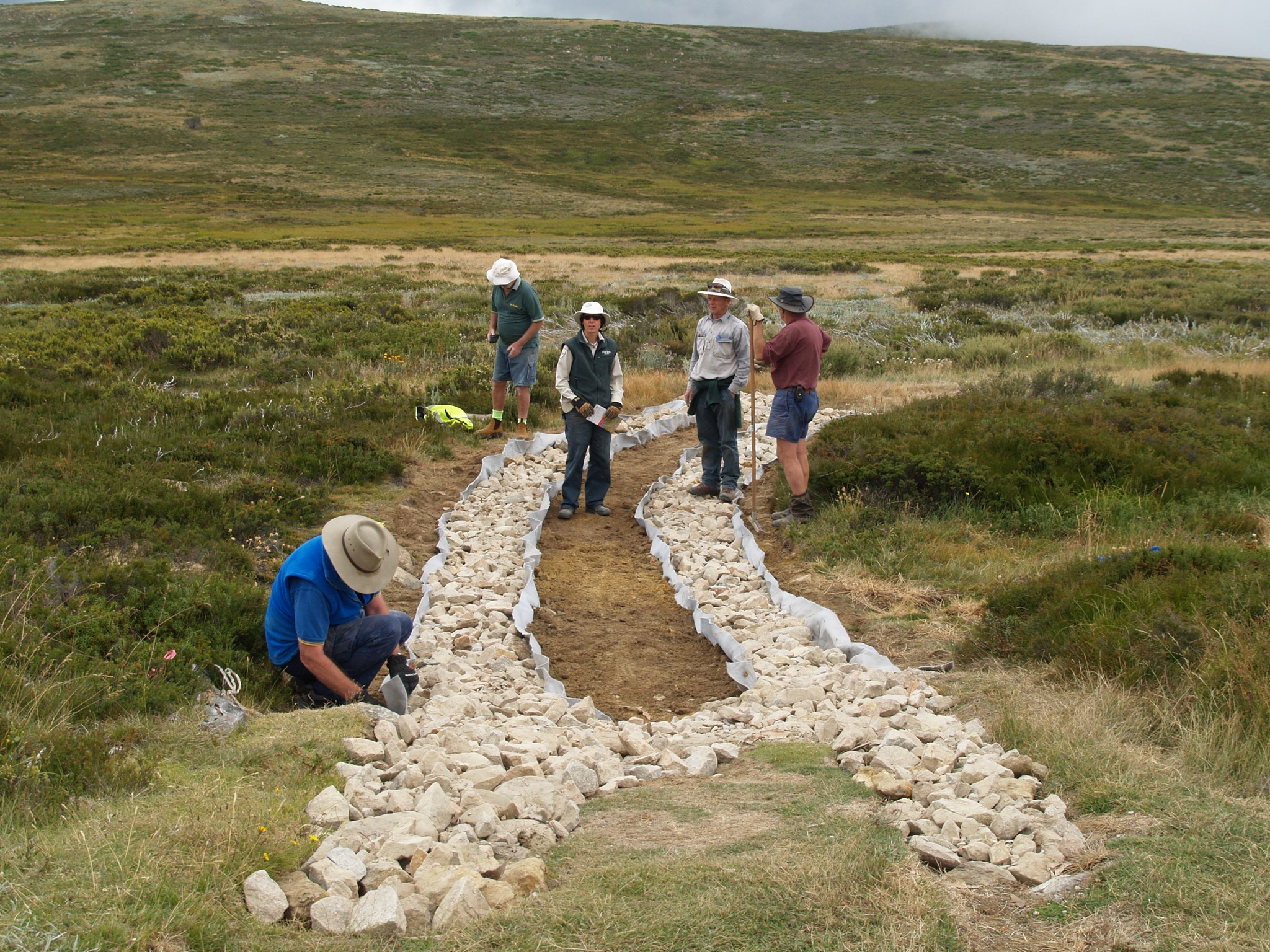
Seven members of the Victorian Mobile Landcare Group Inc. (VMLCG) travelled to Mt. Beauty late on Friday 7 March in order to take on a request from Parks Victoria (PV) to assist create a rock vehicle bridge to protect sensitive sphagnum moss beds which straddle the Management Vehicle Only track out to the iconic Roper’s Hut, burn in the 2003 fires and restored in 2009 by a community effort, headed by the Freemasons Victoria NE District.

OLYMPUS DIGITAL CAMERA
This one is the end of work. Time is 1 pm

The team met Parks Ranger Elaine Thomas and contractor Kim, on Saturday morning at Falls Creek and after rationalising vehicles and loads to reduce track impact, travelled out to the Big River Fire Trail and Roper’s Track intersection.

Once fortified by an early morning team, the VMLCG team then walked to the site, and after a JSA and briefing on design and approach by Kim, commenced the work to excavate and create the crossing.

In all, around 4 cubic metres of existing material was moved to make two purpose built and rock-based wheel tracks for both PV and contractor vehicles required to access the hut site. The 4 cubic metres of 75 – 150 mm granite rock used to fill the wheel tracks was kindly donated to the project by AGL, the operators of the recently constructed Clover hydro power station and this kind donation is much appreciated and acknowledged. Without it, this work would not have been possible.

This one is the end of work. Time is 1 pm
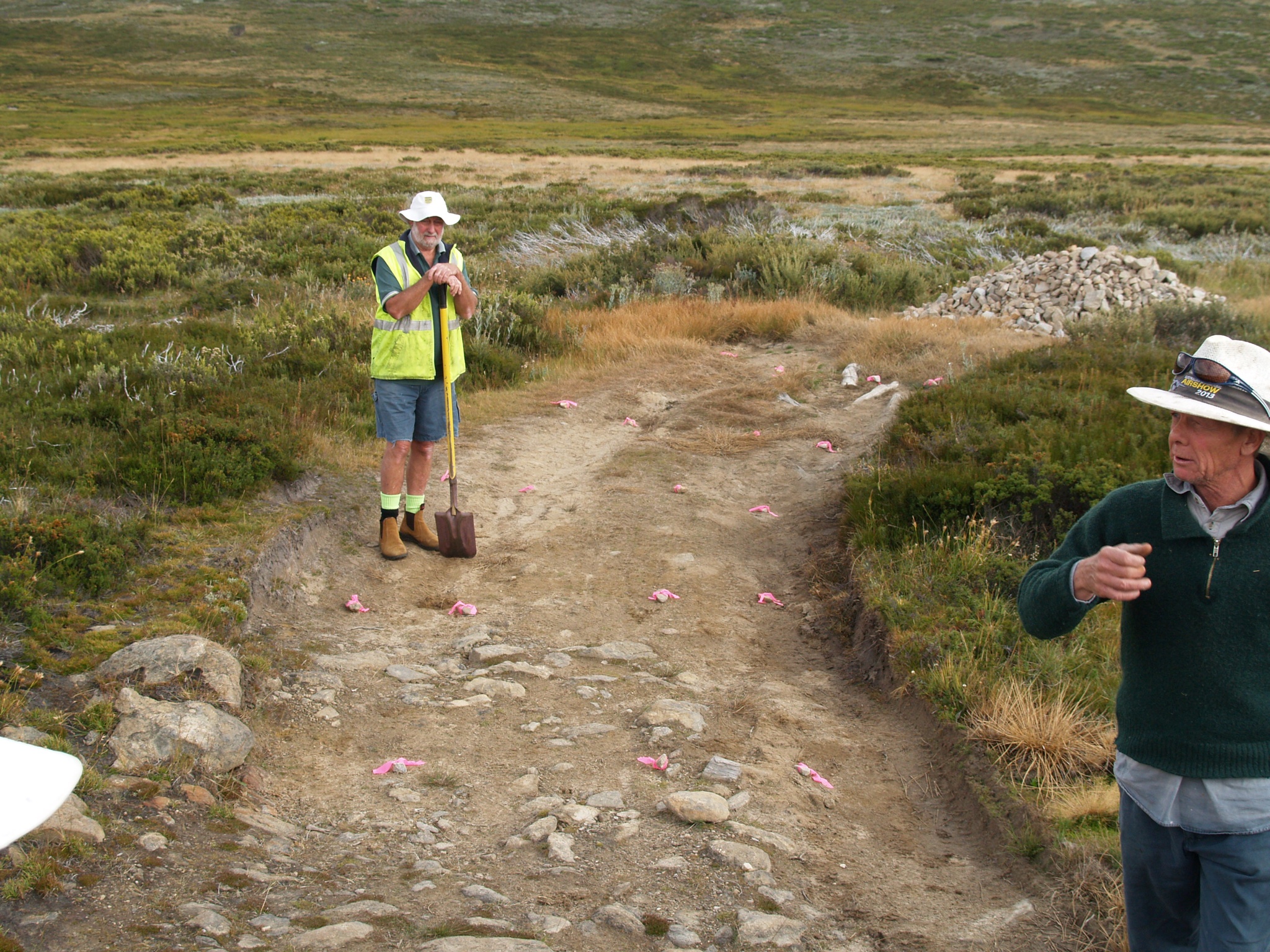
Start of the work at 10am. The pink dots mark the outlines of the track to be built
This one is start of work 10 am.  The pink dots are the track outlines we had to create.

The VMLCG was originally tasked for two days but with the combined effort of the team and Parks Victoria rangers, the entire project was completed between 10 am and 1:30 pm on the Saturday – and after a quick lunch, the crew returned to Falls Creek and an early mark for the weekend!

The next phase of the project will be when the VMLCG returns with Fintona Girls’School to plant out around 450 alpine shrub species to stabilise the soil around the tracks and reduce their visual impact. It is expected in time, the spot will become barely noticeably and yet provide a much needed stabilising base for the occasional and required vehicle access.

We’ll let the before and after photos speak for the work done.

The VMLCG specialises in the development and delivery of remote area landcare projects and works collaboratively with a number of conservation groups on a diverse range of projects across Victoria. They can be reached via http://www.vmlcg.org.au

climate change and bushfires

There is no doubt that our fire seasons are getting longer and more intense. Here in the south east, in terms of massive fires (greater than 250,000 ha), Victoria experienced two such events in the 19th century and five in the 20th century. In less than two decades, we have already had three mega fires in the 21st century. Many alpine areas have been burnt three times in the space of a decade.

There is no coherent overall response as yet by state or federal governments that outlines how we should respond to the growing interaction of climate change and wildfire. Sadly, our Prime Minister is in denial, having claimed that since ‘fires have always been part of our landscape’ there is no link to climate change. The Victorian state government has been challenged on the lack of attention to climate change in it’s approach to managing fire risk. Reducing fire risk is therefore about reducing fuel load and getting larger equipment , not about reducing greenhouse gas emissions or accepting that enhanced fire risk is the new reality for much of the country.

The following report, from Grist, outlines a different approach. The US government has released a strategy that aims to respond to the changing nature of fire threats. One aspect that especially interested me is the fact that it includes an approach that aims to ‘restore and maintain landscapes that are resilient to fire.’ In Victoria, we seem to be doing the opposite. There is a politically driven target that dictates that 5% of the state will receive fuel reduction treatment each year. This is in spite of the fact that some vegetation types don’t need burning to maintain ecological health, and others can become more flammable with the wrong fuel reduction approaches, and others are directly threatened by too much fire.

Climate change just reshaped America’s wildfire strategy

Wildfire
EricF2000

Like a tree in a greenhouse, America’s forest fire problem is growing ominously. Rising temperatures and declining rain and snowfall are parching fire-prone areas and juicing conflagrations. On Thursday, following years of meetings and scientific reviews, the Obama administration published a 101-page strategy that aims to help meet the country’s shifting fire threats.

The National Cohesive Wildland Fire Management Strategy divides the nation according to fire risks, and profiles the communities that face those risks. “No one-size-fits-all approach exists to address the challenges facing the Nation,” the strategy states.


Despite covering 70,000 communities and 46 million homes, the strategy can be boiled down to guidelines that aim to do three main things: restore and maintain landscapes that are resilient to fire; brace communities and infrastructure for occasional blazes; and help officials make wise decisions about how and whether flames should be doused. Here’s what that all looks like in flowchart form:

Click to embiggen.

“As climate change spurs extended droughts and longer fire seasons, this collaborative wildfire blueprint will help us restore forests and rangelands to make communities less vulnerable,” said Mike Boots, chair of the White House Council on Environmental Quality.

John Upton is a science fan and green news boffin who tweets, posts articles to Facebook, and blogs about ecology. He welcomes reader questions, tips, and incoherent rants: johnupton@gmail.com.

Hawkweed Eradication Program

The following is a reportback from Parks Victoria on this summer’s Hawkweed program. For several years PV has been co-ordinating a program on the Bogong High Plains aimed at getting this invasive weed under control.

Volunteers help to eradicate dreaded Alpine weed

orange_hawkweedVolunteers are helping to eradicate one of the state’s worst weeds from the Victorian Alps. Hawkweed is an extremely invasive member of the daisy family and is a State prohibited weed in Victoria. It has already caused major environmental damage in North America, Japan and New Zealand. Three species have been discovered in the Falls Creek Alpine Resort and surrounding Alpine National Park. An eradication program is underway and being jointly overseen by Parks Victoria, the Department of Environment and Primary Industries and Falls Creek Resort Management. Universities, research organisations and volunteers are also helping with the eradication program.

Over summer, 59 volunteers made a significant contribution by seeking out Hawkweeds across the vast and rugged alpine landscape. Volunteers from the Victorian National Parks Association, Weed Spotters, Landcare and Bushwalking clubs, as well as individuals joined forces for the hunt. They searched a total area of 73 hectares over a five week period in December and January, discovering 15 Hawkweed infestations.

“The search involved approximately a thousand hours of surveillance over rough terrain and often in challenging weather conditions,” said Keith Primrose, Operations Manager for the Hawkweed Eradication Program with Parks Victoria.

The project was assisted with information from Parks Victoria’s Research Partners Program by the University of Melbourne, Parks Victoria and DEPI. This helped locate and prioritise Hawkweed infestations.

Falls Creek Resort Management supplied accommodation for the volunteers free of charge.

This meant they stayed on the mountain for the surveillance work and enjoyed their free time in this beautiful landscape.

Parks Victoria Volunteer Coordinator Yohanna Aurisch says these enthusiastic teams are making a real difference. “We had an amazing season with a fabulous bunch of volunteers and we can’t thank them enough for their time, hard work and dedication. They discovered infestations of Orange, King devil and Mouse-ear Hawkweeds and have helped us take another step towards eradicating this highly invasive pest.”

Keith Primrose says only a committed approach will see the eradication of Hawkweed from the Victorian Alps “Without the dedication and effort of these volunteers this program has significantly less chance of success.”

Planning is already underway for next year’s season and recruitment starts later this year. For more information contact Keith Primrose via info@parks.vic.gov.au

If you think you have seen a Hawkweed please contact DEPI on 136 186.

Blog at WordPress.com.

Up ↑