Search

Mountain Journal

Environment, news, culture from the Australian Alps

Tag

snow gums

Good news – protection for snow gums gets closer

As you will know, winning a significant campaign can take years of work. I am really pleased to be able to tell you about some great developments on snow gums that we have recently helped achieve.

You may recall that Friends of the Earth (FoE) started working in the Victorian high country in 2021 because there was very limited forest campaign work going on in the north east at the time, and many dire threats of logging in special forests. We released the Icon at Risk report, which made it clear snow gum forests are facing an existential threat from climate change driven fire and expanded impact of dieback. We campaigned for an end to logging in the high country, and developed a rescue plan for snow gum forests.

During the campaign, we have had to deal with three different environment ministers on these issues. Each time we needed to get the new minister and their staff up to speed on the issue, then encourage them to act.

In February this year we hosted the first ever snow gum summit, which allowed us to build the profile of the campaign and give the government more detail about how they need to respond to protect snow gum forests.

And now, after four years of consistent work, we have some great news.

Continue reading “Good news – protection for snow gums gets closer”

Protect Macedon’s rare Snow Gums from chainsaws

As you know snow gum communities across the high country face an existential threat from the combined impacts of dieback and more frequent and intense fire seasons. Sadly the isolated pockets of snow gums away from the higher mountains also face significant threats, like in the Mt Cole ranges where the Bayindeen fire damaged sections of remnant snow gum forest.

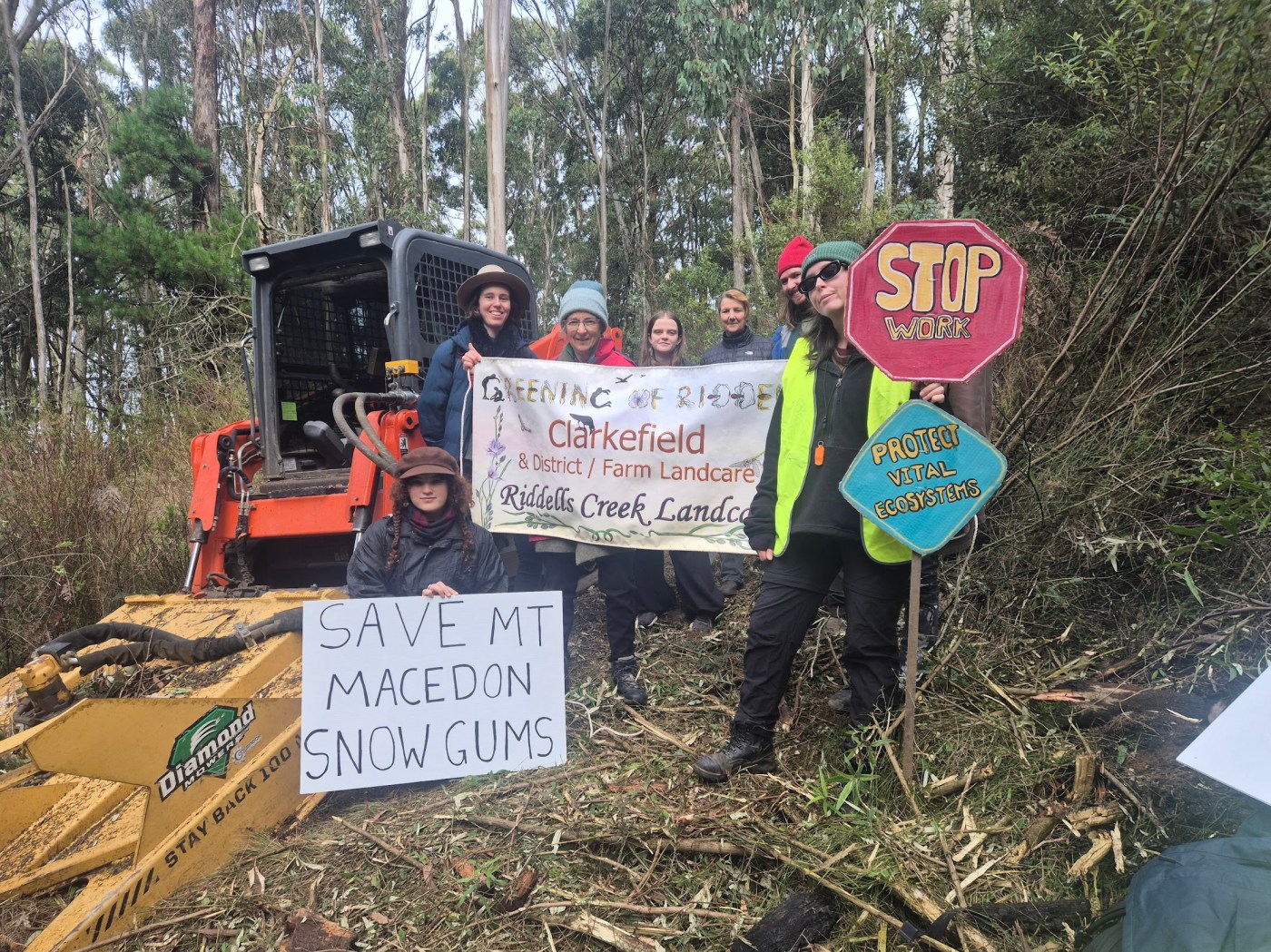
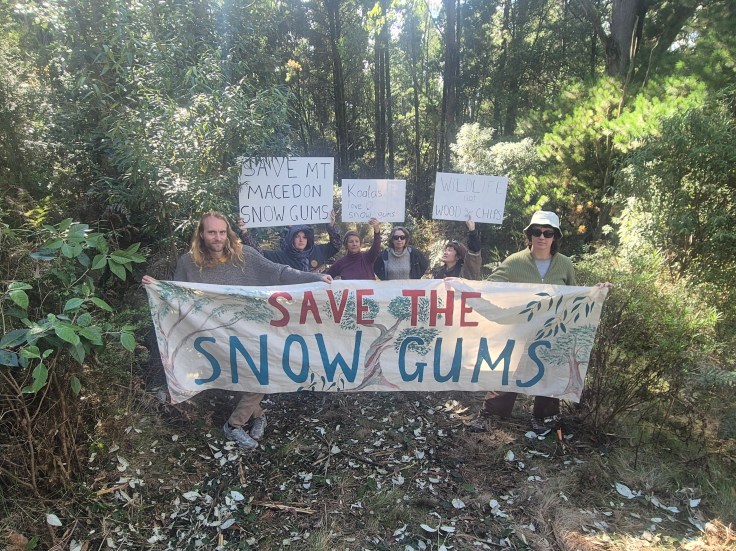
There is currently an immediate threat to the wonderful snow gum forests on Mt Macedon and I am asking you to take a few moments to contact MPs and urge them to stop imminent tree felling operations.

Urgent update April 13, 2026

We have just heard that destruction of trees on Mt Macedon has started! While snow gums have not yet been cut, access tracks have been created to allow destruction of trees, which could start on April 14.

Please express your concern about this by taking action: Simply tell them how concerned you are by this destruction and urge them to intervene to stop the clearfelling.

Take action here: sign this letter to the ministers.

Or you can email them with your own message:

  • contact the Minister for Planning, Sonia Kilkenny: sonya.kilkenny@parliament.vic.gov.au
  • contact the local MP: Maryanne Thomas. E: mary-anne.thomas@parliament.vic.gov.au
  • contact the State Environment Minister: Steve.Dimopoulos@parliament.vic.gov.au
  • Spread the word: Share stories and images of Macedon’s Snow Gums on social media using #SaveMacedonSnowGums.
  • If you are in the area please visit the summit and get images of what is happening. Please email to: cam.walker@foe.org.au

UPDATE APRIL 14.

Check here for an update on actions today.

RALLY – SUNDAY APRIL 19

Local community members invite you to join them at 10am this Sunday April 19, Mt Macedon Memorial Cross Reserve, for a peaceful rally.

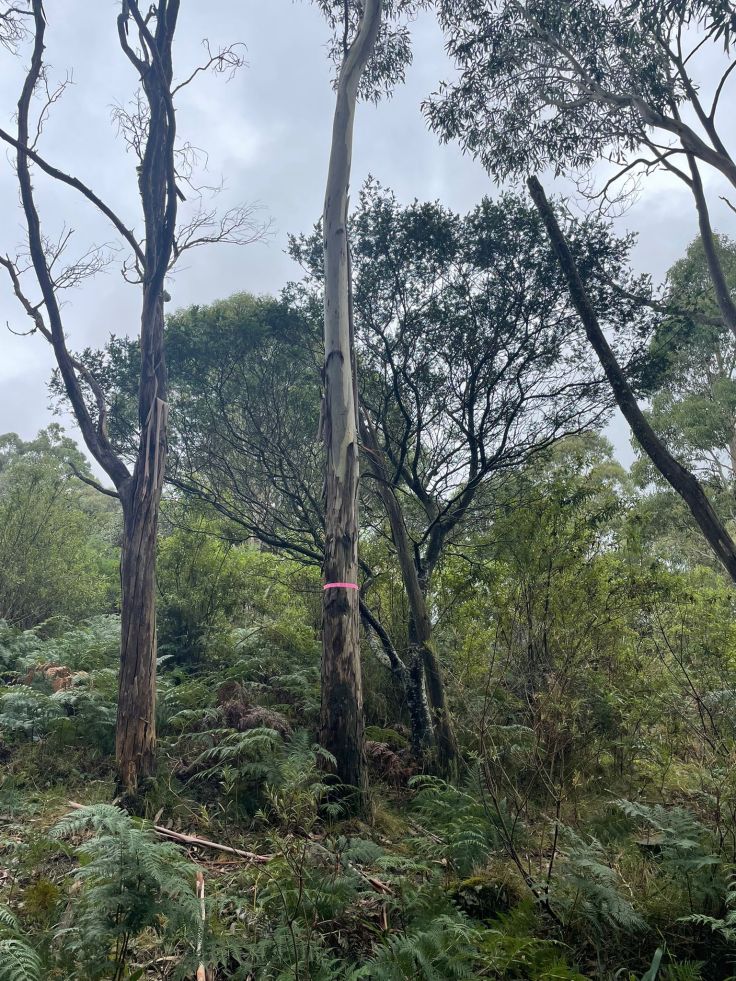
Above: trees marked for felling, April 13.

Continue reading “Protect Macedon’s rare Snow Gums from chainsaws”

Heading off ecological collapse in the mountains

Snow Gums are the classic alpine tree of the Australian High Country. And they’re now at risk.
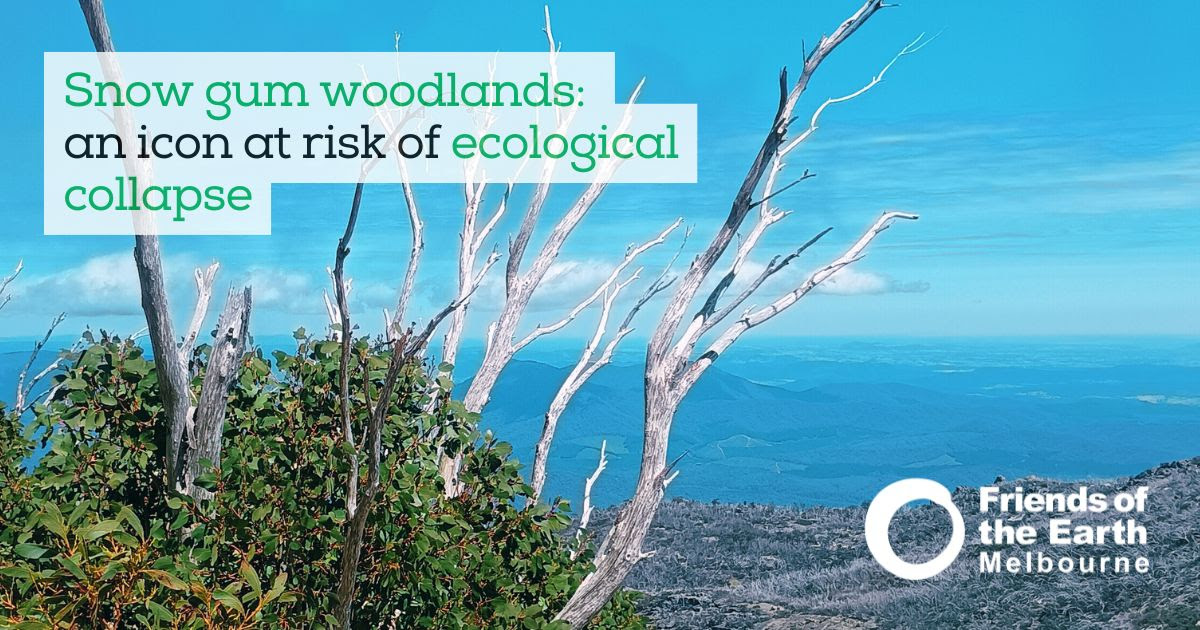
Snow gums can survive fire. However, climate change driven fire seasons are leading to more frequent fire, which is causing more death of trees and changes to forest structure. Dieback, which is caused by a native beetle, but becoming more damaging due to the effects of climate change, is devastating large sections of the high country. In many places, localised ecological collapse is now occurring.

Continue reading “Heading off ecological collapse in the mountains”

Mountain Journal magazine #5 now available

The Mountain Journal magazine is now in its 5th year of production. We print 1,000 copies and distribute it for free through mountain and valley towns between Melbourne and Canberra during autumn each year. This year we had a guest editor – Anna Langford, who has produced an absolutely gorgeous magazine with the assistance of designer Tess Sellar and beautiful images from a range of people including Matt Tomkins.

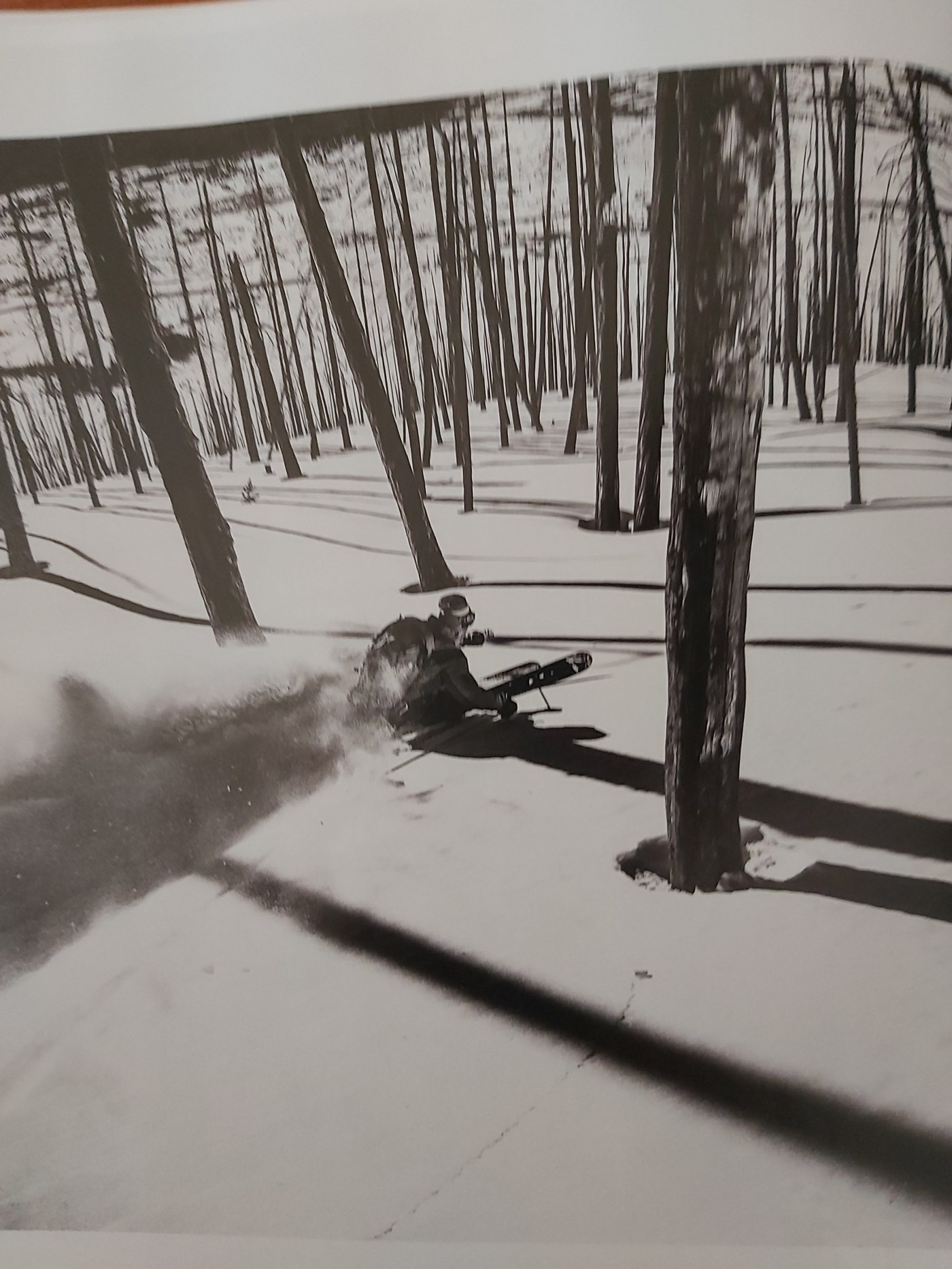
The theme delves into what is happening to Winter. As Anna says in her introduction: “Long, deep winters are fast becoming folk tales of the past. But there is still so much to love, and so much we can do to act. To talk about our alpine winters is to lament what we’ve lost, celebrate
what we still have, record it for collective memory, and impel each other to step up and take action“.

Continue reading “Mountain Journal magazine #5 now available”

A report from the snow gum summit

Each year it gets a little harder to ignore the impacts of climate change. For us mountain folk, the obvious signs are the more erratic winters, the dwindling snowpack, and the longer fire seasons that, increasingly, disrupt our summers.

Every natural ecosystem on the planet is being impacted by climate change. In the Australian high country, the two most obvious victims are alpine ash and snow gums. It is impossible to miss the walls of grey dead trunks and the thick and flammable regrowth as you drive up into the mountains from any valley town. Climate change is making our fire seasons longer and snow gums are increasingly being burnt beyond their ability to recover. Research from Latrobe University[1] shows that ‘long unburnt’ snow gums are now ‘exceedingly rare’ in the Victorian Alps, comprising less than 1% of snow gum forests.

And dieback is now killing thousands of trees. Dieback is a natural phenomena, caused by a native beetle. However, climate change appears to be ‘super charging’ the scale of the impact. This is because winters are shorter and warmer (meaning more beetles survive the cold months) and summers are hotter and drier (meaning trees are more water stressed and less able to produce the sap that acts as a defence against beetle infestations).

Continue reading “A report from the snow gum summit”

Above the Snow Line

Sarah Lynch is an artist based in Naarm (Melbourne) and works primarily in photography, video, and installation. Lynch’s most recent work examines the diversity of the botanical world and the relationship between plants, people, and the ecosystems they inhabit.

Sarah will be presenting at the snow gum summit, which will happen at Dinner Plain from February 14 – 16, 2025.

Continue reading “Above the Snow Line”

The first Snow Gum Summit

Announcement of conference: February 14 – 16, 2025

Snow Gums (Eucalyptus pauciflora) are the classic tree of the Australian High Country. They are profoundly different to the trees found in mountain areas in other parts of the world, and give a uniquely Australian sense to our high country. However, they are facing a double threat to their survival: from fire and dieback.

We are hosting a ‘snow gum summit’ which will bring together land managers and academics and anyone interested in the future of this iconic species to explore what needs to be done to ensure the survival of snow gum woodlands, and put the issue firmly on the state governments agenda.

We will be inviting First Nations people, local and state wide environmental organisations, local communities and businesses, groups active in outdoors recreation, and enthusiasts of high-elevation, forest ecosystems.  There will be presentations, workshops and field trips.

This event will happen at Dinner Plain, on GunaiKurnai Country in north eastern Victoria.

Continue reading “The first Snow Gum Summit”

The Bayindeen fire and Snow Gum forests at Mt Cole

Snow gums (generally E. pauciflora ssp. Pauciflora) are the iconic tree of the Australian high country. While they are best known for their dominance of higher elevation areas in north eastern Victoria and the Snowy Mountains of southern NSW, it grows in woodland along the ranges and tablelands, in cold sites above 700 metres, in a long stretch from the far south-east of Queensland, through New South Wales, the Australian Capital Territory, and Victoria, to near Mount Gambier in South Australia and Tasmania.

Snow gums also exist as isolated pockets well away from the higher mountains. For instance there are 53 known remnant Snow Gum sites within a 40 kilometre radius of Ballarat, Victoria. A  large proportion of remnant vegetation in the area occurs as small patches or isolated paddock trees, often on private land.

However there are also some important Snow Gum forests on public land in central and western Victoria. A well known example is on the upper slopes around Mt Macedon. Although these forests were impacted by the 1983 Ash Wednesday fires, the Mount Macedon Snow Gum population have been assessed as being in relatively good health (despite a recent proposal to clear some sections of the forest around the Memorial Cross at Mt Macedon)..

There is also a really important community of Snow Gums growing across the higher hills of the Mt Cole state forest.

Continue reading “The Bayindeen fire and Snow Gum forests at Mt Cole”

The world’s most charismatic tree (*)

If you visit this website, you will probably have noticed that I have a bit of an obsession with Snow Gums.

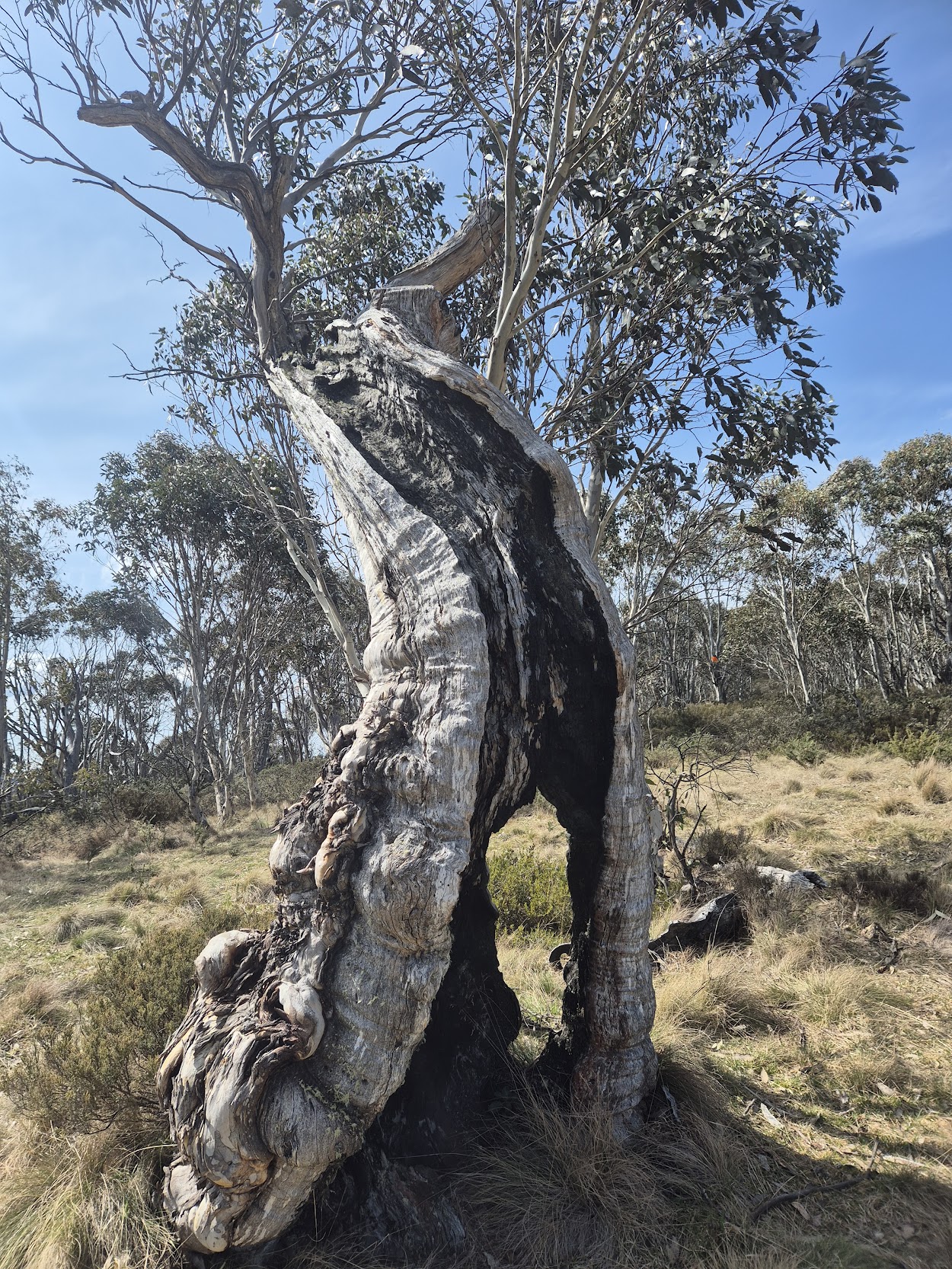
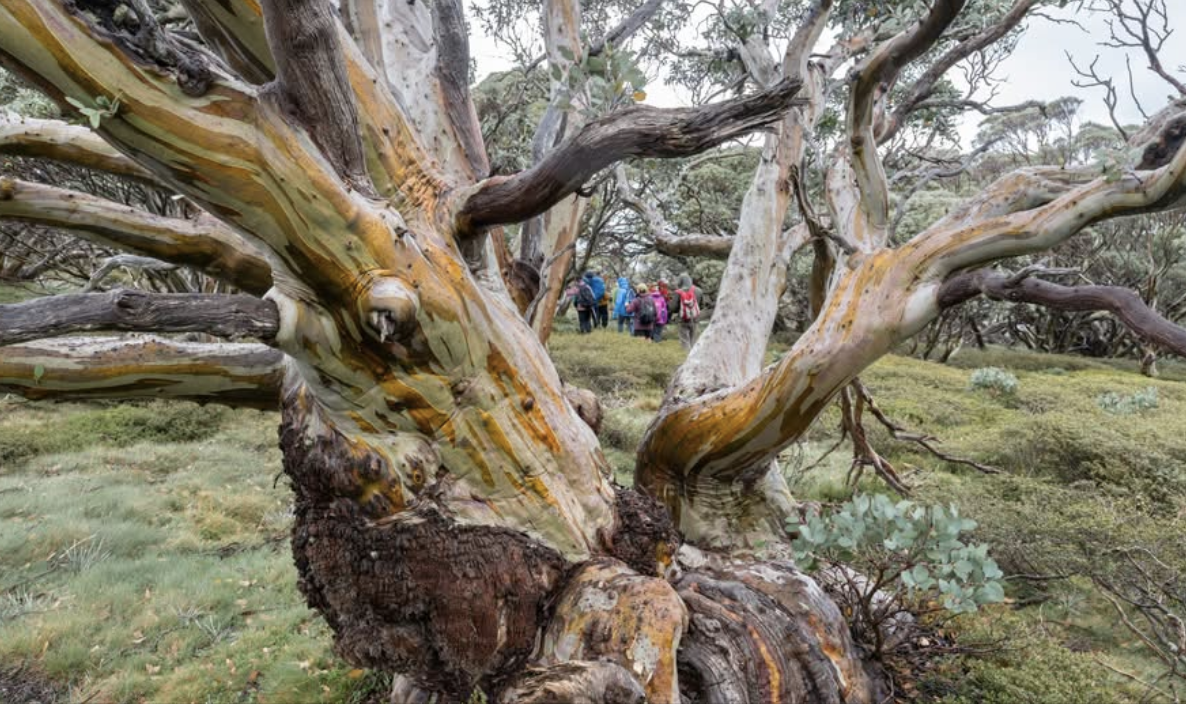
Snow Gums (Eucalyptus pauciflora) are the classic tree of the higher mountains of south eastern Australia. Interspaced with Alpine Ash at the lower end of their distribution, much of the forests and woodlands at higher levels across the Alps are dominated by this wonderful tree. They are profoundly different to the trees found in mountain areas in other parts of the world, and give a uniquely Australian sense to our high country. I am always amazed by the remarkable diversity in form that is possible within a single species. From grand tall elders in sheltered zones to wind pruned Bonsai sized trees on the treeline, the Snow Gum has a dazzling diversity of forms.

Continue reading “The world’s most charismatic tree (*)”

‘They offer great beauty. They offer shelter. They nurture us.’

Across the Australian high country, the snow gum woodlands are facing an existential threat from dieback and climate change driven fire regimes.

These threats are detailed here, as are some potential solutions.

While the loss of these forests would have major physical and ecological impacts on mountain environments, what would it mean for our personal connection to the high country? For me these trees are an essential part of life in the mountains. When I drive or walk up from the valley and have a wander among old trees, I feel like I have come home. I know these forests have been here for time beyond our imagining:

Continue reading “‘They offer great beauty. They offer shelter. They nurture us.’”

‘Long-unburnt snow gum forests are now exceedingly rare’.

Across the mountains of south eastern Australia, climate change is already driving profound change. In many places in the high country of NSW and Victoria, snow gum forests are facing a double sided threat: dieback, caused by a native beetle is killing individual trees, and climate change driven fire regimes are devastating vast areas of forest. Climate change, drought, insects and soil microbes are all thought to contribute to dieback. The spread and impacts of the beetle appear to be super charged by climate change (more beetles are surviving because of milder winters and more mortality of water stressed trees in summer).

More frequent and intense wild fire also poses an existential threat to the survival of snow gum woodlands and forests. A new report reveals the scale of the fire impact on these forests in the Victorian high country.

In the paper ‘Long-unburnt stands of snow gum (Eucalyptus pauciflora Sieber ex Spreng) are exceedingly rare in the Victorian Alps: implications for their conservation and management’, John Morgan, Michael Shackleton and Zac Walker from the Research Centre for Applied Alpine Ecology at La Trobe University highlight that ‘Long-unburnt snow gum forests (now) comprise less than 1% of snow gum forests in the Victorian Alps. We identify where long-unburnt snow gum stands persist in the Victorian Alps and outline why management intervention is necessary to protect unburnt refuges and, more broadly, to allow mature/adult stands (such as occur on the Baw Baw Plateau) to develop into future old forests’.

Continue reading “‘Long-unburnt snow gum forests are now exceedingly rare’.”

Welcome coverage of threats to snow gums in The Age

You may have seen today’s story by Miki Perkins in The Age here.  It considers the threats posed to snow gum woodlands (and other mountain forests) by more frequent and intense bushfires.

The story says ‘the global climate crisis, driven by humans burning fossil fuels, has brought a new threat to these mountain peaks: more frequent and more intense bushfires.

Because snow gums have not evolved to cope with these conditions, experts say the nature of Australia’s high mountain landscapes are changing, and the ecological collapse of snow gum woodlands – the abrupt decline or change of this ecosystem – is happening before our eyes’.

Continue reading “Welcome coverage of threats to snow gums in The Age”

Blog at WordPress.com.

Up ↑