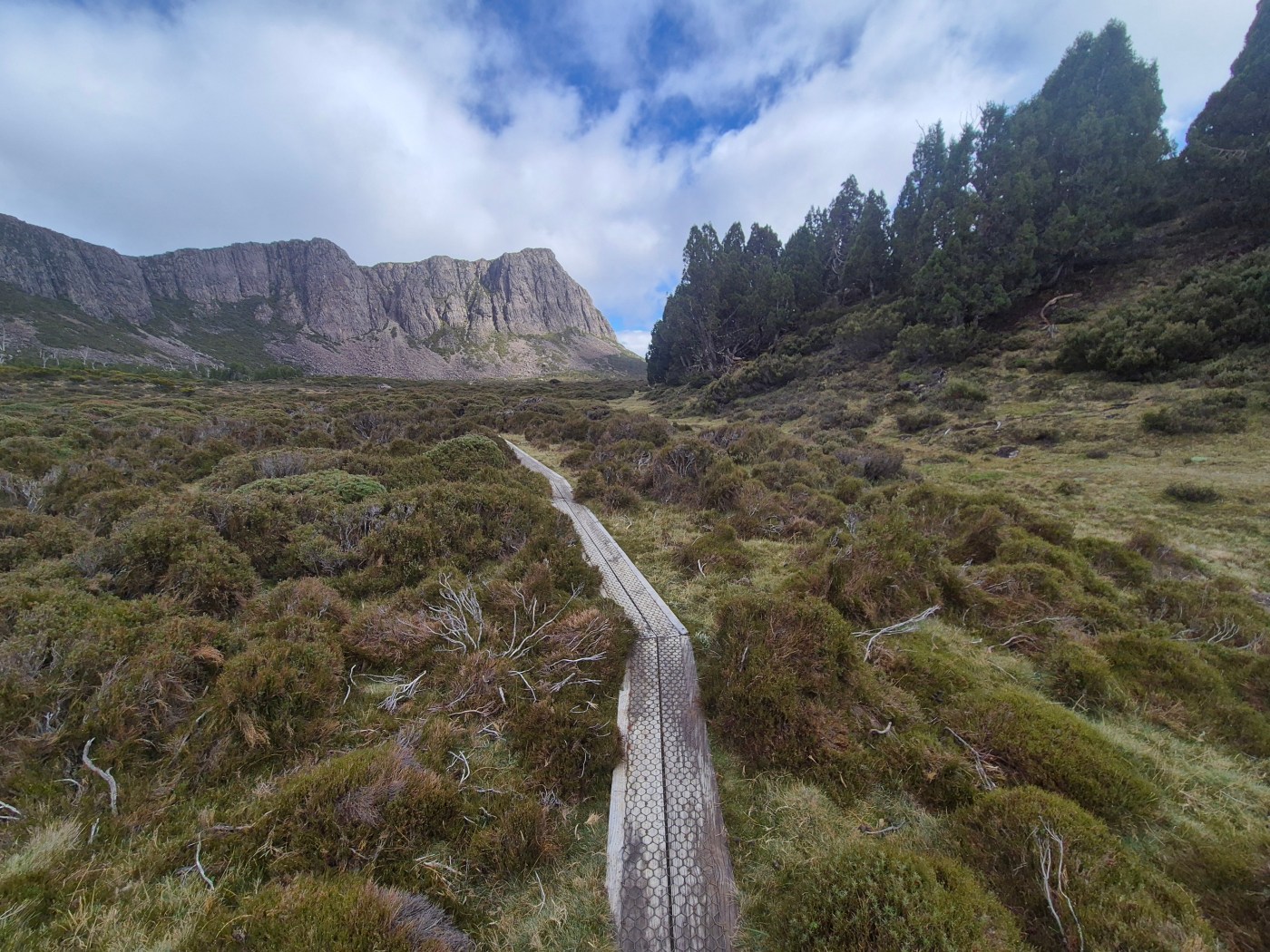
The Tasmanian Wilderness World Heritage Area (TWWHA) meets seven of the ten criteria for World Heritage listing, an achievement not surpassed by any other property. The TWWHA was first inscribed in 1982. Since then, the world has changed significantly, and this is demonstrated by the issues that are arising in places like the World Heritage Area. This in turn has influenced how the area needs to be managed.
A recent paper published in Austral Ecology and called Natural Values and Threats of the Tasmanian Wilderness World Heritage Area: Changed Perspectives Over Four Decades Since Listing (available here) considers how threats have changed over the past four decades and how management approaches have responded.
When you think about the massive World Heritage Area that covers much of south western and central lutruwita/ Tasmania, what you probably think of is rugged mountains, buttongrass plains and a wild coastline. It feels mostly like an untracked and intact landscape – and to a large degree it is. And in earlier times, there were multiple land use threats to the World Heritage values. In the 1980s, key threats came from mining, forestry operations and hydro-electric power generation. The assumption was that we needed then was less human activity – if we could get the damaging land practises removed, then nature could look after itself.
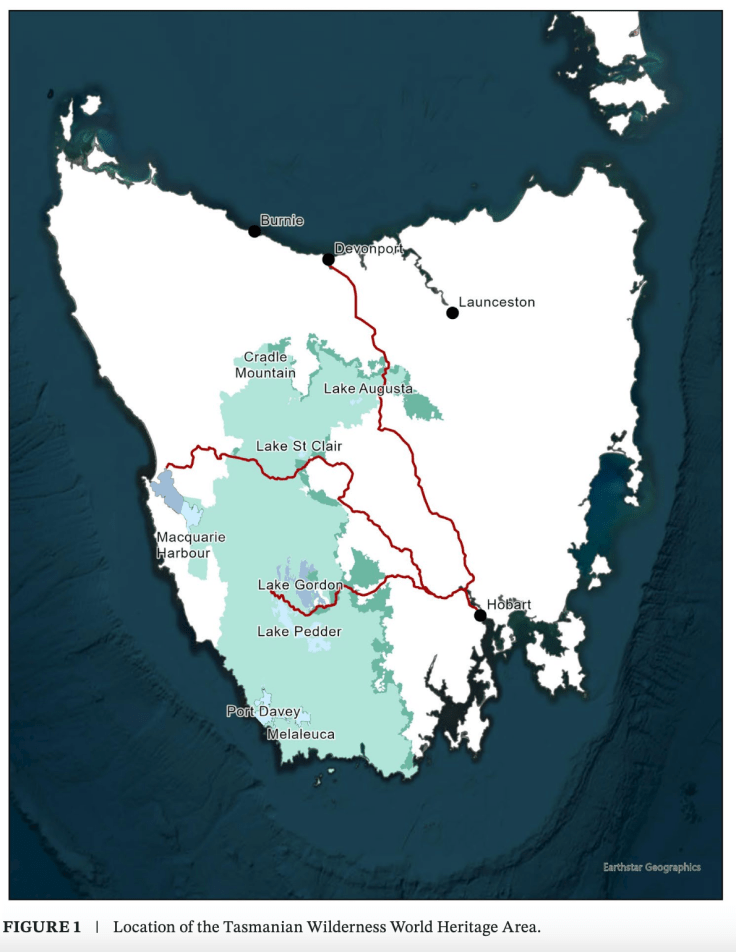
There were a number of extensions on the northern and eastern fringes of the WHA in 2013 which helped extend protection from logging.
Changing threats
Forty years on, the main threats have shifted and now come from bushfires, invasive species and climate change. Climate change exacerbates other threats, as shown by greater bushfire risk caused by increased lightning ignited fires (the frequency of Dry lightning – lightning strikes not associated with significant rainfall has been growing in recent decades).
When the TWWHA was inscribed in 1982, anthropogenic climate change was generally regarded as an esoteric threat; however, recognition of this threat to Earth’s systems has increased dramatically during the subsequent decades.
So, from being a place where human threats need to be removed so nature can manage itself, the TWWHA has become a place that requires more human intervention. The fact that much of the area has high ecological integrity certainly helps (the native species composition of the TWWHA has not substantively changed since the early 1800s) but the threats must be managed.
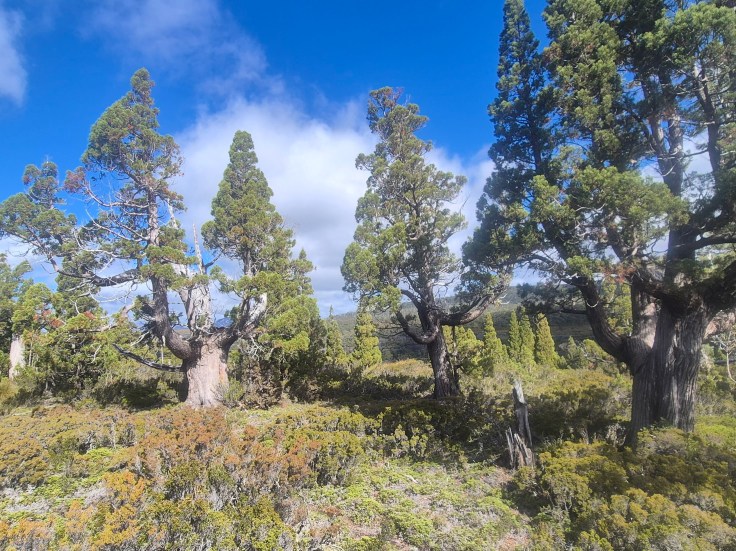
Climate change and fire
The fire management paradigm has now shifted from a focus on fire exclusion to landscape-scale planned burning, which is aimed at maintaining fire-dependent values and vegetation mosaics as well as reducing bushfire risk and implementing cultural landscape management. This is seeing much more planned burning, primarily to keep fire tolerant vegetation communities such as button grass open, creating a mosaic of vegetation types that will allow land managers to hopefully stop wild fire from entering fire sensitive communities such as rainforest.
The devastating bushfires of 2016 and subsequent ‘TWWHA Bushfire and Climate Change Research Project’ were a watershed for understanding and management of fire in the TWWHA. It has been suggested that the 2016 fires were indicative of a ‘new normal’ fire regime under climate change.
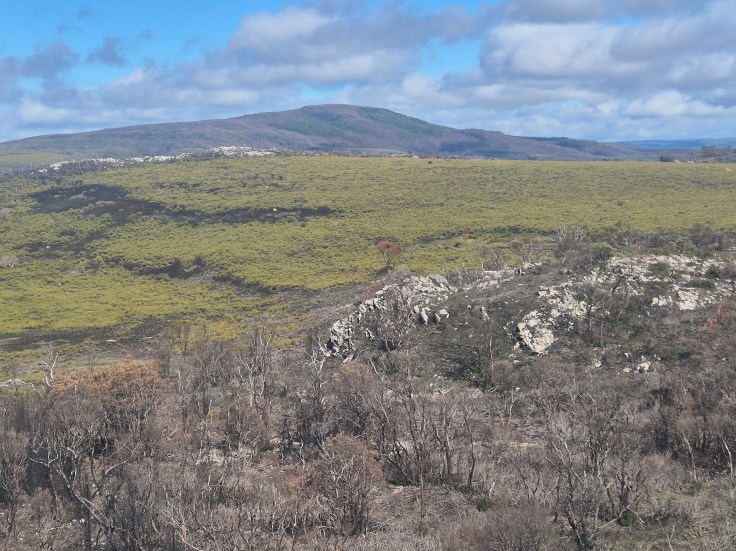
In response, the Tasmanian Government implemented major improvements in fire management systems including:
- developing a TWWHA Strategic Fire Management Plan;
- increased capabilities in rapid fire detection and response, including remote area
- and aerial firefighting;
- improved mapping of fire-sensitive values, including paleoendemic vegetation and organic soils;
- defining and applying fire regimes to maintain eco-system resilience; and
- investigating the potential for post-fire rehabilitation of key values.
Visitors and social media
The report also notes that increasing visitation and information sharing via social media are placing more pressure on the TWWHA through increasing access to environmentally sensitive sites and unauthorised activities. While the size and integrity of the TWWHA provide a degree of security and resilience to the natural values within it, pressure on its environment from cumulative and compounding threats will escalate.
Summary
The report notes that the threats that have been identified require strong management responses. With continued degradation of natural environments globally, the importance of the protection of geodiversity and biodiversity in the TWWHA will increase.
This report is based on the paper
Natural Values and Threats of the Tasmanian Wilderness World Heritage Area: Changed Perspectives Over Four Decades Since Listing
Authors
Michael M. Driessen, Jayne Balmer, Jason Bradbury, Rolan Eberhard, Rosemary Gales, Steve Leonard, Micah Visoiu and Jennie Whinam.




Leave a Reply