Search

Mountain Journal

Environment, news, culture from the Australian Alps

CHASING the MOUNTAIN LIGHT: A Life Photographing Wild Places

All landscapes have appeal. Some are easier to love than others. Many Australians love the beach and coastlines. Some love the desert, or wetlands, rainforests or the tall Ash forests. Some people have more obscure tastes – mangroves or mulga or gibber plains. But many of us love the mountains. And some of us express this love through writing, film, poetry, photography or other forms of communication. A new book called Chasing the Mountain Light delves deep into love of the mountains through the medium of images and writing.

The subititle of the book explains it perfectly: ‘A life photographing wild places’. The work of David Neilson, it is a glorious coffee table sized book featuring wonderful black and white images from south western lutruwita/ Tasmania, Patagonia, Karakoram and the Alps of Australia, New Zealand and Europe and other ranges such as the Andes.

Continue reading “CHASING the MOUNTAIN LIGHT: A Life Photographing Wild Places”

Alpine Resorts Victoria takes on management of VIC resorts

On Saturday 1 October 2022, recent amendments to the Alpine Resorts (Management) Act 1997 came into effect.

Those amendments include the abolition of the Mount Hotham, Falls Creek, Mount Buller Mount Stirling and Southern alpine resort management boards and the Alpine Resorts Co-ordinating Council and the establishment of Alpine Resorts Victoria (ARV) as a single entity to manage Victoria’s six alpine resorts.  This has been long planned and with winter over, ARV is now starting the job of managing the resorts.

Continue reading “Alpine Resorts Victoria takes on management of VIC resorts”

Logging threat to Victoria’s high country

Victoria’s highest mountain, Bogong (Warkwoolowler in the Waywurru and Dhudhuroa languages, meaning the mountain where Aboriginal people collected the Bogong Moths) is protected in the Alpine National Park. It sits high above the town of Mount Beauty and is a drawcard for hikers, skiers and backcountry snowboarders. There are no roads on the mountain, and access is slow because of the steep climb up from the valley. It is an alpine wonderland of wildflowers in summer and deep snow in winter.

Most people approach the mountain from the Ovens Valley or across the Bogong High Plains. There is another route on the eastern side, following the appropriately named Long Spur to Mt Wills. This is all high elevation woodland and forests, and is the route by which the famous Australian Alps Walking Track (AAWT) leaves Bogong as it heads towards the Snowy Mountains. The 700 km long AAWT crosses the Alps from Walhalla to the outskirts of Canberra, and follows Long Spur from Bogong to Mt Wills before turning south and dropping into the valley of the Mitta Mitta River.

Mt Wills itself is a magical ‘island in the sky’ of isolated snow gum woodland, largely dominated by older trees. While it is connected by the long and high ridge back to Bogong, mostly the land around the mountain falls away to deep river valleys and forests that are initially dominated by Alpine Ash.

A new threat to these mountains

The higher mountain areas on this side of the Bogong High Plains are largely intact, although significant areas have been burnt, often several times in close succession, in recent years. But now there is a threat posed by logging in the area where the AAWT/ Long Spur track starts the climb up to Mt Wills, which would create a large clear cut area of more than 100 hectares.

Continue reading Logging threat to Victoria’s high country

An erratic winter reminds us about the reality of climate change

We know that climate changes is already impacting on the mountains we love. Longer fire seasons, longer droughts, less streamflow, warmer weather. And, of course, declining snowpack.

As we come to the end of a winter marked by classic Australian ‘Boom and Bust’ snow conditions, it is clear that we are on a trajectory towards milder winters and less snow. Snowpack has been in decline in Australia since at least the 1950s. And there are decades worth of studies, reports and media stories which make it clear what’s happening (for instance this story from The Age in 2018).

A new story published by the ABC written by Thomas Saunders reminds us yet again about what is happening in spite of bumper snowfalls in any particular winter.

Continue reading “An erratic winter reminds us about the reality of climate change”

New book ‘WILD LIGHT’ will show case Tasmania’s landscapes

Well known Tasmanian landscape photographer Grant Dixon self-published his book WINTER LIGHT, featuring the Tasmanian mountain landscape in the winter of 2020. This book was generously-described by Paul Hoelen, NZIPP Grand Master of Photography, as possessing “some of the most exquisitely perfect production qualities I have ever seen in a landscape photography book”. Winter Light is now out of print, but Grant was inspired and encouraged to work on a second book of similar quality drawing on his other Tasmanian material.

Grant has recently announced the publication of this new book, WILD LIGHT, and it can be pre-ordered now at the pre-publication price of $85 (RRP will be $95), and he is relying on such pre-orders to make publication viable. The book will be available in November 2022.

Continue reading “New book ‘WILD LIGHT’ will show case Tasmania’s landscapes”

Walk to the Little Dargo, November 2022

The fires of 2019/20 burnt huge areas of north eastern Victoria. The remaining unburnt forests are more important than ever. One of these areas lies in the headwaters of the Little Dargo River, just south of Mt Hotham. It is a pristine area, without roads, and containing mature forest, much of it dominated by Alpine Ash. It is an area of state forest that lies right next to the Alpine National Park.

The state government logging agency, VicForests, intends to log a total of 11 “coupes”, or sections, of mature forest in the upper Little Dargo River, possibly starting in the spring of 2022 once the roads are opened after winter. These coupes are located in a series of clusters, where separate sections of bush will be harvested, creating a large zone of cleared land over time. Extensive roading networks will be needed to access the coupes.

Despite a strong community campaign, as of September 2022, the coupes remain on the VicForests Timber Release Plan, meaning they could be scheduled for logging at any moment. We do, however note that the planned logging road through the Alpine National Park has now been removed from the plan.

If you missed our previous trip to visit the Little Dargo, you have another chance to see this special place.

In conjunction with the Treasure family, we are hosting a walk in to the valley over the weekend of November 19 and 20. You are welcome to arrive on the saturday, and the walk will happen on the sunday.

This free trip will offer:

  • A shorter ( 2 – 3 hour) walk in to the edge of the Little Dargo headwaters
  • A longer (5 – 6 hour) walk into Fred’s Flat on the Little Dargo river
  • A chance to hear from Christa Treasure and Ray Anderson about the cultural value of the Little Dargo and surrounding area
  • The opportunity to help set up a potential base camp should the government continue with plans to log this precious area and protest becomes necessary

We will also be educating people driving through the area about the threats to the Little Dargo and looking for a team to be out on the Dargo High Plains road to engage with people driving past to explain the threat posed by logging.

Details

The Dargo High Plains is about a 6 hour drive from Melbourne, and accessed via a good 2WD road from either the Great Alpine Road or the township of Dargo.

You will need to be self sufficient in terms of food and camping gear and have suitable gear for the walks (we will circulate a list prior to the trip).

Please rsvp here so we know how many people to expect.

WHEN

November 20, 2022 at 8:30am – 2:30pm

WHERE

Dargo High Plains
Dargo High Plains road
Dargo High Plains, VIC 3862
Australia
Google map and directions

P1040195
CONTACT

Cam Walker · cam.walker@foe.org.au · 0419338047

Huw Kingston finishes a winter traverse of the Australian Alps

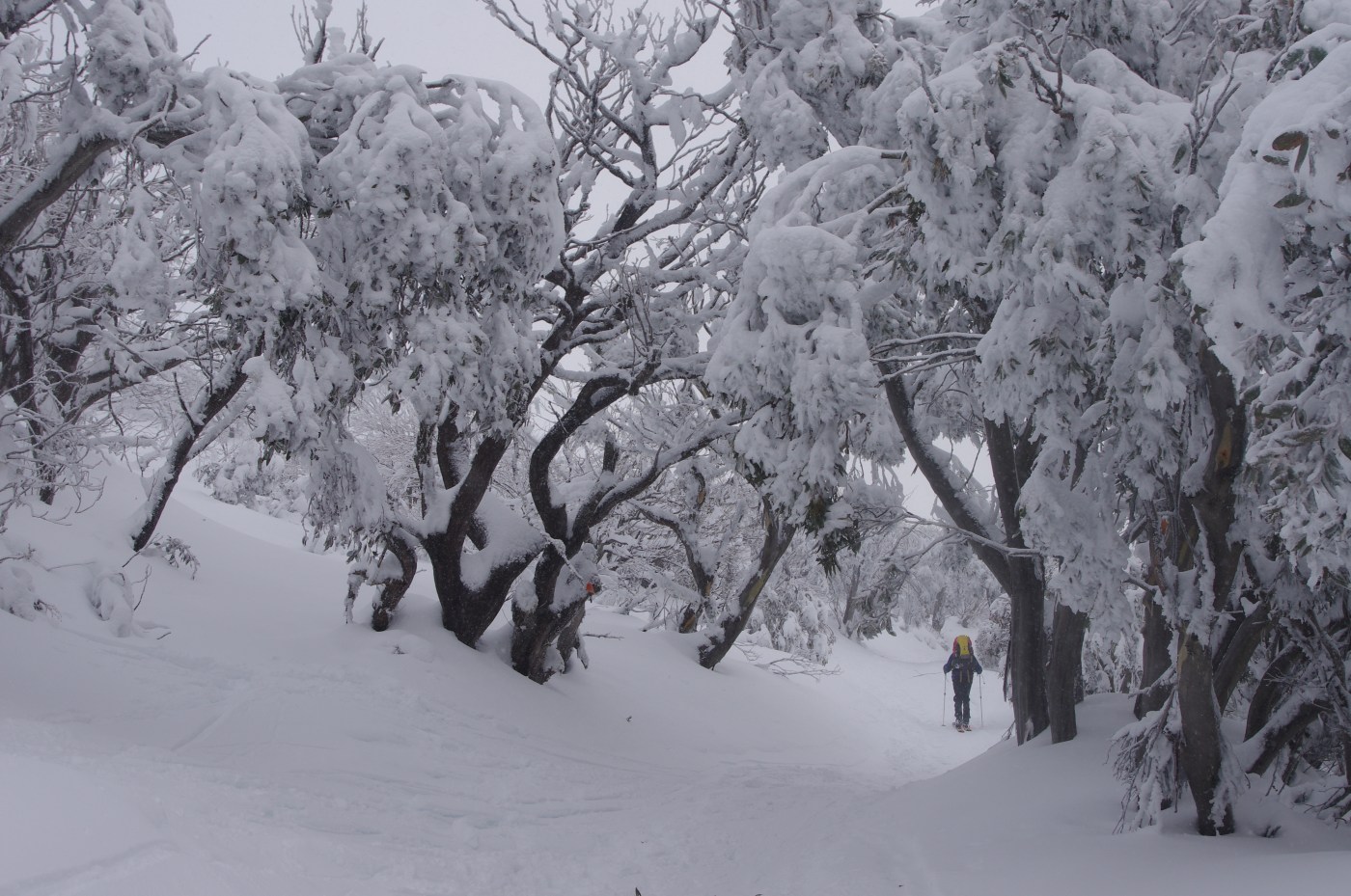
On September18,  adventurer Huw Kingston finished his long journey skiing and walking the 700km length of the Australian Alps, in the process raising over $62,000 for Save the Children’s Our Yarning project.

Yesterday afternoon, 52 days since his journey began with a Smoking Ceremony and ski at Victoria’s Lake Mountain resort, Huw Kingston could finally take off his pack and put down his poles. Fittingly the end of his journey was at the historic old ski area of Mt Franklin Chalet, high above Canberra in the Brindabella Mountains and, fittingly again, he enjoyed fresh snow to serenade him to the finish line.

Continue reading “Huw Kingston finishes a winter traverse of the Australian Alps”

Help protect the Alpine National Park from development

The Falls to Hotham Crossing is a lovely three day walk from the resort town of Falls Creek, across the Bogong High Plains, to Mt Hotham. Managed by Parks Victoria (PV), you need to book to use the designated campsites near Cope Hut and Dibbins hut. It is a hugely popular walk.

There are also plans to extend and reroute the Crossing, turning it a five day ‘serviced hiking opportunity’ in the Alpine National Park.

The Victorian National Parks Association (VNPA) opposes the commercial aspects of this proposal, and says There is already too much pressure on parks: invasive pests and weeds, increased bushfires and climate change impacts, and rapidly growing visitor numbers. That’s why they were set aside to protect nature in perpetuity. This insidious attempt to commercialise the Alpine National Park and compromise its carefully considered management plan must be stopped. But we need to work together if we’re going to protect our precious Alps.’

Continue reading “Help protect the Alpine National Park from development”

Why should Murdoch have all the fun? Mountain Journal to produce summer edition of the magazine

Over the past two winters, Mountain Journal has produced an annual print edition (2021 available here and 2022 here – this was a collaboration with Mandy Lamont’s La Mont magazine).

Based on the feedback we have been getting, I decided to produce one over summer as well – and this is your chance to get involved.

Continue reading “Why should Murdoch have all the fun? Mountain Journal to produce summer edition of the magazine”

‘Alpine Odyssey’ crossing of the AAWT finishes soon

In a journey expected to take some 50 days, Huw Kingston, 59, is skiing and walking the 700km length of the Australian Alps this winter and, along the way, skiing at each of the 12 snow resorts. His Alpine Odyssey aims to raise $50,000 for Save the Children’s Our Yarning project.

Huw hopes to take the final steps of Alpine Odyssey to finish at the Namadgi NP Visitor Centre in Tharwa, ACT on the afternoon of Sunday 18 September.

Continue reading “‘Alpine Odyssey’ crossing of the AAWT finishes soon”

Seminar – Climate change, fire and the Victorian Alps

A report from the ‘Climate change and the Victorian Alps – preparing for the fires of the future’ seminar, which was held as part of the speakers program for the 2022 Victorian backcountry festival at Mt Hotham on September 2.

Speakers included an academic, a local landcare representative, Parks Victoria and DELWP.

Continue reading “Seminar – Climate change, fire and the Victorian Alps”

Where are the old snow gums?

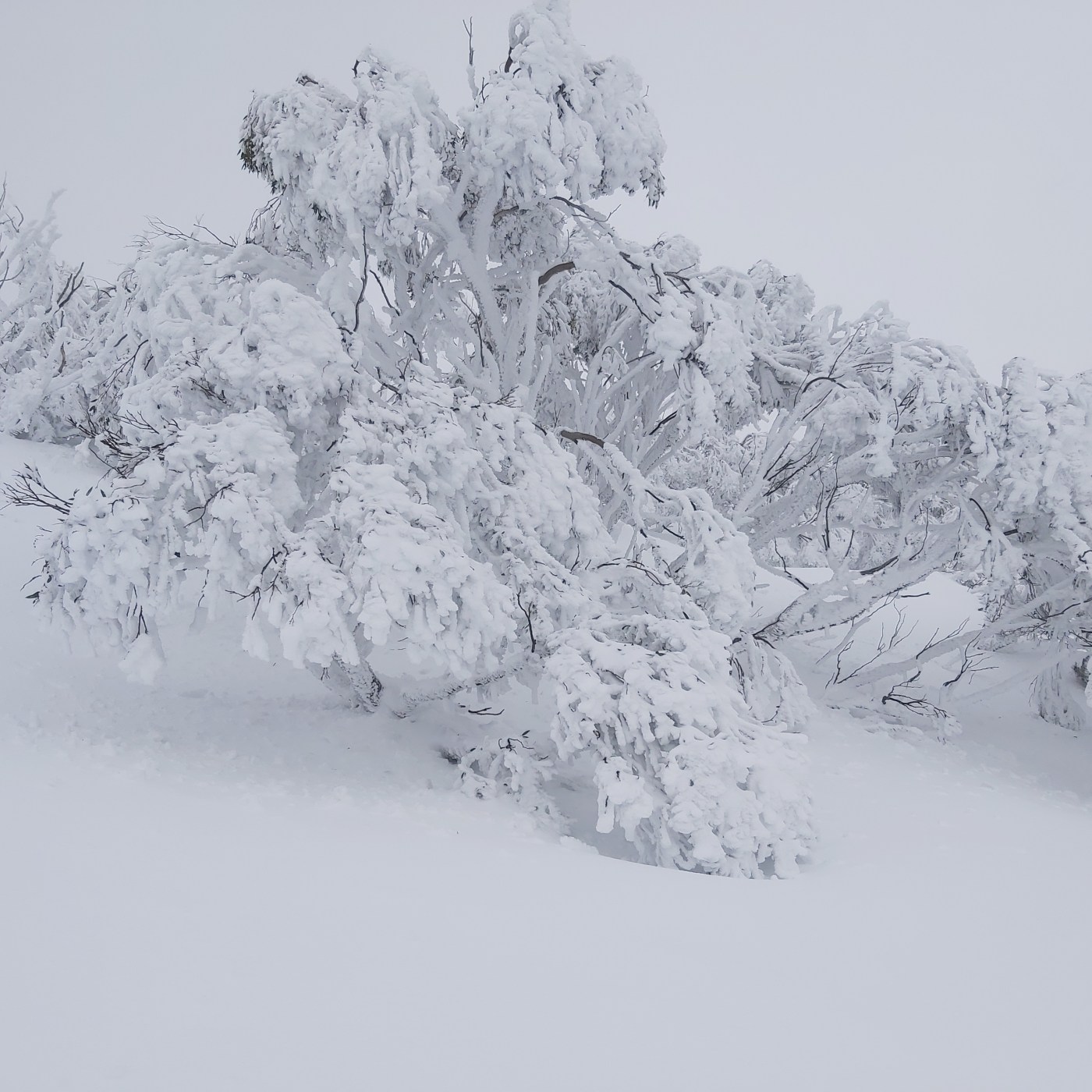
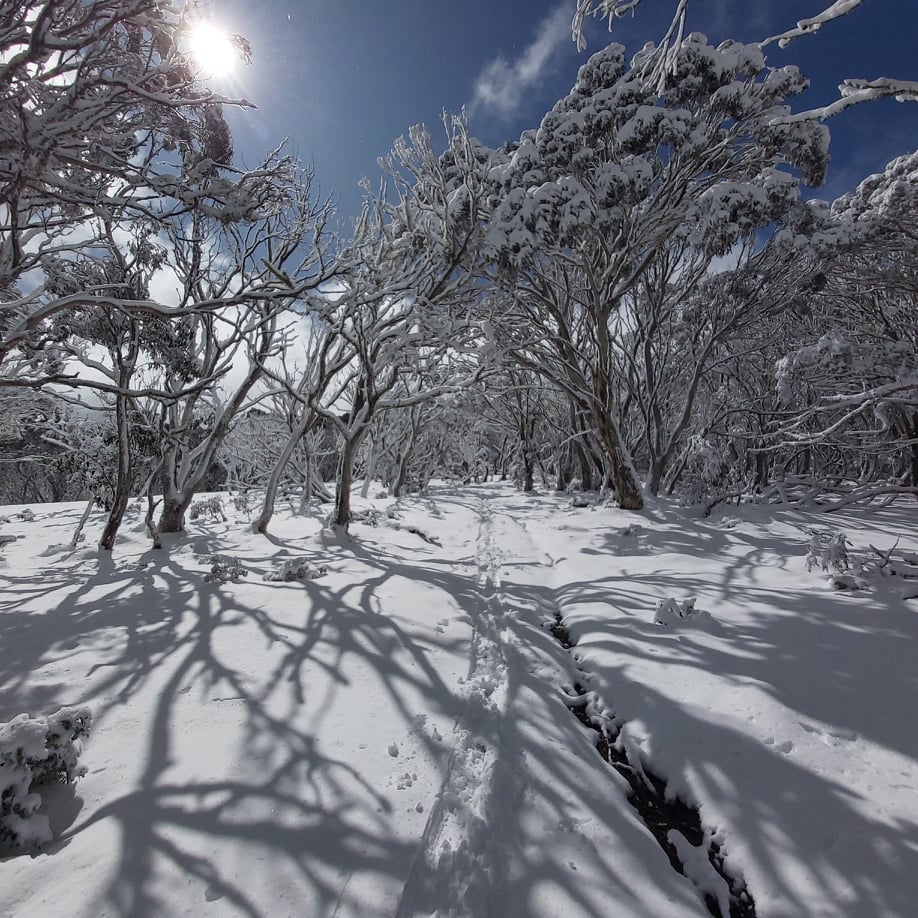
Snow Gums (Eucalyptus pauciflora and related species) are the classic alpine tree of the High Country, generally growing at heights between 1,300 and 1,800 metres asl. Anyone who has visited the Australian High Country will know – and probably love – these trees.

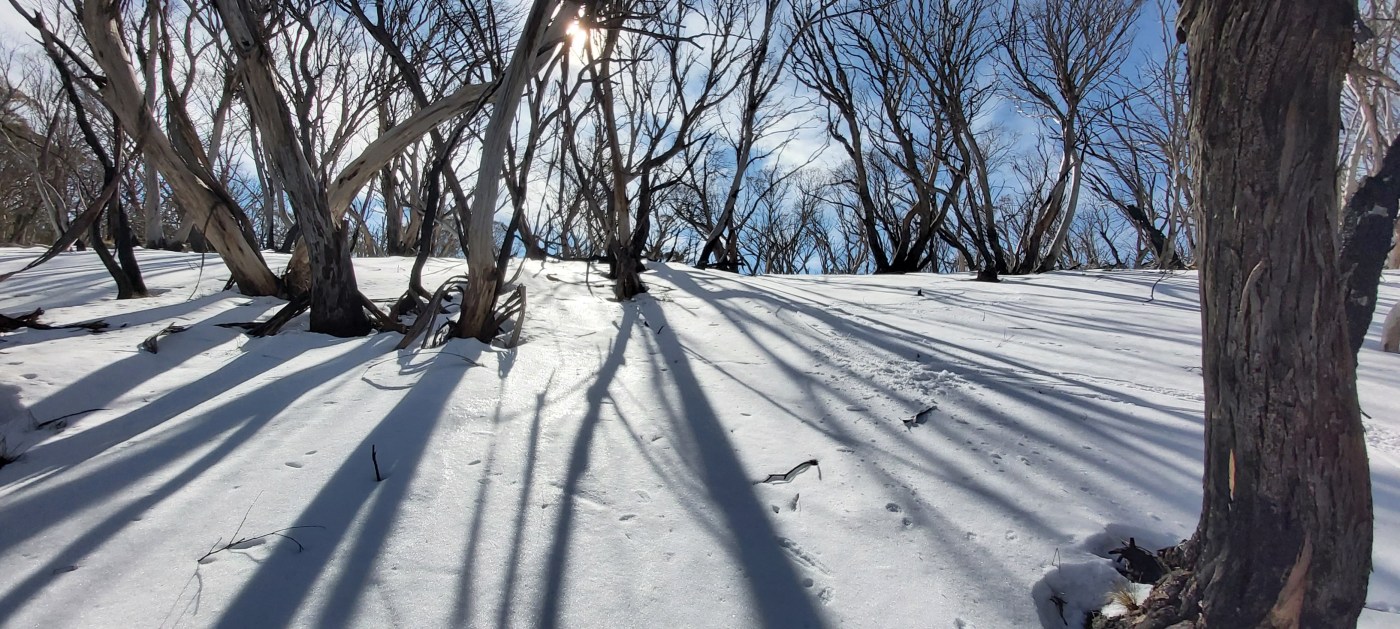
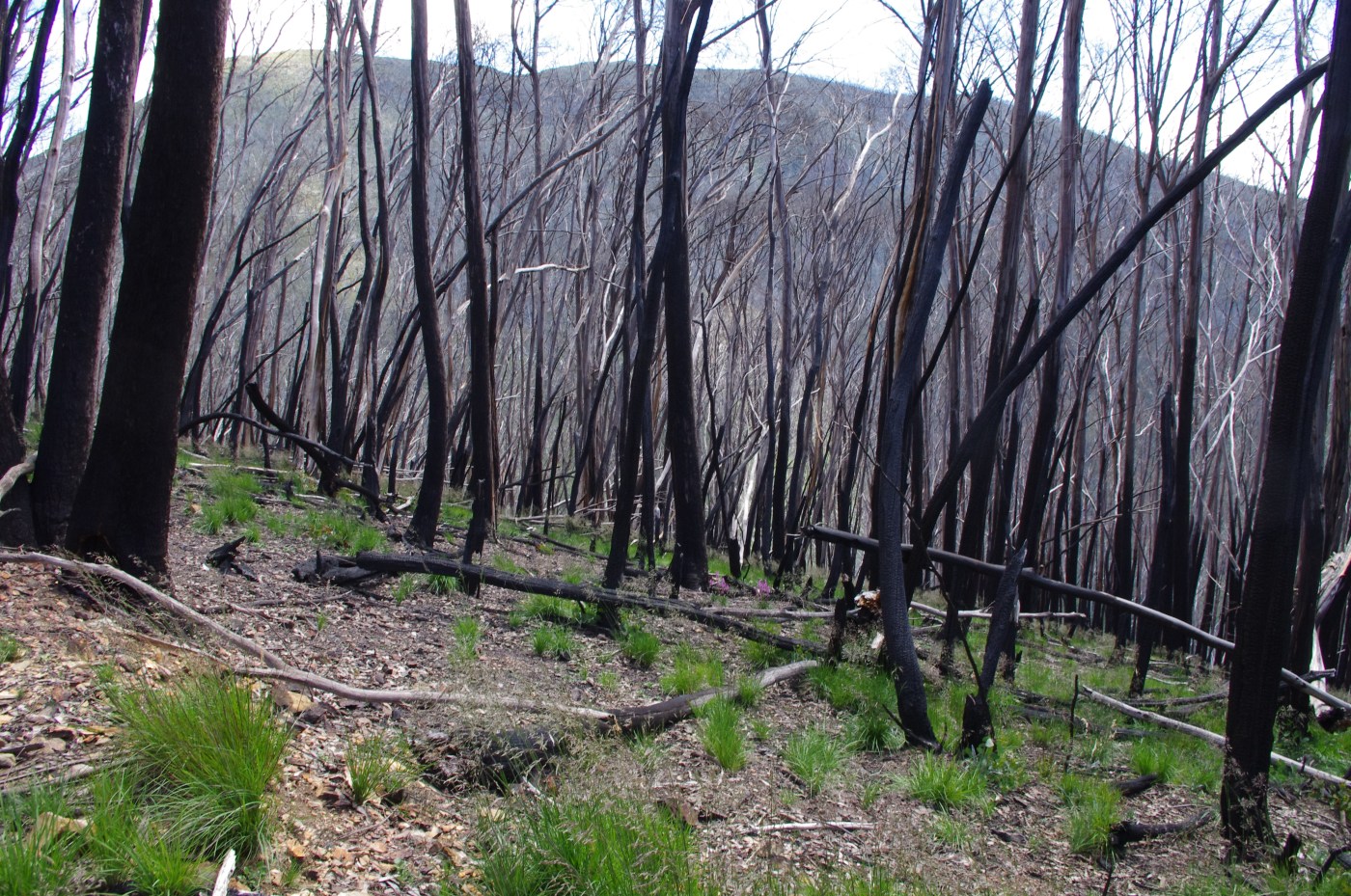
In recent decades, wildfire has been devastating huge areas of the Snow Gum forests, with significant fires in the Victorian High Country in 1998, 2002/3, 2006/7, 2013 and 2019/20. More than 90% of Snow Gum habitat has been burnt at least once in the last 20 years.

The species can survive fire. However, climate change driven fire seasons are leading to more frequent fire, which is causing more death of trees and changes to forest structure. In some instances, localised collapse of Snow Gum woodlands is now being observed. As climate scientist Michael Mann describes it, we are now seeing climate change play out in real time.

We must ask whether we are now seeing the start of the collapse of Snow Gum woodlands, one of Victoria’s iconic vegetation communities.

Continue reading “Where are the old snow gums?”

Blog at WordPress.com.

Up ↑