For the past four years, the backcountry film festival has been attracting good numbers of people and is showing in more locations.
It seems like it might be time to have our own festival – with films made in Australia.
At previous Melbourne shows, we have added a film about skiing and boarding on The Bluff, and this year saw OFF GRID, a new effort on Mt Bogong from SoO Airtime.
The plan is to hold an Australian backcountry film festival in late spring 2014 with only local content. There are some fantastic film makers out there, and we hope to be able to showcase some of these.
We are seeking expressions of interest from film makers who would like to submit films.
Any human and gravity powered backcountry adventure would be welcome: walking, skiing, boarding, MTBing, paddling, climbing, …
As this is an entirely volunteer effort, with no budget, we are not able to offer payment for showing the films.
Films can be in two length categories. We hope to show an hours worth of short films (3 to 7 minutes) then up to 2 longer films (30 – 40 minutes).
At this point we are looking at doing a Melbourne showing, with the ability to offer the festival to other places once its packaged up.
“In 2012 seven adventurous skiers explored the Australian High Country. They camped, skied and filmed across one week’.
This short film is the result. Focused on the experience of climbing and riding on Mt Bogong and its ‘camo snow’, OFF GRID is a celebration of Australian backcountry skiing and boarding.
OFF GRID was produced by Joey Corcoran and Watkin McLennan of SoO Airtime (“a movie, an event, a community and bunch of Australian skiers that love sharing their Airtime”).
NB: please note that this year, because of the venue, we won’t have drinks for sale.
Co-hosted with Melbourne University Ski Club.
The festival is run by not-for-profit hosts, and in Australia, all funds raised will support the Friends of the Earth (FoE) climate campaign. Funds will go to FoE’s work with regional communities to stop the development of new coal mines and unconventional gas drilling across southern Victoria.
The festival is run by not-for-profit hosts, and in Australia, all funds raised will support the Friends of the Earth campaign against new coal and gas.
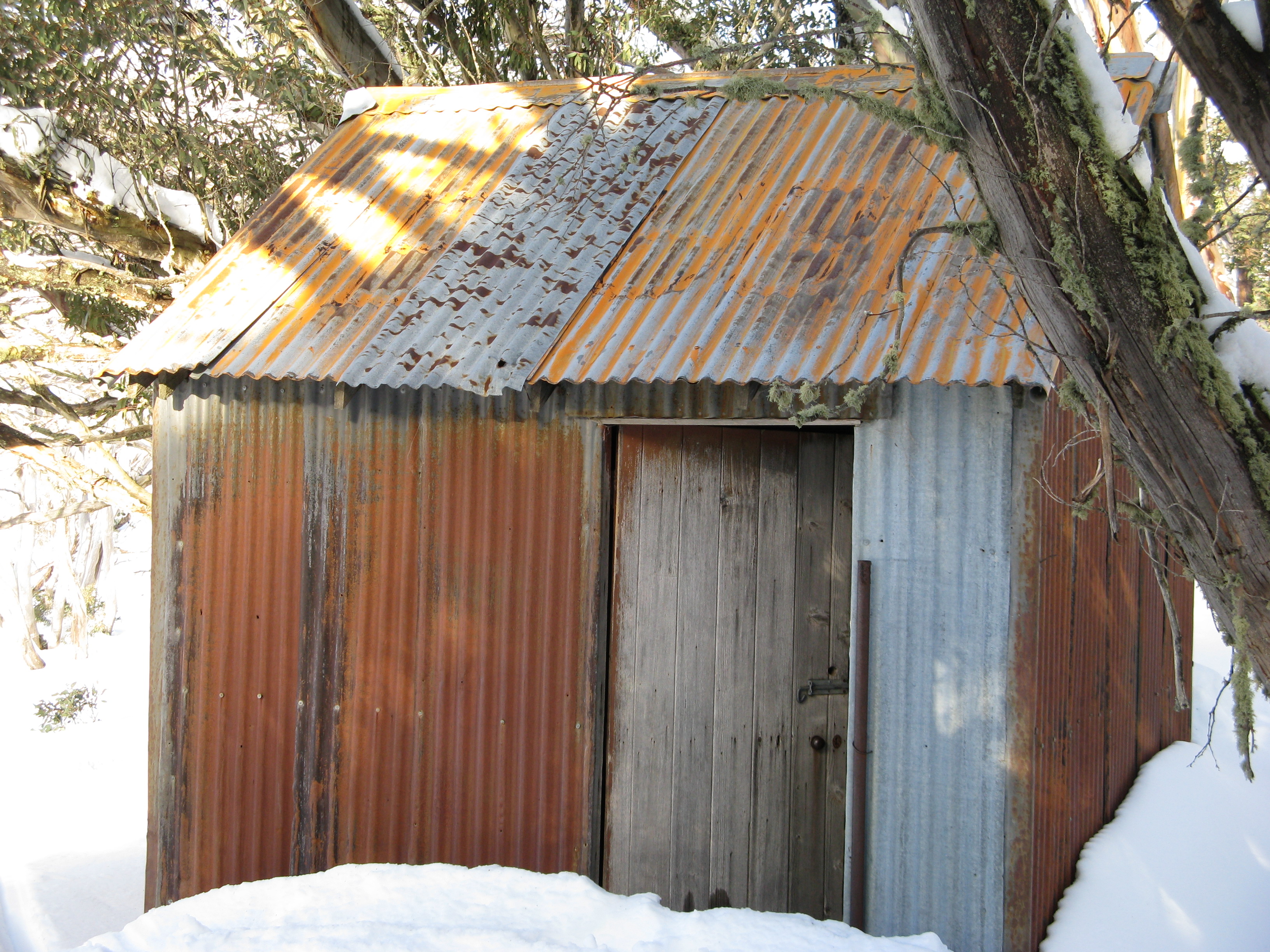
Huts in the mountains can be a vexed issue. Huts will tend to attract people and so tend to concentrate visitation within a larger area. As one example, most people who climb Mt Bogong tend to then turn towards Cleve Cole hut rather than head across to the Hooker Plateau. This tendency to influence visitation can be both good and bad.
They are part of the cultural history of the high country, and reflect major stages in the post colonisation era: cattle grazing, forestry, hydro, even fire watch towers and, more recently, huts built for recreational purposes. We also have a number of strange and random anomalies, ones that don’t really make sense: Craig’s hut near Mt Stirling as an example, which was built as a set for a film. There are, of course, those whose primary function is safety, such as Seaman’s hut near Mt Kosciusko, and huts that belong to clubs or even schools (Geelong Grammar on Mt Stirling).
I have always tended towards the position that we don’t need more huts in the high country. With incremental pressure as ski resorts increase their footprint and the risk of private developments within Victorian national parks and the precedent of private enterprise in a number of Tasmanian parks, I don’t think we need more infrastructure. There have been some hut removals that make ecological sense (such as Albina Lodge, above the western slopes of the Main Range in the Snowy Mountains). I certainly understand the need for huts in strategic spots for safety. And I do appreciate the history of these places, the incredible work of getting materials into hut sites in the early days and the bush skills of the builders. I love the work of Klaus Hueneke, who has chronicled the heritage of the huts.
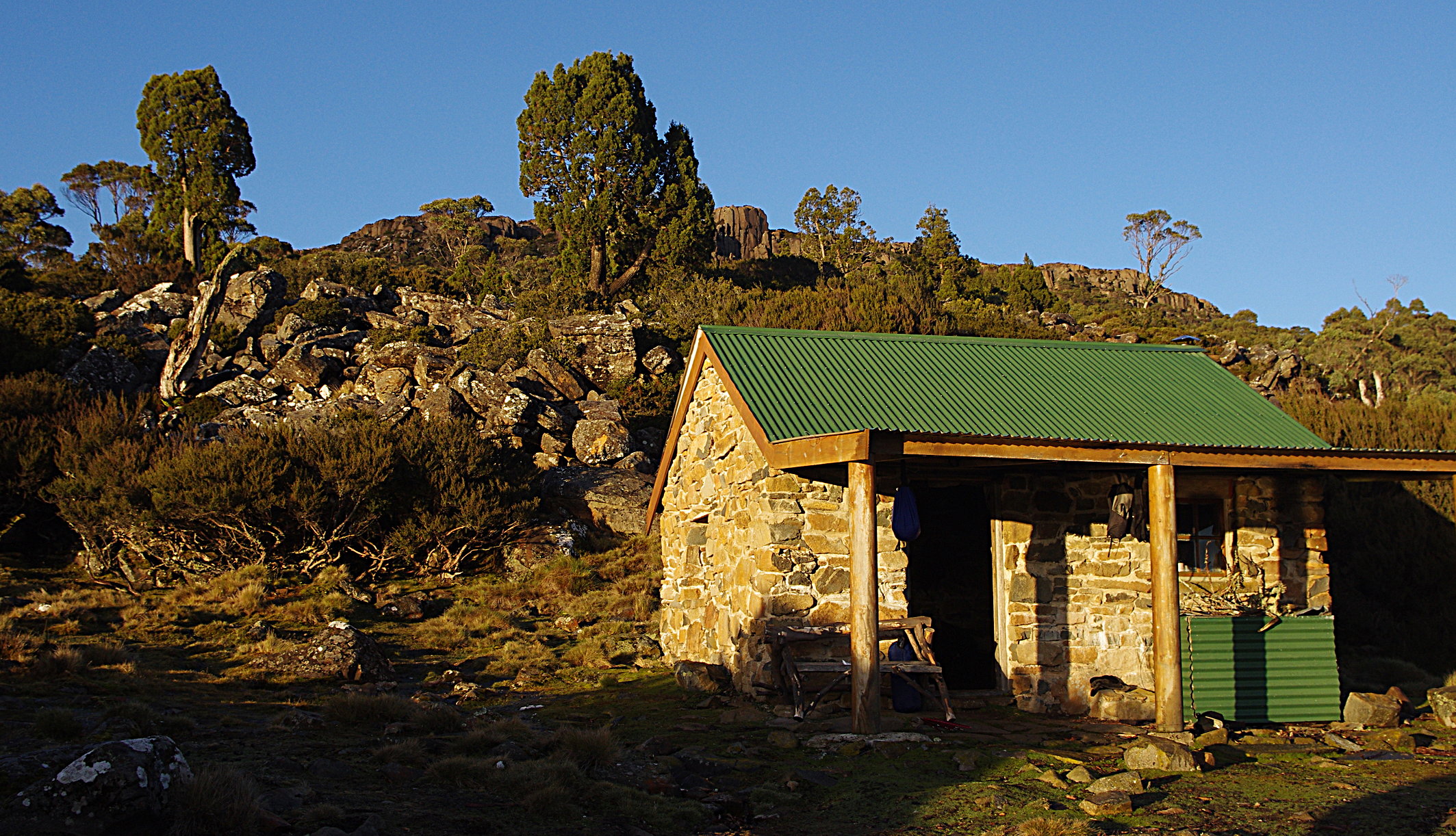
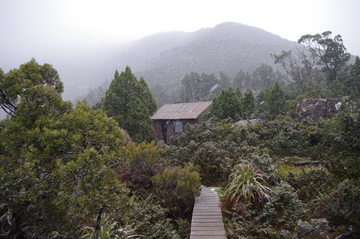
the hut at Lake Nameless, Central TAS
With the rise in wildfire over the past decade, we have lost many of the iconic huts. There have been some excellent rebuild efforts, such as Michel’s at Mt Bogong. The Victorian High Country Huts Association was founded after the major bushfires of February 2003, to try and preserve remaining huts. Some huts are looked after by organisations and this can give people a strong connection to ‘their’ hut, and various groups exist to look out for huts in general (partial list below).
For me, it’s a rare thing to find a hut that is more appealing than a tent, but amongst my favourites are Seamen’s and the ‘Schlink Hilton’ in the Snowies, Vallejo Gantner at Macalister Springs, Cleve Cole on Bogong (of course), and the hut at Lake Nameless in Central Tasmania. I love the location of the ridiculously ugly house on Mt Wills.
For hut fans, we have recently been posting photos on Mountain Journal’s facebook page. Please feel free to join in and post your favourite pics.
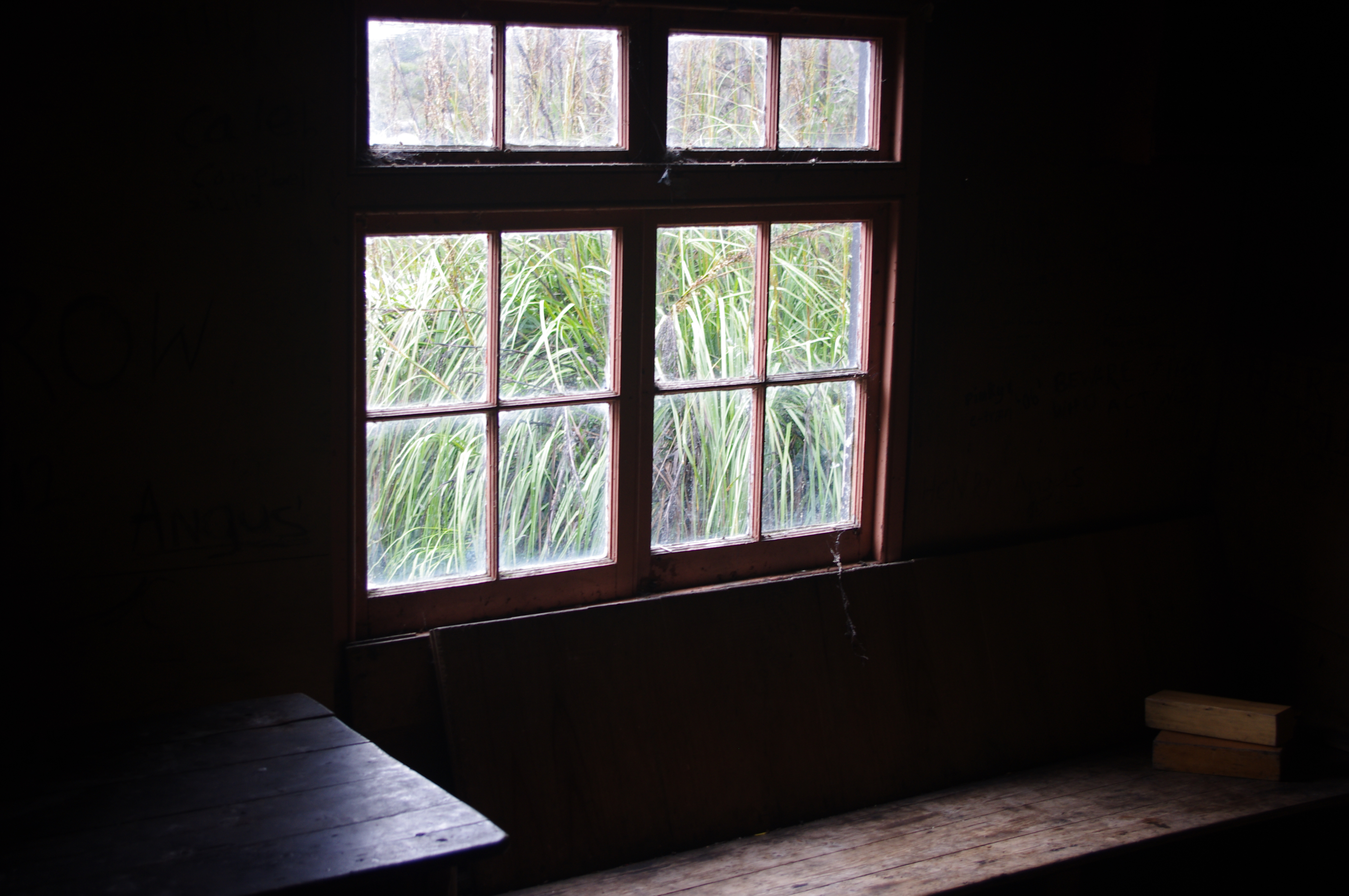
the hut at Newgate Tarn, TAS
I recently spotted the article below, highlighting the value of the ‘secret’ hut stash around many resorts, the little known hang out spot. I remember a rough hut that lasted several years on the northern slopes of The Bluff in Victoria which was popular with some backcountry skiers and boarders. I went to look for it one spring and it was gone (it had been tarp and pole heavy, more a glorified camp than a hut).
What I loved about this article is that it highlights that for all of us who use huts, there are personal and social memories that build up: of friendship, adventure, good dinners, long and late night conversations with strangers. I held my 30th birthday at Vallejo Gantner hut and have spent the last 4 new years at Bluff Spur hut on Mt Stirling with a big gang of friends. Part of the cultural – as opposed to technical – history is preserved in log books and, increasingly, on line. For instance, check the newsletters from the Mt Bogong Club, who have been looking after the Cleve Cole hut since 1965. In many countries there is the tradition of the hut warden, which can add to the sense of hut culture. I like the short film Winters of my Life, an appreciation of the decades-long service of Howard Weamer, who for the past 35 years has spent his winters as a hutkeeper in Yosemite’s backcountry.
Secret stashes, shacks included, are a part of skiing in the same way that early mornings and long drives are. If you are dedicated you will have yours, you’ll know the good ones, and the people to share them with inbounds and out. People who love the mountains cultivated them, probably long before you got there.
Splitfest – Australia’s backcountry boarding festival
Now in it’s third year, the Splitfest DownUnder is THE gathering for anyone interested in trying out splitboarding or just meeting other people who are into backcountry boarding.
We will be holding the Friday night entertainment at the Banjo Paterson Inn Starting @ 6pm (1 Kosciuszko Road Jindabyne Snowy Mountains New South Wales 2627).
There will be all the usual trimmings, T-Shirts, give a ways, raffles and loads of fun. Some of the prize categories include worst DIY job, most inventive Splitboard design etc. etc.
An official list will be out soon so stay tuned!
You have the option to stay in Jindabyne, camp in the National Park or my favorite camp on the peaks.
There will be rental gear available to those who need it. Jump on board and meet some new touring partners, the more the merrier!
This is a free event, there are no guides so you must be able to make your own terrain decisions.
Ok, it’s late summer. Its been stinking hot, dry, and fires have been going for weeks in East Gippsland and a number of spots in the high country. We still have a long warm spell ahead of us.
We all need some cheering up. This short film from Mark Allen, and coming via Backcountry magazine may do the job. Nine days of snow storms sounds kind of like a nice option when compared with the smokey humidity of late February … Enjoy.
The blurb about the film:
“Outdoor Research Athletes Mark Allen and Sheldon Kerr have grand ideas of first ski descents in a remote area of Glacier Bay National Park in Southeast Alaska. After hiring a bush pilot to fly them deep into the park from Haines everything goes well, at first. The ski mountaineering powder fest turns in to some major tent time and days filled by camp maintenance while pinned in a storm for 9 days. The two try to figure out how to stay fed with 7 days of rations in an unchanging situation. Once the two learned the pilot was not coming back, the adventure began”.
This is a great project. A group of back country skiers from Montana have joined together to make a film that looks at wilderness in their state – the first in the USA to create wilderness. Designated wilderness areas prohibit mechanised recreation like the use of snowmobiles. The US phenomena of ‘slednecks’ is a huge issue across a lot of the mountainous public lands in the ‘States.
They say:
Land of No Use is a two year documentary project using winter recreation to explore the value of Montana’s public lands. The title comes from an old bumper sticker and slogan for opponents of wilderness designations (i.e. motorised recreation enthusiasts and timber corporations) that reads, “Wilderness = Land of No Use.” The narrative of the land management debate will shadow that of a group of young athletes exploring terrain where humans are mere visitors, in a state named for its mountains.
The mountains of the eastern seaboard of the USA have some similarities with those in south eastern Australia. They are mostly forested, with only limited terrain above tree line, meaning that much of the steep snow country is not easily or safely ridden. Alpine resorts get around this by cutting runs, with sometimes very significant environmental impacts. Mt Buller would stand out as the worst case in Australia, with much of the mountain having been massively impacted by the footprint of the resort: the roads, the village, the runs and associated infrastructure, and waste treatment plants, etc.
Backcountry skiers and boarders tend to look to the higher terrain, and while many areas of tree covered terrain in the Australian mountains do offer some great options, the vast majority of the riding hours that are clocked up each winter are on naturally open slopes above tree line.
Image: APSA
In the Adirondack mountains of New York state, there is a growing movement to create backcountry runs through ‘glade clearing’, small scale clearing of saplings to create safe corridors through the forests to allow skiing access.
The Adirondack Powder Skier Association (APSA) was formed to negotiate the right to cut these trails from state authorities in the Adirondack Park, which covers about 2.5 million hectares of wild land. Although avalanche slide paths are formed each year, skiers currently have few options when it comes to safely touring the backcountry mountain sides in the park. The APSA is seeking to gain an amendment to legislation that covers the park management plan so that they can create a series of skier-specific trails. The APSA argues that these would have less environmental impact than formed walking trails. Ron Konowitz, the president of the APSA, says “we’d manage the undergrowth by clipping horizontal stems and minimal undergrowth. On hiking trails they remove the top soil down to a hard surface. What we’re proposing is so much less invasive than that.”
Essentially they would seek to carefully remove a handful of trees on each ‘run’ or glade to create a more open area through birch forests which will be far safer than attempting to ski through regrowth forest. At this point, this type of management for backcountry skiing is not recognised in the Park management plans. Back country skiing and boarding is growing in North America, as it is here. The APSA argues that opening up back country runs would bring economic benefit to local towns, as it would attract more people to a wider area of the Adirondacks, as well as bringing many more opportunity for low impact out-of-resort skiing.
Of course, such land management intervention for a particular user group on public land is potentially fraught. It can be a foot in the door to more intrusive developments. The APSA seems to be mindful of this risk: it is seeking a change only to allow glade management, and is going to considerable lengths to bring all groups concerned about the mountains along with this proposal. It is set up as a not-for-profit corporation formed to “study, protect, promote, and enhance low-impact human powered snow sports on public lands in the Adirondack Mountains” and is working with state and local land managers, plus the local towns, conservation groups, and other stakeholders, to “define then develop appropriate management regulations” for managing the runs. If successful in gaining permission for the runs, they would trial them on a number of mountains.
The weightlessness of youth: every breath radiates opportunity and hope; every sense thrives on the wealth of the present; everything whispers of brilliance and awe. When you’ve seen the season’s first great snow through the eyes of a child—you’ve known true happiness. But what happened to that simple joy? Where do we find the freedom that time and wisdom stole away?
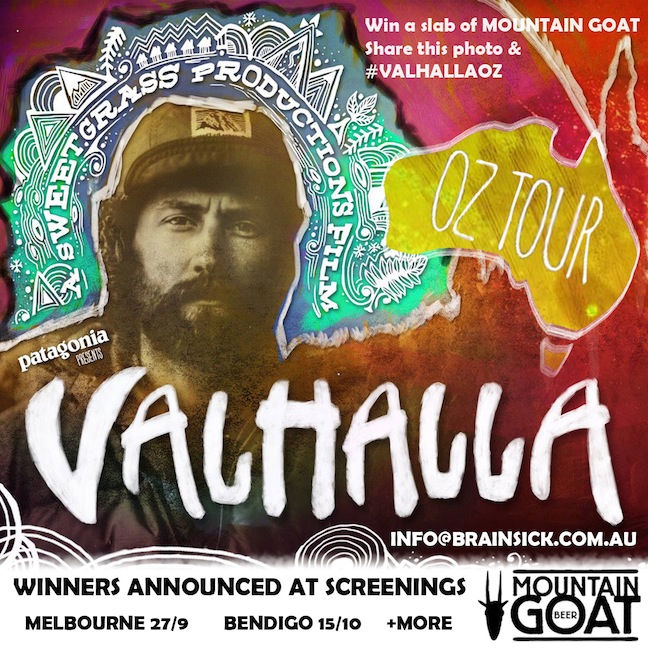
Valhalla, Sweetgrass Productions’ fourth feature film, is the tale of one man’s search to rediscover the freedom of his youth. Feeling the distant heat of it’s fire still burning in the mountains of the frozen north, he goes in search of those tending the flame—the untamed, the wild, and the outcast dwelling on the fringe. Weaving narrative-driven style with award-winning, face-melting backcountry ski and snowboard cinematography; Valhalla is a vivid explosion of colour, character, snow, and nostalgic soul.
Starring: Cody Barnhill, Sierra Quitiquit, Alex Monot, Pep Fujas, Eric Hjorleifson, Kazushi Yamauchi, Zack Giffin and Molly Baker
Presented by: Brainsick
Sponsored by: Patagonia and Mountain Goat
Where/When:
Bendigo: 15/10 – 6pm
Star Cinema
1 Peg Leg Rd, Eaglehawk
$10 on the door (cash only)
Sydney: TBA
Patagonia Retail Shop
93 Bathurst St, Sydney
TBA
Entertainment: Mountain Goat beers and live entertainment at some events. Door prices at all events.
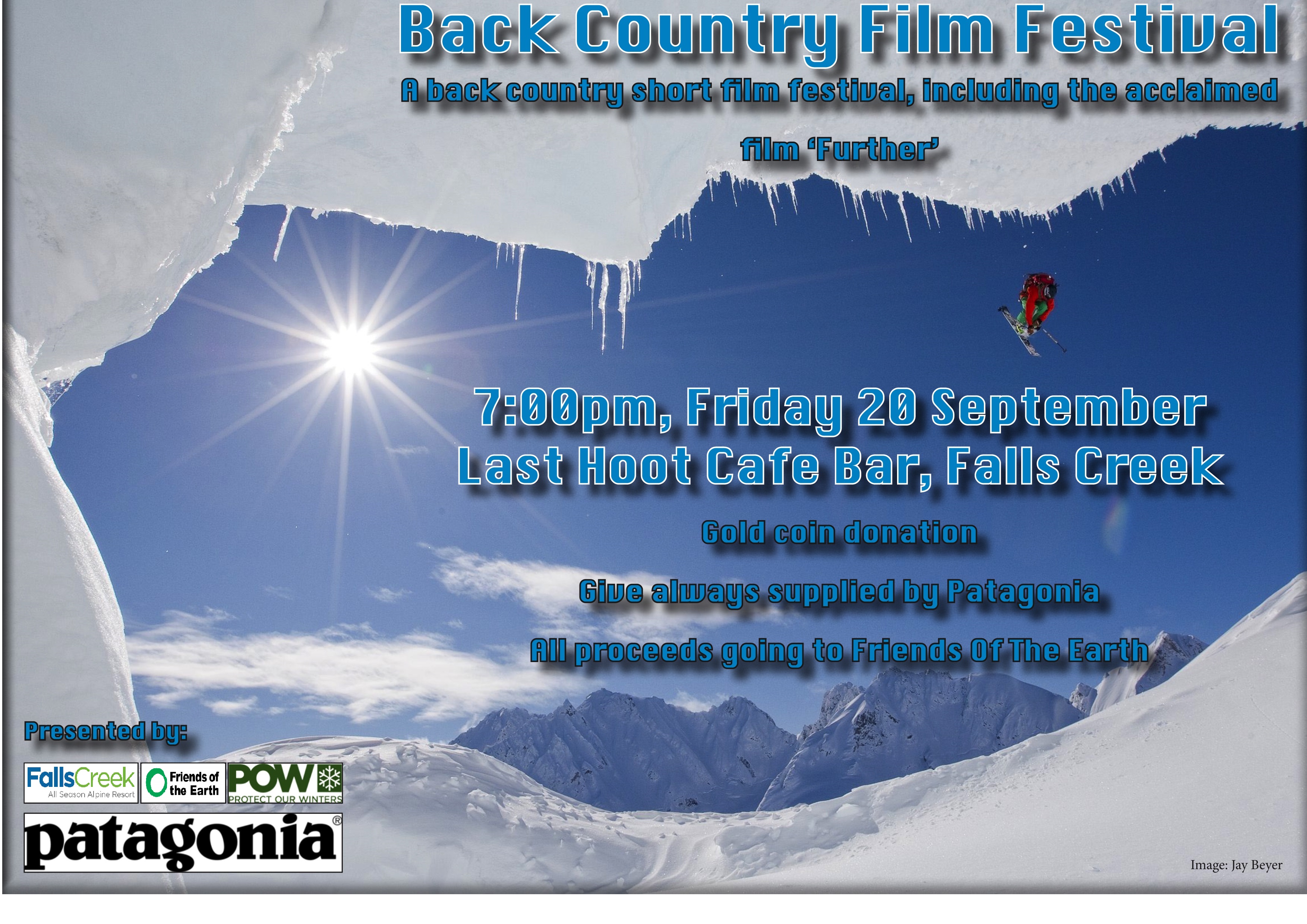
There is one last showing for 2013 – at Falls Creek, on friday September 20 at 7pm.
Many thanks to Brett Lemin for organising the evening, and to Falls Creek resort management for support, the Last Hoot cafe bar for hosting, and Patagonia for the give-aways.
Check here for details on the films shown in this years festival.
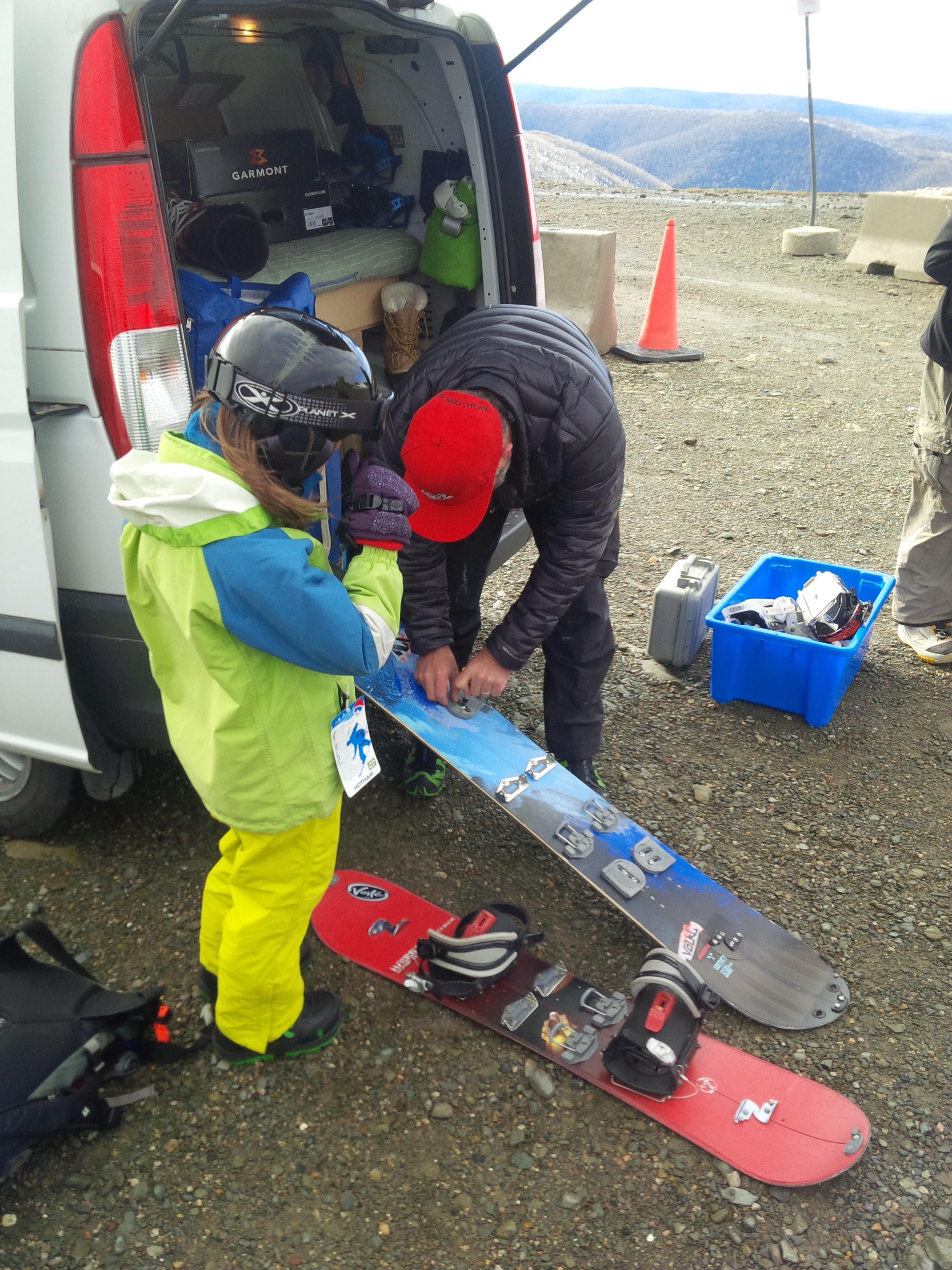
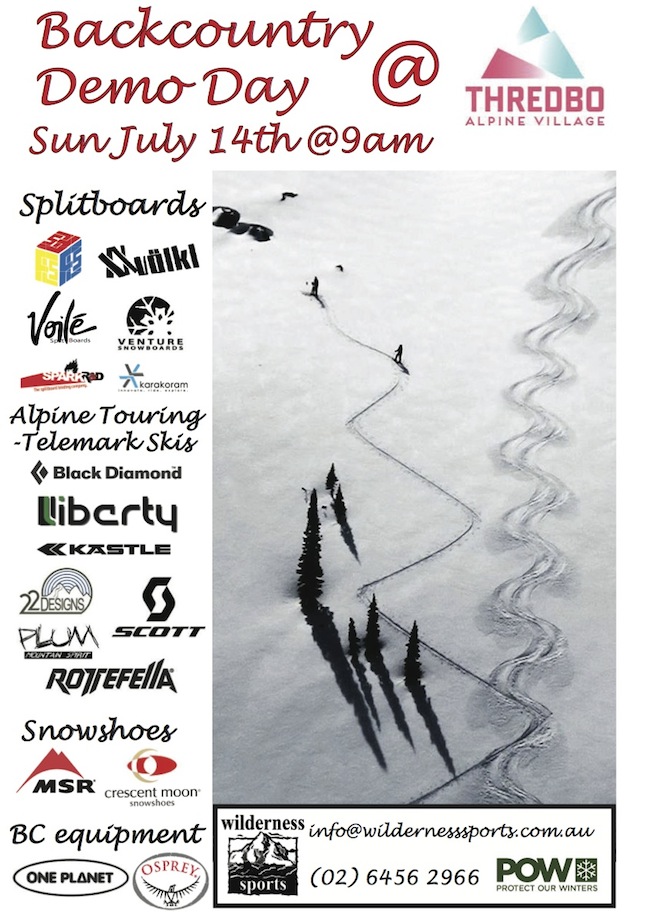
This coming weekend Wilderness Sports will host the First EVER Backcountry Demo Day to be held in Australia @ Thredbo on Sunday July 14 from 9.00am. (Further details shortly and part of a series)
In partnership with Thredbo we will offer an opportunity to try out the latest equipment for free and talk with experienced industry people as well as Wilderness Sports Backcountry guides about enjoying the mountains safely and how to explore more of the rugged and unique Snowy Mountains.
This is a part of a series of Backcountry Events to be hosted by Wilderness Sports and partnering companies such as First Light Snowboards and Protect Our Winters in order to encourage and educate safe and responsibly travel in the backcountry.
The Event will feature Split Boards; Alpine Touring gear; Snowshoe and Telemark Equipment. Clinics as well as backcountry gear for safety and education.
Split Board Brands – Voile; Venture; Volkl;
Alpine Touring Brands – Kastle; Liberty; Black Diamond; PLUM; Scott;
Telemark Brands – 22 Designs; Rottefella; 75mm and NTN;
Snowshoe Brands – Crescent Moon; MSR;
Backcountry Accessories – Black Diamond; One Planet; Osprey






 Mountain Journal
Recent Comments