This is a great project. A group of back country skiers from Montana have joined together to make a film that looks at wilderness in their state – the first in the USA to create wilderness. Designated wilderness areas prohibit mechanised recreation like the use of snowmobiles. The US phenomena of ‘slednecks’ is a huge issue across a lot of the mountainous public lands in the ‘States.
They say:
Land of No Use is a two year documentary project using winter recreation to explore the value of Montana’s public lands. The title comes from an old bumper sticker and slogan for opponents of wilderness designations (i.e. motorised recreation enthusiasts and timber corporations) that reads, “Wilderness = Land of No Use.” The narrative of the land management debate will shadow that of a group of young athletes exploring terrain where humans are mere visitors, in a state named for its mountains.
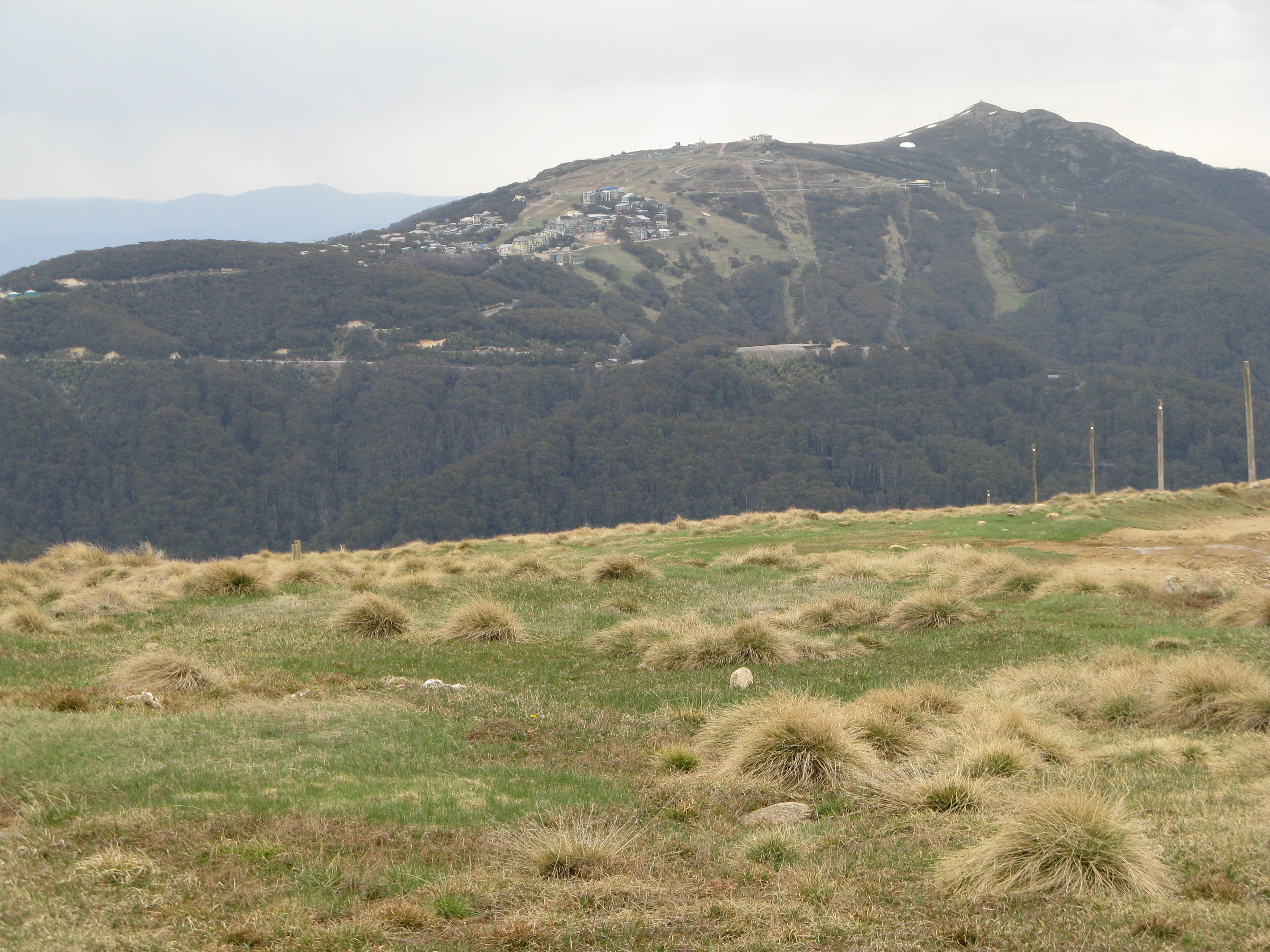
The mountains of the eastern seaboard of the USA have some similarities with those in south eastern Australia. They are mostly forested, with only limited terrain above tree line, meaning that much of the steep snow country is not easily or safely ridden. Alpine resorts get around this by cutting runs, with sometimes very significant environmental impacts. Mt Buller would stand out as the worst case in Australia, with much of the mountain having been massively impacted by the footprint of the resort: the roads, the village, the runs and associated infrastructure, and waste treatment plants, etc.
Backcountry skiers and boarders tend to look to the higher terrain, and while many areas of tree covered terrain in the Australian mountains do offer some great options, the vast majority of the riding hours that are clocked up each winter are on naturally open slopes above tree line.
Image: APSA
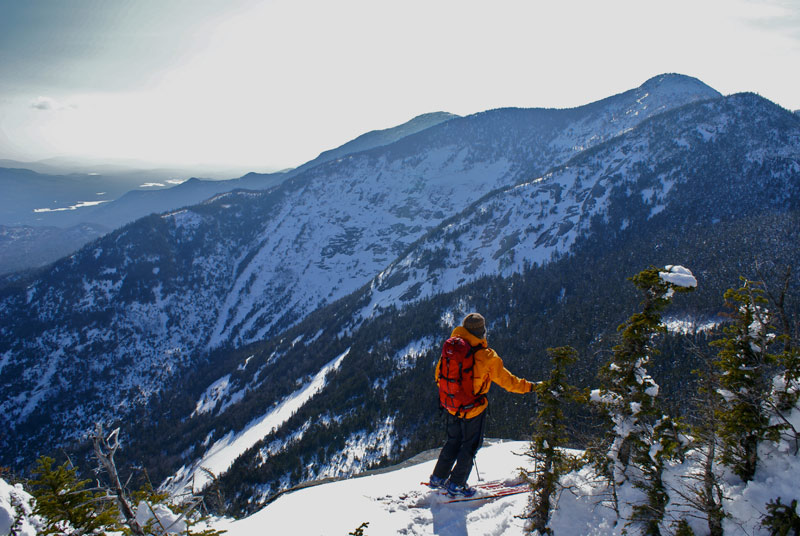
In the Adirondack mountains of New York state, there is a growing movement to create backcountry runs through ‘glade clearing’, small scale clearing of saplings to create safe corridors through the forests to allow skiing access.
The Adirondack Powder Skier Association (APSA) was formed to negotiate the right to cut these trails from state authorities in the Adirondack Park, which covers about 2.5 million hectares of wild land. Although avalanche slide paths are formed each year, skiers currently have few options when it comes to safely touring the backcountry mountain sides in the park. The APSA is seeking to gain an amendment to legislation that covers the park management plan so that they can create a series of skier-specific trails. The APSA argues that these would have less environmental impact than formed walking trails. Ron Konowitz, the president of the APSA, says “we’d manage the undergrowth by clipping horizontal stems and minimal undergrowth. On hiking trails they remove the top soil down to a hard surface. What we’re proposing is so much less invasive than that.”
Essentially they would seek to carefully remove a handful of trees on each ‘run’ or glade to create a more open area through birch forests which will be far safer than attempting to ski through regrowth forest. At this point, this type of management for backcountry skiing is not recognised in the Park management plans. Back country skiing and boarding is growing in North America, as it is here. The APSA argues that opening up back country runs would bring economic benefit to local towns, as it would attract more people to a wider area of the Adirondacks, as well as bringing many more opportunity for low impact out-of-resort skiing.
Of course, such land management intervention for a particular user group on public land is potentially fraught. It can be a foot in the door to more intrusive developments. The APSA seems to be mindful of this risk: it is seeking a change only to allow glade management, and is going to considerable lengths to bring all groups concerned about the mountains along with this proposal. It is set up as a not-for-profit corporation formed to “study, protect, promote, and enhance low-impact human powered snow sports on public lands in the Adirondack Mountains” and is working with state and local land managers, plus the local towns, conservation groups, and other stakeholders, to “define then develop appropriate management regulations” for managing the runs. If successful in gaining permission for the runs, they would trial them on a number of mountains.
The weightlessness of youth: every breath radiates opportunity and hope; every sense thrives on the wealth of the present; everything whispers of brilliance and awe. When you’ve seen the season’s first great snow through the eyes of a child—you’ve known true happiness. But what happened to that simple joy? Where do we find the freedom that time and wisdom stole away?
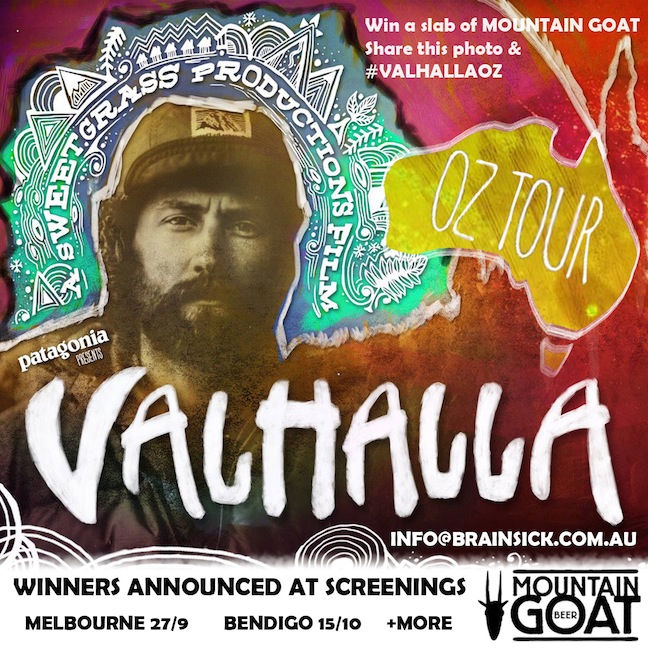
Valhalla, Sweetgrass Productions’ fourth feature film, is the tale of one man’s search to rediscover the freedom of his youth. Feeling the distant heat of it’s fire still burning in the mountains of the frozen north, he goes in search of those tending the flame—the untamed, the wild, and the outcast dwelling on the fringe. Weaving narrative-driven style with award-winning, face-melting backcountry ski and snowboard cinematography; Valhalla is a vivid explosion of colour, character, snow, and nostalgic soul.
Starring: Cody Barnhill, Sierra Quitiquit, Alex Monot, Pep Fujas, Eric Hjorleifson, Kazushi Yamauchi, Zack Giffin and Molly Baker
Presented by: Brainsick
Sponsored by: Patagonia and Mountain Goat
Where/When:
Bendigo: 15/10 – 6pm
Star Cinema
1 Peg Leg Rd, Eaglehawk
$10 on the door (cash only)
Sydney: TBA
Patagonia Retail Shop
93 Bathurst St, Sydney
TBA
Entertainment: Mountain Goat beers and live entertainment at some events. Door prices at all events.
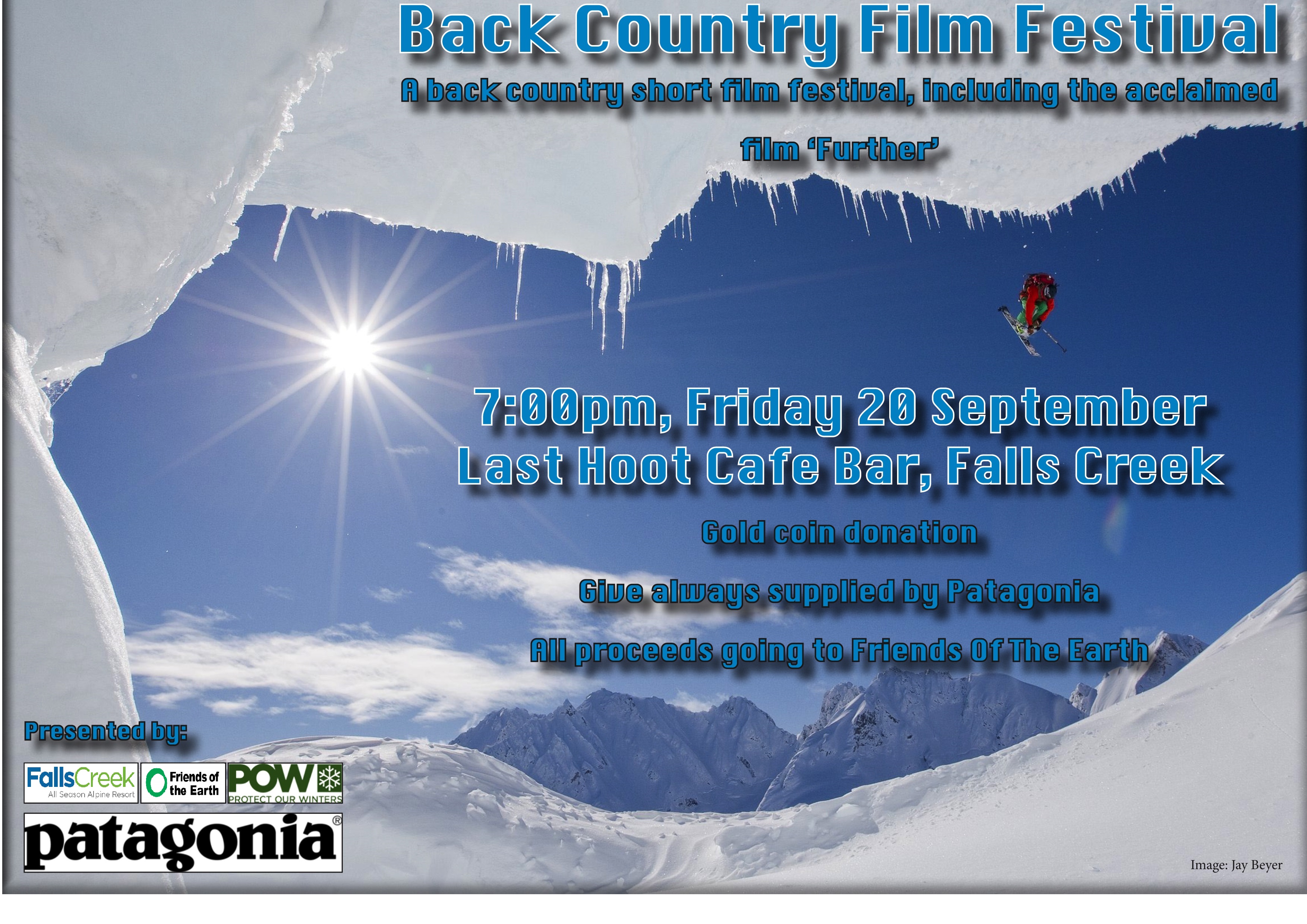
There is one last showing for 2013 – at Falls Creek, on friday September 20 at 7pm.
Many thanks to Brett Lemin for organising the evening, and to Falls Creek resort management for support, the Last Hoot cafe bar for hosting, and Patagonia for the give-aways.
Check here for details on the films shown in this years festival.
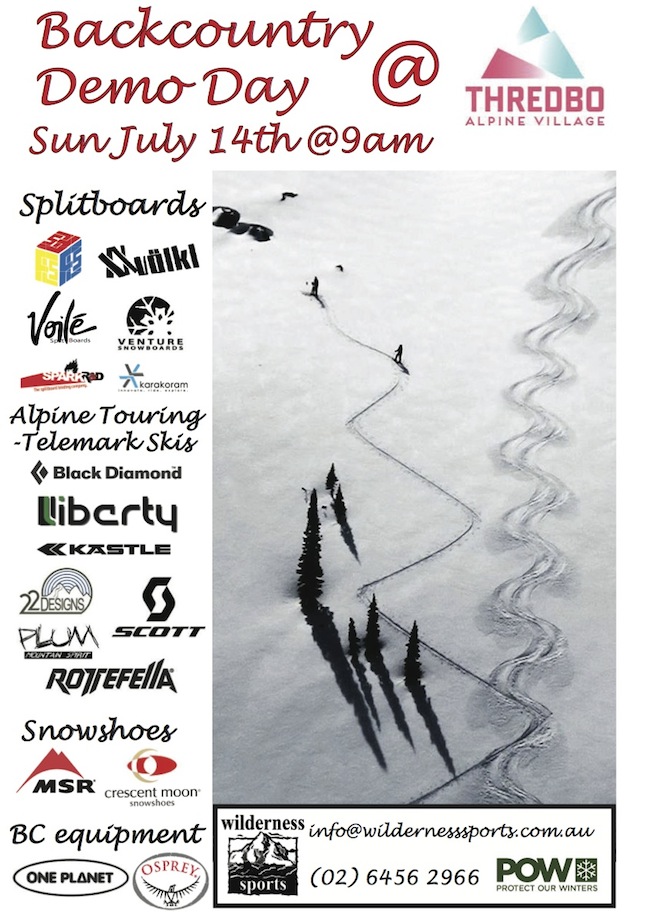
This coming weekend Wilderness Sports will host the First EVER Backcountry Demo Day to be held in Australia @ Thredbo on Sunday July 14 from 9.00am. (Further details shortly and part of a series)
In partnership with Thredbo we will offer an opportunity to try out the latest equipment for free and talk with experienced industry people as well as Wilderness Sports Backcountry guides about enjoying the mountains safely and how to explore more of the rugged and unique Snowy Mountains.
This is a part of a series of Backcountry Events to be hosted by Wilderness Sports and partnering companies such as First Light Snowboards and Protect Our Winters in order to encourage and educate safe and responsibly travel in the backcountry.
The Event will feature Split Boards; Alpine Touring gear; Snowshoe and Telemark Equipment. Clinics as well as backcountry gear for safety and education.
Split Board Brands – Voile; Venture; Volkl;
Alpine Touring Brands – Kastle; Liberty; Black Diamond; PLUM; Scott;
Telemark Brands – 22 Designs; Rottefella; 75mm and NTN;
Snowshoe Brands – Crescent Moon; MSR;
Backcountry Accessories – Black Diamond; One Planet; Osprey
This is a great resource: the ‘gnarliest runs in Oz’, from the Huck & Dyno website (in two parts – Victoria and the Main Range in NSW).
The NSW feature has all the obvious things, and Victoria includes excellent coverage of places like Mt Buller, Feathertop and Bogong, and also some gems which are off the beaten track, like Mt Howitt.
A few years ago I put a lot of effort into expanding the ski wiki posts on backcountry skiing in Australia (mostly the VIC and TAS sections) but a big failure with this is the lack of images. In contrast to my effort, James and Sam, who are behind Huck & Dyno, have some gorgeous pictures of the mountains and general terrain, plus many of the actual runs. Visually beautiful.
I like their intro:
When you get down to it, Australia is the flattest driest continent on Earth. By definition, the skiing here is the worst in the world. … So it’s easy to write the place off as a land of sunburnt sweeping plains. Or, if you’re a skier, patchy cover, ice and crud, short shallow runs and snowmaking.
Even the highest mountain, good old Kosciuszko, is a hill with a road to the top… The very first time I ever went XC skiing, we made it to the top! Snowboarders were drinking beer up there! Fun for the whole family!
The enthusiastic might even bother to look over at the ‘Main Range’, hoping to see a craggier peak. But nope, Mount Townsend and Northcote and Lee all look pretty tame over there.
But then one day you’ll bother to climb the second highest peak, Mount Townsend, and have a look from the top of there and, HOLY CRAP, there it is…
So begins our investigation into the gnarliest lines in Oz.
With winter finally bearing down on us, I hope this inspires you. Get out there and enjoy!
The Winter Wildlands Alliance created the Backcountry Film Festival in 2005 to help grassroots and professional filmmakers to show audiences their love of the winter outdoors. Since then, the annual festival has become something of an institution amongst many outdoor communities.
The festival is now a pre winter event here in Australia. Melbourne show
Wednesday May 15
At The South Melbourne Commons
corner of Bank & Montague St in South Melbourne
Suggested donation: $8 conc/ $12 waged
7pm. Come and grab a drink and catch up
7.30. Films start, the show runs til 10pm (with a 20 minute break in the middle).
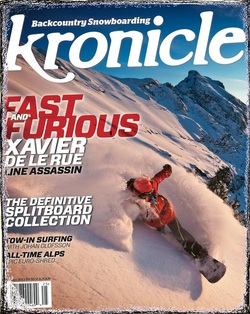
Kronicle is the world’s first backcountry snowboarding/ spiltboard magazine:
“Kronicle is a backcountry snowboard publication tailored to riders with a thirst for untracked snow, untapped lines, and exploration. We’re employing the richest stories, images and design to chronicle the people and places of backcountry snowboarding. That’s not all—we also report on the gear and skills riders need to reach their mountain objectives.
During its relatively short lifespan, snowboarding has covered a lot of ground and backcountry is the next frontier. It’s a homecoming of sorts, coming back to where it all began, bringing the sport full circle and leading us to Kronicle. This is our story, and it’s just the beginning”.
It is produced by Height of Land Publications in the US, who produce the excellent Backcounrtry magazine and, for many years, Telemark magazine. HOL produces high quality, visually gorgeous publications and Kronicle is a nice addition to their existing magazines.
Kronicle have teamed up with FirstLight Snowboards to provide this to the Australian Splitboard community.
Recent warm weather has really burnt off much of the snowpack remaining in the Victorian Alps, especially on lower elevation and north facing slopes. But there are still some great slopes and gullies, especially those facing south and east.
The following trip report by Sam Leitch comes from Mountain Watch, and features some great images of spring conditions on Mt Feathertop’s impressive east face.
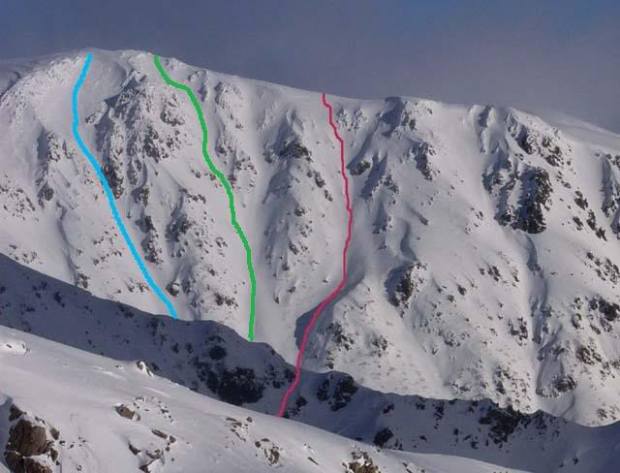
Anyone who has skied/ boarded this terrain will know Hellfire and Avalanche gullies, this is serious country which can be dangerous because of cornice collapse, slide avalanches, and ice, even occasional rockfall. Being east facing it can quickly become extremely icy once in the shadows. Graeme Nelson, a highly experienced skier died here in the winter of 2011.
With spring in full swing and plenty of snow, conditions were great, but as Mike Garrett found on his trip to the Blue Rag Range, things don’t always go according to plan.
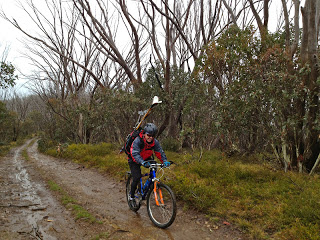
A recent trip report from Mike Garrett about an epic bike ride (with skis) to the Blue Rag Range to check out what skiing was still on offer.
He says:
“Last year, Graeme (Nelson) and I had pencilled in a September man-date to the Blue Rag Range.
Visible from just about anywhere on Hotham, the Blue Rag sticks up like a red rag to a bull from the Barry Mountains between Hotham and Buller as a long ridge running east west. The heavily wooded northern faces visible from the chairlifts bely a host of south facing bowls, chutes and couloirs – and Graeme was, like me, certain that good snow would still be found there well after the season was over. The plan was to mountain-bike the 15km along the Dargo Road from St Bernard and camp out on the ridge for a few days picking off late September lines”.
A great winter has left some good snowpack in the backcountry. To find how much was left on the southern slopes of the Blue Rag, read Mike’s blog.
Winter Wildlands Alliance created the Backcountry Film Festival in 2005 to help grassroots and professional filmmakers to show audiences their love of the winter outdoors.
Since then, the annual festival has been shown in more than 30 towns and cities, and raised thousands of dollars to help efforts to preserve our winter environment.
The festival highlights the fun and magic of the winter backcountry. At the same time, it raises funds to help grassroots groups to continue to protect wild areas.



Recent Comments