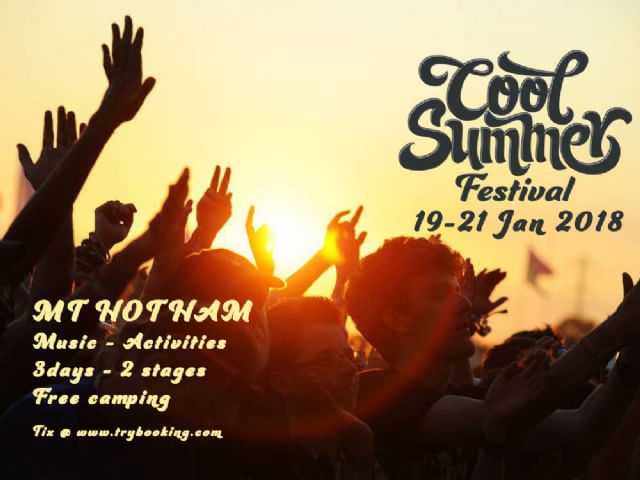
Mountain Journal often advertises high energy events like trail running, road riding, cross country races, etc. But summer is also a good time to relax, take it easy, and chill out with friends. Here are some listings for festivals, low key nature events, and social gatherings that are happening in the Alps over summer 2017/18.
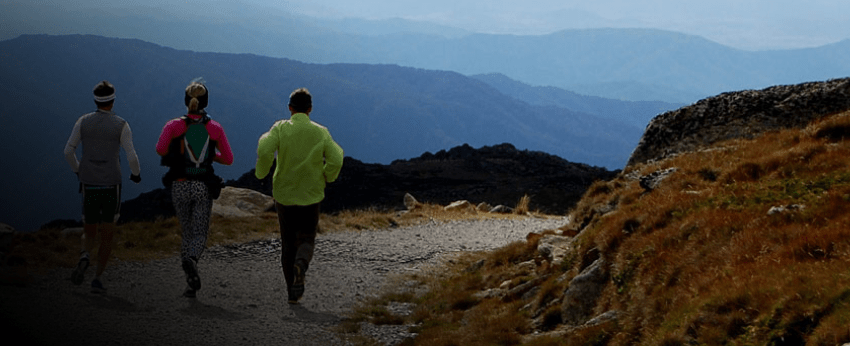
Now that we’re well and truly into trail running season I expect that lots of people who love running events are in training. It’s always good to have something to work towards. If you’ve been a bit slow off the mark, the Australian Alpine Ascent will be held in the Snowy Mountains on March 10.
Plenty of time to get in shape!
Full details below.
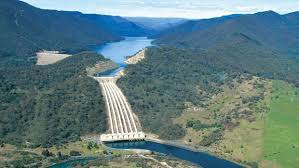
What are the environmental costs of Snowy Hydro 2.0?
Australia is still (sadly) stuck in a culture war over whether climate change is real. While the majority of Australians accept the fact, a significant number of political leaders are using their position to block meaningful action. This has immobilised any forward movement on developing a coherent national energy policy. If anything, the standoff between the conservatives and climate deniers on the one hand, who support more coal and gas, invoking the catch cry of energy security and reliability of supply, and those who heed climate science and understand the need to transition rapidly to renewable energy, is getting worse.
Thankfully technology is intervening to change the dynamics of the argument. The rapid development of storage technology is clearly a game changer when it comes to considering what is possible in terms of powering our nation. Domestic and commercial scale batteries and electric cars are two obvious points where the debate is changing. So is the prospect of pumped storage hydroelectricity, where a two way system is developed so water can be run through a hydro system to produce electricity, and retained below the point of generation, then pumped back up into the storage point (usually a dam) when electricity is very cheap.
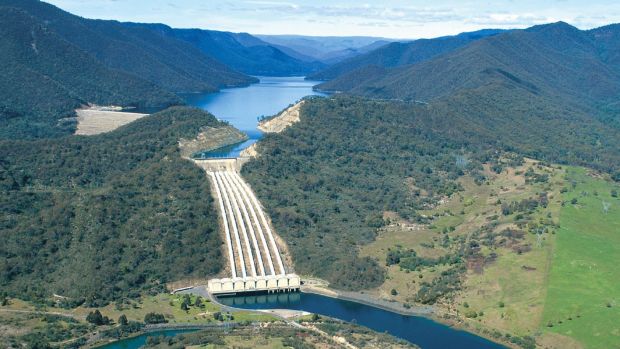
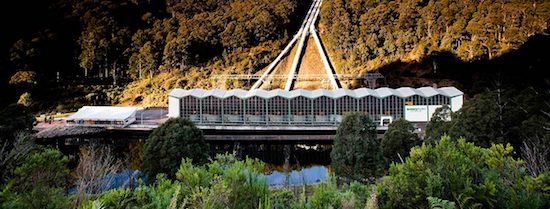
As the federal government grapples with pumped hydro storage options it is becoming ever clearer that there are many places where such schemes could be established (It is estimated that there are more than 22,000 suitable locations right around Australia). But there are also plans to re-purpose the Snowy Mountains Hydro Scheme to be able to re-use water by creating a second pipeline system to pump water back into the storages. This is being referred to as Snowy Hydro 2.0.
On face value this seems to be a sensible option for getting more clean energy production out of the existing infrastructure. However there are obvious and very considerable environmental issues that need to be considered before the upgrade proceeds. The initial feasibility study (which is still underway) has already identified the major question of what to do with the spoil from the massive drilling operation that would be required to make the project viable. It will need 27 kilometres of tunnels, which may be up to 12.5 metes wide, and from the report below, it is clear that, at this point, the authorities have no idea where they would dump all the rock waste that would come from drilling the tunnels. It should go without saying that the Snowy scheme is within the Snowy Mountains National Park and so the waste will need to be taken outside the park.
Continue reading “What are the environmental costs of Snowy Hydro 2.0?”
This great story about a late season trip to the western slopes of the Snowy Mountains comes from Main Range Backcountry.
Antony von Chrismar goes on a Spring splitboarding mission to the western faces after getting back from a European summer.
Continue reading “Spring splitboarding mission to the western faces”
The Snowy Mountains scheme, built between 1949 and 1974, diverts the water of the Snowy River and some of its tributaries, much of which originally flowed southeast onto the river flats of East Gippsland, inland to the Murray and Murrumbidgee Rivers irrigation areas. This has caused the health of the Snowy to decline dramatically.
Following long running campaigns, the Snowy Water Inquiry was established in January 1998. The Inquiry recommended an increase to 15% of natural flows. In 2000, Victoria and NSW agreed to a long-term target of 28%, requiring A$375 million of investment to offset losses to inland irrigators. It has been hoped that this increase in flow will help the health of the river system improve.
However there have been ongoing fears that the flows are not being properly managed in a way that will maximise environmental benefits. In 2013, the NSW Government abolished the Snowy’s scientific monitor and a replacement body, announced in 2014, has not yet been established. As pointed out recently by ecologists, without an independent monitor, there is a risk that the health of the river will go backwards.
Continue reading “Fears over Snowy River’s health without independent monitor”
World telemark day is celebrated in both the northern and southern hemispheres
In NSW World Telemark Day will be celebrated on Saturday 9 September.
It will be held at Perisher. Meet at 8am at Perisher skitube.
The Plan: there will be two groups; 1 will go backcountry (ideal for those who don’t want to lash out on a lift ticket for the day) and 1 will take to the lifts to explore the great terrain that Perisher has to offer!
Both are great options, especially with the awesome snow that’s out there at the moment!!
There will be demo gear available through the Wilderness Sports Perisher store, with both NTN and 75mm gear to try!
Hire is also available through the store in Jindabyne on Friday night and Saturday Morning, as well as in our Perisher shop on Saturday morning. You can bring book through the WS website https://www.wildernesssports.com.au/pages/telemark-hire.
Come join us and have an awesome day with fellow freeheelers!
Please email or PM us to let us know whether you are interested in resort or backcountry to bruce@wildernesssports.com.au
For full details on world tele day, please check here.
In Victoria, ski resorts operate on designated permanent Crown land reserves, each managed by a Resort Management Board appointed by, and responsible to, the Minister for Environment, Climate Change and Water. The Boards are responsible for the development, promotion, management and use of each Alpine Resort. In contrast, the resorts in NSW exist within the Kosciuszko National Park and operate through negotiating a lease with the government through the Parks Service (NPWS). They are then required to develop an environmental management system (EMS), which seeks to regulate and minimise the impacts of the operation on the natural environment.
As has been reported widely in regional media, it has been recently announced that the Parks Service has not granted any company a new head lease arrangement for Perisher Range in their recent Governance Review. Having a head lease allows the holder of the lease to then sublet to other businesses such as venues, accommodation, family lodges, etc.
This has caused a lot of anxiety among businesses, both in the park and adjacent communities who are reliant on the smooth functioning of the industry. While it is obviously essential that the conditions of the lease ensures minimal impacts on the surrounding environment, the uncertainty in terms of the future of Perisher and Charlotte Pass is very stressful for people whose livelihoods depend on these operations. One local owner said “NPWS made the announcement publicly before the stakeholders knew that it was off the table ….this means that clubs are unable to accept bookings for the following year or budget, invest or plan due to lack of vision first & foremost.”
The following article written by Steve Cuff comes from the Snowy Mountains Magazine, and provides a comprehensive overview of what the delay means for businesses (and hence the ski industry in general).
Continue reading “What is happening with the lease at Perisher?”
Saturday September 2, 2017.
This is the annual day for telemark skiers (and any other backcountry inclined skiers and riders) to get together, share some turns, make new friends, and generally enjoy getting out in the mountains.
WTD was initiated by Telemark magazine, with events both in the northern and southern hemispheres.
At this point there are plans for gatherings at MT HOTHAM and the SNOWY MOUNTAINS. Any tele skiers are encouraged to come along to the organised events or plan their own on their local hill.
As far as I’m concerned, SplitFest – the Splitboarding festival – is the highlight of the winter backcountry calendar.
You get a great party in Jindabyne on the Friday night, a camp out up in the mountains at Island Bend with a big mob of fantastic people, and an outing with Adam West, who will share his knowledge of the backcountry, reading terrain and all things splitboarding.
The Telegraph is reporting that the state government proposal to cull almost the entire population of wild horses in the Snowy Mountains is set to be shelved after a government deadlock.
Sadly it seems that the ‘horses are a cultural icon and must be protected’ interests have won out (for the time being) over sensible land management. For a summary of the environmental impacts of wild horses, check here.
The NSW Splitfest DownUnder will be held on weekend of the 25-27th of August in the NSW main range.
The Federal Government’s announcement of a feasibility study into the expansion to the Snowy Hydro Scheme in NSW could potentially break the current impass in the fossil fuels vs renewables energy debate.
Pumped hydro represents stored energy, which can be created through the use of renewables. It is a ‘game changer’ in that it can, in effect, provide baseload power for when renewable energy supplies like wind and solar need back up. This will be done through what is called Pumped Hydro.

Recent Comments