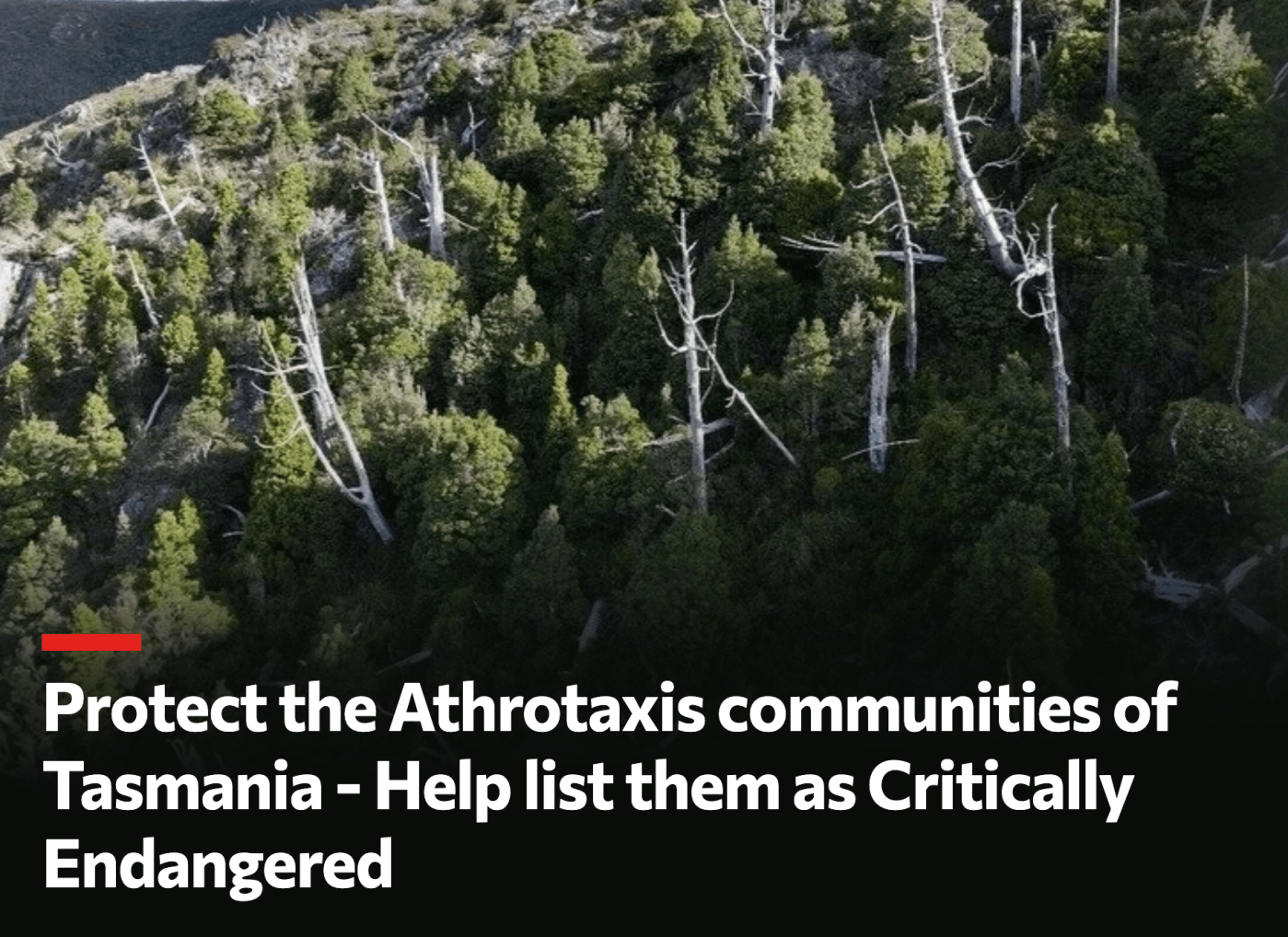
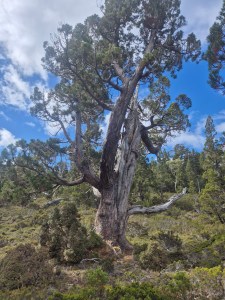
The pencil pine (Athrotaxis cupressoides) is a much loved and wonderfully charismatic tree of the Tasmanian mountains where it is largely restricted to sub-alpine areas above 800 metres. It is one of the Gondwanan species – dating back to the times of the Gondwana super continent – and often grows around tarns, streams and lakes because of its intolerance to fire. Pencil pines can reach ages in excess of 1,200 years, but have little chance of recovery after a fire.
It is hard to imagine the mountains of lutruwita without these wonderful trees (check here to get a sense of the beauty of these trees).
Sadly they face a very uncertain future. But this campaign aims to secure a future for both pencil and King Billy pines.
The Athrotaxis communities of Tasmania — the iconic Pencil Pine and King Billy Pine communities — are some of the oldest, slowest‑growing, and most irreplaceable ecosystems in Australia and the world. These ancient trees have survived for thousands of years, but they are now facing sudden declines from climate‑driven wildfire, habitat loss, drought, and a slow natural regeneration.
Once these communities burn, they do not return. Entire landscapes that stood for millennia are being lost in a single fire season.
The extremely slow growth rates and recruitment cycles of these keystone species means that their communities are susceptible to suddenly collapse while appearing stable for decades. There are signs, however, that these communities are under stress and that we need to act now if we are going to ensure we don’t lose these ancient icons on our watch. The evidence is clear: Athrotaxis communities meet the criteria to be listed as Critically Endangered under the EPBC Act and national recognition is key if we are to protect what remains and to support recovery efforts.
Sadly, last year, despite displaying evidence that five of these six criteria have been met, the Australian Minister for the Environment, Murray Watt, ignored the science and rejected the application to list the Athrotaxis communities of Tasmania as Critically Endangered.
Since then a campaign has been established to ensure the proposal for listing is successful the next time the issue is considered by the federal government.
The campaign calls on the Australian Minister for the Environment and Water to:
- Accept the proposed listing of the Athrotaxis communities of Tasmania as Critically Endangered under the EPBC Act when the Threatened Species Scientific Committee provides its recommendation.
- Prioritise the assessment of the nomination to ensure timely protection.
- Support a national recovery plan that includes fire management, climate resilience, long‑term monitoring, and restoration of damaged areas.
- Provide adequate funding and resources for further research into protecting these globally unique ecosystems.
Take action to support the listing
A simple action you can take is to sign the petition in support of the listing. This is a parliamentary petition.
The petition will close on June 24, 2026.
The petition was set up by Will De Angelis




Leave a Reply