Search

Mountain Journal

Environment, news, culture from the Australian Alps

Author

Cam Walker

I work with Friends of the Earth, and live in Castlemaine in Central Victoria, Australia. Activist, mountain enthusiast, telemark skier, volunteer firefighter.

Vail Resorts to Acquire Falls Creek and Hotham Ski Resorts

After months of speculation, it has been confirmed that Vail Resorts will acquire Mt Hotham and Falls Creek resorts. They bought Perisher resort in 2015.

It should be noted that ‘The acquisition, which is subject to certain regulatory approvals, is expected to close prior to the commencement of the Australian snow season in June 2019.’

The following media release comes from Mt Hotham resort:

Continue reading “Vail Resorts to Acquire Falls Creek and Hotham Ski Resorts”

Remote area firefighters call for more resources

Firefighters at the Tasmania Parks and Wildlife service are calling for more specialised local staff to fight remote fires.

During the 2016 fires that devastated fire sensitive vegetation in Tasmania, there were a number of suggestions made by concerned observers that the Parks and Wildlife Services’ firefighting efforts appeared ‘poorly prioritised’ in terms of early response to the fires in remote areas. According to the Tasmanian National Parks Association, fire response prescriptions prioritising rare and threatened fire sensitive species were not ‘effectively implemented’. Lack of early intervention may have resulted in these fires becoming larger than they otherwise would have been. Similar claims have emerged with the 2019 fires.

Continue reading “Remote area firefighters call for more resources”

‘Respect the Mountain’ calls for peaceful protest to defend kunanyi/ Mt Welligton

The community campaign to stop a cable car from being built up the eastern face of kunanyi/ Mt Wellington has reached a new phase.

With the state government intervening to over ride local council concerns, there is the risk that exploratory drilling could start on the mountain at any time.

In response, residents group ‘Respect the Mountain – No Cable Car’ have announced that they will oppose any drilling through organising peaceful protests. They say ‘when the drilling rigs come, we will be there. The Government and the investors have got this one wrong’.

You can sign up to express your interest in being involved in peaceful direct action through this link. Respect the Mountain reports that several hundred people have already signed up.

There will be a training day for people who may be interested in joining peaceful actions on Sunday March 3. Details here. You can register for the session here.

Further details on the campaign are available here.

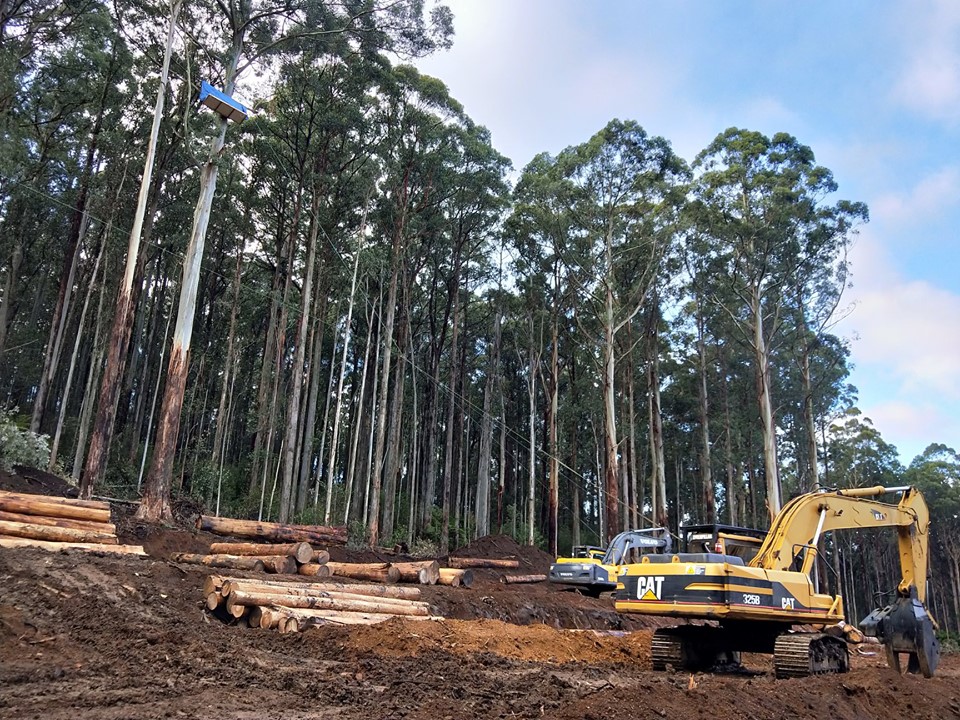
Castella forest about to be logged

Logging appears to be imminent in this very important forest in Castella near Toolangi, to the east of Melbourne.

The Castella coupes are a stronghold for a diversity of species including the threatened greater glider and critically endangered barred galaxias – a small native fish.

A blockade has been established to protect these forests.

Please call the environment minister and urge her to intervene to protect this forest.

Call and ask to leave a message: 03 9637 9504.

You can find further information here.

Fire risk a grave threat to cable car proposal

As the long debate continues about whether a developer should be allowed to build a cable car up the face of kunanyi/Mt Wellington, Bernard Lloyd reminds us about the primary threat to the mountain, which is posed by wildfire. Regular fires on the mountain have huge implications for the proposal to build a cable car.

In terms of combustibility, the forest on the mountain’s eastern face carries the greatest fuel load. The cable car is planned to be built up the eastern face.

  Continue reading “Fire risk a grave threat to cable car proposal”

The 2019 Tasmanian Fires so far: what has burned and where?

An update on what ecological communities have been burnt.

Fires have burnt across huge sections of Tasmania this summer (and some continue to burn despite recent rain and milder conditions). There have been grave fears that fire sensitive vegetation – plant communities that will not recover or recover very slowly after fire – had been badly impacted by the fires.

An initial analysis (based on the fires up until Feb 5) of what types of vegetation have been burnt so far in this summer’s fires is heartening. According to Dr Sam Wood, only very small areas of fire sensitive vegetation have been identified as being burnt. “The majority of the burned area is comprised of flammable vegetation communities” (ie, communities adapted to fires). Continue reading “The 2019 Tasmanian Fires so far: what has burned and where?”

Logging in the Stirling Alpine Link?

A new logging coupe (the ‘Bus Loop’ coupe) is about to be logged near Mt Stirling. The trees are a mixture of (very old) snowgums, and alpine ash, only some of which is suitable for making sawlogs.

This coupe exists within the area proposed for inclusion in the Stirling Alpine Link (SAL).

Continue reading “Logging in the Stirling Alpine Link?”

Citizen Science Camp in East Gippsland

Goongerah Environment Centre (GECO) will be running citizen science camps in 2019. The first one will happen in far east Gippsland over the Labour Day weekend in March.

Continue reading “Citizen Science Camp in East Gippsland”

NSW’s inaction on horses causing problems in ACT

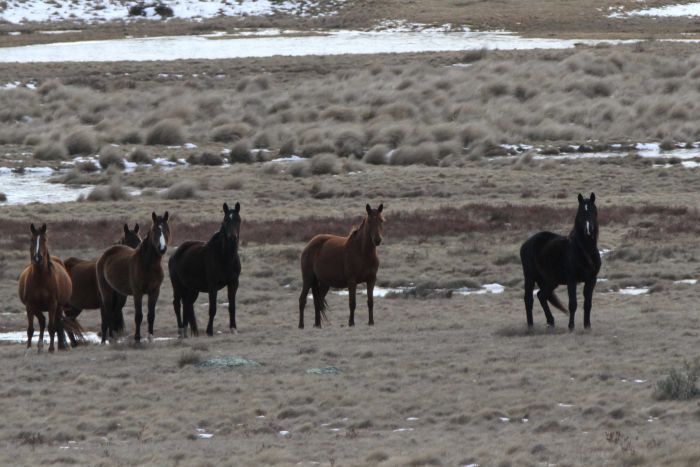
Have you ever lived next to a bad neighbour who doesn’t care how their actions impacts on you? If so, then you probably know how Victoria and the ACT feel about NSW’s unwillingness to control the herds of wild horses that range in the Snowy Mountains.

The enormous environmental impacts of wild horses are widely documented. In spite of this, the NSW government has aligned itself with the ‘brumby lobby’, which wants to keep wild horses in the Kosciuszko national park for ‘cultural reasons’. They have legislated to protect the horses from culling. Given that there is no fence between the mountains in NSW and adjoining states, this negligence is impacting Victoria and the ACT.

Continue reading “NSW’s inaction on horses causing problems in ACT”

Backcountry film festival – Melbourne, April 30

The Backcountry Film Festival is produced each year by Winter Wildlands Alliance as a celebration of the human-powered winter experience and a gathering place for the backcountry snowsports community.

In 2019 it features a program of ten films, including productions from Colorado, Washington state, California and China.

Tuesday April 30

7pm – 9.30pm.

Co-hosted with RMIT Outdoors Club.

Storey Hall (RMIT), 342-344 Swanston St, Melbourne.

Suggested donation: $8 conc & students/ $15 waged. Tickets at the door. There will be plenty of room.

There will be a bar run by the RMIT Outdoors Club before the films start.

Facebook event page for Melbourne available here.

You can check the trailer for the 2019 season here.

Check here for the full list of films.

Cradle Mountain Film Festival

The Cradle Mountain Film Festival is an adventure festival like no other in Australia! Screening a range of adventure films on the fringe of the wilderness in unique locations, plus a Wellness Program including the Dove Lake Classic Trail Run, acro-yoga and Nia Dance, Cold Water Therapy and canyoning in the rivers.

There will be art exhibitions, Kids’ Films, panel discussions, World Premieres on the Green Carpet, the Tasmanian exclusive screening of Mountainfilm on Tour, the Mountain Huts Film Trail, plus encore screenings of the biggest climbing blockbusters The Dawn Wall and Free Solo, and short film programs the Women’s Adventure Film Tour and European Outdoor Film Tour (courtesy of Adventure Film Tours).

March 29 – 31.

Continue reading “Cradle Mountain Film Festival”

“We are not out of the woods yet”

The Bureau of Meteorolgy has released its national climate summary for January 2019. As expected, it shows that it was the country’s warmest January on record for mean temperatures (2.91 °C above average), maximum temperatures (3.37 °C above average) and minimum temperatures (2.45 °C above average). Rainfall for the country as a whole was 38% below the long-term average for January, and Tasmania had its driest January on record.

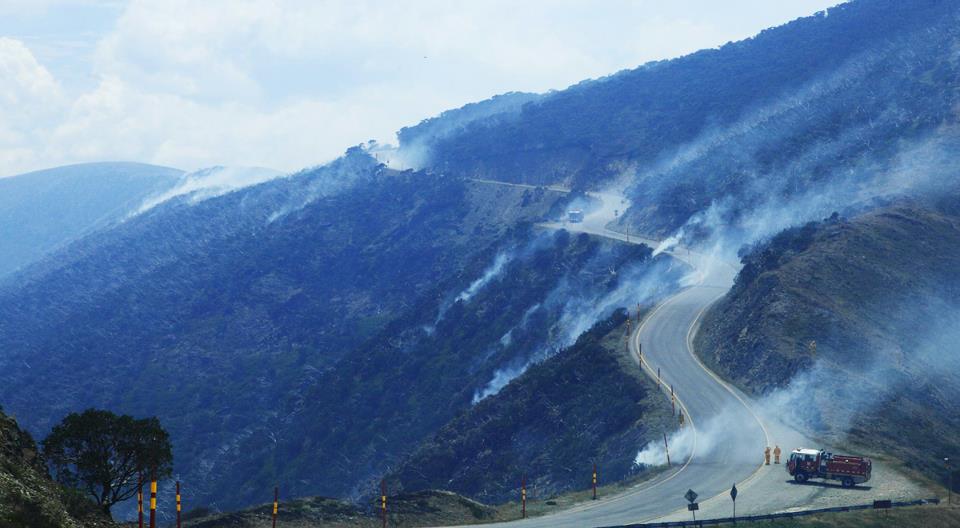
After a dry winter and spring in the south east and then a sustained heatwave, its fairly obvious why its been a horror summer for fires. Tasmania and Victoria still have a significant number of fires which are not contained, let alone under control. And there is no obvious break coming to this hot, dry weather. The ecological costs of this summer’s fires are already becoming apparent.

Continue reading ““We are not out of the woods yet””

Blog at WordPress.com.

Up ↑