Search

Mountain Journal

Environment, news, culture from the Australian Alps

Alpine Researchers honoured for contributions to parks

This is from a few weeks ago, but is good acknowledgement of the efforts of researchers working to remove Hawkweed and control willows on the Bogong High Plains. Thanks to David Turner for spotting this one.

The release below is from Parks Victoria.

orange_hawkweedTwo Victorian researchers have been recognised for their outstanding contribution to managing highly invasive weeds in Victoria’s Alpine National Park.

Parks Victoria Chief Executive Dr Bill Jackson today acknowledged The University of Melbourne’s Dr Nick Williams, and Dr Joslin Moore from Monash University, as joint recipients of Parks Victoria’s inaugural Nancy Millis Science in Parks Award.

Dr Jackson said the award was being presented to the two researchers for their outstanding contribution to fostering excellence in applied science for the benefit of park management.

“Both projects demonstrated the researchers’ strong willingness to work closely with park managers to understand the extent and challenge of the weed problems. They also demonstrated leading edge science in solving difficult problems.”

“The work of Dr Williams and his team from The University of Melbourne has helped to protect the Alpine National Park’s biodiversity and transformed hawkweed control into a cutting edge and targeted program. This research partnership between Parks Victoria and Department of Environment and Primary Industries staff has significantly reduced Hawkweeds in the Alpine National Park, and the goal of eradicating it altogether is now a real possibility.”

“Dr William’s research and the work being done by all the partners on this project also benefits private landowners as hawkweeds have the potential to invade agricultural land and significantly affect agricultural production.”

Dr Jackson said Dr Joslin Moore and her team had achieved great results in controlling willow on the Bogong High Plains and as a result has had a major impact in protecting the Bogong High Plains environment.

“Willows are highly invasive and following the 2003 fires began germinating in large numbers. This posed a significant threat to an area within the Alpine National Park that is particularly important for its high biodiversity and landscape environment.

“As a result of a 7 year partnership with Parks Victoria, local Catchment Management Authorities and Falls Creek and Mt Hotham resorts, Dr Moore’s work has been fundamental in improving efforts to control willows on Bogong High Plains.”

Dr Jackson said both researchers had extensively documented their research in scientific publications, adding to the international body of work on effective methods of managing these extremely invasive weeds.

“I warmly congratulate Dr Williams and Dr Moore, and their teams who have contributed to this work, on making a real difference to managing invasive weeds in Victoria’s iconic Alpine landscapes.

“Caring for our parks is a complex task that involves many challenges including climate change, population increases and threats such as invasive pest plants and animals.

“We need innovative solutions and a good scientific understanding of how best to tackle these issues and how best to care for these important natural environments. Dr Williams and Dr Moore’s projects are part of Parks Victoria’s Research Partners Program that fosters collaborative applied research with universities and other research organisations.

The Nancy Millis Science in Parks Award

This award presented by Parks Victoria honours the late Professor Nancy Millis who was Chair of Parks Victoria’s Science and Management Effectiveness Advisory Committee since its inception 1997 and a member of Parks Victoria Board’s sub-committee on Environment.

Time to get Out There!

conditions at Mt Wheatley, 25/6/14

So, the first major dump has passed over the Alps, with snow everywhere!

This update comes from Bruce at Wilderness Sports in Jindabyne.

A deep low, well to the south of Tasmania is moving slowly to the southeast. A ridge of high pressure extends across the far north of New South Wales from a high centred over South Australia. The high should move to the Tasman Sea on Friday. The next major cold front is expected to reach the far west of the state Friday night, before bringing another vigorous and colder west to southwesterly airstream over the weekend.

In terms of backcountry conditions on the Main Range:

BACKCOUNTRY:
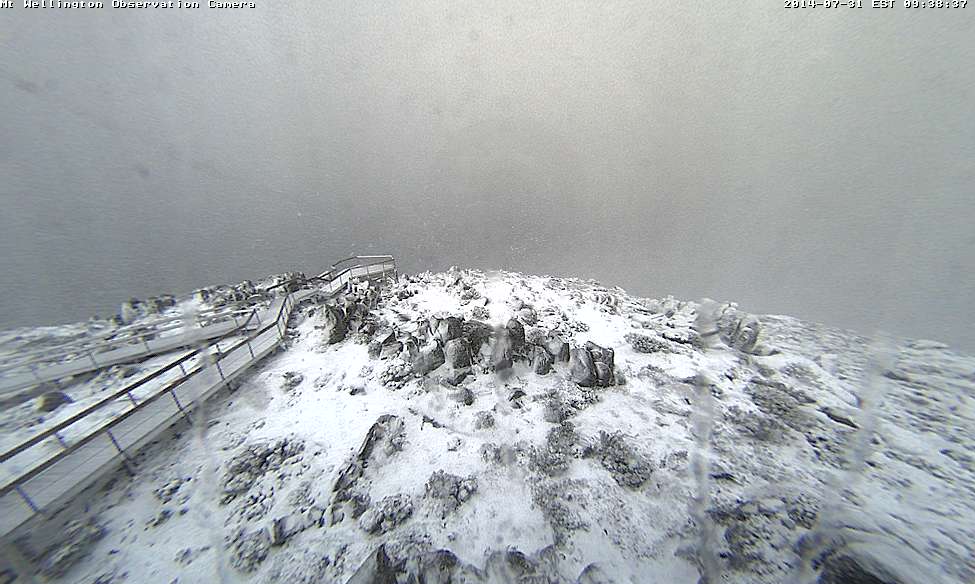
Lots of wind and drifting snow continuing to build the snow cover on the Main Range with a further 20+cms over higher peaks. Looks so promising with the forecast of solid snowfalls continuing this week. The base will have consolidated improving backcountry skiing & Snowshoes are pretty useful at the moment to get about. Once the weather clears it will be really good but while the weather is wild and woolly patience will be rewarded so use more sheltered spots to get out. Resort Cams show building snow cover!
The NEW Cam looking towards Mount Kosciuszko is sensational to assess conditions (But not when blizzard conditions prevail).

“From field observations exposed slopes in the area averaged 40-50cms. Cross loaded terrain averaged between 50-80 cms. Protected slopes snow depths started at 70 to130+cms”.

Check the weather page on www.wildernesssports.com.au for more updates on the weather throughout the week.

It’s here

The wait is over. Melbourne’s Herald Sun, who always love a bit of hyperbole has declared it “The megablizzard. Snowpocalypse now“.

A few weeks ago, Falls Creek management made the brave prediction:

Like many on the mountain, we’re beginning to get a very good feeling about this Winter. Old hands say it feels a lot like 1991, the end of the last Cold War, when our dear frenemy El Nino looked like a double agent early on before confounding the pundits and pounding us with record snowfalls. The pattern looks encouragingly familiar this year. Fingers crossed.

Whether they are right waits to be seen.

But there is no doubt that the snow is falling. Check the forecast amounts for resorts over the next week, courtesy of Mountain Watch.

Bring it.

more private development in Tasmanian World Heritage Area ?

As the Tasmanian and federal governments are being internationally criticised at the World Heritage Commission meeting in Doha over their attempt to de-list 74,000 hectares of forest from the Tasmanian World Heritage Area, a new threat to the integrity of Tasmania’s reserves has come to light.

A Tasmanian government website is calling for Expressions of Interest from investors w ho have “ideas (for development) in the Tasmanian Wilderness World Heritage Area as well as our National Parks and Reserves”.

It says the government wants to “unlock its natural areas to allow exciting new tourism experiences that are complemented by sensitive and appropriate tourism infrastructure”. In other words, more private development in conservation reserves.

Specifically, it says that the Government is looking for “developments which broaden the range of exciting and unique experiences on offer in our state by improving access for tourists while maintaining the integrity of our natural areas”.

It suggests that “sensible and appropriate” developments in the Wilderness World Heritage Area, National Parks and Reserves might include “resort-style accommodation. It might include walking tours, helicopter flights, mountain-bike riding, river cruises, new interpretative experiences or even luxury camping escapes”.

The Government is initially looking for ideas for the Tasmanian Wilderness World Heritage Area as well as our National Parks and Reserves. In the longer term it will consider other protected areas including Crown land and State Forests.

The first round for putting in an EOI is open until 21 November 2014.

With the anti-green agenda of the Tasmanian government it is very hard not to see this as a dangerous development which will undermine the ecological integrity of the reserve system.

The Greens have opposed this process. Greens’ Parks and Tourism spokesperson Nick McKim said in May that “the Liberals have an irrational and ideological desire for development at any cost, and they simply cannot be trusted to safeguard the natural and cultural values of Tasmania’s National Parks.”


The High Country of the Mind

The places we love are the ‘mountains of the mind’. The places we imagine and day-dream about. The places we escape to. Each of us has our special place. Some of us have many. Some just like to keep moving, and the mountain of the mind is the next unclimbed range.

What makes our places special? And what do we find there?

And where are your places?

Check here for some reflections, inspired by writer David Gilligan.

Winter. Are we there yet?

It’s almost mid June and we’re still waiting for winter to start!

Forecasts have been all over the place. Recently the Climate Council suggested winter would be warmer than normal. Not good news for snow lovers.

Earlier reports on this site quoted weather guru grasshopper as predicting ‘a mediocre to above average season’.

With the BOM now suggesting the expected El Nino event will not occur until early spring, perhaps things are looking up.

According to the Weekly Times:

Weather forecasters at the Bureau of Meteorology last week dramatically downgraded the fears of El Nino’s drying influence on the weather in southern Australia this year.

While the El Nino pattern could still form in spring, the conditions that originally caused scientists to issue the warning disappeared last month.

Falls Creek is especially brave with this recent prediction:

Like many on the mountain, we’re beginning to get a very good feeling about this Winter. Old hands say it feels a lot like 1991, the end of the last Cold War, when our dear frenemy El Nino looked like a double agent early on before confounding the pundits and pounding us with record snowfalls. The pattern looks encouragingly familiar this year. Fingers crossed.


In praise of the ephemeral

In my teenage years, after I became obsessed with all things alpine, I discovered the work of a number of ‘70s era nature photographers who were working on the micro scale in black and white.

snow3I found a number of large format photo books that gave me an insight into the small places and ephemeral beauty of ice and snow, wind blown sand and leaf fall.

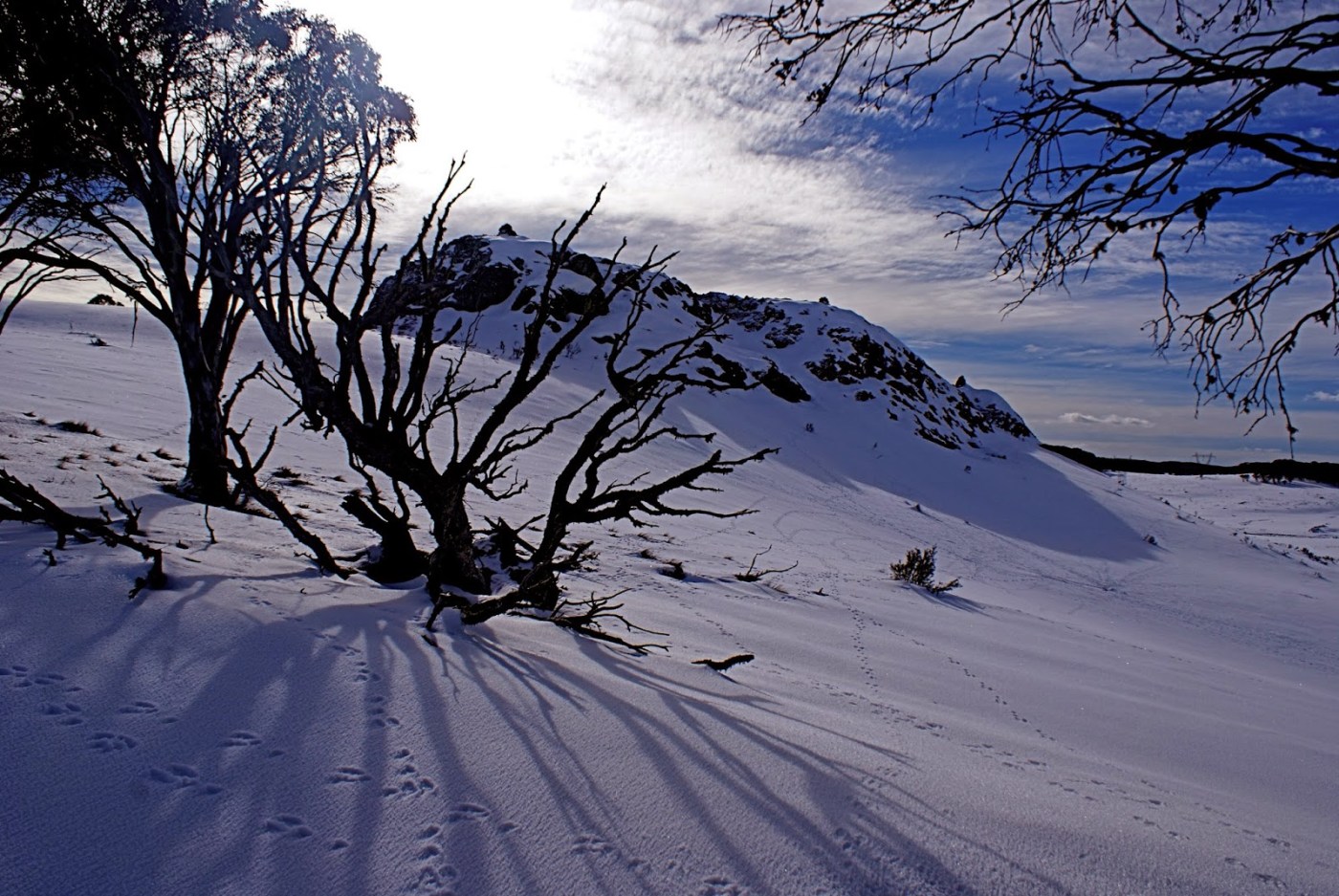
snow5I followed their lead and spent endless hours looking downwards to the tiny worlds under our feet. One July, on a week long ski tour of the Bogong High Plains, I found myself camped near Johnston Hut, with an entire day to enjoy my birthday as I wandered amongst snow drifts and emerging poa tussocks, amongst stately snow gums as high ragged clouds pushed through, with the promise of fresh snow.

As I lent in to hear the small, and glean something from the temporary and incredibly complex tangle of the worlds at ground level, I was struck by a sense of wonder, of specialness, of amazing things happening just beyond our sight. I felt richness stitched into the complexity of thick tangles of grass, of bark thrown on snow, and bare branches against a pale, rich winter sky.

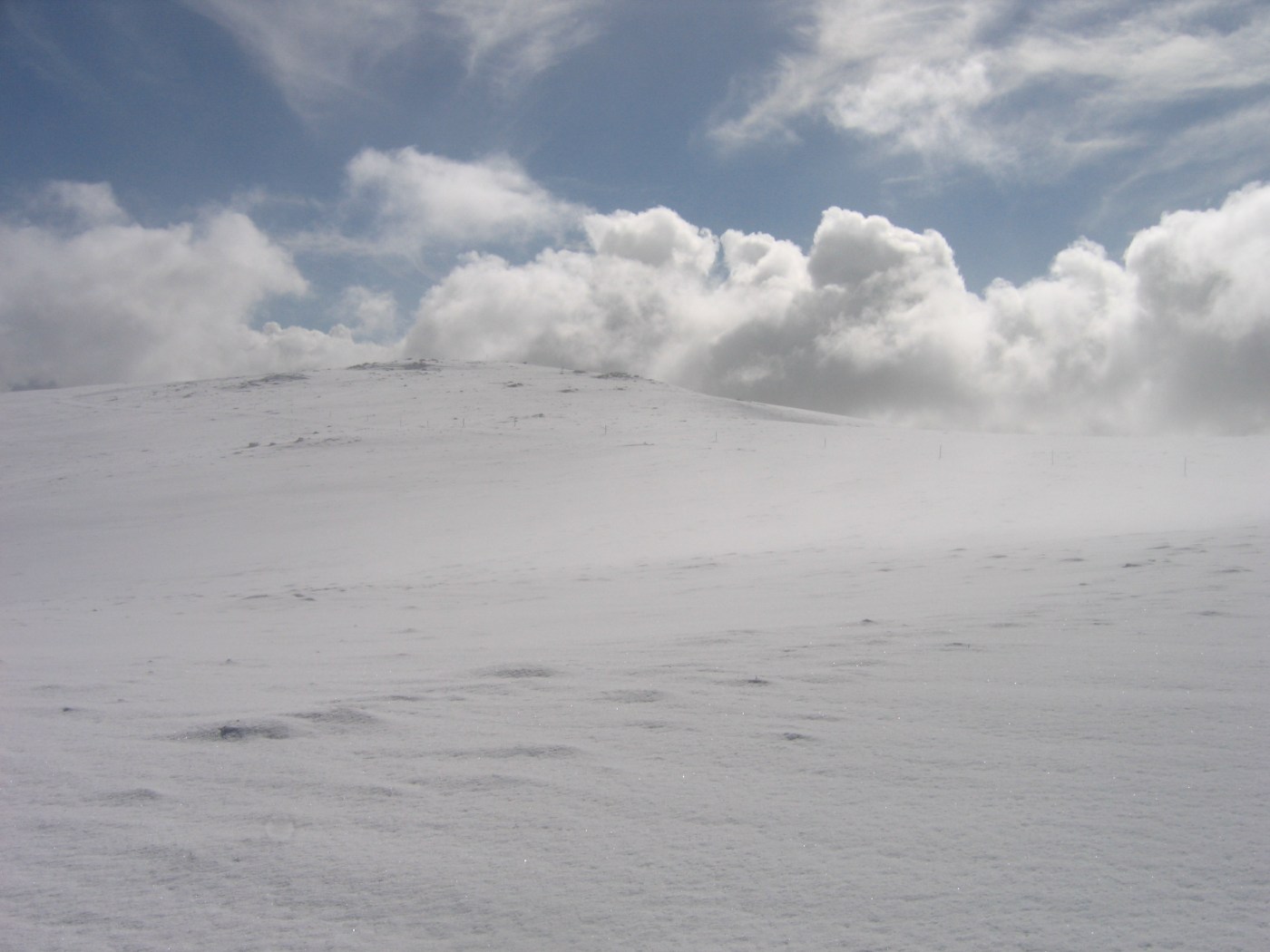
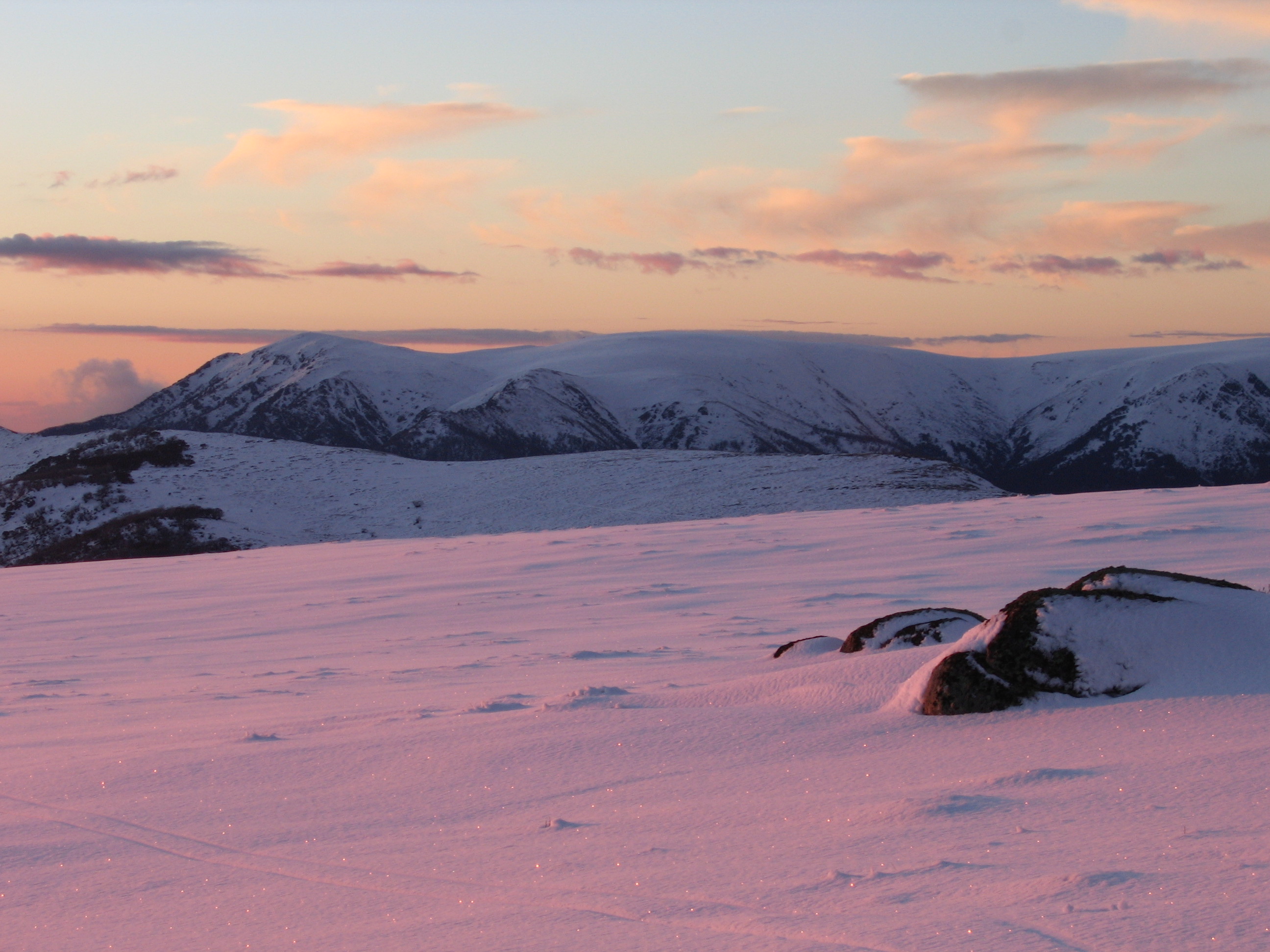
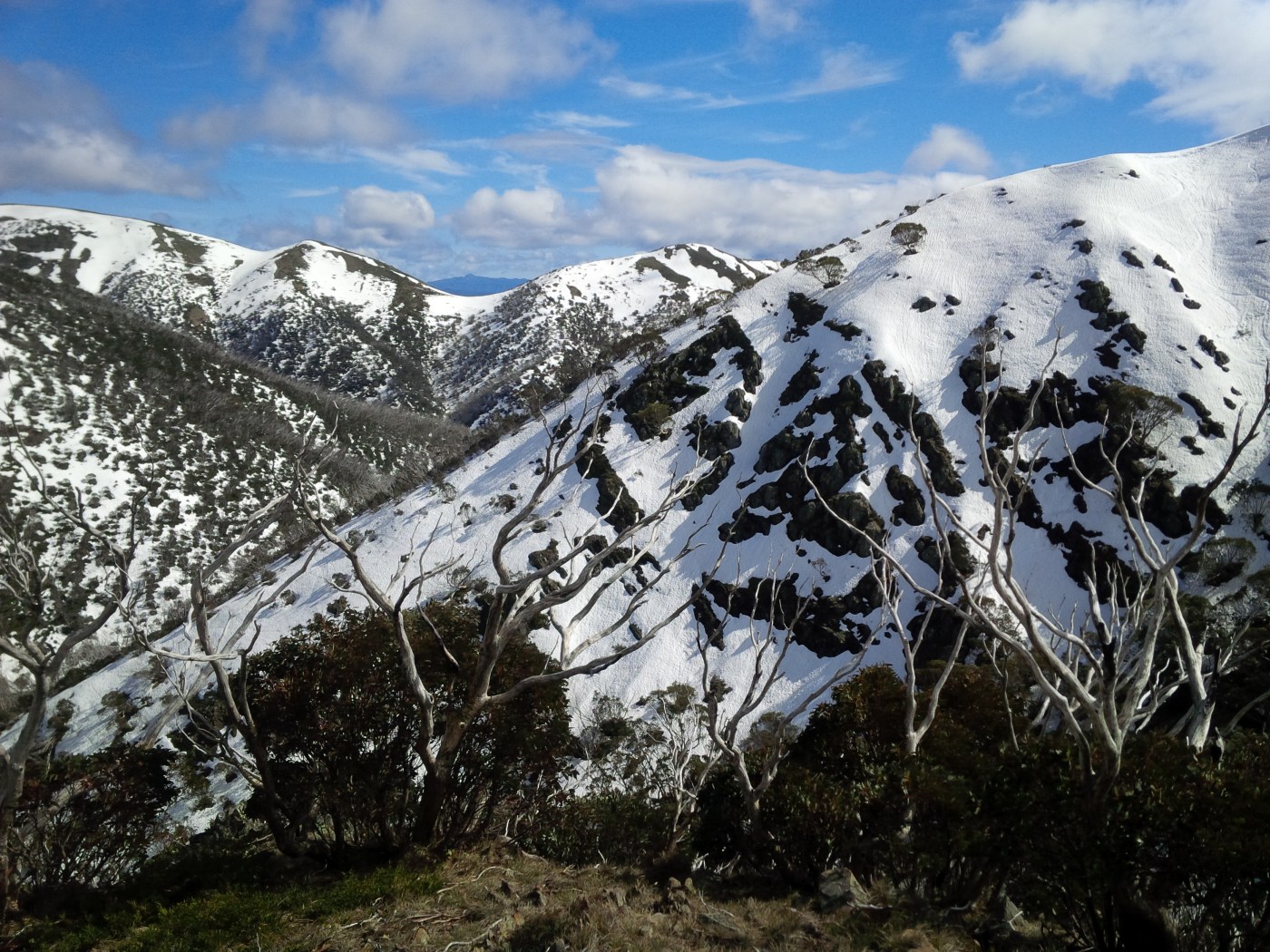
snow11As we wait for the decent falls of a late coming winter, I have been struck by that same old sense of wonder at the beauty of the ephemera of wind blown grass, stone and snow.

The following are some pics from Mt Hotham and nearby hills over Opening weekend 2014.

snow12

Little Higginbotham
Little Higginbotham


IMGP7694


Alpine park grazing challenged

The following comes from the Victorian National Parks Association,:

Wonnangatta River
Wonnangatta River

Today we took the first steps in our legal challenge against Alpine cattle grazing.

This case marks the first time in our 60 year history that the Victorian National Parks Association has taken the extraordinary step of launching court proceedings to protect national parks – the cornerstone of our conservation efforts – from damaging cattle grazing. 
Represented by Environmental Justice Australia and barristers Richard Niall QC and Andrew Walker, we headed to the Supreme Court of Victoria for a directions hearing on the case. The court set a time in early July 2014 for a further hearing. 
According to Felicity Millner, Director of Litigation at Environmental Justice Australia and part of our legal team, today’s hearing takes us one step closer to getting a decision from the court about whether it is legal for the government to put cattle in the national park. 
At the final hearing of the case, we will be arguing the laws do not allow cattle in the Alpine National Park. 
Ensuring the integrity of national parks is an investment in the future. Whether we win or lose this legal test case, the idea and importance of national parks as a haven for people and nature must be defended.
To fight this campaign we need to raise money from visionary people in Victoria. We are hoping you are one of those people. 
We have to take this legal action now.  In March this year, 60 cattle were rushed back into the Wonnangatta Valley, part of the heritage-listed Alpine National Park, under a flawed fire management trial by the Napthine Government.
The cattle have now left, but will be back next summer, when up to 300 head of cattle will do even more damage.
These ‘cattle grazing trials’ have been roundly criticised as flawed science that will contribute little, if anything, to our understanding of fire management. The evidence speaks for itself, you can read all about it on our website.

warmer weather, shorter ski season?

The most recent assessment of Australian weather trends (seasonal update: abnormal autumn 2014) from the Climate Council warns of a warmer than average winter. Professor Will Steffen says that “warmer weather increases the odds that the ski season will be shorter”.

“The unseasonably warm conditions that many regions of Australia experienced in April and May are likely to continue through winter. Higher-than-average maximum and minimum temperatures are likely over most of the country with the chances of warmer-than-average conditions being particularly high for the southern half of the continent.

With a warmer winter on the cards this year, the prospect of increasing intensity and frequency of winter warm spells could lengthen Australia’s bushfire season and worsen drought conditions”.

As skiers and boarders will remember from last winter, when overall temperatures are warmer than usual, it doesn’t take much to lose snow base when there are precipitation events. Victoria was especially hard hit last year, with loss of the entire base in July after a reasonable start to the winter in June.

The good news is that we can do something about this if we choose to do so:

“These trends can be turned around. Australians have an opportunity to rapidly and significantly reduce our CO2 emissions to help stabilise the climate and halt the current trend towards more extreme weather events and hotter average temperatures”.


Australian backcountry film festival – Spring 2014

For the past four years, the backcountry film festival has been attracting good numbers of people and is showing in more locations.

It seems like it might be time to have our own festival – with films made in Australia.

At previous Melbourne shows, we have added a film about skiing and boarding on The Bluff, and this year saw OFF GRID, a new effort on Mt Bogong from SoO Airtime.

The plan is to hold an Australian backcountry film festival in late spring 2014 with only local content. There are some fantastic film makers out there, and we hope to be able to showcase some of these.

We are seeking expressions of interest from film makers who would like to submit films.

Any human and gravity powered backcountry adventure would be welcome: walking, skiing, boarding, MTBing, paddling, climbing, …

As this is an entirely volunteer effort, with no budget, we are not able to offer payment for showing the films.

Films can be in two length categories. We hope to show an hours worth of short films (3 to 7 minutes) then up to 2 longer films (30 – 40 minutes).

At this point we are looking at doing a Melbourne showing, with the ability to offer the festival to other places once its packaged up.

If you’re keen, please get in touch: cam.walker@foe.org.au

And get out there and getting filming!

Introducing The Watershed

6a00d8341d07fd53ef01a3fd06febb970b-500wiAs we wait patiently for cooler weather and serious snow falls, you may enjoy this one. Its the pilot issue of a newsprint publication.

The previous one focused on all things snow and was called The Drift.

The Watershed is a collaborative newsprint publication between The Usual (‘The Usual is a creative team with a penchant for the outdoors’) and Patagonia to celebrate the joy of simple fly fishing, healthy rivers, dam busting, and sustainably sourced food.

The Watershed features Patagonia founder Yvon Chouinard, Patagonia fly fishing ambassador April Vokey, DamNation producer Matt Stoecker, director Travis Rummel, 1% for the Planet co-founder Craig Mathews, dam buster Katie Lee. With contributions by Malcolm Johnson, Jeremy Koreski, Paul Greenberg, Jeanine Pesce, Keith Malloy, Trevor Gordon, Stefan Knecht, Jim Mangan, and others.

Pick up your  Spring/Summer 2014 copy at select Patagonia stores worldwide.

You can read it here.

Perisher Peak Festival

a1June 6 – 9

The Perisher Valley in NSW’s Snowy Mountains will open the 2014 Australian Winter Ski Season with a vibrant 4 day festival packed with live music at the snow over the June long weekend.

From the organisers:

“The 6th Perisher Snowy Mountains of Music-Peak Festival will run from Friday 6th June to Monday 9th June 2014 and is presented by the Perisher Resorts Chamber of Commerce and led by veteran musician David De Santi who has been the Artistic Director of the famed Illawarra Folk Festival since 1996 and is a member of one of Australia’s most famous bush bands, Wongawilli. With Dave De Santi at the helm you can expect to hear some great new sounds from here and overseas and walk away with an experience to remember. Read more about David here.

This is your opportunity to soak up the magic of the snow fields whilst listening to some of our best musicians step up to the mic with a mix of world, folk, roots, celtic, acoustic, traditional music, song, dance, poetry and yarnspinning. Peak will take place across 8 indoor venues in Perisher Valley, Smiggin Holes and Guthega Alpine Village”.

Full details here.

Blog at WordPress.com.

Up ↑