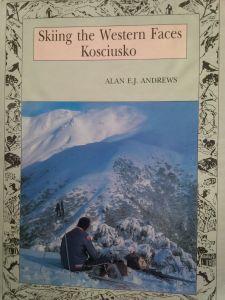
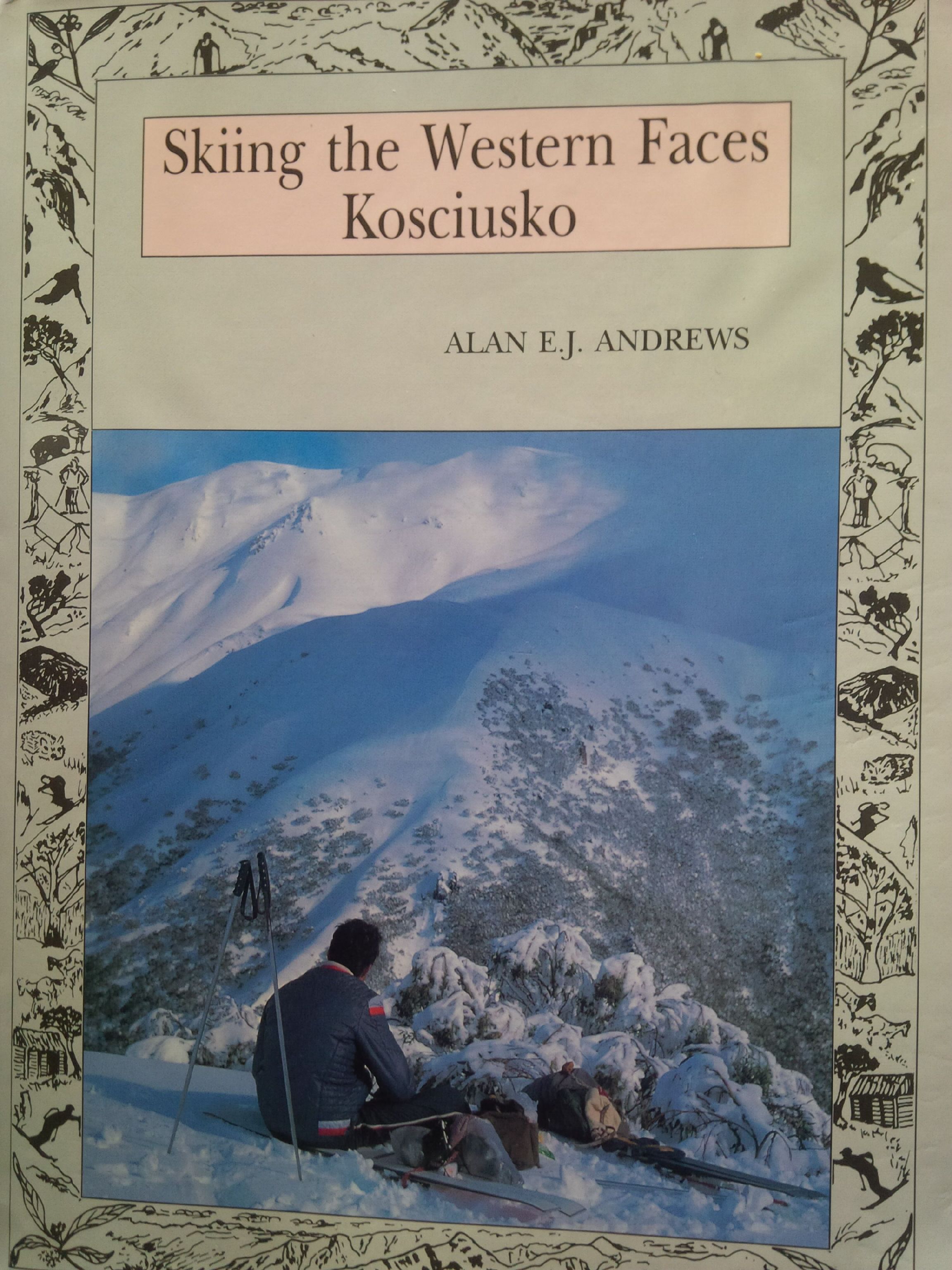
 Alan E J Andrews is known to many backcountry skiers and boarders as a pioneer of skiing the steep western faces of the Main Range of the Snowy Mountains. He was the author of Skiing the Western Faces Kosciusko.
He passed away last month after a long and well lived life. The eulogy that follows was written by his friend Klaus Hueneke, another luminary of the High Country.
Nureyev on Skis
Or
The Emperor of Illawong
Eulogy for Alan E J Andrews, Mona Vale, 26/6/14
“I have known Alan in person since about 1984 and I’ve known about his writings and journeys across the high country since the 1960s. He had a big impact on my life and my book publishing business Tabletop Press.
Alan was a lover of:-
Australian History especially the early explorers,
the Australian Alps and skiing in all its forms,
the mountain huts especially Illawong and Albina,
old style poetry with rhyming verse,
the ballet and bacon sandwiches and
an old Holden Station Wagon.
He loved reading, drawing and using maps,
and the careful composing of numerous articles and books.
He enjoyed helping others with their own research and replied at length to any questions or correspondence sent. He did this in careful, often quite tiny, longhand or neatly printed with lots of curly bits. You can view it in some of his books. When his distinct handwriting was not on the last parcel of books I thought, ‘something must be seriously wrong’. It was.
His books and long sojourns at Albina or Illawong hut above the Snowy River were very important features of his life. When he was at Illawong it was like the Emperor was in residence. Not a domineering Emperor who demanded our attention but a quietly spoken, quietly smiling, self effacing Emperor, one who didn’t have to shout it from the roof tops.
I loved listening to him reciting Australian classics as well as his own poetry. This is an extract from The Fan-shaped Snowgum.
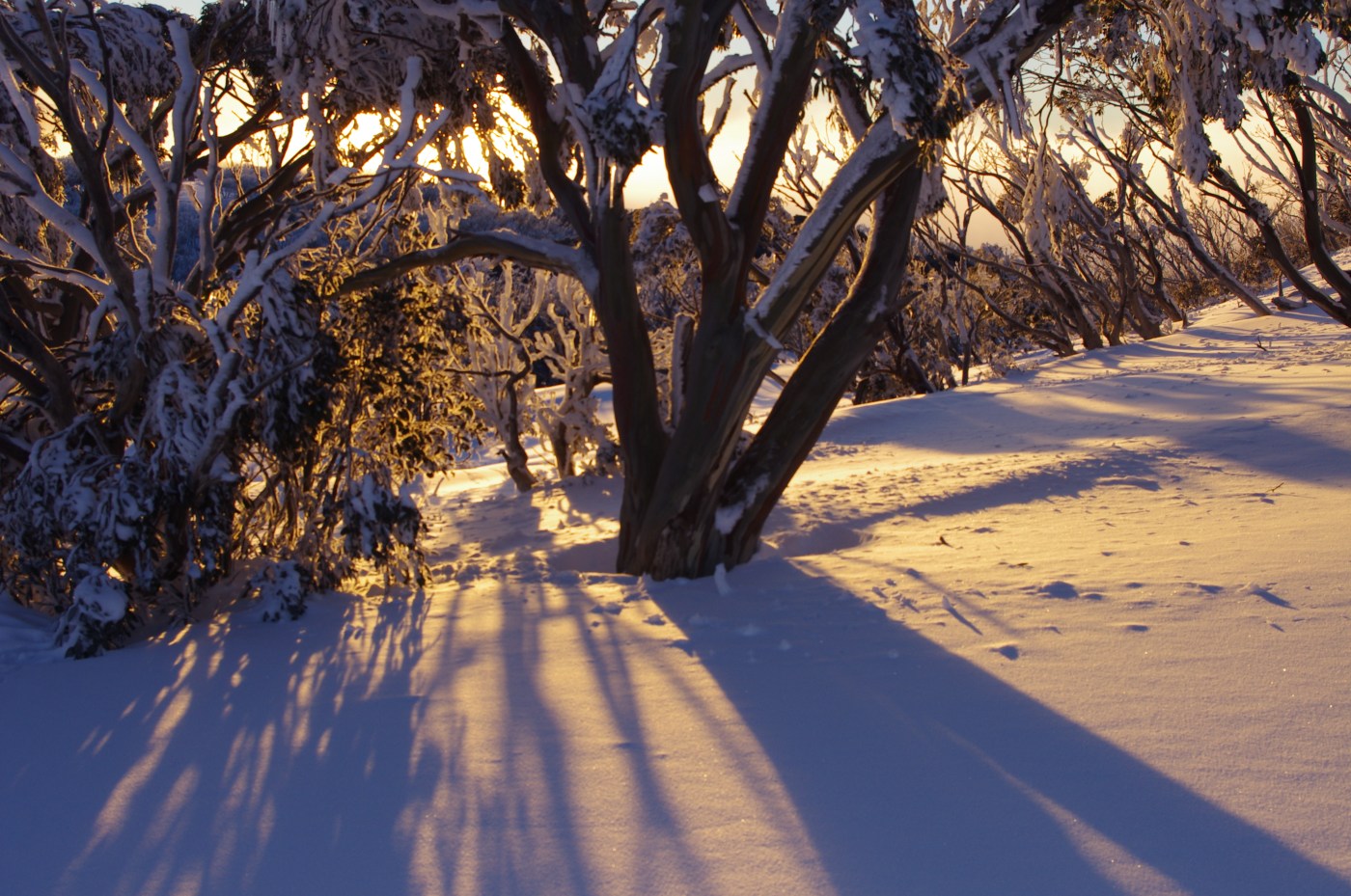
There it is, the fan-shaped snowgum,
Glinting in the morning frost;
Reminding us of courtly pleasures
From time forgotten – long since lost.
Lovely eyes ‘neath lowered lashes,
Flirting sweetly, ringlets tossed,
Fan on crinoline laid demurely,
Clamouring suitors imperiously bossed.
But look again, the trunk is twisted,
Leaning perilously askew.
Another instant it had fallen,
Yet still survives, to grow anew,
The branchlets fanning to the northward,
Others stretching southward too;
Now proudly standing tall, defiant,
A sentinel to welcome you.
In 1982 I wrote Huts of the High Country. Alan took note that there was a new kid on the block and on a later visit to Illawong we spoke about my new book Kiandra to Kosciusko. He offered to draw a number of maps and gave me permission to use his articles about early ski tours in different parts of the Snowy Mts.
When the book came out he said ‘but you only spent a couple of pages on the history of Mt Kosciusko itself’. Sorry Alan. It got him going and in 1990 he asked me to design and publish Kosciusko – the Mountain in History. It covered all the first European explorers who reached the high tops and filled a missing gap. As usual, the research was meticulous.
In 1993 he wanted me to do the same with Skiing the Western Faces but this time he said, ‘I want the book to breathe more’. ‘Breathe?’, I thought Can a book breathe? It showed how books to him were living entities with eyes, lungs, heart and soul. No wonder his and Muriels house is full of them.
He showed me a book which had lots of space around the text and between chapters. I got the message and Skiing the Western Faces became his most popular book. It inspired many others including his sons Neil and Ian as well as my step-son Chris, who brought me here today, to explore the dramatic western faces. I always know it has been a good snow year if orders come in during September and October.
By 1996 he was ready to go with Rainforest and Ravished Snow. Half of this book dealt with his bushwalks on the Comboyn and in the Upper Manning River area, one in which some of his relatives once lived and where Ian, his son, still owns a plot of bush. After skiing became too hard for him, Alan often went there to communicate with nature.
It became obvious that Alan had been sitting on a large body of drawings, maps, photos, writing ideas and unpublished work. I was very glad he chose me to bring them into the world. These were books with small print runs not commercially viable for big publishing houses but important nevertheless.
In 1998 I received the manuscript for Earliest Monaro and Burragorang, his last major work. It is jam-packed with historical detail, black and white photos, dozens of hand-drawn maps and many references. It has been well received by old Monaro families and local historians.
His books have been selling steadily for the last 20 years and will continue to do so for a long time. I often say ‘History doesn’t age, it just gets older’.
Before I came along Alan published a number of books with Blubber Head Press and smaller hand-made ones like Where the Wombat Goes and Surveyor Thomas Townsend, his work in Australia 1831-1854. Another was a compendium of all the articles and books he had published between 1950 and 1983. Yes, starting in 1950, 64 years ago, when he was a young 24. A note in one said, ‘This really is a table top book – written, made and printed at home’.
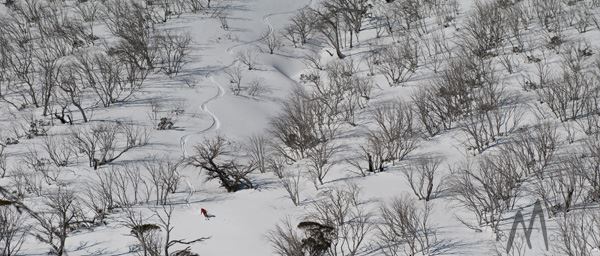
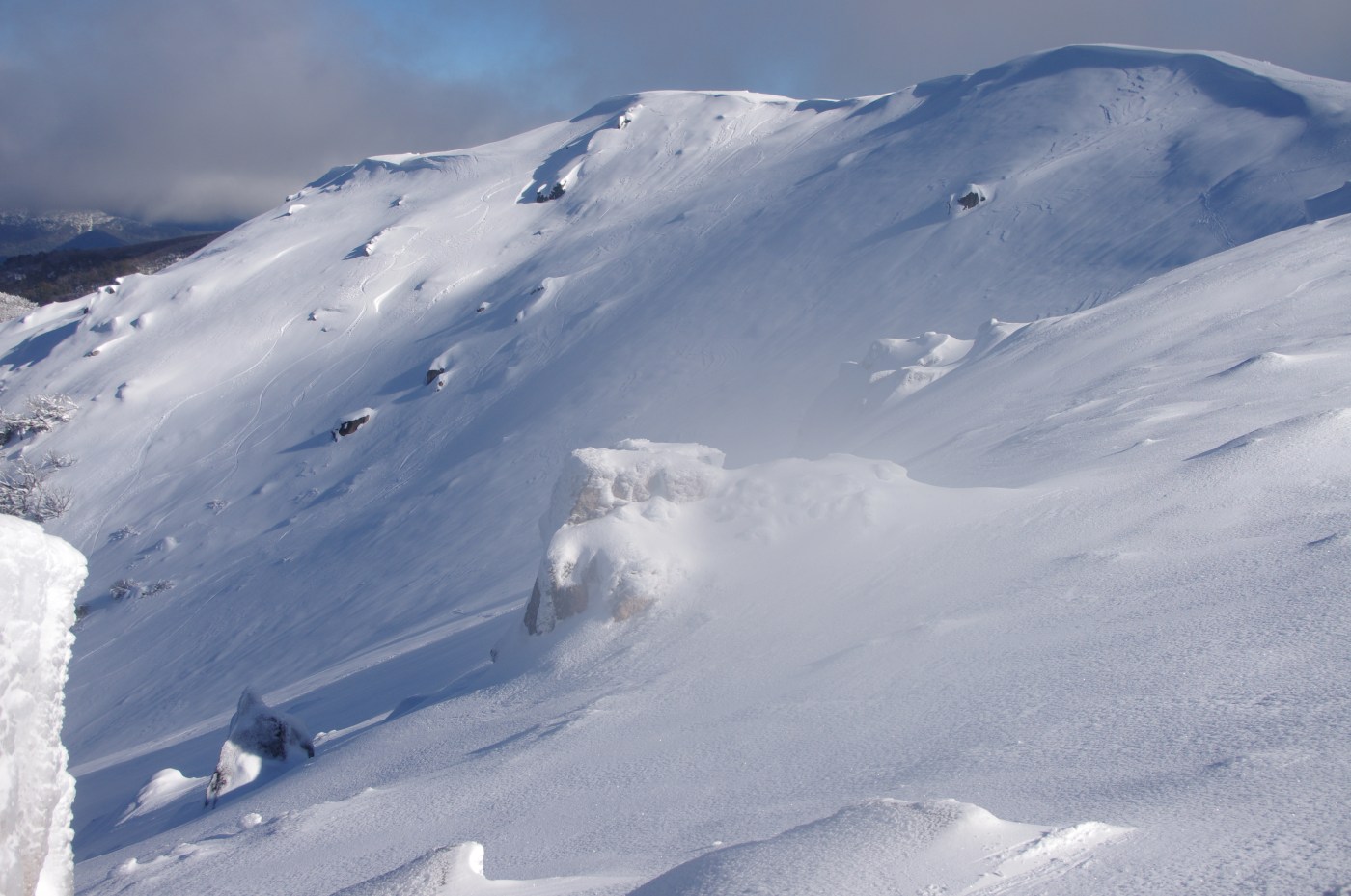
On one of our day trips he took me on to Twynam West Spur and showed me the gap in the cornices through which I could thread my long, thin skis and descend into Siren Song Creek. ‘Ski down there?’ I thought, and went off to sit at the end of the Crags to bask in the sun and contemplate the vista to the crouching lion Jagungal.
He, meanwhile, wasted no time and in a series of adroit, light as a feather, linked turns, leapt, carved and flew into the sirens arms. It was Rudolf Nureyev (a famous ballet dancer from the 1980s) delicately balanced on a couple of plastic planks in the steepest snow country we have.
About the same time I discovered he adored the Australian Ballet and the stunning, lithe, pink-clad ballerinas. He wrote poems about them too. The ballet must have rubbed off for it was ballet on skis that he displayed that memorable day.
Writing this about Alan, the word ‘fey’ kept bouncing around inside my head. The dictionary explained. It means, ‘as if enchanted, under a spell and aware of supernatural influences’. Yes, that was Alan all over and that’s what explains his love of skiing, his poetry, his wry sense of humour, some of his drawings and his ability to morph from a cheeky Shakespearean imp to a serious historian over the same cup of tea.
I will end on a poem he wrote after ascending Twynam North Spur. It could be his epitaph:
We leave our stately sentinel
And pass on through the Arc of Trees,
Then upwards still and cross the snowbridge,
There possibly to take our ease,
But not for long; it’s on to Twynam
To the throne to pay our dues
And find our fealty rewarded –
The granting of the kingdom’s keys.
You may be sure we will not waste them.
Full many a secret we’ll explore.
Full many a slope will feel our ski-tips:
Past craggy slate and granite tor,
Down gullies steep and awesome,
We’ll ski them all, you may be sure.
So when at last we hand the keys in,
As needs we must – so stands the Law –
There’ll be no need for compensation.
There’ll be no need to ask for more.
I will miss him, his annual hand-illustrated and written Christmas cards, his tightly composed letters often with poetry, his years of support and all that he stood for with all my heart for the rest of my days.
Alan, you were an inspiring scholar and an old fashioned gentleman”.
Klaus Hueneke (OA-AM)
NB: a number of Alan’s books are still available, check here for details.




Recent Comments