Search

Mountain Journal

Environment, news, culture from the Australian Alps

New Mountain Biking Trails at Falls Creek in 2013/14

Image: Falls Creek resort

Falls Creek resort management has announced that the long awaited XC1 and XC2 trails are now open.

The following comes from resort management:

For the past 2 years Falls Creek Resort Management has been busy at work bringing to life a dream shared by those who love the resort. In 2013 this dream is realised with the opening of the first 2 of 4 BRAND NEW mountain bike trails.

Under the commission of World Trail – the best bike trail builders in the business, months of development has joined years of planning to bring the new trails to completion. Head to Slalom Plaza now and try them out yourself

The Grand Opening of the new trails will take place in early 2014 but as a present to everybody visiting the Resort, the 2 XC trails in the wombats area were made open and free to use in time for Christmas! Stop in at the Visitor Information Centre at Falls Creek Resort Management to pick up a trail map when you arrive.

See more here.

The new trails have been developed in the Gully, Summit and Wombats Ramble ski areas. The trails are so fresh that we haven’t even had time to name them yet! Each trail will be named and graded prior to opening (click right to name one of them yourself) but in the interim, we have detailed each trail’s path and location for you to get to know them.

Wombats Ramble XC Loops

Intermediate
The most visible trails are found amongst the snowgums of the Wombats Ramble area (you may have seen parts of them riding the Falls Express Chairlift last Winter). Able to be ridden as one giant loop, the network consists of two trails – one riding uphill and one riding down. Whilst classified as cross country, there are some great downhill features and corners to navigate at speed.

The trails are intersected by the Aqueduct trail which means you can also ride each as a separate loop – one above the aqueduct and one below. Keep an eye out for some spectacular viewpoints and rocky outcrops along the way.

International DH Trail

Intermediate
We all love skiing and boarding the International Poma area in Winter. This downhill trail now brings just as much fun in Summer! Starting at the Summit Chair top (click here for chairlift operation dates), the trail winds down under the Poma line before zig-zagging down Grand Coer ski run and cutting through Short & Curly to the base of the Summit Chair.

Gully XC Trail

Intermediate
This trail connects the popular “Wishing Well” spot to the Gully region by the base of the International Poma and Gully Chairlift. Winding its way down, it is classed cross country but with a downhill aspect.

Bike Rental

Mountain Bikes are available to rent at Frueauf Village in Falls Creek (Schuss St). Adults full suspension bikes (Kona) are available for $65 per day or $50 per half day (extra day $50). Kids Kona bikes with front suspension are also available for the day rate of $45 (extra day or half day $30).

Helmets are provided with rentals and bookings are recommended by calling 0427 166 335.

A number more rental options will become available toward the new year.

Shuttle and Chairlift Access

New in 2014 will be a weekend MTB shuttle service to take riders and their bikes to the top of the trails – all Summer long. An announcement will soon be made on the commencement of this service.

Like in previous years, the Summit Chairlift will be operational over specific event weekends to allow for lift-accessed biking of the trails – particularly the International downhill trail. Click here for more info.

Downhill Descent Weekends

Cedarwood Apartments in conjunction with Alpine Gravity is hosting a series of downhill descent tour weekends, taking in the new MTB trails as well as existing favourites between Falls Creek and Mt Beauty.

Click here for more information.

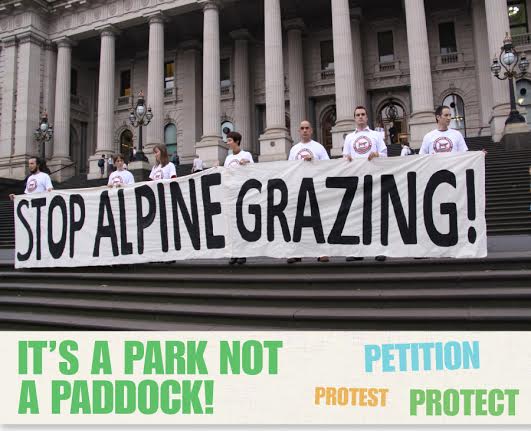
Victorian government yet to supply all information on alpine grazing proposal

The following comes from Rob Harris at The Weekly Times. It is interesting to note that this trial is ostensibly about whether cattle grazing can reduce fuel load, yet the Mountain Cattleman rep keeps talking about invasive species in the valley.

Given that cattle introduced most of the invasive species in the first place it seems to be an ‘own goal’ type argument to run if you want to see cattle brought back.

As with the earlier attempt to get cattle into the Alpine Park, it would appear that the Victorian government has done a poor job of compiling the information that the federal minister needs to make an informed decision on the trial. Given that the Wonnangatta trial has been a concept endorsed by the environment minister for at least a year, it is hard to fathom why this second application has been managed so badly.

For background on the issue, check here.

There is an online poll attached to the story: Should a native orchid halt alpine grazing?


Fears for native orchid put high country cattle trial on hold

alpine grazingA THREATENED native orchid could prove the latest hurdle to returning cattle to the high country.

The Victorian Government’s push to begin a three-year trial in the Wonnangatta Valley this month has been put on hold after the Commonwealth sought more information about the habitat.

The Australasian Native Orchid Society of Victoria is the latest conservation group to raise concerns about a return to alpine grazing, after it was reported a survey of rare and threatened plants in the area was not included in Victoria’s application to the Commonwealth.

The Wonnangatta Valley is home to one of two known populations of the native orchid diuris ochroma, or pale golden moth.

Society member Richard Thomson said the group had written to federal Environment Minister Greg Hunt seeking protection for the native flower.

“Having chosen this venue virtually in the middle of the park – where there is plenty of state forest which would have been equally as suitable and wouldn’t run the same risks to the environment – just seems totally weird to me,” Mr Thomson said.

Mr Thomson said it was “ridiculous” the Victorian Government would put the native flower at risk.

If the trial is approved by the Commonwealth, 60 cattle will be released into the Valley for a three-year trial.

A spokesman said Mr Hunt was awaiting information from his Victorian counterpart that would allow the department to make a “fully-informed decision”.

A spokeswoman for Victorian Environment Minister Ryan Smith said an updated survey of the native habitat would be provided to the Commonwealth. She said the “experience and expertise gathered over 170 years” should be included in land management.

The mountain cattlemen, removed from the park in 2005 by the Bracks Labor Government, will this weekend hold their annual high country “get together” on the Omeo High Plains.

Mountain Cattlemen’s Association of Victoria president Charlie Lovick said the decision to stop grazing Wonnangatta had grown into a fire trap “infested with invasive species”.

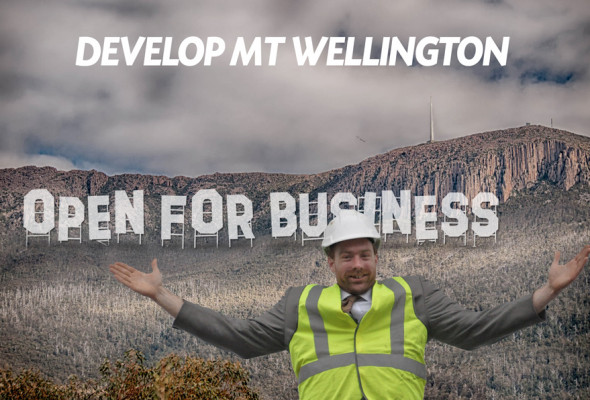
Mt Wellington ‘open for business’

The following comes from The Mercury newspaper, journalist Jennifer Crawley.

The long running campaign to ‘open’ the mountain to major commercial development is now one step closer to fruition. For some background on the issue, check here and here.

there is already substantial viewing infrastructure on the mountain

Mt Wellington opens for development under new management plan

MT Wellington is open for business, with a new management plan allowing for a wide range of commercial development, including a controversial cable car.

The Wellington Park Management Plan, which took effect this week, opens the gates to commercial development at the pinnacle and The Springs.

The tourism industry has welcomed the potential for new drawcards at the Hobart landmark, which attracts more than 350,000 visitors every year.

Tourism Industry Council Tasmania boss Luke Martin said the plan was “overdue, historic and very welcome”.

“It creates the possibility of a whole series of new markets on the top and at The Springs,” Mr Martin said.

The plan allows for a visitor centre, interpretation centre, viewing shelter cafe, restaurant and take-away food premises, bus terminal, council depot, shuttle buses, cable cars and aerial ropeways, and funicular rail and cable-rail systems.

There has been no commercial development on the mountain since a health spa and chalet were destroyed by bushfire at The Springs in 1967.

Mr Martin said there was great potential for tourism development on the pinnacle.

“We have 350,000 tourists going to the summit each year, with no economic activity out of them,” he said.

“There is a market for something on the summit to vastly improve what’s there now.

“Even if the cable car doesn’t happen, we will still get something.” Environment, Parks and Heritage Minister Brian Wightman said the plan allowed for a range of developments in the park, including a cable car.

“The new plan strongly promotes the development of new visitor services and infrastructure on Mt Wellington, but also ensures its special values are protected,” he said.

Developments specifically allowed at The Springs include a backpacker hostel, bed and breakfast establishment, holiday cabin, residential hotel, walkers bunkhouse/hut and cable-rail systems.

While the plan allows for commercial development at The Springs and the pinnacle, Wellington Park Management Trust chairwoman Christine Mucha said the trust preferred major development to be centered at The Springs.

“We would like to see The Springs developed and Hobart City Council would like to see it developed,” she said.

“It is the central point to start walks and bikes and it is lacking facilities.” Hobart developer Ali Sultan’s approval for a visitor centre, restaurant and carparking at The Springs expires next month.

Hobart Lord Mayor Damon Thomas said no one could do anything at The Springs until that lapsed.

“The playing field opens up but not until that happens,” Ald Thomas said.

The new plan was “a big step forward,” Ms Mucha said.

“It was two years in the making and before the Planning Commission for nine months.

It’s not just about Mt Wellington, it’s the whole mountain range, Glenorchy and crown land.” Greens environment spokeswoman Cassy O’Connor said talk of development on the pinnacle was disturbing.

“It’s disappointing and disturbing to hear the state’s Environment Minister talking up inappropriate development such as a cable car on Mt Wellington,” she said.

“Brian Wightman knows very well that any cable car on the mountain would damage its natural and cultural values.”

Cable car proponent Adrian Bold said his group had waited for the plan to be ratified before taking the next step with their cable car vision.

They will have a proposal launch next month, a second round of public consultation and the plans before the council by mid-year, he said.

“We are very excited the plan is finally ratified,” he said.

‘Worn Wear’. Don’t buy new stuff – love the stuff you already have

Image: Worn Wear website

This 27 minute film comes from Patagonia.

Worn Wear is an exploration of quality – in the things we own and the lives we live. This short film takes you to an off-the-grid surf camp in Baja, Mexico; a family’s maple syrup harvest in Contoocook, Vermont; an organic farm in Ojai, California; and into the lives of a champion skier, a National Geographic photographer, and a legendary alpinist. It also features exclusive interviews with Patagonia founder Yvon Chouinard.

Released as an antidote to the USA Black Friday and Cyber Monday shopping frenzy, Worn Wear is an invitation to celebrate the stuff you already own.

You can read people’s stories about their favourite gear here.

Check here for an earlier post on the Worn Wear campaign.

a new take on backcountry skiing: managing forests to create runs

mt stirling 008
Mt Buller from Mt Stirling

The mountains of the eastern seaboard of the USA have some similarities with those in south eastern Australia. They are mostly forested, with only limited terrain above tree line, meaning that much of the steep snow country is not easily or safely ridden. Alpine resorts get around this by cutting runs, with sometimes very significant environmental impacts. Mt Buller would stand out as the worst case in Australia, with much of the mountain having been massively impacted by the footprint of the resort: the roads, the village, the runs and associated infrastructure, and waste treatment plants, etc.

Backcountry skiers and boarders tend to look to the higher terrain, and while many areas of tree covered terrain in the Australian mountains do offer some great options, the vast majority of the riding hours that are clocked up each winter are on naturally open slopes above tree line.

Image: APSA
Image: APSA

In the Adirondack mountains of New York state, there is a growing movement to create backcountry runs through ‘glade clearing’, small scale clearing of saplings to create safe corridors through the forests to allow skiing access.

The Adirondack Powder Skier Association (APSA) was formed to negotiate the right to cut these trails from state authorities in the Adirondack Park, which covers about 2.5 million hectares of wild land. Although avalanche slide paths are formed each year, skiers currently have few options when it comes to safely touring the backcountry mountain sides in the park. The APSA is seeking to gain an amendment to legislation that covers the park management plan so that they can create a series of skier-specific trails. The APSA argues that these would have less environmental impact than formed walking trails. Ron Konowitz, the president of the APSA, says “we’d manage the undergrowth by clipping horizontal stems and minimal undergrowth. On hiking trails they remove the top soil down to a hard surface. What we’re proposing is so much less invasive than that.”

Essentially they would seek to carefully remove a handful of trees on each ‘run’ or glade to create a more open area through birch forests which will be far safer than attempting to ski through regrowth forest. At this point, this type of management for backcountry skiing is not recognised in the Park management plans. Back country skiing and boarding is growing in North America, as it is here. The APSA argues that opening up back country runs would bring economic benefit to local towns, as it would attract more people to a wider area of the Adirondacks, as well as bringing many more opportunity for low impact out-of-resort skiing.

Of course, such land management intervention for a particular user group on public land is potentially fraught. It can be a foot in the door to more intrusive developments. The APSA seems to be mindful of this risk: it is seeking a change only to allow glade management, and is going to considerable lengths to bring all groups concerned about the mountains along with this proposal. It is set up as a not-for-profit corporation formed to “study, protect, promote, and enhance low-impact human powered snow sports on public lands in the Adirondack Mountains” and is working with state and local land managers, plus the local towns, conservation groups, and other stakeholders, to “define then develop appropriate management regulations” for managing the runs. If successful in gaining permission for the runs, they would trial them on a number of mountains.

For further details on the APSA, check their website.

Job fears in Parks Victoria revamp

The following comes from The Weekly Times, journalist is Chris McLennan.

Image: DSE
Image: DSE

With government plans to introduce camping fees for staying in national parks (which will draw on Parks Victoria [PV] resources to manage), allow private development in parks, re introduce cattle into the Alpine national park, you do have to wonder about the common sense of this government. Add to this the threat of ever worse fire seasons, and these cut backs seem short sighted and potentially dangerous. Union officials say that more than 500 people, including firefighters, will be caught up in the proposed changes.

According to the union that represents PV workers,

Parks are slashing 10% of its workforce but exempt senior and managerial positions, and will target Ranger and Field Service Officer employees instead.  Parks will waste $8-$10million paying out retrenched employees trying to save $10-$15million.  It’s completely cost counterproductive.  Parks Victoria (currently) employs 1,100 staff at 100 national, state, marine and urban parks.

Job fears in Parks Victoria revamp

Parks Victoria staff face an anxious summer after a department-wide restructure was announced just before Christmas.

Union officials claim more than 500 people will be caught up in the proposed changes, which may involve some staff pay cuts and others choosing redundancies.

“Many of these people are our frontline firefighters. They already have a lot on their plate,” Community and Public Sector Union federal secretary Karen Batt said.

A consultation period on the proposed changes will end on January 30 and a Parks Victoria spokeswoman said it may not be until March-April that the reorganisation is finalised. Individual staff are yet to be told which positions will be restructured.

Parks Victoria’s acting chief executive Chris Hardman said there would be no net loss of staff from the restructure. He said the proposed model was designed to significantly enhance the organisation’s services for the Victorian community.

“We are looking forward to hearing from staff and unions as to what they think about the proposal and to assist the organisation to put together the best possible operating model.”

More than 120 jobs have been trimmed from Parks Victoria in the past 18 months.

eviction notice soon for Toolangi treehouse?

1522060_374731309336888_1556541492_nOn sunday 10 November, 2013, a young activist called Hannah Patchett launched a long term tree sit to highlight the immediate threats to the Leadbeaters Possum through continued destruction of its habitat. Logging threatens the survival of this species in the Central Highlands to the east of Melbourne.

She has called a ‘festive picnic’ at the red treehouse, because she is expecting the government to issue a notice of complaint addressed to the ‘owner’ on the 3rd or 6th of January. Supporters will host a walk to the location of the treehouse with local naturalist Burnie Mace and a movie screening is also planned, plus some live music. This will be a family friendly drug and alcohol free event.

It  will be held on thursday January the 3rd. Please call the Camp phone on 0455 111 985 for specific directions and if you feel like it please ask if you can bring something or help some one with a lift. The journey is about 1.5hrs from Melbourne.

More details on the facebook page and background info here.

Life, death, rebirth and new terrain

near Mt Wills
near Mt Wills

I have been out checking some of my special places, to see how they are faring after last summer’s Feathertop fire. The north razorback fire burnt hot up and out of the Ovens river, past Mt Smythe and into the Upper Buckland River and swinging east around the massive bulk of Hotham and towards Dinner Plain.

Many of the forests along the Sugarloaf Ridge were badly burnt and now big swathes of burnt out country have been clearfelled to protect the Great Alpine Road. I understand the need to cut out the alpine ash close to the road that had been killed in the 2013 or earlier fires, but a major over clearing has happened on the slopes of Mt St Bernard, where fire killed snowgums well back from the road had been clearfelled for no obvious reason.

IMGP6236Parts of this country have been burnt three times in a decade. Each year, the land becomes ever more of a mosaic of new burn, older burn, and pockets of old forest – alpine ash and snow gum – that have survived each onslaught. The 2013 fire has killed off forests, glades, slopes that had survived the earlier fires. The headwater country of the Ovens, Buckland, and Wongungarra were hammered hard over the past summer. To my eyes that land seems poorer, from too many burns in too few seasons.

IMGP6251Fire has always been a part of our landscape. And climate science clearly tells us that longer and harder fire seasons are our future. These last few days I have wandered through alpine ash slopes and snow gum forests that had been completely scorched. Other areas have been lightly burnt, others spared altogether. The fire burnt hot up out of the Ovens, then seemed to turn back around some of the higher ridges on the Divide slower and with less heat. Its incredible to see some areas thick with new fern and daisys, while other areas as still mostly bare soil and logs, dead trees still black, streamers of bark rattling in the breeze. In some areas wattle are shooting back, in others, the beginning of Elderberry Panax groves or thick rushes of snow gums re-shooting around the burl of parent trees. If anything, the most recent fires have increased the mosaic effect on the ground.

Below tree line, the forests on these mountains can look so similar from a distance. Up close it is a mix of montane forests merging to alpine ash, leading to snow gum, the mix of vegetation in each place all dependent on slope and aspect, altitude and soil, fire history and circumstance. These most recent fires have added to the mix of already complex ecosystems and forest types.

In my mind I can see a future of more frequent fires, longer summers, warmer winters, and the land that I know and love so well being transformed into something new and poorer. Less old growth, trees pushed beyond their limits, less diversity of living things. But in the short term – summer to summer, the annual cycle that my mind can hold and understand – I see nature adapting and filling the spaces created by each fire. There is a deep ability for tenacity and resilience, seeking balance. The great unknown we face is that we do not yet understand the point at which we will have crossed beyond the balance of resilience and natural cycle into the time when balance will be broken by a human induced future. Some days I am frightened that no one knows, or will even be able to identify, that point of no return, when resilience is surpassed by a new reality that will make our familiar lands a new country, one that is foreign and strange, beyond anything we have known before.

Running Wild

Running Wild organises trail runs in some of Victoria’s most spectacular mountain country, including Feathertop, Mount Buller, Lake Mountain, as well as the 160km long Alpine Challenge, which is a major fund raiser.

Image: Running Wild
Image: Running Wild

The organisers say

Our motto is great runs – great places – great people. We do not run “races” as such, we are about the running experience, enjoying the country, experiencing what nature has to offer – weather, terrain and your ability to push yourself and get to know your body and your limits, and the social experience. That is what running and wild running is all about, however if you want to run fast and race, that’s fine too.

They are organising some new runs in 2014: the ‘Vertical K’ Series, the Victorian Mountain Running Championships and the Mount Buller Mountain Running Festival.

If running in mountain terrain appeals, then check out the various races. One of the things I appreciate about the organisers approach is that they see the run as a ‘mutual support event; it is not a race in the traditional sense. For safety reasons all participants must offer assistance to others in distress.’

The Alpine Challenge is especially impressive: it covers ‘some of the best, hardest and most exposed high country in Australia including Mt Feathertop, Mt Hotham, The Fainters, Spione Kopje, Mt Nelse and Victoria’s highest mountain, Mt Bogong’.

Their 2014 season of runs starts in early February.

Lake Mountain fire recovery

Echo Flat
Echo Flat

The Lake Mountain area, near Marysville, was terribly burnt in the fires of early 2009.

Almost every tree on the plateau was killed or burnt back to ground level (snow gums have the capacity to reshoot from the base after the above ground section of the tree is killed). At Lake Mountain, the fire was particularly severe and killed off many parent trees that had survived the 1939 fires.

The landscape was completely transformed from what it had been. Anyone that knew the ‘old’ Lake Mountain couldn’t help but be devastated on their first post fire visit.

The good rainfalls over the summers of 2010 and 2011 greatly assisted the regrowth across the mountain. Whilst the area will not return to anything near to its former state for many years, the regrowth is going well, and the spring/ summer wildflower display is fantastic.

If you haven’t been to Lake Mountain since the fires, Christmas is a great time to go.

The Olden Days (aka the late 1970s). Echo Flat with an intact snow gum forest

The snow gum woodlands and lower alpine ash forests were absolutely devastated in the fires. Regeneration in the snow gum country is now substantial, with regrowth over 3 m high and in most places at least one third the height of the remnant dead trunks.  In addition large numbers of Snow Gum seedlings are also thriving.

The open heath and bog areas have been slower to recover, but ground cover is now almost complete.

If you knew the pre-fire landscape, then coming back can be emotionally devastating. The two known stands of Mountain Plum Pine on Echo Flat did not survive the fires. These trees had previously been dated as being between 700 and 800 years old. The remaining colony of Leadbeaters Possums have been removed to Healesville Sanctuary because it wasn’t deemed biologically viable. Most of us won’t see the likes of the original forest, and the landscape itself can seem forlorn.

But life is coming back. There is great walking on the plateau, and the local economies need your support.

For details on the post fire recovery, check here. For general info on the resort, check here.

Cattle grazing – decision put off til 2014?

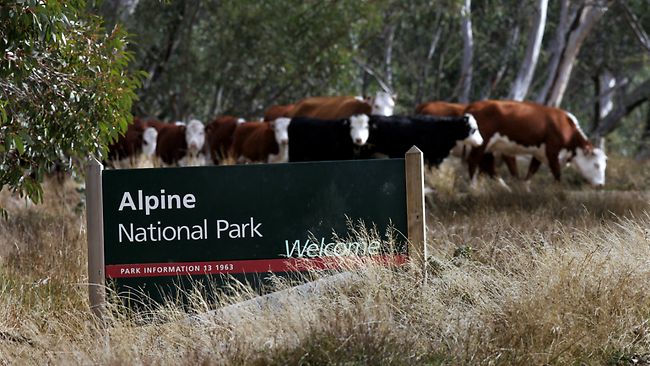
alpine grazingThe political rumour mill is suggesting that federal environment minister Greg Hunt won’t give approval to the Victorian government’s grazing trial before Christmas. The Victorian government proposes putting cattle back into a  section of the Alpine National Park to see if it can reduce fuel loads in the Wonnangatta valley.

However, the proposal has been undermined by the fact that only limited information has been presented about how the trial would be managed. In a worrying development, it would seem that the state government has also  withheld significant information from the federal environment department, about possible impacts of the project.

Refusing to fast-track approval of this project would be prudent for a minister who is already under fire for signing off on a growing number of environmentally destructive projects.

Lets hope common sense prevails and the federal government requires considerably more information than a desk top study to decide if this is actually a scientifically robust proposal.

Australian Alps Walking Track – volunteers needed

Mt Clear from The Bluff

Thanks to Wild magazine for this one

Conservation Volunteers Australia and Parks Victoria are calling out for volunteers to help restore remote sections of the 650-kilometre Australian Alps Walking Track.

Last summer saw helpers spend 120 days in Alpine National Park Across repairing 23 kilometres of track, laying 930 metres of rubber matting and installing eight water bars to prevent erosion at locations including The Knobs, Mount Sunday and Mount McDonald.

Park ranger Nigel Watts said: “It’s a win-win situation for us and for them; an opportunity to get out into the Alps, help with managing this area and enjoy this beautiful landscape.

“Remote sections of the track are difficult to maintain over time and help is needed to clear fallen timber off the track, install rubber tiling, brush-cut overgrown vegetation and to install crucial signage and symbols to help guide bushwalkers on their adventures in the Australian Alps.”

The first three projects in Januray and February are rated easy walking but require volunteers who are especially fit and strong to lay rubber tiles and use heavy mattocks over five full days. Accommodation will be provided in Falls Creek.The track work is all on the Bogong High Plains.

The last three projects in March and April are rated hard walking, and involve remote camping in the King Billy/ Mt Magdala/ Mount Clear/Knobs areas.

Full details here.

For more info, contact volunteer engagement officer Adam Smolak on asmolak@conservationvolunteers.com.au

Blog at WordPress.com.

Up ↑