Search

Mountain Journal

Environment, news, culture from the Australian Alps

Science society urges governments to axe cattle grazing trial in Victorian Alps

?????????????????????????????????????????????????The federal environment minister Greg Hunt is due to make a decision shortly on the Victorian government’s plan to put cattle back into the Alpine National Park. With only a few working days til Christmas, will the minister do one of those shonky announcements just before the summer holidays that governments are famous for?

Or will he do the reasonable thing and allow additional time for his department to consider the information that the state government withheld from him?

Recently, Mr Hunt approved major coal and gas facilities adjacent to the Great Barrier Reef. Refusing a poorly developed ‘scientific whaling’ (sorry, ‘scientific’ grazing project) would help re-build some of his reputation as the minister for the environment.

The following is from The Age, journalist Tom Arup.

Victoria’s leading scientific society has called on the state and federal governments to abandon plans for a cattle grazing trial in the Alpine National Park, saying peer-reviewed evidence shows it would fail to cut fire risk.

In a letter to state Environment Minister Ryan Smith, the normally conservative Royal Society of Victoria has questioned the merits and scientific basis of a trial to test whether cattle grazing decreases the risk of bushfires by reducing fuel loads. About 60 cattle would be released into the Wonnangatta Valley for three years if the trial is approved by the Commonwealth.

In the letter, society president Dr Bill Birch says the trial ignores published evidence that cattle grazing has no measurable effect on fuel reduction, but has serious impacts on the diversity of species in the local area.

”The plan for the proposed trial is not clear and shows little evidence of sound scientific structure,” Dr Birch writes.

Dr Birch says among the trial’s failings are that the vegetation in the Wonnangatta Valley represents only a proportion of that found throughout the Alpine park, meaning the results could not automatically be applied to the entire region. He also said wildfires burn more intensely and move differently to controlled burns, which would be used in the trial, meaning any effect on fuel reduction by cattle would not be measurable.

”The Royal Society considers the proposed trial as another example of so-called scientific study, undertaken without adequate appreciation or even demonstrated knowledge of the literature and which is characterised by inadequate planning and inadequate scientific rigor,” Dr Birch writes. ”We suggest that the trial be abandoned.”

Executive officer of the Mountain Cattlemen’s Association, Graeme Stoney said: ”There is no doubt grazing reduces fuel in the grazing areas.”


Fire in the Crosscut Saw area

crosscut sawThe CFA is reporting ‘fire activity in the northern Wonnangatta Valley.  This fire has started as a result of last nights lightning activity.  The fire is close to the Australian Alps Walking Track and the Macalister Springs Hut.  The fire is currently active in the Cross Cut Saw Section of the track and visitors are advised to avoid the area’.

The fire is in the Terrible Hollow and apparently burning up towards Mt Buggery. As of midday Dec 20, it was listed as being 10 ha in size.

Scroll down for updates

UPDATE. 21 DEC

The fire is close to the Australian Alps Walking Track and the Macalister Springs Hut.  The fire is currently active in the Crosscut Saw Section of the track and visitors are advised to avoid the area.
The Australian Alpine Walking Track is closed from King Billy Saddle through to Barry Saddle (where Barry Saddle adjoins the Wonnangatta Road).
Closures to the Alpine Walking Track include: Howitt Spur Walking Track, Queen Spur Walking Track, King Spur Walking Track and Macalister Springs Walking Track. (This general area of closures to the Australian Alpine Walking Track is also known as the Howitt Crosscut Speculation Area).
Smoke will be visible in the area.  Aircraft will be operating in the vicinity of Mt Buller and Snowy Range today and tomorrow.

You can  find updates here.

UPDATE. DEC 22

The fire is still going and described as being in the ‘Cross Cut Saw’ area (now 42 ha in size), with the Alpine track and surrounding areas closed. Fire breaks are being cut on the south east and eastern flanks, and fire retardants on the western sides.

UPDATE. DEC 23

The fire is now described by the CFA as being ‘contained’ at 45ha in size. The area outlined above remain closed.

UPDATE. DEC 24

The CFA has announced that the fire is now contained, although it appears that previously announced track closures are still in place. Check with Parks Vic before going near the area.

Mingling Waters Music Festival

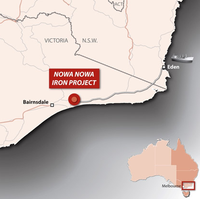
January 18 and 19, Nowa Nowa, East Gippsland

Mingling-Waters-Music-Festival-logo-colour-300x223From the organisers:

Mingling Waters Music Festival is a small, grass-roots, high quality, well-organised, community-focused, family-friendly music event, supporting local artists and business, promoting Nowa Nowa as a special place to visit.

We plan to bring new and interesting artists in from the wider community.

We aim to create a scene that brings people together to talk, listen, play, and dance and celebrate together, in a beautiful natural environment!

It is a high priority to pay and look after all the participating artists as best we can.

We hope to do well enough to donate to two local charities, The East Gippsland Rail Trail and Melon’s Cottage.

There will be a small market, including food stalls, a bar, workshops, children’s activities and FINE MUSIC!

Check here for details on the artists.

Check here for details on tickets, accommodation, etc.


coal dust killing glaciers

The West Branch of the Columbia Glacier, near Prince William Sound in Alaska’s Chugach Mountains. photo by Ethan Welty.

An interesting piece from Mountain Online. Here in Australia, the 10 year drought in the south east brought noticeable levels of dust onto the snowfields. Dust events are known to impact on snowcover in the South West of the US and have been linked to desertification, over grazing, etc. This article suggests another way human activity has been impacting on snow melt is through burning coal.

New research reveals humans halted the Little Ice Age. Is it too late to learn from our mistakes?

By Patrick Doyle

In July 1998, Thomas Painter took a break from his doctoral studies on the reflective nature of snow to climb the Maroon Bells near Aspen, Colorado. The snow was unusually filthy along his route. On a whim, he scraped the dirt off a small area with his ice axe and continued climbing. After summiting, Painter returned to the snowfield. The clean patch was now a small, extruded tower; the blackened snow rapidly melting around it. “It was sticking up about three inches—in a day,” says Painter.

Around that time, climate scientists were grappling with a conundrum tied to the end of the Little Ice Age, a period of below-average temperatures in the 16th through 19th centuries. Researchers had pegged the ice age’s demise to 1860, when glaciers in the Alps began to retreat. But that theory didn’t quite compute. Regional temperatures continued to decline for another 60 years. If anything, the glaciers should have kept growing.

Painter wondered if dirty snow could have been at play. In 1860, the Industrial Revolution’s coal-burning factories started spewing soot that covered European cities and—Painter guessed—the glaciers in the Alps. He hunted down ice cores from the Alps and found that layers of black carbon began appearing in the mid-19th century. Like the dirty snow melting on the Maroon Bells, the soot liquefied hundreds of meters of glacier in just 20 years. Painter, now an ice and snow scientist at NASA’s Jet Propulsion Lab, published his findings in September 2013. “I was just in the right place at the right time,” he says. “I was thinking of junk falling on snow.”

The study doesn’t just rewrite the ending of the Earth’s most recent ice age; it underlines the fact that humans caused it. Painter’s work also suggests that black carbon settling on snow runs a close second to carbon dioxide as a driver of global warming. Which means the fall of King Coal in North America is good news for snow and glaciers. Nearly half of U.S. energy came from coal in 2007. By 2012 that number had dropped to 37 percent. Expect that trend to continue, driven by increased consumption of cleaner natural gas and the Obama administration’s tighter emissions regulations for future coal plants. And while China’s coal usage has skyrocketed in recent decades, the country’s coal imports finally began to drop this year due to a slowing economy and pollution levels so high they are poisoning the population.

The switch to cleaner fuels can’t happen soon enough. But in India, a growing economy means increasing demand for coal. And more black carbon on Himalayan snow and glaciers. “What we’re seeing in the Himalaya in terms of glacier retreat is profound,” says Painter.

How it works:

Black carbon from coal-burning power plants blows into the atmosphere and settles on the mountains.

Most of that soot lands on glaciers at lower elevations, which are already susceptible to melting from summer sun.

The darkened snow melts at double the speed of clean snow, causing the glacier to retreat up the mountain.

Smaller glaciers are less able to mitigate the effects of climate change, causing a spiral of increased temperatures and less stable weather.

Logging halted in forest on the Errinundra Plateau today

This report comes from Goongerah Environment Centre. The actions are part of the Fearless Summer campaign.

Image: GECO. NB: this photo is from the Dec 12 action

Environmentalists have halted logging in state forest on the iconic Errinundra Plateau in East Gippsland. One person has climbed a tree more than 40 metres, and sits on a platform tied to machinery.

“Until recently this area of forest was reserved as a special protection zone, it contains a number of different forest types and is of high conservation value. It also contains old growth forest and is a known site for the endangered powerful owl.” Said David Caldwell, spokesperson for Goongerah Environment Centre (GECO)

“This area was made available for logging in 2011as part of changes to the informal reserve system. This process swapped a large number of forest areas reserved for specific values, for areas that don’t reflect the same value. This has been something of a lifeline to the logging industry, who have repeatedly shown poor management of Victoria’s forests at the expense of the taxpayer.” He said.

“This is another example of forest destruction in the face of evidence of threatened species. Our native forests are becoming degraded and without areas like this one, they won’t be able to provide our endangered animals with a chance to survive. This is a looming extinction crisis that is being assisted by forest agencies around the nation.” Said Miranda Gibson spokesperson for Still Wild Still Threatened.

Today’s action is the latest in a series of actions over the last week, known as Fearless Summer, a coalition of grassroots environment groups, committed to an end to industrial scale native forest logging and export woodchipping.

Decision on Alpine grazing before Christmas

w-valleyThe following information comes from the Victorian National Parks Association. A number of significant environmental decisions will be made by the federal environment minister before Christmas, with the danger that they will slip through relatively unnoticed and unreported.

If approved, it can be expected that cattle will be introduced over summer. Last time the Victorian Coalition government introduced cattle to the Alpine Park, they did so without setting in place adequate scientific frameworks to the trial. They had been clearly told that grazing would not be useful in reducing fire risk, yet proceeded to implement their policy.

The fact that the government has withheld information from the federal minister in their current attempt to reintroduce cattle is hardly the basis for assuming this trial will be any more scientifically robust.

Over the next few days Australia’s environment minister Greg Hunt must decide whether or not he will let the Victorian Government put cattle back into the Alpine National Park.

After failing to return cattle to the Alps in both 2010 and 2011 the Napthine Government is again asking the federal government to approve a new cattle grazing trial in the Alpine National Park.

They plan to bring 60 cattle into the remote Wonnangatta Valley, a beautiful river flat that sits below the Howitt High Plains and has been ungrazed by cattle since 1988.

We need your help. Please take action today or as soon as possible:

We cannot allow this grazing trial to go ahead.

The Victorian Government wants to put cattle into the park simply because of a promise it made to some graziers that once held privileged grazing licences.

Their new attempt comes on the back of repeated attacks by the Napthine Government on the integrity of national parks including changing legislation to allow 99 year leases for private development, expanding areas for fossicking and prospecting and making significant cuts to park budgets.

We have also uncovered many serious flaws in the proposed trial:

  • There is no scientific design for the trial, and apparently no scientists are involved.
  • There has been no consideration of a location outside of the national park, even though there are many areas where such a trial could be conducted.
  • The State Government has withheld an important survey listing rare and threatened plants in the valley from the Federal Government.
  • The application ignores the considerable evidence that cattle grazing does not significantly reduce alpine fires. There are far more important bushfire research projects on which to spend scarce research funds.
  • More than 60 years of research shows cattle damage alpine wetlands and the headwaters of many rivers, threaten nationally-listed rare plants and animals, and bring weeds into the National Heritage-listed Alpine National Park.

National parks are the cornerstone of our efforts to protect nature – not cow paddocks or private resorts.

Please email Greg Hunt today.

Alpine grazing. Don’t like the data? Hide it.

When I went through the paperwork attached to the state government’s proposal to put cattle back into the Alpine National Park, one of the things that struck me was the fact that there was no data from the field about possible threatened plants or animals that may be impacted by the proposal.

in the Wonnangatta, looking north

The Wonnangatta is not the easiest place to get to in Victoria. Yet the Environment Minister has visited there on at least two occasions. Clearly this project is important to the minister. So it would be reasonable to assume that he would have ensured that some staff were sent to the Valley to investigate possible impacts on endangered species.

Yet in their proposal, the government relies only on desk top data searches of federal government information. Given that the government was roundly criticised for its poorly framed research methodology last time they attempted to put cattle back into the park, you would think they would at least make an effort to make the scientific case more robust this time.

But now, according to The Age, this lack of firsthand data isn’t just because of sloppy project design. It would appear that the government has deliberately withheld key information.

Tom Arup has reported that

The state government has withheld from the Commonwealth a survey of rare and threatened plants of an area of the Alpine National Park earmarked for a cattle grazing trial.

It is believed scientists at the state’s biodiversity research body – the Arthur Rylah Institute – were asked to look for rare and threatened plants in different parts of the alpine park as part of research for the high country grazing project. Their results were outlined in an unreleased report from May 2012. But the survey was not included in a recent application by Victoria to the federal government for environmental approval of a grazing trial.

Instead an older desktop study – drawing on previously recorded data – was used to identify the extent of endangered species in the low-lying Wonnangatta Valley, where the latest trial is planned.

The unreleased 2012 plant survey found one nationally protected species of orchid known as pale golden moths and a small patch of endangered alpine bog and wetland in the valley. A large area of rare grassland and a rare plant known as spreading knawel were also found across the trial region.

The report suggests that fencing to protect the orchids, grassland and spreading knawel would be impractical and would not mitigate against the impacts of grazing.

No government is perfect. But deliberately withholding information in order to get an outcome you want is incredibly bad form. It begs the question: if this has happened in this case, how do we know it doesn’t happen routinely in attempts to introduce other aspects of environmental policy in Victoria?

Want to build private huts in a national park? Here’s your chance.

The Razorback
The Razorback

The Victorian government is currently calling for tenders to design the Falls to Hotham Alpine Crossing Master Plan. The plan will define the level of future developments which will occur along the trail – and associated infrastructure like private developments to allow overnight accommodation.

Check here for a background on the recent upgrade of the walk.

It identifies the walk as being part of a bigger program:

Walk Victoria’s Icons is a trademark brand comprising a portfolio of four long distance walks located in iconic regions renowned for their outstanding natural landscapes, wildlife and cultural values across Victoria. With a vision to be compelling, world-class, year round sustainable walking experiences, the Great Ocean Walk, Grampians Peaks Trail, Falls to Hotham Alpine Crossing and Coastal Wilderness Walk represent the quintessential nature-based attributes of the State – from dramatic coastlines to rugged mountain peaks, from remote waterways and inlets to alpine and sub-alpine scenery.

As four distinct walks the Walk Victoria’s Icons walks are designed to capture discerning high yield experience seekers who have a desire to be immersed in exceptional natural beauty that is supported by high quality products and services.

It is seen as being a

guided 2 day walk of 25km, with potential for 4 days, offers an experience that will be as challenging as it will be rewarding.

So far, so good: more people out in the hills….

The Falls to Hotham Alpine Crossing Master Plan will be lead by Parks Victoria in partnership with Tourism North East, Tourism Victoria and Regional Development Victoria.

The preferred route goes from Falls Creek, around Rocky Valley dam to Wallaces hut, then across the High Plains, descending to Dibbins hut, then downstream along the Kiewa to Diamantina spur, up to Feathertop, and out to Hotham along the razorback.

The documents say:

The main driver for this project is the need for a resolved, design-led, strategic master plan and implementation strategy (the master plan) for the FHAC which considers regional tourism and commercial opportunities in the context of recent changes to public land policy, particularly tourism investment in national parks.

That is, the Coalition governments intention to encourage private development within national parks.

The tender documents show that private accommodation is planned to be developed. Included in the brief for the tender is the requirement that the master plan:

Identify settings where opportunities may exist for potential private sector investment in on-walk roofed accommodation and/or services;

Coming soon to a national park near you? Image: Cradle Mountain huts

They use the ‘precedent image’ of private huts along the Overland Track, Tasmania.

A final decision is expected by 2015.

What do you think?

It is great that the government is providing resources to further develop walking tracks to get more people out into parks.

It is orientated towards a market that is happy to pay to have ‘luxeries’ while in the bush, like high quality acommodation, so potentially brings a new group of people into the mountains, who would currently tend to stay in the neighbouring resorts.

However, it could be the thin end of the wedge in terms of developments within parks.

It will probably bring new walking track infrastructure to what is at present a relatively remote area with only a rough trail (the Diamantina spur).

‘snow surfing’

‘Snow surf’ boards are hardly a common sight on our slopes. But they are showing up more in some classic backcountry films like Signatures, from Sweetgrass Productions.

The following item is lifted directly from the new The Drift publication, and features some quotes from renowned surfboard designer and rider Taro Tamai. The company Gentemstick makes snowsurf boards.


Image: The Drift
Image: The Drift

Taro Tamai: Of Gods and Mountains

ON DESIGNING GENTEMSTICK:

My shapes aren’t just mimicking surfboards, but like surfboards they have different shapes for riding different waves. I shape boards depending on snow, terrain, and riding styles.

The design should perform on any snow condition, whether it’s powder, groomers, or spring corn snow. I don’t focus on skateboard-like snowboards, which emphasize ollies, big-air landings and the spinning factor, but a design that focuses on the relationship between the rider and slopes.

Image: The Drift
Image: The Drift

ON SNOWSURFING:

What if someone sees the mountain differently than others? What if the same terrain appears different to each person who sees it? Obviously the design for riding that place will differ from one another. The reason I quit skiing— which I loved so much—for snowboarding is because the potential lines that I could see when on a snow-surfboard were drastically different from when I was on skis. The ultimate goal of surfing is to be one with the wave. The ultimate goal in snowsurfing is to be one with the mountains.

MOUNTAINS IN JAPANESE SYMBOLISM:

Traditionally, Japanese people felt the presence of gods in all natural elements: water, forests, fire or mountains. Mountains were one of the most important deific symbols and climbing was a religious ritual. Japanese mentality sees gods in every single pebble lying on the river shores.

Conservationists maintain stand at forest action

The following media release comes from Still Threatened, Still Wild, and marks the beginning of a summer of actions to protect remaining old growth forests.

koalaToday’s protest action continues to stop logging operations in a stand of forest at Stony Creek, East Gippsland, Victoria. Two conservationists remain at the top of tripods, blocking the road at different access points to the logging zone. While one person remains 30 meters above the ground in a tree sit in the middle of the logging coupe. Around 40 others remain in the area.

Department of Environment and Primary Industries (DEPI) workers attended the site at around 11am. The DEPI workers then cut down trees in an area believed to be part of the Snowy River National Park, in an attempt to drive around a blockade tripod. Forestry workers are currently in the logging coupe, below the tree sit, assessing the situation.

nippon“Three conservationists are today putting themselves on the line, up tripods and tree sits, and risking arrest in order to halt the destruction of this stand of forest that is home to the endangered long footed potoroo” said David Caldwell of Goongerah Environment Centre (GECO).

“Continued funding from tax-payer dollars to this industry for the benefit of a few private companies, like Nippon Paper, should be of concern to all tax payers. Australia is not only losing millions of dollars to prop up this industry, we are also losing our irreplaceable native wildlife species” said Mr Caldwell.

“Today’s action has brought a national focus to the destruction of wildlife habitat that is occurring here in East Gippsland as well as forested landscapes around Australia. It comes the day after a court appeal was lost by My Environment which now allows the ongoing logging of endangered leadbeater possum habitat.” said Poppy King of Central Highlands Action Group (CHAG).

“These dedicated conservationists are committed to continuing today’s action as long as possible, in order to protect this precious forest from industrial scale logging. This is part of a nation-wide movement that will see ongoing actions across the country in a call for protection of our native forests” said Miranda Gibson of Still Wild Still Threatened.

For comment:

Miranda Gibson and David Caldwell

(03) 5154 0109

Law fails to guarantee protection for Victoria’s emblem

This release is from Healesville based MyEnvironment, about the outcome of the recent case seeking protection for the Leadbeaters Possum.

Law fails to guarantee protection for threatened species

IMG_2247_Version_2The Flora and Fauna Guarantee Act has never before been tested at the level of Appeal. By taking our case to Appeal we have given the law the best possible opportunity to show whether it can be effective in its stated purpose of GUARANTEEING the survival of unique native species.

In this, the law has failed.

This judgement gives the green light to ongoing destruction of Leadbeater’s Possum habitat in Toolangi State Forest at sites where we have photographic and video confirmation that the species is present. Obviously, this is a disappointing outcome for MyEnvironment but, more importantly, for Leadbeater’s Possum and all other species that rely on the protection of the Flora and Fauna Guarantee Act for their ongoing survival.

If the Flora and Fauna Guarantee Act is incapable of guaranteeing the protection of our state’s faunal emblem against a rapacious logging industry, we have to wonder what, if anything, does it protect?

We call on the state government to urgently review the Act to make it functional and effective in saving threatened species, including the Leadbeater’s Possum from extinction.

In the meantime, we call on VicForests and its contractors to demonstrate genuine commitment to their repeated protestations of concern for the survival of Leadbeater’s Possum by properly protecting all sites in logging coupes that contain known colonies of the species, including the three Toolangi coupes that were the subject of this case, where video and photographs of nesting and foraging animals have recently been obtained. Their conduct in coming days and weeks will be a public demonstration of their sincerity and decency.

We shall now take time to study the implications of the judgement for MyEnvironment, the group and its members, and to take advice on future action.

For quotes please call ; Steve Meacher 0447 330 863 or  Sarah Rees 0438 368 870

For background on the Toolangi forest issue, check here.

The Drift – new publication

The DriftThe Drift is a collaborative newsprint publication between The Usual and Patagonia to celebrate all things snow.

Issue 1 features Patagonia ski and snowboard ambassadors Caroline Gleich, Josh Dirksen, Gerry Lopez, Kye Petersen, Liz Daley, Pep Fujas, Forrest Shearer, Taro Tamai, Alex Yoder, and Aidan Sheahan.

Pick up your Winter 2013/14 copy at select Patagonia stores worldwide.

For more information visit: http://www.thedriftmag.tumblr.com and http://www.patagonia.com/us/sports/snow. Follow us @theusualmontauk, @patagonia #pursuitofpowder

Blog at WordPress.com.

Up ↑