Search

Mountain Journal

Environment, news, culture from the Australian Alps

Call out for content – Mountain Journal magazine #2

Mountain Journal magazine was produced for the first time in 2021. Intended as an ‘annual’ of key events from the previous year, it has been distributed in mountain huts, info centres, and cafes in and around the mountains of south east Australia (you can find it as a pdf here).

We are just starting to think about content for the 2022 edition (to be distributed in early winter) and would welcome contributions.

Continue reading “Call out for content – Mountain Journal magazine #2”

‘Mature-aged native forest may never return to parts of Namadgi’

In January and February 2020, the Orroral Valley Fire burnt more than 80% of Namadgi National Park in the ACT. Since then, monitoring and recovery efforts have sought to protect damaged environments and aid the recovery of the park.

A report released in 2021 showed that some areas and forest types were recovering well (for instance, many Candle Bark forests and Snow Gums) however the news was grimmer for other vegetation types like Alpine Ash.

Two years on, it is clear that full recovery will take many years and sections of the park will never be the same. Mature-aged native forest may never return to parts of Namadgi National Park because climate change is impacting regeneration.

Continue reading “‘Mature-aged native forest may never return to parts of Namadgi’”

Fires in south west Tasmania

A number of small fires are burning in World Heritage Areas in lutruwita/ Tasmania. At this point details on each fire is fairly scare. This post will be updated as extra details arrive. Initial post: JAN 31, 2022.

Continue reading “Fires in south west Tasmania”

‘Citizen science’ field trip investigates loss of Snow Gums

Friends of the Earth recently held its first citizen science fieldtrip to map areas of Snow Gum forests in the Victorian mountains. These forests are largely protected in national parks but are threatened by climate driven fire regimes and dieback, which is caused by a native beetle.

We checked sites on the northern end of the Dargo High Plains, which is roughly south of the Hotham ski resort. We visited areas that have been burnt multiple times in recent years. This has resulted in the death of many parent trees, and then loss of the seedlings and resprouting that happened after the first fire. We were pleased to see that, after two mild and wet summers, seedlings have finally started to grow in sections of these burnt forests.

While these forests will recover from fire, climate change is making fires more frequent and this is leading to local loss of Snow Gum woodlands.

Continue reading “‘Citizen science’ field trip investigates loss of Snow Gums”

Firefighters demand climate action

Bushfires are becoming more frequent and the bushfire season is coming earlier and lasting longer because of climate change.

These longer fire seasons in Australia are not “normal”. They are being driven by human induced global heating (climate change). Unless we act now to reduce our emissions in line with what climate science suggests, we will become locked in to ever worsening fire seasons. We know that climate driven fires pose an extreme threat to mountain environments like Alpine Ash and Snow Gums.

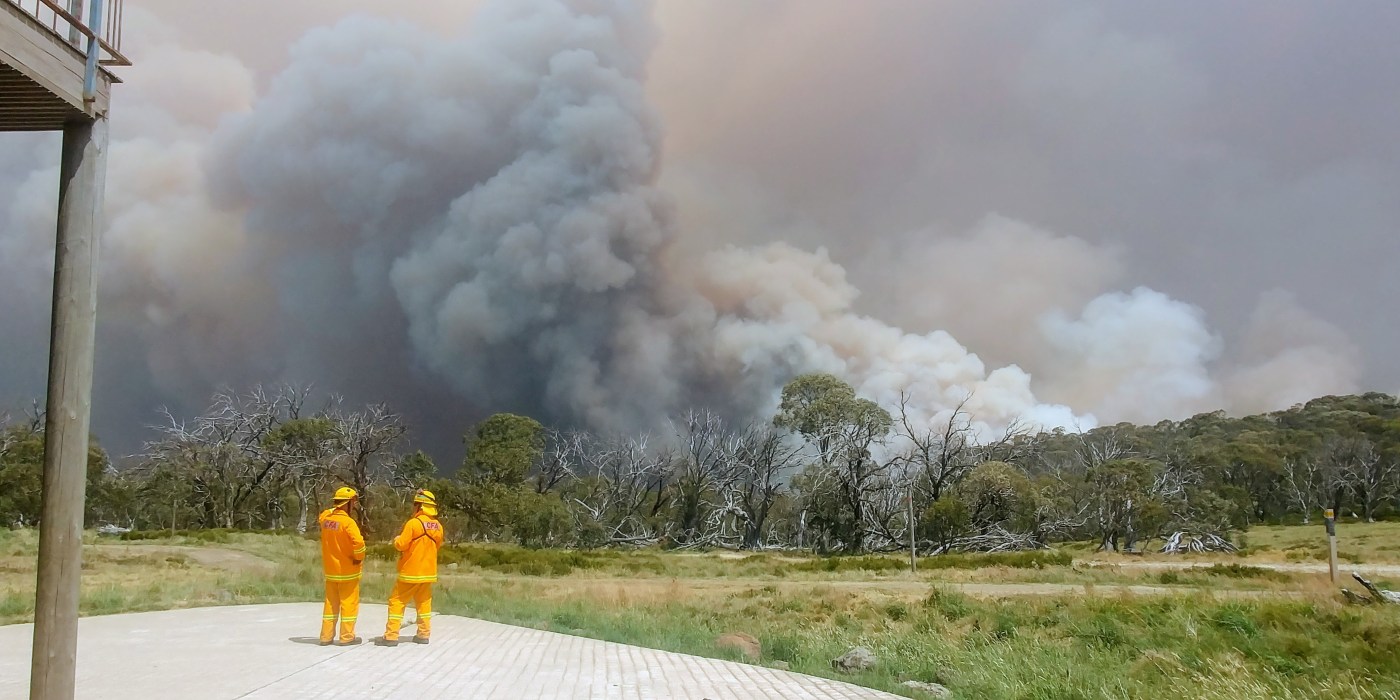
The Australian Firefighters Climate Alliance (AFCA) has launched a new campaign, asking firefighters to post an image of themselves on a fireground, and demanding the Austrtalian government act on climate change.

Continue reading “Firefighters demand climate action”

Time is running out for mountain woodlands

It is worth going back to a report from 2020 that shows the impacts of fire in Victoria. Most of the area burned in the summer of 2019/20 is in mixed-species eucalypt forests, which are common throughout eastern Victoria, and which can recover well from fire.

But the fires also burnt forest types of more limited distribution including banksia woodlands, warm temperate rainforests, and mountain communities including alpine ash forests and snow gum woodlands.

Continue reading “Time is running out for mountain woodlands”

The strange land of 12 Mile Hill

The Dargo High Plains, in Victoria’s High Country, and surrounding ranges are facing an onslaught of logging activity. It is well beyond the sealed road network and out of sight for most people. Lisa Roberts reports on a recent trip to this remote mountain country.

‘We watched the mist come out of the forest over the hill and race across the cleared smashed country and fall when it reached the trees on the other side. Up here, the trees call in the clouds and the clouds drop into the trees and this is where the water comes from’.

Continue reading “The strange land of 12 Mile Hill”

New year, old issues 

As we move into a new year, things are looking good in the mountains. A second mild and wet spring has led to a mild summer, with no significant fires in mountain areas so far (there were two fires in lutruwita/ Tasmania earlier in the season – at Mt Rufus and the Eldon Range). As heatwaves bake much of the north and west of the continent, the mountains of the south east and lutruwita/ Tasmania are a cool refuge from the heat. As always there is so much to do and wonderful places to visit. And, as always, there are threats to the mountains that we will have to deal with this year.

Here’s some of them:

Continue reading “New year, old issues “

Alpine and Mountain Ash face potential declines in a warmer and drier future.

We know that the Alpine Ash forests are struggling to survive in the face of climate change driven fire regimes that are bringing fire into these forests more frequently.

The scale of this threat is so extreme that the Victorian government has a program specifically responsible for reseeding forests that are on the verge of ecosystem collapse.

New research underscores, yet again, that the mountain forests face grave threats from climate change and that this could lead to the transformation of these forests.

Continue reading “Alpine and Mountain Ash face potential declines in a warmer and drier future.”

Fires in Tasmanian World Heritage Areas

Back in 2019, Tasmania/ lutruwita was badly impacted by wildfires (check here for a diary of those fires). With much of south eastern Australia experiencing a La Nina mild summer, the forecast is for a ‘mild’ season across most of the south east.

But following lightning storms over the weekend of December 18 and 19, 2021, a number of fires have started in remote World Heritage Areas in Tasmania/ lutruwita. It has been noted that since the year 2000, there has been an increase in the number of lightning-caused fires and an increase in the average size of the fires in Tasmania, “resulting in a marked increase in the area burnt”.

This page will track significant fires on public lands in Tasmania during the summer of 2021/22.

Continue reading “Fires in Tasmanian World Heritage Areas”

Snow Gum citizen science field trip – January 2022

Snow Gums face a massive threat from the spread of dieback which is caused by a native beetle – and also super charged by climate change, and localised collapse of snow gum woodlands due to more frequent fires.

Last winter Friends of the Earth (FoE) published An Icon at Risk, which considers the many threats to the mountains of north east Victoria (the report is available here).

FoE will be hosting a field trip to map impacts of fire over four days in January 2022 in the Mt Hotham region.

Continue reading “Snow Gum citizen science field trip – January 2022”

International Mountain Day 2021

December 11 is International Mountain Day.

Around the world, mountain environments are threatened by climate change and destruction of natural environments. It is the same here in Australia, where we are starting to see the local collapse of mountain forests – both Alpine Ash and Snow Gum – due to climate driven fire regimes (and, in the case of Snow Gum, dieback caused by a native beetle).

There is much we must do to protect these wonderful environments, including building our capacity to fight fires effectively in mountain areas.

Here are some ideas.

And please join the citizen science project if you’re planning on visiting the VIC/ACT/ NSW mountains this summer.

#MountainsMatter

Blog at WordPress.com.

Up ↑